
Rosemary Rarely Survives Winter Indoors Unless You Stop Making These 3 Watering Mistakes
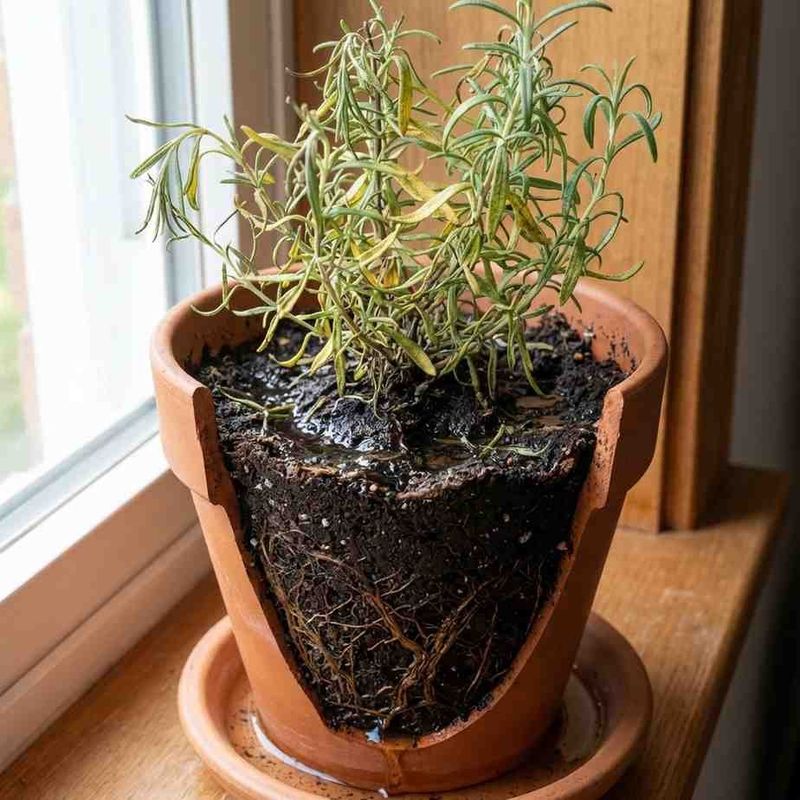
Your rosemary looked great when you brought it inside this fall, but now the needles are turning brown and crispy. You are not alone, and the plant is probably not as fussy as it seems.
Most indoor rosemary dies in winter because of a few simple watering slip-ups. Fix these three mistakes, and your rosemary has a real shot at making it to spring.
1. Letting the Soil Go Bone Dry
Rosemary has a reputation as a tough, drought-loving herb, and that reputation fools a lot of gardeners. Outdoors, its roots can stretch deep to find water.
In a small pot near a heater, those roots have nowhere to go.
Here is the sneaky part. When the root ball dries out completely, the fine roots die back quietly, and the plant may look fine for days or even weeks.
Then the needles turn dull, fade to brown, and suddenly drop, long after the real damage happened.
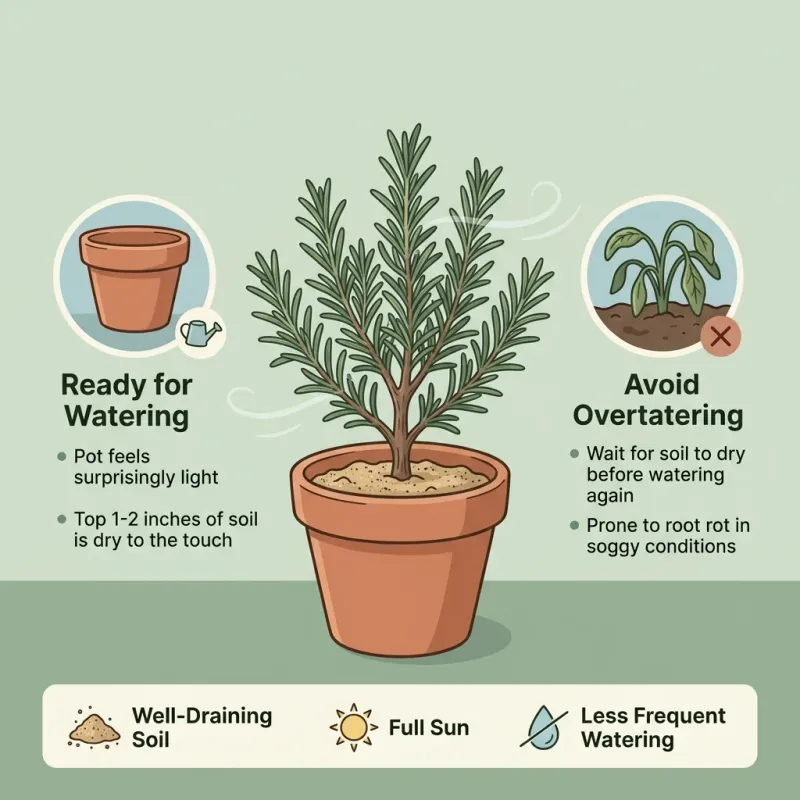
Watch for brittle leaves and stems that snap easily, since those are classic signs of thirst. To stay ahead of it, push your finger an inch or two into the soil.
If it feels dry at that depth, water slowly until it runs out the bottom of the pot.
How often depends on your home. A rosemary in a warm, sunny window may need a drink every three to four days, while one in a cool room might go a week to ten days.
Checking the soil beats following a calendar every time.
2. Drowning It With Too Much Water
Funny thing about worry: once people learn rosemary can die of thirst, many swing hard the other way. Rosemary comes from the dry hills of the Mediterranean, and it truly hates wet feet.
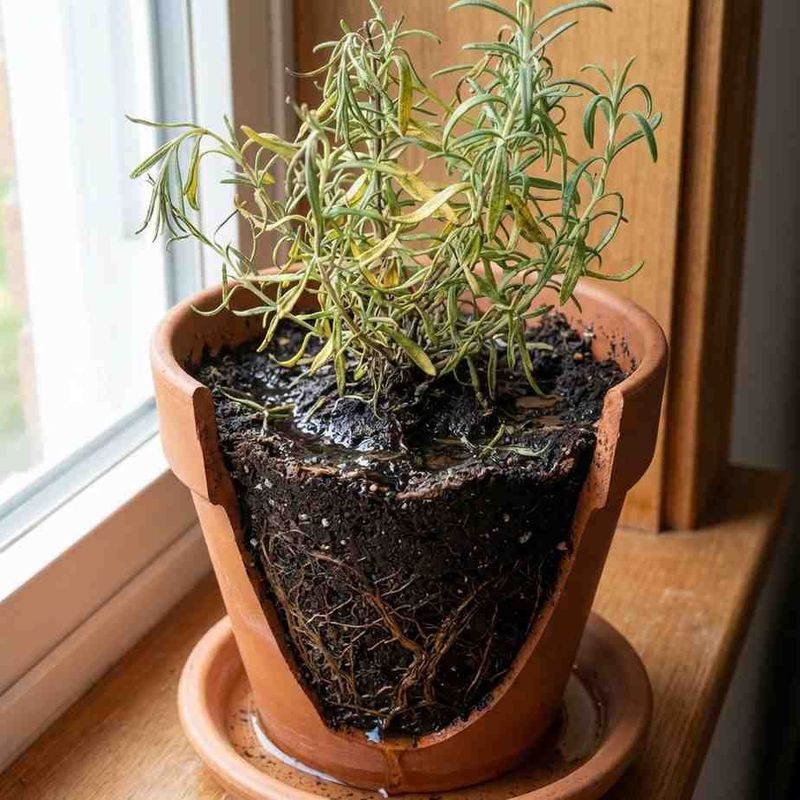
Soggy soil cuts off oxygen to the roots and can lead to root rot.
Winter makes the risk worse. Cooler rooms slow evaporation, so soil stays wet much longer than it did in summer.
Telling thirst from drowning can be tricky, since both cause drooping and browning. With too much water, though, the leaves often feel soft instead of crispy.
You may also spot yellowing leaves, a blackened stem base, or a sour smell coming from the soil.
The fix is simple. Let the top inch of soil dry before you water again, and dump any water left in the saucer about 15 minutes after watering.
If you suspect rot, slide the plant out and look at the roots, trimming off any that are dark and mushy before repotting in fresh, dry mix. Healthy roots should be white or tan.
3. Ignoring Drainage and Potting Mix
Picture doing everything right with your watering can and still losing the plant. That happens more than you might think, and the culprit is often hiding under the surface: the soil and the pot itself.
Many regular bagged potting mixes hold a lot of moisture, which is great for leafy houseplants but rough on rosemary. Heavy mix stays wet around the roots in a cool winter home, setting the stage for rot.
An oversized pot adds to the problem by holding extra water the roots cannot use.
Rosemary is happiest in a loose, gritty, fast-draining mix. A cactus or citrus blend works well, or you can stir plenty of perlite or coarse sand into ordinary potting soil.
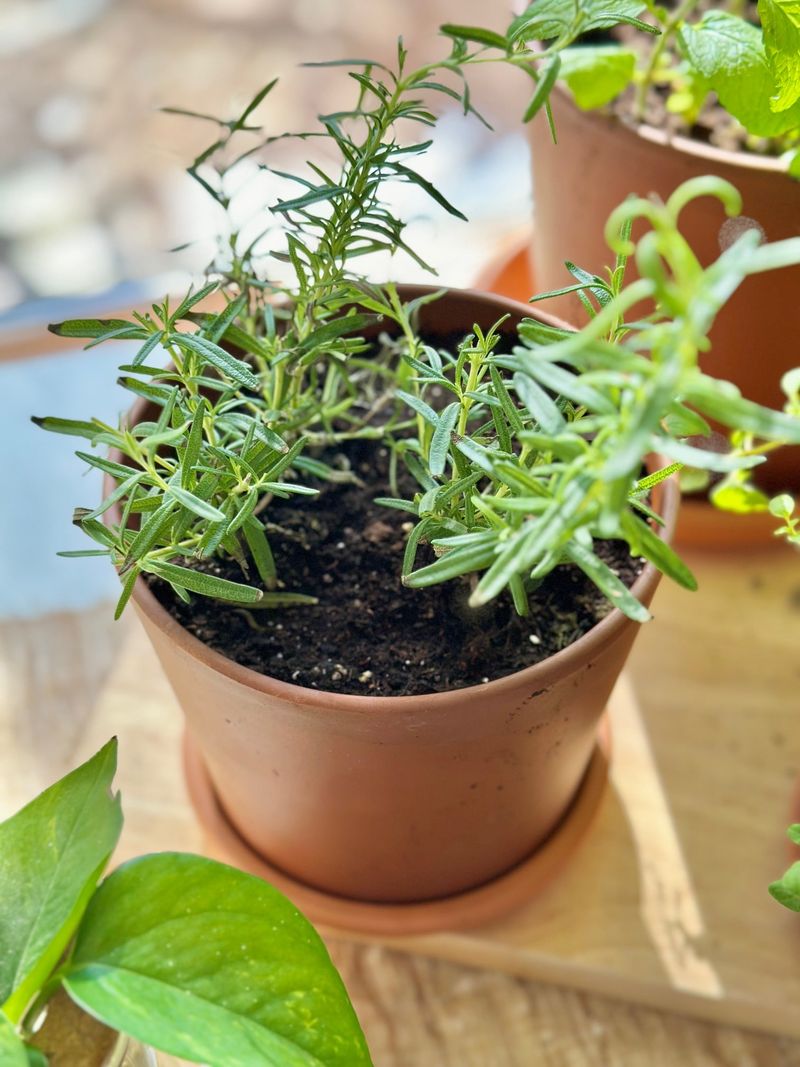
For the container, an unglazed terracotta pot may be your best friend. Its porous walls let extra moisture escape, which can reduce the chance of soggy soil.
Just make sure there is a drainage hole in the bottom, because even the best mix cannot help if water has nowhere to go.
Get the soil, pot, and watering habits working together, and your rosemary can keep perfuming your kitchen all winter long.