
Why Your Amaryllis Has Leaves but No Flowers, and How a Rest Period May Help Schedule Its Next Bloom
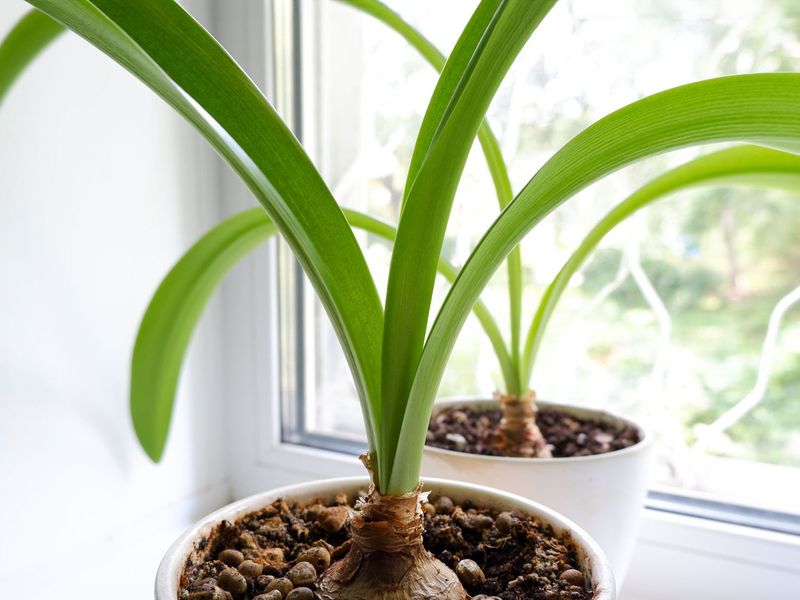
Your amaryllis is growing strong, green leaves, but there is no flower stalk in sight. That can feel like you did something wrong, but a leaf-only season is common and does not mean the bulb is finished.
Several things can cause it, and a rest period is only one piece of the puzzle. Here is what may be going on and a simple routine you can try.
Leaves without flowers point to more than a missed rest
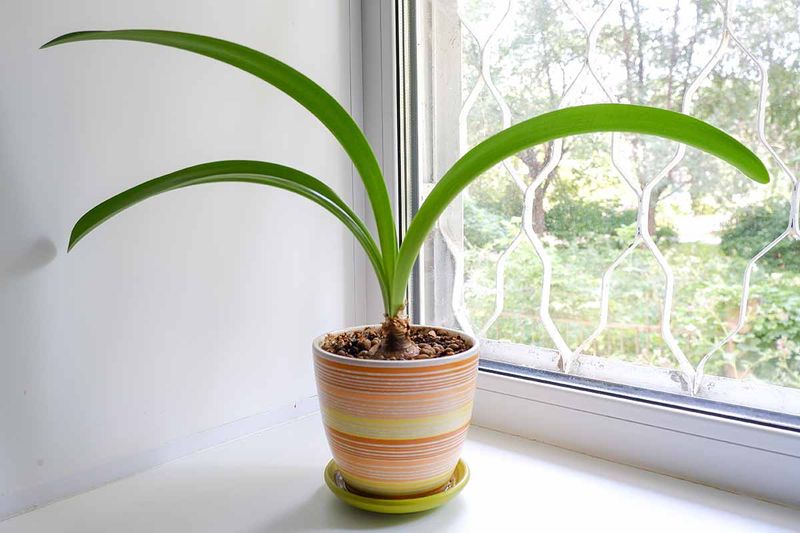
Staring at a pot of nothing but leaves is frustrating, especially when you were hoping for those big trumpet blooms. Here is the reassuring part: a leaf-only flush does not prove you skipped a step, and it does not prove the bulb is doomed.
One common reason is that the bulb did not store enough energy during its last leafy season. Iowa State Extension lists too little food reserve and unsuitable temperatures among the reasons a bulb may produce leaves but no flowers.
A bulb that came out of a dim winter or a cold, drafty spot may simply need another round of good growing.
Timing matters too. Some bulbs send up leaves first and the flower stalk shows up later, so a plant with only leaves today may still be getting ready.
University of Minnesota Extension notes that a plant kept actively growing can rebloom, which tells you the leaves are doing real work.
Think of each leaf as a tiny solar panel feeding the bulb underneath. The more healthy green foliage the plant holds onto, the more fuel goes back into the bulb for a future flower stalk.
Nobody can promise a bloom, but you can give the bulb a fair chance by keeping those leaves happy.
So the plan is simple. Protect the foliage, give the bulb good light and steady care, and treat a rest as a tool you may choose to use later rather than a fix for what already happened.
Green leaves are the bulb’s fuel
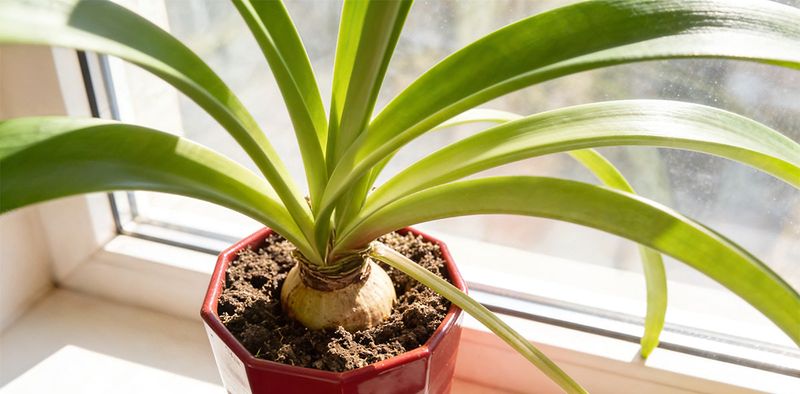
Once the flowers fade, many gardeners reach for the scissors and cut everything back. Please hold off.
The leafy stretch after bloom is when the bulb refills its pantry for next time.
Snip off the spent flowers so the plant does not spend energy making seed pods. Then leave the leaves alone.
University of Illinois Extension advises removing faded flowers but keeping the green leaves, and it suggests leaving the flower stalk in place until it yellows.
That stalk is easy to overlook. While it is green it can photosynthesize, just like a leaf, so it keeps sending a little energy down to the bulb.
Cut it only after it turns yellow.
Here is a practical example. If your plant has four green leaves and a drooping stalk, resist the urge to tidy it up in January.
Trim the faded blooms, then let the rest stay put through spring and summer while the bulb recharges.
This is also why cutting healthy leaves to force a rest is poor advice. Taking them off early interrupts the energy-building stage that future flowers depend on.
Sources such as Iowa State Extension tie flowering to the bulb’s stored food, and green leaves are how that food gets made.
The Minnesota guidance agrees that the goal after bloom is simply to keep the plant growing well.
Does every reblooming amaryllis need a rest?
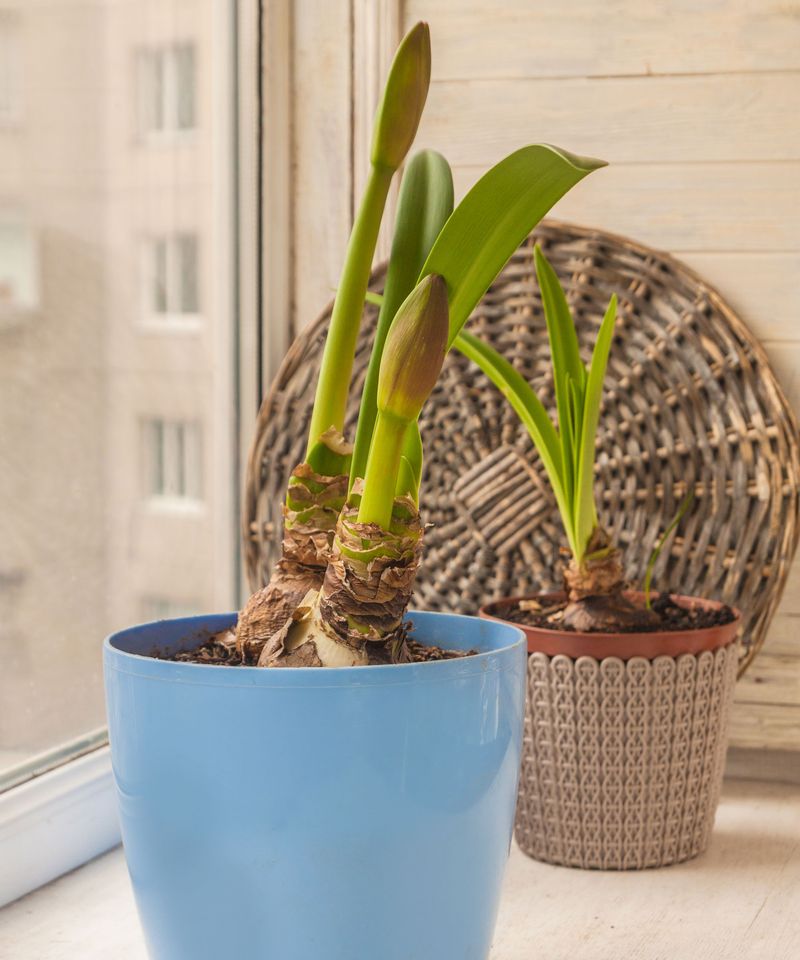
The short answer is no, not always. Getting an amaryllis to rebloom and getting it to bloom at a chosen time of year are two different goals.
Extension sources do not all say the same thing. Illinois Extension says a plant can rebloom if it keeps growing, with a cool rest mainly useful for controlling timing.
Minnesota Extension describes it much the same way, and Wisconsin Horticulture also treats dormancy as optional.
Maryland leans a bit differently. University of Maryland Extension emphasizes dormancy when you want blooms timed for the holidays.
So there is no single agreed rule, and that is okay.
What does that mean for you? If you do not care when the flowers show up, you can skip the rest and focus on keeping the plant growing in good light.
If you want blooms around a certain date, a rest is one practical way to try to line things up.
It is not the only fix for a leaf-only plant, though. If your bulb is short on stored energy or has been too cold, a rest alone will not solve that.
A bulb that has had a full season of healthy leaves is in a better spot to respond to any schedule you set.
One more note: if you just bought a bulb, it is often sold already dormant and ready to start growing, so you do not need to give it a seasonal rest first.
Let the bulb finish growing before its rest
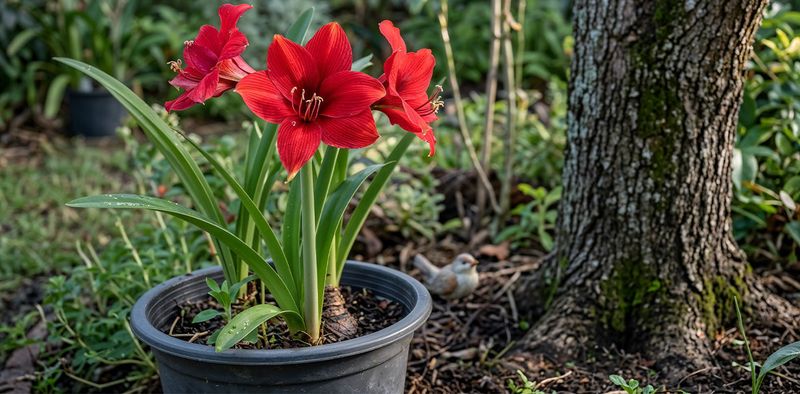
Before any rest, the bulb needs a good growing season. Think of it as the earning phase, with the rest coming only after the savings are in.
Give the plant bright light, and water when the soil is nearly dry rather than keeping it soggy. Feed it with a houseplant fertilizer, following the product label for how much and how often.
Extension advice on frequency varies, so no single schedule fits every plant. Iowa State Extension covers this active-growth care.
If your weather is frost-free, the pot can summer outdoors. Move it out gradually, starting in shade and working toward more sun over a week or two so the leaves do not scorch.
Illinois Extension suggests this approach, and you must bring the pot back inside before frost arrives.
Now comes the patience part. Do not start a rest while the leaves are still green.
Wait until they yellow or dry on their own, then remove them. Pulling healthy leaves early cuts the bulb off from the energy it is still collecting.
A good clue that you are on track is steady, strong, dark green leaves. Floppy, pale growth often says the plant wants more light.
Minnesota Extension also describes this growth period as the foundation for any later bloom.
Give the bulb about 8–12 cool, dry weeks
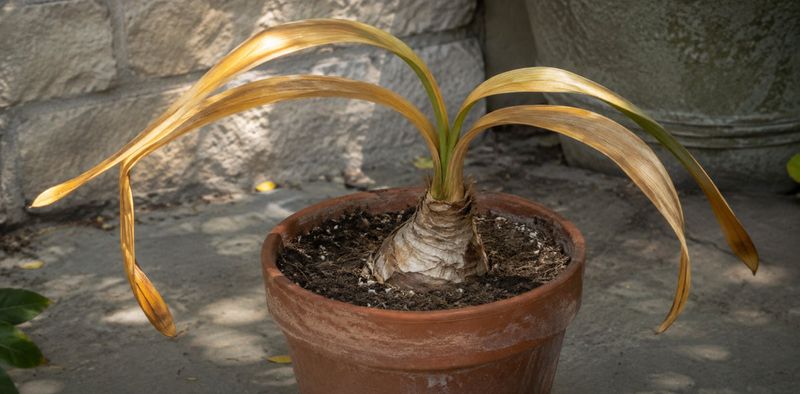
If you want to schedule a bloom, here is the simple version of the rest. Once the foliage has yellowed or dried, set the pot in a cool, dark, dry spot and stop watering.
Plan on roughly 8 to 12 weeks. A basement, closet, or unheated room can work, as long as it stays out of the way and does not freeze.
Temperature advice is not identical everywhere. Illinois Extension suggests 45 to 55 degrees F, while Minnesota Extension gives 50 to 60 degrees F.
Treat those as helpful ranges, not one magic number, and aim for somewhere cool that you can maintain.
Count the weeks backward from when you want flowers. If you hope for blooms near the holidays, work out your restart date and set the rest to end then, keeping in mind that the timing is approximate.
What the rest can do is help pace growth and flowering. What it cannot do is guarantee a flower stalk.
A bulb that is short on reserves may still come back with leaves only, which is why the growing season before the rest matters so much.
If it does not bloom this round, that is not a failure. Go back to good light and steady care, and try again next year.
Restart in warmth and light, then give the bulb time
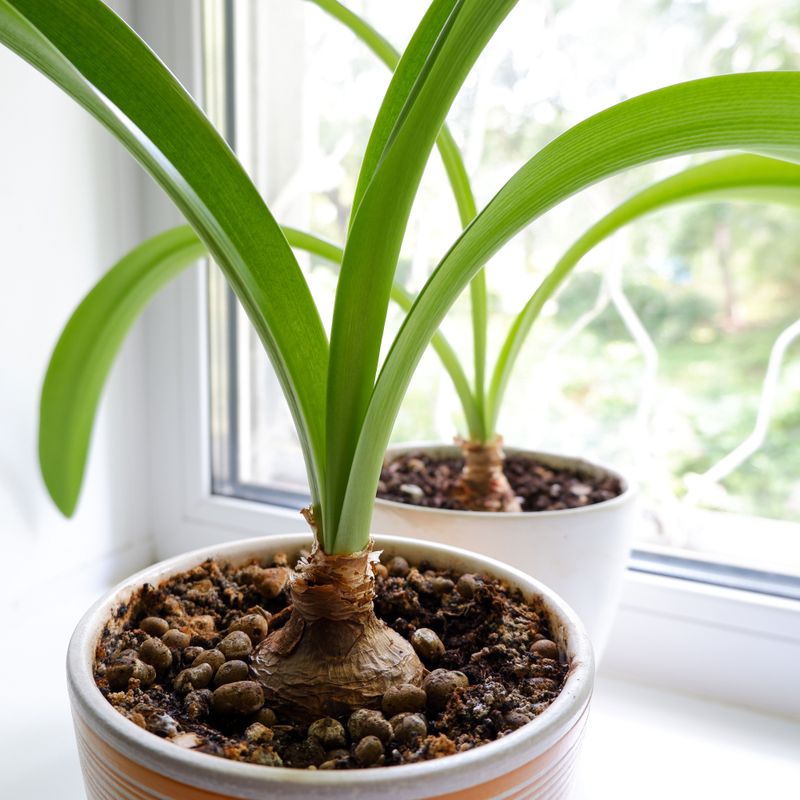
When the rest is over, bring the pot into a brighter, warmer spot. A sunny windowsill is a good choice.
Water lightly at first and give a bit more as new growth appears.
Then wait. Guidance from Illinois Extension and Minnesota Extension points to flowers about 4 to 6 weeks after dormancy.
Treat that as a rough guide, because some bulbs run slower and some may not flower at all. Iowa State Extension notes that bulbs can fail to bloom when reserves or temperatures fall short.
If only leaves appear, keep them growing and feed the bulb through the season. A leaf-only flush does not prove you skipped dormancy, so there is nothing to blame yourself for.
Keep healthy leaves, support steady growth, and use a rest when timing matters to you. A bulb that has been fed well all season has the best shot, even without a promise.