
How To Wrap A Fig Tree Before A Hard Freeze To Help Protect Its Branches
Bare, brown fig branches in late winter can make any gardener’s stomach drop. The good news is that one cold night does not automatically doom your tree, but a hard freeze can injure the branches that carry some of your fruit.
A little planning before the deep cold arrives can help you save more of that wood. Here is how to decide when to protect your fig and how to do it without causing new problems.
What actually puts a fig at risk?
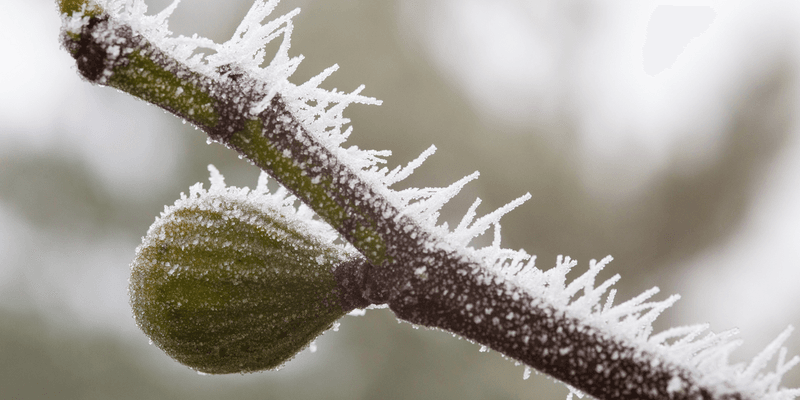
Cold injury to a fig is not triggered by a single magic number or by one night with a scary forecast. Several things work together: how low the temperature drops, how long the cold lasts, whether the tree is fully dormant, how well it has adjusted to cooling weather, which cultivar you grow, and how healthy the tree is going into winter.
Some numbers help give context. University of Maryland Extension says unprotected fig stems are often injured by sustained temperatures below 20°F.
Alabama Extension reports that fully dormant figs can tolerate roughly 15 to 20°F with little or no damage, and that hardiness varies by variety. Treat these figures as rough guideposts, not cutoffs that apply to every tree.
Dormancy matters a lot. UF/IFAS Extension notes that fully dormant trees are hardier than trees that have not been properly conditioned to cold.
A fig that is still pushing growth when a sudden freeze hits is in a more vulnerable spot than one that has settled in for winter.
It also helps to separate stem injury from the loss of the whole tree. Branches can die back while the roots survive, and the roots often send up new shoots in spring.
That is reassuring, but dieback can still delay or reduce your harvest, which is why protecting the branches is worth considering.
Why preserving old wood can matter for the crop
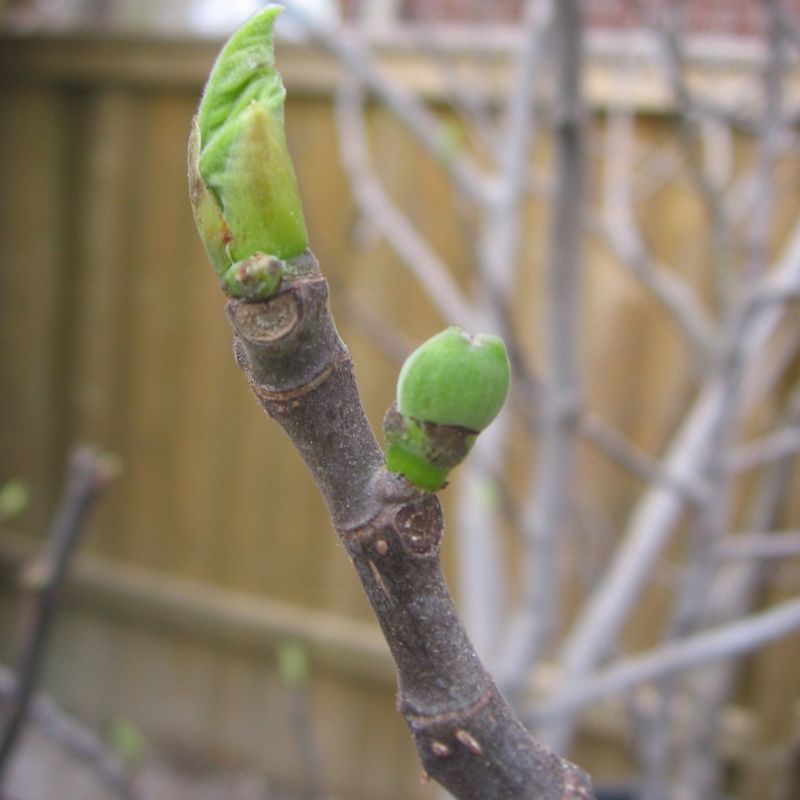
If roots can regrow a fig, why bother saving the branches? Because the wood you keep determines how soon and how much you may harvest.
A tree that has to rebuild from the ground spends its first season growing stems instead of ripening fruit.
Figs have two possible crops. The main crop forms on the current season’s growth, according to University of Tennessee guidance, so a fig that regrows after winter damage can still set fruit.
Some cultivars also bear an earlier breba crop on the previous year’s wood, and Penn State Extension covers winterizing as a way to protect that older wood.
So the effect of branch loss depends on your cultivar and on which crop you care about. If your variety relies mostly on the main crop, losing old branches may only slow things down.
If you love early breba figs, those winter-killed branches take that crop with them.
Even for main-crop figs, Maryland Extension says severe injury can take up to two growing seasons for production to return to normal. Protecting branches is a way to improve your odds, not a requirement for keeping the tree alive.
Time protection around dormancy and local conditions
There is no single date on the calendar that works for every fig grower. A gardener in Tennessee, one in Virginia, and one in the Pacific Northwest will each see cold arrive on a different schedule.
Watch your tree and your forecast instead of the date.
The general rule is to protect an in-ground fig after it goes dormant and drops its leaves, but before severe winter cold shows up. Virginia Tech advises removing any remaining leaves and fruit after a hard frost, then wrapping.
Pulling off leftovers keeps damp material from sitting inside your wrap.
Wrapping too early can backfire, since a tree that is still active may not be ready for cover. Waiting too long means scrambling in freezing wind.
A good approach is to gather materials in advance so you can act within a day or two once the tree is bare and a cold snap is on the way.
Late-fall mulching is also recommended, and University of Tennessee lists it among winter preparations. Local conditions, including how fast temperatures drop in your area, should guide when you do each step.
Build a breathable shelter and protect the base
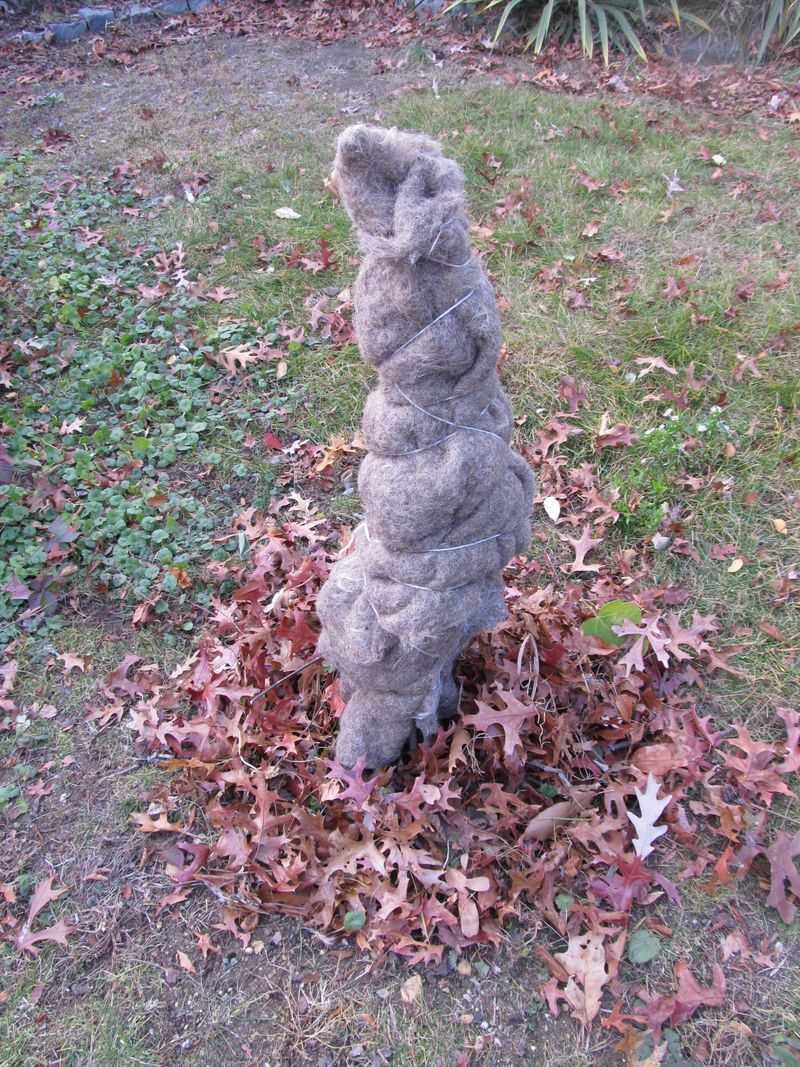
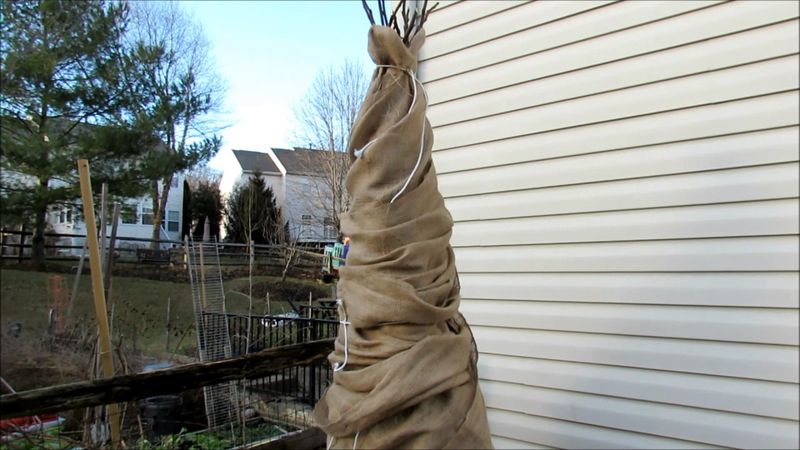
Start by gently tying the flexible branches together into a loose bundle. Go slowly and avoid forcing stiff limbs, since cold wood snaps easily.
Then wrap the bundle in a breathable material such as burlap or canvas.
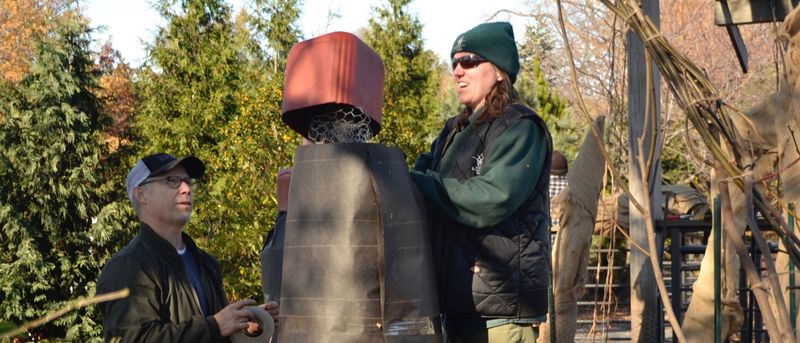
Virginia Tech describes going a step further. Enclose the wrapped plant in cardboard, loosely fill the space with dry straw, and add an outer tarp to shed rain and snow.
Leave room at the bottom so air can circulate.
Plastic is the thing to keep away from the branches. A tarp as an outer cover is different from sealing the tree in plastic, which can trap moisture and encourage mold and fungi.
Utah State Extension also cautions against letting plastic touch plant tissue, and notes in its frost-cover guidance that temporary covers generally add only a few degrees.
Treat the base as its own job. Maryland Extension suggests insulation such as bagged leaves or straw around the main stems and 6 to 12 inches of organic mulch over the base.
There is a tradeoff. Piles of leaves or straw can shelter voles, which may feed on fig bark, so check the base now and then.
Even a well-built shelter cannot guarantee protection in severe or prolonged cold, but it can improve the odds that your wood makes it through.
Move container figs to a sheltered room
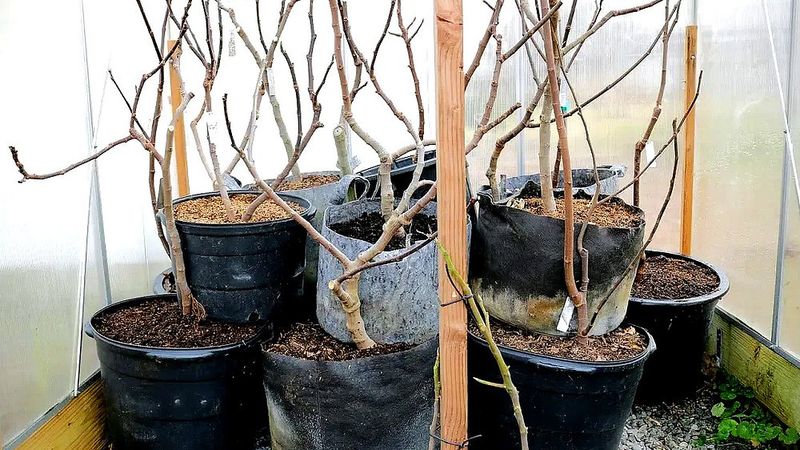
Potted figs have an easier option than a wrapped outdoor shelter: carry the whole tree indoors. Roots in a container are more exposed to cold than roots in the ground, so shelter is a smart move for pots in colder areas.
Virginia Tech recommends an unheated, insulated, dark room. Think of a basement, a shed with insulated walls, or a garage that stays cool but out of the deepest freeze.
The tree is dormant, so it does not need light or warmth.
Watering is light. Virginia Tech suggests watering monthly through winter, only enough to keep the soil just moist.
Soggy soil in a cold, dark spot invites rot, while bone-dry soil stresses the roots.
No single location or schedule fits every tree and climate. A garage that stays safely cool in one region may freeze solid in another, and a very warm room may wake the tree too early.
A simple thermometer in the storage spot can tell you what the tree is really experiencing.
Check for living tissue before pruning in spring
Dark, bare branches in late winter do not prove your fig is gone. Wait until spring, when you can judge what survived, and resist the urge to cut all the dead-looking wood in winter.
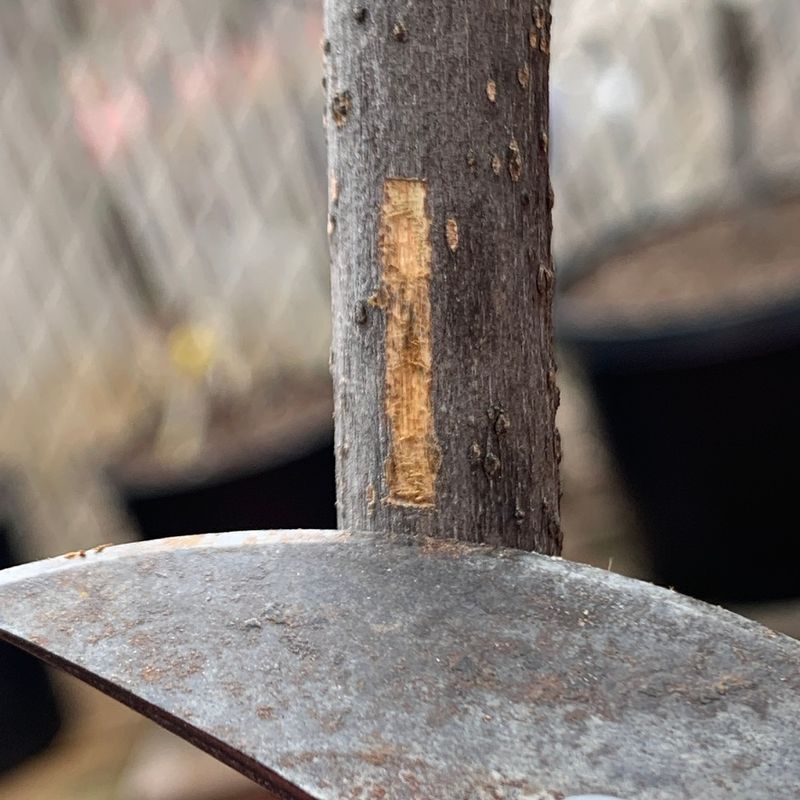
Maryland Extension advises lightly checking beneath the bark on several stems. Use a thumbnail or a clean knife to scrape a tiny patch.
Green tissue means the wood is alive.
Check more than one stem and test at a few heights, since a branch can be alive at the base and dead at the tip. Branches with no green tissue can be pruned in early spring.
Cutting back to living wood gives the tree a clean start.
If the top is badly damaged, look at the base. The roots may survive and send up new shoots, even when every branch above ground has died.
Those shoots rarely mature fruit in the same season, so a harvest may be small or absent the first year.
Patience is the main tool here. A fig that looks hopeless in March can leaf out by early summer, so give it time before deciding anything.
A scratched twig tells you more than any forecast ever could.