
Knowing Your Clematis Pruning Group Can Help Protect Next Summer’s Flowers
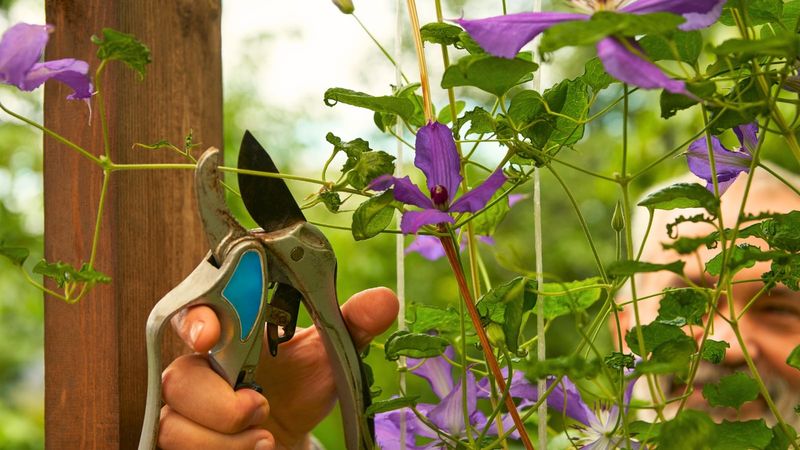
You love your clematis, and the last thing you want is to snip off next year’s flowers by accident. The trick is knowing which pruning group your vine belongs to, because each group flowers on different stems.
Getting this right can help you keep the blooms your vine is already planning to make. It will not promise a bigger show, but it takes away a lot of the guesswork.
The right cut depends on where the flowers grow
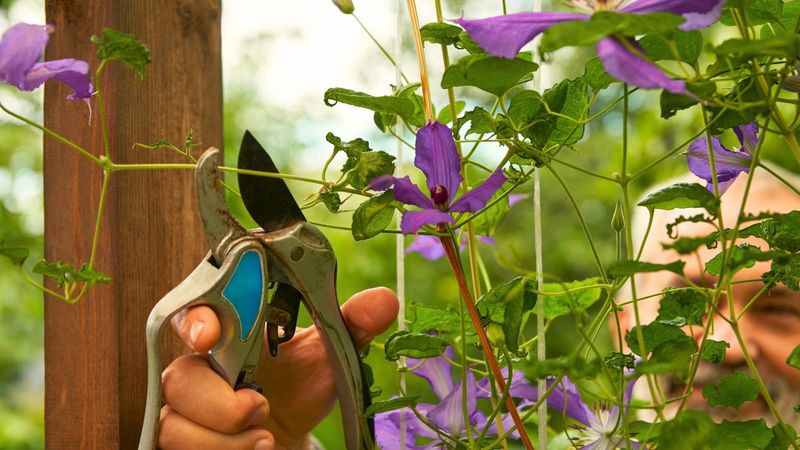
Picture two clematis side by side. One has already set flower buds on last year’s stems, and the other will grow new stems this spring and flower on those.
Cut both to the ground and the second one carries on happily, while the first loses its show. That is the whole reason pruning groups exist.
Clematis are sorted into three groups based on when they flower and which stems carry the buds. Some bloom on growth from the previous year, some bloom on the current season’s growth, and some do both.
According to Iowa State Extension, pruning away last year’s stems can remove buds on early-flowering and repeat-flowering varieties, while late-flowering types generally bloom on new growth and can be cut back harder.
Here is the quick map. Group 1 flowers on last year’s growth and usually needs little pruning.
Group 2 often blooms first on old stems and may flower again on new ones. Group 3 flowers on this season’s growth and tolerates a harder cut.
The Royal Horticultural Society pruning guide uses the same three-group system.
Now for some honesty about expectations. Pruning the right way can help preserve the flowers your vine is set up to make, and it keeps the plant tidy.
It cannot make a clematis bloom twice as hard, and not every clematis blooms twice. Think of the group as a way to avoid losing flowers, not a way to multiply them.
The next sections walk through each group, then cover what to do if you have no idea which one you own. Knowing the cultivar name makes everything easier, so start hunting for that old plant tag.
Group 1 flowers on growth from the year before
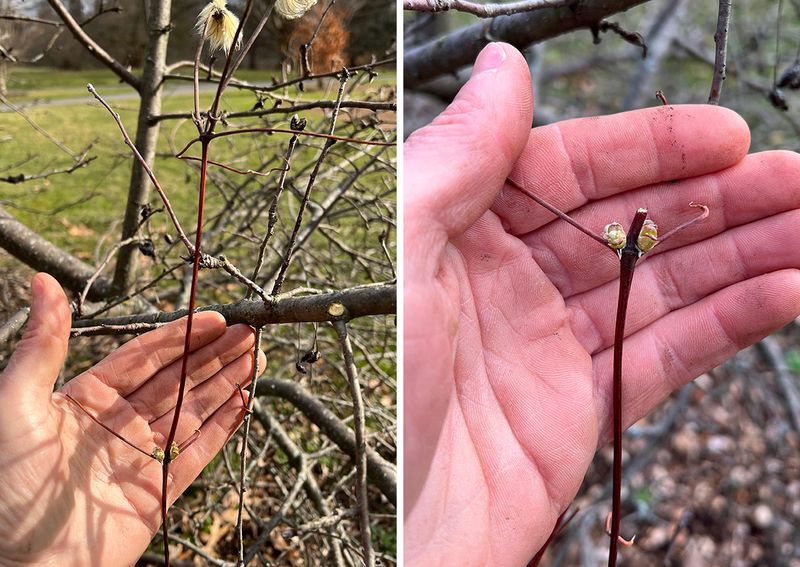
Spring-flowering clematis in Group 1 get their buds ready the summer before. By fall, the stems you see already hold next spring’s flowers in waiting.
That is why the usual advice for these vines is to leave them mostly alone.
Both Clemson Cooperative Extension and Iowa State describe Group 1 as needing little pruning. If you cut one back in late winter, you may trim away the very stems that were about to bloom.
The result is usually not a dead plant, just a quiet spring.
When a Group 1 vine does need attention, the time to act is right after flowering finishes. At that point you can shorten stems that have outgrown their space, tidy tangles, or take out anything clearly dead.
The vine then has the rest of the season to grow the stems that will carry next year’s flowers.
Some gardeners worry they must prune every year. You do not.
As Iowa State notes, pruning can improve appearance but is not essential for every plant. If your Group 1 clematis fits its trellis and flowers well, leaving it be is a perfectly fine plan.
One practical example: say your vine blooms in April and is now reaching into a neighbor’s shrub. Wait until the petals drop, then trim those wandering stems back to where you want them.
Doing the same job in February would have cost you most of that April display.
Group 1 is the most forgiving group when you wait and the least forgiving when you cut early.
How should you handle Group 2?
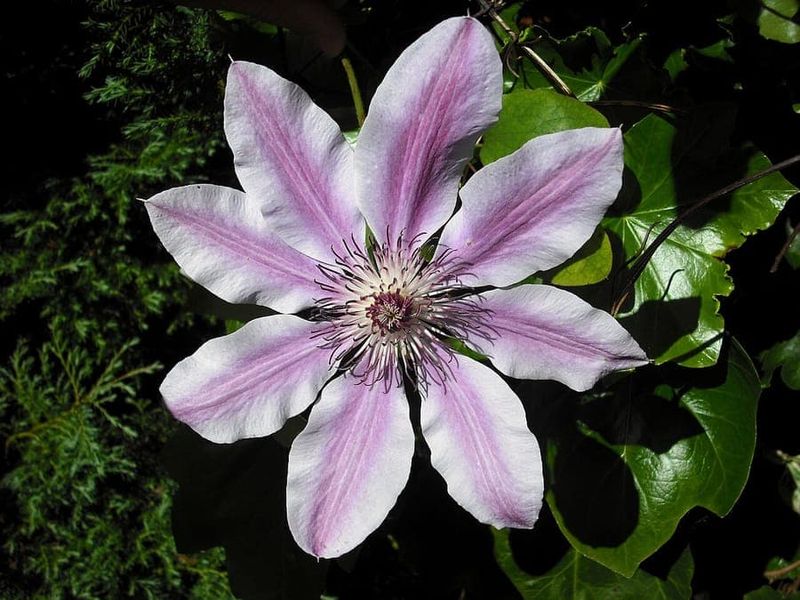
Group 2 is the in-between group, and it causes the most second-guessing. Many large-flowered cultivars bloom first on stems made the previous year, then may send up new growth that flowers again later.
Some repeat reliably, and some barely repeat at all.
That two-part habit shapes how you prune. The early flush depends on old stems, and the later flowers, if they come, depend on new ones.
A hard cut gets rid of the old stems, so the first flush can shrink or disappear, even though some later flowers may still show up.
The gentler approach, described in Illinois Extension guidance and echoed by Iowa State, is to keep as much living old growth as you can. Remove stems that are dead or weak, and use light pruning instead of a blanket hard cut.
In practice, look at the vine in late winter or early spring when buds begin to swell. Follow a stem upward until you find a pair of plump buds, then trim just above them.
Anything brown, brittle, and bud-free can go.
Keep your expectations modest. A second flush is possible, not guaranteed, and it depends on the cultivar and the season.
Think of the later flowers as a bonus, and protect the first round, since that is the part you can most easily lose.
If you are unsure whether your vine belongs here, hold off on any big cuts. Light cleanup costs you very little, while a hard cut costs you a lot if you guessed wrong.
Group 3 blooms on this season’s growth
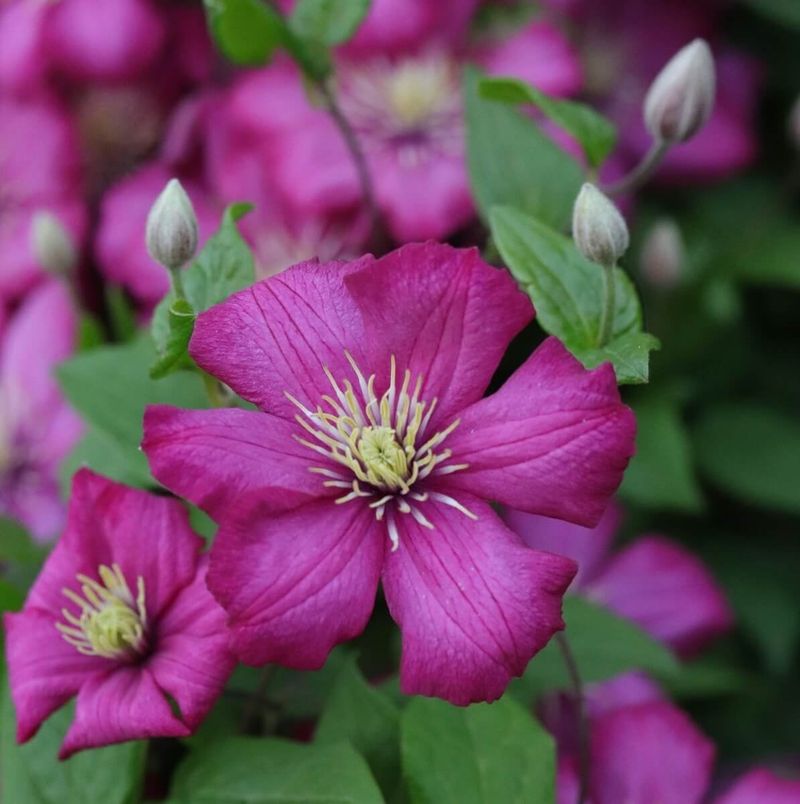
Group 3 clematis are the summer and fall bloomers, and they flower on current-season growth. Because the flowers form on stems that have not even grown yet, last year’s stems are not needed for the show.
That makes this the group that tolerates a harder cut.
Extension sources commonly suggest cutting these vines back in late winter or early spring, before new growth takes off. Without a cut, the vine can turn into a tangle with flowers up high and bare stems below.
A cutback helps keep it neat and may encourage fresh growth lower down.
Here is where advice splits. Iowa State recommends cutting to about 6 to 12 inches from the ground.
Clemson advises about 2 to 3 feet. Both are respected sources, and both are talking about the same kind of vine.
The gap is useful. It tells you that no single height is the right one for every yard.
Climate, the specific cultivar, and how well the vine came through winter all play a part, so check guidance for your cultivar and your region.
A sensible approach is to look for the lowest healthy buds on each stem and cut just above a set of them. If the vine is young, you might lean toward a little more height.
If it is crowded and established, a lower cut may suit it.
Calendar dates vary too, since late winter arrives at very different times across the country. Let your local spring, rather than a fixed date, tell you when buds are about to wake up.
When the label is gone, bloom history can help
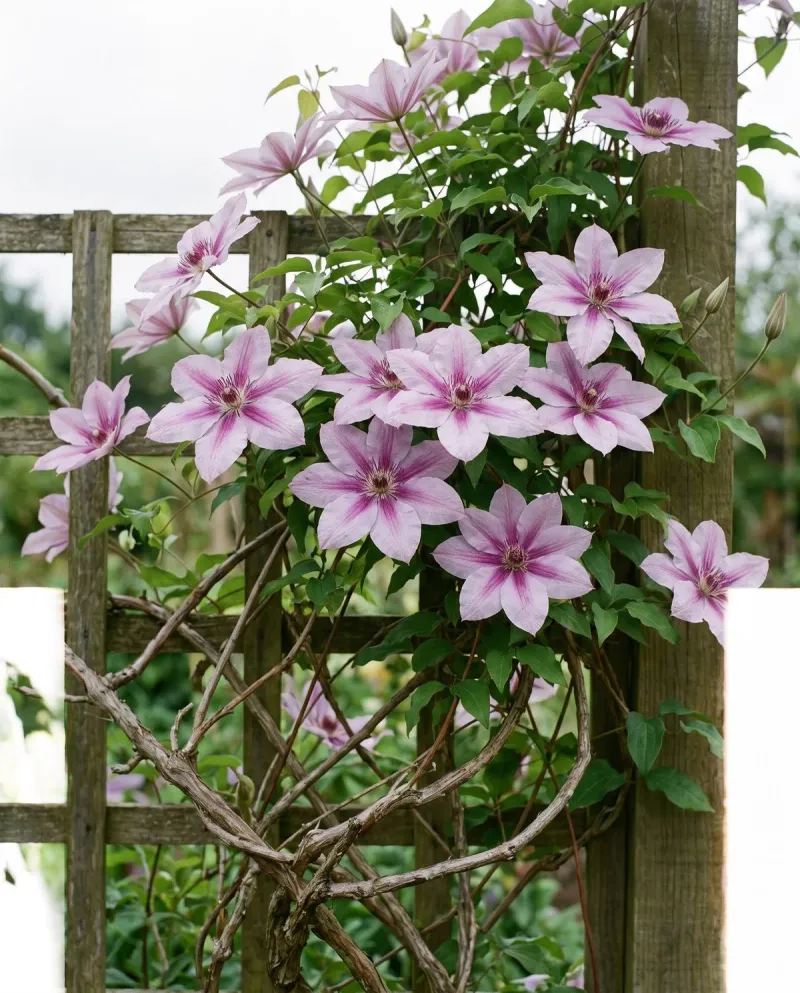
Lost labels are the main reason gardeners end up guessing. Before you do anything else, search for the cultivar name.
Look through saved plant tags, nursery receipts, photos on your phone, and any garden notes you kept.
If you find a name, you can look it up through a trusted source such as Illinois Extension or a nursery listing, which usually states the pruning group. That is the most reliable path, so spend a little time on it.
No name anywhere? Then pay attention to how the vine behaves.
Note when the first flowers open, whether they come in spring, summer, or fall, and whether a second round shows up. Write down flower size and shape too, and take dated photos.
These observations are clues, and clues can mislead. Early flowers hint at Group 1 or Group 2, while flowers that start only in summer or later hint at Group 3.
But Iowa State points out that a vine blooming only later could be Group 3 or a Group 2 whose old growth was damaged by winter.
So a late bloomer might not be what it seems. Say your vine flowered only in July last year after a harsh winter.
It could be Group 3, or it could be a Group 2 that lost its early flowers to cold.
Looks alone will not settle it either, since many clematis flowers resemble one another. Keep a few seasons of notes, and you will have a much clearer picture than a single year can give you.
An unknown vine is a reason to wait, not guess
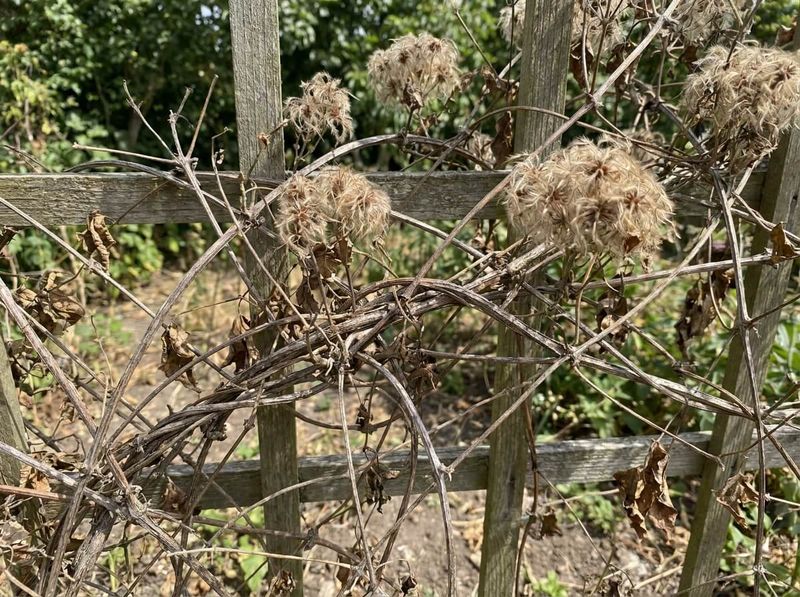
Fall is when the urge to tidy hits hardest, and it is also the worst time to guess on a mystery clematis. If the vine is Group 1 or Group 2, a hard cut now could remove next year’s buds.
Leaving it alone costs you nothing but a slightly messy trellis.
So make a plan built around waiting. First, save whatever label you have, or attach a new tag with a note to yourself.
Then write down what you remember about the bloom history: when flowers opened, how big they were, and whether a second round appeared.
Stems that look dead are tricky. Brown and crispy in fall does not always mean finished, since buds on old wood can still be alive.
According to Iowa State Extension, wait until growth resumes before removing stems on a vine you cannot identify.
Once spring arrives, you will see which stems leaf out and which stay bare. Remove only the ones that clearly stay dead.
That gives you a safe cleanup, and it lets you see how the vine grows and flowers this year.
Timing for that spring check depends on where you live. As Iowa State’s guide and other extension sources show, late winter is earlier in warmer states and later in colder ones.
Watch the buds instead of the calendar.
Patience is the cheapest pruning tool you own, and a year of notes can turn a mystery vine into a known one.
Pruning is not the only cause of a sparse display
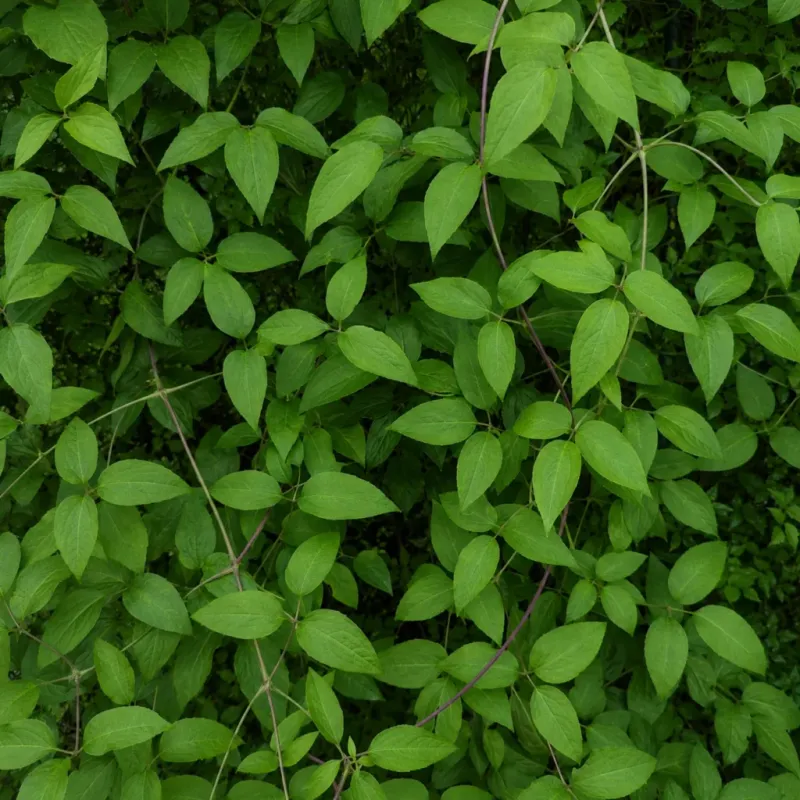
If your clematis gave you a thin show, pruning might be to blame, but it is not the only suspect. Several other things can hold flowers back, and a harder cut will fix none of them.
A little detective work can save you from making the problem worse.
Iowa State’s growing guide lists low light, too much nitrogen, winter damage, and immaturity among the reasons for poor bloom. Clematis generally want sun on their leaves and shade at their roots.
Lots of nitrogen can push leafy growth at the expense of flowers, so a lawn fertilizer drifting into the bed may be part of the story.
Winter injury can strip away buds on old growth, which matters most for Groups 1 and 2. And young plants simply may not be ready.
The same guide says establishment can take up to three years, so a new vine with few flowers may just need time.
Remember too that pruning is not essential for every clematis. The Royal Horticultural Society frames pruning mostly as a way to keep vines tidy and flowering well.
A vine that is healthy and fits its space can be left alone.
So when the display looks weak, run through a short checklist. Do you know the cultivar and its group?
How many hours of sun does it get? Has it been fertilized heavily?
Did last winter hurt it? How old is the plant?
Answer those before you reach for the shears. A weak year is often a puzzle to solve rather than a mistake to punish with a harder cut.