
Your Thanksgiving Cactus Is Not A Christmas Cactus: How To Identify It And Time Its Blooms
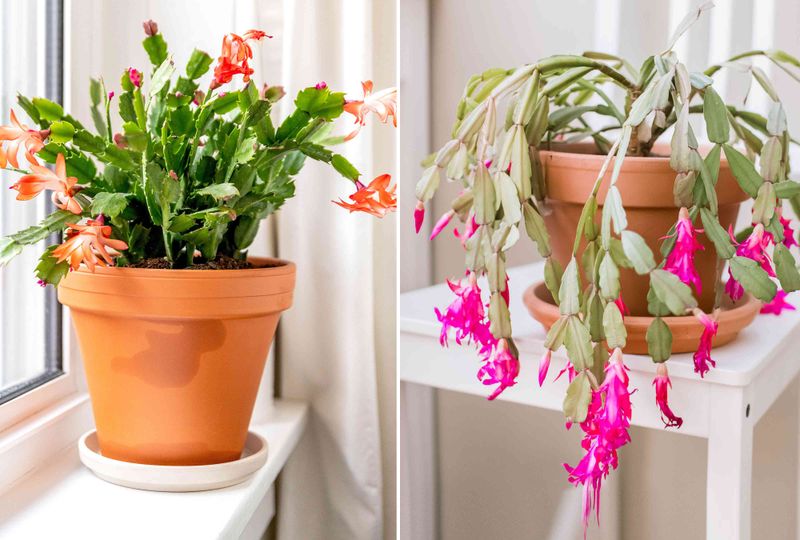
That holiday cactus on your windowsill may not be the plant its tag says it is. Many sold as Christmas cacti are really Thanksgiving types or hybrids, and the labels are confusing for everyone.
A few simple clues can help you figure out what you have. Then you can set up the conditions that encourage buds at the right time.
Why the label is only a starting point
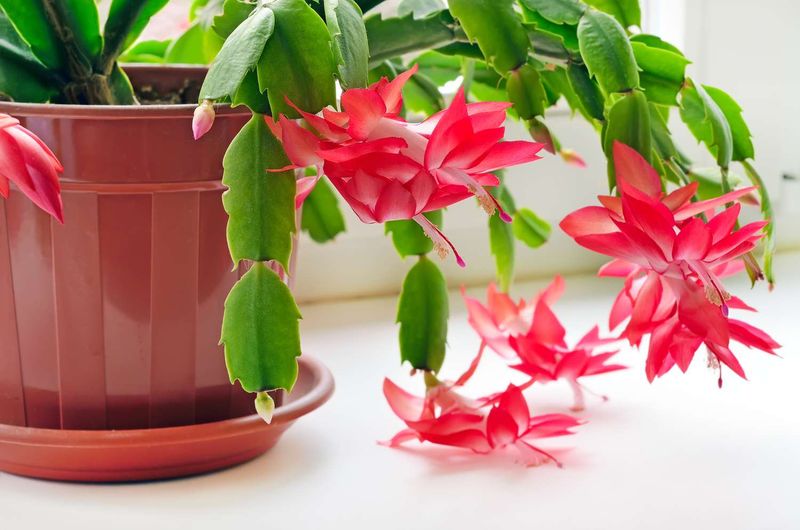
Walk into any store in late fall and you will find holiday cacti tagged as Christmas cactus. Plenty of those plants are actually Thanksgiving cacti or hybrids, so if your tag and your plant seem to disagree, you are not alone.
Labels are a loose guide at best.
The two types do differ in one handy way. According to Iowa State Extension, Thanksgiving cactus typically blooms earlier, with a window from mid-November to late December.
Under natural day lengths, UMass Extension describes it flowering about four to six weeks ahead of a true Christmas cactus.
Here is the reassuring part. A mismatched name does not by itself doom your flowers, because the two types have broadly similar care needs.
If your plant skipped blooming last year, the name on the tag is not a likely culprit.
What matters far more is giving the plant the right bud-triggering conditions, and giving them weeks ahead of the show. Think of it as setting the stage in early fall rather than reacting in December.
The next sections cover how to read your plant’s clues, then how to build that routine step by step.
Once you know roughly which type you have, you can plan the calendar with more confidence. Even then, treat every date as a good estimate, since each plant and home is a little different.
Read the edges of the stem segments
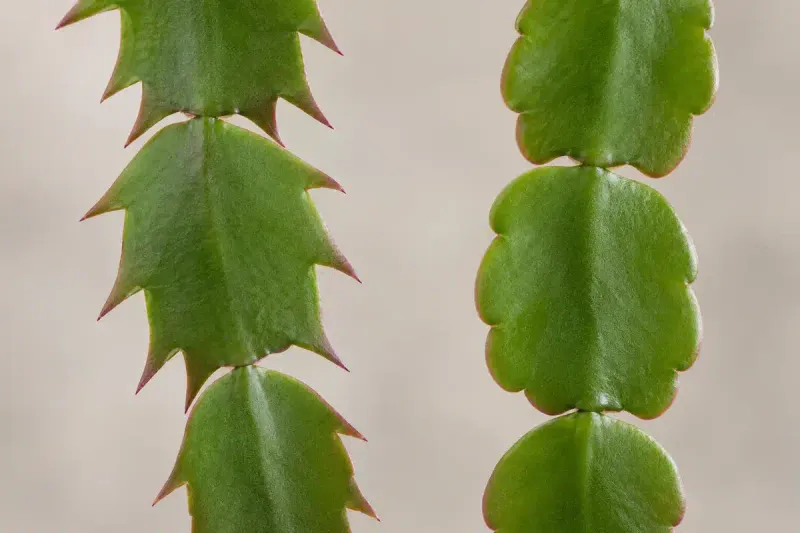
Take a close look at the green, flat sections that make up the plant. People call them leaves, but they are really flattened stems, sometimes called cladodes.
Their edges hold your best visual clue.
Pointed, sharply toothed edges, almost like tiny claws, suggest a Thanksgiving type. Rounded, scalloped edges with a softer outline suggest a Christmas type.
NC State Extension uses this same edge comparison to tell them apart.
Grab a few segments from different parts of the plant and compare them in good light. A hand lens or phone camera zoom helps if the teeth are small.
Look at mature segments rather than fresh new growth, which can look smoother.
Keep in mind that breeders have crossed these plants for years. Iowa State notes that hybrids can show in-between traits, such as mild points or half-rounded teeth.
So treat shape as a useful hint, not a final answer. A pointy plant is probably leaning Thanksgiving, and a scalloped one is probably leaning Christmas, but neither clue proves its exact family tree.
If yours looks like a mix, that is perfectly normal.
Use bloom timing as a clue, not a verdict
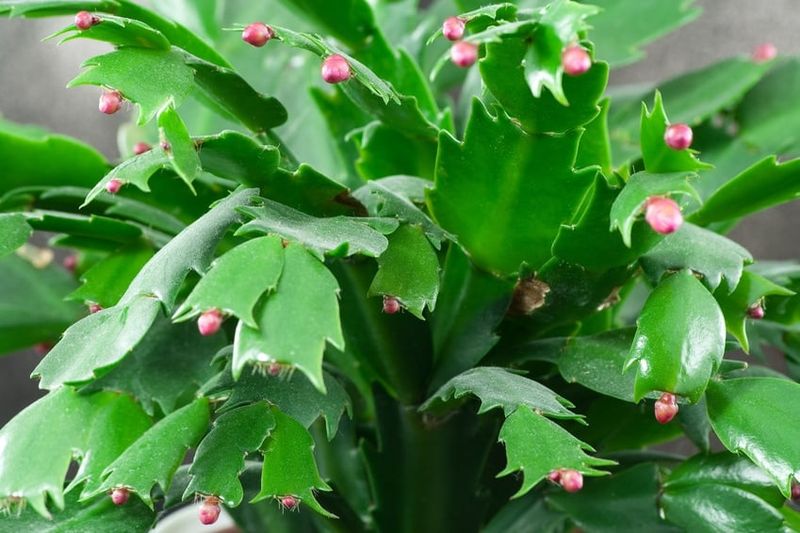
Flowering time can add a second hint. Thanksgiving types usually open earlier, and UMass Extension puts the gap at about four to six weeks under natural day lengths.
If your plant colors up in early to mid November, that fits a Thanksgiving type.
Still, these windows are approximate. Neither plant is locked into blooming only on its namesake holiday, so a Thanksgiving cactus in full flower on December 20 is not a mistake.
Several things can nudge the schedule. Hybrid parentage matters, and so do your home’s light and temperature.
Commercial growers also use controlled light and temperature to time blooms, which means the plant you bought may have been pushed to flower on a schedule that your living room will not repeat.
That is why a tag, a purchase date, or last year’s bloom date cannot promise when your plant will flower this year. Iowa State also notes that cultivars vary.
A practical move is to jot down the date you first see buds each year. After a season or two, you will have a record that fits your own home better than any label does.
Pair that note with stem shape, and your identification gets much sharper.
Set up long nights before the bloom window
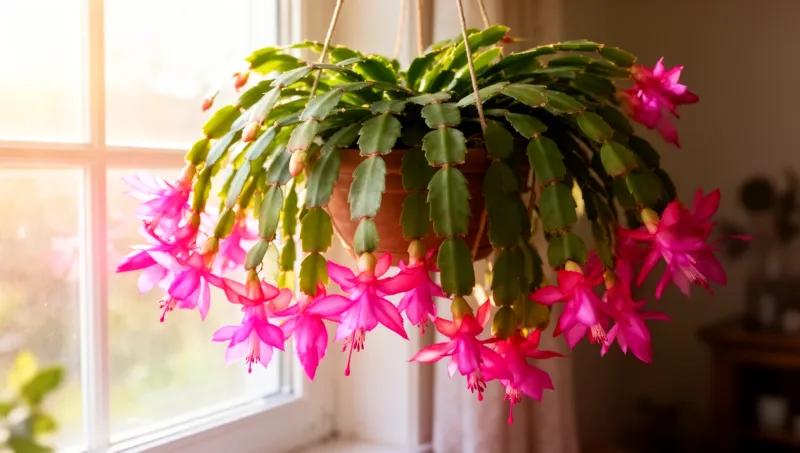
Buds are triggered by long nights, and that routine is the main lever you control. Give the plant bright light during the day and long, uninterrupted darkness at night for several weeks.
Extension guidance commonly recommends at least 12 hours of darkness each night, and cool nights can help too.
Even a short burst of lamp or hallway light can interrupt the dark period. A spare room, an unused corner, or a closet at night can work, as long as the plant gets bright light again in the morning.
For timing, UConn gives an approximate start of September 1 for Thanksgiving types and October 1 for Christmas types when using short-day treatment. Treat those as starting points, not deadlines.
If you are unsure which type you have, begin on the earlier date.
Temperature can play a part as well. University of Minnesota Extension suggests nights of 55 to 65 degrees F, and notes that around 55 degrees may trigger flowering in five to six weeks, sometimes regardless of day length.
Plants respond differently, so do not expect every cactus to follow the same script. Cool air is a helpful boost, not a guaranteed stand-in for dark nights.
A simple Iowa State approach is a cool spot with bright daytime light and no artificial light at night in late summer.
Support growth with light and careful watering
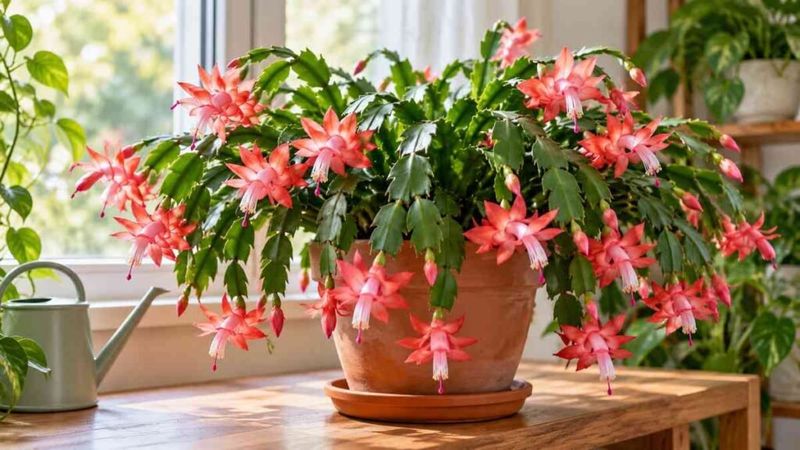
A healthy plant has the energy to set buds, so everyday care counts. Place your cactus where it gets bright, indirect light, and plant it in well-drained soil.
Direct, hot afternoon sun can scorch the stem segments.
For watering, Iowa State Extension points to a simple check: water thoroughly when the top inch of soil feels dry. Then empty the saucer so the roots are not sitting in water.
Poke a finger into the soil rather than following a fixed weekly schedule, since indoor conditions change the pace.
Avoid both extremes. Soil that stays soggy can lead to root problems, while a plant that dries out too much can struggle, especially as buds and flowers develop.
UF/IFAS Extension offers similar preparation advice for these plants.
If a pot feels light and the soil is dry well below the surface, it is time to water. If it still feels cool and damp, wait a few more days.
Good light and sensible watering keep the plant strong, but they do not replace the long nights and cool conditions described above. Think of this care as the foundation and the dark-period routine as the trigger.
Keep conditions steady once buds appear
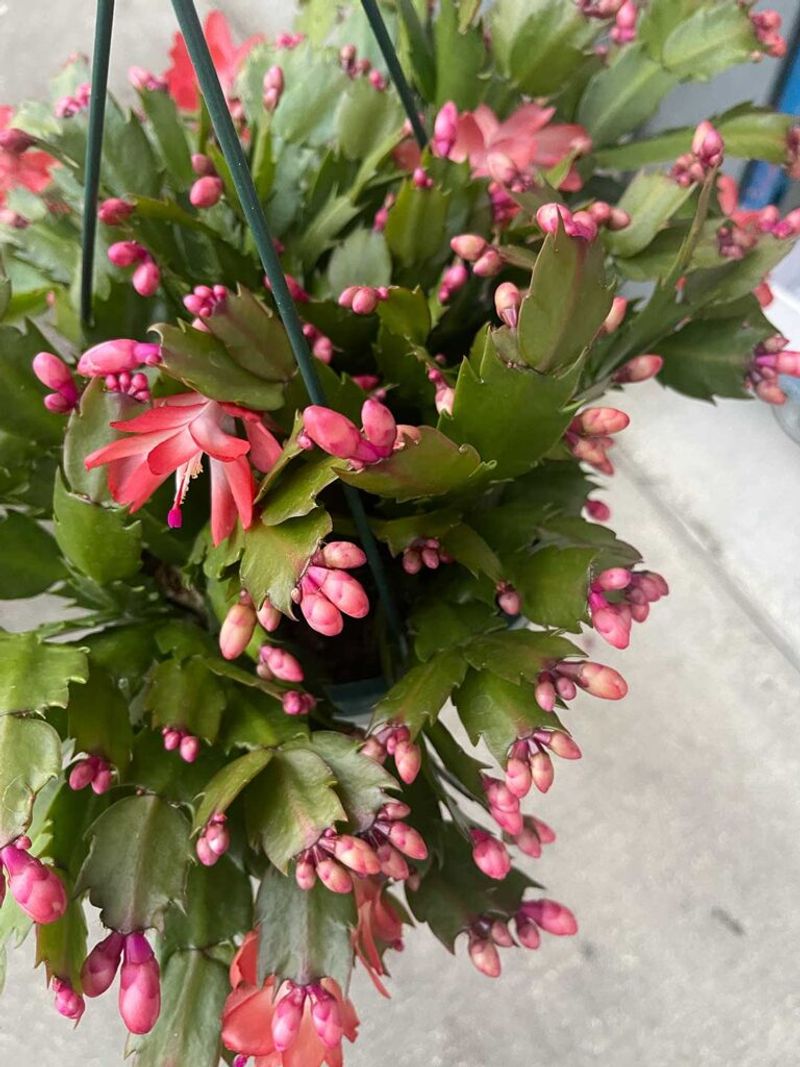
Tiny buds are exciting, and also delicate. Drafts, nearby heat sources, sudden swings in light or temperature, and improper watering can all contribute to bud drop, according to University of Minnesota Extension.
So once buds show, pick a good spot and leave the plant there. Keep it away from heating vents, fireplaces, and cold window glass.
Resist the urge to rotate or relocate it often, since moving a budded plant over and over will not make it bloom faster.
Stay steady with water, too. The UF/IFAS guidance backs avoiding both soggy and bone-dry soil while buds develop.
Even with perfect conditions, a few buds may still fall. That is normal and does not mean you did something wrong.
Use stem shape as a clue, treat bloom dates as approximate, and start the bud-triggering routine in time for the bloom season you want. A mixed-up name on the tag will not sink your flowers.
Your cactus is listening to the nights, not the label.