
A Pileated Woodpecker Hammering Your North Carolina Dead Tree This Fall Is a Reason to Consider Keeping It, If It Can Stand Safely
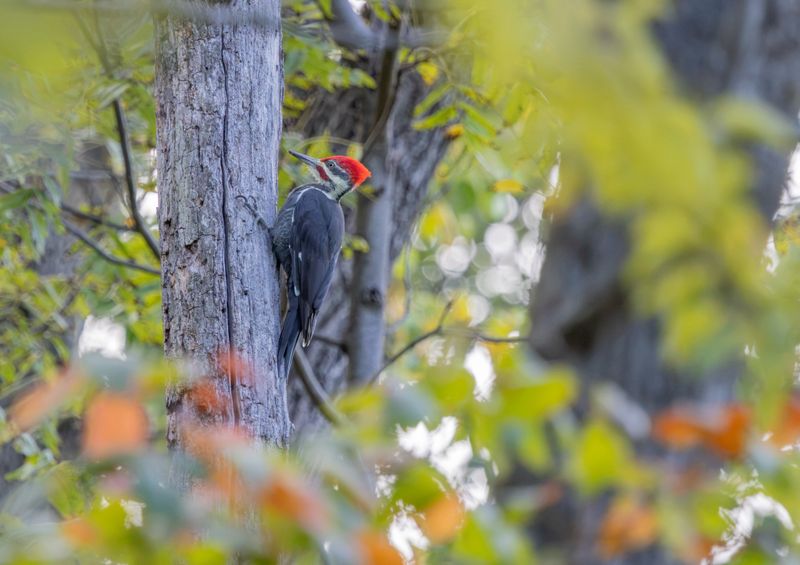
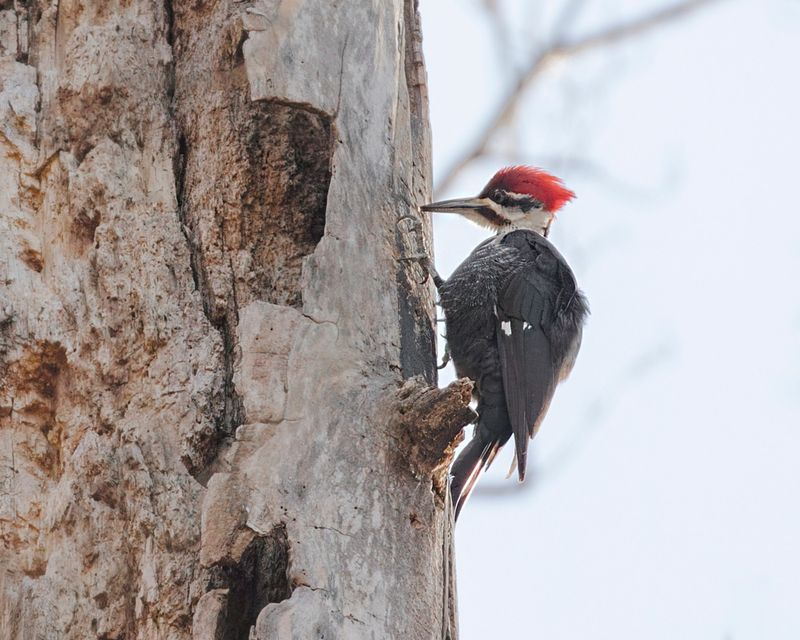
A big black and white bird with a flaming red crest is pounding on a dead tree in your yard, and chips are flying. It is a thrilling sight, and it makes many North Carolina homeowners wonder if they should spare the tree.
The answer depends on more than the bird. Here is how to read the sighting, think about wildlife, and make a safe choice for your yard.
Hammering may mean the bird is finding food
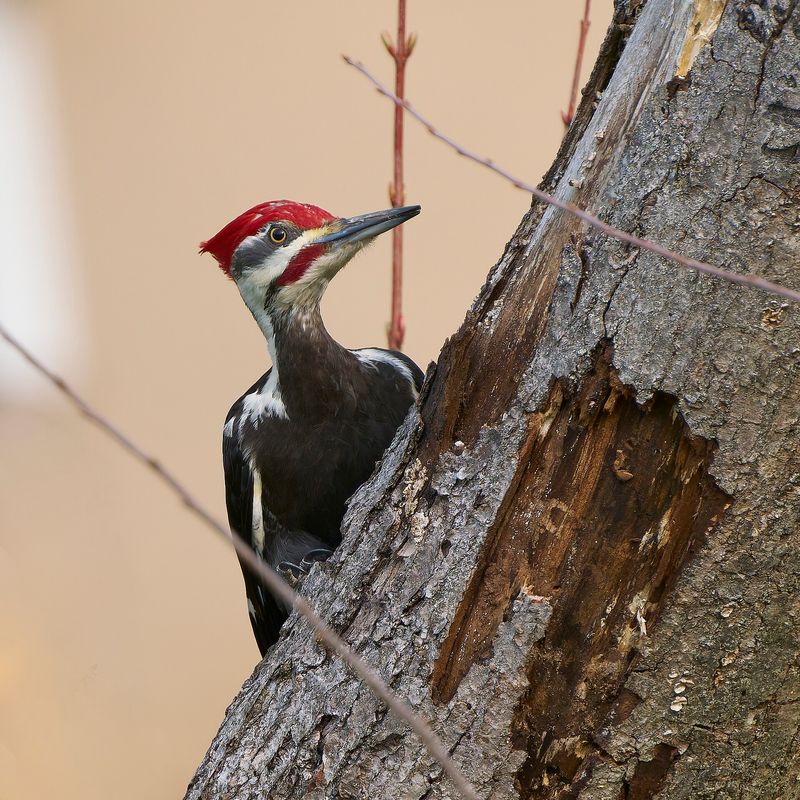
That loud, rhythmic pounding is often a meal in progress. Cornell Lab life history notes describe Pileated Woodpeckers digging deep into dead wood for carpenter ants and other insects.
The holes they leave are often large and rectangular, and a single tree can end up with extensive excavations.
Feeding holes and nest cavities are two different things. A bird hammering away may be hunting for ants, not building a home.
From your window, the pounding alone cannot tell you which one is happening.
It also cannot tell you much about the tree itself. A woodpecker working a snag is a sign the wood has insects in it, but that does not prove the bird is causing the tree to decline.
The tree was already dead or dying, and the bird simply found a food source. In the same way, one visit does not show that your neighborhood has a pest outbreak.
The Cornell Lab species overview is a handy way to confirm what you are seeing. Look for a crow-sized bird, mostly black, with white stripes on the face and a bright red crest.
If the bird matches, enjoy the show, and treat it as a prompt to think about the tree rather than a verdict on it.
A snag can support wildlife beyond the woodpecker
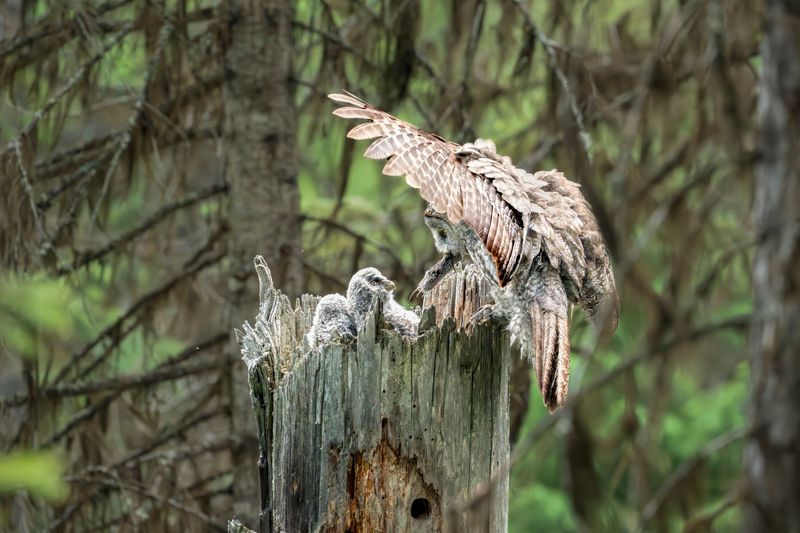
Gardeners call a standing dead or dying tree a snag. NC State Extension describes snags and downed logs as natural forest features that many wildlife species use.
To a bird or beetle, a dead trunk is a pantry and a shelter, not a problem.
Dead wood can offer food, nest sites, or places to hide. Cornell Lab says some old woodpecker cavities are later used by other birds and mammals.
That is potential, not a promise, so no one can say that a given snag in your yard will draw chickadees, owls, or squirrels.
The habitat idea comes from forest management. NC State’s wildlife and forest stewardship guidance notes that Pileated Woodpeckers depend on large dead or dying trees for food and nesting.
A woods and a backyard are very different places, though. In a yard, apply that idea only where the snag can be kept without putting anything at risk.
If your snag sits at the back of the lot, away from the house, driveway, and play areas, its habitat value is worth weighing. If it leans over a roof, the math changes quickly.
Does a fall sighting mean the bird is nesting?
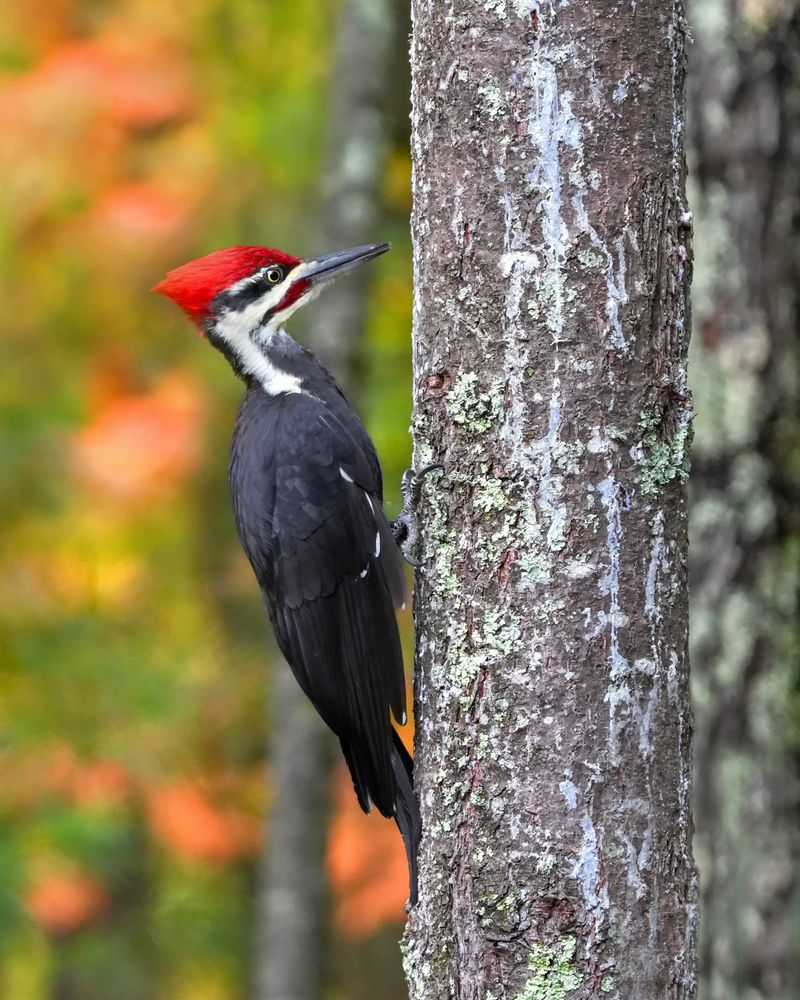
Seeing this bird in October is not odd. Pileated Woodpeckers live in North Carolina all year, as shown on the Cornell Lab range map.
They do not leave for winter, so your yard may simply be part of their territory.
Both males and females also drum on trees at any time of year, according to Cornell’s sound notes. Drumming is a way of communicating, and it sounds a lot like feeding.
That means the season and the noise together cannot show that a nest is being built.
So what clues help? A feeding bird tends to move around the trunk, digging at different spots.
Even then, you are only guessing. A qualified professional or wildlife agency can help if you truly need to know whether a nest is active.
The bird’s activity also says nothing about whether the trunk is sound. A woodpecker can cling to a tree that is weak inside, and a strong-looking tree can still fail.
The U.S. Forest Service tree risk guide focuses on the tree’s condition and what lies around it, not on who is visiting it.
What could the tree hit if it fell?
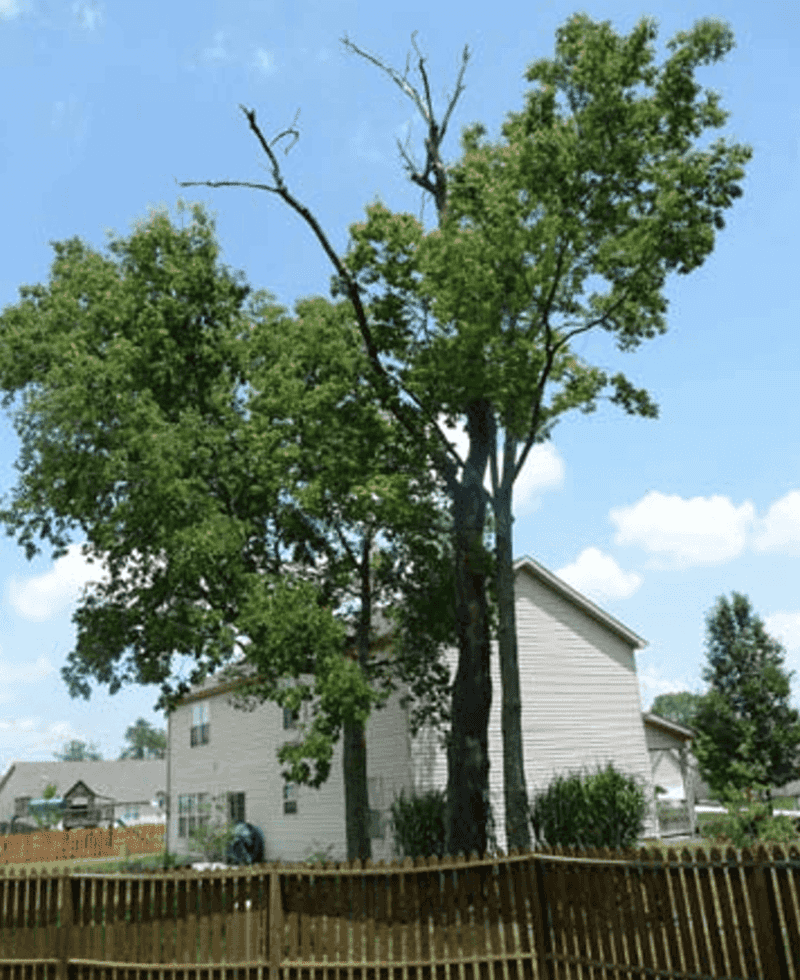
Picture the tree coming down and ask what is in the way. Walk the yard and note any people, buildings, vehicles, sheds, fences, play areas, and driveways within its reach.
Those are what arborists call targets.
The U.S. Forest Service urban tree risk guide says dead trees within striking distance of a target should be removed.
It also says they may be kept for wildlife where they would not fall into target areas. That is the balance to weigh in your own yard.
Notice what is missing: there is no magic number of feet. Risk depends on the tree’s height, its condition, how it leans, and what sits nearby.
A short snag in a far corner may be a fine keeper, while a tall one beside the garage may not be.
The woodpecker does not change this. Its presence is not a safety check, and it does not move the fall zone.
A bird on the trunk is a reason to think about habitat, but the choice should rest on the tree and its surroundings.
If a snag has no target in range, you may be able to leave it and enjoy the wildlife it attracts. If something valuable or someone could be in the way, treat the tree as a risk first and a habitat second.
When the decision is uncertain, bring in a professional
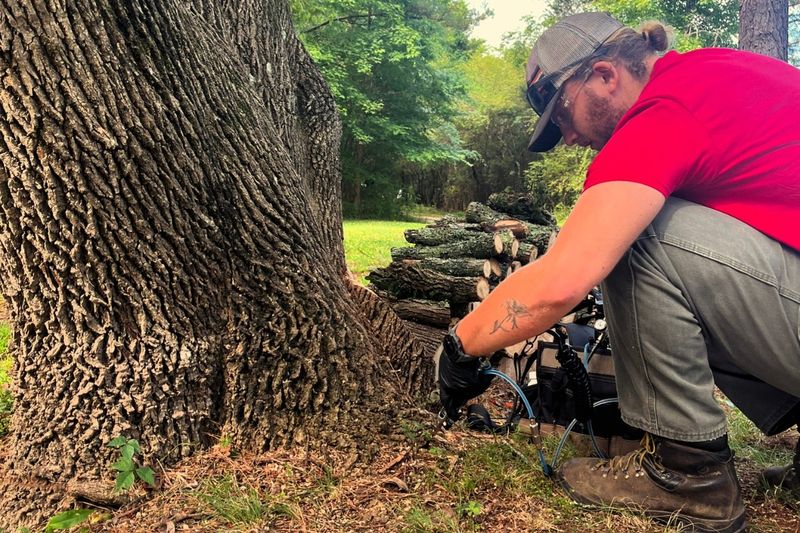
Some snags are easy calls, but many are not. If you cannot tell how sound the trunk is, or whether the tree could reach something important, ask a qualified tree professional to look at it.
The University of Maryland Extension advises getting a professional opinion when a tree’s risk is unclear.
Resist the urge to handle it yourself. Cutting or trimming a dead tree can be dangerous, and dead wood can break in unexpected ways.
The same guidance warns that tree work is hazardous and best left to trained people.
Power lines raise the stakes. The ANSI Z133 safety standard on electrical hazards covers how arborists must work near energized lines.
As a homeowner, stay well away from any work near those lines and let trained crews handle it.
A nest adds one more question. If an active woodpecker nest may be in the tree and the snag presents a problem, NC Wildlife guidance suggests considering removal of only part of the tree until the young have fledged.
That is not a universal rule for every situation. Before you schedule any work, check with a qualified professional or a wildlife agency.
Ask the professional about the tree’s condition and the fall zone, and tell them what you have seen the bird doing. Their assessment, not the sighting, should guide your decision.
Keep the snag where it can stand safely
Here is a simple rule. If a snag can stand without threatening people or property, it may be worth keeping, since NC State’s habitat guidance recognizes large dead trees as valuable to wildlife.
If a target is in range, or you are unsure, get an assessment and be ready to let the tree go, as the Forest Service guide advises.
The woodpecker is your cue to look closely, not a sign that all is well. A good steward watches the bird, checks the fall zone, and lets the tree’s safety make the final call.