
A Red-Tailed Hawk Perched Over Your North Carolina Yard This Winter May Be a Clue to Useful Habitat Nearby
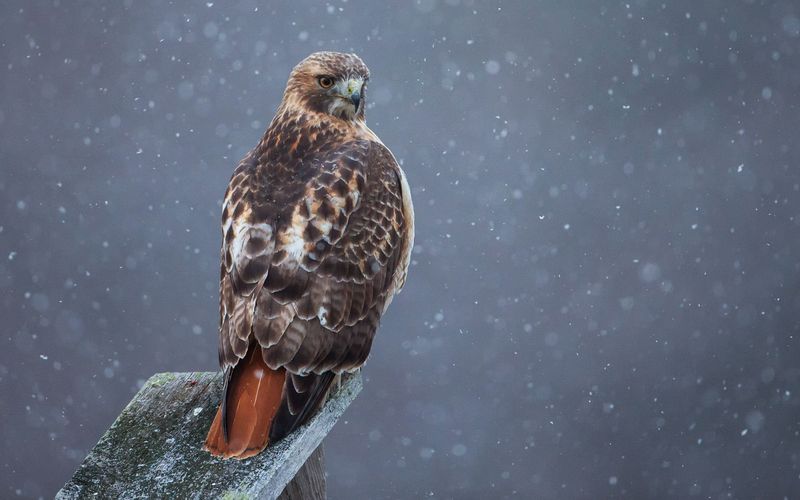
A big hawk sitting on a tall branch or utility pole above your yard on a cold morning is hard to ignore. In North Carolina, this is often a red-tailed hawk, and seeing one feels like a small gift.
The sighting can hint at useful perches and hunting ground somewhere in your neighborhood. It cannot tell you exactly what is going on in your own yard, and that difference is worth understanding.
Winter red-tails are a familiar sight in North Carolina
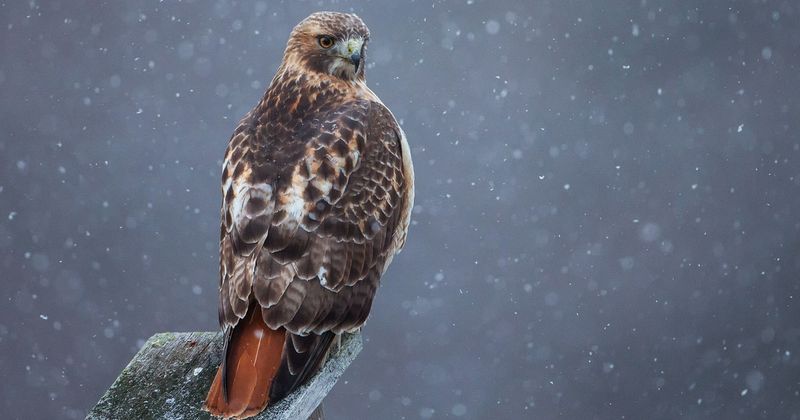
Red-tailed hawks live all across North Carolina, from the mountains to the coast. The NC Wildlife Resources Commission describes them as common permanent residents, which means many of the hawks you see were here all along.
Birds from farther north also move into the state, so numbers climb in fall and winter.
That mix explains why winter sightings feel so frequent. Leaves are off the trees, so a large bird on a bare limb is easy to spot.
A hawk in January is ordinary, and it is not a sign that something changed in your yard overnight. Not every winter red-tail is a visitor from up north, either.
Some may have nested a mile from your house last spring.
Before you announce a red-tail to the neighbors, give the bird a careful look. A hawk that is perched may be turned so you cannot see its tail at all.
Young birds also have brown-barred tails instead of the rusty red of an adult, so a brown tail does not rule out a red-tail.
A distant or brief glimpse is often not enough to be sure. Cornell Lab identification tips point to other clues, such as a streaked band across the belly, a pale chest, and broad, rounded wings.
If you only caught a quick look, it is perfectly fine to call it a large hawk and keep watching.
Binoculars and a little patience go a long way. Many backyard birders keep a notebook by the window and jot down the date, the perch, and any field marks they notice.
What can a perch tell you?
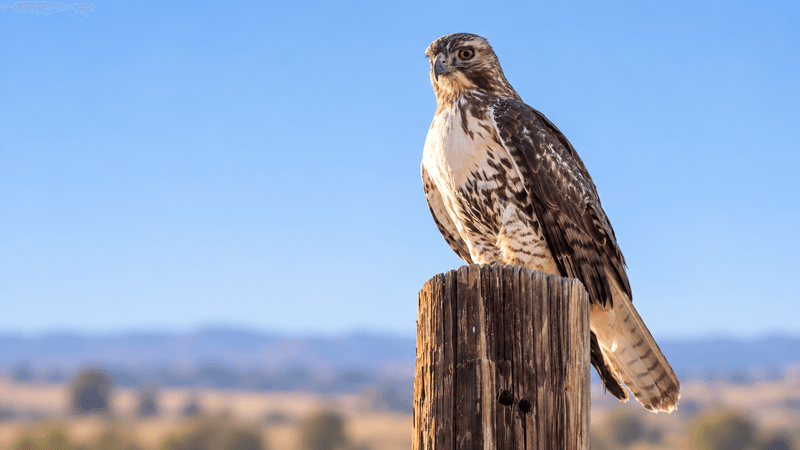
Hawks are patient hunters, and a high seat is part of the strategy. According to the NC Wildlife Resources Commission, red-tails use high perches and scan open areas below them.
From a tall branch, pole, or fence post, a hawk can survey a wide stretch of ground with very little effort.
Of course, a hawk on a perch is not always hunting. It may simply be resting, digesting a meal, or staying out of the wind on a cold day.
Even when it is scanning, there is no way to know from your window whether it caught anything in your yard or somewhere else entirely.
Think of the perch as a clue about the bird’s surroundings. A tall tree, a pole, or an open view nearby gives the hawk a place to sit and look.
That tells you something about the setting, but it is not a grade on your yard. Plenty of perfectly healthy yards never see a hawk, and plenty of hawks perch over lawns that offer little to eat.
The U.S. Forest Service species review of red-tailed hawks notes that the birds use a wide range of open and semi-open habitats, which fits the picture of a flexible bird that works the edges of fields, roadsides, and neighborhoods.
Next time you spot one, note where it sits. Does it return to the same snag or light pole?
Repeat visits to a favorite perch tell you more than a single glimpse ever could.
Voles and mice are part of a varied menu
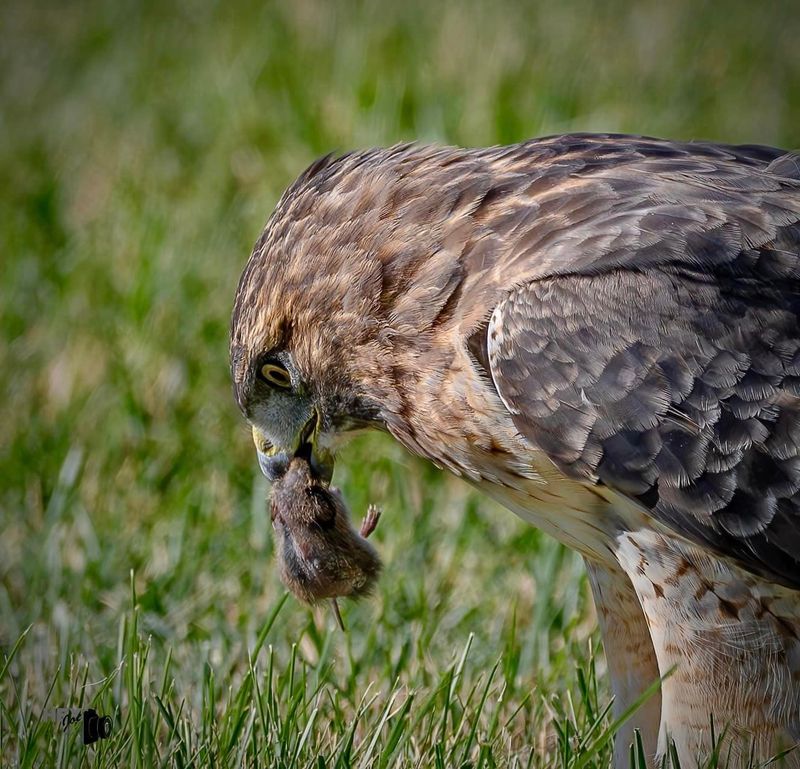
Ask most people what a red-tailed hawk eats and they will say mice. They are partly right.
Small mammals such as voles and mice are common prey, and a hawk watching a grassy edge may well be hoping for one.
The full menu is much wider, though. Cornell Lab life history notes describe a diet that also includes rabbits, birds, reptiles, and amphibians.
Insects show up on the list too, along with carrion such as roadkill. The Audubon field guide likewise describes a varied diet that shifts with location and season.
That flexibility is why a hawk’s presence is a weak clue about prey. The bird could be eyeing a rabbit under a shrub, watching a squirrel, or just passing through.
It may be after something in the neighbor’s field and only using your tree as a lookout.
So if you spot a hawk, resist the urge to conclude that your yard is crawling with voles. You cannot tell how many rodents live nearby from one bird on one branch.
A hawk on a snowy morning might also be feeding on whatever is easiest to find.
What you can do is enjoy the sighting for what it is: a glimpse of a predator doing what predators do, in a landscape that gives it options.
The hawk may be using more than your yard
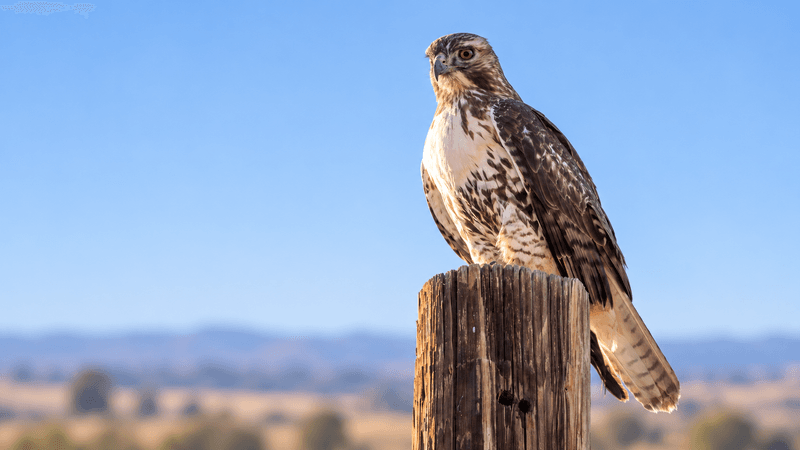
A typical residential lot is tiny compared with the area a hawk covers. Red-tails use open and semi-open country such as fields, pastures, roadsides, and woodland edges, and they can hunt across territory much larger than a backyard.
The hawk on your oak may spend most of its day a half mile away.
Research backs up the idea that hawks care about two things at once. A study in The Condor looked at how raptor foraging relates to prey biomass and habitat structure, and work on overwintering hawks links where they settle to both prey and perch availability.
The U.S. Forest Service review describes similar patterns.
Here is the catch. From one sighting, you cannot separate those two factors.
The hawk might be there because of good perches, because prey is plentiful, or because of both. You also cannot tell where it hunts once it flies off.
Look at your surroundings the way the hawk might. Is there a pasture, a power line, a creek corridor, or a church lawn within a short flight?
Those features may be doing more of the work than your own garden beds.
The sighting suggests the wider landscape may offer useful conditions. It does not measure the food web in your yard, and that is a fair, honest reading of what you saw.
Support wildlife without baiting the food web
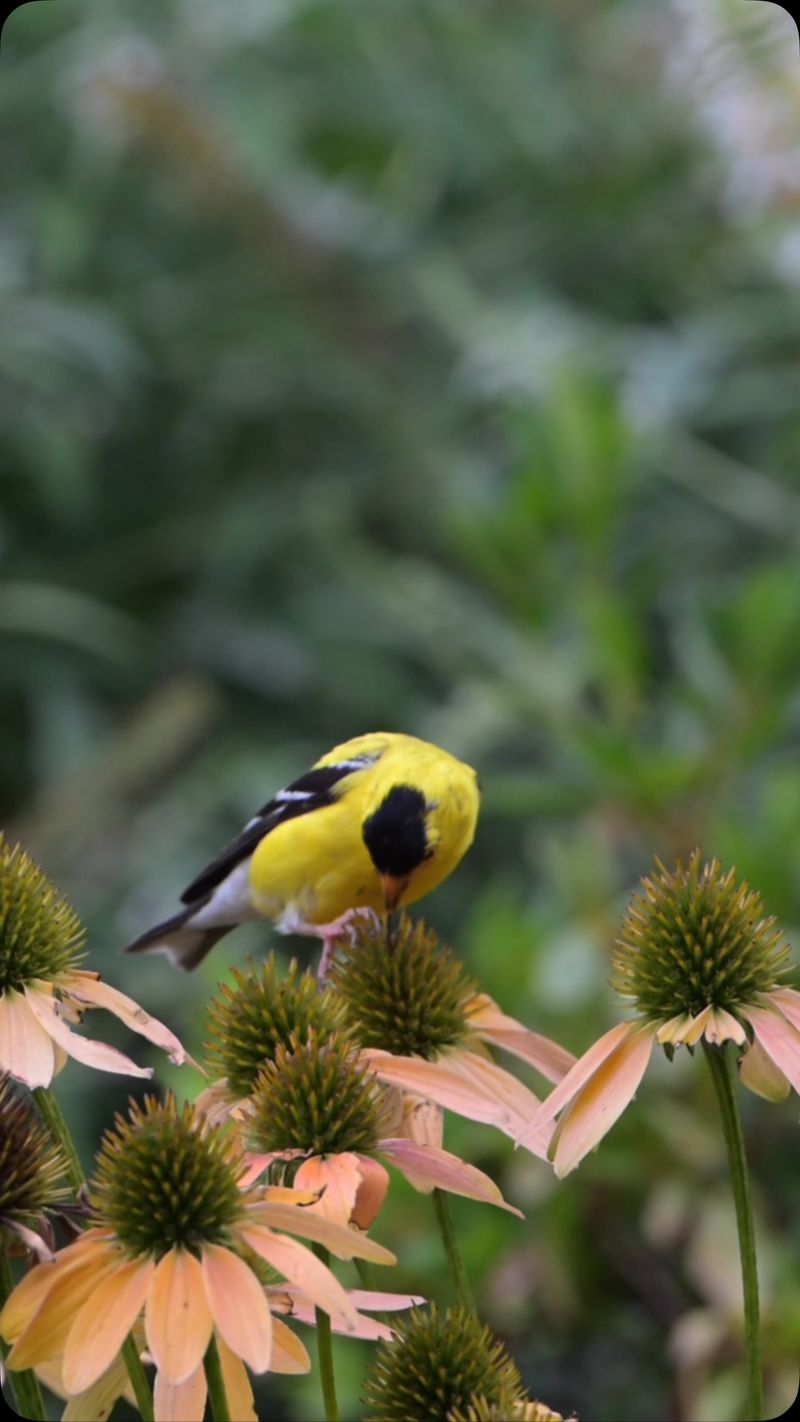
If a hawk visit has you inspired, the best response is to make your yard friendlier to wildlife in general. Skip any plan to lure hawks or rodents.
The NC Wildlife Resources Commission advises against feeding wildlife and offers guidance in its how to feed wildlife responsibly page, noting that feeding can draw unwanted animals.
Instead, plant a mix of native flowers, shrubs, and trees. Think purple coneflower, little bluestem, American beautyberry, serviceberry, and oaks, and pick what suits your part of the state.
Layers of plants give insects, songbirds, and small animals natural shelter and food.
Leave some fallen leaves under trees and shrubs, and consider keeping dried flower heads standing through winter where it makes sense. Leaf litter shelters overwintering insects, and seed heads feed birds.
You do not need to leave everything messy, so tidy the walkways and keep a wilder corner.
Rodent control deserves extra care. The EPA’s rodent control pesticide safety review warns that predators and scavengers can be harmed after eating poisoned rodents.
A hawk or owl can be exposed without ever touching the bait.
Where possible, avoid rodent poison and seal gaps in sheds and garages instead. If you do use bait, follow the label closely and promptly remove dead rodents as directed, as explained in the EPA’s guide to safely using rodent bait products.
Give the hawk space
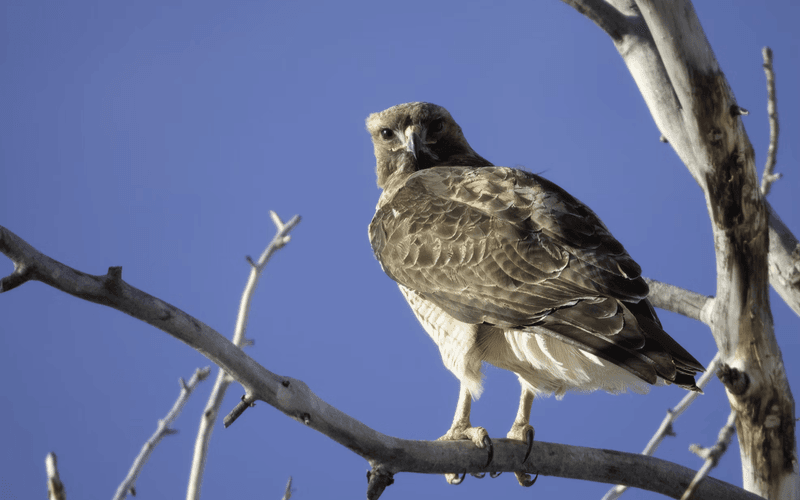
Hawks are protected. The NC Wildlife Resources Commission notes that native hawks are covered by state and federal law, so never harm, harass, or disturb one or its active nest.
Watch from a window or porch and keep pets and children back.
A hawk standing on the ground is not necessarily in trouble. It may be eating, and moving in too close can make it drop its meal or flee.
Give it time and distance before you decide anything is wrong.
If the bird really does look injured, such as a drooping wing, no attempt to fly, or an obvious wound, call a licensed raptor rehabilitator. Do not try to pick it up or handle it.
Those talons and that beak are serious tools.
Back at the window, keep your expectations honest. A hawk may be using the wider landscape in ways you cannot see, and research like the Condor study on perches and prey shows why one visit is a clue and not a verdict.
It does not prove abundant prey or a healthy food web on your lot.
Still, enjoy it. A wild hunter on your skyline is a good morning, whatever it means.