
Adult Carpenter Bees May Be Waiting Out Winter Inside Your North Carolina Porch Rails
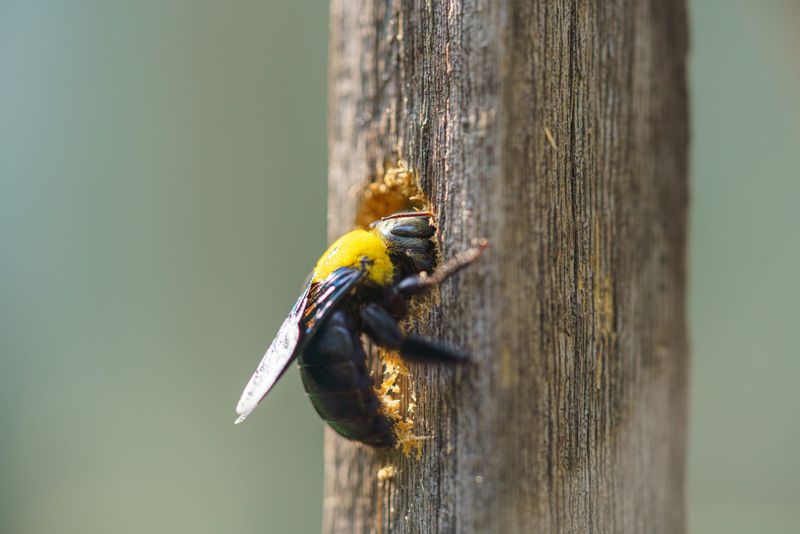
Those neat round holes in your porch rail may be more than a nuisance. In North Carolina, they can be winter shelters for eastern carpenter bees, which are helpful pollinators in your yard.
Knowing who is inside, and when, helps you protect your wood without harming the wildlife you value. A little careful looking now can save you from a mistake come spring.
A round hole is a clue, not a diagnosis
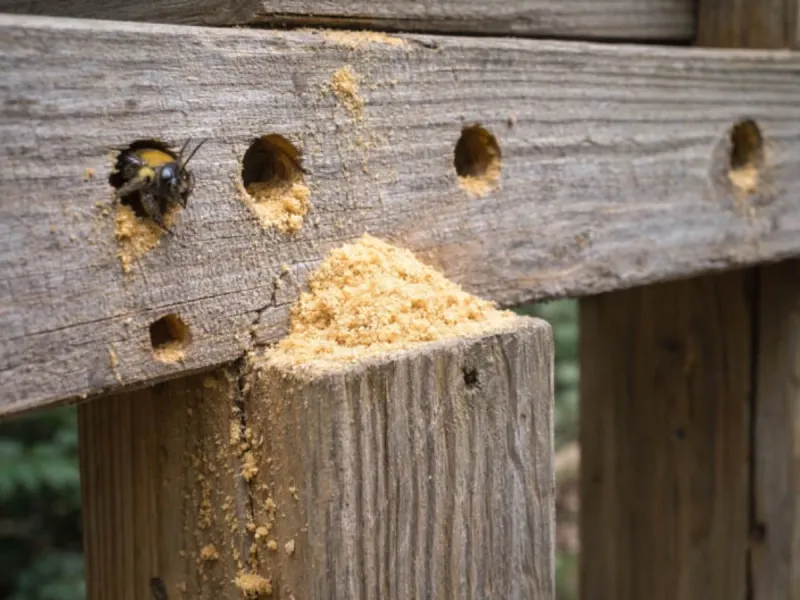
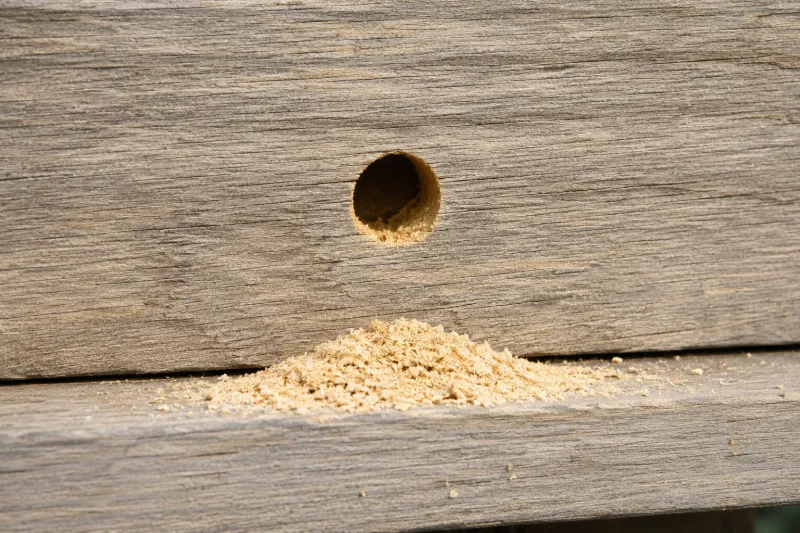
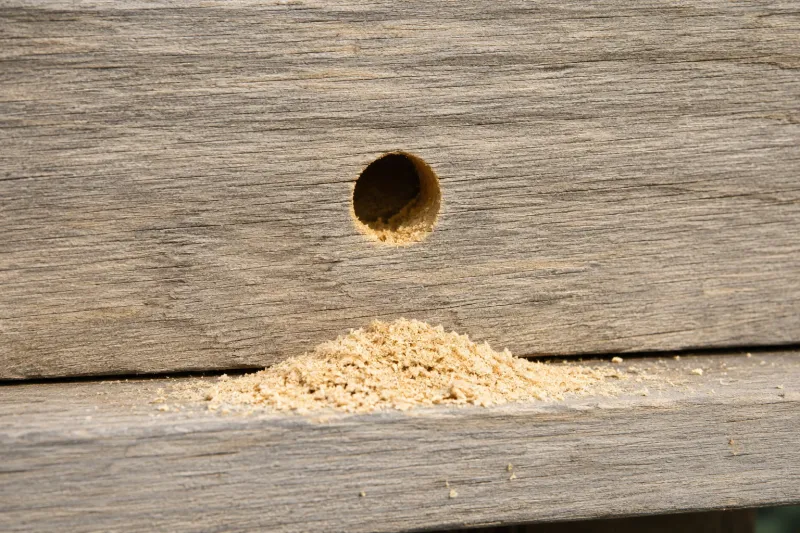
Walk your porch rail with a flashlight and look closely. Carpenter bees tend to leave a nearly round entrance about half an inch wide, usually on exposed, unpainted or weathered wood.
NC State Extension describes fresh sawdust or yellow-brown staining below the opening as additional clues.
Still, a hole by itself does not prove carpenter bees made it. Other insects and even old nail holes or woodpecker work can leave marks that confuse the picture.
Think of the hole as the first clue in a small mystery, not the final answer.
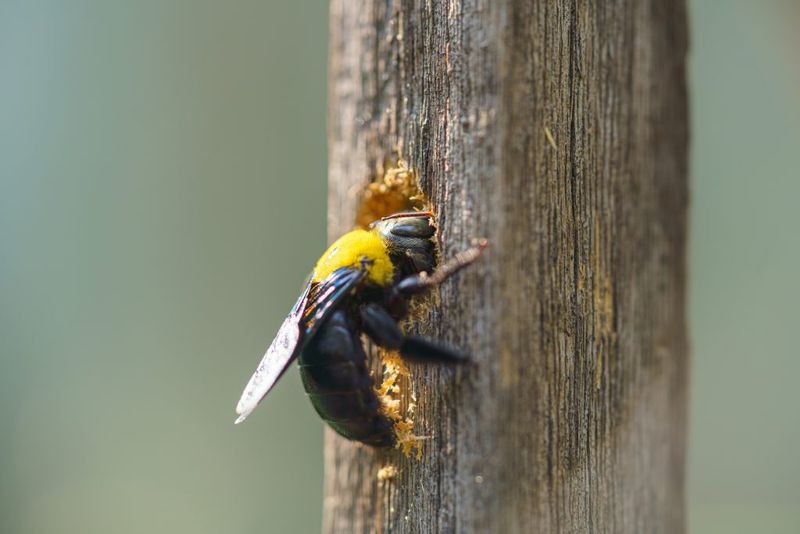
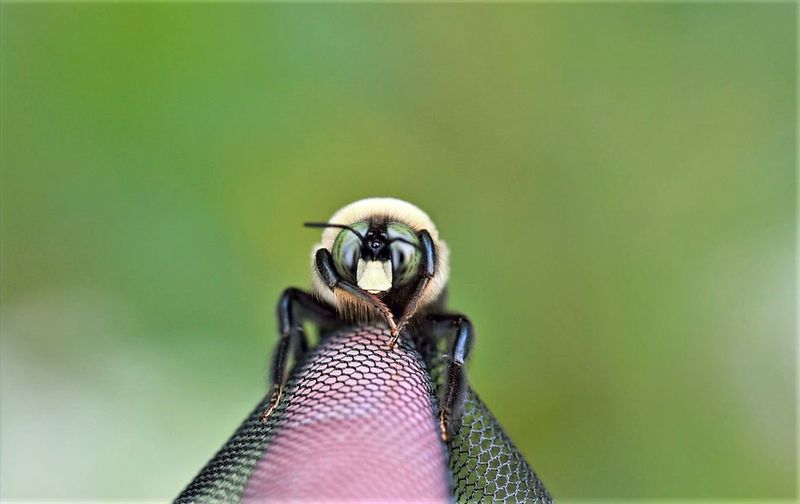
The bee itself is the best evidence. A carpenter bee has a shiny, hairless abdomen that looks almost like polished black enamel.
A bumblebee, by contrast, has a fuzzy abdomen, and bumblebees do not drill into your porch.
That difference matters for your yard. Bumblebees and other native pollinators deserve protection, and mistaking one for a wood-borer could lead you to harm the wrong insect.
Sawdust piles that look fresh suggest recent activity, while dusty, weathered holes may be old.
Take a few photos, note which rails are affected, and jot down what you see. Identification comes before any treatment, because the right next step depends entirely on what is actually living in that wood.
The bees in winter are adults, not larvae
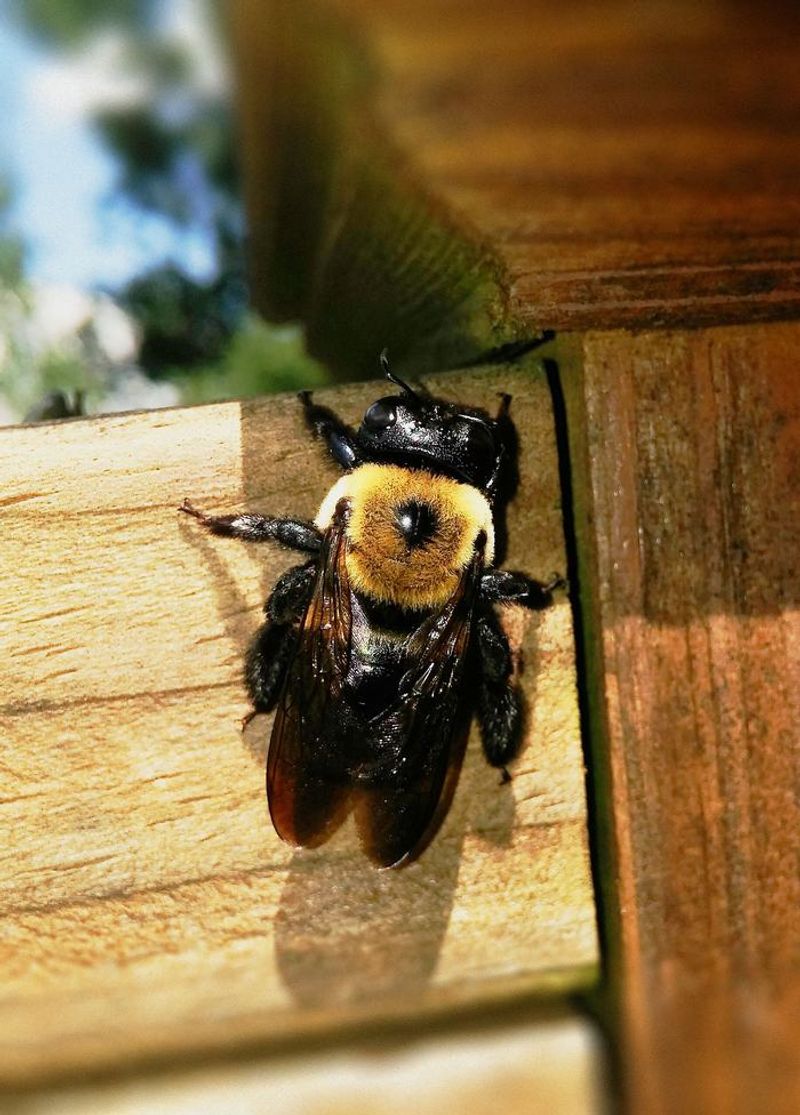
Here is the mistake worth fixing: larvae are not what spend winter in your porch rail. In North Carolina, the larvae grow up in spring and summer, and the bees resting in tunnels through the cold months are adults.
The cycle starts when a female excavates a tunnel. She does not eat the wood, as NC State News explains.
She builds the nest and lays eggs in separate chambers, each stocked with pollen and nectar.
The larvae feed on that food supply and develop inside their chambers. By late summer, new adults emerge, and Clemson Extension notes the same general life cycle across the Southeast.
When cold weather arrives, those adults return to existing holes. NC State reports that adults typically overwinter in nest tunnels and come out again in April and May.
So a hole you notice in November, January, or February may well hold a sleepy adult bee. That is a very different situation from a tunnel full of developing young, and it changes how carefully you should handle the hole.
Whether you live in the Piedmont, the coast, or the mountains, the winter sleeper is the adult.
One nest is different from years of accumulated damage
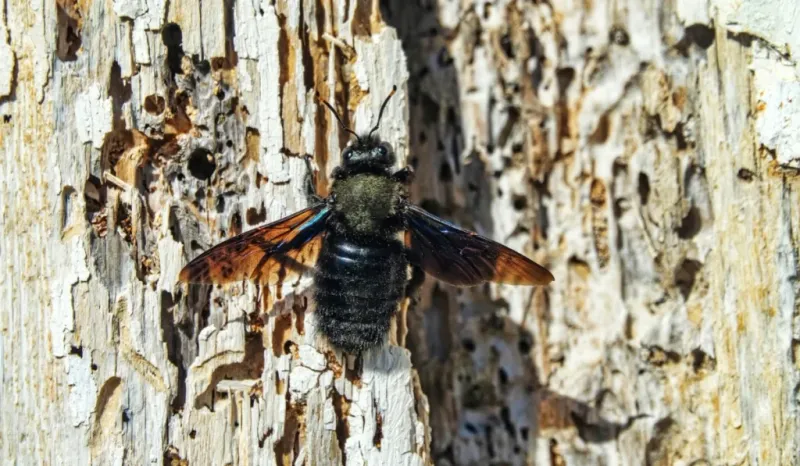
A single hole does not mean your porch is about to fall down. According to NC State Extension, one nest usually is not a serious structural threat.
The trouble builds slowly. Bees often return to the same wood, reuse old tunnels, and extend them.
Over several years, numerous galleries can weaken a board, a point also made by University of Maryland Extension.
Holes can also let moisture in, which opens the door to wood decay. A rail that stays damp around a drilled hole may soften faster than the same rail left alone.
Woodpeckers can add to the damage. They may pound at the wood to reach bee larvae, leaving bigger, ragged openings that look worse than the original hole.
To judge your own porch, count and compare. An isolated hole on one rail is a watch-and-monitor situation.
Many holes clustered together, tunnels in the same spot year after year, soft or crumbling wood, or lots of dark streaking deserve a closer look. Press a screwdriver gently near suspect spots to test firmness, and call a qualified professional if the wood feels spongy.
What should you do with a hole this winter?
Winter calls for patience. Because an adult bee may be tucked inside, the safest first move is simply to look and wait.
Check the rail for fresh sawdust, staining, and any bee activity on a mild afternoon.
Resist the urge to plug everything right away. NC State guidance warns that plugging an untreated tunnel can trap bees, and a trapped bee may chew a new exit.
That leaves you with a second hole and the same problem.
Repair timing is also a spot where advice disagrees. Maryland Extension describes repairing in late summer after emergence or in early spring before nest building.
North Carolina sources point out that adults use old holes for winter, so a universal repair date does not fit every porch.
NC State’s pollinator team also says it has no solid, research-based advice for removing carpenter bees from structures.
If you cannot tell whether a tunnel is occupied, or you are unsure when to repair, contact your county NC Cooperative Extension office or a qualified professional. In the meantime, photograph the holes, keep notes, and leave them be.
Prevention may help, but control methods are not guaranteed
Carpenter bees tend to favor bare, weathered wood, so keeping finished surfaces in good shape is a sensible habit. Maryland Extension recommends maintaining finished wood and describes painting as a way to discourage them.
North Carolina advice is more cautious. In a 2025 article, NC State experts said paint and pesticides are not really effective, and research has not yet backed up plugging holes or using repellents.
The pollinator program at NC State goes further, saying there is no solid, research-based advice for eliminating or repelling carpenter bees, and that painting or plugging often does not work well.
So how do you weigh two different opinions? Treat painting as a possible, imperfect deterrent.
It may reduce how attractive a rail looks to a nesting female, and it also protects wood from weather, which is worth doing anyway.
Just do not count on it. A freshly painted rail can still get a hole, especially near an unpainted edge or underside.
Paint when the wood is dry, cover the undersides and ends, and keep checking each spring.
Routine spraying is not a pollinator-safe shortcut
Swatting or spraying at hovering bees feels like action, yet NC State says it is not sensible or particularly safe. The hovering ones are often males, which cannot sting and are simply guarding the area.
Spraying surfaces does not fix much either. Surface insecticides have limited effectiveness, they wear off quickly, and bees are rarely exposed to lethal doses.
Meanwhile, the chemicals can reach things you care about, like nearby flowers, native bees, and other visitors in your yard. Skipping unnecessary pesticide use is one of the easiest ways to protect the pollinators that make your garden work.
If you still decide to consider a pesticide, read the product label closely and follow every pollinator warning. The EPA explains that labels may limit applications by bloom time, time of day, drift, or closeness to pollinator habitat.
Those limits are there for a reason. If a label seems hard to follow near your flowering shrubs or vegetable beds, that is a good sign to call your local Extension office before buying anything.
Inspect first, then choose a measured next step
Start by confirming the likely insect: round hole, sawdust, staining, and a shiny, hairless bee. Then decide if the damage is a lone hole or a repeated pattern across the wood.
Skip blind plugging and routine spraying. A tunnel may hold a sleeping adult, and NC State guidance cautions against both shortcuts.
If you are unsure about occupancy or repairs, check with your county Extension office, as the NC State pollinator program suggests. Not every porch hole needs action today.
Sometimes the wisest repair plan begins with a notebook and a little patience.