
American Beautyberry in North Carolina: A Native Shrub for Yard Edges, Not a Tick Barrier
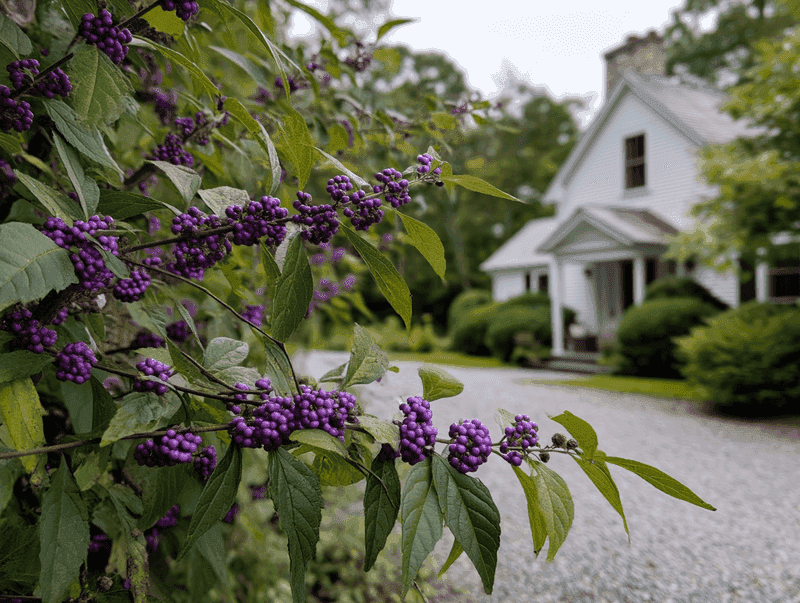
Walk past a beautyberry in early fall and you will probably stop, because its clusters of bright purple berries look almost unreal. Online, this North Carolina native shrub has picked up a big reputation as a tick-proof hedge.
The real story is more interesting and a bit more careful. Here is what beautyberry can do for your yard edge, and what to rely on for tick safety instead.
American beautyberry belongs in some North Carolina yards
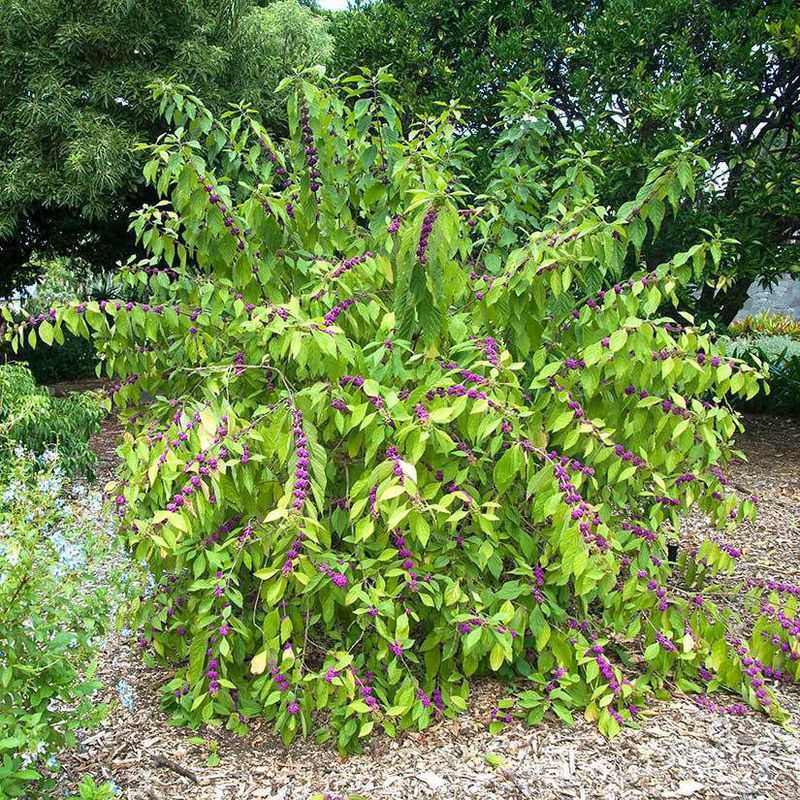
Picture the border where your lawn meets the trees. American beautyberry (Callicarpa americana) is one shrub that people often imagine there, thanks to its arching stems and showy fall berries.
But “native to North Carolina” needs a map. The Vascular Plants of North Carolina flora records it throughout the Coastal Plain and the southeastern half of the Piedmont.
It also shows scattered occurrences in the west-central Piedmont and southern Mountains, and it is absent from most of the Mountains and the northwestern Piedmont.
So a gardener in Wilmington or Fayetteville is planting a true local. A gardener in Boone or Wilkes County would be stepping outside the plant’s natural range.
That does not make it a villain, but it does mean you should think about what belongs in your own spot.
The NC State Extension Gardener Handbook chapter on native plants advises matching plants to your property’s ecoregion and growing conditions. Before you buy, check your county’s place in the flora map, notice how much sun and drainage your edge gets, and ask a local Extension office what grows well nearby.
Beautyberry is a fine choice for many yards in the eastern and central parts of the state. It is not a must-have for every North Carolina homeowner.
What the tick study tested—and what it did not
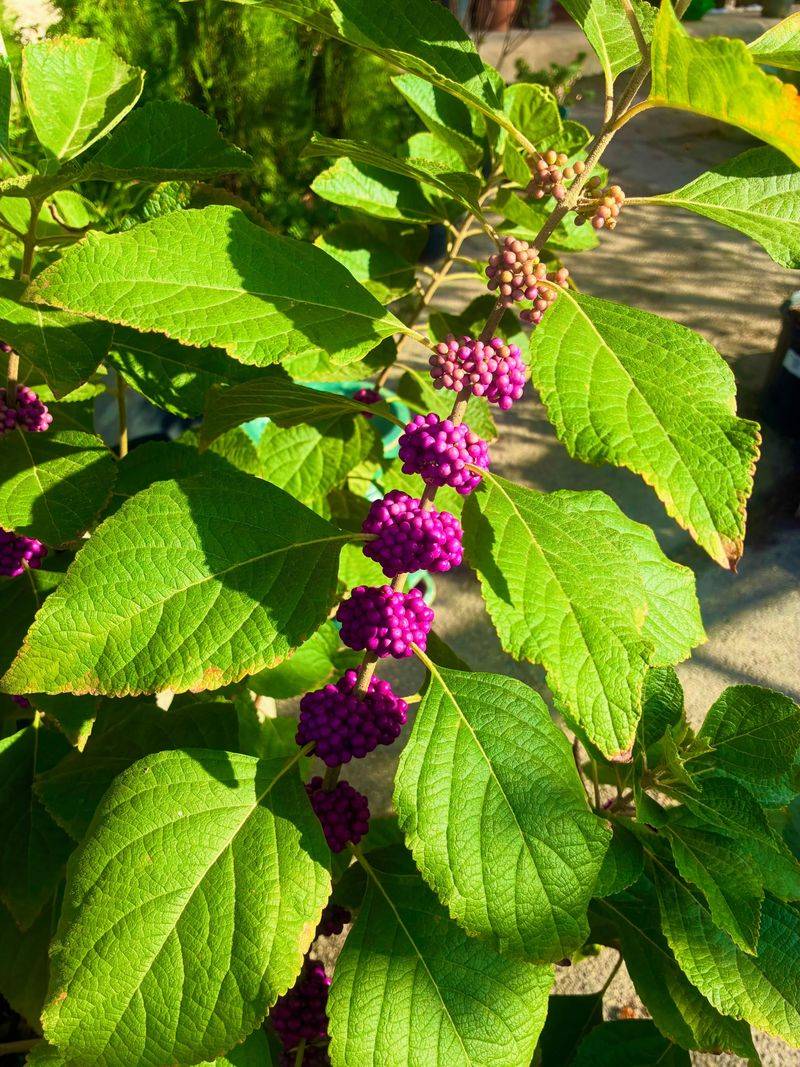
The tick claim traces back to real science, just not the kind that involves a yard. In a USDA-hosted laboratory study, researchers took two compounds isolated from beautyberry leaves, callicarpenal and intermedeol, and applied them to cloth.
They tested that treated cloth against ticks. They did not test crushed leaves, living shrubs, hedges, or anyone’s backyard.
The results depended on the tick. Treated cloth repelled 98% and 96% of blacklegged tick nymphs.
Lone star ticks were a different story: at the highest concentrations tested, the compounds repelled only 20% and 40%.
Those numbers describe what happens when concentrated, purified chemicals sit on fabric in a lab. They do not tell us how much of those compounds a growing shrub releases outdoors, or whether planting one lowers your chance of meeting a tick.
An Ask Extension answer from University of Maryland makes the same split. Its experts know of no studies showing that having a particular plant species in a landscape repels ticks, and they note that extracted compounds may need specific concentrations to affect pests.
If you hear that ticks will not cross a beautyberry line, treat it as a promise nobody has tested.
An arching shrub makes an informal edge, not a solid wall
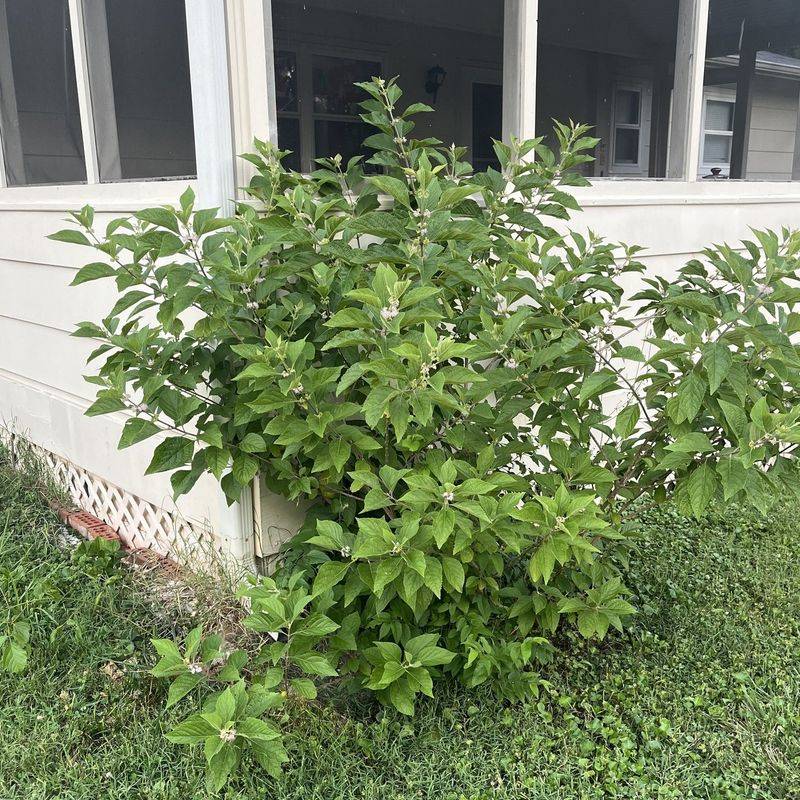
Think of beautyberry as a relaxed, fountain-shaped plant. NC State Extension’s Plant Toolbox lists it at about 3 to 8 feet tall and 3 to 6 feet wide, with arching branches.
It is also deciduous. The leaves drop in fall, and the stems look much more open through winter than they do in summer.
That shape suits a loose, informal grouping at the back of a bed or along a transition zone between lawn and trees. Several plants set a few feet apart can read as a soft, natural drift of color, especially when the berries ripen.
It is not a tight, sheared wall. If you want a dense, year-round screen for privacy, beautyberry will leave gaps, and bare winter branches will not hide much.
Likewise, the plant’s form has nothing to do with stopping ticks. Arching branches are a design feature, not a fence.
Enjoy the shape for how it looks and for the gentle, woodland feel it brings to the edge of your property.
Leave room for mature size when you plant, so you are not fighting the shrub with pruners every year.
Set realistic expectations for water and growing conditions
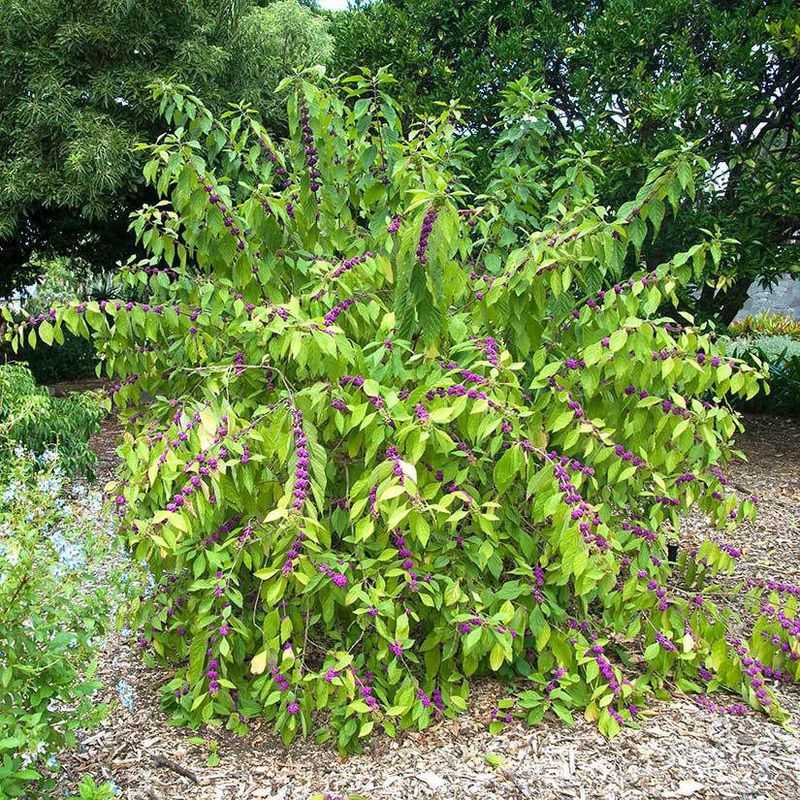
Beautyberry is flexible about light. According to NC State Extension, it grows in sun to part shade and wants well-drained soil, so a soggy low spot is a poor match.
Many people hear that it handles dry ground and assume it needs no care. The truth sits in the middle.
N.C. Cooperative Extension in Beaufort County says established plants can tolerate some dry conditions.
A brand new shrub is not established yet. Its roots are still settling in, so it needs water while it gets going.
Even older plants may need a drink during a long dry spell. Summer heat in the Piedmont or a dry stretch on the coast can leave leaves limp, and that is your cue to check the soil and water if needed.
No source gives an exact watering schedule, so use your eyes and your finger. Push a finger into the soil near the root zone, and water when it feels dry and the plant looks stressed.
A beautyberry planted in a spot that fits its light and drainage will be far easier to keep happy than one forced into the wrong place. Choose the site first, and the rest gets easier.
Beautyberry offers a real wildlife payoff
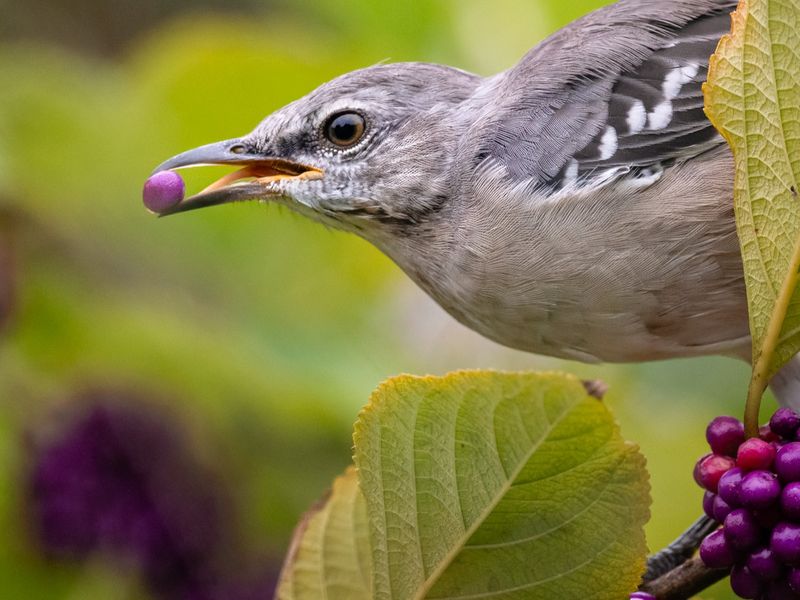
Here is where beautyberry truly earns its spot. Per NC State Extension, its flowers attract pollinators, and its berries feed songbirds and small mammals.
That gives the plant two seasons of usefulness. Small flowers appear first and draw in pollinators.
Later come the brilliant purple berries that wildlife can eat.
For a steward who wants a yard that feeds local creatures, that is a solid reason to plant one. A shrub that gives food and visual interest at the same time is a good use of a corner.
Keep the claim modest, though. The sources name pollinators, songbirds, and small mammals, and that is the extent of what we can say.
They do not tell us about particular animals beyond those groups.
Wildlife value also has nothing to do with ticks. A busy, berry-laden shrub is not a tick control measure, and it should not be planted with that goal in mind.
Plant it for the birds and bees. Then, if you leave berries on through fall, watch who shows up.
Watching your yard become useful to local wildlife is part of the fun.
Use proven measures to manage ticks around the yard
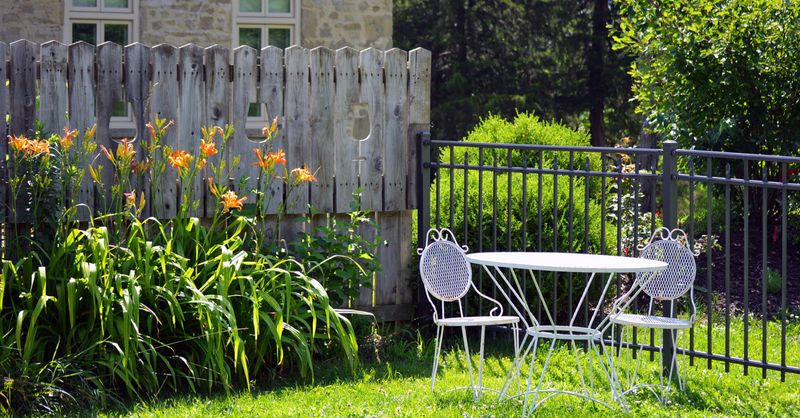
For tick safety, start with habitat. CDC guidance recommends removing leaf litter, clearing tall grass and brush near the home and the lawn edge, and mowing regularly.
CDC also suggests a 3-foot-wide barrier of wood chips or gravel between lawn and woods. The agency says this can restrict tick migration, not stop it.
A barrier is not a guarantee. A residential-yard study found no detectable association between wood-chip barriers and larval tick abundance.
However, barriers existed at only two properties, which limits what that result can show.
That does not prove barriers fail. It just means nobody should call them tick-proof.
Yard work is only half of the plan. CDC also recommends EPA-registered repellents used as directed, and clothing or gear treated with permethrin.
After time outdoors, check yourself, your kids, and your pets for ticks. Run through hairlines, behind knees, waistbands, and armpits.
One safety note: do not rub crushed beautyberry leaves on skin, clothing, pets, or children. Nothing reviewed shows that is safe or effective, so stick with products that carry an EPA registration and follow their labels.
A good weekend routine: rake the leaves at the edge, trim the tall growth, lay down the chip border, and keep repellent by the back door.
Plant beautyberry for the shrub it is
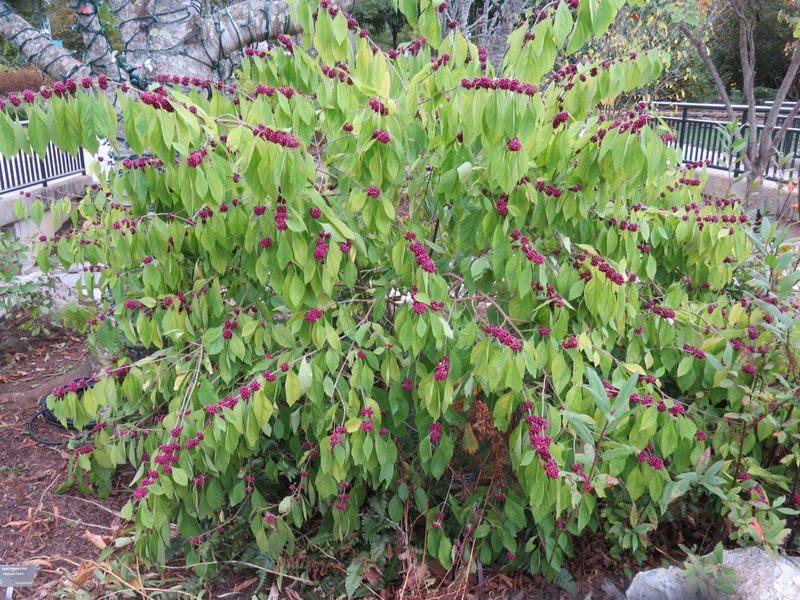
Choose beautyberry where its growing needs fit your site and your region. It is a handsome, informal native that feeds wildlife.
For ticks, lean on CDC habitat and personal-protection advice. A shrub cannot do that job for you.
Plant it for the purple berries, and keep your repellent close.