
Pine Needles Can Be a Useful Winter Mulch for Some Perennials
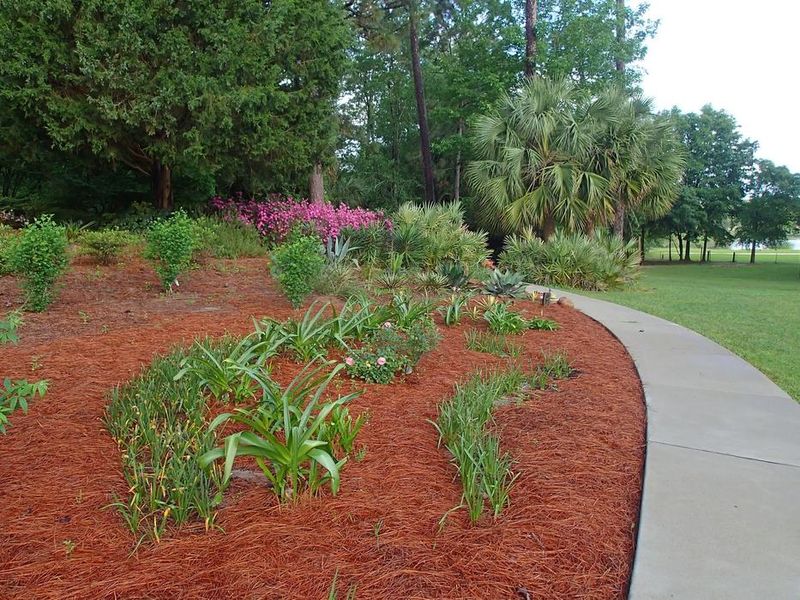
Those brown needles piling up under your pine trees might be worth a second look this fall. Winter cover can help protect certain perennials from the freeze and thaw swings that push plants out of the ground.
But not every plant wants a blanket, and pine straw has some real limits. Here is how to decide whether to use it, and how to do it safely.
Does every perennial need winter mulch?
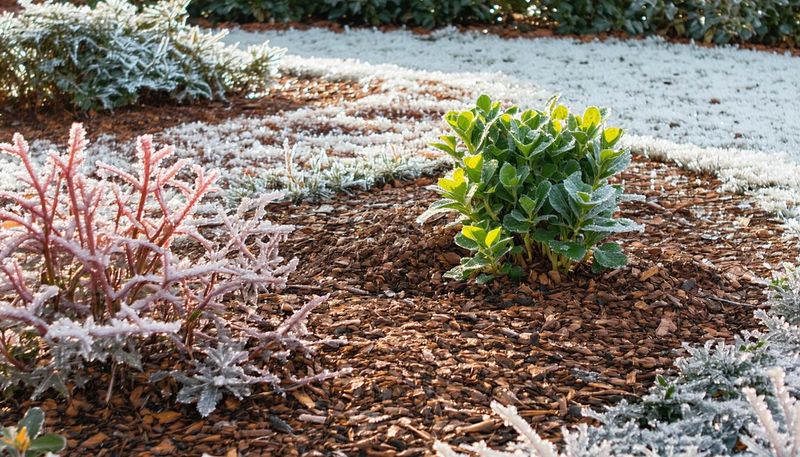
Plenty of gardeners cover every bed out of habit, then wonder why a plant turned to mush by April. The truth is that some perennials need cover and some are better off without it.
Think of winter mulch as a tool for specific plants, not a rule for the whole yard.
Cover mainly helps plants that can be pushed up out of the soil when it freezes and thaws over and over. Newly planted perennials are the usual suspects, since their roots have not settled in yet.
Iowa State Extension guidance points to frost-heave protection and extra care for tender perennials as the main reasons to mulch.
On the flip side, some plants dislike wet feet. If the crown sits in soggy soil all winter, a thick layer on top can hold moisture and invite crown rot.
Oregon State Extension notes that some perennials do better with no winter mulch at all.
Here is a simple way to sort your beds. Make a short list of what you grow, then look up each plant for your region.
Newly planted, borderline hardy, or heave-prone plants are candidates for cover. Plants that hate winter wet, or that sit in heavy clay that stays soggy, may be better left bare.
If you are unsure, ask your local extension office, since winters differ a lot from one state to the next.
How winter cover protects vulnerable plants
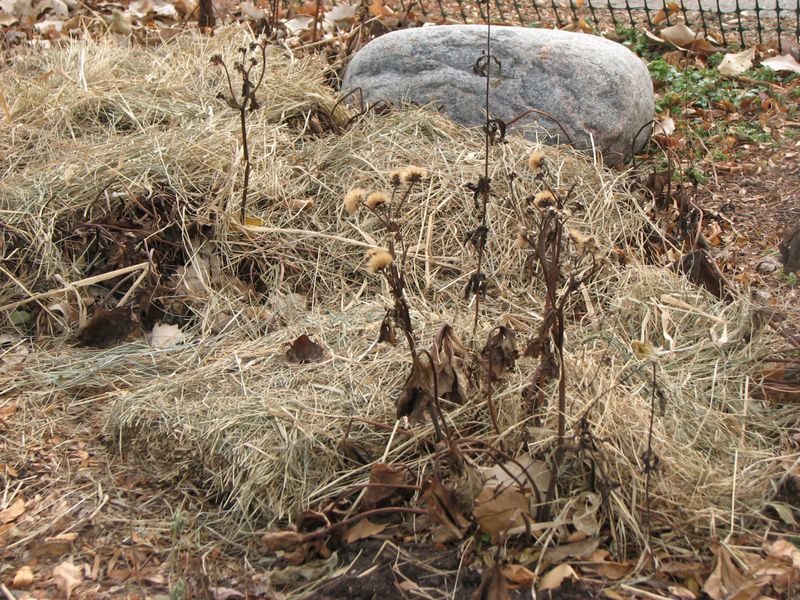
Frost heaving happens when soil freezes, thaws, and freezes again. Each cycle can lift a plant’s roots a little higher until they sit exposed to drying wind and cold.
A layer of mulch slows those swings, so the soil stays steadier instead of bouncing between frozen and thawed.
That steadier soil is the real payoff. University of Minnesota Extension recommends mulching perennials and bulbs after the soil freezes to keep it from thawing and refreezing.
The goal is not to keep plants warm. It is to keep the ground consistently cold.
Nothing here is special to pine needles. Any loose, airy material can do the same job.
Iowa State’s advice lists several choices, including pine needles for protective cages around tender perennials, and other extension guidance mentions leaves and straw.
So if your neighbor swears by shredded leaves and you have a pine tree, both can work. What matters more than the material is the timing, the depth, and whether the plant actually needs help.
Snow cover also acts as natural insulation, so a bed under steady snow may need less from you than a windswept bed that stays bare.
Wait for the soil to start freezing
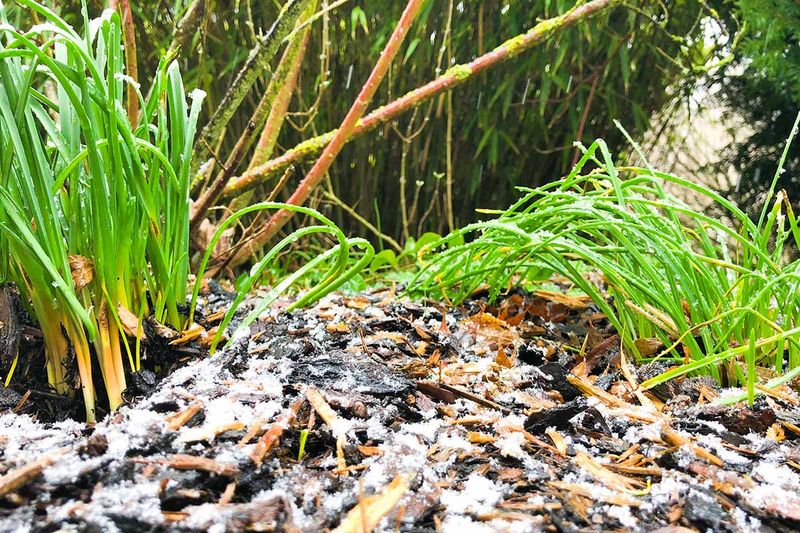
It is tempting to tuck beds in during early-fall cleanup. Resist that urge.
Both Minnesota and Iowa guidance say to wait until the soil begins to freeze. Mulching too early can delay dormancy or encourage growth under the cover.
In practice, that often means late fall or even early winter, depending on where you live. A handy clue is a light crust of frozen soil in the morning, or a stretch of nights that stay well below freezing.
Your calendar date matters less than what the ground is doing.
Depth varies by plant and region, so treat these numbers as examples. Iowa State suggests about 4 inches for frost-heave protection and 6 to 8 inches for tender perennials.
Oregon State gives 2 to 5 inches for most perennials, with more for some tender plants.
Notice the ranges do not match, and that is the point. A mild-winter garden does not need what a Midwest garden does.
Also, do not pile the full depth directly onto every crown. Some plants resent a heavy cover on top of their growing points, so check your plant’s needs first.
Pine needles are one option, not a universal upgrade
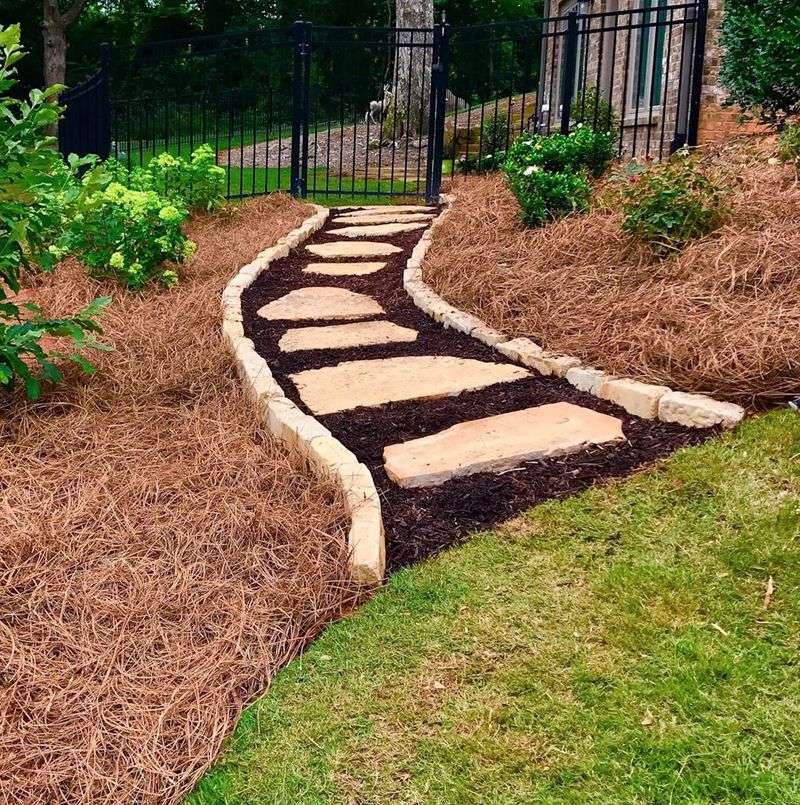
Pine needles are a perfectly usable mulch. A University of Georgia publication describes organic mulches, pine straw included, as porous enough to let water soak in.
That is different from saying they always shed water or never mat down, because the sources do not promise that.
Wind is a real limit. UGA Extension notes pine straw can blow around and may need to be reapplied.
On an open, breezy bed, expect to check it after storms.
Pine straw also breaks down and settles. In a University of Florida comparison, it settled the most of six mulches, and little remained after two years.
That study was done in one setting and did not test winter protection, so it does not tell you how needles act in your yard.
As for beating bagged mulch, there is no clear winner. Bagged products are made of many different materials, and one UGA horticulture specialist, in a Q&A with specialists, saw no difference between pine straw and wood chips in perennial beds.
One more myth to drop: needles will not meaningfully acidify your soil. Oregon State Extension says that popular claim has been debunked.
Free needles are a fine choice if you have them, nothing more.
Keep combustible needles out of the home zone
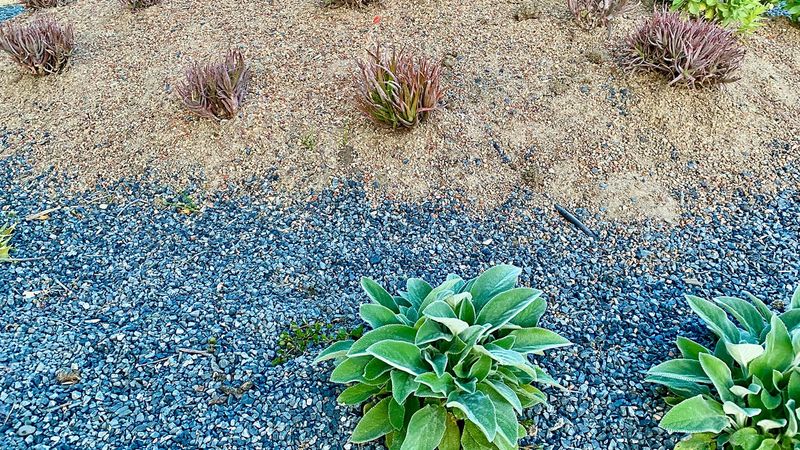
Before you rake up a pile of needles, think about where you live. Dry pine needles burn easily, which matters a lot in wildfire-prone areas.
Free mulch is not worth it if it carries embers to your siding.
The University of Nevada, Reno Extension’s defensible-space guide advises removing pine needles and other combustible mulch from the 0 to 5 foot zone next to a home. It also recommends limiting needle buildup elsewhere in the yard.
So if you garden in a fire-prone region, keep perennial beds right against the house mulched with something noncombustible, or leave them bare, and use needles only farther out in thin layers. Clear needles from gutters, decks, and under porches too.
This is a fire-risk rule, not a rule for every location. If you live in a wet, low-fire region, your main concerns are the plant-care ones covered above.
If you are not sure how your area is rated, your local fire district or extension office can tell you.
Thin the cover as spring returns
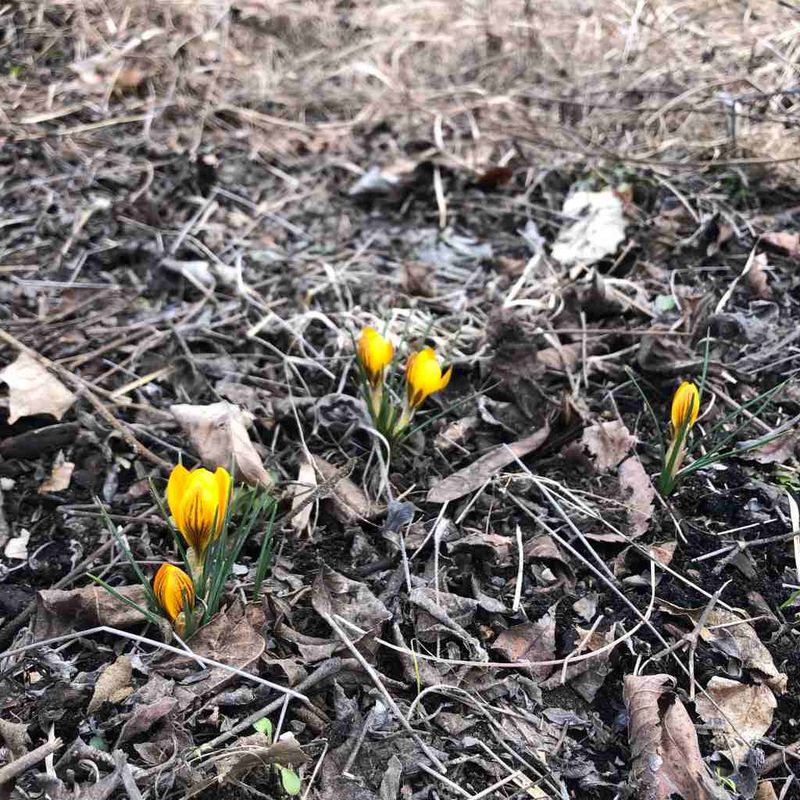
Winter cover is a short-term job. When the weather warms and the ground thaws, it is time to pull it back.
Leaving it in place too long keeps the crown damp and shaded.
That is how trouble starts. Minnesota Extension warns that mulch left on can contribute to crown rot and fungal problems.
Do it gradually. Rake the layer back as the soil thaws and new shoots show, and keep the pulled-off needles nearby in case a hard freeze returns.
Pale, stretched shoots under the cover are a sign it is time to open things up.
Check for matted, soggy patches right over the crown, since those are the spots that hold the most moisture. Fluff or remove them first.
Once growth is steady and the worst cold has passed, you can leave a thin layer between plants or store the extra for next fall.
Let the plant and site decide
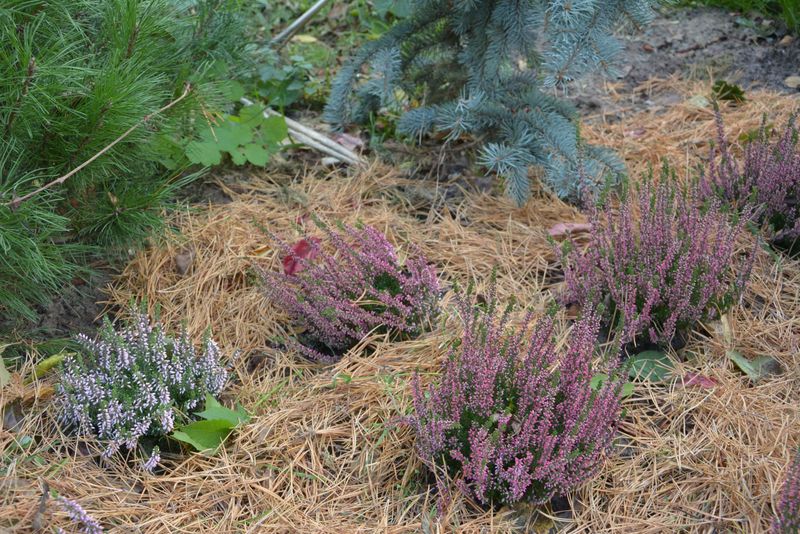
Here is a simple rule to carry into fall. Use pine needles only when your perennial actually benefits from winter cover, your local conditions support it, and fire safety allows it.
If the plant is tender or newly planted, wait for the soil to start freezing, then add a layer sized to your region. If it hates winter wet, or your home sits in a fire zone, skip it or keep needles away from the house.
Pine straw is one possible mulch, not a proven winner over everything in a bag. Your plant and your site get the final vote, and the best mulch is the one that fits both.