
Ants Swarming Your Hummingbird Feeder? These 15 Simple Tricks Keep Them From Ever Reaching The Nectar
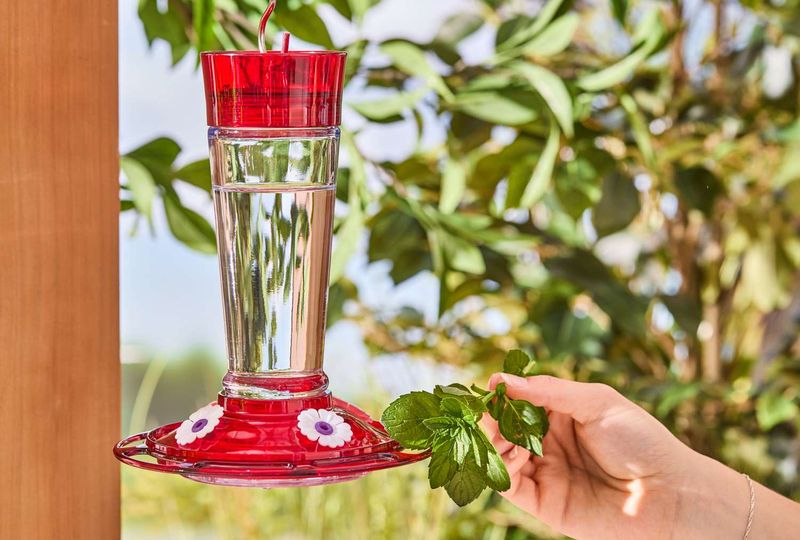
You fill your feeder with fresh nectar, and by lunchtime a line of ants is marching right into it. Ants spoil the sugar water, clog the ports, and can scare away the hummingbirds you worked so hard to attract.
The good news is that you do not need harsh sprays or fancy gear to fix it. With a few cheap, bird-safe tricks, you can keep those tiny invaders from ever getting a taste.
1. Install an Ant Moat
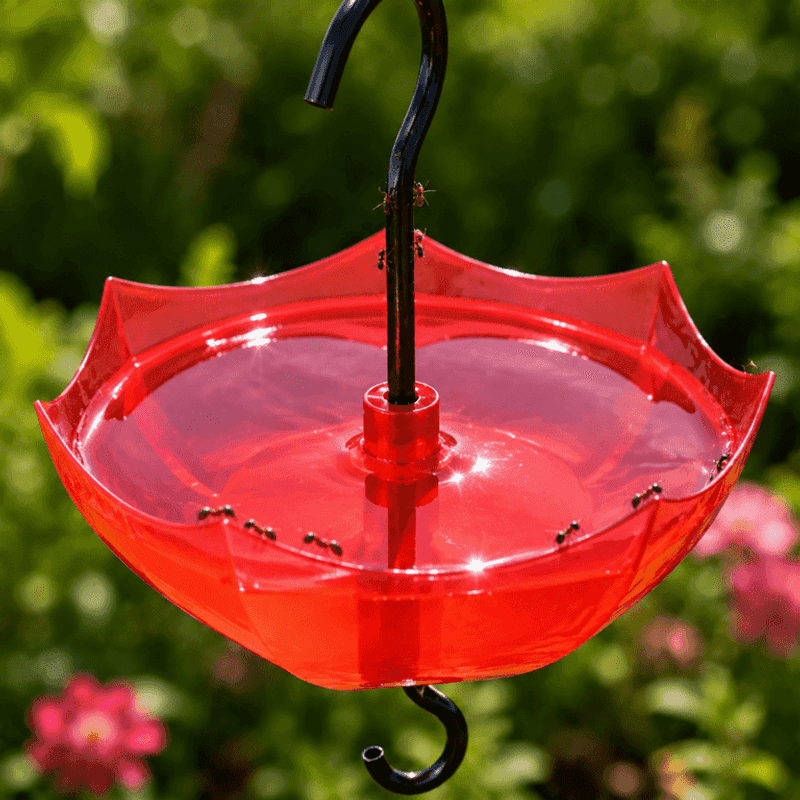
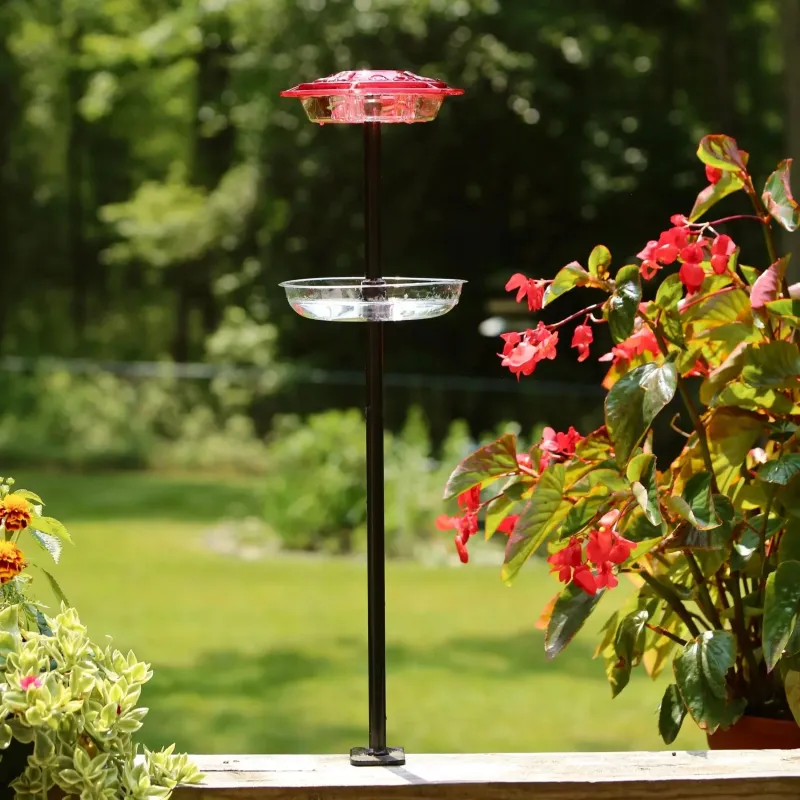
Picture a castle with a moat, only the castle is your feeder and the invaders are ants. An ant moat is a small cup that hangs between the hook and the feeder.
You fill it with plain water, and ants walking down the hanger hit a pool they cannot cross.
Most moats cost just a few dollars, and many feeders already have one built in. Hang it so the feeder sits directly below, and you have blocked the most common ant route in one step.
The catch is upkeep. On hot summer days, water can disappear fast, and a dry moat is just a bridge.
Peek at it every morning when you check the nectar, and top it off as needed.
Never add oil or soap to the water. Hummingbirds sometimes stop for a sip or a quick splash, and plain water keeps them safe.
2. Hang Your Feeder with Fishing Line
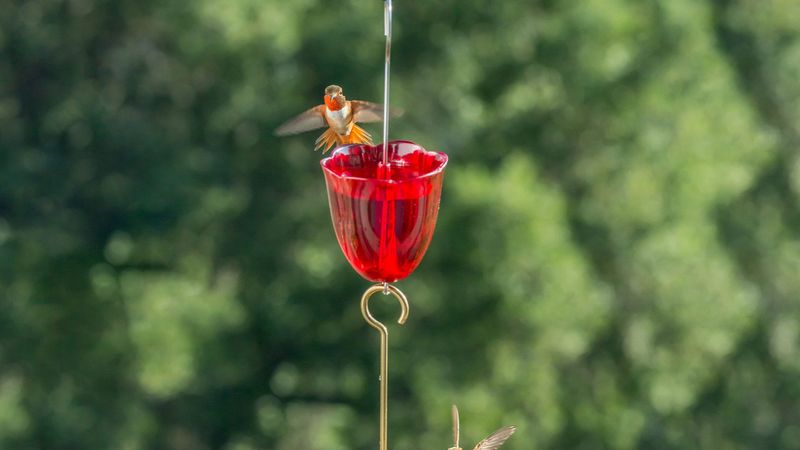
Ants are amazing climbers on rope, chain, and wire. Clear fishing line is another story.
It is thin and slick, so their little feet struggle to hold on.
Swap your chain or hook for a strong monofilament line, at least 30-pound test for most feeders. A full feeder plus a few perching birds adds up, so pick a line that can handle the weight with room to spare.
Bonus: the clear line nearly disappears, which makes your feeder look like it is floating. Pair it with a moat for a double barrier.
3. Keep the Feeder Spotlessly Clean
Honestly, a sticky feeder is an open invitation. Ants follow the smell of sugar, and even a thin film on the outside can bring a whole colony running.
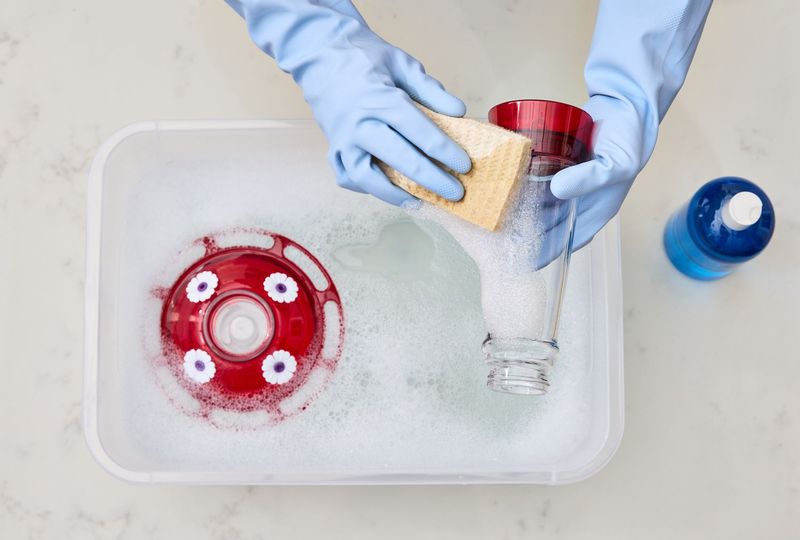
Wash your feeder every few days in warm weather, scrubbing the ports with a small brush. Rinse very well so no soap stays behind.
Then wipe the hanger, hook, and pole too.
That last step matters more than people think. Ants leave scent trails called pheromones that guide their friends straight to food.
A soapy wipe erases the map and sends scouts back to square one.
4. Check for and Fix Any Leaks
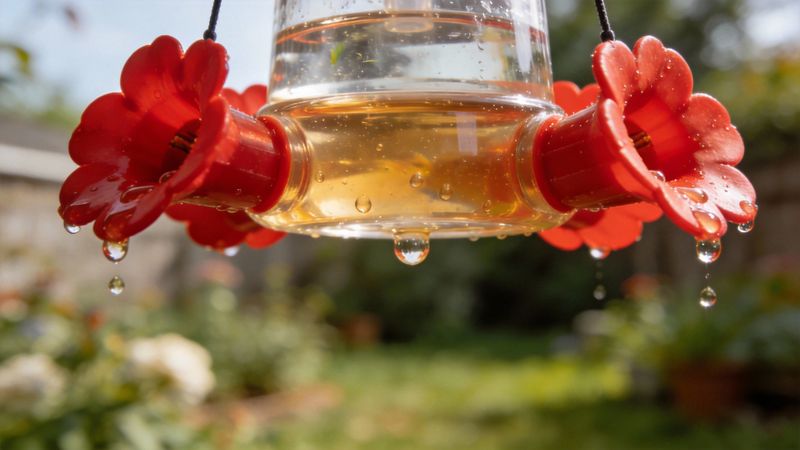
One tiny drip can do more damage than a whole feeder. Drops land on the ground or slide down the pole, and ants follow that sweet trail straight up.
Fill your feeder and hold it over the sink for a minute. Watch for drips from ports, seams, or cracks.
Loose seals and worn gaskets are the usual suspects.
Summer heat makes plastic expand, which pushes nectar out. If leaks keep coming back, think about a glass or metal feeder.
They hold their shape better and often last for years.
5. Relocate Your Feeder Frequently
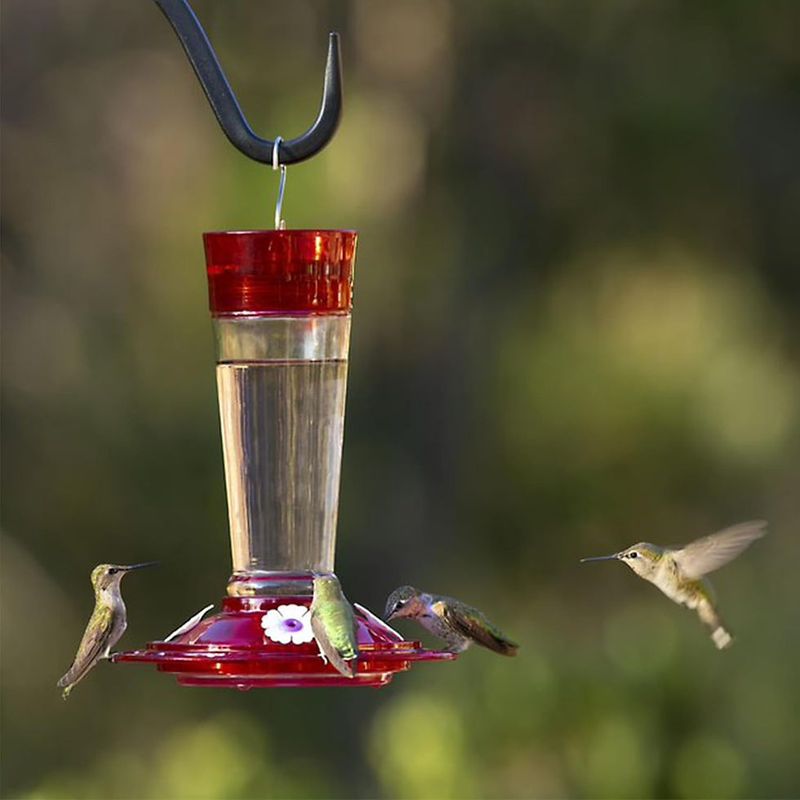
Ever watched ants march in a perfect line? They are following a chemical road their scouts laid down.
Move the destination, and the road leads nowhere.
Shift your feeder just a few feet every few days. The ants lose their trail and have to start searching all over again.
You might worry the hummingbirds will get lost. Not likely.
They have sharp eyes and great memories, and most find the new spot within minutes.
6. Trim Nearby Branches and Foliage
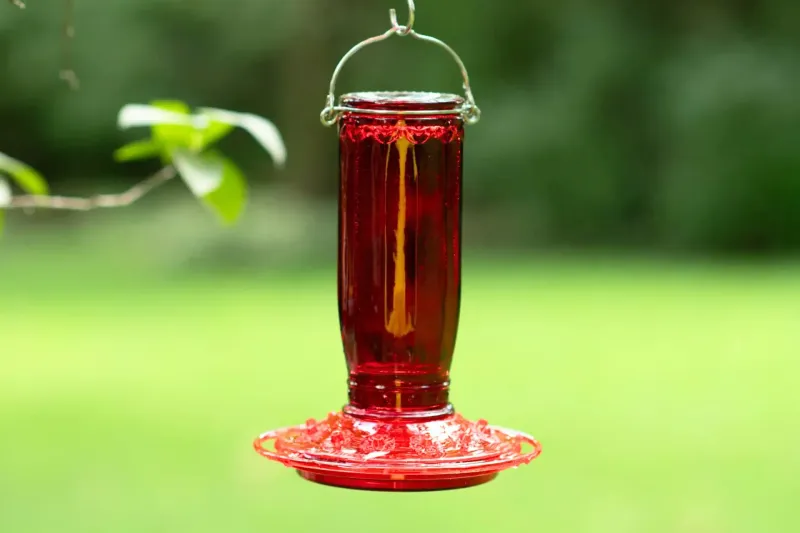
Here is a sneaky one. You install a moat, use fishing line, and still find ants inside.
Often the culprit is a leaf or twig quietly touching the feeder.
Ants will happily skip your defenses by walking across any bridge they find. Branches, tall plants, fences, and even your porch railing all count.
Walk around the feeder and make sure nothing touches it or the pole. Leave a gap of at least a foot, and check again after a growth spurt in summer.
7. Place Your Feeder in Partial Shade
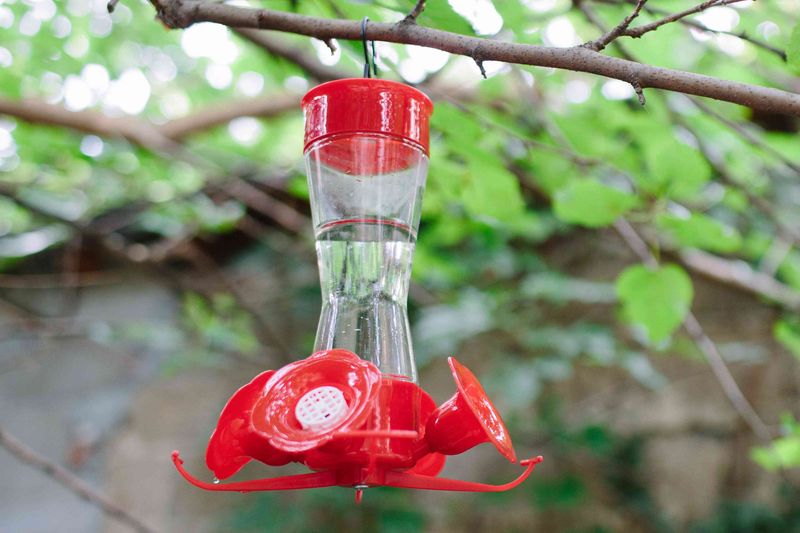
Blazing sun is rough on nectar. It speeds up spoiling and makes plastic swell, which leads to drips and a stronger sugary smell.
A spot with morning sun and afternoon shade works well. The nectar stays fresh longer, the feeder leaks less, and ants have fewer reasons to come calling.
Fun fact: hummingbirds appreciate shade too. A cooler perch nearby gives them a comfy place to rest between sips.
8. Sprinkle Cinnamon Around the Base
Your spice rack might hold a handy helper. Many gardeners find that ants avoid crossing a thick line of ground cinnamon.
Sprinkle a generous ring around the base of your feeder pole. It may help deter ants from starting the climb at all.
Keep it on the ground only, never on the feeder or ports. Rain washes it away, so reapply after storms.
9. Use Essential Oils in a Nearby Dish
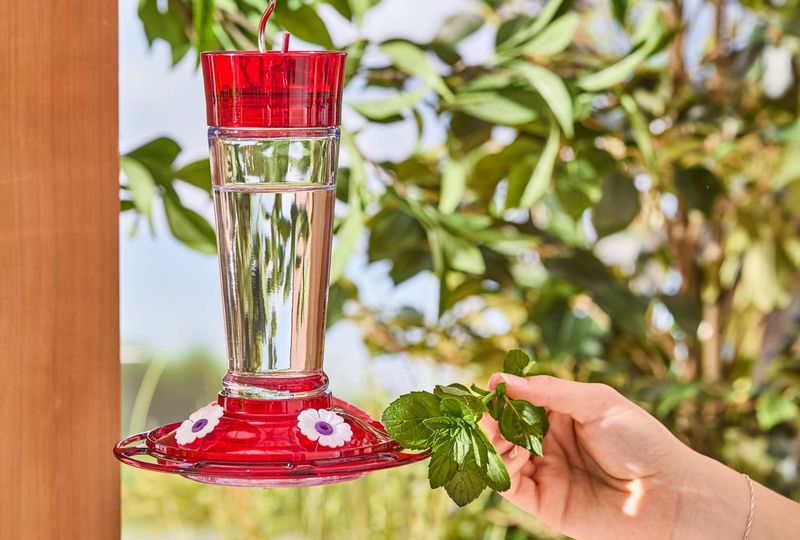
Smell is everything to an ant. Strong scents like peppermint, clove, and lemongrass can confuse them and may keep them from exploring nearby.
Put a few drops on a cotton ball, squeeze out the extra, and set it in a small dish near the feeder pole. Refresh every few days as the scent fades.
One firm rule: never put oil on the feeder itself. Oils can coat hummingbird feathers and make it hard for them to fly and stay warm.
10. Apply Food-Grade Diatomaceous Earth
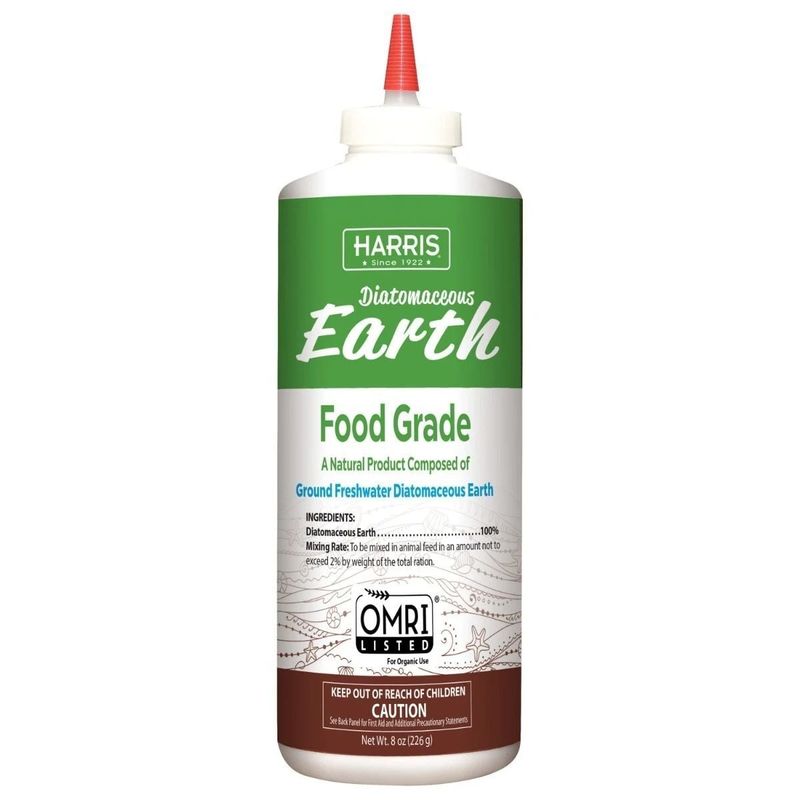
Diatomaceous earth looks like plain white powder, but it is made from tiny fossils of ancient sea creatures. To an ant, those sharp bits are like crawling through broken glass.
Dust a ring of food-grade DE around the bottom of the pole. It dries out ants that cross it and can reduce the number reaching your feeder.
DE only works dry, so add more after rain or heavy dew. Wear a mask when spreading it so you do not breathe in the dust.
11. Plant Mint or Bay Leaves Nearby
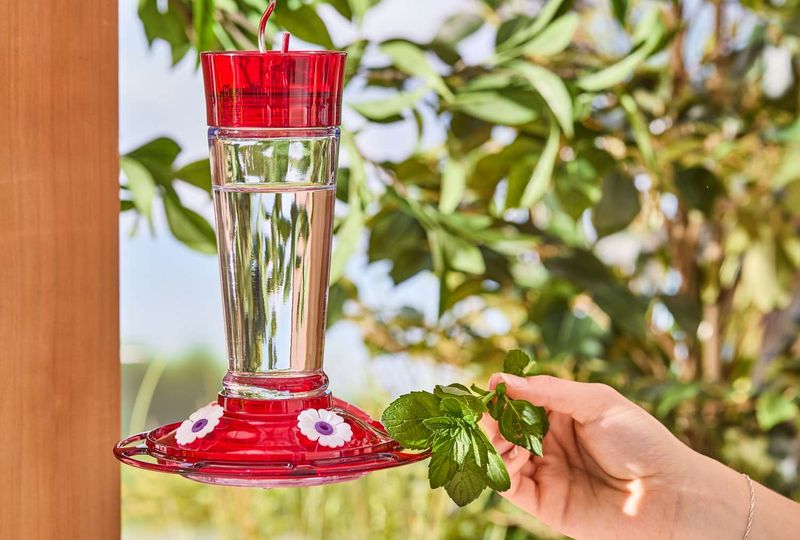
Why not let a plant do the guard duty? Mint and bay have strong smells that many ants seem to dislike.
Grow mint in a pot near the feeder pole, since it spreads fast in garden beds. You can also tie a few fresh bay or mint leaves to the hanger and swap them out once they dry.
As a bonus, you get fresh mint for iced tea. Pair it with nearby salvia or bee balm, and you have a spot hummingbirds will adore.
12. Choose a Feeder with a Built-in Ant Moat
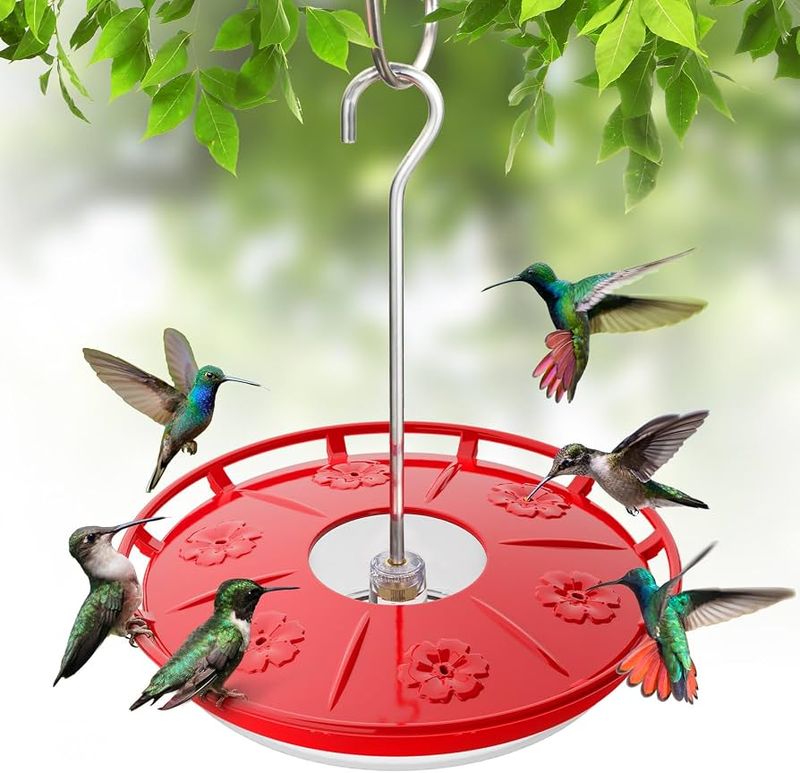
Shopping for a new feeder? Make your life easier by picking one that fights ants for you.
Many saucer-style feeders have a moat built right into the top. Their nectar also sits below the ports, so less drips out and the sweet smell stays contained.
Look for parts that come apart easily for cleaning. A feeder you can scrub in two minutes is one you will actually keep clean.
13. Wrap Aluminum Foil Around the Hook or Pole
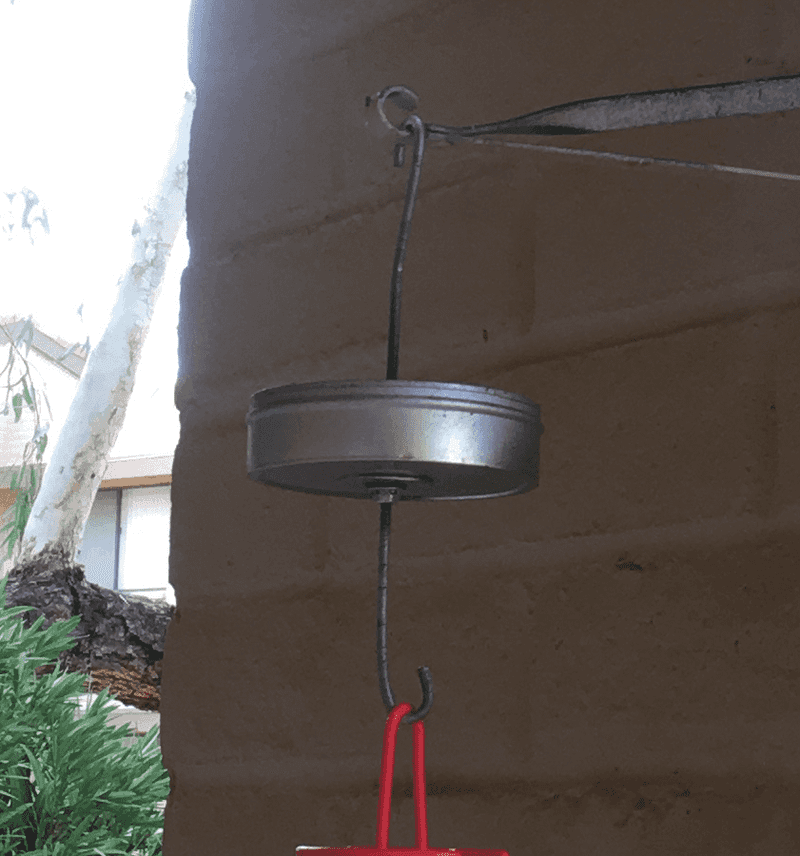
Sometimes the simplest fix is already in your kitchen drawer. Smooth aluminum foil gives ants a slippery surface that is hard to climb.
Wrap a band several inches wide around the pole or hook. Keep it smooth, since wrinkles give ants footholds.
It will not stop every ant alone, but it adds a cheap extra hurdle. Replace it when it tears or gets dirty.
14. Use Double-Sided Tape with Extreme Caution
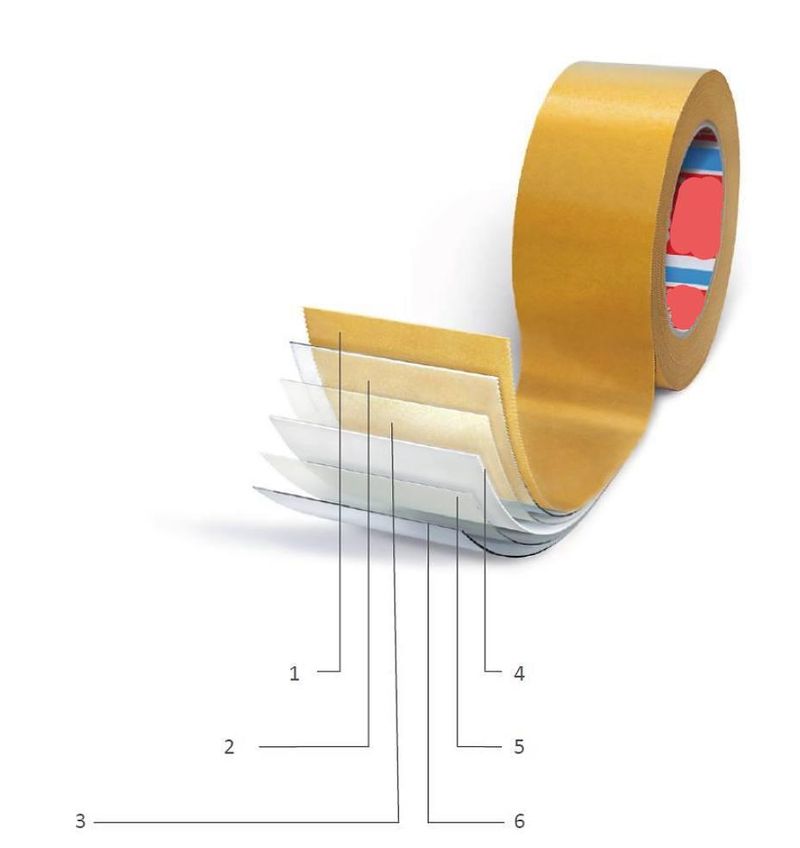
Fair warning: this trick comes with a big safety label. Sticky tape catches ants, but it can also seriously hurt a hummingbird whose feathers touch it.
If you try it, wrap the tape low on the pole, well away from where birds fly or perch. Never put it on the hook, hanger, or feeder.
Dust and bugs make tape lose its grip quickly, so replace it often. When in doubt, choose a moat instead.
15. Hang Your Feeder Over a Water Feature
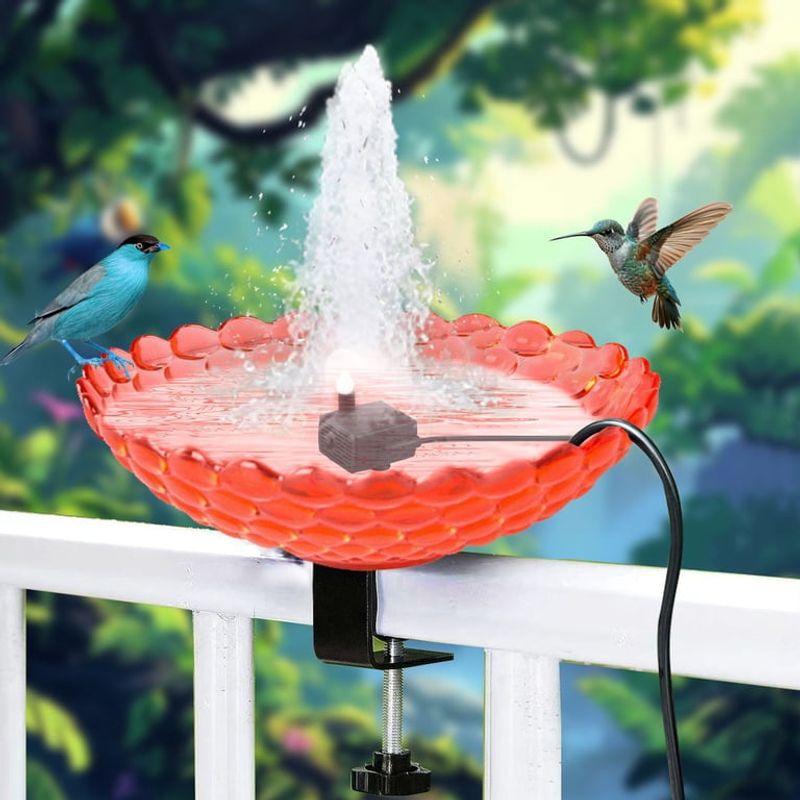
Got a birdbath or small pond? You already own the biggest ant moat around.
Hang your feeder directly above the water, and ants coming from below hit a barrier they cannot cross. Just keep the hanger clear of anything ants could climb.
Hummingbirds love moving water, especially misters and little fountains. You may get the bonus show of a bird zipping through the spray between sips.