
Aphids All Over Your Flowers? Skip The Harsh Sprays – These Gentle Fixes Clear Them Out
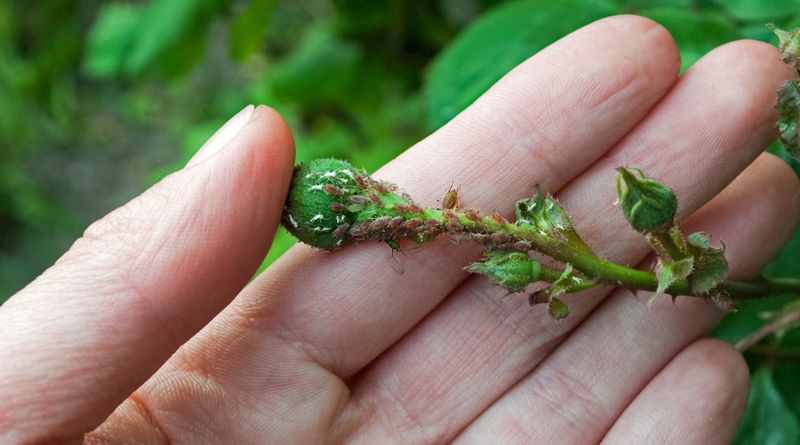
You lean in to admire your petunias and find the stems crawling with tiny green bugs. Aphids multiply fast, and they can curl leaves, stunt buds, and leave sticky goo on hydrangeas, roses, and geraniums in just a few days.
The good news is you don’t need a harsh chemical spray to win this fight. Here are eight easy, gentle fixes that can clear aphids out while keeping your plants and the good bugs safe.
1. A Strong Blast From the Garden Hose
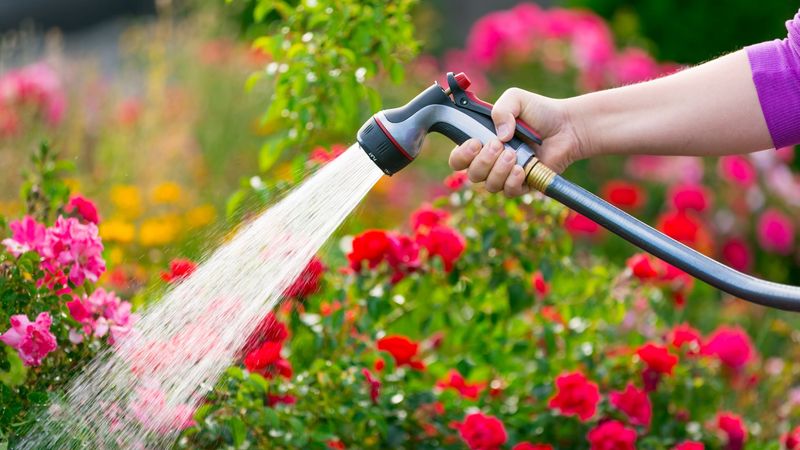
Sometimes the best tool is the one already coiled by your back door. A firm spray of water knocks aphids right off stems and leaves, and most of them can’t crawl back up.
Aim for the undersides of leaves and the soft tips of new growth, since that’s where aphids like to crowd together. Sturdy plants like hydrangeas, petunias, and tomatoes handle this well.
Just ease up the pressure on delicate blooms so you don’t snap them.
Do it in the morning so the leaves dry before evening, which helps cut down on fungus problems. Repeat every two or three days for about a week.
One spray rarely gets every bug, but a steady routine can break their breeding cycle and save you from ever opening a bottle of anything.
2. Hand-Picking and Snipping Infested Tips
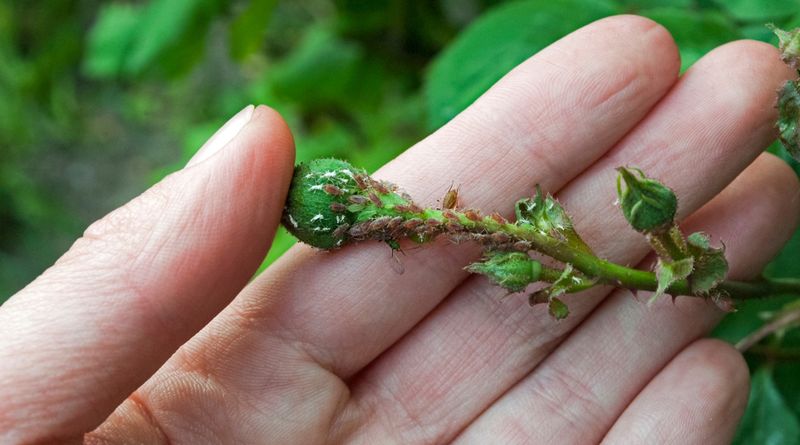
My grandmother called it bug duty, and she did it with a coffee cup of soapy water in one hand. It sounds old-fashioned, but for a small outbreak, it works beautifully.
Slip on a pair of gloves, since aphids leave sticky honeydew behind. Gently rub them off buds and stems with your fingers, or wipe them away with a damp paper towel.
On clematis and geraniums, the bugs often hide right where the leaf meets the stem, so check those spots closely.
If one shoot is totally coated, just snip it off. Drop the cuttings straight into soapy water instead of the compost pile so the bugs don’t wander back.
Your plant will push out fresh, clean growth in no time.
3. Ladybugs, Lacewings, and Other Garden Allies
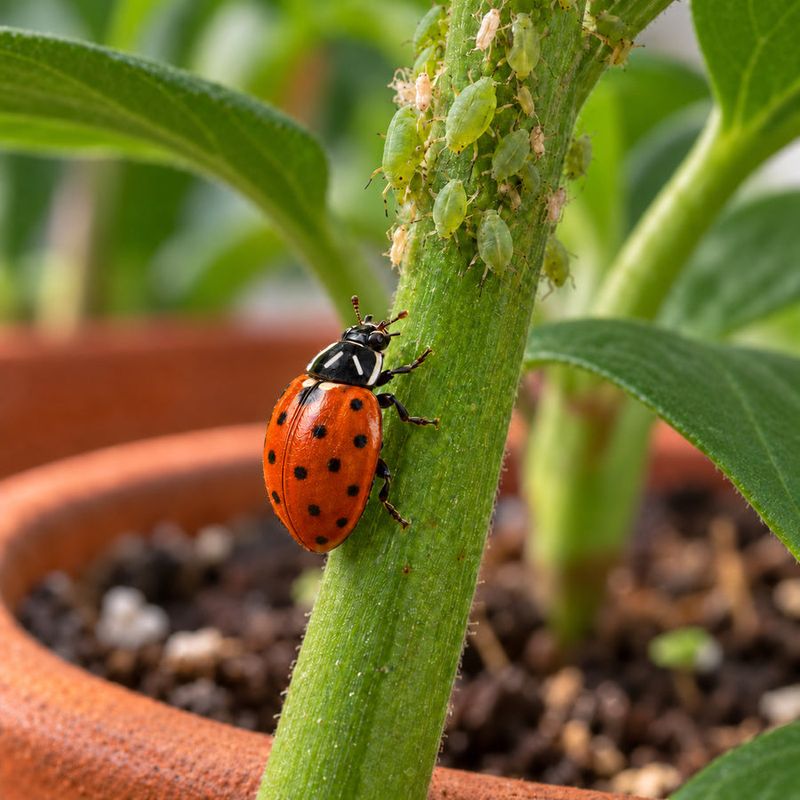
A single ladybug can eat dozens of aphids a day, and its larvae, which look like tiny alligators, are even hungrier. Hiring nature’s pest crew is one of the smartest moves you can make.
Green lacewings and tiny parasitic wasps also feast on aphids. The wasps are harmless to people and lay eggs inside aphids, leaving behind puffy tan shells called mummies.
If you spot those, the good guys are already at work.
Buying adult ladybugs can be hit or miss, since many simply fly away. Lacewing eggs or larvae tend to stay put and get busy faster.
The easiest plan, though, is to stop using broad sprays and plant flowers like dill, yarrow, and sweet alyssum that invite these helpers to move in for good.
4. Simple Insecticidal Soap Spray
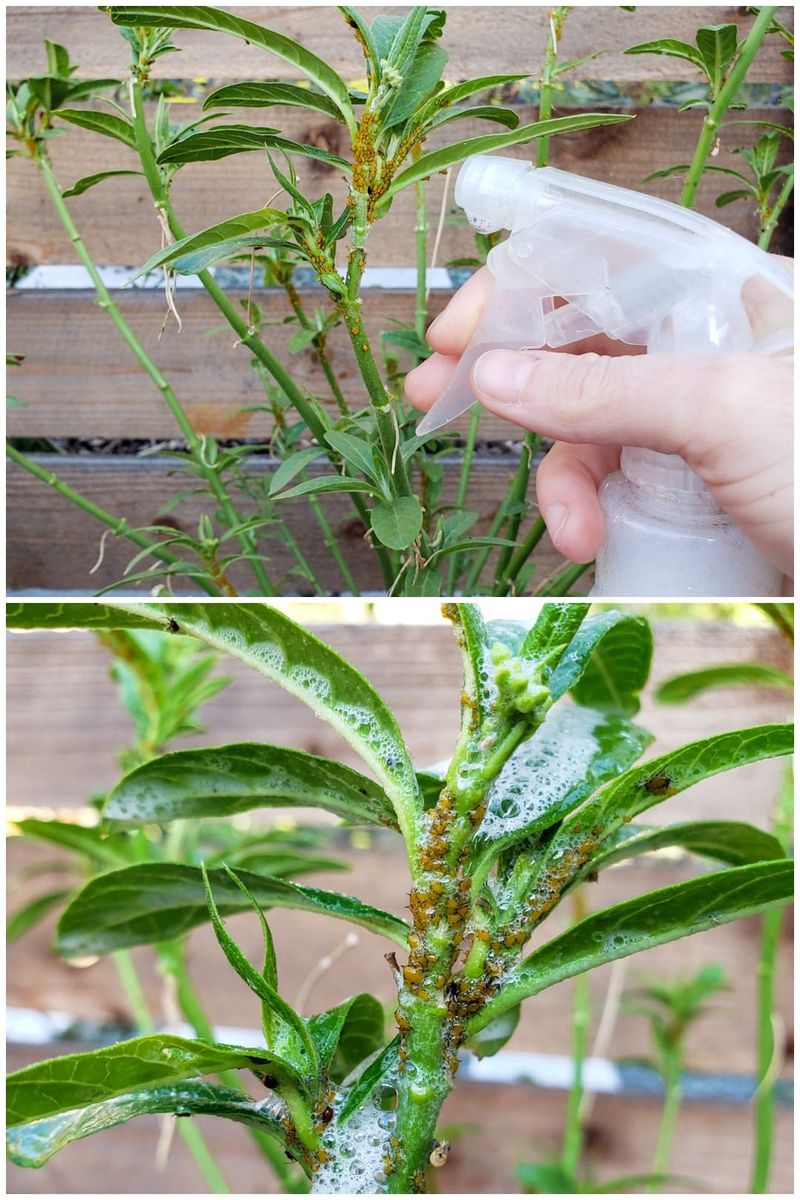
Soap and water may not sound tough, but aphids have soft bodies that can’t stand up to it. The soap breaks down their protective outer coating, and they dry out.
Mix about a teaspoon of mild liquid soap into a quart of water. Skip anything with degreasers, bleach, or added lotions, since those can burn leaves.
Store-bought insecticidal soap is even safer because it’s made for plants.
The spray only works when it actually hits the bugs, so soak the undersides of leaves too. Test a small patch first and wait a day.
Rinse the plant with plain water a couple of hours later, and avoid spraying in hot midday sun. Repeat every few days until the colonies are gone.
5. Neem Oil for Stubborn Colonies
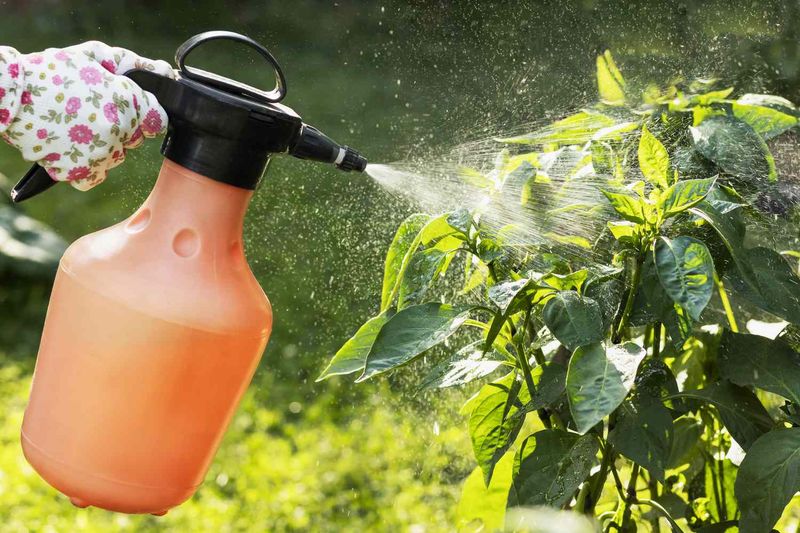
Squeezed from the seeds of a tree native to India, neem oil has been used for centuries to protect crops. Today it’s a go-to for gardeners whose aphids keep coming back.
Neem works in a few ways. It smothers soft insects, and it can also mess with their feeding and breeding, so the next generation shrinks.
That makes it handy for hollyhocks and roses that seem to attract aphids every single year.
Always mix it according to the label and shake the sprayer often, since oil and water separate. Spray in the evening, when bees have gone home and the sun can’t scorch wet leaves.
Plan on repeating every seven to ten days. Patience pays off here, because neem may take a little time to show results.
6. A Light Dusting of Diatomaceous Earth
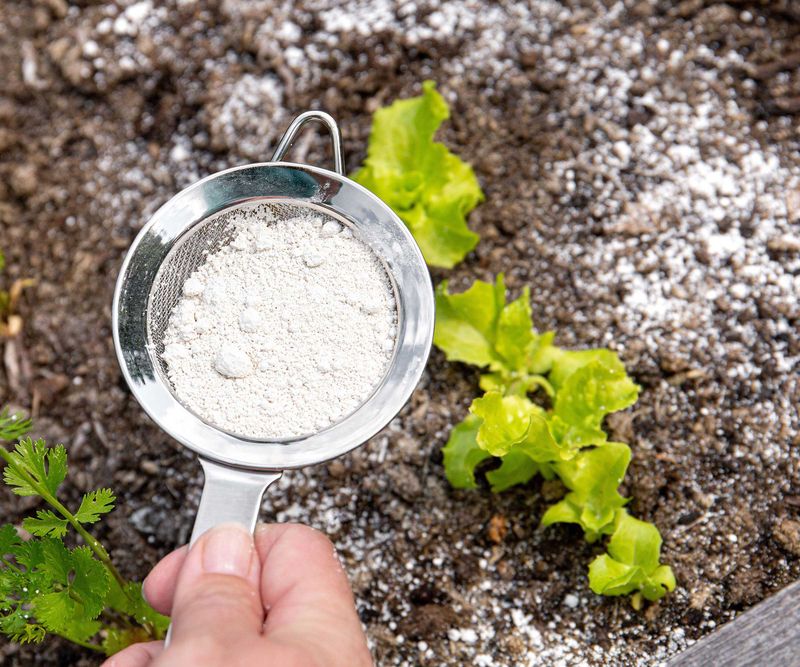
Here’s a quirky one: diatomaceous earth is made from the fossilized shells of tiny ancient algae. To us, it feels like soft flour.
To a soft-bodied bug, it’s sharp and drying.
Choose food-grade DE and dust a thin layer on dry leaves or around the base of the plant. It only works while dry, so you’ll need to reapply after rain or watering.
Wear a simple mask, since the fine powder isn’t something you want to breathe in.
Use it carefully. DE doesn’t pick favorites and can harm ladybugs and bees too, so keep it off open flowers.
Think of it as a spot treatment for a problem plant, not a blanket for the whole garden.
7. Trap Crops and Aphid-Shy Neighbors
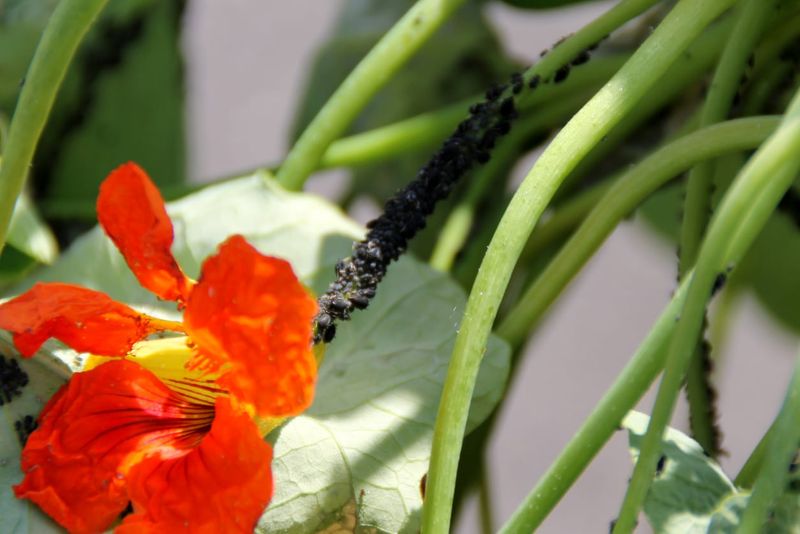
Picture a decoy that lures pests away from your prized blooms. That’s exactly what a trap crop does, and nasturtiums are aphid magnets.
Plant a few nasturtiums a short distance from your petunias or roses. Aphids often pile onto them first, giving you one easy spot to hose them off or pull the whole plant once it’s overrun.
Bonus, the flowers are cheerful and edible.
Some gardeners also tuck chives and garlic near their flowers, since their strong scent may help deter aphids. Results vary from yard to yard, so treat these plants as helpers rather than a full cure.
Mixing them in can still make your beds a little less tempting.
8. Healthy Plants and Easy-Going Fertilizer
Too much love can actually draw aphids in. Heavy doses of high-nitrogen fertilizer push out soft, juicy new growth, and that’s the aphid version of a buffet.
Feed your flowers lightly and choose a balanced or slow-release fertilizer. Water deeply at the base instead of giving small daily sips, and make sure each plant gets the sun it needs.
A stressed, thirsty plant has a much harder time bouncing back from an attack.
Get in the habit of checking leaf undersides once a week during spring and summer. Catching a few bugs early means a quick fix instead of a full rescue.
Strong plants plus a watchful eye may be the gentlest aphid control of all.