
Bearded Iris Rhizome Showing at the Soil Surface? What to Know Before You Cover It for Winter
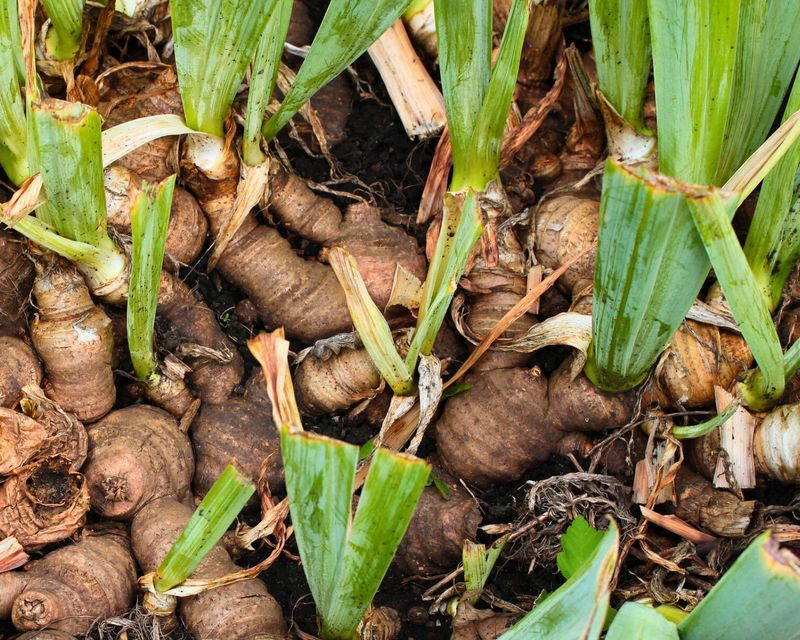
You look at your iris bed and spot a fat, tan rhizome sitting right on top of the soil. It feels like something is wrong, and the urge to tuck it in with dirt or mulch is strong.
For bearded irises, that urge may do more harm than good. Here is how to tell what is normal, what is risky, and when a little winter protection makes sense.
A visible bearded iris rhizome is usually normal
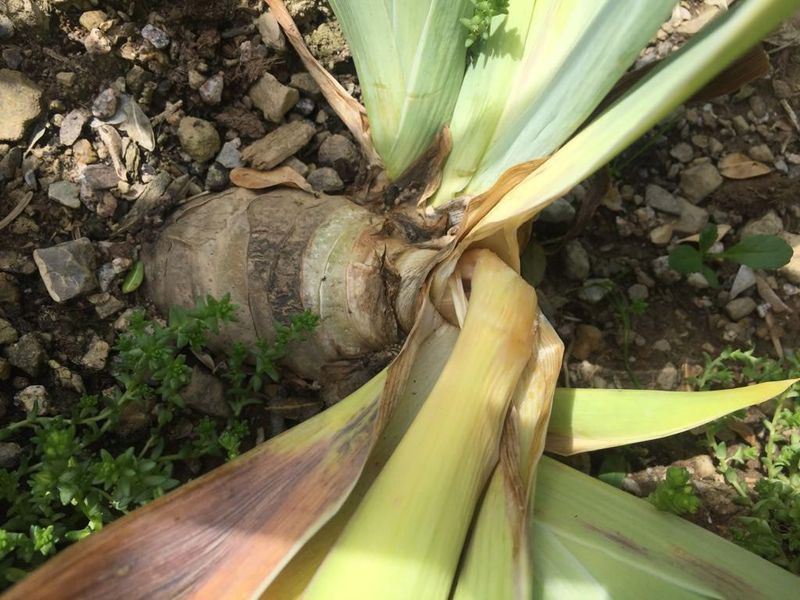
Spot a thick, knobby, tan-to-green stem lying along the soil line? That is the rhizome, the storage structure of a bearded iris.
According to American Iris Society planting guidance, bearded iris rhizomes should sit at or just below the soil surface, with the roots anchored underneath.
So a visible rhizome top is not an emergency. The top may be showing or barely covered, and that is a normal planting position.
What should not be showing are the roots. Those thin, wiry strands should stay in the soil, holding the plant steady and taking up water.
Heavy clay soil changes the picture a little. Clemson Extension notes that in heavy clay, up to half the rhizome may be exposed.
Planting a bit high in slow-draining ground helps keep the rhizome from sitting in wet soil.
A quick check can settle your worry. Brush back any loose mulch or debris and look at where the rhizome meets the roots.
If the rhizome is firm and the roots dive into the soil, you are in good shape. If roots are dangling in the air, gently firm the soil around them without piling it over the rhizome.
One important limit: this advice is for bearded irises, the ones with fuzzy “beards” on the lower petals and flat, fan-shaped leaves. Other types can have different needs.
For example, UConn Extension advises planting beardless iris rhizomes deeper, and Dutch iris grow from bulbs, not rhizomes. Confirm what you have before you decide how deep it should sit.
Deep planting and trapped moisture create avoidable risks
Burying a bearded iris rhizome is where trouble can start. Planting too deep is one possible contributor to poor flowering, and it can make the rhizome sit in cooler, wetter soil.
That is a risk, not a guaranteed outcome, but it is one you can avoid.
Moisture is the bigger worry. North Carolina State Extension points out that these rhizomes are prone to rot in overly wet conditions.
Soil that drains well and a shallow planting position both help lower that risk.
Think of the rhizome as a plump little pantry. It stores food and water, so it does not need extra dampness around it.
Soggy ground, heavy soil, and low spots where water lingers all make life harder.
If your bed holds water, a few changes may help. Mix in coarse material to loosen the soil, or plant on a slight mound so rain runs away from the rhizomes.
The American Iris Society also stresses good drainage as part of basic care.
As for coverings, skip piles of soil and thick, wet layers like heavy compost or matted leaves right over the rhizome. They can hold moisture against it.
That does not mean every covering causes rot, only that dense, soggy ones raise the odds. When in doubt, keep the area around the rhizome open and airy.
Should you mulch before winter?
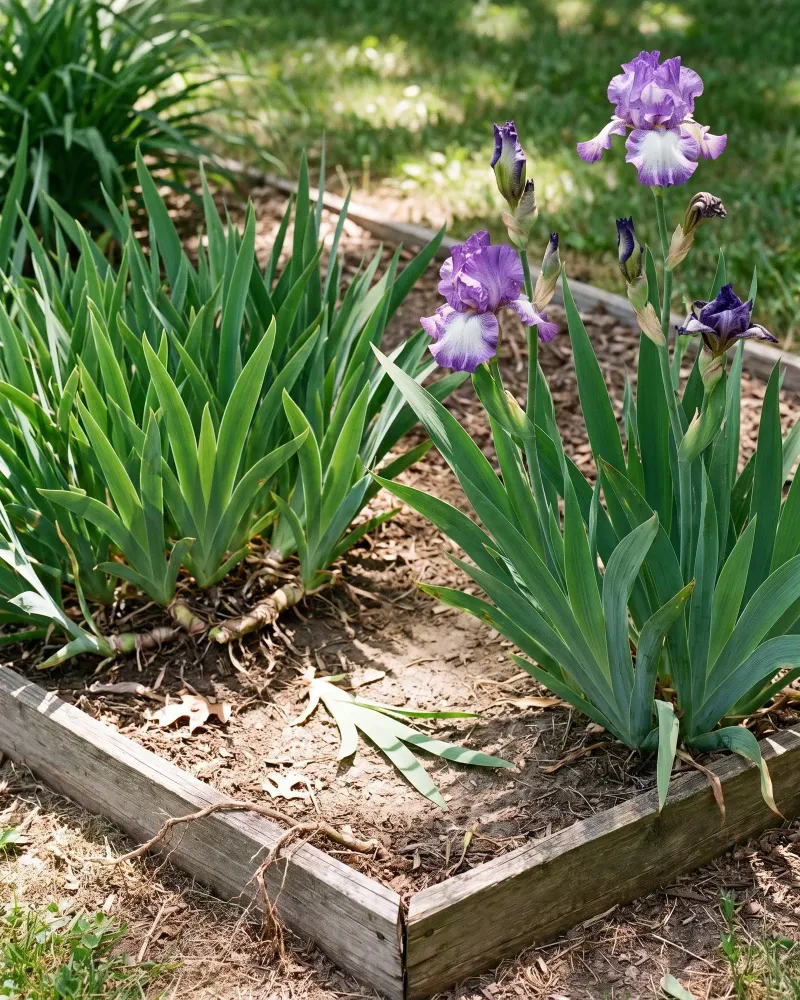
Keeping a rhizome shallow and giving it winter protection can sound like opposites, but they are different jobs. The goal is not a deep blanket right over the rhizome.
It is a light, airy layer, used only where cold and weather call for it.
Some guidance does recommend mulch in the right situation. University of Wisconsin Extension suggests mulching newly planted iris after the ground freezes when snow cover is lacking.
The aim is to reduce damage from freezing and thawing, which can heave young plants out of the soil. In early spring, remove the mulch.
Cold climates may need more attention. Utah State Extension says northern gardens may need light winter mulch, including on established irises.
That fits places where winters are harsh and snow is unreliable.
Wait until the soil has frozen before adding any covering. Mulching too early can hold warmth and moisture around the plant.
Choose something loose, such as straw or evergreen boughs, rather than wet, packed leaves.
If you garden somewhere mild, or your winters bring steady snow, you may not need any mulch at all. A visible rhizome in those conditions is usually fine as it is.
So there is no single rule to follow. Think about your new plants, your local cold, and whether snow tends to cover the bed.
Then decide how light your protection should be.
Poor bloom has more than one possible cause
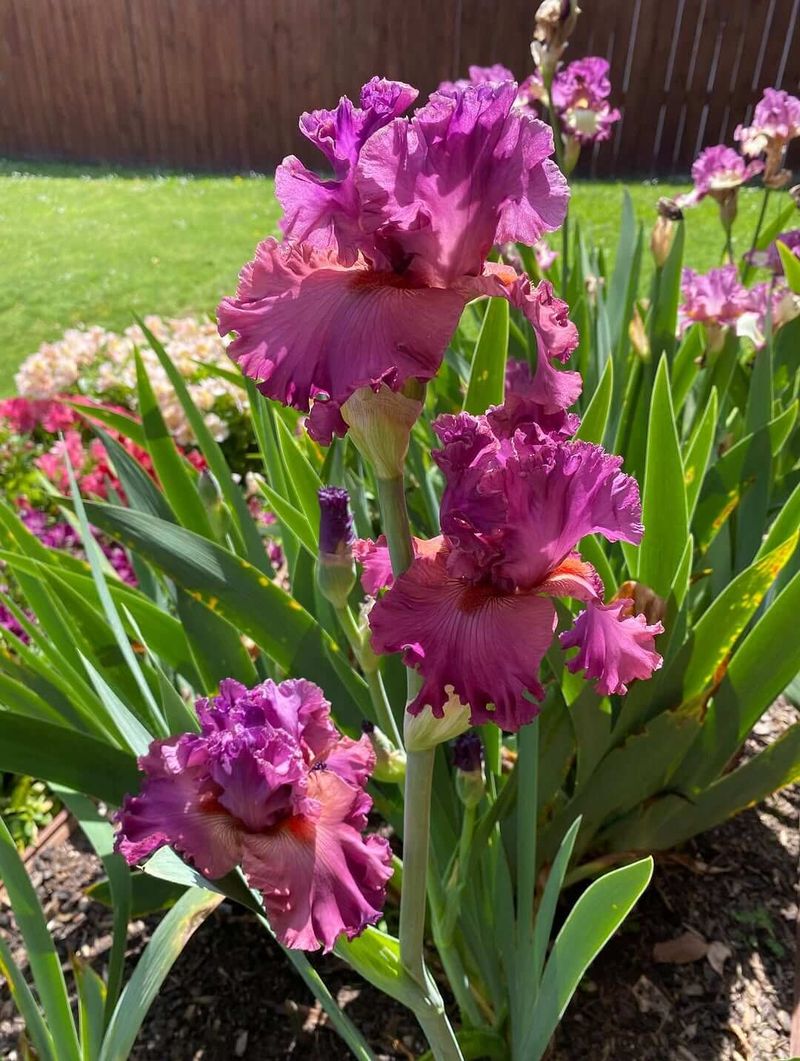
Lots of leaves and no flowers feels frustrating, and a visible rhizome is easy to blame. But seeing one does not tell you why a clump skipped blooming.
Several causes can be at play, sometimes together.
Both Iowa State Extension and University of Wisconsin Extension list planting too deep, crowding, and too little sunlight as possible reasons for poor bloom. These are possibilities to check, not a diagnosis.
Start with light. Iowa State gives a benchmark of at least six hours of direct sun for best flowering.
If a nearby tree or shrub has grown, your once-sunny spot may now be shaded.
Next, look at the clump. Rhizomes packed tightly, stacked on each other, or crowding toward the center can compete for space and nutrients.
Blooms often thin out in the middle first.
Then check depth. If the rhizome is truly buried under a few inches of soil, raising it so the top sits near the surface may help.
Still, fixing depth does not guarantee flowers next spring. Plants sometimes need a full season to respond.
Work through the list one item at a time. Sun, spacing, and depth are all things you can adjust without buying much.
A crowded clump may need dividing, not burying
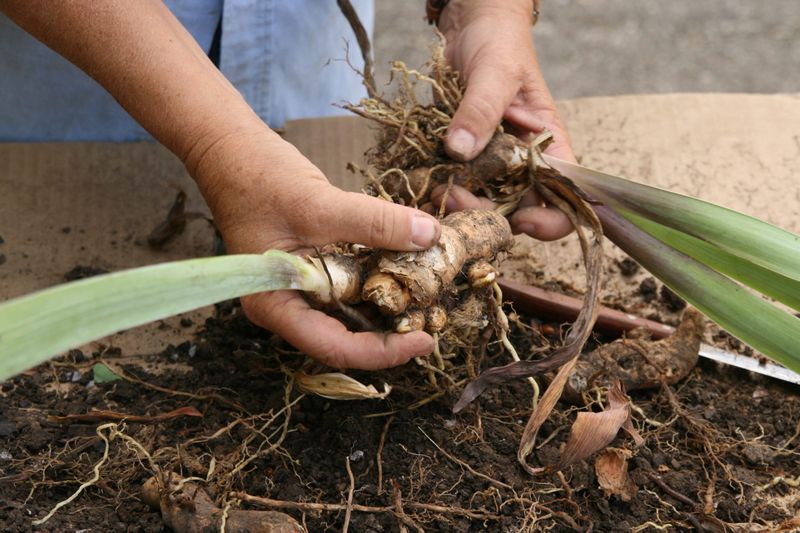
When rhizomes pile up in a tight knot, adding soil on top is the wrong move. Dividing the clump is the practical fix.
It gives each rhizome room and puts them back at the right height.
University of Wisconsin Extension recommends division when bloom declines or the clump becomes crowded. Signs include a bare center, rhizomes stacked or pushed above the soil, and fewer flowers than before.
For timing, Iowa State Extension suggests dividing bearded iris every three to five years. Treat that as a general guide.
A fast-growing clump may need it sooner, and a slower one may wait longer.
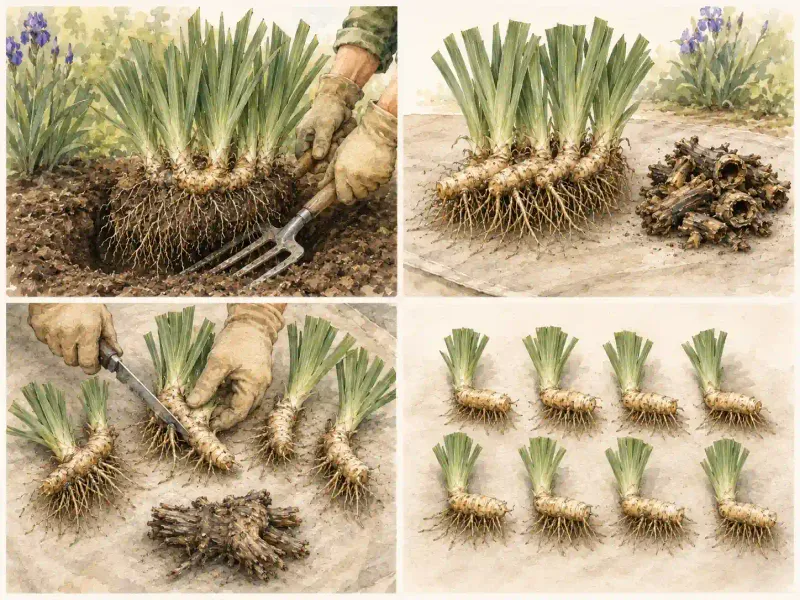
To divide, lift the clump with a fork and shake off loose soil. Choose firm, healthy rhizomes with a fan of leaves, and discard soft or damaged pieces.
Replant each one with the top at or just below the surface and the roots spread and covered.
Set realistic hopes for the first year. Transplanted divisions may bloom sparsely in their first season while they settle in.
That is normal and does not mean you did something wrong.
Give the new plants decent sun and well-drained soil, and they have a fair chance to bulk up again over the next seasons.
Check the plant, roots, drainage, and winter conditions
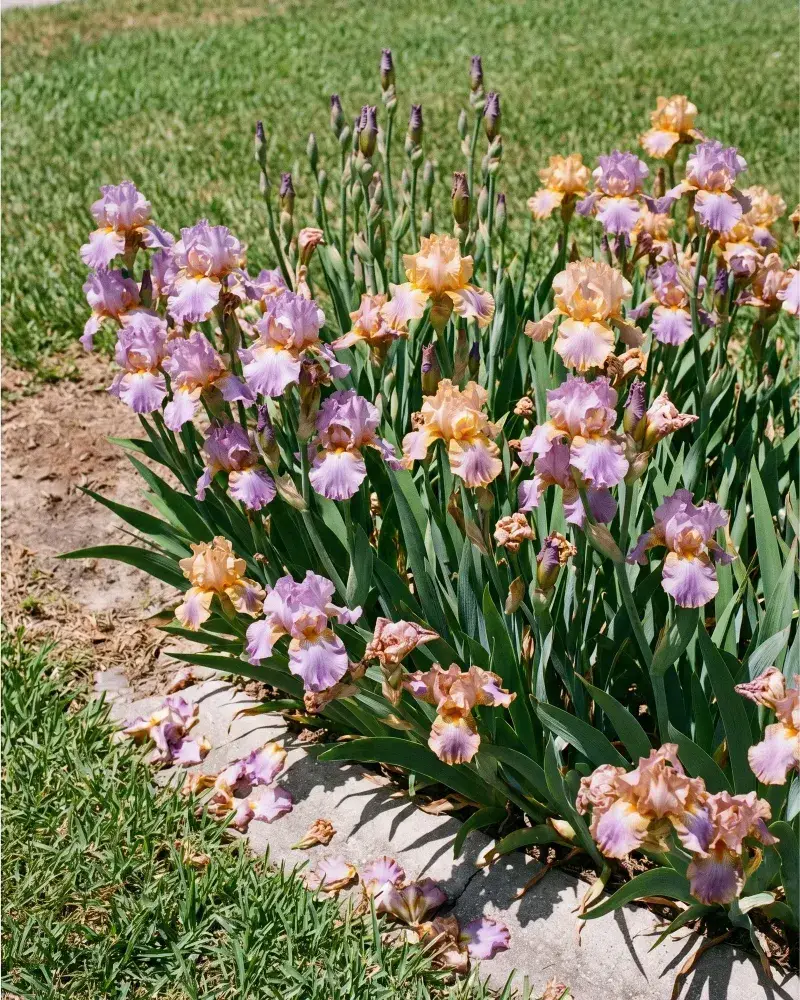
Before you reach for the shovel or the mulch, run through a quick checklist. Confirm the plant is a bearded iris.
Keep the roots covered and the rhizome near the surface, as the American Iris Society describes. Skip deep burial and soggy coverings.
Decide on winter protection by your local cold and snow. Cold, low-snow gardens may want a light layer, as Utah State Extension notes.
Also remember that crowding and too little sun, with six hours of direct sun as the benchmark, can affect bloom.
No single fix promises flowers. A rhizome in the open air is often just a plant sitting where it likes to be.