
Black Gum, the Often Overlooked Native Shade Tree That Feeds North Carolina Pollinators in Spring and Wildlife Through Fall
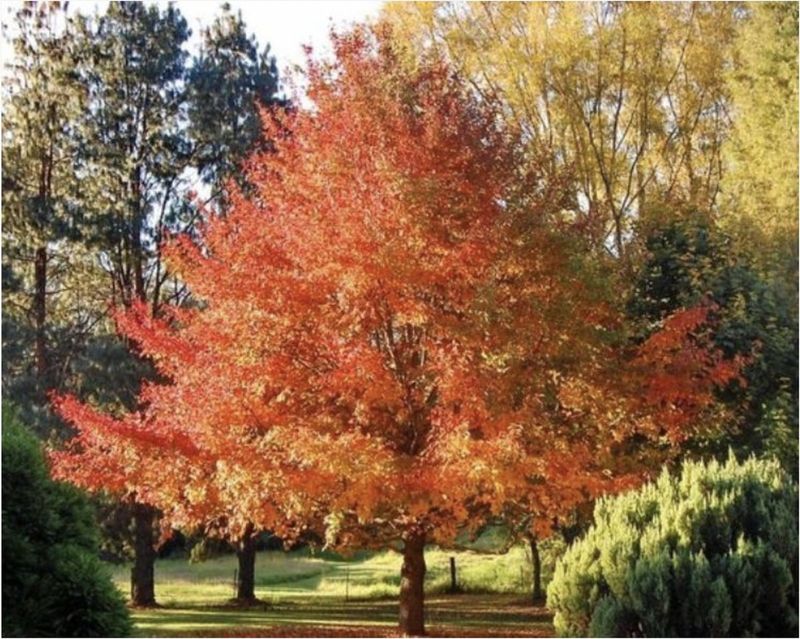
Black gum, also called black tupelo, grows quietly in yards and woodlands from the Outer Banks to the Blue Ridge, yet most North Carolina homeowners walk right past it at the nursery without a second glance. That is a missed opportunity.
This tree brings together real canopy shade, spring nectar for bees, brilliant fall color, and late-season fruit for birds and other wildlife, all in one long-lived native planting. Paired with the right companion plants, it can anchor a yard that supports pollinators and wildlife from the first warm days of spring until hard frost.
Why black gum deserves a closer look
Black gum, or black tupelo (Nyssa sylvatica), is worth your attention as a native shade tree candidate for North Carolina yards. NC State Extension’s plant profile classifies it as a shade tree, specimen tree, and street tree, and it is native across all three of the state’s major regions: the Coastal Plain, the Piedmont, and the Mountains.
That statewide presence means it is not a regional specialty; it belongs here.
What makes black gum a strong candidate is the combination of services it provides over its lifetime. Its canopy can grow substantial enough to shade a patio or a south-facing wall.
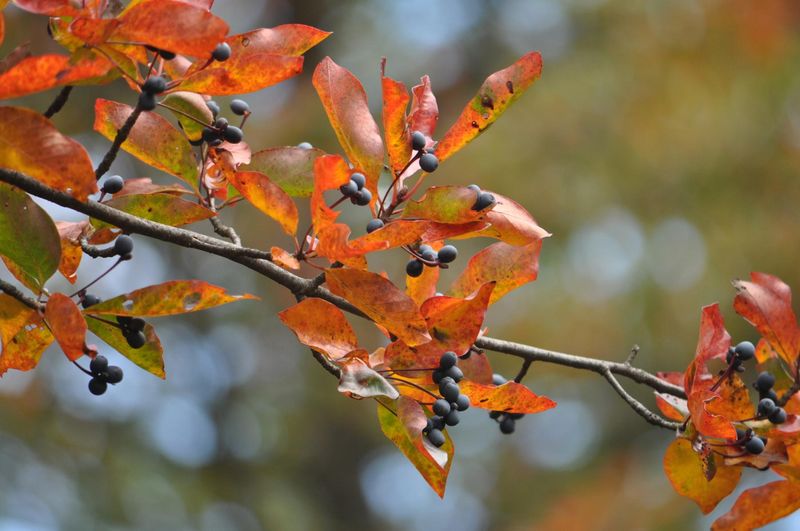
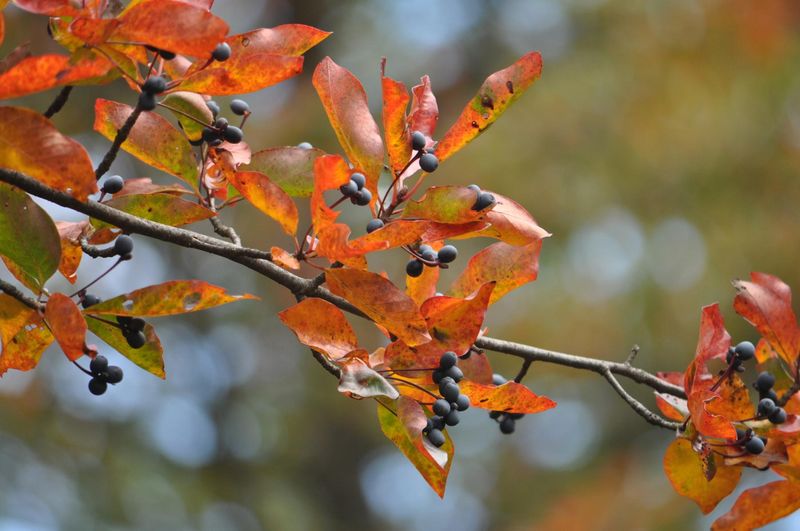
Its spring flowers, though small and easy to miss, supply nectar that bees actively seek. Its blue-black fruit feeds songbirds and other wildlife from late summer into fall.
And its fall foliage, often turning a vivid scarlet or deep burgundy well ahead of most other trees, gives the yard a seasonal anchor that earns its space on aesthetics alone.
A fair introduction to this tree also requires an honest correction. The original framing of this article promised that one tree feeds pollinators continuously from spring through the first frost.
That claim does not hold up. Black gum flowers during a defined spring window, and its fall fruit supports birds and mammals, not bees.
The goal of this article is to show where black gum genuinely shines, explain what it cannot do alone, and help you build a realistic planting plan around it.
Black gum is not the right tree for every North Carolina yard. It can become large, it has strong site preferences, and it is a permanent commitment once established.
But for homeowners who have the space and the right conditions, it is a native tree that quietly earns its keep across every season without demanding much in return.
Its seasonal benefits are not all the same
Black gum moves through the year offering different things to different creatures, and keeping those contributions straight helps you set realistic expectations before you plant.
Spring is when black gum earns its pollinator credentials. The flowers open in May and run into June, and while they are inconspicuous rather than showy, bees find them reliably.
NC State’s black gum profile confirms that the spring flowers provide nectar for bees, and beekeepers in the Southeast have long valued black gum as a honey source. The flowers are clustered and small, so you may not notice them from the ground, but the bees will.
This May-to-June window is the tree’s primary pollinator contribution, and it should not be stretched further than that.
By late summer, the picture shifts. The tree’s blue-black drupes begin to ripen, and the list of wildlife that responds reads like a backyard bird count: thrushes, songbirds of several species, wild turkeys, and, in wilder settings, black bears, foxes, raccoons, and opossums.
This is wildlife food in the truest sense, providing fat and calories at a time when many birds are preparing to migrate or building reserves for the months ahead. The fruit is not late-season nectar for bees or butterflies; it is a completely different ecological service, and calling it pollinator forage would misrepresent what the tree actually does.
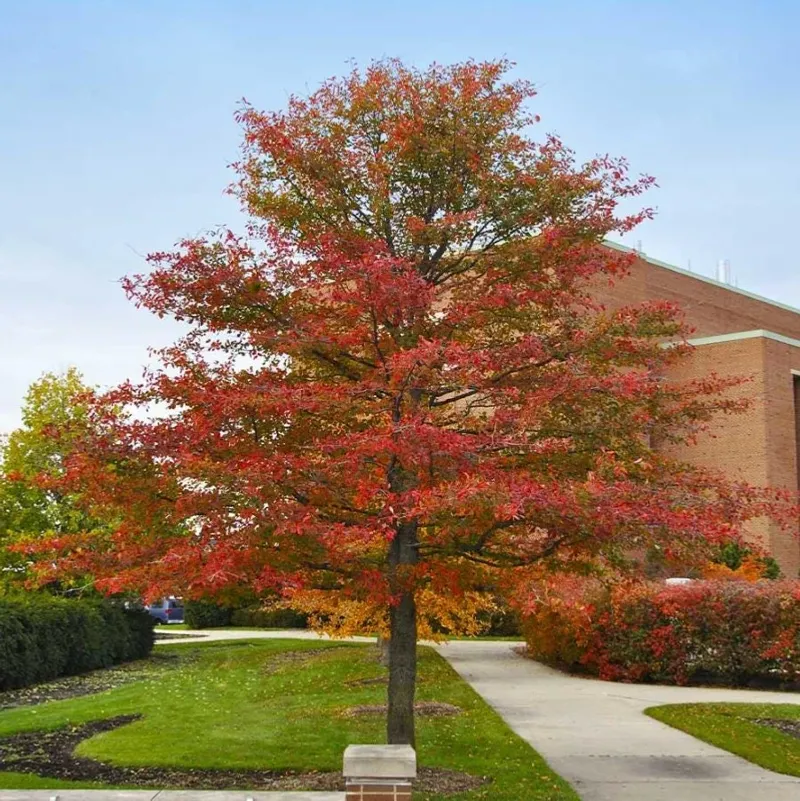
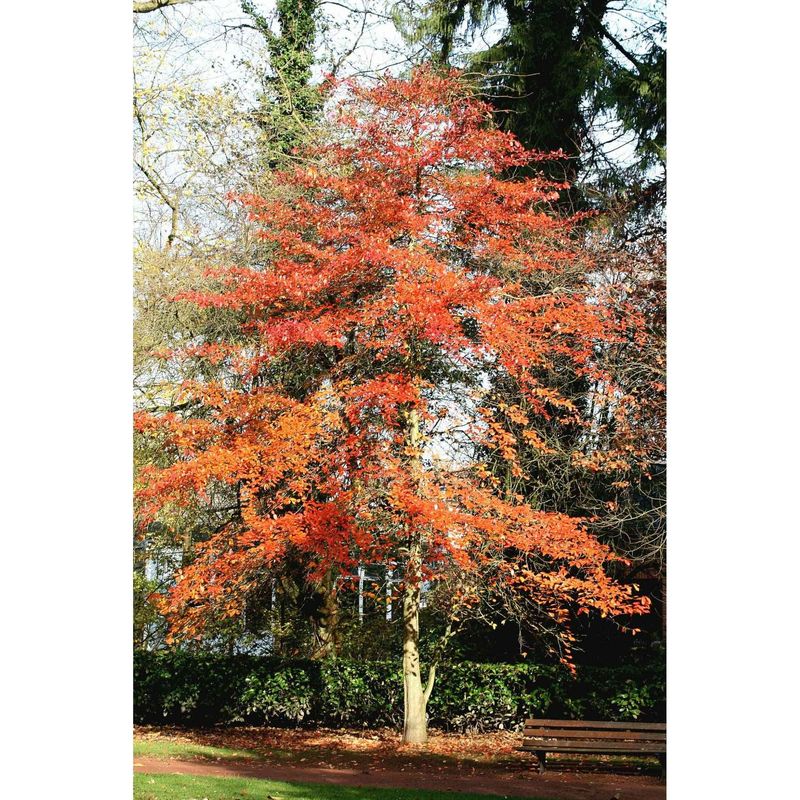
Fall color is the third contribution, and it arrives reliably. Black gum often turns before most other trees, producing deep reds, purples, and oranges that make it a standout specimen even in a mixed planting.
Beyond the visual appeal, the tree’s structure, cavities, and bark also provide shelter for bats, reptiles, frogs, and small mammals throughout the year.
Taken together, black gum’s seasonal arc runs from spring nectar to fall fruit to year-round habitat, but those are three distinct roles, not one continuous feeding station. Understanding that distinction is the starting point for building a yard that actually delivers on a spring-to-frost pollinator goal.
Check the site before choosing a permanent tree
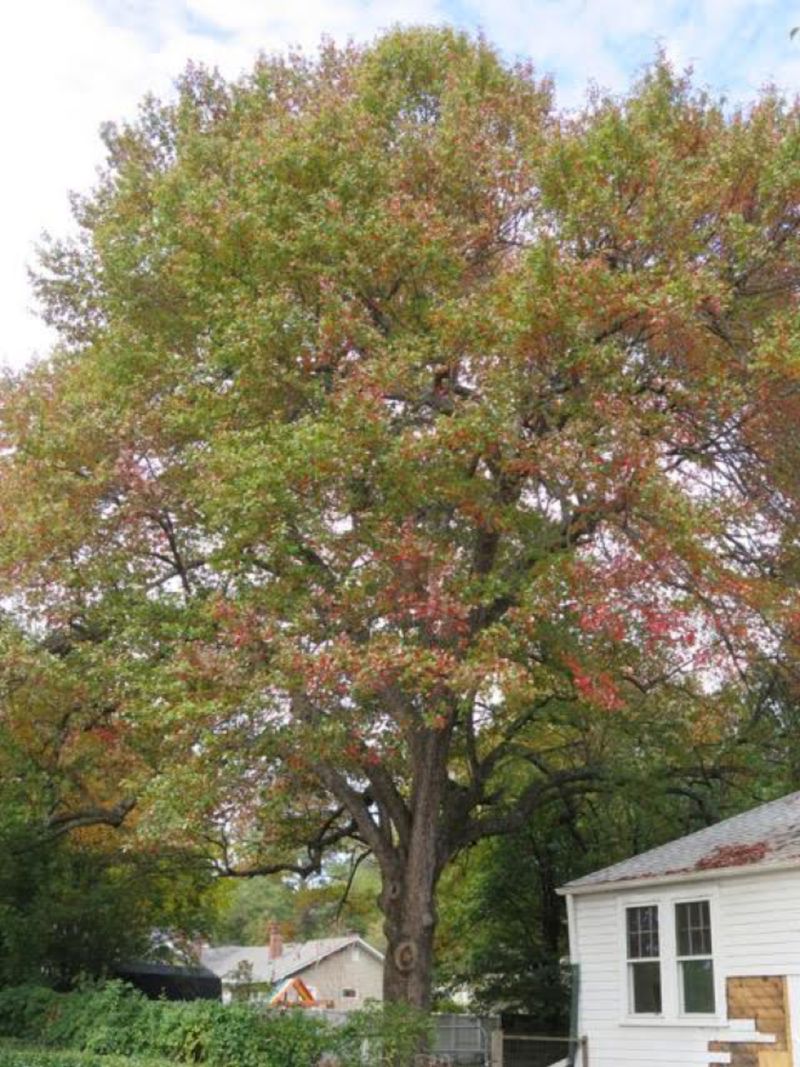
Before you buy a black gum, walk your property with the tree’s mature size in mind. In natural settings, black gum can reach 40 to 70 feet tall with a canopy spread to match, though nursery-grown cultivars often stay somewhat smaller.
That is still a large tree, and placing it incorrectly is a mistake you will live with for decades.
Look up before you pick a planting spot. Overhead utility lines are the most common conflict, and a tree planted beneath them will either be disfigured by repeated cutting or will eventually require removal.
Scan for buildings, roof overhangs, pavement, driveways, and sidewalks that a spreading canopy or surface roots could eventually reach. Septic systems and drain fields deserve special attention; a large tree planted too close can cause serious and expensive problems over time.
Property boundaries matter too, since a tree that eventually shades or drops fruit onto a neighbor’s yard can create friction that outlasts any goodwill.
Black gum also has a long taproot that anchors it firmly once it is established. NC State’s profile notes that established trees are difficult to transplant, which means the spot you choose now is essentially permanent.
Get the location right the first time.
On the soil side, black gum prefers full sun for best growth and fall color, and it does best in acidic soil. It tolerates heat, periods of drought, occasional flooding, and some poorly drained conditions, which makes it more flexible than many trees.
Alkaline soils are where it struggles, so if your yard sits on limestone-derived soil or has been heavily limed, a soil test before planting is worthwhile.
For homeowners whose lot cannot accommodate a 40- to 70-foot tree, sourwood (Oxydendrum arboreum) is worth considering as a smaller alternative. It typically reaches 20 to 30 feet, tolerates partial shade, and suits Piedmont, Coastal Plain, and Mountain settings.
Sourwood has its own site requirements, including well-drained, acidic, organically rich soil, and it may perform poorly in heavily urbanized or polluted locations. It fills a different landscape role than black gum and should be evaluated on its own merits rather than treated as an interchangeable substitute.
Build the spring-to-frost forage plan around the tree
One tree cannot carry a full season of pollinator forage on its own, and black gum is no exception. Its May-to-June bloom window is genuinely valuable, but it leaves a long stretch of the growing season without a nectar source unless you plan around it.
NC State’s Native Plants chapter recommends combining multiple regionally native species with overlapping bloom periods to create a continuous food supply from early spring through late fall. A practical target is having at least three native species in bloom during each part of the growing season.
Black gum covers part of spring and early summer; the rest of the calendar needs to be filled deliberately.
Early spring, before black gum flowers, is often a gap in residential yards. Native plants that bloom in March and April, such as wild columbine, native violets, or early-blooming native shrubs suited to your region and soil, can bridge that opening window when emerging bees are searching for their first meals.
Your local NC Cooperative Extension office can help you identify which early bloomers are appropriate for your specific county and site conditions.
Midsummer is where sourwood earns its place in this plan. Sourwood’s fragrant white flowers appear from approximately June through July, attracting bees and butterflies during the peak heat of summer.
If your lot has room for a second small tree or a shrub layer, sourwood’s midsummer bloom period complements black gum’s spring window without overlap. Sourwood is not a spring-to-frost solution by itself, but as one layer in a staggered planting, it fills a real gap.
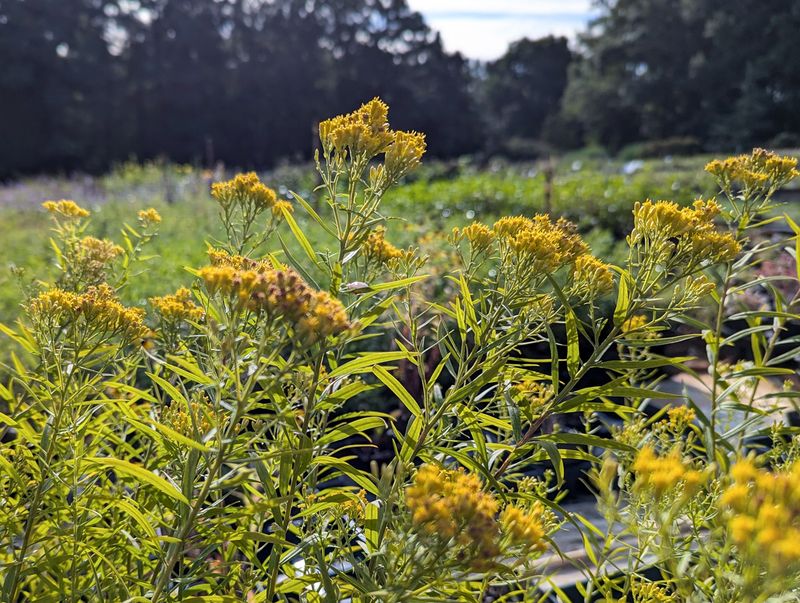
Late summer and fall are where many yards go quiet for pollinators, and that is the easiest gap to close with a single well-chosen native. Aromatic aster (Symphyotrichum oblongifolium) blooms from late summer until the first frost, making it one of the most documented late-season nectar sources available to North Carolina gardeners.
Goldenrods, native ironweeds, and other fall-blooming natives can round out the end of the season depending on your site.
The NC State Butterflies in Your Backyard resource provides additional guidance on selecting site-matched native plants for different regions and seasons. Use it alongside your local Extension office to build a companion list that actually fits your soil, drainage, and light conditions rather than pulling from a generic plant list that may not suit your corner of the state.
Plant black gum for long-term success
Timing matters when you plant a tree that will outlive your mortgage. Fall is generally a favorable planting window in North Carolina because roots can continue to establish while shoot growth slows and summer heat fades.
Spring is the next-best general period. NC State’s lawn and landscape installation guidance supports fall as a preferred establishment window for woody plants in the state’s climate.
Start with nursery-propagated native stock from a reputable source. The North Carolina Native Plant Society’s nursery directory lists regionally distributed sources across the state.
Before you purchase, confirm that the plant is appropriate for your specific region and site conditions. A black gum grown from piedmont seed stock may not perform identically to one sourced from the mountains or the coast, so ask your nursery about provenance when possible.
When you are ready to plant, dig the hole two to three times wider than the root ball but no deeper than the ball itself. Setting the tree at its original depth keeps the root flare at or just above grade, which matters for long-term health.
NC State’s Woody Ornamentals handbook recommends watering immediately after planting and applying roughly 2 to 3 inches of organic mulch over the root zone. Keep that mulch at least 6 inches away from the trunk; piling it against the bark invites rot and pest problems.
Establishment watering is not optional for a newly planted tree, even one as adaptable as black gum. NC State’s general guideline for smaller container plants is approximately 3 to 5 gallons twice weekly when rainfall is insufficient, adjusted for season, soil type, plant size, and your specific site conditions.
Larger trees at planting need proportionally more. Plan on consistent supplemental watering through at least the first growing season, and monitor the soil rather than following a rigid schedule.
Manage the surrounding yard as habitat
Planting a native tree is a beginning, not a finished habitat. What you do in the surrounding yard through the rest of the year determines whether black gum anchors a living ecosystem or just an attractive specimen.
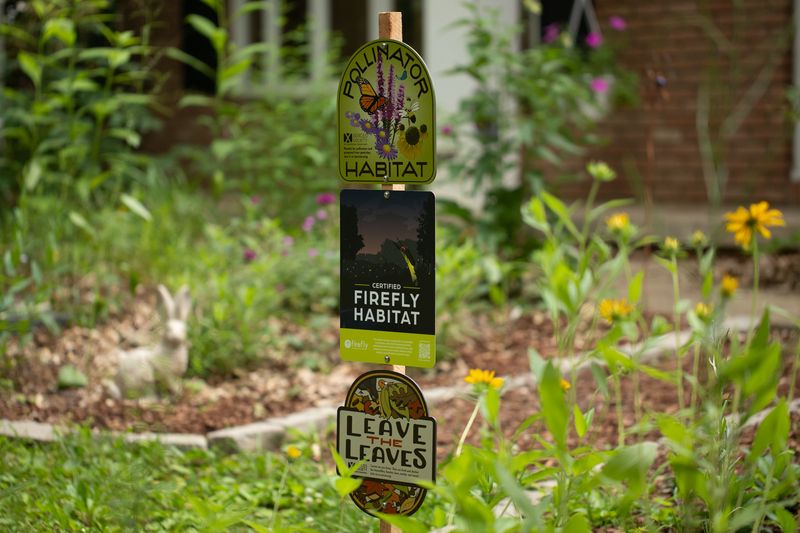
Leaf litter is one of the most undervalued resources in a wildlife-friendly yard. Native bees, ground beetles, firefly larvae, and dozens of other beneficial insects overwinter in the layer of leaves beneath trees and shrubs.
NC State’s native bee nesting and overwintering habitat guidance specifically identifies hollow and pithy stems as critical overwintering structure for native bees. Cutting everything to the ground in fall removes that shelter before insects have emerged in spring.
Leaving stems standing through winter, or at least until daytime temperatures are consistently above 50 degrees Fahrenheit, gives cavity-nesting and stem-nesting bees time to complete their life cycles.
Pesticide choices carry real consequences in a yard you are managing for pollinators. The EPA identifies bloom-time restrictions, drift reduction, and strict label compliance as core pollinator-protection strategies.
In practical terms, avoid spraying any flowering plant or active pollinator habitat unless the product label specifically permits that use and you follow every direction and restriction on the label. Apply pesticides in the early morning or evening when bees are less active, and use targeted applications rather than broad coverage to reduce drift onto neighboring plants.
When pest pressure does arise, the guidance from Penn State Extension on pesticide safety reinforces the same principle: confirm the pest, choose the least-disruptive effective option, minimize exposure to non-target insects, and read the label as the binding document for every application. Native status does not make a plant immune to pests, but unnecessary pesticide use in a habitat garden undermines the very insects you planted to support.
Reducing excessive yard cleanup, leaving some patches of bare soil for ground-nesting bees, and resisting the urge to tidy every corner of the yard in fall can matter as much to your local pollinator population as any single plant you add. The tree and the companions you choose set the table; the management choices you make through the seasons determine who actually shows up to eat.
Use black gum as one layer of a native planting
Black gum earns its place in a North Carolina yard when the site fits. It can provide lasting canopy shade, May-to-June bee nectar, late-summer and fall wildlife food, reliable fall color, and year-round habitat value for bats, birds, and other creatures.
NC State’s full black gum profile documents each of those contributions, and they are real. The honest boundary is that no single tree covers the entire pollinator season, and black gum is not an exception to that rule.
Readers who want forage from spring through frost need to build a layered planting of regionally appropriate native species around the tree. NC State’s native plants guidance makes the strategy clear: combine multiple natives with staggered bloom times so something is always flowering during each part of the growing season.
Black gum handles spring nectar. Sourwood or other midsummer-blooming natives fill the summer gap.
Aromatic aster and fall-blooming goldenrods carry the season to frost. The tree is the canopy anchor, not the whole answer.
The practical path forward starts with the size-and-site decision. Measure the available space, check for overhead wires and underground systems, test your soil pH, and confirm that a tree potentially reaching 40 to 70 feet fits your property before you commit.
If it does, source nursery-propagated stock from a reputable North Carolina native plant nursery listed through the NC Native Plant Society’s directory, then build your companion planting layer by layer with plants matched to your region and site. A yard built that way does not just look good in October; it quietly supports the insects, birds, and other wildlife that make a North Carolina yard worth stepping into all year long.