
Skunks Aren’t The Only Ones Digging Cone Holes In North Carolina Lawns This Fall
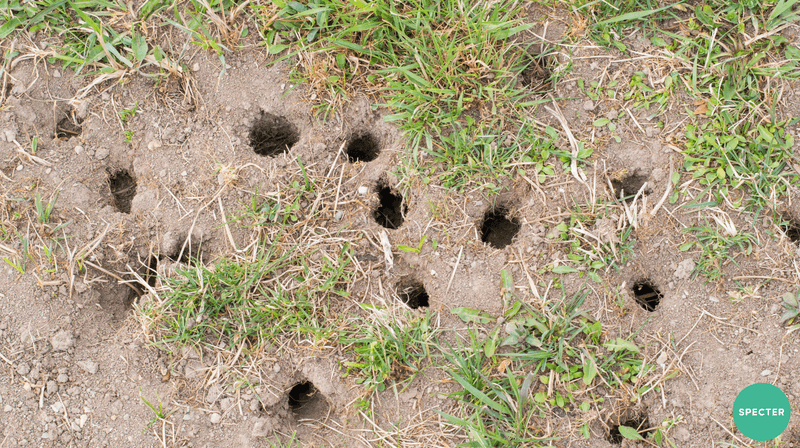
Walking out to your yard on a crisp fall morning and spotting a scattering of cone-shaped holes can feel alarming, but the culprit is not always obvious. North Carolina homeowners from the Piedmont to the Coastal Plain often blame skunks right away, yet several other animals can leave nearly identical marks in the turf.
Knowing what you are actually looking at changes how you respond, and responding correctly protects both your lawn and the wildlife that shares your yard.
A Cone-Shaped Hole Is a Clue, Not a Verdict
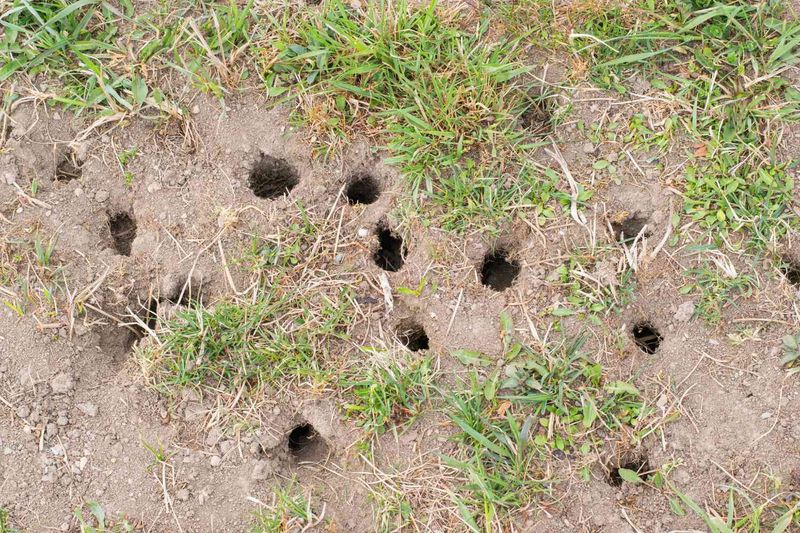
Spotting a cluster of cone-shaped holes in your lawn on a fall morning can send most homeowners straight to one conclusion: skunks. That conclusion gets ahead of the evidence.
Multiple species are capable of leaving similar marks in turf, and a hole’s shape alone cannot tell you which animal was responsible.
Iowa State University Extension’s yard-hole identification guidance and the Internet Center for Wildlife Damage Management’s garden inspection resource both caution that skunks, armadillos, raccoons, birds, and several other animals can produce similar-looking excavations. Matching the damage to a specific animal requires reading the whole scene, not just the opening in the ground.
A useful inspection looks at several things together. Measure the width and depth of the holes, note whether the surrounding turf is simply punctured or has been lifted and rolled, and check whether the damage appeared overnight or gradually over several days.
Look for tracks or scat nearby, consider what kind of cover, brush, or structure edges the yard, and try to make or collect direct sightings if possible.
Fall is useful context because skunks and raccoons commonly step up their foraging before winter, but that seasonal timing does not narrow the suspect list to one species. Birds, insects, armadillos, and other animals can also be active and feeding in lawns during the same period.
As University of Georgia Cooperative Extension’s guide to nuisance wildlife conflicts notes, a thorough inspection of all available clues produces a far more reliable identification than a quick glance at hole shape. Observe before you treat, and keep a safe distance from any animal you spot in the process.
The Digging Pattern Can Narrow the Suspects
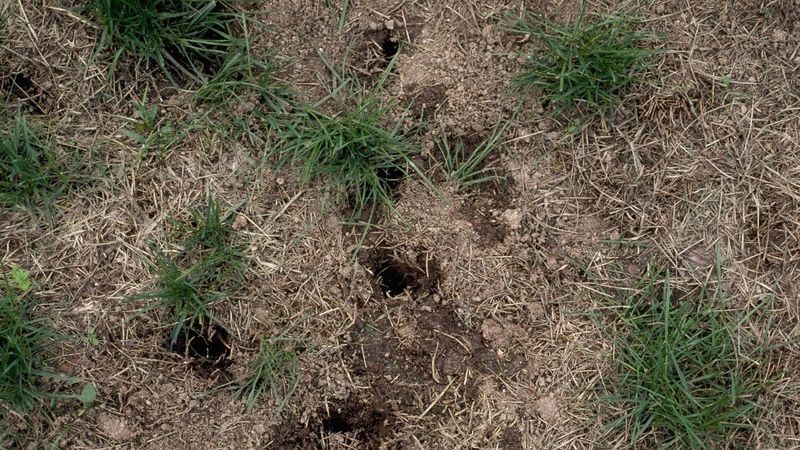
Once you have measured the holes and surveyed the surrounding damage, the pattern starts to point toward certain animals more than others. No single pattern is conclusive, but comparing the clues can meaningfully shorten the list of likely visitors.
Skunks are nocturnal foragers, and their digging tends to show up as individual, cone-shaped probing holes that are often roughly 2 to 4 inches across. They occasionally tear or roll back small sections of sod as well.
According to Iowa State University Extension’s guide on managing skunk and raccoon lawn damage, this probing style reflects the animal’s method of locating grubs and other soil insects just below the surface. Finding this type of damage in the morning, after an otherwise quiet night, fits the skunk profile reasonably well, though it does not confirm it.
Armadillos leave a somewhat different mark. Their holes tend to be shallow inverted-cone shapes, and the University of Georgia Cooperative Extension’s natural history profile of the nine-banded armadillo describes typical excavations as roughly 1 to 3 inches deep and 3 to 5 inches wide, though dimensions vary.
A single armadillo can make many holes in one night and may also disturb ornamental plants near the lawn edge. Armadillos are more commonly reported in the Coastal Plain and southern Piedmont of North Carolina than in the mountains, so regional location matters when weighing this possibility, as noted in the NC State Extension Gardener Handbook’s wildlife chapter.
Raccoons typically create more disruptive damage than either skunks or armadillos. Rather than probing, they tend to shred, lift, or roll back larger sections of turf while searching for grubs, earthworms, and other food.
If you find turf peeled back in wide strips or patches, a raccoon is a stronger candidate.
Birds present a different picture entirely. Penn State Extension’s sod webworm resource describes bird-related lawn damage as many small punctures scattered across an affected patch, rather than the larger, more precise cone-shaped holes associated with mammals.
If the holes are numerous, small, and appear in a concentrated zone of browning turf, birds pursuing larvae near the surface are worth considering alongside the mammal suspects. And remember that a University of Georgia study on nine-banded armadillo behavior reinforces that even within a single species, foraging patterns can vary, so treat these descriptions as guides, not guarantees.
What the Wildlife Finds Below the Turf
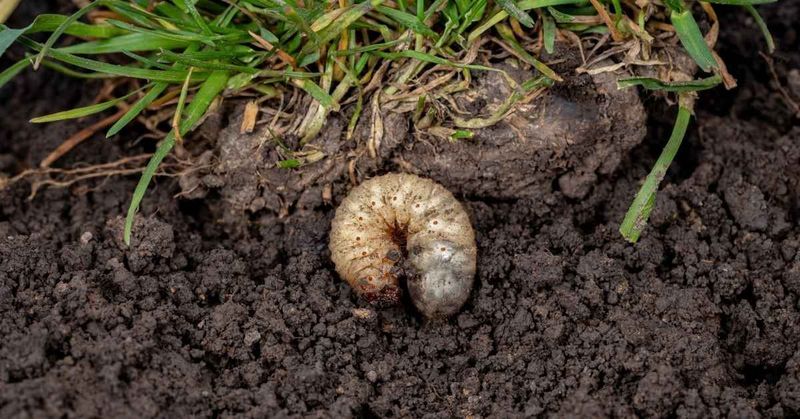
Every hole in your lawn marks the spot where an animal decided the effort of digging was worth it. That decision is driven by food, and the menu below a North Carolina lawn in fall can include white grubs, earthworms, sod webworm larvae, and a range of other soil invertebrates.
The presence of digging tells you something was worth finding, but it does not tell you exactly what that something was.
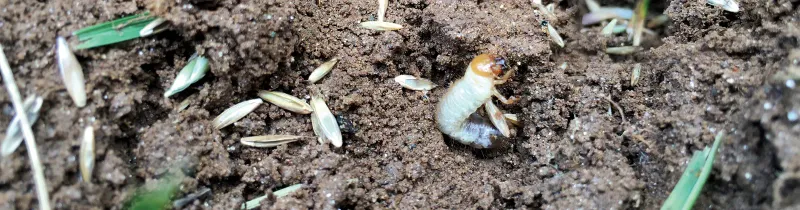
White grubs are a common draw. NC State Extension’s guide to arthropod pests of North Carolina turf identifies several scarab beetle species whose larvae feed on grass roots in the state, including Japanese beetles, green June beetles, and masked chafers.
When grub populations are high enough, root damage causes turf to thin, wilt, or pull up from the soil with almost no resistance. Wildlife that discovers a patch rich in grubs will return repeatedly until the food source is gone.
Earthworms are also a significant attractant, particularly for skunks and raccoons, and their presence in the soil does not signal a pest problem. A lawn with abundant earthworms may draw foraging animals even when grub numbers are low.
According to University of Georgia Cooperative Extension research on wildlife foraging behavior, wildlife responds to accessible food concentrations rather than to overall soil quality, which means holes are evidence of a foraging opportunity, not a measure of how healthy your lawn ecosystem is.
The NC State Extension integrated pest management and organic lawn care guide draws a useful distinction here: biologically active soil can support both beneficial organisms and pest species at the same time. Seeing animal activity in your yard does not mean the soil is thriving, nor does it mean it is failing.
The holes simply show that something edible was accessible at that spot, and an animal with the right nose or beak found it.
Inspect the Lawn Before You Treat It
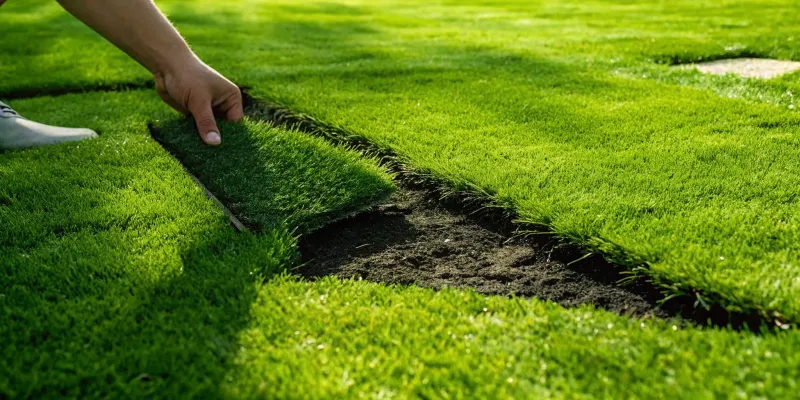
Reaching for an insecticide before you know what you are dealing with is one of the most common and costly mistakes a homeowner can make after spotting lawn holes. The first step is not a product application; it is a careful look at what is actually happening in the soil.
Start by comparing a damaged area to an undamaged section of the same lawn. In each spot, cut three sides of a square foot of turf and fold it back, then examine the top two to three inches of soil underneath.
NC State Extension’s Franklin County white grub guidance recommends counting C-shaped white grubs found in each sample. Finding a few grubs is normal; a high concentration in multiple samples, combined with thinning or dying turf, is what warrants further action.
While you have the turf folded back, check whether the roots are intact and firm or whether the grass pulls away from the soil with almost no resistance. Turf that lifts like a loose rug has likely suffered meaningful root damage, while turf that holds together suggests the digging animal may be feeding on earthworms or other prey without causing significant turf injury.
The NC State arthropod pest guide emphasizes that grub populations in North Carolina lawns can be highly localized, which is why sampling in multiple spots matters more than inspecting just one damaged patch.
The NC State integrated pest management guide is clear that treatment should follow identification and confirmed injury, not just the presence of holes. Knowing which organism is present and whether it is causing real turf decline is what separates a targeted, justified response from an unnecessary application that may affect beneficial soil life without solving the problem.
Fall Changes the Timing, Not the Diagnosis
Late summer and fall are active seasons for foraging animals in North Carolina, and that timing can make the holes feel more urgent than they might otherwise seem. The season provides useful context, but it does not change the basic rule: you still need to identify what is visiting before you decide how to respond.
Skunks and raccoons do increase their foraging activity as temperatures cool and they build up energy reserves. Iowa State University Extension’s skunk and raccoon lawn damage resource confirms that fall lawn damage from these species is consistent with their seasonal behavior.
However, the University of Minnesota Extension’s lawn hole diagnosis tool notes that birds, insects, armadillos, and other animals can produce similar lawn signs during the same period, so the season narrows the calendar without narrowing the suspect list.
Treatment timing is a separate question entirely, and it depends on the insect species involved, the life stage of that insect at the time of application, the product selected, and the instructions on the current pesticide label. NC State Extension’s turf arthropod pest guide explains that curative products work differently than preventive ones, and applying the wrong type at the wrong time produces poor results while adding unnecessary chemical load to the lawn.
Seasonal holes alone are not a reason to apply a grub treatment. Penn State Extension’s sod webworm guidance reinforces that even when larvae are the underlying cause of turf damage, the right response depends on correctly identifying the pest and confirming that the population is high enough to justify treatment.
A fall calendar entry for grub control is not a substitute for actually looking at what is in the soil.
Reduce the Invitation Without Harming the Visitors
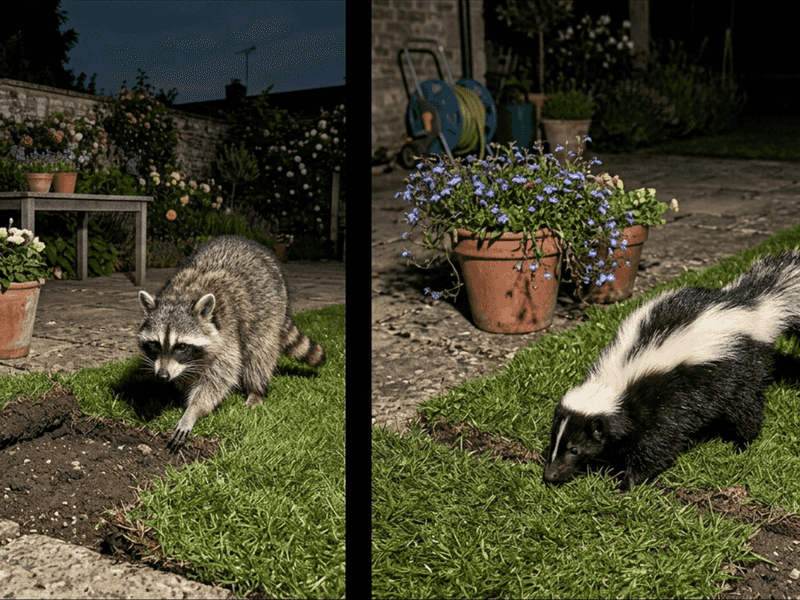
Once you have a reasonable read on what is visiting your yard and why, there are practical steps you can take to make your property less attractive without reaching for a repellent or a trap. The goal is reducing the conditions that bring wildlife into close contact with your lawn, not eliminating every organism that lives in or moves through the soil.
Start with attractants that are easiest to control. CDC guidance on healthy pets and wildlife recommends securing garbage containers with tight-fitting lids and removing outdoor pet food bowls each evening.
Compost piles, fallen fruit, and birdseed spilled beneath feeders can also draw nocturnal foragers into the yard. Removing these food sources does not guarantee that a skunk or raccoon will stop visiting, but it reduces the reasons for a return trip.
Accessible shelter is worth addressing as well. Brush piles, gaps under decks and outbuildings, and dense low-growing cover near the house give wildlife comfortable resting spots close to your lawn.
The NC State Extension Gardener Handbook’s wildlife chapter suggests reducing that accessible cover as one component of a broader conflict-reduction approach. No single step is a guarantee, and framing these changes as reducing the invitation rather than sealing the yard off entirely keeps expectations realistic.
Turf repair can happen after the animal has moved on. Tamp down any lifted sections, fill shallow holes with a matching soil mix, overseed bare patches if needed, and water appropriately for the season.
Iowa State University Extension notes that most small-scale digging damage is cosmetically fixable once the attractant or the animal’s interest has passed. Repairing the lawn while the animal is still actively visiting typically results in the same holes reappearing within a day or two, so patience with the sequence matters.
Know When Observation Should Give Way to Help
Most wildlife visits to a North Carolina lawn end on their own once the food source runs out or conditions change. Some situations, though, call for outside help rather than continued observation, and knowing the difference protects both you and the animal.
Handling, capturing, or attempting to relocate wildlife yourself is not a safe or straightforward option. Relocation can separate mothers from young, spread disease to new areas, and create conflicts in the release location.
North Carolina regulates how wildlife may be taken or controlled, and residential settings may also be subject to local ordinances that add further requirements. The NC State Extension Gardener Handbook’s wildlife chapter recommends contacting the North Carolina Wildlife Resources Commission or a licensed wildlife damage control agent when removal becomes necessary.
An administrative document from the NC Office of Administrative Hearings has addressed relevant wildlife rules, but regulations can change, so always verify current requirements directly with the Commission or a licensed agent before acting.
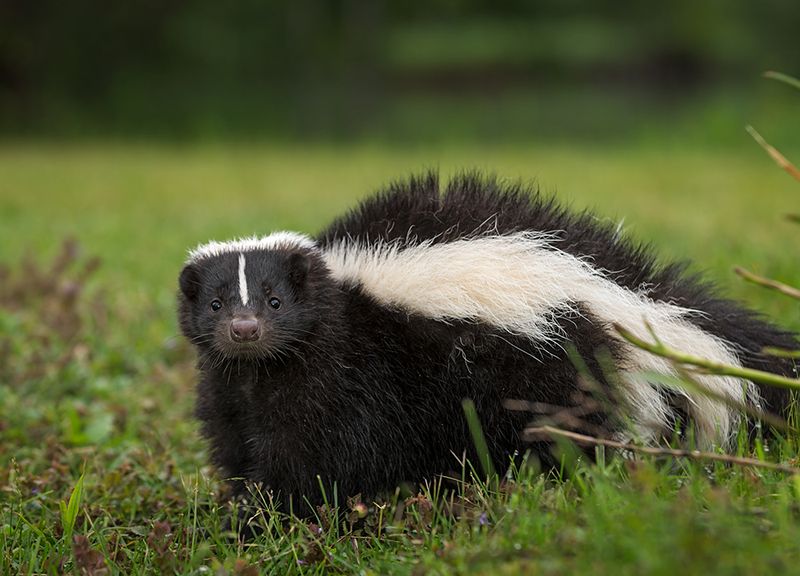
Rabies is a real concern with certain wildlife species in North Carolina, and skunks are among the animals that can carry it. That said, a skunk seen during daylight hours is not automatically rabid.
The behavior that warrants immediate caution includes animals that appear disoriented, are staggering or circling, seem unusually tame or aggressive, are injured, or are already dead. NC DHHS rabies guidance and CDC rabies prevention resources both recommend keeping a safe distance from any animal showing these signs and contacting local animal control or public health officials promptly.
If you experience a bite, scratch, or contact between an animal’s saliva and broken skin or a mucous membrane, wash the area thoroughly with soap and water and contact a medical or public health professional right away. The NC State Laboratory of Public Health’s rabies testing information can help guide next steps if the animal is available for testing.
Do not attempt to handle or detain the animal yourself.
Read the Holes Before You React
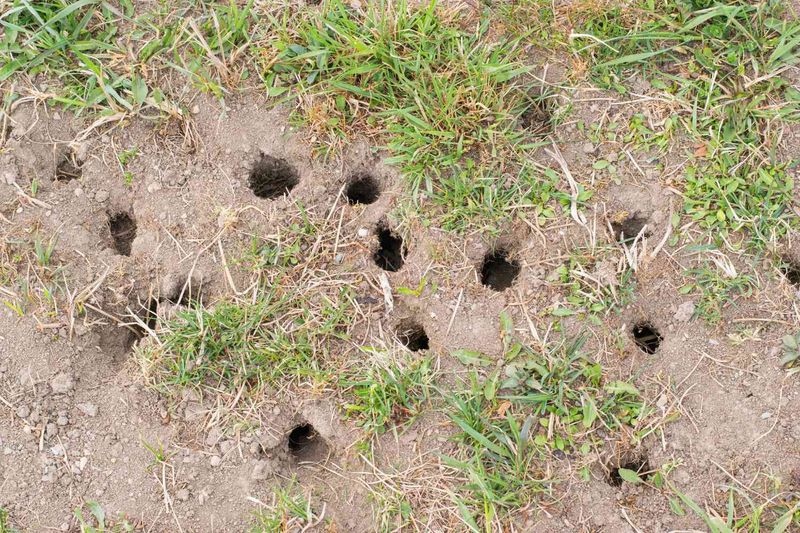
A yard full of cone-shaped holes is a message worth reading carefully before you do anything else. The holes tell you that an animal found food worth digging for, and that is the extent of what the holes alone can confirm.
They do not prove your soil is thriving, they do not identify the species responsible, and they do not mean an insecticide application is overdue.
The practical sequence is straightforward: observe the pattern, measure and compare the holes, check the surrounding turf for rolled sections or punctures, look for tracks and scat, and then inspect the soil in both damaged and healthy areas before considering any response. Iowa State University Extension’s yard-hole diagnosis guidance and the NC State arthropod pest guide both support this evidence-first approach.
Active soil life and real turf damage can exist in the same lawn at the same time, which is exactly why assumptions in either direction lead to poor decisions. The NC State Extension Gardener Handbook frames good wildlife stewardship as choosing the least harmful response that the evidence actually supports.
A hole in the lawn is an invitation to look more carefully, not a signal to act fast.