
This Native Shrub Blooms In October When Every Other North Carolina Flower Has Quit
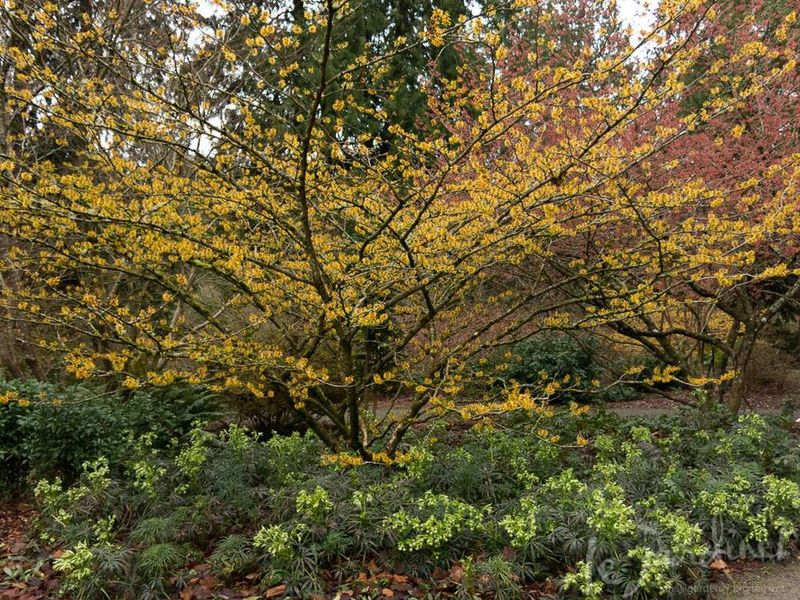
By late October, most North Carolina yards look like the garden gave up. Perennials are brown, summer annuals have collapsed, and even the toughest border plants have called it a season.
Common witchhazel, Hamamelis virginiana, is one native shrub that can still push out fragrant yellow flowers right around that time, filling the gap when almost nothing else will. If you have room for a large, moisture-loving plant and want something genuinely different for your fall landscape, this one is worth knowing.
Common witchhazel is a distinctive native for North Carolina’s late fall
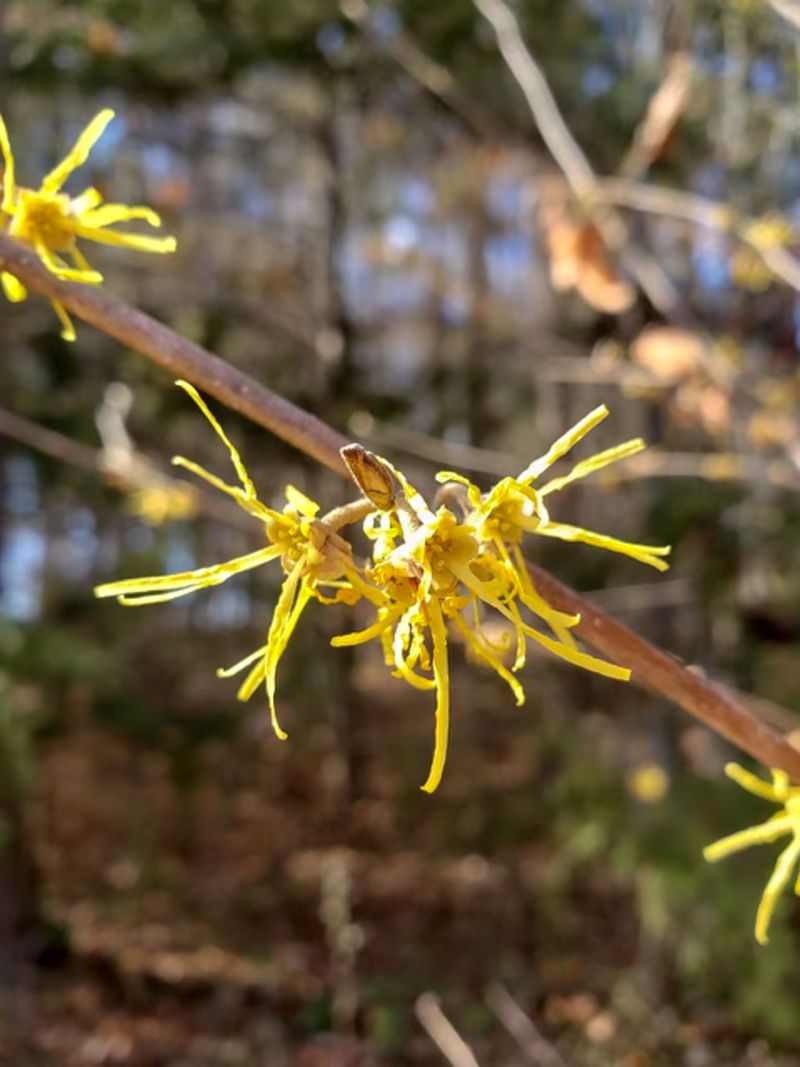
Most gardeners searching for late-season color reach for ornamental grasses or berry-covered shrubs, but common witchhazel offers something those plants simply cannot: actual flowers in October and beyond. Hamamelis virginiana is a deciduous, often multi-stemmed shrub or small tree native to North Carolina’s Coastal Plain, Piedmont, and mountain regions.
NC State Extension’s plant profile confirms the species is suited to all three of those regions and documents a bloom period running from October into December.
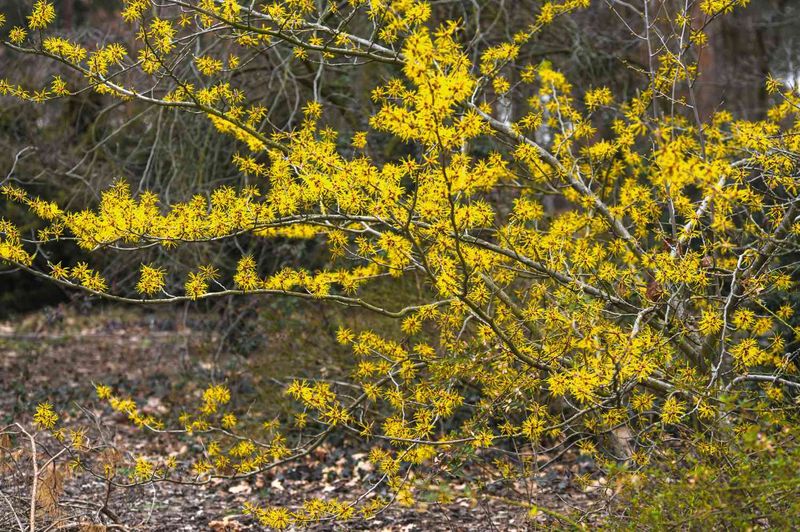
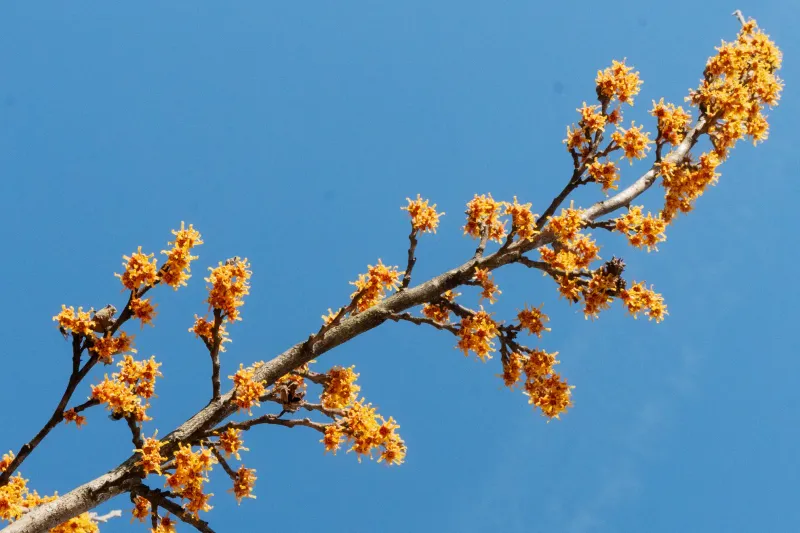
The plant’s fragrant yellow flowers appear on bare or nearly bare branches, producing a display unlike anything else in the fall garden. Four narrow, crinkled petals emerge in small clusters along the wood, catching low autumn light in a way that reads as genuinely luminous against gray bark.
That combination of scent and color at an otherwise quiet time of year is exactly why homeowners looking for a wildlife-friendly yard should consider it.
Framing matters here. Common witchhazel is not the only North Carolina native that flowers in October.
Asters, goldenrods, and a handful of other species are still active then. U.S.
Forest Service records place witchhazel’s flowers opening in September and October, which overlaps with those other bloomers rather than replacing them. What witchhazel offers is a distinctive focal point in a season when the palette is thinning, not a monopoly on autumn color.
Think of it as the plant that keeps the garden looking intentional when most of your other choices have already faded.
What the October flowers look like—and when they actually appear
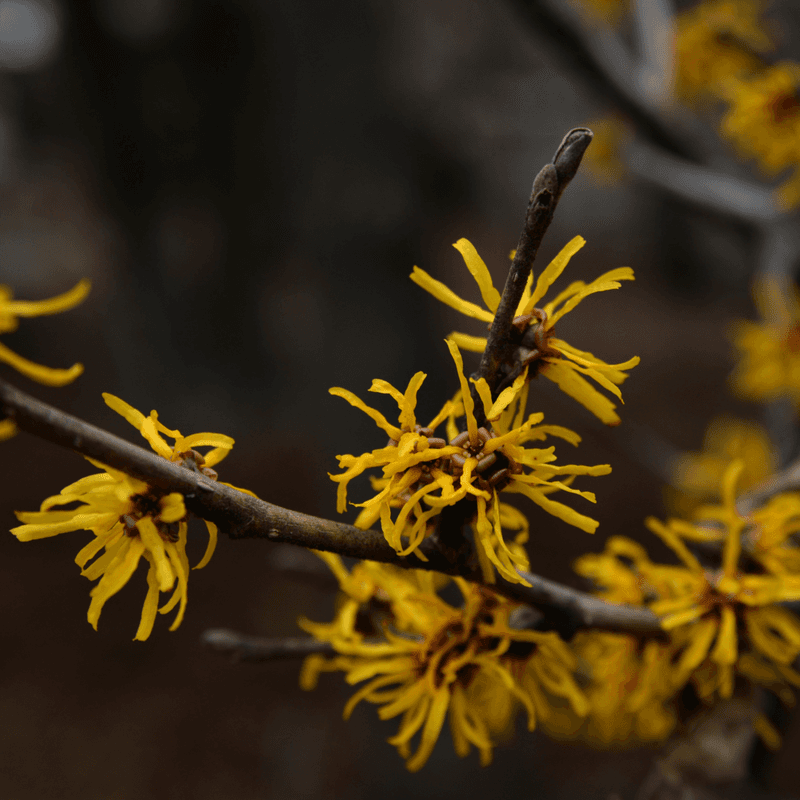
Witchhazel’s flowers are genuinely unusual, and knowing what to look for helps you spot them before you assume the shrub has skipped a year. Each flower carries four petals that are long, narrow, and crinkled, almost like tiny yellow ribbons twisted and attached at the base.
They emerge in small clusters directly along the branches rather than at branch tips, so the display is spread across the whole framework of the plant rather than concentrated in one showy mass.
University of Maryland Extension’s witchhazel guide specifically shows flowers beginning while foliage is still present, which matters for North Carolina gardeners expecting a clean, unobstructed display. When golden leaves cling to the branches alongside those yellow petals, the two can visually merge, making the flowers harder to notice at a glance.
Walk closer and look along individual stems rather than stepping back for a wide view.
Bloom timing is genuinely variable. Missouri Botanical Garden’s winter-interest guide lists the bloom window as October through December, while the U.S.
Forest Service records flowers opening in September and October, and NC State’s profile runs October to December. Those windows overlap but are not identical, and none of them guarantee flowers on a specific date in your specific yard.
Weather, plant maturity, sun exposure, and even individual plant genetics all shift when and how freely the flowers open. The honest promise is that flowering can begin around October and may continue well into fall or beyond, not that every plant will perform on schedule every year.
Plan for a large shrub that can become a small tree
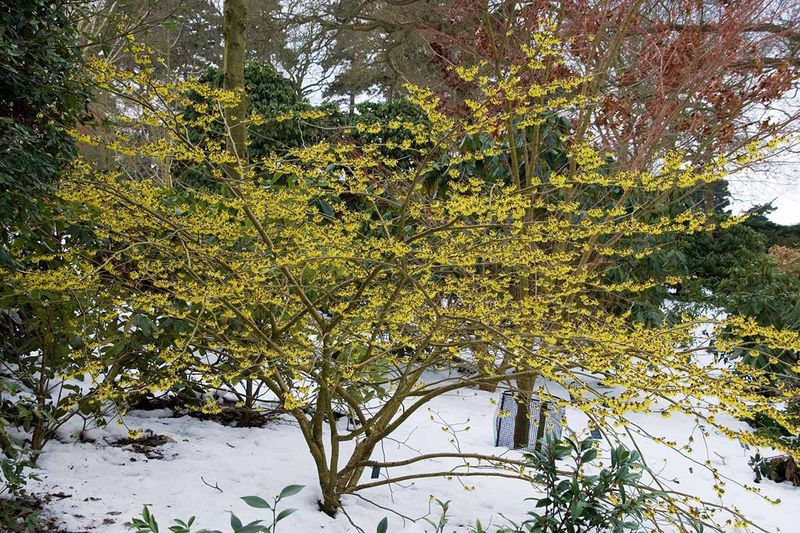
Before ordering a witchhazel from a nursery catalog, measure your available space carefully. Common witchhazel is not a compact accent plant.
NC State Extension documents a mature size of roughly 15 to 30 feet tall and 15 to 20 feet wide, and the U.S. Forest Service describes a common mature height of 15 to 25 feet.
That is the size of a small tree, not a tidy border shrub.
The plant typically develops as a multi-stemmed specimen with crooked or spreading branches and an open, somewhat irregular crown. That natural form is part of its character, and it looks best when given room to express it.
Placing one within a few feet of a window, a sidewalk, an overhead utility line, or a tight foundation planting will create maintenance headaches and almost certainly require hard pruning that damages the plant’s flowering wood.
Suitable residential settings include woodland edges, the back row of a mixed shrub border, a rain-garden margin where moisture collects naturally, or a transition zone between a maintained lawn and a naturalized area. Penn State Extension’s native shrub pollinator guide recommends witchhazel for shrub borders and pollinator gardens, which reinforces the idea that it works best as part of a layered planting rather than as a standalone specimen crammed into a narrow bed.
If your yard is mostly paved, shaded by structures, or built around tight geometric borders, a different native may serve you better. Where there is genuine room, though, this plant earns its footprint with a display no other native shrub in North Carolina provides at the same time of year.
Match the site to the shrub’s light and moisture needs
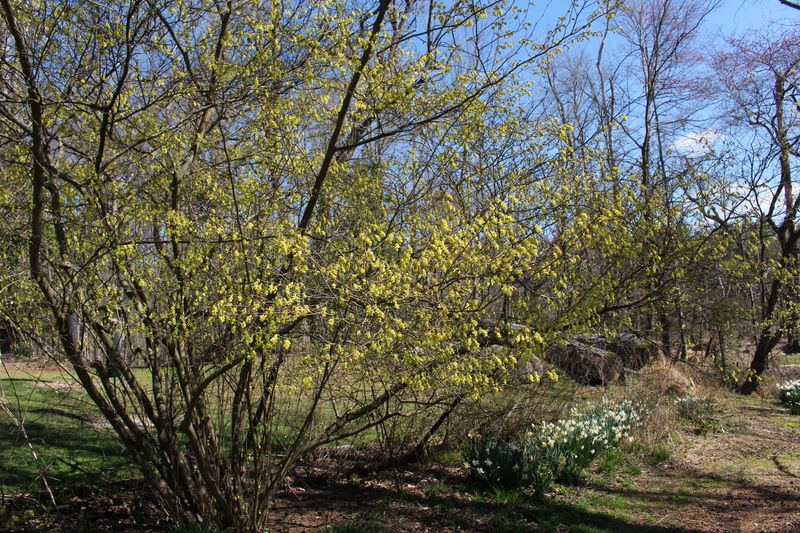
Choosing the right spot makes the difference between a witchhazel that thrives and one that struggles through every dry spell. Full sun generally produces the strongest flowering, and a location that receives at least six hours of direct light each day is a reasonable target.
That said, University of Maryland Extension notes that full-sun plants can be vulnerable to sunscorch, so a site offering some afternoon shade may actually be preferable in exposed, hot locations, particularly in North Carolina’s Piedmont and Coastal Plain where summer heat is intense. Partial shade is tolerated, though flowering may be somewhat reduced compared to a sunnier position.
Soil quality and moisture are where most North Carolina homeowners will need to pay the closest attention. The preferred soil is moist, acidic, humus-rich, and well drained.
NC State Extension is explicit that common witchhazel is drought-intolerant, which is a meaningful warning in a state where summer dry spells can run for weeks. The species can handle heavy clay and even occasional flooding, making it a realistic candidate for low spots or rain-garden margins where other shrubs would rot.
What it cannot handle is sustained dryness during the growing season.
A practical site-selection test: stand in the candidate spot after a hard rain and check whether the soil stays damp for a day or two, or whether it dries out within a few hours. A spot that holds some moisture without staying waterlogged is a good match.
A raised, sandy, south-facing slope beside a driveway is a poor one, regardless of how much you water. Matching the plant’s natural preference, moist woodland understory and edge conditions, gives it the best foundation for both healthy growth and reliable flowering over time.
Steady establishment care supports growth but cannot guarantee October flowers
Planting witchhazel is not a plant-and-forget situation, especially in North Carolina’s climate. The first two to three years after planting are critical, and the single most important task during that period is keeping the root zone consistently moist.
Because the species is drought-intolerant, a newly installed plant that dries out repeatedly during summer heat is spending its energy on survival rather than root expansion, and a stressed plant is unlikely to produce much of a flower display.
NC State Extension’s care guidance supports maintaining consistent moisture, particularly during establishment and drought. A 3- to 4-inch layer of organic mulch over the root zone helps buffer soil temperature and retain moisture between waterings, which is especially useful during the heat of a Piedmont or Coastal Plain summer.
Deep, infrequent watering that encourages roots to grow downward is more effective than shallow daily sprinkles.
Consistent watering does support establishment and overall plant health, but it does not guarantee flowers in the first year or in every October afterward. Bloom timing and frequency depend on plant maturity, weather patterns, sun exposure, individual plant genetics, and climate conditions that vary from year to year across North Carolina’s three regions.
Missouri Botanical Garden’s winter-interest resource lists the bloom window as October through December, but a young or recently transplanted shrub may take several seasons to settle in before flowering consistently. Setting that expectation honestly from the start means you are less likely to pull a healthy, still-maturing plant because it did not bloom in its first fall.
Use restrained pruning to preserve the next flower display
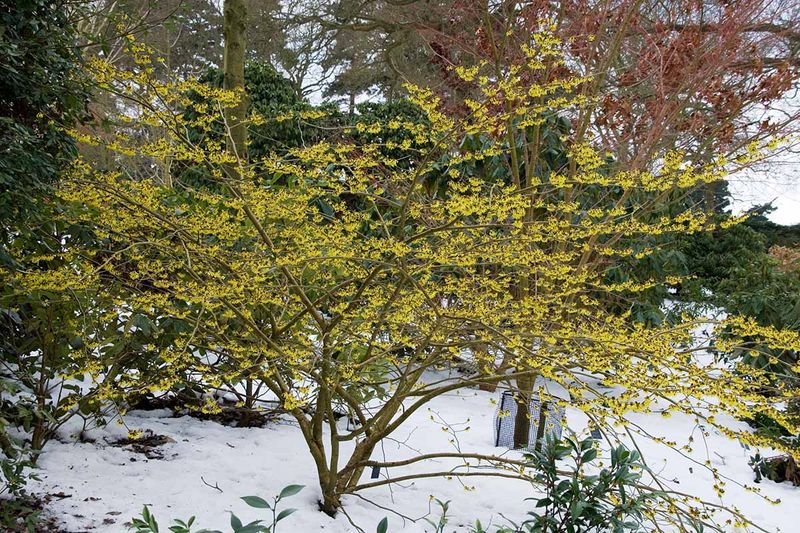
Witchhazel’s pruning needs are refreshingly modest. NC State Extension states that pruning is usually unnecessary except for shaping and flags an important detail: the flowers form on old growth.
That means any wood you remove before flowering takes the following season’s flower buds with it.
The practical rule is to prune only after the plant has finished blooming, which for common witchhazel generally means late fall through winter. Remove dead, damaged, or crossing branches at that time, and cut back any stems that are genuinely out of place.
Do not shear the whole plant into a rounded shape or cut it back hard in late summer or early fall, when the flower buds for the coming season are already set. A late-season shearing job that seems tidy in September can leave you with a well-groomed shrub that produces almost no flowers in October or November.
Beyond timing, the goal is to preserve witchhazel’s natural, somewhat open and irregular form rather than forcing it into a geometry it was not built for. Hard, repeated pruning to keep the plant small also contradicts the reality of its mature size.
If the plant is in a spot where it regularly needs to be cut back to fit, it was placed in the wrong location. Let the form develop, remove only what is necessary, and time any cuts to protect the flowering wood that makes this shrub worth growing in the first place.
Its late-season value extends beyond yellow flowers
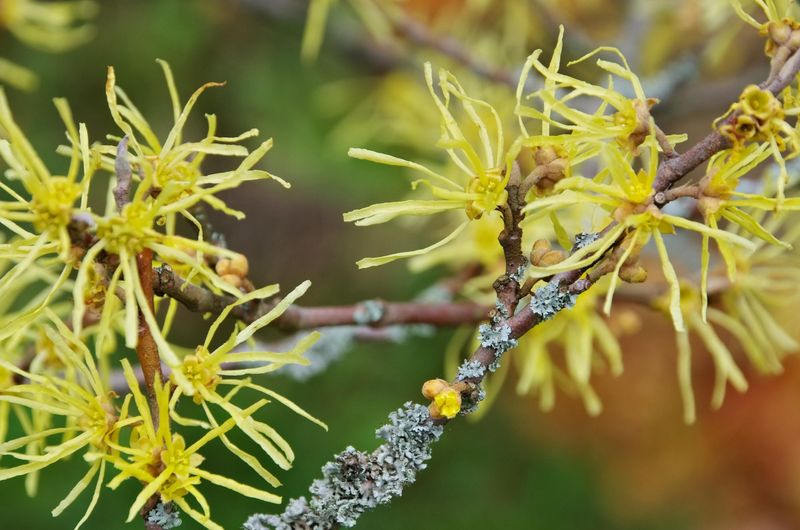
Yellow flowers in October are the headline, but witchhazel offers more to a wildlife-friendly yard than color alone. Penn State Extension’s native shrub pollinator resource documents late-season visits from moths, flies, beetles, bees, and other insects seeking nectar and pollen at a time when most other sources have closed.
Nocturnal moths are considered among the likely primary pollinators, though multiple insect groups use the flowers. The plant also serves as a larval host for several moth species, including the witchhazel dagger moth, which means supporting it through the season extends its value well beyond the bloom period itself.
Penn State’s wildlife landscaping spotlight notes that witchhazel seeds and fruit are eaten by some birds and mammals, adding a food-source dimension that persists after flowering ends. NC State Extension’s landscaping-for-wildlife guide records witchhazel as a wildlife plant across all three North Carolina regions, with shelter value noted alongside its food and pollinator contributions.
Restoring perspective here is important: North Carolina’s October landscape is not as bare as the title of this article suggests. NC State’s butterfly habitat guide lists native asters, goldenrods, swamp sunflower, and orange coneflower as plants still active in fall, and the urban bird habitat guide highlights fruiting shrubs like beautyberry and winterberry for the same season.
Witchhazel is most valuable when it complements those plants in a layered yard rather than standing in for all of them. Add it to a planting that already includes late-blooming perennials and fruiting shrubs, and the result is a yard that supports wildlife across a much longer seasonal window than any single species could manage on its own.
Choose Hamamelis virginiana for a realistic October payoff
When shopping for this plant, verify the botanical name on the tag: Hamamelis virginiana. Not every plant sold under the common name witch hazel is the same species.
Vernal witchhazel, Hamamelis vernalis, blooms in late winter or early spring. Chinese, Japanese, and hybrid witchhazels have different bloom periods and are not North Carolina natives.
NC State Extension’s species profile and the U.S. Forest Service review both address Hamamelis virginiana specifically, so those are reliable references when confirming what you are actually buying.
Place the plant where a large, moisture-loving shrub can mature without being cut back repeatedly, and accept that October flowering is possible and often begins around that time rather than being guaranteed on a fixed date. University of Maryland Extension and Missouri Botanical Garden both give overlapping but variable windows, reinforcing that site conditions and plant maturity shape the actual outcome more than any single calendar date.
Common witchhazel earns its place through distinctive late-fall color, genuine native status across North Carolina, and documented value to late-season insects and wildlife. A yard that has room, consistent moisture, and an open woodland or shrub-border setting is a yard where this plant can quietly become one of the most memorable things growing in it come October.