
Bluebirds Keep Perching On One North Carolina Fence Post Because The Field Below Feeds Them Insects
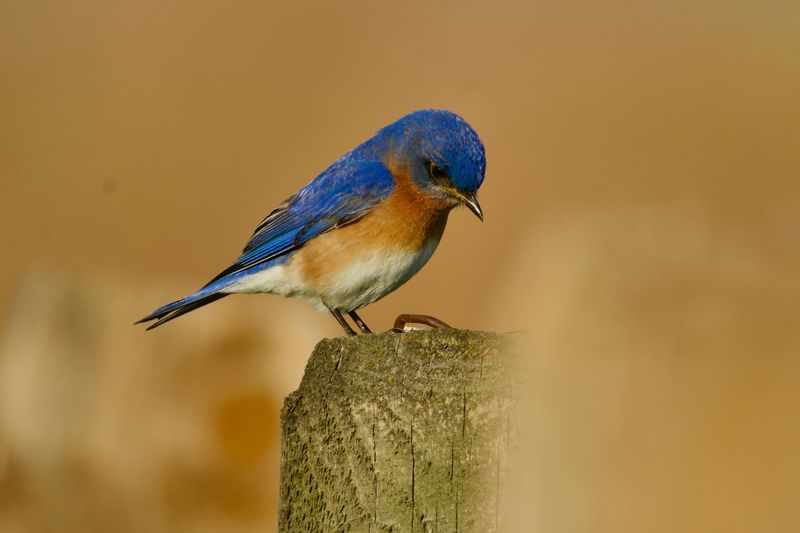
A flash of blue landing on the same old fence post day after day is the kind of thing that makes a North Carolina homeowner stop and wonder what is going on. The easy explanation is that the field below is crawling with insects, drawing the bird back like a dinner bell.
That explanation is plausible, but the full story is more interesting and more useful than a single cause. Understanding why bluebirds use certain spots, and what that behavior can and cannot tell you, opens a practical path to making your yard work better for wildlife.
The fence post is useful, but its exact purpose remains uncertain
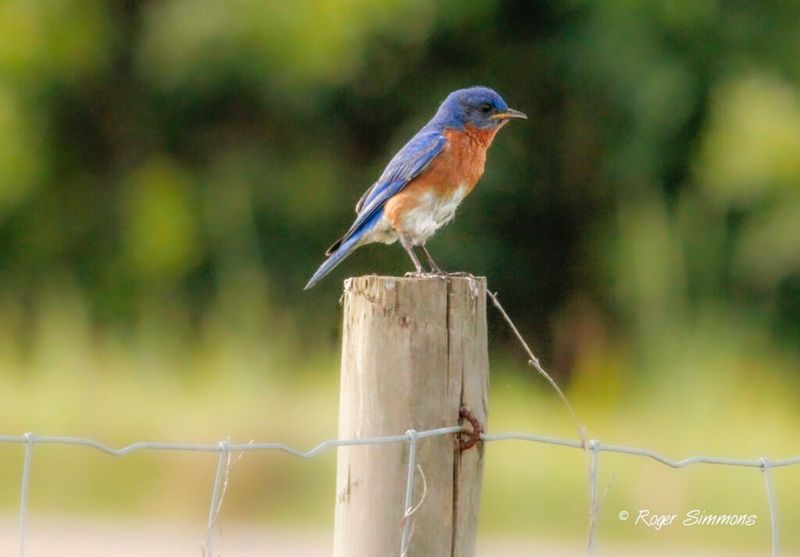
Spot a bluebird on the same fence post three mornings running and the temptation is to declare the mystery solved: the field must be full of insects. Cornell Lab’s Eastern Bluebird life history confirms that these birds do use low perches to scan the ground and then drop or flutter down for prey, so hunting is a reasonable first guess.
But reasonable is not the same as confirmed, and one recurring sighting cannot identify exactly what the bird is doing or why it keeps coming back.
Eastern Bluebirds use fence posts, utility wires, low branches, and similar elevated spots for several overlapping reasons. A post may offer a clear view of approaching predators, a convenient resting spot between flights, or a station for watching over a territory.
Audubon’s Eastern Bluebird field guide notes that the species favors open country with scattered perches, which means any well-positioned post in a semi-open yard fits that profile whether or not prey is directly below it.
The bird may also be foraging somewhere outside the visible field entirely, using the post as a waypoint on a familiar route, or staying close to a nest cavity nearby. Cornell’s identification guide points out that bluebirds move through a range of semi-open habitats, so the food source may lie beyond the fence line rather than directly beneath the post.
What the repeated visits do establish clearly is that the bird finds the location useful. That is a meaningful clue about your yard’s habitat, even if it does not pin down the exact reason the bird keeps returning.
How a low perch can help a bluebird find food
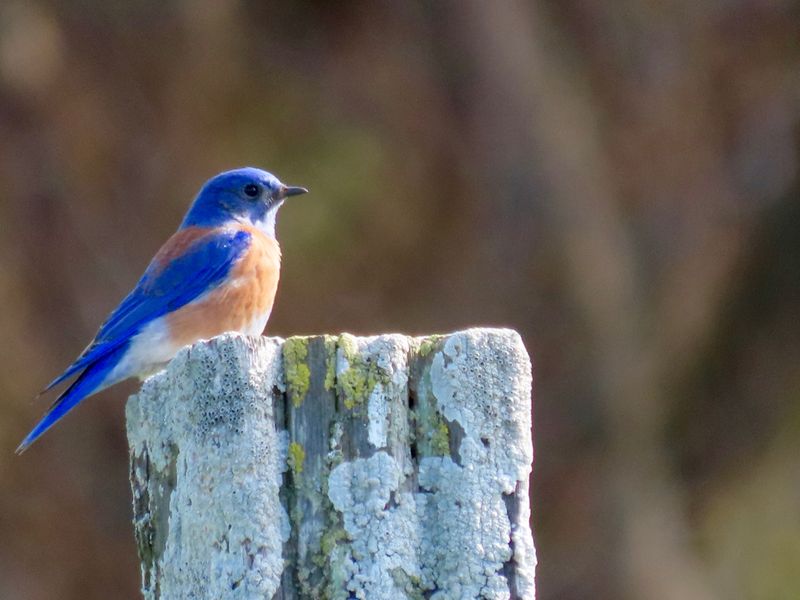
Watch a bluebird long enough and you will likely see the move that makes a fence post so practical: the bird sits still, tilts its head toward the ground, then drops in a short, direct plunge before returning to its perch. Cornell Lab describes this perch-and-pounce foraging style as the species’ primary hunting method, with the bird scanning from a low vantage point before dropping onto prey on or near the ground.
A fence post at the edge of open ground puts the bird close enough to reach prey quickly while keeping it elevated enough to spot movement below.
The prey that ends up on the menu is varied. Beetles, crickets, grasshoppers, caterpillars, and spiders make up a significant share of a bluebird’s diet during spring, summer, and early fall, when insects are active and accessible in short grass or bare soil.
Audubon’s nest box guidance reinforces that bluebirds rely on open ground to reach those ground-level prey items, which is part of why they avoid areas with tall, dense vegetation that would block a clean drop.
Bluebirds can also catch flying insects in midair, making brief sallies from the post when prey crosses their field of view. That flexibility means the post serves more than one foraging purpose depending on what is available at a given moment.
One more detail worth keeping in mind: Eastern Bluebirds are not strictly insect hunters. Berries and other fruits become important food sources in fall and winter, so a bird sitting on a post in November may be resting between fruit-foraging trips rather than scanning for beetles.
A visit to the post does not automatically mean an insect strike is underway.
What one recurring bluebird can—and cannot—tell you
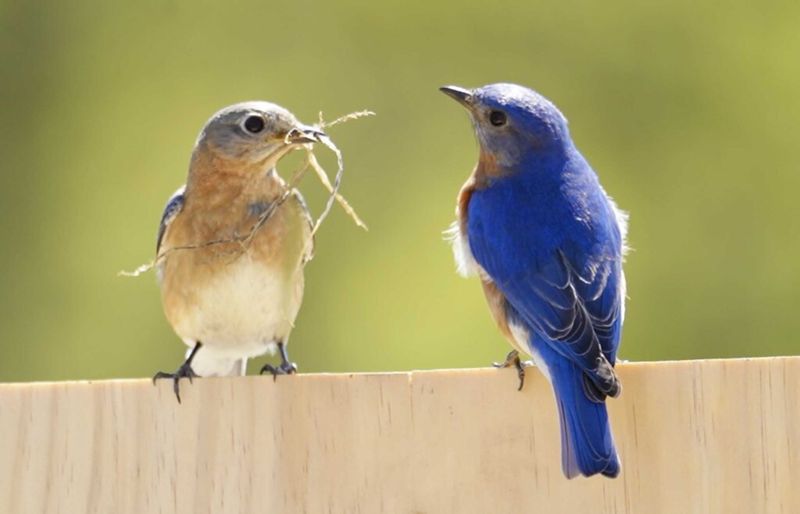
Repeated behavior carries more weight than a single sighting. A bluebird that returns to the same post across multiple days or weeks is giving you reliable evidence that the location works for it, whether that means foraging, resting, territory watching, or some combination.
That is genuinely useful information about your yard’s habitat, and it is worth paying attention to. What it cannot do is measure how many insects are present, how diverse the insect community is, whether pesticide residues are low, or whether the soil and water are in good shape.
USGS research on birds as ecosystem indicators explains that birds can reflect broader environmental conditions, but reliable indicator work requires repeated surveys, attention to multiple species, and careful accounting for habitat and seasonal variation. A peer-reviewed review of indicator species selection reaches a similar conclusion: a single species observed casually cannot substitute for structured monitoring.
One bluebird on one post is an observation, not an ecological assessment.
It is also worth resisting the shortcut that more bluebirds automatically mean more insects. Bluebird numbers at any location are shaped by available nest cavities, territorial behavior, seasonal movement, fruit supplies, weather, and the surrounding landscape, not just prey density.
A review of birds as biodiversity indicators in Ecological Indicators notes that interpreting bird presence as a direct proxy for other ecological variables requires careful methodological controls that casual backyard watching cannot provide. The honest takeaway is encouraging rather than deflating: your yard is offering something a bluebird finds worth returning to, and that is a reasonable starting point for thinking about how to support more wildlife over time.
Open ground helps explain why the post may matter
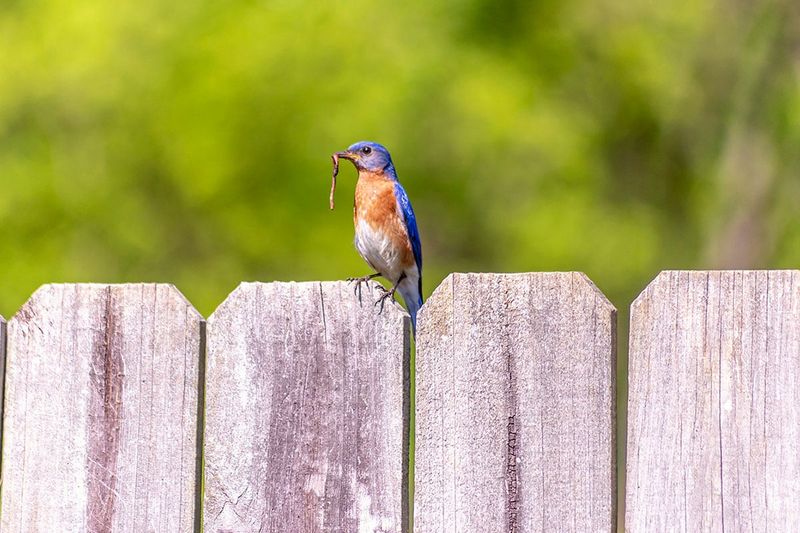
A fence post sitting in the middle of a dense shrub thicket would not attract a bluebird the way an isolated post at the edge of open lawn or meadow does. The post and the ground beneath it work together.
Cornell Lab’s life history account places Eastern Bluebirds squarely in open-country habitats: fields, meadows, pastures, forest openings, suburban parks, and backyards where ground cover is sparse enough for the bird to spot and reach prey. The recurring post visitor in your yard is almost certainly benefiting from the open ground nearby, not just the perch itself.
Audubon’s field guide entry reinforces that bluebirds prefer scattered trees or perches with relatively open understory, which maps well onto a typical North Carolina backyard that has a lawn, a few trees, and a fence line. The post becomes more valuable when the ground around it is accessible.
A yard where dense weeds or overgrown grass crowds the base of the fence line gives the bird less room to work.
The practical implication is not to mow everything short or let everything grow tall. NC State Extension’s guide to managing urban habitats for birds and its landscaping for wildlife resource both recommend a mosaic approach: open foraging areas alongside native shrubs, layered plantings, and patches of natural cover.
Bluebirds need the open ground, while other wildlife, including the insects bluebirds eat, benefit from denser vegetation nearby. Thinking about the post, the lawn edge, the shrub border, and the tree line as a connected system gives you a clearer picture of what the habitat is offering and where there is room to improve it.
Native plants can strengthen the food web around the field
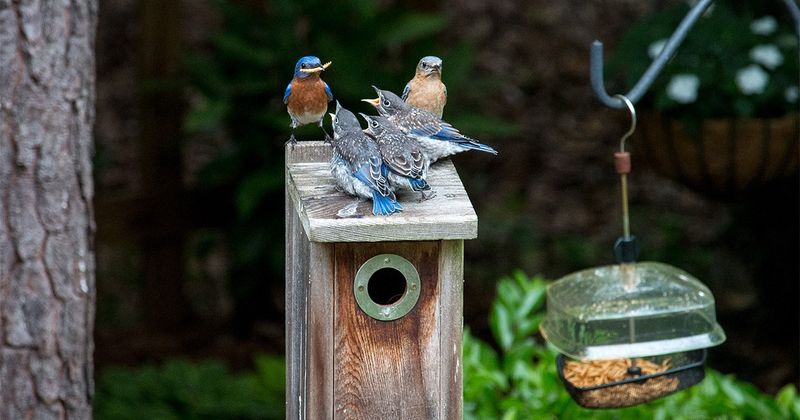
Adding native plants to the edges and corners of your yard is one of the most practical things a North Carolina homeowner can do to support bluebirds and the insects they depend on. NC State Extension’s urban bird habitat guide notes that plant diversity increases insect diversity, and more leaf area from native foliage creates more surfaces where insects can feed, shelter, and reproduce.
That insect activity is what makes a yard worth hunting in.
NC State’s landscaping for wildlife resource and its guide to selecting wildlife-attractive native plants point to species such as oaks, black cherry, willows, flowering dogwood, serviceberry, blackberry, elderberry, native blueberries, and sumac as plants that can provide insects, fruit, and cover across seasons. These are examples, not a universal shopping list.
A Piedmont homeowner on clay soil has different options than someone gardening on the sandy Coastal Plain or in the cooler Blue Ridge mountains. NC State Extension’s native plants handbook and the NC State plant database both allow searches by region and site conditions, which makes it easier to match a plant to your specific yard rather than guessing.
One caution worth stating plainly: native plants improve habitat conditions, but they do not guarantee that bluebirds will show up or stay. Whether bluebirds use a yard also depends on open foraging space, perch availability, nest cavities or boxes, predator pressure, competition from other species, and the surrounding landscape.
A targeted unmowed edge, a meadow patch, or a native shrub border added to the side of an existing lawn is a better starting point than letting the entire yard grow tall, which would actually reduce the open foraging ground bluebirds need.
Protect the food web without creating a pest problem
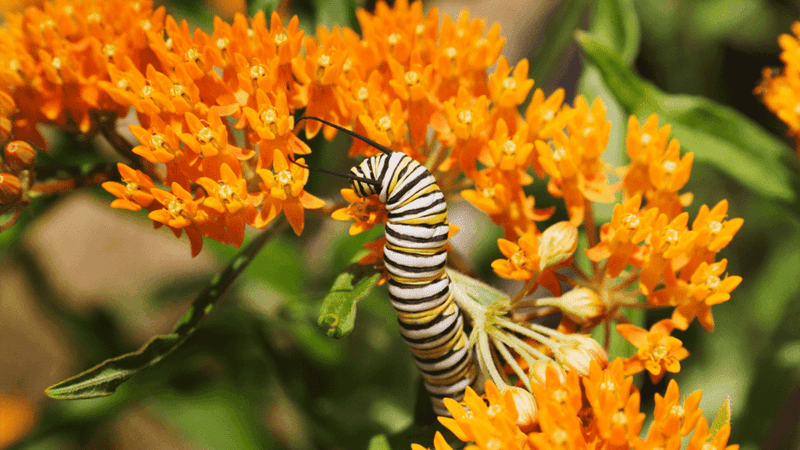
Pesticides can remove the insects that bluebirds and other birds depend on, and some products affect non-target wildlife well beyond the intended pest. EPA guidance on reducing pesticide impacts on wildlife recommends using pesticides only when necessary, treating only the affected area, and following the product label precisely.
Those steps matter because the effect of any pesticide on a yard’s food web depends on the specific chemical, the dose applied, the timing relative to insect life cycles, where the product lands, and whether it drifts beyond the target zone.
The goal is not to tolerate every pest or leave serious infestations untreated for the sake of the birds. EPA’s ecological risk assessment factsheet for pesticides makes clear that risks vary widely by product and application method, which means a blanket rule against all treatment is not the right answer.
A more practical approach is integrated pest management: identify what is actually causing the problem, try nonchemical controls first where they are realistic, and reach for a pesticide only when other options have not worked or are not practical for the situation.
When treatment is necessary, choosing a targeted product, applying it in the early morning or evening when pollinators are less active, and avoiding broadcast spraying near native plantings or fence lines where bluebirds forage can reduce collateral impact. NC State’s native plant and wildlife landscaping guidance connects careful pesticide decisions to the broader goal of maintaining a yard that supports a normal food web over time.
One cautious treatment is unlikely to strip a yard of all its insects, but repeated broad-spectrum applications across the growing season can steadily reduce the prey base that keeps a bluebird coming back.
A nest box adds responsibility, not just bluebird appeal
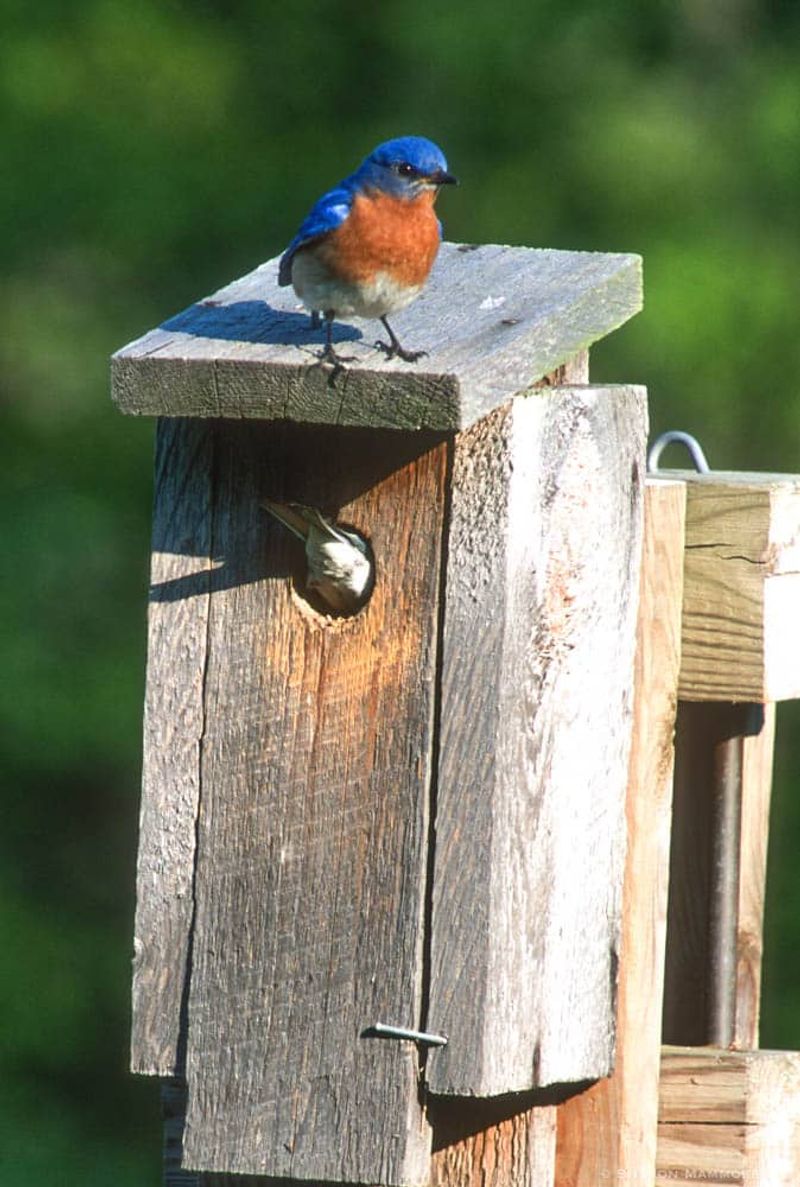
A fence post with a regular bluebird visitor often prompts the next question: should I put up a nest box? The answer can be yes, but a box is a commitment rather than a decoration.
Cornell NestWatch’s Eastern Bluebird guidance specifies mounting boxes in open habitat, generally 4 to 6 feet above the ground, with the entrance hole facing open space so the bird has a clear flight path in and out. A box placed in a shaded, shrubby corner or directly against a building wall is far less likely to attract bluebirds and more likely to sit empty or fill with unwanted occupants.
Pole mounting is strongly preferred over nailing a box to a tree or fence post, because a smooth pole is much easier to protect with a predator baffle. NestWatch’s predator management page covers baffle styles and placement, and the effort is worth it: raccoons, snakes, and cats are capable of reaching boxes that lack protection.
NestWatch’s nest box placement resource also advises keeping boxes away from areas routinely treated with pesticides, and avoiding any pesticide application near an occupied box during the nesting season. Exposure to pesticide residues at or near the nest can affect adults and nestlings alike.
Once the box is up, monitoring is not optional. House Sparrows and European Starlings compete aggressively with bluebirds for nest cavities, and Audubon’s nest box guide is direct about the need to check boxes regularly and remove non-native bird nests to give bluebirds a fair chance.
NestWatch’s guide to good birdhouse features outlines entrance hole dimensions that can help exclude starlings while admitting bluebirds. Installing a box and then ignoring it through the season can inadvertently support the very species that push bluebirds out, which is the opposite of the stewardship goal.
Treat the post as an invitation to look closer
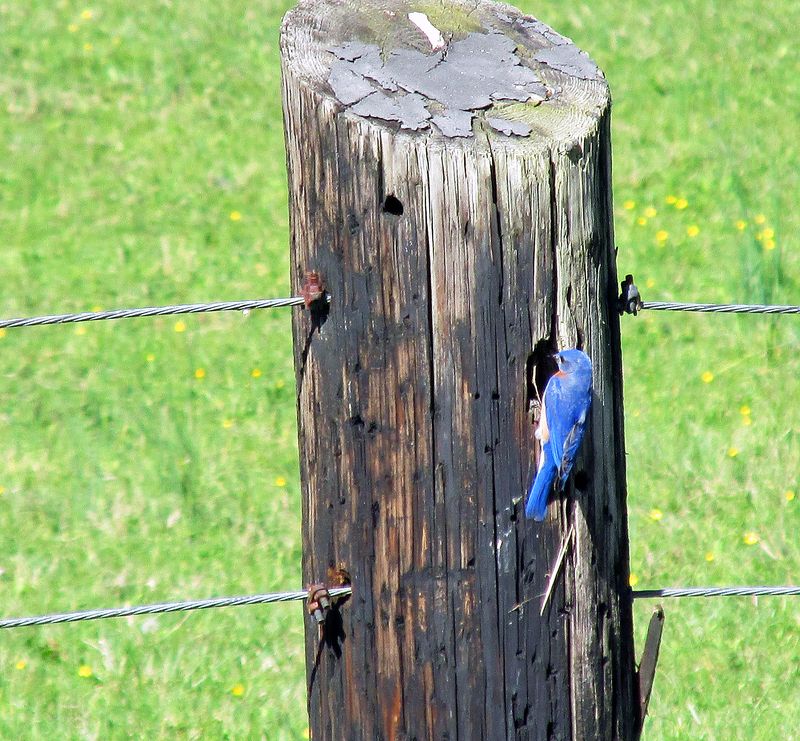
That bluebird on the fence post is telling you something real, even if it cannot tell you everything. Cornell Lab’s life history account makes clear that repeated use of a perch reflects genuine habitat value, whether the bird is hunting, resting, watching territory, or moving through a familiar route.
What the post cannot confirm is which of those reasons applies, where exactly the food comes from, or whether the yard meets any broader ecological standard.
The actions that follow from this sighting are straightforward. Preserve open foraging space near the post, add site-appropriate native vegetation at the edges, reduce unnecessary pesticide applications, and monitor any nest box you install.
NC State Extension’s urban bird habitat guide and EPA’s wildlife-safe pesticide tips point toward the same general direction: a yard that supports a functioning food web benefits bluebirds and a wide range of other species at the same time.
Rather than settling on one explanation for the bird’s behavior, watch what happens over several weeks. Note whether it drops to the ground, flies out for aerial prey, or simply rests before moving on.
The pattern across multiple visits will tell you more than any single moment can. A bluebird that keeps coming back is, at minimum, a sign that something in your yard is working.