
Wild Turkeys In Your North Carolina Yard: What Their Visits Reveal About Your Local Food-And-Cover Mosaic
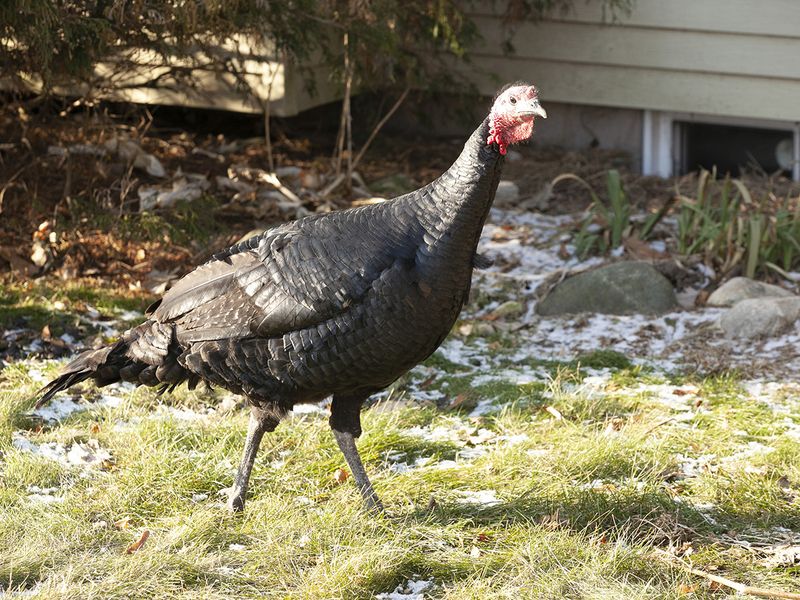
Spotting a wild turkey strutting through your backyard is one of those moments that stops you mid-coffee. These birds are big, bold, and surprisingly observant, and their appearance is telling you something real about your yard and the surrounding landscape.
Understanding what draws them in, and what keeps them moving through, can help you become a smarter steward of your slice of North Carolina. The answer is more layered than a simple story about grass and bugs.
A turkey visit is a clue, not a yard-health certificate
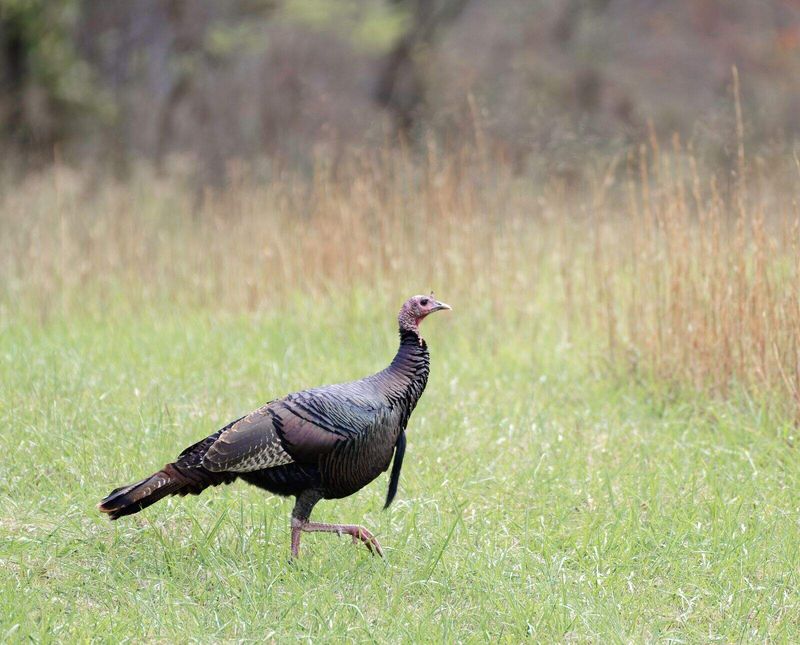
Seeing a wild turkey pick its way across your lawn feels like a stamp of approval from nature itself. Eastern wild turkeys now occur across most of North Carolina, from the mountain coves of the Blue Ridge to the pocosins of the Coastal Plain, and according to NC State Extension’s wild turkey profile, many individual birds maintain home ranges of 1,000 acres or more.
A single bird crossing your Piedmont backyard may be covering a circuit that touches dozens of properties, woodlots, and creek corridors in a single day.
That scale matters when you try to interpret a sighting. The turkey may have paused in your yard because it found a fallen acorn, a patch of exposed soil, a gap in the fence line that made travel easy, or simply because your property sits between two patches of better habitat.
It may also have been drawn by spilled birdseed under a feeder, outdoor pet food, fallen fruit from a crabapple, or open compost. None of those possibilities points to ground cover as the cause, and none of them says anything definitive about your yard’s overall ecological health.
A turkey visit is best read as evidence that your property offers access to at least one resource or travel route the bird found useful at that moment. That is genuinely worth knowing, and it is a reasonable starting point for thinking about habitat.
What it cannot do is identify a single cause, confirm that the bird will return, or certify that your yard is a thriving wildlife sanctuary. Indiana DNR’s wild turkey guidance reinforces this point: turkeys are highly mobile and opportunistic, so the most honest interpretation of a yard sighting is that your property may be one usable piece of a much larger food-and-cover mosaic.
The food story changes with the season
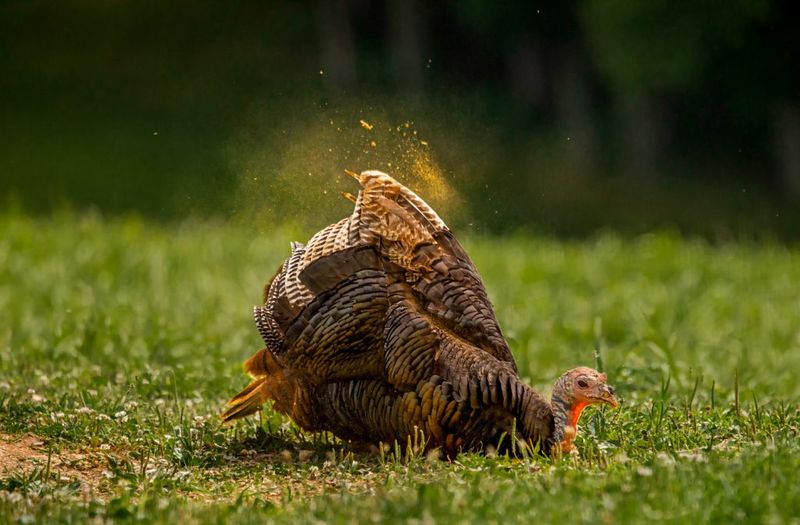
Turkey diets are not what most people expect. Plant matter makes up roughly 90 percent of what an adult wild turkey eats across the year, while animal matter, including insects, spiders, snails, and other invertebrates, accounts for the remaining 10 percent, according to NC State Extension’s wild turkey publication.
Seeds, fruits, acorns, beech nuts, dogwood fruit, holly berries, and forbs form the bulk of the diet, not bugs.
Acorns carry particular weight from fall through winter. When oaks, hickories, and beech drop their mast, turkeys shift their movement patterns to take advantage of that concentrated energy source.
A yard with mature oaks overhead is offering something very different from a yard with tall grass, and that distinction matters. Acorns come from trees, not from ground-level vegetation, so crediting “ground cover” for drawing turkeys during a heavy mast year misses where most of the calories are actually coming from.
Invertebrates play a different role depending on the time of year. Adult turkeys consume insects, spiders, and snails throughout all seasons, but the need spikes sharply in spring and early summer when hens are raising poults.
Young poults depend heavily on invertebrates for protein during their first weeks of life, and their survival rate is closely tied to how many insects they can find in forb-rich, open habitat. By late summer, as the birds mature, plant matter reasserts its dominance in the diet.
Understanding this seasonal rhythm helps you read a yard sighting more accurately. A turkey working through your yard in October is almost certainly following mast, while a hen with young in tow in June is hunting invertebrates in every patch of open, weedy growth she can find.
The yard is offering something different each time, and the food source is rarely what a casual glance at the ground suggests.
Ground cover helps most when it is more than grass
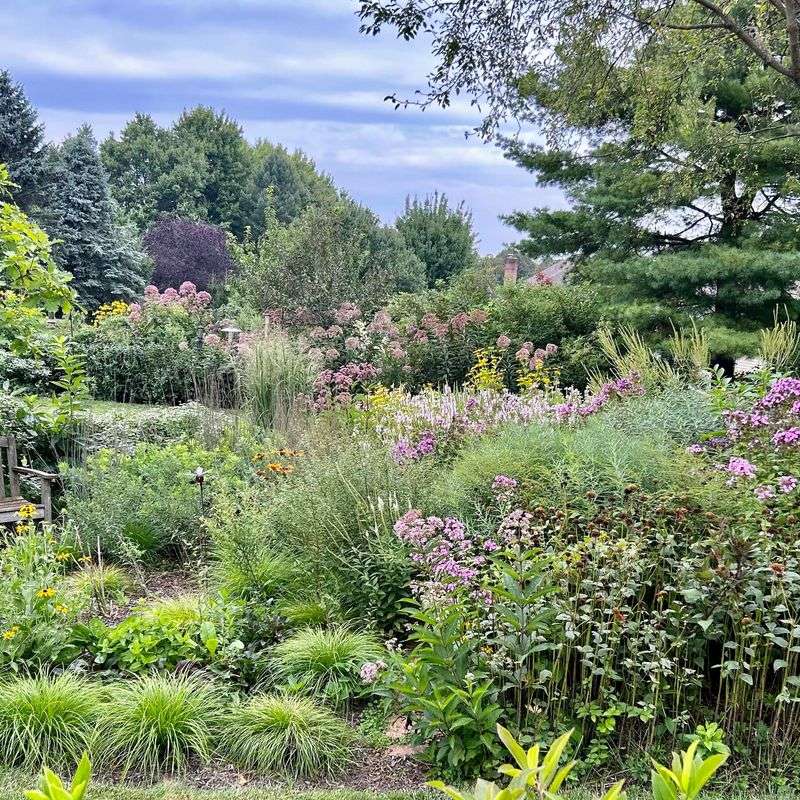
The phrase “ground cover” can conjure an image of a low, uniform carpet of something green, but that picture does not capture what actually supports wild turkeys at ground level. NC State Extension’s herbaceous plants for wildlife guide draws a useful distinction: grasses primarily provide cover and concealment, while forbs, the broad-leaved flowering plants most people think of as wildflowers or weeds, supply seeds directly and harbor the invertebrates that turkeys and their poults actively hunt.
A yard edge dominated by a single grass species, even a native one, offers less than a mixed planting that includes partridge pea, wild bergamot, black-eyed Susan, goldenrod, or native clovers alongside the grass. Those forbs attract beetles, caterpillars, and other invertebrates through their flowers and foliage, creating a living pantry that turkeys can scratch through.
Leaf litter beneath and around those plants adds another layer, sheltering ground beetles, earthworms, and other invertebrates that a foraging turkey will flip through methodically.
Dense, uniformly tall vegetation creates a different problem. Turkeys need to see predators approaching and move through habitat without fighting their way through a thicket at every step.
NC State Extension notes that structural diversity, patches of varying height, density, and plant type, serves turkeys better than a single uniform layer, whether that layer is a closely cropped lawn or a head-high wall of vegetation.
For most North Carolina homeowners, the practical move is creating a transition zone along the yard’s edge or a fence line where native forbs, low shrubs, and grasses are allowed to grow together in a connected strip rather than a tidy monoculture. That kind of mixed planting gives turkeys a reason to linger and scratch, but it also serves native bees, songbirds, and other wildlife that your yard already hosts or could attract.
What lies beyond the feeding patch matters too
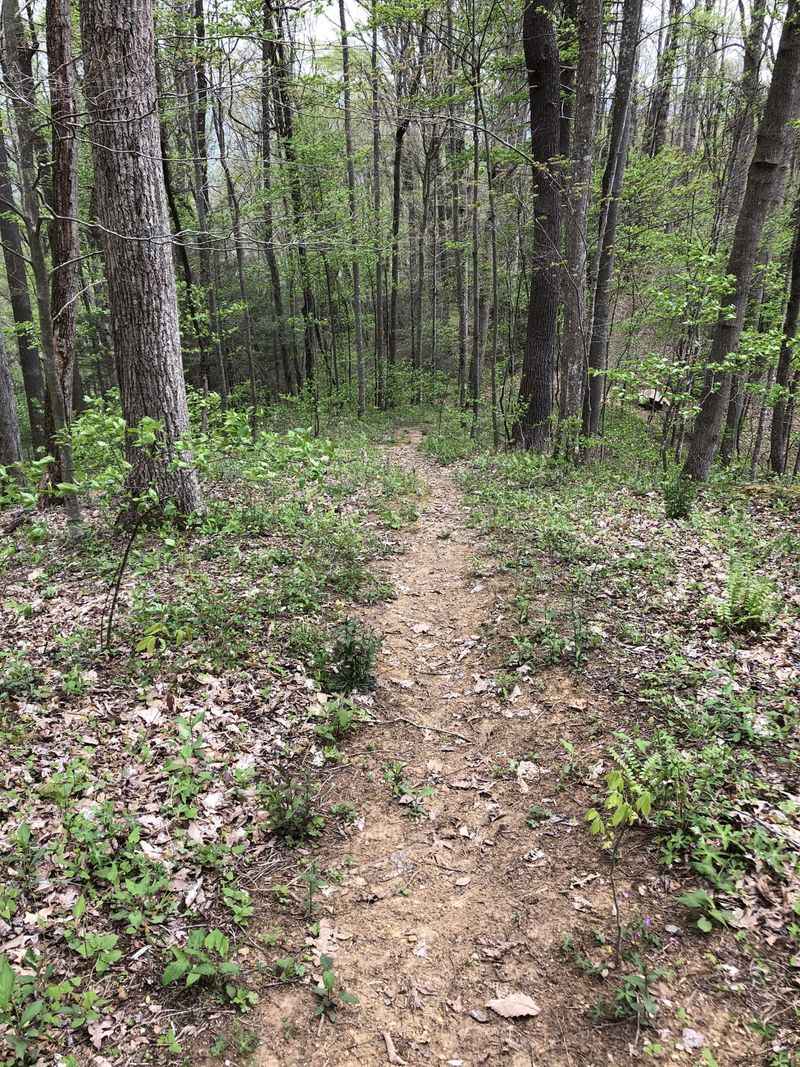
A yard that offers acorns or a forb-rich edge is still only one piece of what a wild turkey needs to survive and reproduce. NC State Extension’s wild turkey profile describes high-quality habitat as a combination of mature forest with a relatively open understory, nesting cover, brood cover, reliable roost trees, water, and escape routes, along with food-producing vegetation.
A residential lot rarely provides all of those elements on its own, and that is fine, because turkeys are built to range across a large, connected landscape rather than settle into a single backyard.
Roost trees are a good example of what yards typically cannot supply. Turkeys prefer large, tall trees with spreading limbs positioned near open areas where they can detect approaching predators at dusk.
A suburban lot may have a suitable oak or tulip poplar, but the bird still needs safe travel corridors to reach it from wherever it spent the day foraging. If the surrounding neighborhood is a solid expanse of mowed turf with no connected patches of shrubs or woods, even a yard loaded with acorns becomes a dead end.
Nesting and brood-rearing habitat adds another requirement. Hens choose nest sites in dense ground vegetation near forest edges, and they move their poults through areas that mix open foraging ground with quick-access cover.
A yard that abuts a larger woodlot, a creek corridor, or a brushy right-of-way is more likely to see turkey families than a yard surrounded by pavement, because the surrounding landscape provides what the yard alone cannot.
Thinking about managing edges for wildlife is therefore just as productive as thinking about what to plant inside the yard. A gradual transition from mowed lawn to native shrubs to taller vegetation to mature trees creates the kind of layered edge that turkeys use as a travel and foraging corridor, connecting your property to the broader habitat network around it.
Build a better North Carolina food-and-cover mosaic
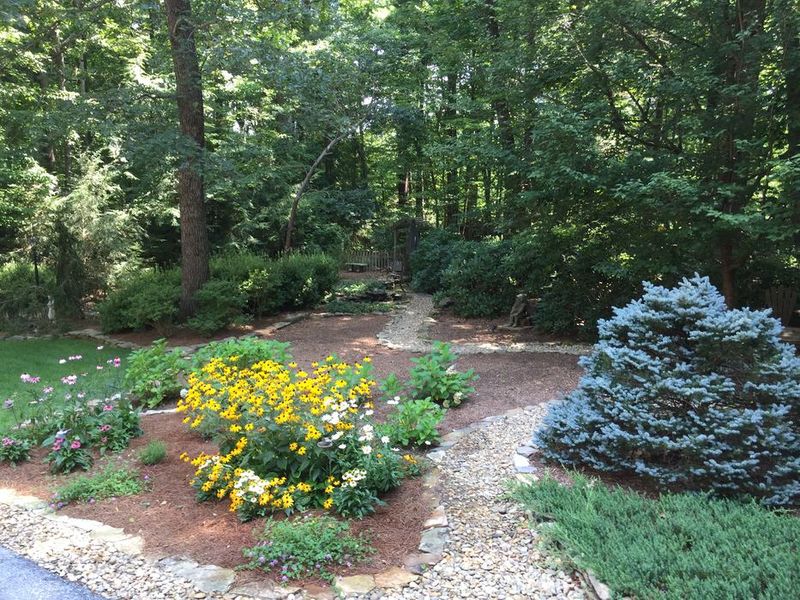
Practical habitat work in a North Carolina yard starts with what is already there. Healthy native oaks are among the most valuable things a property can hold, not just for turkeys but for the hundreds of caterpillar species that depend on oak foliage and, in turn, feed nearly every bird species that raises young in the region.
Protecting existing oaks from unnecessary removal, soil compaction, and overhanging construction should come before any new planting project. Hickories, beech, and black walnut contribute mast as well, and keeping those trees healthy is the single highest-leverage action most homeowners can take for fall and winter wildlife food.
New plantings are worthwhile, but be realistic: a newly planted oak will not produce meaningful quantities of acorns for at least a decade or two, so NC State Extension’s wild turkey guidance frames tree planting as a long-term investment rather than an immediate attractant.
Below the tree canopy, the goal is layered diversity rather than a single plant type. Native shrubs that produce fruits or berries extend the food supply through fall and winter.
Flowering dogwood, American holly, blackgum, native viburnums, and serviceberry all fit well in Piedmont and mountain yards. Blueberry, beautyberry, and persimmon work across a wider range of NC regions and soil types.
In the Sandhills and Coastal Plain, turkey oak, longleaf pine habitat associates, and native sparkleberry are worth considering where conditions match.
At ground level, NC State Extension’s herbaceous plants for wildlife resource points to forb-rich plantings as the most productive choice for invertebrate support. Partridge pea, native goldenrods, wild bergamot, and native clovers are relatively easy to establish and require less maintenance than a traditional lawn once they are settled in.
Connecting these patches to one another and to existing shrub or woodland edges creates the corridors turkeys and other wildlife use to move safely through a neighborhood.
Match every plant to your specific region and site. A plant that thrives in the moist, loamy soils of the Piedmont Triad may struggle in the sandy, acidic soils of the Sandhills.
The NC State Extension Gardener Handbook’s wildlife chapter is a useful starting point for pairing site conditions with appropriate native species before you buy anything at the nursery.
Remove the human-made reasons turkeys linger
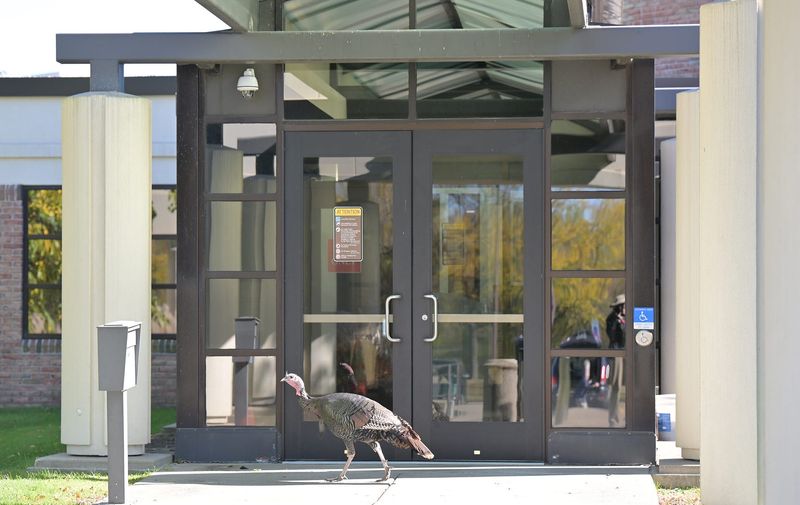
Not every turkey visit traces back to habitat quality. Bird feeders are among the most common accidental attractants, because spilled millet, sunflower seed, and cracked corn on the ground are easy pickings for a foraging turkey.
Outdoor pet food bowls, open compost bins, fallen fruit under an unpicked apple or pear tree, and unsecured trash can produce the same result. Indiana DNR’s wild turkey management page notes that turkeys attracted to artificial food sources can become habituated to human presence, which increases the chance of aggressive behavior, particularly from males during spring breeding season.
If turkeys are visiting your yard primarily because of a food source you are providing, intentionally or not, the fix is straightforward: remove or secure the attractant. Switch to a feeder style that reduces spillage, bring in pet food after meals, pick up fallen fruit regularly, and make sure compost is covered.
You do not need to eliminate habitat to discourage problem birds. The goal is to remove the accidental cafeteria while keeping the native plants and structural diversity that support a broader wildlife community.
Garden damage is a separate problem that calls for a targeted solution. If turkeys are scratching up a vegetable bed or a newly seeded area, sturdy physical exclusion around that specific space is the most reliable answer.
USDA wildlife damage management guidance on wild turkeys confirms that fencing can reduce access but notes that turkeys are capable fliers and low barriers may not stop determined birds. Hardware cloth or welded wire at least four to five feet tall, or netting draped directly over vulnerable plants, works better than a standard garden border fence.
For ongoing conflict concerns, USDA APHIS wild turkey conflict guidance recommends keeping dogs under control around turkeys, giving birds space to leave on their own, and never cornering or chasing them. Hazing a habituated bird by making loud noises or using a garden hose can help reinforce its wariness of humans without causing harm.
Let the sighting guide better stewardship
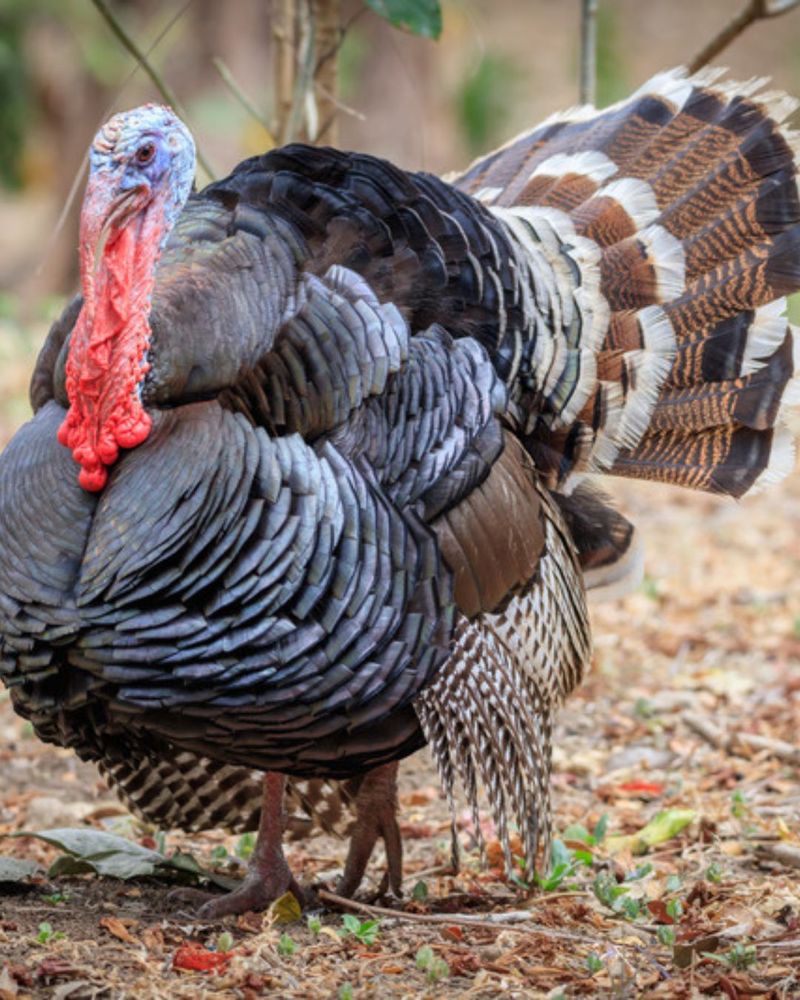
The next time a turkey works its way through your yard, treat it as a field observation rather than a verdict. Watch where the bird goes first: is it heading under the oak that dropped a heavy mast crop, scratching through a weedy edge strip, or making a beeline for the area under your bird feeder?
That movement tells you more about what drew it in than any general theory about ground cover. Note the time of year, whether it is alone or in a group, and whether it seems at ease or nervous, and you will start building a picture of how your property fits into the local habitat network.
From there, the action list is short and manageable. Check for and remove any artificial attractants if birds are becoming too comfortable around people.
Retain the mature native trees you have, and protect existing patches of native shrubs and forbs from unnecessary clearing. Add a connected strip of native forbs and shrubs along an edge where conditions allow, matching plant choices to your NC region and soil type.
Protect specific garden beds with sturdy exclusion rather than stripping habitat from the whole yard. Keep dogs under control, and give the birds room to move.
NC State Extension and wildlife managers both frame the strongest conclusion the same way: your yard may form one usable piece of a larger habitat mosaic, and that is reason enough to tend it thoughtfully. A turkey passing through is not a guarantee of anything, but a yard that quietly supports native plants, invertebrates, and structural diversity is already doing real work, whether or not a turkey ever returns to confirm it.