
Brown Patches Showing Up In Your Lawn This Fall? Don’t Reseed The Whole Yard Before Fixing What’s Underneath
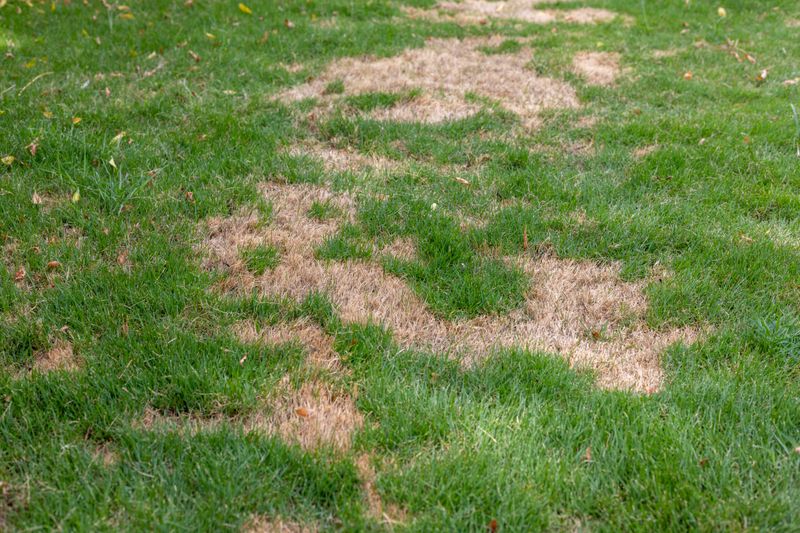
A few brown spots in the grass can make your stomach drop, especially when you have put time into your lawn. The good news is that brown color is a clue to investigate, not a bill you have to pay right away.
Lots of things can turn grass brown, and some of them fix themselves. A little detective work can save you from buying seed or treatments your yard does not need.
Brown color alone cannot tell you what failed
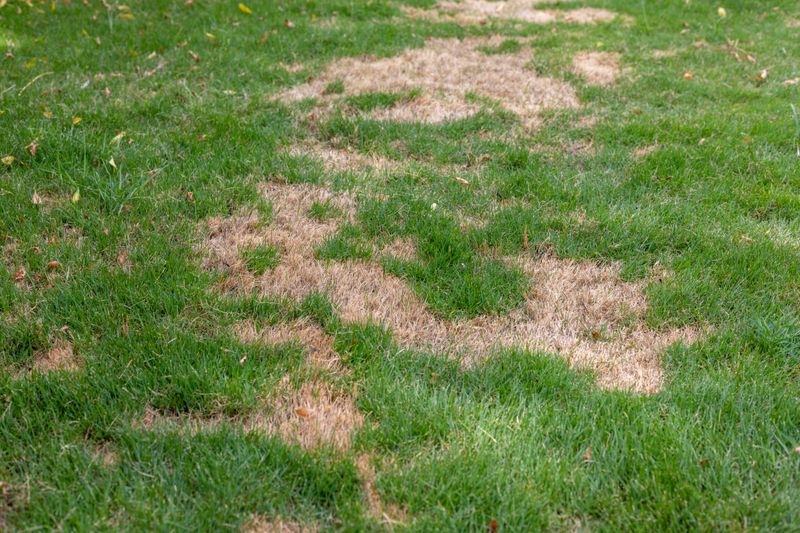
Brown grass is a symptom, not a diagnosis. The same dull color can come from drought, normal dormancy, insects, disease, compaction, poor drainage, or physical damage like a spilled chemical, pet urine, or a dragged hose.
Nothing about the color alone says which one you are dealing with.
That is why guessing can get expensive. A bag of seed will not help if grubs are chewing the roots, and a grub treatment will not help if the lawn is simply thirsty.
Some brown areas are not even in trouble at all.
Extension specialists treat lawn diagnosis as a process of narrowing things down. The University of Maryland Extension diagnostic guide lists several possible causes and notes that symptoms can overlap, so a single clue rarely settles the question.
Think of each observation as one piece of a puzzle rather than the answer.
It also helps to remember that no single cause is automatically the likely one. Your lawn, your grass type, your weather this season, and your yard’s history all matter.
Some patches need a repair, some need a change in watering, and some just need patience.
So before you open your wallet, slow down and look. The next few sections walk through what to check, in an order that starts with the cheapest and easiest steps.
You may find the answer costs you nothing at all.
What does the patch tell you?
Start with a slow walk around the yard. Is the browning spread across the whole lawn, or is it limited to a few distinct spots?
Widespread browning can point toward weather or watering, while isolated patches may suggest something local, though that is only a hint.
Next, kneel down and look at the blades. Check for spots or lesions on individual leaves, and see whether the color looks dry and straw-like or more water-soaked.
Then feel the soil. Is it bone dry, soggy, or somewhere in between?
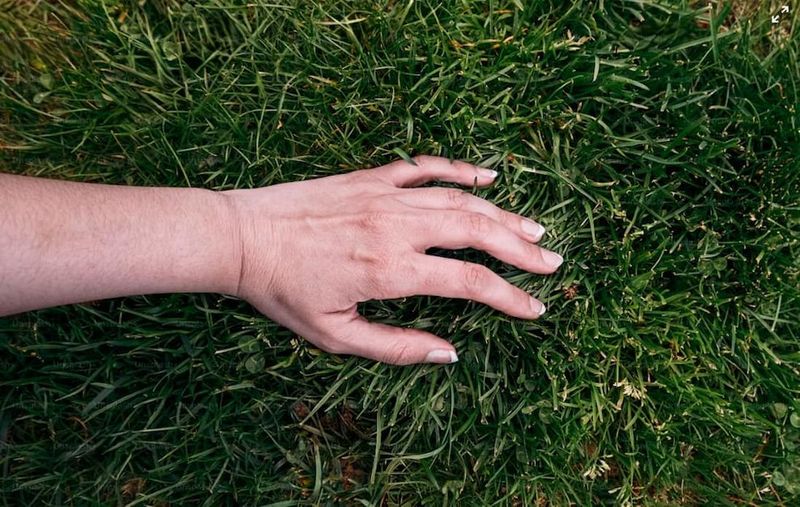
Try the footprint test too. When you walk across the grass, do your footprints linger instead of springing back?
Maryland Extension’s diagnostic guide connects lingering footprints and a bluish-green to brown cast with drought stress, and it links turf that lifts easily with weak roots and possibly grubs.
Finally, give a small section of brown turf a gentle tug. Does it stay anchored, or does it peel back like a loose carpet?
Write down what you find for each spot, or snap a few photos.
These observations narrow the list of suspects, but they do not prove anything on their own. A lawn with weak roots could have grubs, but it could also have been stressed by heat or poor soil.
Treat your notes as leads that tell you what to check next.
Lift several spots before blaming grubs
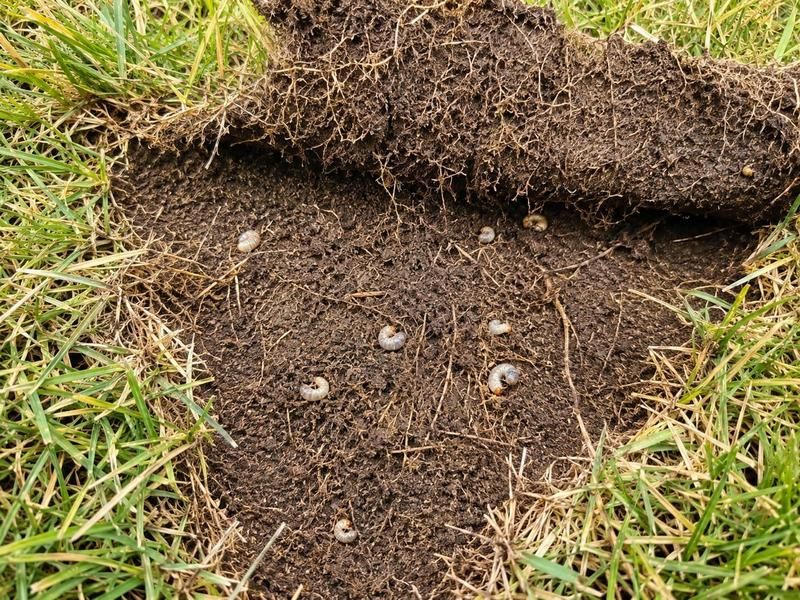
Grubs get blamed a lot, but you can check rather than guess. Use a spade to cut a few sections of turf about a foot square and peel them back.
Look through the grass roots, the thatch, and the top few inches of soil.
Sample in more than one place. Try the edge of a brown patch where green grass meets damaged turf, plus a few spots that look fine for comparison.
Penn State Extension recommends sampling multiple locations, and it notes that grub-damaged turf can feel spongy or roll back easily.
If you find some grubs, resist the urge to panic. A few in the soil is common.
Counts that call for action depend on the grub species, the grass type, and the circumstances. Penn State describes five to ten per square foot as a commonly used threshold in many cases, but it stresses that the decision is not one-size-fits-all, and Maryland’s grub identification guide helps you tell which kind you have.
If you do decide a pesticide is justified, confirm the pest first. Then read the label closely.
The EPA explains that following label directions helps ensure effective and safe use, which covers where it can be used, how much, when, and what precautions to take.
No grubs? That is useful news too.
It means you can cross one expensive treatment off your list and keep looking.
Check compaction and thatch separately
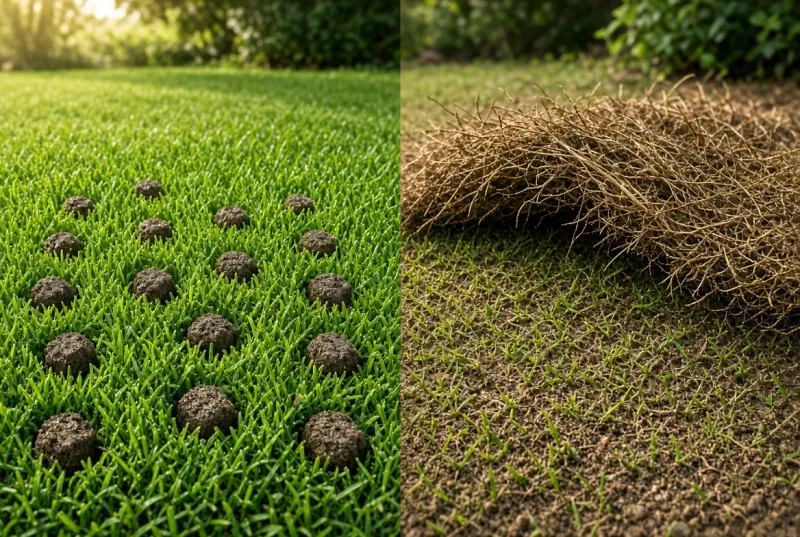
Compaction and thatch are two different things, and neither can be diagnosed from color. Both are simply possibilities to check, usually in spots where grass looks thin or stressed.
Compacted soil is packed so tightly that water, air, and roots struggle to move through it. Hard ground, runoff, and heavily trafficked paths are clues, though not proof.
If compaction really is the problem, Illinois Extension points to core aeration, which pulls out small plugs of soil. Solid-tine spikes that just poke holes are not an effective substitute, and Maryland Extension also lists compaction among the non-pest, non-disease lawn problems.
Timing matters. Aerate when the soil is moist but not saturated.
Aeration will not bring dead grass back to life, though it can help the lawn that remains.
Thatch is the layer of stems and roots between the green blades and the soil. To check it, cut out a plug and measure that brownish layer with a ruler.
A thin layer can actually be beneficial. Illinois Extension considers more than one-half inch excessive.
Be careful with aggressive removal. The same guidance warns that mechanical dethatching can be destructive to turf.
If your layer is thin, there is nothing to fix. If it is thick, core aeration and topdressing can help address conditions that contribute to buildup, and you can weigh your options from there.
Brown turf may be dormant, drought-stressed, or diseased
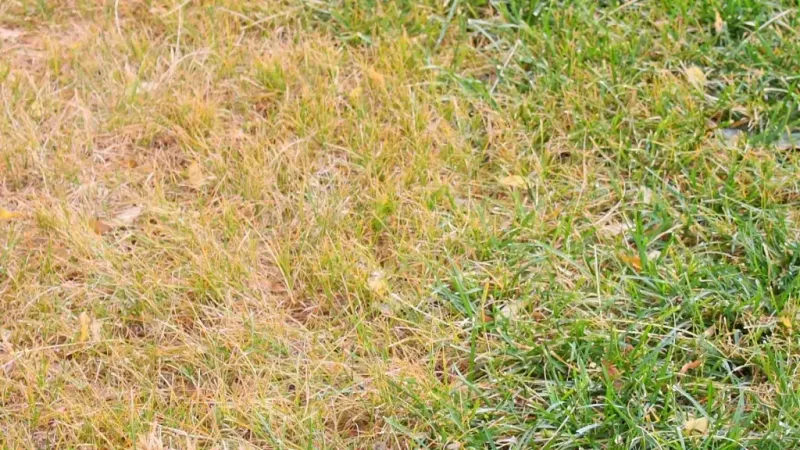
Brown does not always mean dead. Established cool-season lawns can turn brown during drought and bounce back once conditions improve, according to Maryland Extension.
A lawn that has simply gone thirsty may need a steady drink more than it needs a replacement.
Your grass type matters too. Warm-season grasses such as zoysia and bermudagrass normally turn brown when they go dormant in winter, as described in Maryland’s guide to lawn grasses.
If yours is one of those, a tan lawn in late fall may be perfectly normal.
Disease is another possibility. Brown patch is a common example.
Maryland Extension says tall fescue often recovers as autumn rains return, though bare areas may need reseeding afterward.
The tricky part is that these causes can look alike. Drought, disease, and other stresses can overlap in symptoms, so no single clue, like patch shape or color, settles the matter.
A lesion on a blade or a ring of dead grass is a lead, not a verdict.
If you are unsure, take a close-up photo and ask your local extension office. Waiting a couple of weeks, watering properly, and watching whether new green growth appears can tell you a lot without spending a dime.
Recovery is possible in many cases, but it is never guaranteed.
Decide whether reseeding makes sense
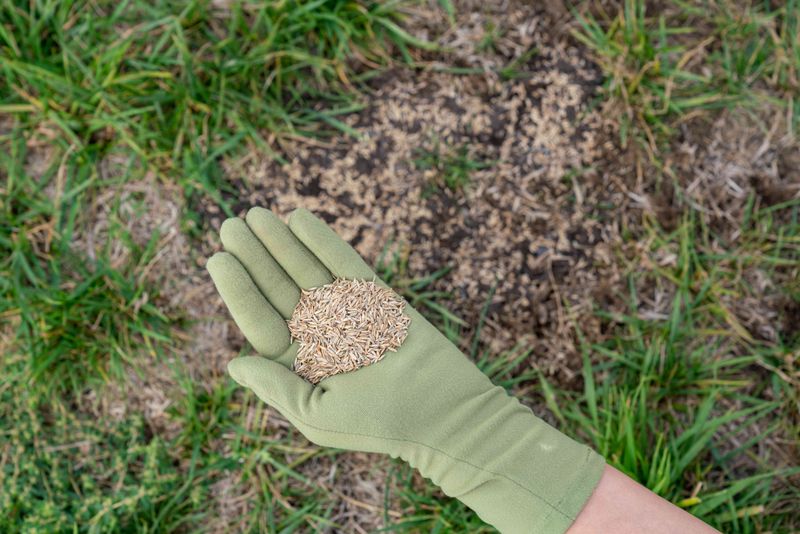
Reseeding is not a bad idea. It is just a step that works best after you understand what went wrong.
Overseeding can repair thin turf or small bare patches once the cause has been dealt with, and if the cause is still there, new seedlings may fail for the same reason.
Seed also needs the right conditions. It has to touch the soil, so loosen the surface and rake out debris rather than tossing seed on top of dead thatch.
Then keep the area moist with follow-up watering until seedlings take hold.
Timing depends on where you live and what grass you grow. Penn State Extension describes early fall as a good time to establish cool-season turf, and says seeding later than mid-October is not suggested in most of Pennsylvania.
Compare that with University of Minnesota Extension, where the preferred renovation window is mid-August to mid-September. Those are two different calendars, and neither is a national deadline.
If you have a warm-season lawn, fall may be dormancy time rather than seeding time. Your best move is to look up your state’s extension service, find your grass type, and follow the dates written for your area.
If the window has passed, patching in the right season next year is a perfectly reasonable plan.
Diagnose first, then decide what to do
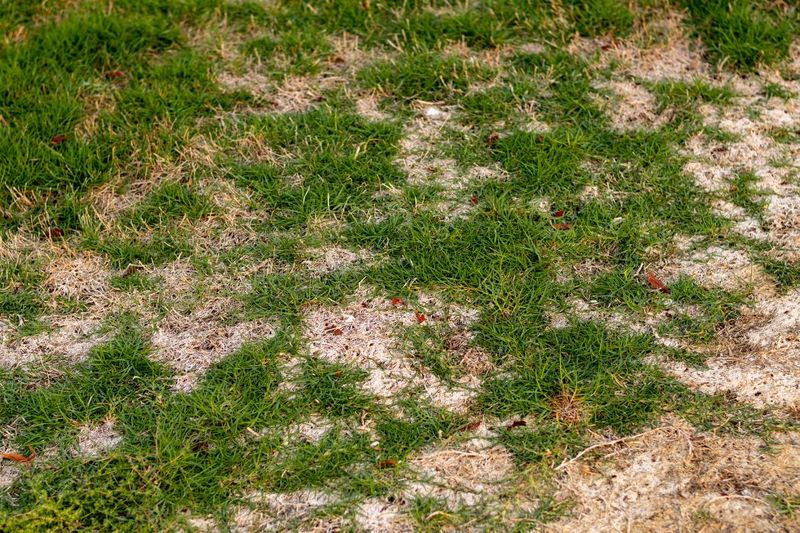
Walk the lawn, note the pattern, and check the soil and blades. Sample for grubs only where it makes sense, look at compaction or thatch in the trouble spots, and keep drought, dormancy, and disease on the list.
Maryland Extension’s guide is a handy companion, and Penn State’s seasonal calendar can help with timing.
Only then decide whether thin or bare spots need repair. You may not need to buy anything, and fixing a cause will not necessarily revive grass that has died.
A brown patch is a question, not a shopping list.