
Can American Holly Give North Carolina Birds Winter Fruit for Decades?
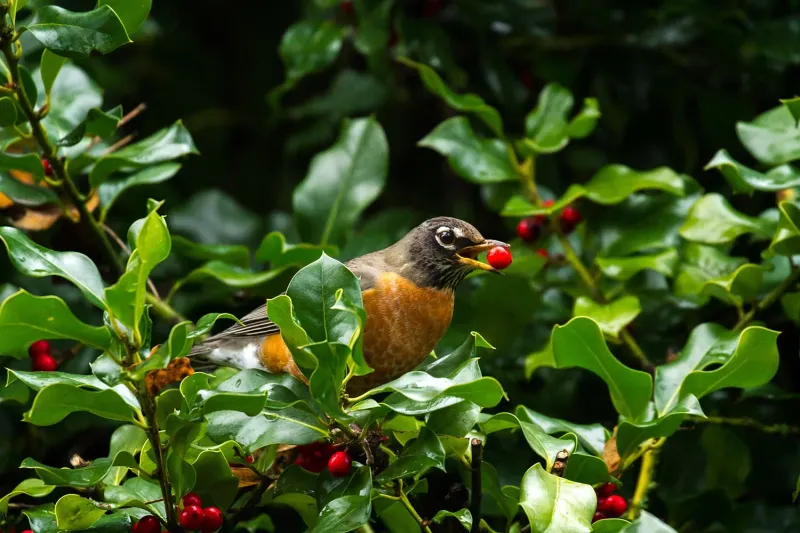
A tree planted this fall could still be standing in your yard when your grandkids are grown. American holly is a North Carolina native that stays green all winter and, in the right conditions, loads its branches with red fruit.
Robins and cedar waxwings are among the birds that eat it. Before you buy one, though, you need to know what it takes to get berries, how big it gets, and whether your yard has room.
American holly can offer evergreen cover and winter fruit
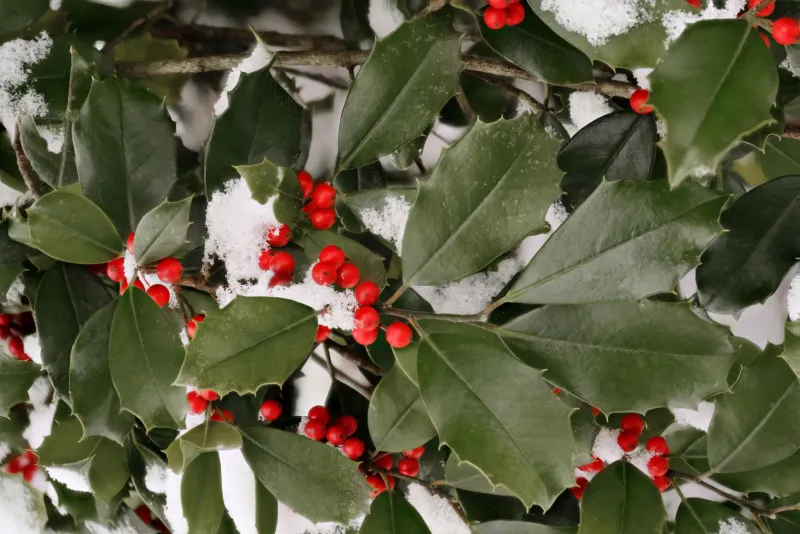
Most trees in a North Carolina yard drop their leaves by December, and that leaves birds with little shelter. American holly keeps its spiny, glossy leaves all year.
That dense evergreen foliage can give birds a place to hide from wind and weather.
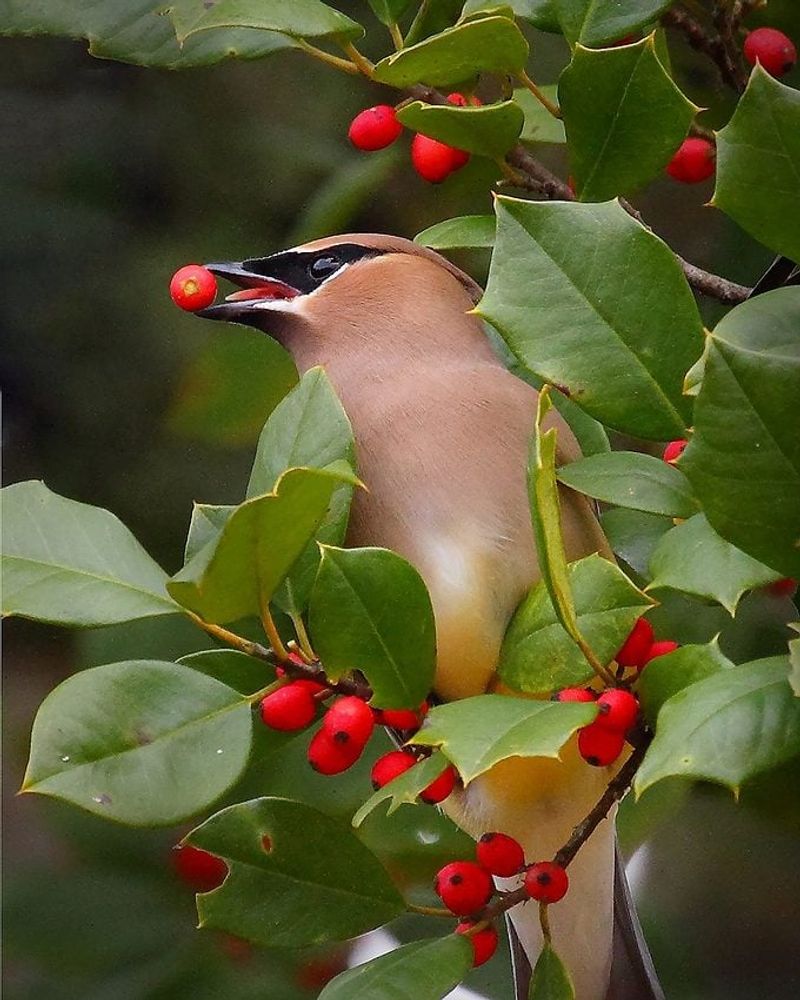
The tree is native to the Coastal Plain, Piedmont, and Mountains, so it belongs in nearly any part of the state. According to the North Carolina flora account, American robins and cedar waxwings eat its fruit in winter.
Those are two birds many of us can recognize at the edge of the lawn.
The fruit ripens in fall and can hang on through much of winter. Botanically it is a berry-like drupe, and the pulp and fruit are what birds eat.
NC State Extension’s plant profile also lists the fruits as food for songbirds and other wildlife.
Here is the honest limit. Holly offers potential habitat and potential food, not a promise.
Not every bird species eats the fruit, and wildlife use varies from yard to yard, so you cannot count on a particular visitor showing up at your tree.
Fruit is also conditional. Only some hollies bear it, which is the next thing to sort out before you shop.
Will one holly tree produce winter fruit for birds?
Walk into a nursery, grab any American holly, and you may go home with a tree that never makes a single berry. Hollies come as separate male and female plants.
Only the females bear fruit, and they need pollen from a male of the same species nearby.
So the practical move is to buy a plant labeled female and check that a compatible male grows close by. A neighbor’s tree may count, but confirm it rather than assume.
Otherwise, plan to plant one of each. NC State Extension notes this male and female split for American holly.
Patience matters too. A newly established holly may take 4 to 7 years to flower, so do not expect berries the first winter.
A small seedling may also hide its sex until it blooms.
That is why a seed-grown tree is a gamble. USDA Forest Service material explains that the sex may not be apparent before flowering.
A labeled named cultivar takes much of the guesswork out.
Think of the tag as part of the investment. A female holly with a male pollinator nearby gives you a real chance at fruit.
A random pick gives you a coin flip at best.
A 50-year payoff is possible, not promised
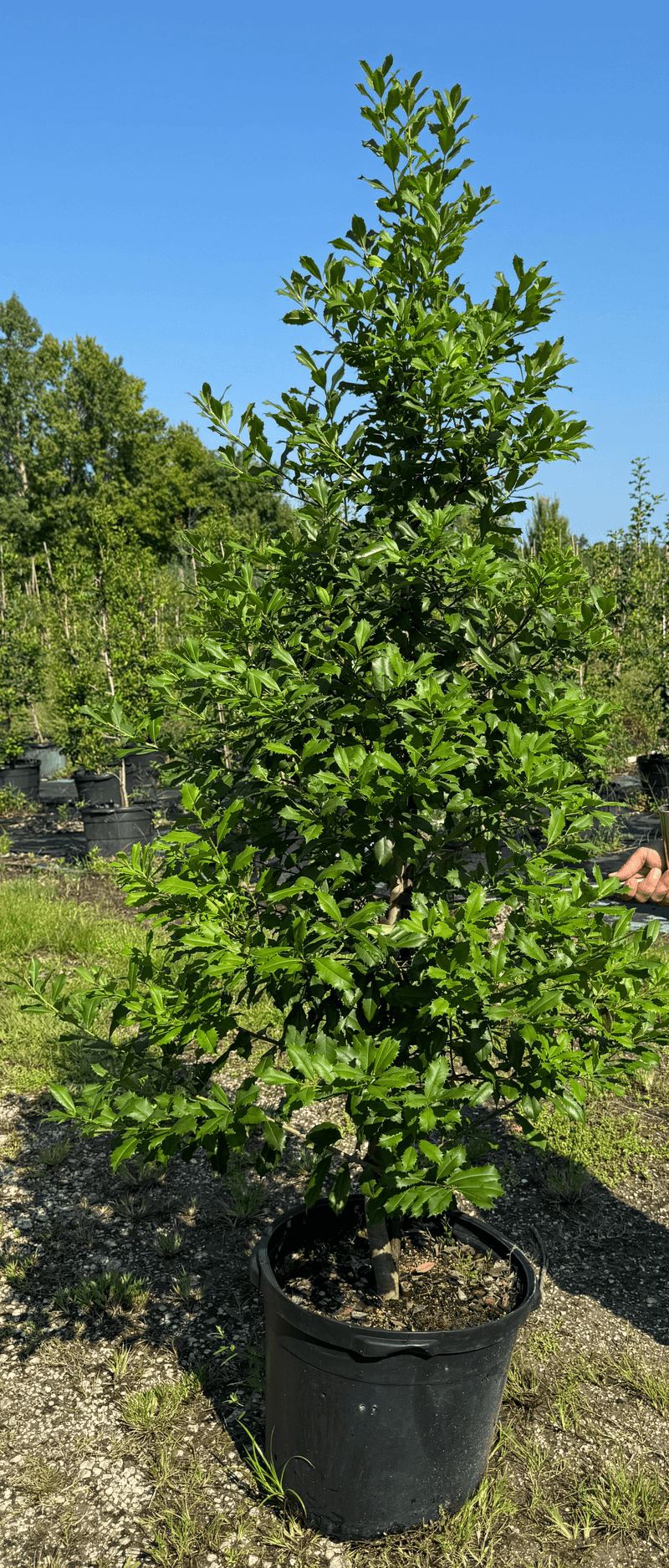
Fifty years is a long time, and no nursery tag can guarantee it. What we can say is that the species is capable of a long life.
USDA Forest Service records document American hollies more than 100 years old, including one tree that reached 144.
Those old trees show what is possible for the species. They do not predict what will happen to a holly in your side yard.
A backyard tree faces its own risks, from mower damage to drought to poor soil.
Several things decide how your tree does. A good site, careful establishment, healthy growth, the right sex, and pollination all play a part.
If any one of them fails, the bird-food payoff shrinks or never arrives.
Size is part of the story as well. NC State Extension describes a tree that can grow quite large over time, which only helps you if your yard can hold it.
A fair way to see it is as a bet with good odds when you do the work. Plant well, tend it early, and you give a long-lived native a real shot at serving birds for decades.
Just do not hand out the guarantee in advance.
Choose a site for the full-grown tree
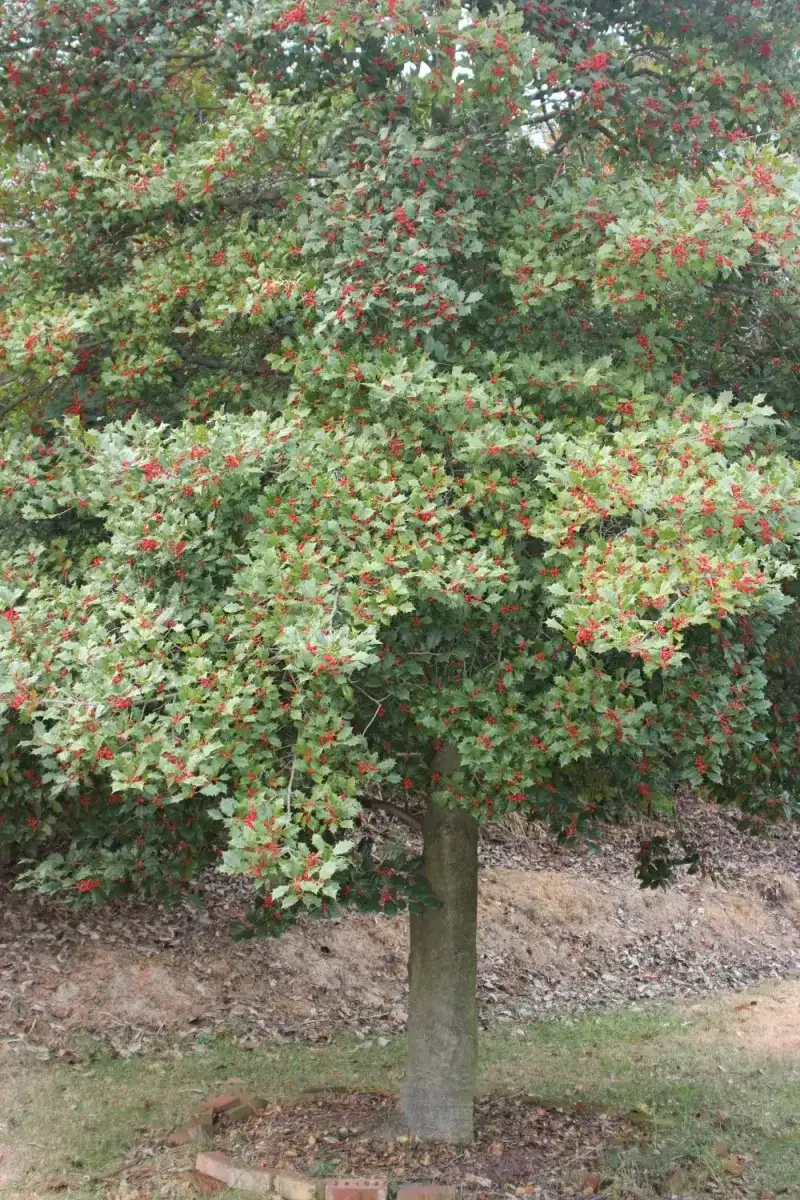
Picture the tree at 40 to 60 feet tall and 10 to 20 feet wide. That is the size NC State Extension gives for American holly, and it is the number to plan around, not the small pot at the nursery.
Extension does not recommend it for small yards.
Walk your lot and measure. Look up for power lines and over for the roof, driveway, fence, and septic area.
If the full spread would crowd any of them, a smaller native tree is the better choice.
The tree grows in full sun to partial shade. It prefers moist, well-drained soil.
Spots that stay soggy or flood after storms are poor fits, and that matters in low Coastal Plain yards and along creek edges.
A simple test helps. Dig a hole, fill it with water, and see how long it takes to drain.
If water sits for a day, pick another spot.
Call 811 before you dig anywhere. Buried utility lines are common in yards, and the call is free.
N.C. Cooperative Extension in Beaufort County also points out that planting sites deserve thought before the shovel goes in.
Fall planting still needs careful establishment
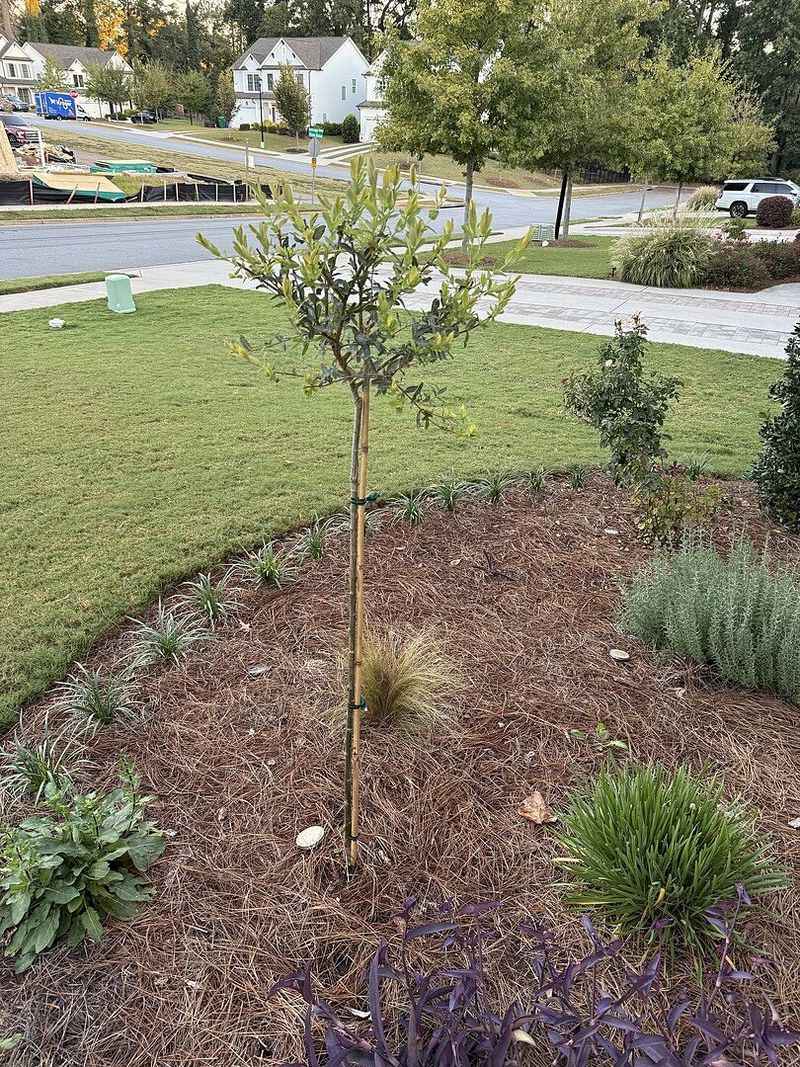
Cooler air and softer soil make fall a good time to get a tree in the ground, and late fall can work especially well. N.C.
Cooperative Extension explains why fall is a strong planting season for trees and shrubs. Still, a good season does not do the work for you.
Start with the hole. Dig it no deeper than the root ball and two to three times as wide.
Then backfill with the native soil you removed, instead of rich amended mix.
Water well right after planting. Then add two to three inches of mulch over the root zone.
Keep the mulch at least six inches back from the trunk, since piled mulch against bark invites rot and pests.
The Extension Gardener Handbook lays out these steps and says to keep watering when rainfall falls short.
Here is where many young trees fail. Fall in North Carolina can turn dry for weeks, and a new holly has a small root system.
Check the soil every week or so by pushing a finger a few inches down, and water if it feels dry.
Keep watching through winter dry spells too. Success is not certain on every site or in every weather pattern, but steady attention in the first seasons improves your odds.
Keep holly fruit away from children and pets
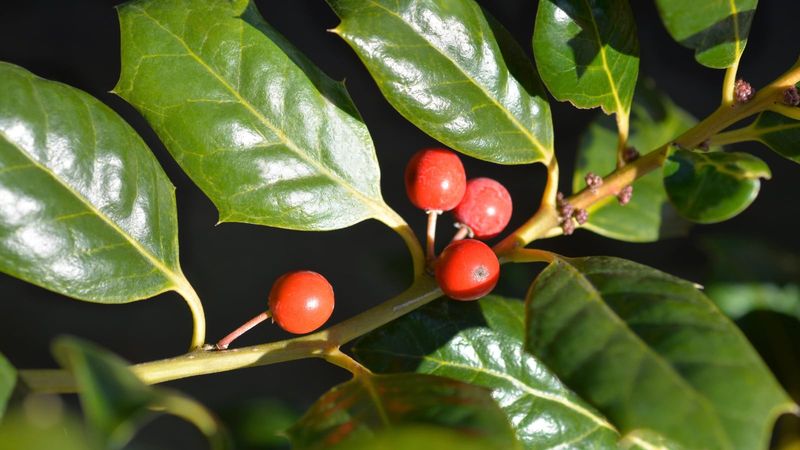
Birds eat holly fruit, but that does not make it food for people. Poison Control says holly berries can cause nausea, vomiting, and diarrhea in people.
Small children are the biggest worry, since bright red berries look like candy.
Pets are at risk as well. The ASPCA lists American holly as toxic to dogs, cats, and horses.
A dog that chews fallen branches or snacks on berries could get sick.
Let that shape where you plant. Keep the tree away from play areas, a dog’s favorite digging corner, and horse paddock fences.
A spot at the back of the yard, past where kids and pets usually roam, makes more sense.
Teach children early that the red berries are for birds only. Rake up dropped fruit near walkways if little ones play nearby.
If someone swallows holly berries, call Poison Control. For a pet, contact your vet or an animal poison hotline.
A tree that helps wildlife should not become a hazard at home.
Plant holly only where its long-term needs fit
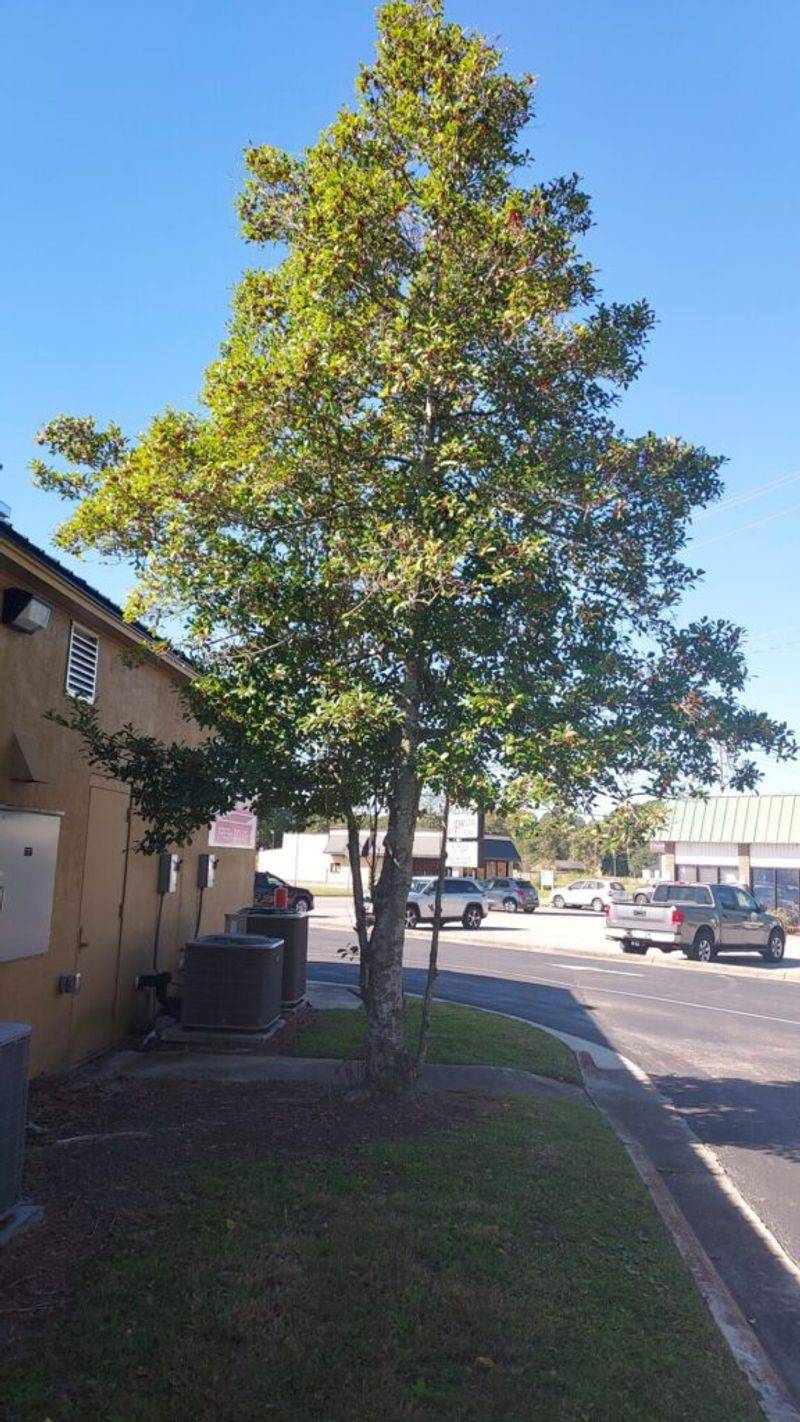
Here is a simple rule: plant American holly only if your yard can hold a 40 to 60 foot tree and you will care for it through its early years. If either answer is no, choose a smaller native instead.
Winter fruit depends on a female tree and a compatible male nearby, as the NC State Extension profile makes clear.
What you get is potential habitat, not a locked-in food supply or promised visits from robins and waxwings. A tree is a slow gift.
Give it room and it may repay you for a very long time.