
How To Tell When Your Fall Carrots Are Ready To Pull
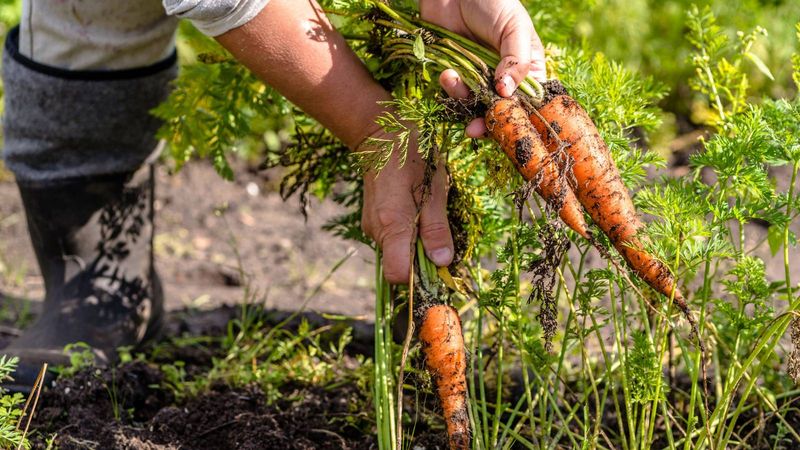
Standing over a row of feathery carrot tops, it is hard to know whether to pull now or wait. Some gardeners worry that digging too soon means missing out, while others fear waiting too long.
The good news is that carrots give you clues, and you can check them without much guesswork. Here is how to read those clues, and what a chilly fall may or may not do for flavor.
There is no single sweetest harvest day
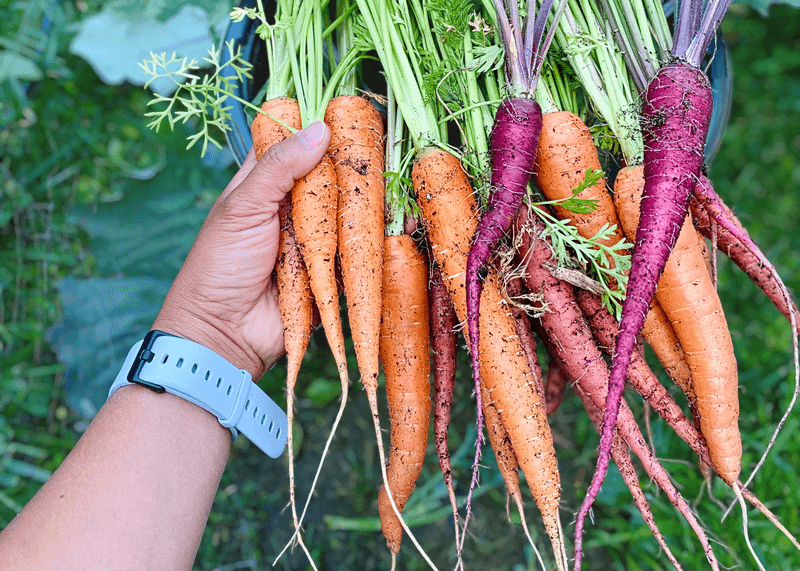
Pull a carrot while it is still small and you do give up some potential size. That part is true.
But a young carrot is still a perfectly good carrot, and nobody has pinned down one date or one size when every carrot hits its sweetest point.
What matters more is the kind of carrot you planted, how you plan to eat it, and what you find when you look at an actual root. UC ANR guidance points gardeners toward checking the root itself rather than trusting a calendar alone.
Some people want slim, tender baby carrots for a quick snack. Others want thick roots for roasting or storing.
Both goals are fine, and they simply call for different harvest times.
University of Maryland Extension also advises harvesting based on the size that suits your cultivar and your plans. So instead of chasing a perfect day, you will learn to read your own row.
The next sections show you how.
Use maturity estimates as a cue to start checking
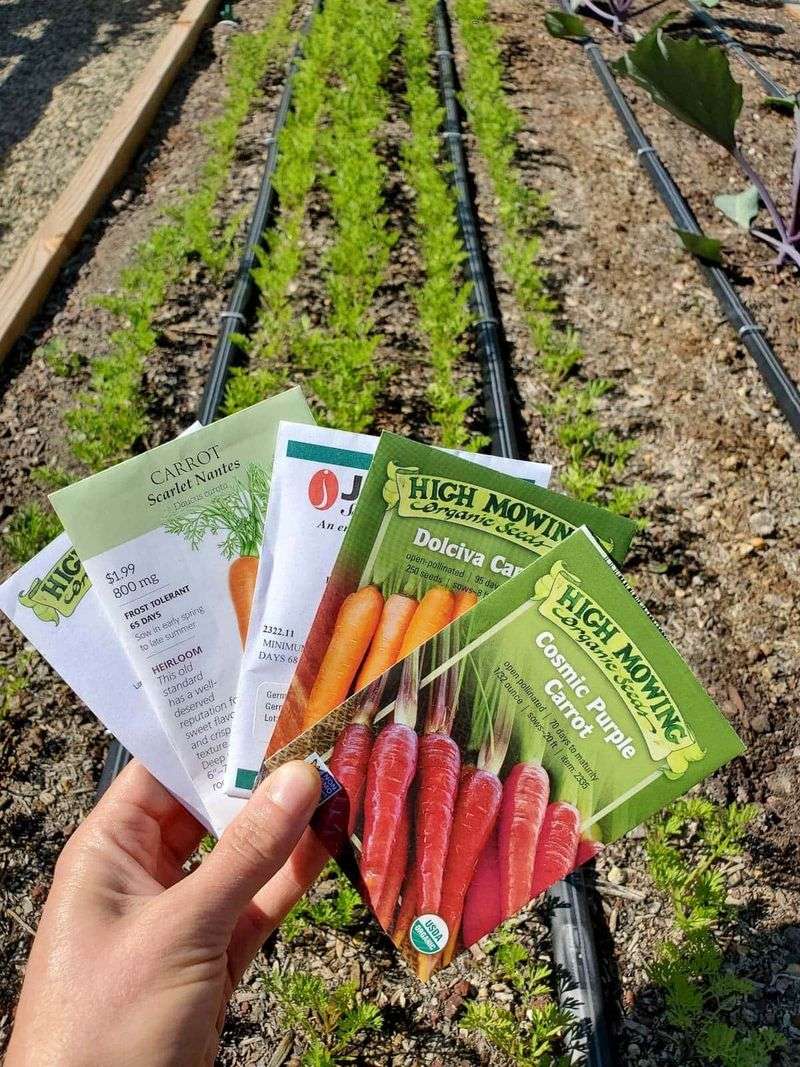
Flip over your seed packet and find the days to maturity. That number is your signal to begin checking, not a deadline that ends on a certain morning.
Extension estimates show how wide the range can be. Utah State Extension gives about 70 to 100 days from seeding, while University of Maryland Extension lists about 65 to 75 days for fresh-use carrots.
Why the gap? Variety is a big reason.
Short, round types and slender early types tend to finish sooner than long, hefty storage types.
Growing conditions matter too. A cool, cloudy stretch can slow things down, and warm, steady weather can speed them up.
Fall sowings often feel slower because days shorten and soil cools.
Preferred size plays a part as well. If you like baby carrots, you may start sampling well before the packet’s number.
If you want full-size roots, you may keep checking after it.
A handy habit is to write the sowing date and the packet estimate on a garden label or in a notebook. Then circle a date a week or so before the estimate as your first look.
From there, let the roots tell you what comes next.
Inspect and sample a root before deciding
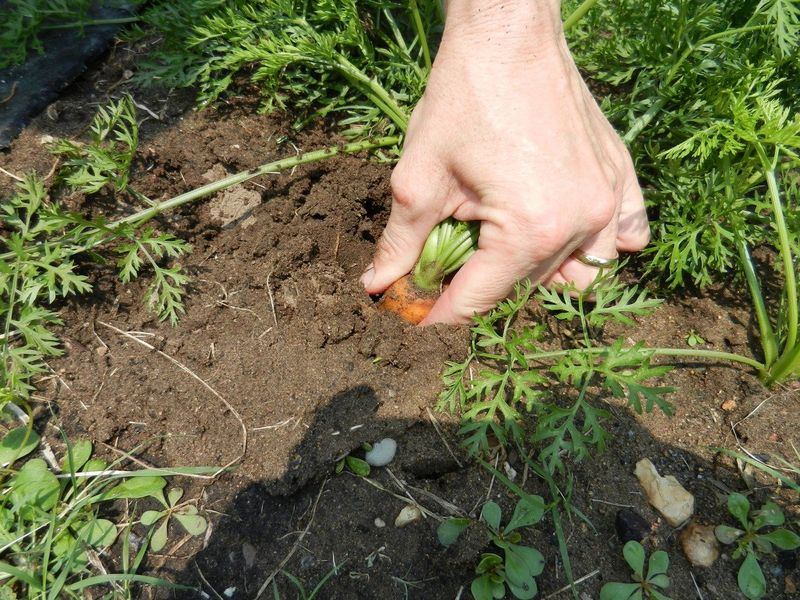
Start by gently brushing soil away from the top of a carrot so you can see the shoulder. This lets you judge thickness without pulling anything up.
Cover the shoulder back over if it is not ready, since exposed tops can turn green.
For a sample, loosen the soil around the root first with a garden fork or trowel, then lift. UC ANR and Illinois Extension both describe checking roots this way, and loosening the soil helps prevent snapped carrots.
Now taste it. Wash it, take a bite, and ask yourself two things: Is the size right for what I want to cook, and do I like the flavor?
Diameter can serve as a rough example. Illinois Extension suggests roots at least about half an inch across, and another Illinois guide gives roughly half an inch to an inch.
Treat those numbers as a starting point, because round, miniature, and long-rooted types naturally differ.
One carrot will not speak for the whole row. Soil, shade, and crowding can make neighbors vary, so sample a second or third from a different spot if you are unsure.
Maryland Extension reminds gardeners that the right size depends on the cultivar and the intended use.
Waiting may add size, but it has limits
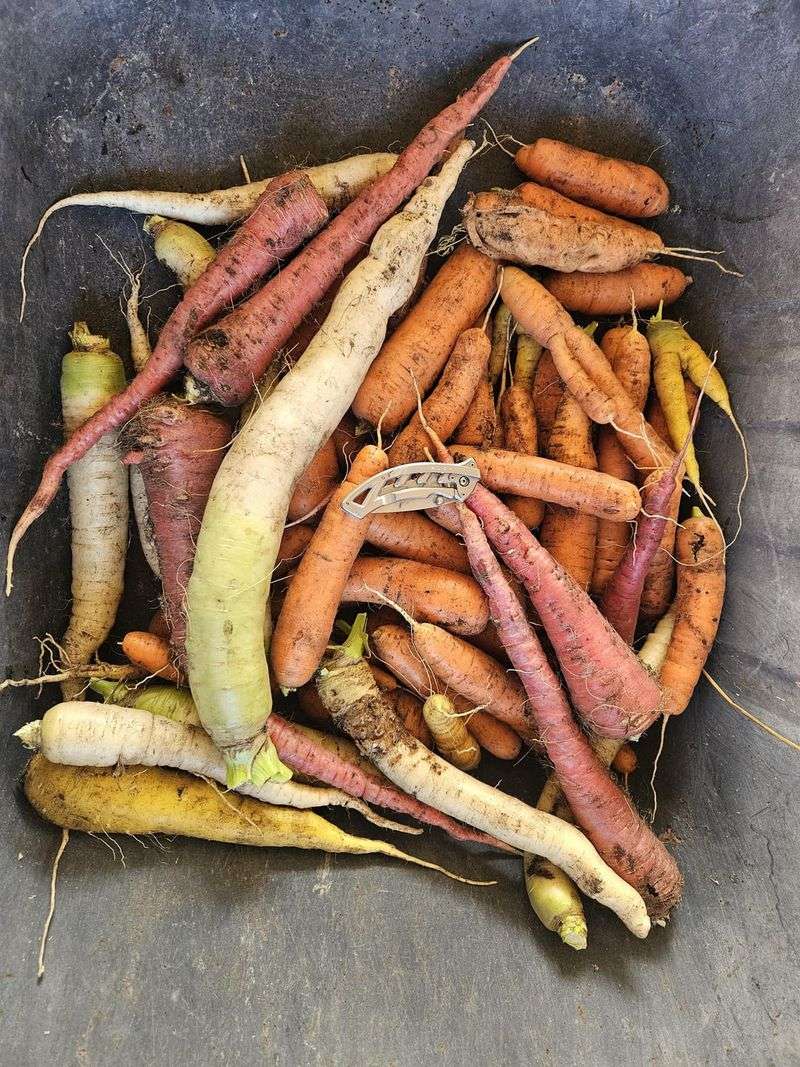
If your sample looks a bit skinny, leaving the rest in the ground for a while can let roots fill out. That is a reasonable plan when the weather is mild and the tops still look healthy.
The catch is that carrots do not keep improving forever. UC ANR warns that overmature roots may become tough and crack.
Cracks often show up as splits along the length of the root. They are usually a sign that a carrot has stayed put past its prime, and they can make the roots harder to store.
So think of waiting as a short trade, not a long-term strategy. Give it a week or two, sample again, and compare.
If the new root is thicker and still tender, you gained something. If it is woody in the center or splitting, it is time to harvest the rest.
Also avoid assuming extra time guarantees sweeter carrots. Bigger and sweeter are two different questions, and only your own taste test can answer the second one.
Cool fall conditions may affect sweetness
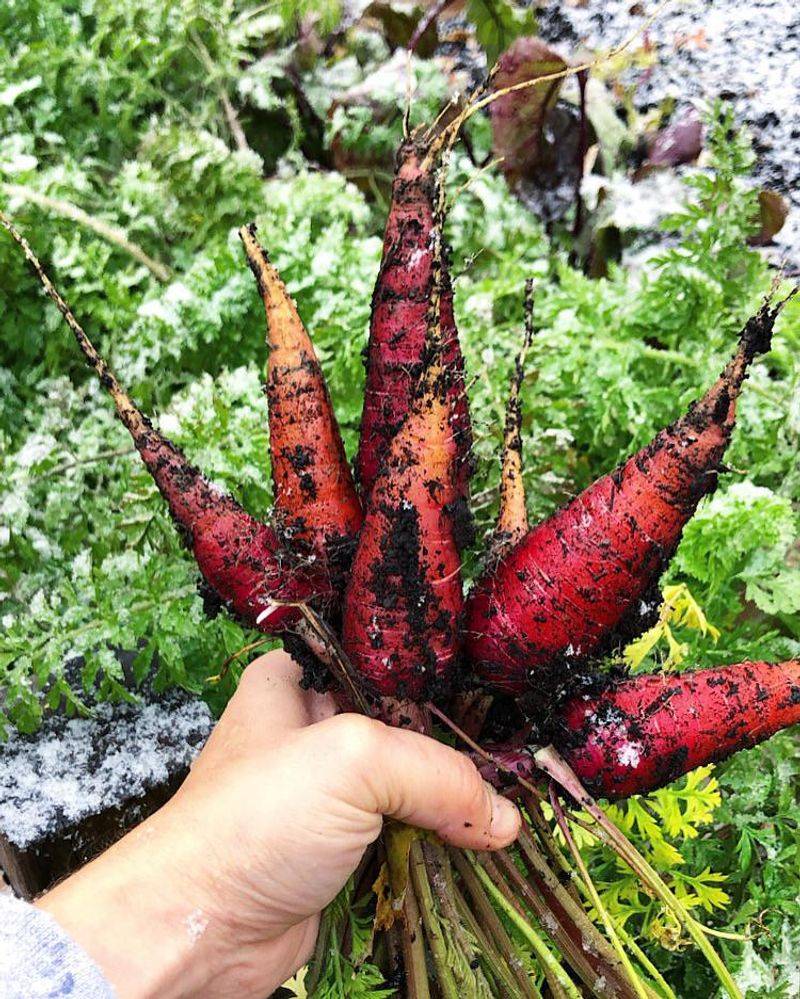
Many gardeners swear that carrots taste better after a chilly snap. Illinois Extension and West Virginia University Extension both note that carrots can become sweeter after a light frost.
Think of that as a tendency, not a promise. Your carrots may taste a little sweeter, or you may not notice a difference at all.
Research adds some nuance. A Finnish field study found later harvests tended to have more soluble sugars, but it also recorded declines in sugar and dry matter where frost injury occurred.
In other words, a little cold may help while real damage can hurt.
You may also run across lab studies. One looked at how carrots respond to cold acclimation, and another found that carrots stored at 2°C gained sweetness.
Those results show carrots do react to cold, but a refrigerated room is not the same as a garden bed with frost on it.
The practical takeaway is simple. Cool fall weather is a nice bonus if it arrives on time, but it is not something you can count on.
Taste your carrots as the nights cool, and let your own tongue decide.
Plan for frost and freezing conditions separately
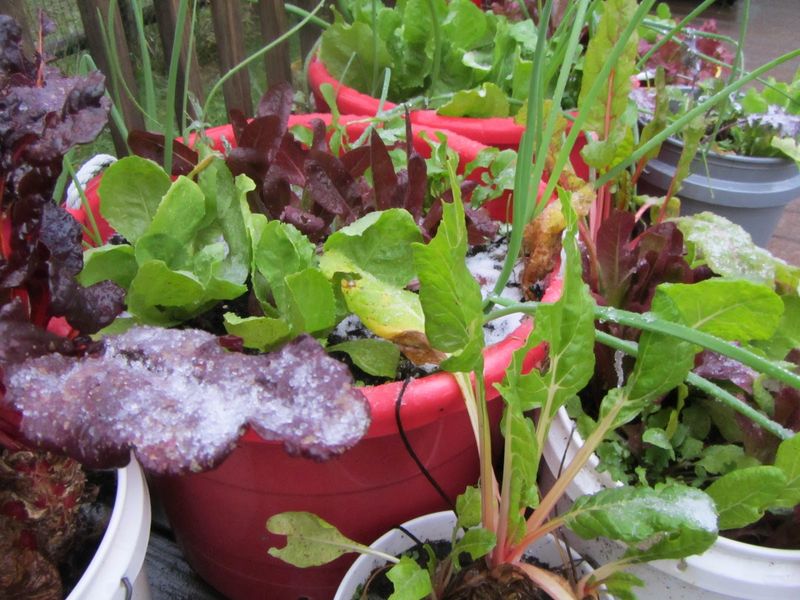
A light frost and a hard freeze are not the same thing, and your harvest plan should treat them differently. Carrots tolerate light frost, which is why many fall rows keep looking fine after a frosty morning, as noted by UC ANR.
A hard freeze is another story, and the real danger is soil that freezes solid. Frozen ground can damage roots and make digging nearly impossible.
Check your forecast for lows well below freezing, and plan to lift carrots before that arrives.
Some regions allow in-ground storage. Maryland Extension describes mulching fall crops so they can be harvested later.
Other sources lean cautious, so Missouri Extension and Utah State Extension are worth a look for how harvest and storage differ by climate.
Whether it works for you depends on your soil, your winter, your carrot variety, and how much protection you add. A deep layer of straw or leaves can help in some places and fail in others.
If you do harvest and store, Penn State Extension covers preserving root vegetables. Your local extension office can tell you what is realistic where you live, and a quick call or web search may save a whole crop.
Choose the harvest size that works for you
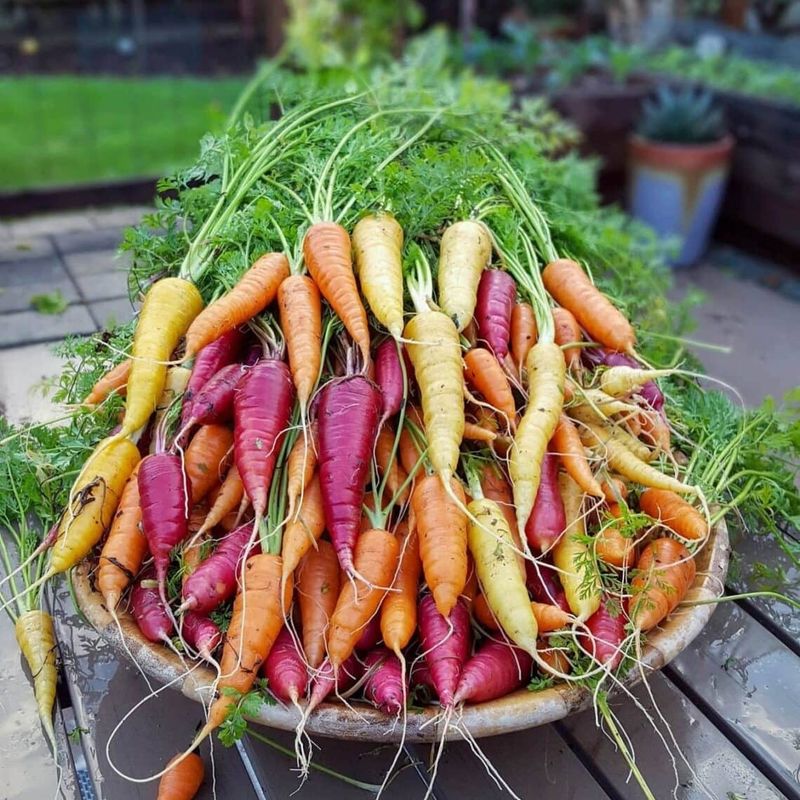
Here is the short version. Check the variety estimate to know when to start looking, then brush back the soil and sample a root.
Harvest when its size fits your plan, whether that is snacking, roasting, or storing.
A light frost may nudge flavor, as Illinois Extension notes, but it is never worth risking a damaging freeze. And UC ANR reminds us that overmature roots can toughen.
A carrot you pulled and enjoyed beats a perfect one left too long in the cold.