
How to Encourage Your Christmas Cactus to Bloom Again After Its First Flush
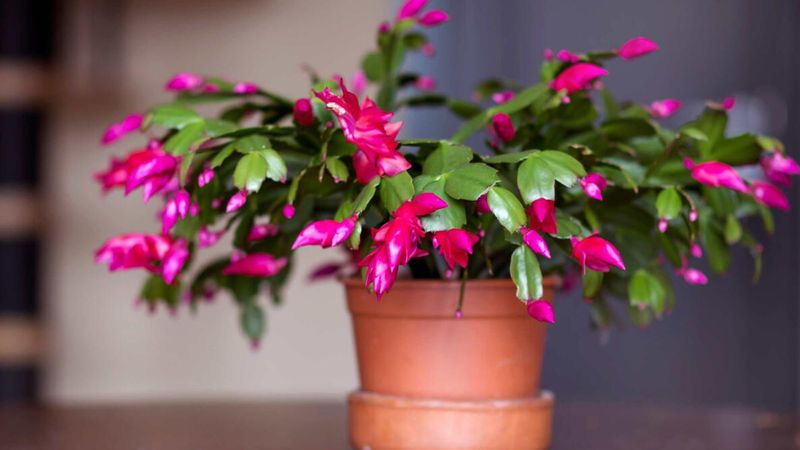
Your holiday cactus just dropped its last flower, and now the plant looks a little plain. Many gardeners worry they did something wrong or wonder if the show is over for the year.
The good news is that these plants can sometimes bloom again if you give them the right care and the right cues. Here is how to help your plant recover and how to set up conditions that may bring a second round of buds.
A second bloom is possible, but not promised
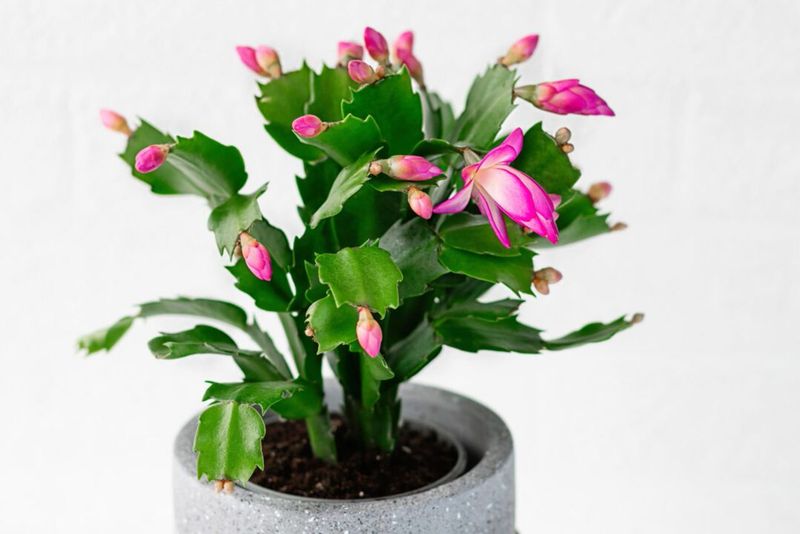
Plenty of gardeners are surprised to learn that a holiday cactus can flower more than once a year. Penn State Extension notes that Thanksgiving and Christmas cacti can bloom more than once with suitable care, and Kansas State Extension says they may bloom twice a year when conditions are right.
Notice the careful wording: may, and when conditions are right. A second flush is something you can encourage, not something you can order up.
Some plants will respond beautifully, and others will simply stay green and healthy until next season. Both outcomes are normal.
It also helps to separate two different goals. Keeping your current flowers open longer is one thing, and cooler conditions can help with that, as University of Minnesota Extension explains.
Coaxing brand new buds is a different job, and it depends on long nights and suitable cool temperatures.
A rebloom routine can give your plant a fair chance. It cannot guarantee flowers on a set schedule, so treat any new buds as a bonus rather than a promise.
Which holiday cactus is on your windowsill?
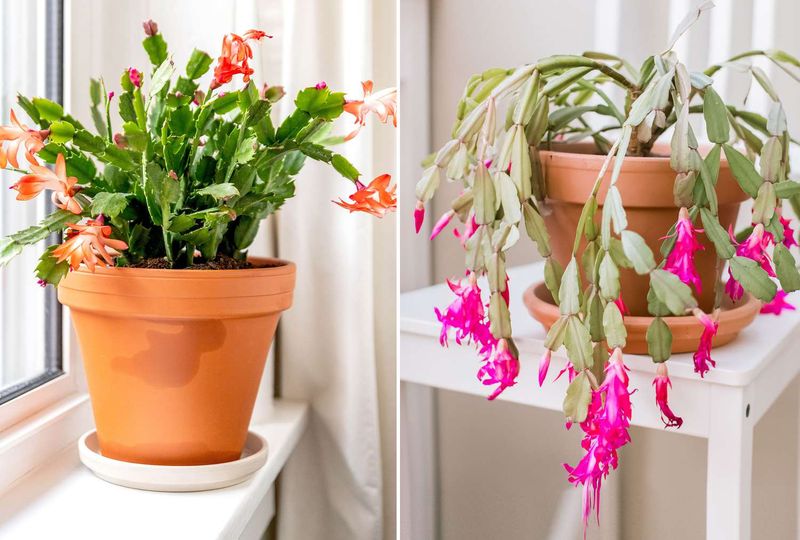
Walk into any store in November and you will see plants labeled Christmas cactus. Many of them are actually Thanksgiving cacti, which tend to bloom earlier in the season.
University of Illinois Extension explains that true Christmas cacti can bloom from late December into March.
A quick look at the stem segments can offer a clue. Thanksgiving cacti usually have pointed, claw-like edges on each segment, while true Christmas cacti have smoother, rounded, scalloped edges.
Still, hybrids are common, and you do not need a perfect identification to follow the care in this article.
What the difference does change is your expectations. If your plant flowered in early November, it may be a Thanksgiving type, and its calendar will run a little ahead of a true Christmas cactus.
Bloom timing also varies from plant to plant, and growing conditions can shift it outside the usual season.
So think of the label as a loose nickname. Your own plant’s habits will tell you more than the tag ever did.
Ease back on watering without drying the plant out
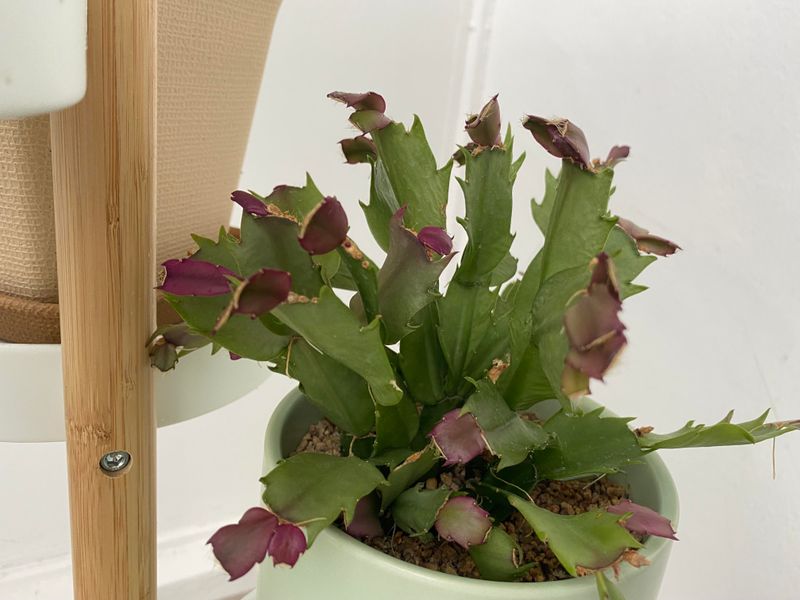
Once the last flower falls, your cactus usually slows down. Several extension sources, including Illinois Extension and Minnesota Extension, suggest watering somewhat less after bloom.
The key word is less often, not stop.
A simple routine works well. Check the potting mix with your finger, and water when the top inch or so feels dry.
Pour until water runs out of the drainage holes, then empty the saucer so the roots never sit in a puddle. Skip the calendar, because a plant in a cool room dries out far more slowly than one near a heater.
This is a gentle slowdown, not a drought. UMass Amherst reports that research does not support withholding water to induce buds, and that water stress can reduce bud set.
Likewise, Iowa State Extension cautions against letting the plant get excessively dry.
Watch the stems as your guide. Firm, plump segments mean you are in the right range.
Limp, wrinkled, or shriveled segments say it is time for a drink, while yellowing and soggy soil say to ease off.
As new growth appears in spring, you can water more often again. Reduced watering is simply good aftercare, and it is not what makes buds form.
Long nights and cool temperatures cue new buds
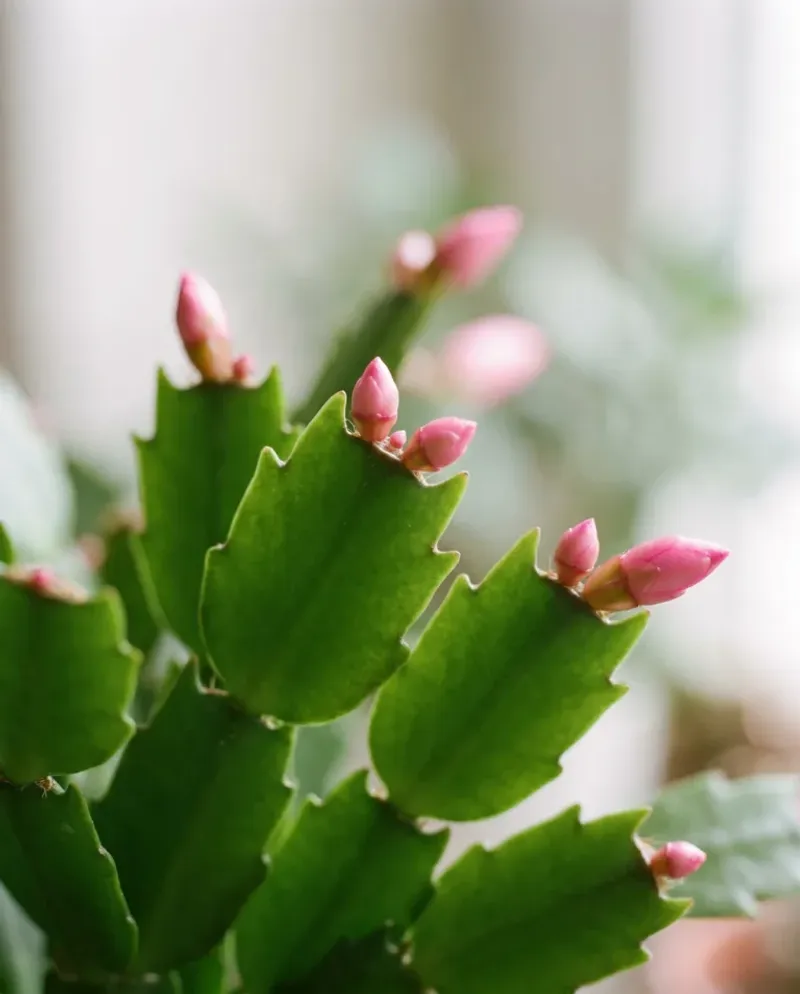
Here is the part that actually matters for flowers. Holiday cacti form buds in response to short days, which means long nights, and cool temperatures also play a role.
Kansas State Extension points to these cues as what sets the stage for another round.
Think about where these plants come from. In their natural home, the seasons nudge them toward flowering with longer nights and cooler air.
Your living room, with lamps on until bedtime and steady warmth all year, can quietly hide those signals.
Commonly cited guidance from sources such as Illinois Extension calls for long, uninterrupted darkness along with cooler nights. In some conditions, cooler nights can stand in for strict darkness.
Recommendations vary a bit, so treat the numbers as a starting point.
Notice what is missing from this list: a vague rest period. A plant that is simply kept dry or ignored is not given a bud signal.
Light and temperature are the cues, and everything else is supporting care that keeps the plant healthy enough to respond.
Set up a steady rebloom routine
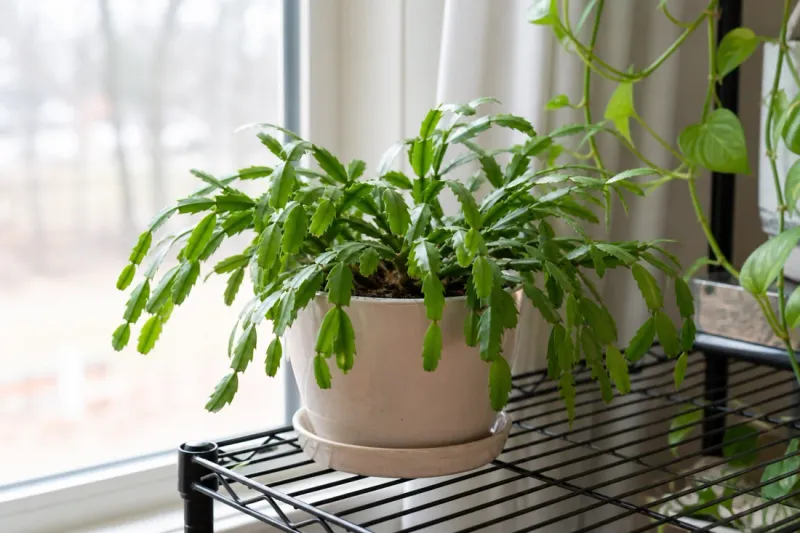
Ready to give it a try? Start with a spot that gets bright, indirect light during the day.
At night, aim for about 12 to 14 hours of uninterrupted darkness for roughly 5 to 8 weeks, as suggested by sources like Kansas State Extension.
Many gardeners use a spare room where lights are rarely switched on, or a closet or box that covers the plant overnight. Move it back into daylight each morning.
Even a brief flash from a lamp or hallway light can interrupt the dark period, so pick a spot you will not disturb.
Temperature helps too. Minnesota Extension and others cite night temperatures around 55 to 65 degrees F.
A cooler bedroom, enclosed porch, or window away from heat vents may fit, if it stays within that range.
Keep watering modestly, as described earlier, so the plant does not wilt. Illinois Extension also describes this kind of light and temperature routine for reblooming.
These numbers are commonly cited guidance, not strict rules. Darkness alone is not a sure-fire method, and some plants will not set buds despite your best effort.
If tiny buds show up at the stem tips, you will know the routine is working.
Protect developing buds from sudden changes
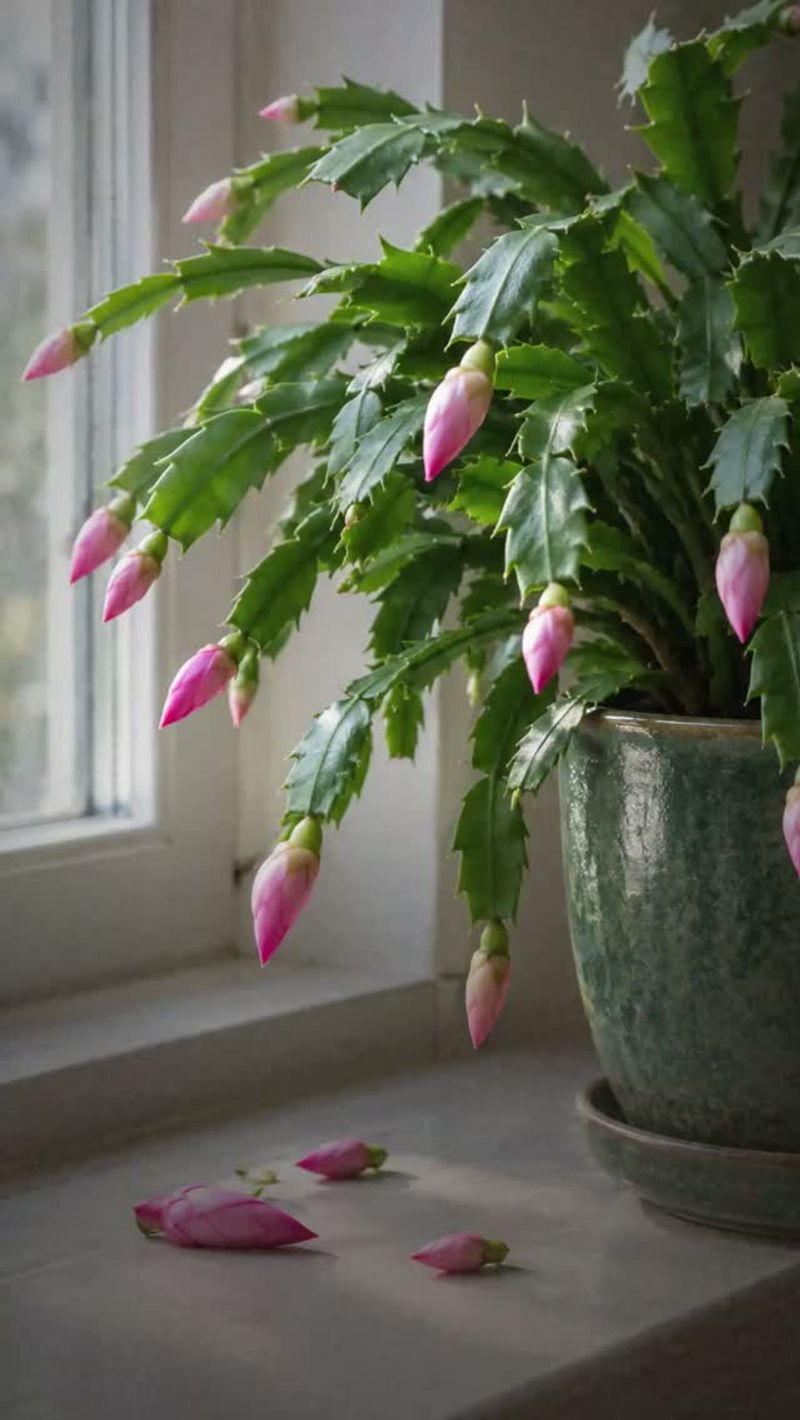
Buds are delicate, and a plant that has done the hard work of forming them can still lose them. Abrupt shifts in temperature, light, humidity, or watering can cause buds to drop, as described by Illinois Extension.
Once buds appear, pick a spot and leave the plant there. Turning the pot, carrying it to a new room, or swinging between a chilly window and a warm radiator can all be enough to cause a drop.
If you must move it, do so gradually.
Cold is a special risk. Illinois Extension warns that temperatures below 50 degrees F can cause buds to drop, and NC State Extension gives the same caution.
Keep the pot away from cold glass, exterior doors, and drafts.
Watering needs a steady hand as well. Minnesota Extension also advises avoiding sudden changes once buds show.
Water only when the top of the mix is dry, and avoid both soaking and long dry spells.
If a few buds drop anyway, do not panic. A partial loss is common, and plenty of the remaining buds may still open.
Encourage another flush without counting on one
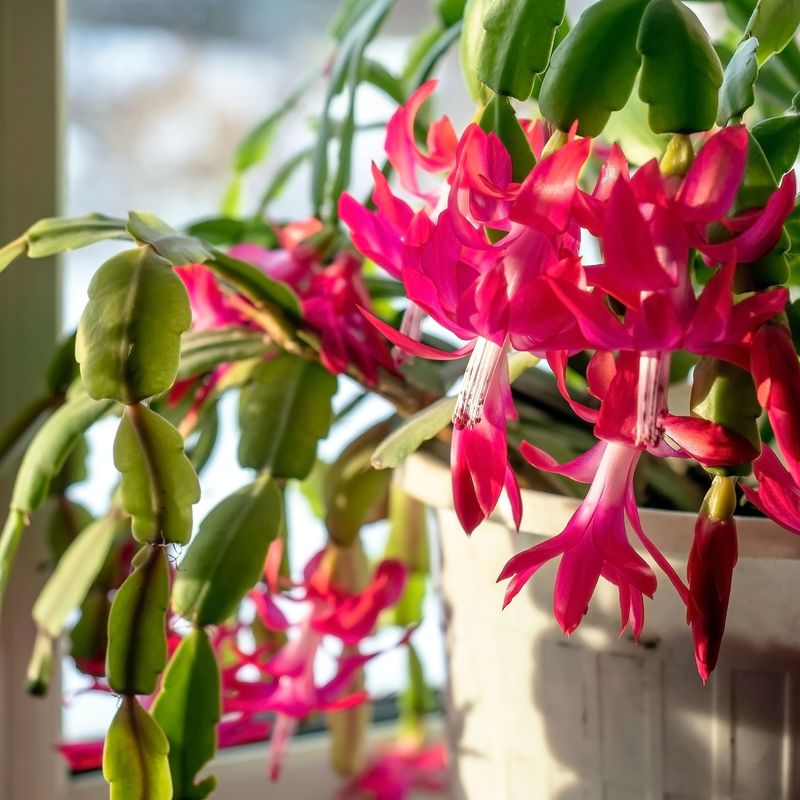
After flowering, water a bit less often, then offer long, uninterrupted nights and suitable cool temperatures while keeping everything steady. That is the whole plan, and Penn State Extension and Kansas State Extension both back the idea of more than one bloom under the right conditions.
It may work, and it may not. A healthy green cactus is still a win.
Some plants simply save their flowers for next winter.