
Can Driveway Deicing Salt Injure Nearby Shrubs? How to Reduce Exposure Before Winter
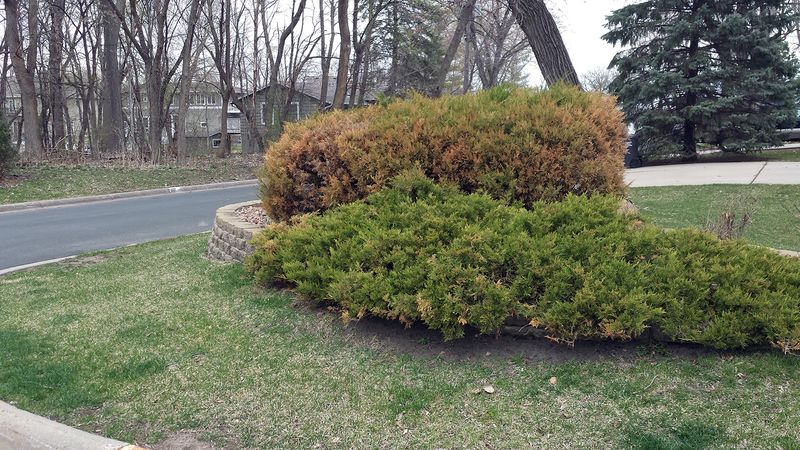
Your shrubs beside the driveway look rough by late winter, and cold weather gets the blame. But the salt you spread for safe footing may play a part too.
Salty meltwater and spray can reach plants in ways that are easy to miss. A few simple habits before the snow flies can help lower the exposure.
Browning beside a driveway is a clue, not a diagnosis

Picture your boxwood or arborvitae in March, brown on one side and green on the other. It is natural to wonder what went wrong, and salt is one possible answer.
It is only one of several, though.
Location can offer hints. Penn State Extension notes that spray injury tends to show up on the side facing a salted road or surface, and it is often easy to spot on evergreen needles.
If the browning sits on the driveway-facing side and fades as you move away from the pavement, that pattern raises suspicion.
Soil-related injury looks different. University of Wisconsin horticulture specialists describe leaf-edge browning, wilting, stunted growth, early fall color, and twig dieback as possible signs.
Those same symptoms can also come from other stresses, so they work as clues rather than proof.
Winter burn is a real contender. University of Minnesota Extension explains that cold, drying wind and sun can scorch evergreens on their own.
Drought, root problems, and disease can also cause browning.
Try a quick investigation. Note which side is damaged, how far the damage reaches from the pavement, and whether shrubs farther from the driveway look fine.
Jot down what you see, because those notes will help if you decide to test the soil later.
Salt reaches shrubs through roots and foliage
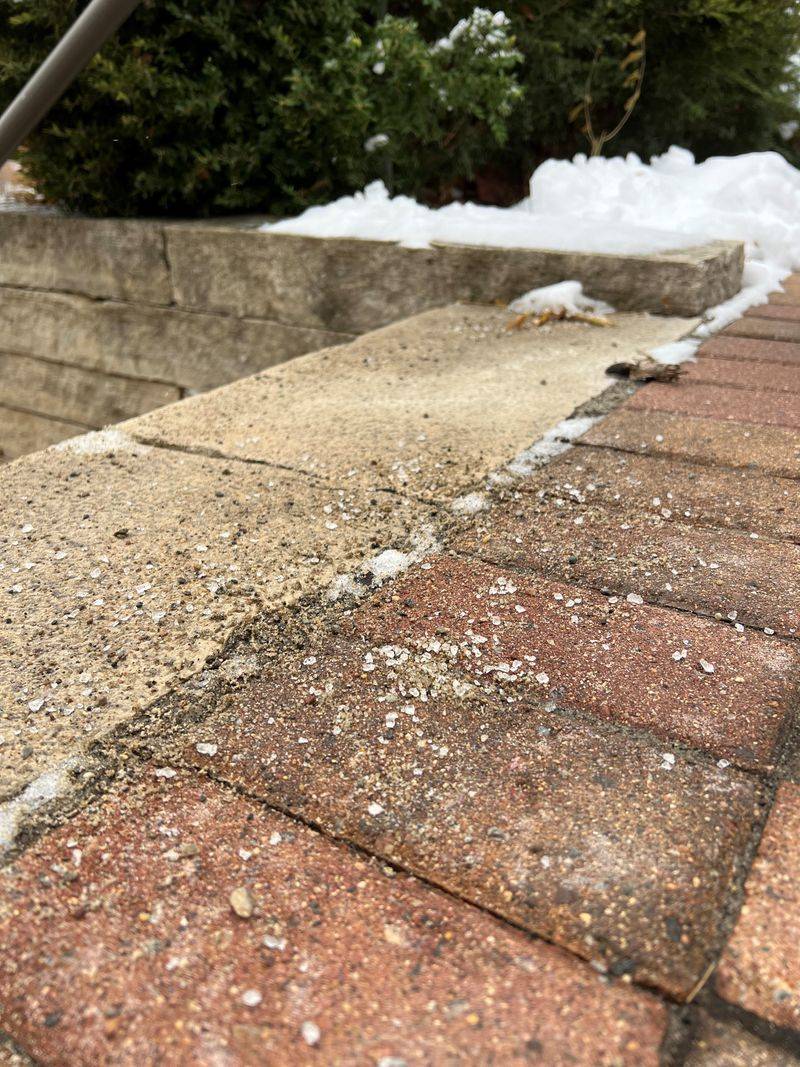
Deicing salt has two ways to reach a shrub, and they work differently. One is through the soil.
Meltwater runs off the driveway, carries dissolved salt along, and soaks into the root zone.
The other route is through the air. Cars and plows throw salty slush onto branches and needles, where it can sit on the foliage.
Because these are separate pathways, a fix for one will not solve the other.
Iowa State Extension explains that sodium chloride in the soil can make it harder for roots to take up water. Sodium can also damage soil structure, which may affect how well water moves through the ground.
Chloride can injure plants, but it does not explain every soil effect on its own.
Deicers also vary. Some are sodium chloride, while others contain different chloride compounds, and University of Minnesota Extension points out that their effects on plants differ.
If you are not sure what is in the bag or what the road crew uses, it is safest to say deicing salt rather than assume the chemistry.
Soil-related injury often builds over several winters instead of arriving after one storm. A shrub may look fine for a few seasons and then slowly decline.
That gradual pattern is one reason the cause can be hard to pin down.
Clear snow before you reach for deicer
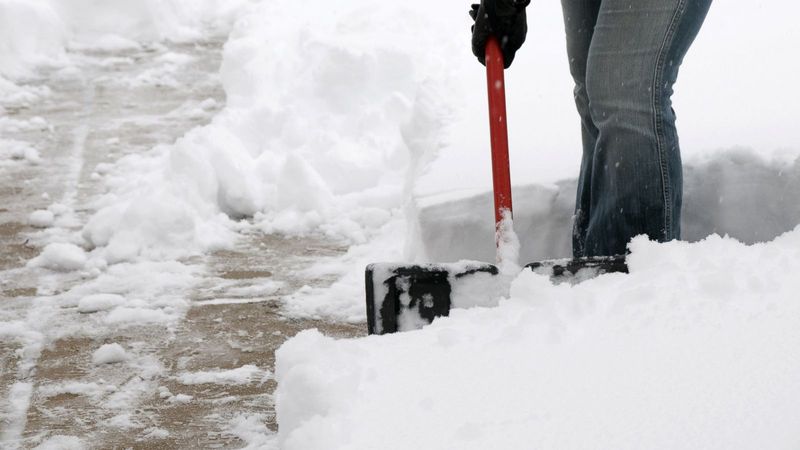
Shovel first, salt second. Removing as much snow and ice as you can by hand means less deicer is needed to finish the job.
Iowa State Extension recommends this order for exactly that reason.
Next, apply deicer only where you need it, such as the walkway, the steps, or the spot where the car tires sit. Follow the directions on the label.
More product is not necessarily more effective, and a heavy hand mostly adds to what ends up in your beds.
Spreading evenly helps. A handheld spreader gives you more control than pouring from the bag, and it keeps clumps from piling up near the shrub edge.
Penn State Extension encourages using the least amount that safely handles conditions.
Once the pavement is dry, sweep up leftover grains. Loose salt can wash or blow into planting beds with the next thaw.
A quick pass with a broom takes a couple of minutes and keeps the product working on the driveway instead of in the soil.
Safety still comes first. If a patch of ice is hazardous, treat it.
The goal is to cut unnecessary use, and University of Minnesota Extension frames it the same way: use what the conditions call for, not more.
Keep salty snowmelt away from the shrub bed
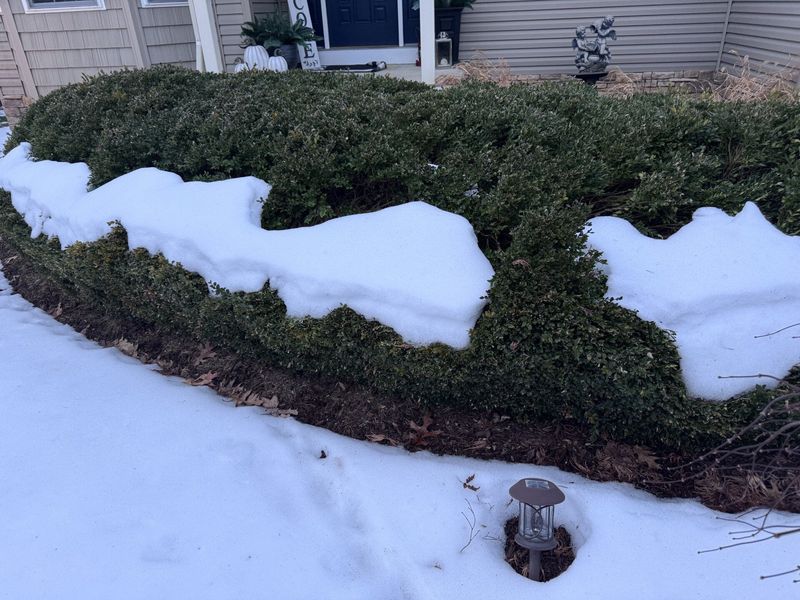
Where you toss the snow matters. Shoveled snow from a salted driveway carries salt with it, and a tall pile beside your hydrangea or yew becomes a slow-release source as it melts.
Iowa State Extension advises avoiding piles of salted snow around plants, so pick a spot on open lawn or elsewhere.
Watch how water leaves the pavement during a thaw. If it streams straight into the bed, a small change may help.
Where practical, you can redirect meltwater with a slight regrade, a shallow channel, or by shifting where you shovel so it flows toward a spot without plants.
Spray calls for a different tool. University of Minnesota Extension describes burlap screens as a way to shield evergreens in winter.
A screen set on stakes a little away from the shrub can help block splashes from passing cars or plows, but it will not stop salty runoff from reaching the roots.
It works the other way too. Steering runoff elsewhere does nothing about slush thrown onto branches.
Since both routes can be at play, many gardeners use one measure for each.
Treat these steps as ways to lower exposure, not as a shield. As Penn State Extension notes, salt from a public road may still reach your plants, and that part is outside your control.
Sand adds traction, but it will not melt ice
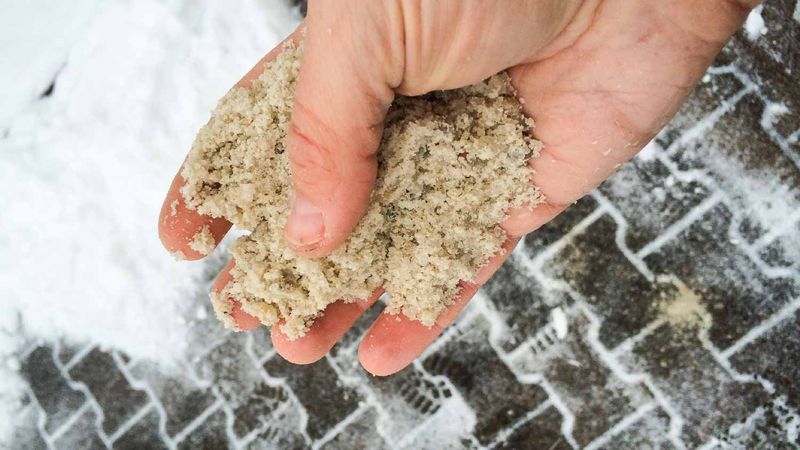
Sand gives your boots something to grip. That is its whole job, and it does it well on packed snow or a thin glaze when you are not trying to melt anything.
University of Minnesota Extension lists it as a traction option that, unlike salt, does not melt ice.
Because it will not melt ice, sand does not replace shoveling. Clear the snow first, then use sand where you need extra footing.
If you have a truly hazardous icy patch, it still needs to be dealt with safely, and sand alone may not do that.
There are tradeoffs to plan for. Sand needs cleanup once the weather turns, or it can end up on the lawn and in the street.
It can also affect drainage, so a heavy layer washing into a planting bed or a drain is something to sweep up early.
Be wary of any product sold as safe for everything. No deicer or traction material is universally harmless to plants, pets, or waterways.
Each one comes with its own tradeoffs.
So think about your own site. Consider how steep the driveway is, where meltwater goes, and what the label says.
Then choose the mix of shoveling, traction, and deicer that keeps people upright with the least impact on the beds.
Test suspected salt buildup before trying to flush it
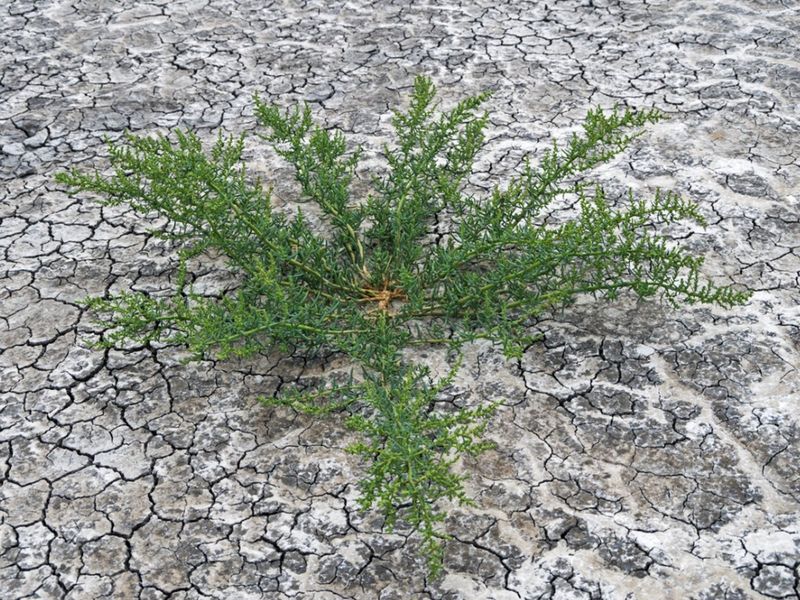
If you still wonder what hurt your shrubs, a test can take some of the guesswork out. University of Wisconsin horticulture specialists say soil or plant-tissue testing through a soil and plant analysis lab can help confirm suspected salt buildup.
This is most useful when the diagnosis really matters to you, such as before replacing a costly shrub.
Take samples from the damaged area, and consider a second sample from a healthy spot farther from the driveway for comparison. Your local extension office can point you to a lab and explain how to collect and package the samples.
Flushing comes next, and only with conditions. After the ground has thawed, thorough watering may help move soluble salts down through the root zone, but only where drainage is adequate.
University of Maryland Extension describes one approach: one-inch applications three to four times in spring. That is one example, not a rule for every soil, site, or shrub.
Hold back if water already pools. In poorly drained soil, extra watering can add stress instead of relief.
If puddles linger near the shrub, skip the flushing and ask an extension office for advice.
Neither testing nor flushing can promise recovery, and neither rules out other causes like winter burn, drought, or root trouble. They simply give you better information and a measured next step.
Sometimes the shrub tells its story slowly, and a lab report helps you read it.