
Catnip and Mosquitoes: What the Research Actually Says About Nepetalactone vs. DEET
Mosquitoes can turn a pleasant evening in the backyard into a miserable experience, and it is no surprise that people keep searching for better ways to fight back. A plant most famous for sending cats into a rolling frenzy has quietly attracted serious scientific attention as a mosquito repellent.
Researchers have found real evidence worth knowing, but the popular claim that catnip works ten times better than DEET tells only part of a much more complicated story. Here is what the studies actually found, what they did not prove, and how to protect yourself based on evidence rather than a catchy headline.
What the “10 times better” claim actually measured
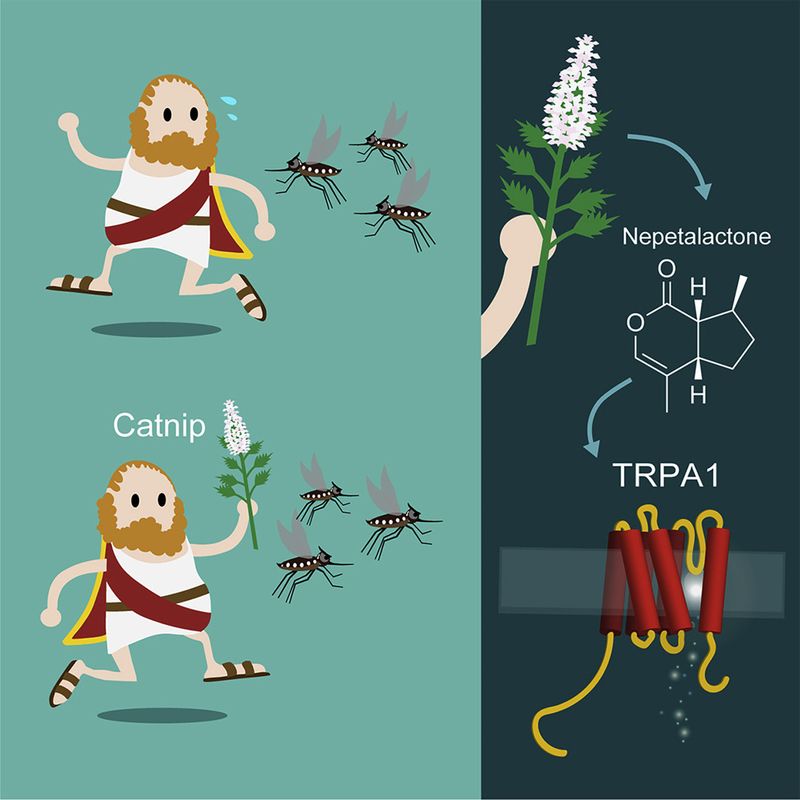
A phrase circulating online for more than two decades claims that catnip repels mosquitoes ten times better than DEET. That number did not come from a study where people wore catnip lotion and counted bites.
A 2001 laboratory report compared how much nepetalactone, the main compound in catnip, was needed to produce a specific effect in a controlled assay versus how much DEET was required for the same effect in that same test. The researchers found that nepetalactone required a smaller quantity to achieve the result in that particular setup, and the tenfold figure described that difference in amount, not a measure of how long protection lasts or how strong it feels on human skin.
The distinction matters a great deal. A compound being potent in a tube assay does not automatically mean it outperforms another compound when it is diluted, spread on warm skin, mixed with sweat, or exposed to wind and rain.
Press coverage of the original finding spread the tenfold comparison widely, but the phrase migrated from a narrow laboratory context into a broad skin-protection claim it was never designed to support.
Human-volunteer studies conducted after 2001 complicated the picture further. A 2005 study testing catnip oil and purified nepetalactone directly on human volunteers found both less effective than DEET at deterring Aedes aegypti biting.
A separate 2007 human study found that catnip protection varied sharply by mosquito species, with some species barely deterred at all.
Rather than dismiss catnip as useless or accept the tenfold headline at face value, this article works through the evidence piece by piece. What the research shows is genuinely interesting, and some of it is encouraging, but the full picture requires looking at formulation, mosquito species, concentration, and study design rather than a single memorable number.
Nepetalactone is linked to catnip’s repellent activity
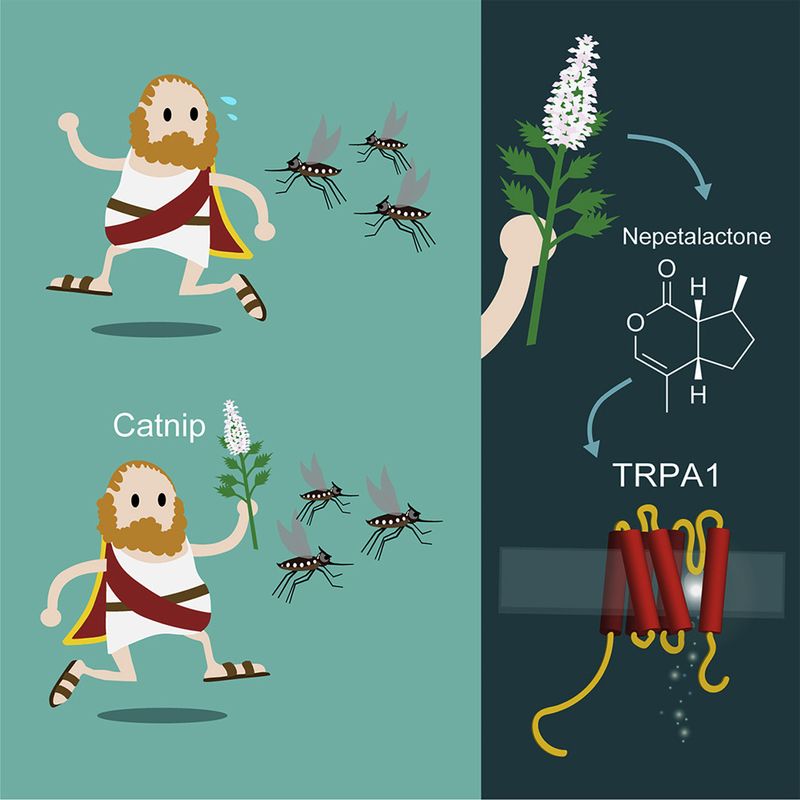
Catnip’s mosquito-fighting reputation rests almost entirely on one compound: nepetalactone. It makes up the bulk of catnip essential oil and gives the plant its characteristic minty-medicinal smell.
Research published in 2021 found that nepetalactone activates a mosquito irritant receptor called TRPA1, which the researchers described as a likely reason mosquitoes move away from the compound. Notably, the same study found that nepetalactone did not activate human TRPA1 in the experimental conditions tested, suggesting the irritant effect is more specific to the insects than to people.
That receptor finding helps explain why concentrated nepetalactone can push mosquitoes away, but it does not mean every catnip product delivers the same response. Additional work on the TRPA1 pathway has confirmed the receptor’s role in insect aversion behavior, while also noting that responses differ across insect species and experimental conditions.
A compound that reliably triggers aversion in one mosquito species in a controlled environment may produce a weaker or shorter-lived response in a different species under outdoor conditions.
The practical gap between the mechanism and the garden plant is wide. A 2019 study testing several catnip oils and purified nepetalactone isomers found that high concentrations reduced Aedes aegypti landings by more than 95% in laboratory conditions, but the researchers also noted that results differed from earlier biting-deterrence tests, underscoring how much the specific setup shapes the outcome.
A living catnip plant releases nepetalactone passively and at low ambient concentrations. A distilled essential oil, by contrast, can contain more than 90% nepetalactone in a stable, concentrated form.
Those are not interchangeable products, and understanding that difference is the starting point for evaluating every catnip repellent claim that follows.
A Uganda field trial supports one formulated catnip-oil lotion
Field research published in 2026 moved the catnip conversation from the laboratory into a real outdoor environment. The eastern Uganda study compared lotions containing 2% and 6% catnip essential oil against a plain lotion control and a commercial lotion containing 15% DEET.
Volunteers participated in four-hour evening human-landing trials, exposing their lower legs to local mosquito populations while trained observers recorded landings. The 6% catnip-oil formulation performed similarly to the 15% DEET comparator across those four hours.
Several specific details define what the study did and did not show. The catnip oil used in the trial contained more than 92% nepetalactone, a purity level that ordinary garden plants or off-the-shelf essential oils are unlikely to match.
The lotion itself was a prepared, stable formulation, not a homemade mixture or a crushed-leaf rub. The test covered exposed lower legs under evening conditions in Uganda, where local mosquito species, temperature, and humidity differ from backyard conditions across most of the United States.
Those details are not reasons to dismiss the finding. A formulated catnip-oil product performing comparably to 15% DEET in a four-hour field setting is meaningful evidence that catnip-based repellents deserve serious attention.
However, the result applies to that specific product under those specific conditions. It does not establish that any catnip oil, any catnip lotion, or any catnip-based preparation will match DEET against every mosquito species in every climate.
The Uganda trial is best understood as important recent evidence for one formulated product, not a verdict on catnip repellents as a category. It adds real weight to the case for further research and for seeking out registered, tested catnip-oil products, while leaving open questions about performance against North American mosquito species and at different DEET concentrations.
Earlier human tests found variable and sometimes weaker protection

The Uganda result does not erase a body of earlier research that produced less encouraging outcomes. Reconciling those studies is more useful than pretending they do not exist.
A 2005 human-volunteer study tested catnip oil and purified nepetalactone directly on skin and found both less effective than DEET at stopping Aedes aegypti biting. That was a controlled comparison on human subjects, and the gap between catnip and DEET was not trivial.
Species differences proved just as important as formulation. A 2007 human study found that catnip protection varied dramatically depending on which mosquito species was tested, with protection times ranging from nearly nothing for one species to several hours for another.
That range illustrates why a single field trial involving one local mosquito population cannot be used to predict performance against Aedes albopictusCulex quinquefasciatus, , or the mix of species a U.S. backyard gardener faces on a summer evening.
Duration is another variable that deserves candid attention. One catnip-oil study reported that repellency above 95% declined after roughly two to four hours, a window similar to many moderate-DEET products but not necessarily superior.
Concentration, formulation base, ambient temperature, perspiration, and water exposure all affect how long any repellent holds up, and those factors interact differently for catnip oil than for DEET.
Research comparing catnip and DEET as spatial repellents rather than skin-contact repellents adds another layer. A study examining spatial versus contact repellency found that catnip oil showed stronger performance as a spatial repellent, while DEET performed better as a contact repellent on skin.
Those are different outcomes measuring different things, and collapsing them into one “better than DEET” claim misrepresents both products. Also, the 2019 landing-reduction study confirmed that concentration and isomer composition shifted results substantially, reinforcing that catnip repellency is not a fixed quantity you can read off a single headline.
A catnip plant beside your chair is not a mosquito shield

Gardeners sometimes read about catnip’s repellent potential and conclude that growing a pot of it next to the porch swing will keep mosquitoes at bay. Colorado State University Extension and Iowa State University Extension both address this directly: simply growing purported mosquito-repellent plants nearby does not provide measurable personal protection.
The volatile oils in a living plant are released slowly and disperse quickly in open air, never reaching the concentrated dose that the repellent studies used.
Fresh leaves crushed in your hand release more nepetalactone than an undisturbed plant, but rubbing them on skin is not a proven or regulated preparation. The dose is uncontrolled, the chemical composition of garden catnip varies by plant variety and growing conditions, and coverage is uneven.
Poison Control specifically advises against using unformulated essential plant oils as insect repellents, noting that concentration and skin exposure are not controlled in improvised preparations.
A water infusion made by soaking leaves faces the same problems, plus the added issue that water does not extract or stabilize the oil compounds the same way distillation does. Homemade mixtures lack validated concentration, stability, or preservation data.
None of them are equivalent to the prepared lotion tested in Uganda or the concentrated oils used in laboratory studies.
Catnip itself is a genuinely easy plant to grow. University of Minnesota Extension notes it is a hardy perennial suited to zones 4 through 11 in full sun or part shade.
University of Arizona Extension flags that catnip can spread aggressively if left unmanaged, so gardeners should plan for containment. Enjoy the plant for its looks and for entertaining your cat, but reach for a tested, labeled repellent before heading outside for the evening.
How to choose a tested catnip repellent
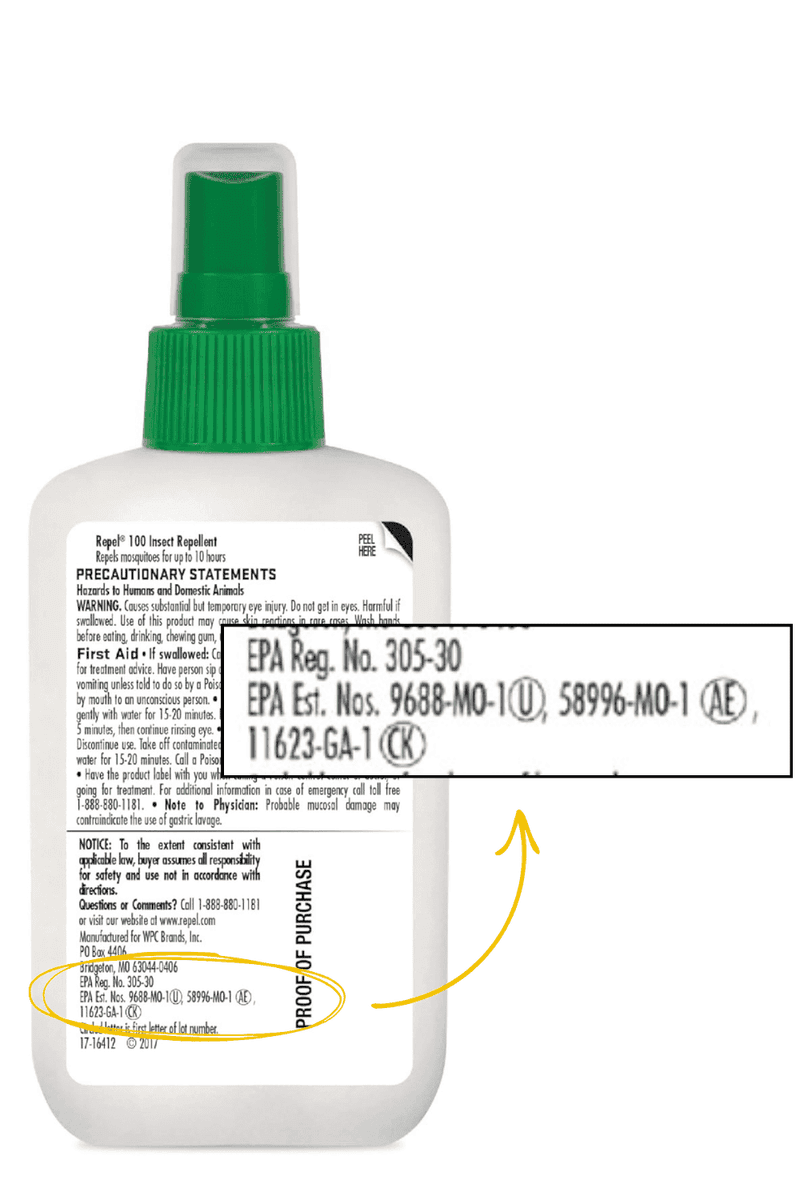
Catnip oil does have a legitimate place in the regulated repellent market. The EPA lists catnip oil among active ingredients in registered skin-applied repellents, with four registered products on the list as of the January 2026 update.
That recognition means those specific products have gone through EPA’s review process. It does not mean that every catnip essential oil sold in a health food store, every online DIY recipe, or every homemade spray carries the same standing.
The practical step is straightforward: look for an EPA registration number on the product label before buying. That number tells you the formulation was evaluated for efficacy and safety data under defined use conditions.
EPA guidance on using repellents safely advises applying the product only to exposed skin or clothing, keeping it away from eyes, mouth, cuts, and irritated skin, and washing treated skin after returning indoors. Those steps apply whether the active ingredient is catnip oil, picaridin, or anything else on the registered list.
DEET deserves a fair mention here. EPA’s current DEET assessment states that normal use as a skin-applied repellent does not present a health concern when used according to the label.
Decades of safety and efficacy data back that conclusion. Choosing a catnip-oil product over DEET is a reasonable personal preference if you find a registered product, but framing DEET as uniquely dangerous misrepresents its regulatory record.
CDC guidance on mosquito prevention lists DEET, picaridin, IR3535, oil of lemon eucalyptus or PMD, and 2-undecanone among effective EPA-registered options. Catnip oil products that carry an EPA registration number belong in that same framework.
EPA’s minimum-risk pesticide guidance also clarifies that not every plant-derived product qualifies as a registered repellent, which is why checking for a registration number matters more than checking whether the ingredient sounds natural.
Keep concentrated catnip oil away from pets
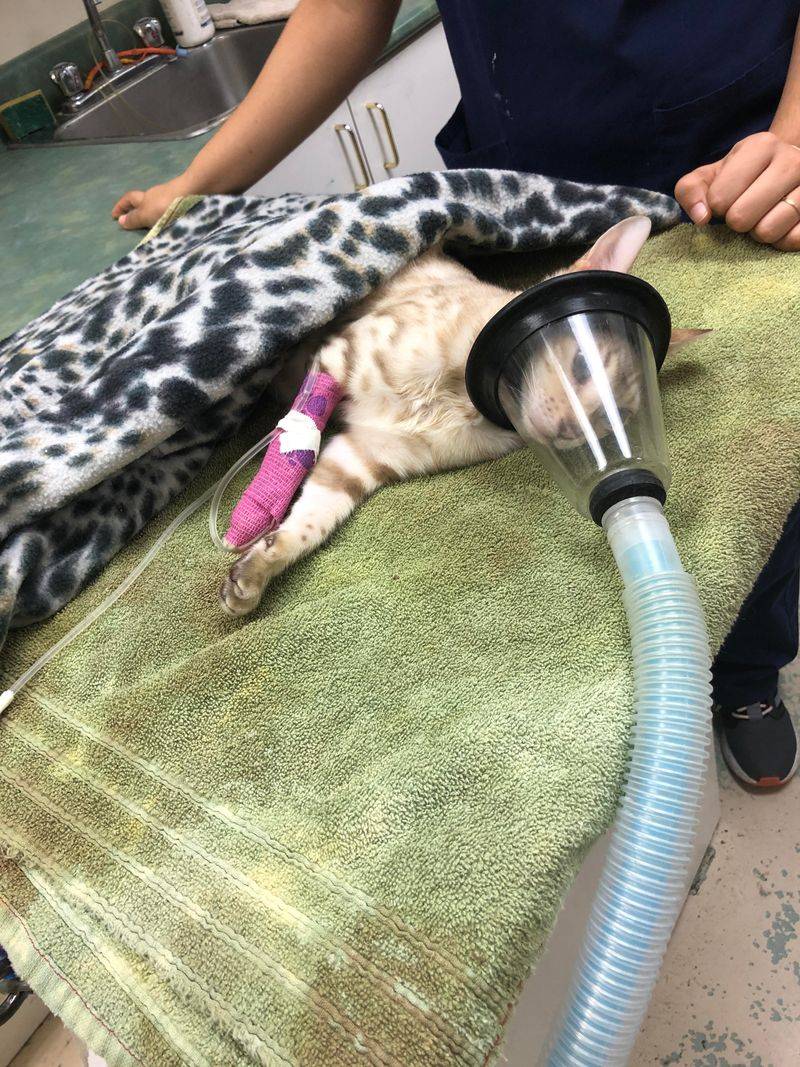
Many readers who grow catnip do so partly because they enjoy watching their cats react to it. That makes a safety note about concentrated catnip oil especially important, because the same product that might protect you from mosquitoes can pose real risks to the animals in your household.
ASPCA notes that ordinary catnip exposure can cause vomiting or diarrhea in cats, even though many cats seek it out enthusiastically. That is a different situation from concentrated essential oil.
Pet Poison Helpline explains that concentrated essential oils create additional hazards for cats because the compounds can be absorbed through the skin or ingested during grooming. Cats metabolize many compounds differently from humans and dogs, making them particularly vulnerable to toxicity from essential oil exposure.
Do not apply catnip essential oil or any human repellent product to a cat or other pet unless a veterinarian specifically approves that use and the product label explicitly permits it.
The skin-irritation risk is not limited to animals. Toxicology data on catnip essential oil have documented skin irritation potential in testing, and essential oils as a category can cause allergic or irritant reactions on human skin, especially at the high concentrations needed for repellent activity.
Poison Control advises against using unformulated essential plant oils as insect repellents precisely because concentration and application are uncontrolled outside of a tested product. A registered catnip-oil lotion with a defined concentration and formulation is a fundamentally different proposition from applying raw essential oil directly to skin or fur.
Catnip oil shows promise, but it is not ten times better than DEET

Nepetalactone has genuine, research-backed mosquito-repellent activity. That is not a small thing.
The Uganda field trial showed that a properly formulated 6% catnip-oil lotion performed similarly to a 15% DEET comparator during four-hour evening trials, which is meaningful evidence for one specific product under defined conditions. That finding is worth taking seriously when you are shopping for a repellent.
What the evidence does not support is the ten-times-better headline. Human-skin studies have found catnip oil less effective than DEET against specific mosquito species, and protection times have varied widely by species, sometimes to nearly zero.
Mixed results across studies, differences between mosquito species, and the gap between a laboratory tube assay and an evening on your patio all rule out any universal superiority claim.
The practical takeaway is simple: if you want to try a catnip-based repellent, look for an EPA-registered product with catnip oil listed as the active ingredient, follow the label, and apply it the same way you would any other registered repellent. EPA’s safe-use guidance applies to all skin-applied repellents, and CDC continues to recommend EPA-registered options for reliable bite prevention.
A catnip plant in the garden is a delight; a tested, labeled catnip-oil product is a reasonable repellent choice; and the two are not the same thing.