
Chimney Swifts Circle Your North Carolina Yard At Dusk Because The Insects Above It Are Thick
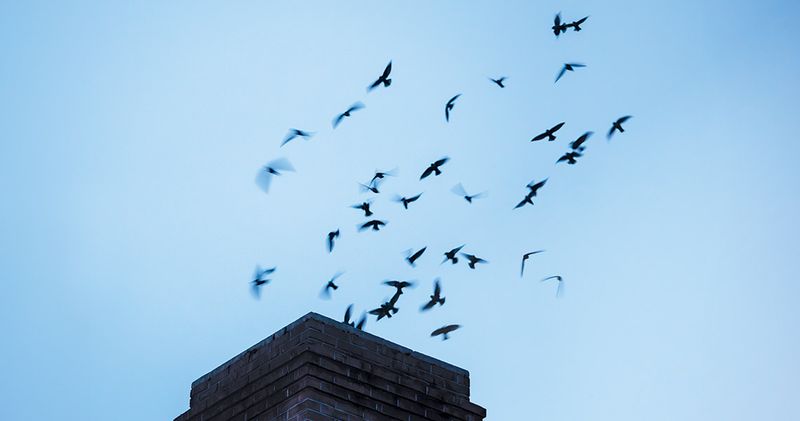
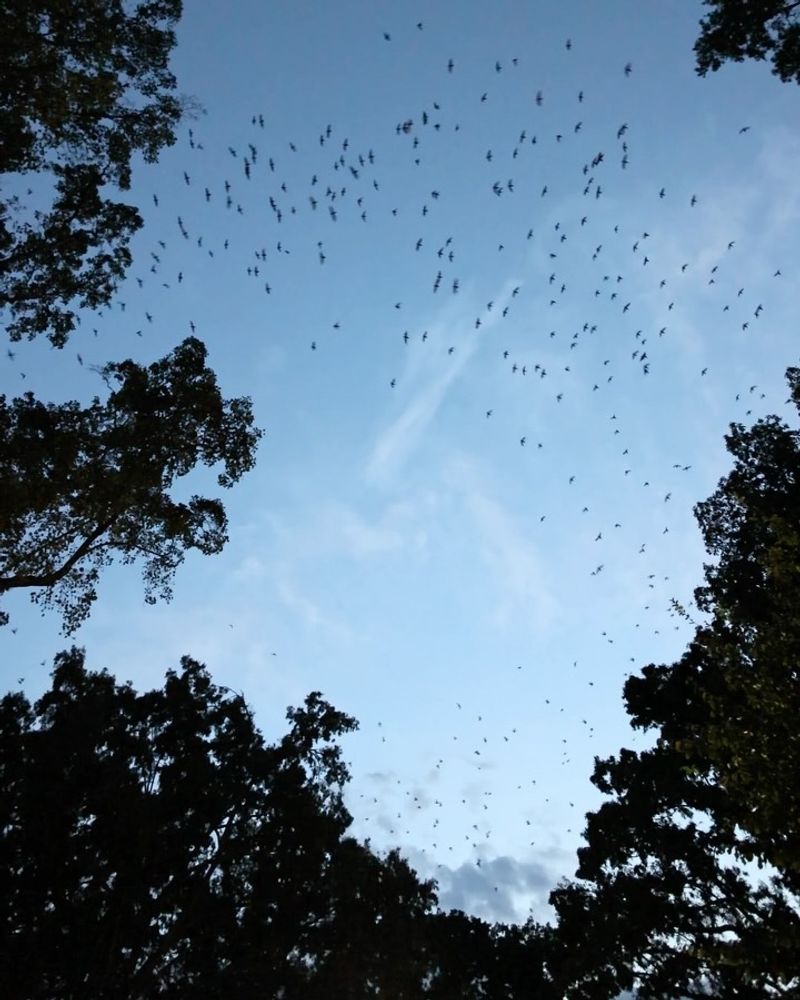
Standing in your backyard at dusk and watching a swirling tornado of small, chattering birds overhead is one of fall’s most striking wildlife moments in North Carolina. Those birds are Chimney Swifts, and the sight raises an obvious question: does a flock that size mean your yard is crawling with insects?
The honest answer is more interesting than a simple yes, and understanding it can help you become a better steward of the wildlife passing through your neighborhood.
A dusk flock is a neighborhood clue, not a backyard insect meter
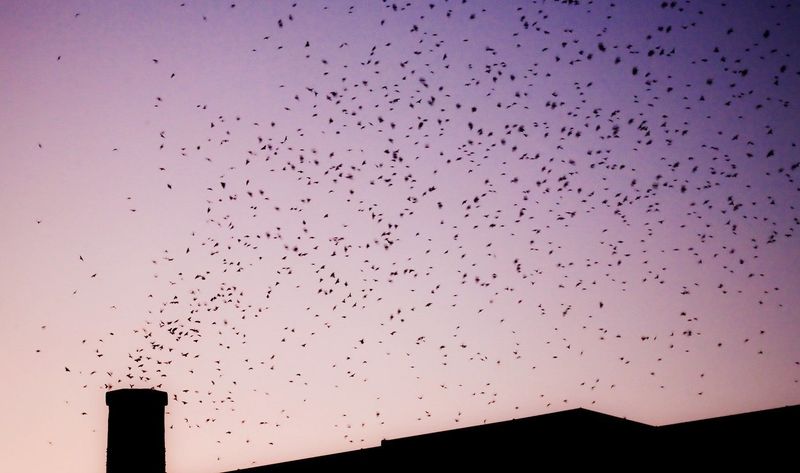
Watching a funnel of Chimney Swifts spiral above the roofline at sunset feels like a direct compliment to your yard’s ecosystem. Before accepting that flattery too quickly, though, consider what the birds are actually telling you.
Cornell Lab of Ornithology’s Chimney Swift life history confirms that the species spends nearly all of its active life in the air, catching flying insects on the wing across towns, fields, forests, ponds, and marshes. A flock overhead is real evidence that the birds are using the broader local airspace, but it is not a calibrated reading of how many insects are floating directly above your property line.
Chimney Swifts can travel several miles from a nest or communal roost while foraging, which means the insects fueling a visible flock may have hatched in a wetland two neighborhoods away just as easily as in your garden beds. Recent diet research adds another layer of nuance: a DNA metabarcoding study on Chimney Swift diet found that the birds can select particular prey and may not consume insects in proportion to what is most abundant in nearby traps.
Their presence signals that the aerial food web is functioning somewhere nearby, not that your yard specifically is producing an insect surplus.
The U.S. Fish and Wildlife Service notes that fall dusk flocks may reflect aerial feeding, migration staging, communal roosting, weather, or roost availability.
Any one of those factors, or a combination of them, could explain what you are watching. The goal of this article is to help you read that spectacle accurately, so you can act on what it genuinely supports rather than on assumptions the observation cannot carry.
What Chimney Swifts hunt across the wider landscape
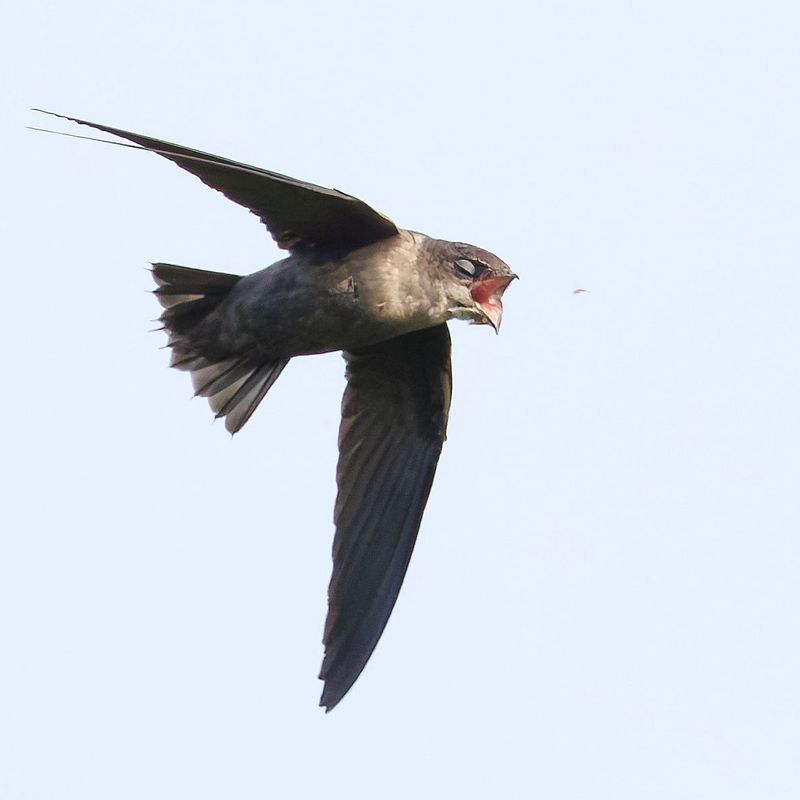
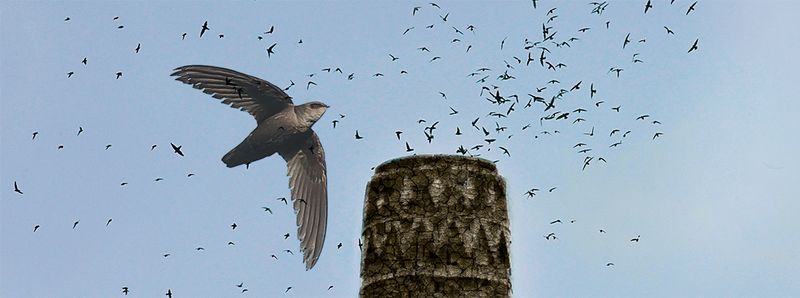
Chimney Swifts are built for a life spent almost entirely airborne. Their tiny feet can cling to vertical surfaces but cannot support a perch on a wire or branch, so feeding, drinking, bathing, and even gathering nest material all happen in flight.
According to Cornell Lab of Ornithology’s detailed life history account, their documented diet includes beetles, flies, true bugs, moths, wasps, ants, mayflies, stoneflies, caddisflies, and other flying insects, along with occasional spiders carried aloft by silk threads.
That list spans multiple insect orders and ecological niches, which matters for how you interpret a flock. Swifts are not targeting one pest species above your rose bushes; they are opportunistic hunters across a broad aerial zone.
They forage over residential neighborhoods, agricultural fields, woodland edges, ponds, and marshes, meaning the insects in one homeowner’s yard represent only a slice of the food supply available on any given evening flight.
The DNA metabarcoding research on Chimney Swift diet reinforces this point in a practical way. The study found that prey selection does not necessarily mirror insect abundance as measured by ground-level or nearby traps.
A swift may pass over an abundant species and pursue a less common one that it detects more easily at altitude or in a particular light condition. That selectivity means you cannot reverse-engineer an insect census from the number of birds you count overhead.
None of this diminishes the ecological value of having swifts in the neighborhood. A bird that consumes beetles, flies, wasps, and moths across several landscape types is genuinely woven into the local food web.
The point is simply that the connection runs through the wider neighborhood, not exclusively through your backyard. Supporting diverse aerial-insect habitat across that broader landscape, rather than trying to manufacture a localized insect peak above one property, is the more realistic and durable stewardship goal.
Why North Carolina’s fall vortex may end at a communal roost
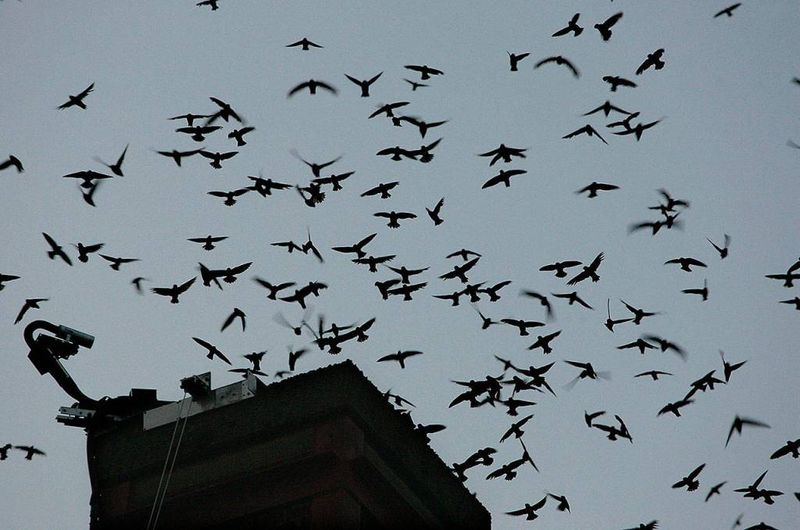
A single swift flying over a yard in June and a funnel of hundreds swirling above a chimney in September are not the same phenomenon, even though the species is identical. Fall transforms Chimney Swift behavior in ways that make the dusk spectacle far more about roosting and migration than about any one yard’s insect supply.
Audubon North Carolina describes statewide roosting spectacles occurring during September, when hundreds or even thousands of birds may circle a single large chimney before funneling inside for the night.
The mechanics of the vortex make more sense once you understand the roosting drive. As light fades, swifts that have been dispersed across a wide foraging area begin converging on a communal roost site.
The circling tightens, the chattering grows louder, and then the birds pour into the chimney opening in a cascade that can last several minutes. The birds may have been feeding during the earlier part of their flight, but the dusk gathering itself is primarily a roosting assembly, not a feeding frenzy directly above the yard where you happen to be standing.
Migration timing adds another layer. The U.S.
Fish and Wildlife Service notes that Southeast Chimney Swifts generally depart for fall migration around mid-October, though exact timing shifts with weather, latitude, and local roost conditions. During the weeks before departure, large numbers of birds can concentrate at traditional roost chimneys, producing the most dramatic vortexes of the year.
One distinction deserves emphasis: a fall flock does not mean swifts are nesting in your chimney. Nesting pairs use individual chimneys or other vertical cavities during the breeding season, typically late spring through summer.
Fall roosts are communal gatherings of birds preparing to migrate, a fundamentally different relationship with the structure they occupy. Recognizing that difference helps homeowners respond appropriately to what they are actually seeing rather than drawing conclusions the observation does not support.
Why one evening cannot identify the cause of the flock
A single evening’s observation carries real limits, and it helps to be honest about them before drawing conclusions. Weather is one variable that complicates interpretation.
A study published in Avian Conservation and Ecology found that cloud cover and date influence the probability of detecting nesting Chimney Swifts. That finding is specific to nesting-season detection, so it should not be stretched into a general claim that cloudy nights mean fewer insects or that weather directly controls fall roost behavior.
Still, the underlying message is useful: conditions on any given evening can affect whether you see birds at all, and absence or presence on one night is not a reliable baseline.
Chimney Swifts also range widely enough that the same flock can appear over multiple neighborhoods within a single foraging circuit. The birds are using the broader local airspace, as the Cornell Lab research makes clear, which means the flock you count above your yard may look very different thirty minutes later when the birds have moved on toward a roost chimney several blocks away.
Repeated seasonal observations tell a richer story than any single sighting. If you notice swifts regularly from late summer through mid-fall, that pattern suggests the neighborhood is part of an active migration corridor or that a communal roost chimney is nearby.
A single spectacular evening followed by weeks of silence may mean the roost shifted, that birds moved on with a weather front, or simply that conditions on that one night drew a larger congregation. Treat each observation as one data point in a longer record rather than a snapshot that answers every question about your yard’s insect ecology.
Build a diverse yard without trying to manufacture pests

Seeing swifts overhead can spark a genuine desire to do something helpful, and the good news is that the most useful actions are also the most ecologically sound ones for your yard as a whole. NC State Extension’s guidance on managing backyards for birds explains that plant diversity increases insect diversity and that more foliage creates more insect-holding surface area.
Layering native trees, shrubs, perennials, and groundcovers gives a wide range of insects places to feed, shelter, and reproduce, which supports the broader aerial food web that swifts and other insectivorous birds depend on.
A wildlife-friendly yard is not the same as a yard with as many insects as possible. A diverse insect community, balanced between herbivores, predators, decomposers, and pollinators, is more ecologically meaningful than a large population of any one pest species.
Leaving some areas less manicured, such as a patch of native grasses or a brush pile near a fence line, gives beneficial insects the habitat they need without turning the yard into an unmanaged problem.
Pest management still has a place in this picture. NC State Extension’s integrated pest management chapter recommends a clear sequence: correctly identify the pest, monitor it to understand the scale of the problem, determine whether treatment is actually necessary, and begin with cultural, mechanical, or biological controls before considering a pesticide.
Some insects that look like pests are better tolerated because they support birds and beneficial predators higher up the food chain.
Routine, preventive spraying is the practice most likely to undercut everything else you are trying to build. Broad-spectrum pesticides can remove beneficial insects along with the target pest, reduce the prey base that swifts and other aerial insectivores rely on, and create runoff that harms aquatic insect communities in nearby streams.
When a pesticide is genuinely warranted, NC State Extension’s pesticide safety guidance advises following the product label precisely, choosing the least damaging effective option, avoiding drift toward pollinators and water, and protecting surrounding habitat from unnecessary exposure.
Protect an occupied chimney before scheduling any repairs
Finding out that Chimney Swifts are using your chimney as a roost or nest site raises an immediate practical question: what should you do with the fireplace and the structure itself? The first and most important answer is to leave the chimney undisturbed while birds are present.
Chimney Swifts, their eggs, and their nests are protected under the Migratory Bird Treaty Act, and the U.S. Fish and Wildlife Service states clearly that harassing, injuring, or killing swifts or destroying active nests is illegal.
That protection applies regardless of whether the birds are nesting in spring or roosting during fall migration.
Capping, screening, lining, cleaning, or repairing a chimney while birds occupy it can injure or kill protected animals and destroy nests. Even well-intentioned maintenance, such as a sweep to clear creosote, can dislodge a nest or trap birds inside if it is timed incorrectly.
The right approach is to schedule all structural work outside the relevant season, which means after nesting pairs have departed in late summer and after fall migration roosts have cleared, typically by mid-to-late October in most of North Carolina.
When you are ready to schedule work, choose a professional who is familiar with Chimney Swift conservation. A swift-aware chimney sweep or contractor will know how to inspect the flue, perform necessary repairs, and advise on capping options that do not interfere with the birds’ legal protection or future use of the structure.
Safe fireplace use during the roosting period requires a bit of attention as well. The U.S.
Fish and Wildlife Service advises using a chimney only when swifts are absent and recommends keeping the damper closed after heating season ends. An open damper can allow birds that have entered the flue to fall into the firebox and enter the home, which is dangerous for both the bird and the household.
Keeping the damper shut and the fireplace unused while swifts are present is the simplest way to avoid that outcome.
Let the spectacle guide careful stewardship, not false certainty
The dusk vortex of Chimney Swifts is worth watching every fall, and it genuinely does mean something. What it means, accurately stated, is that the birds are using the broader local airspace and that suitable roosting habitat or prey exists somewhere in the neighborhood.
That is a real and encouraging signal, even if it is not the direct insect census the overhead spectacle seems to promise. Treat repeated sightings as context about your local landscape rather than a precise reading of what is happening in your yard specifically.
The practical response to the sighting is straightforward: maintain diverse, foliage-rich habitat with native plants, apply NC State Extension’s yard-habitat principles to support a balanced insect community, manage pests selectively with integrated pest management rather than routine spraying, and protect any chimney the birds occupy by timing repairs outside their season with a swift-aware professional.
Conservation context matters here. Cornell Lab of Ornithology documents a long-term Chimney Swift population decline of approximately 74 percent between 1966 and 2023, driven by chimney loss, habitat changes, and reduced insect resources.
A memorable fall vortex is not evidence that the species is doing fine locally; it is an invitation to help. The swifts circling your neighborhood are part of a population that needs careful stewardship far more than it needs confident assumptions about what their presence proves.