
Skip Butterfly Bush In Your North Carolina Garden And Let This Native Magnet Take Over Instead
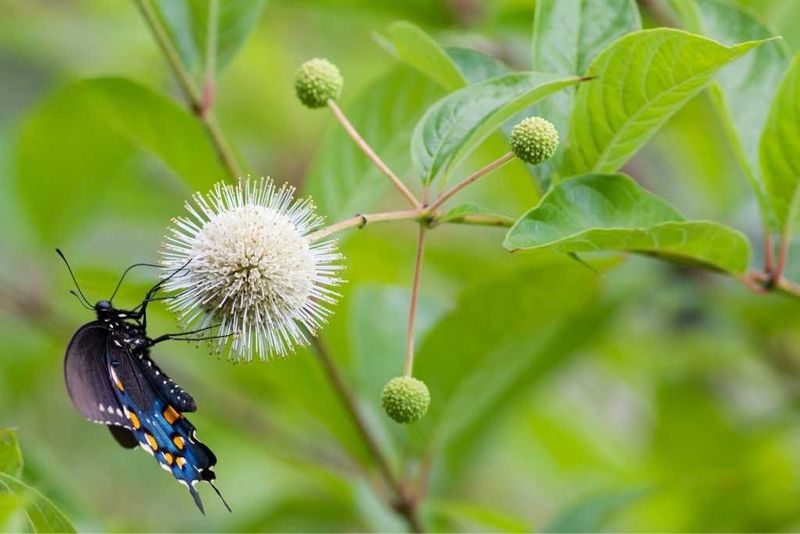
If you have butterfly bush growing in your yard, you might think you are doing butterflies a favor. The plant draws plenty of winged visitors to its flowers, but there is a gap between attracting adult butterflies and actually supporting them through their full life cycle.
For gardeners in North Carolina’s Mountain and Piedmont regions especially, a native shrub called buttonbush can fill that gap on the right site, offering nectar, seeds, and broader wildlife value without the regional invasive concerns tied to butterfly bush.
Butterfly bush offers nectar without supplying the whole butterfly life cycle
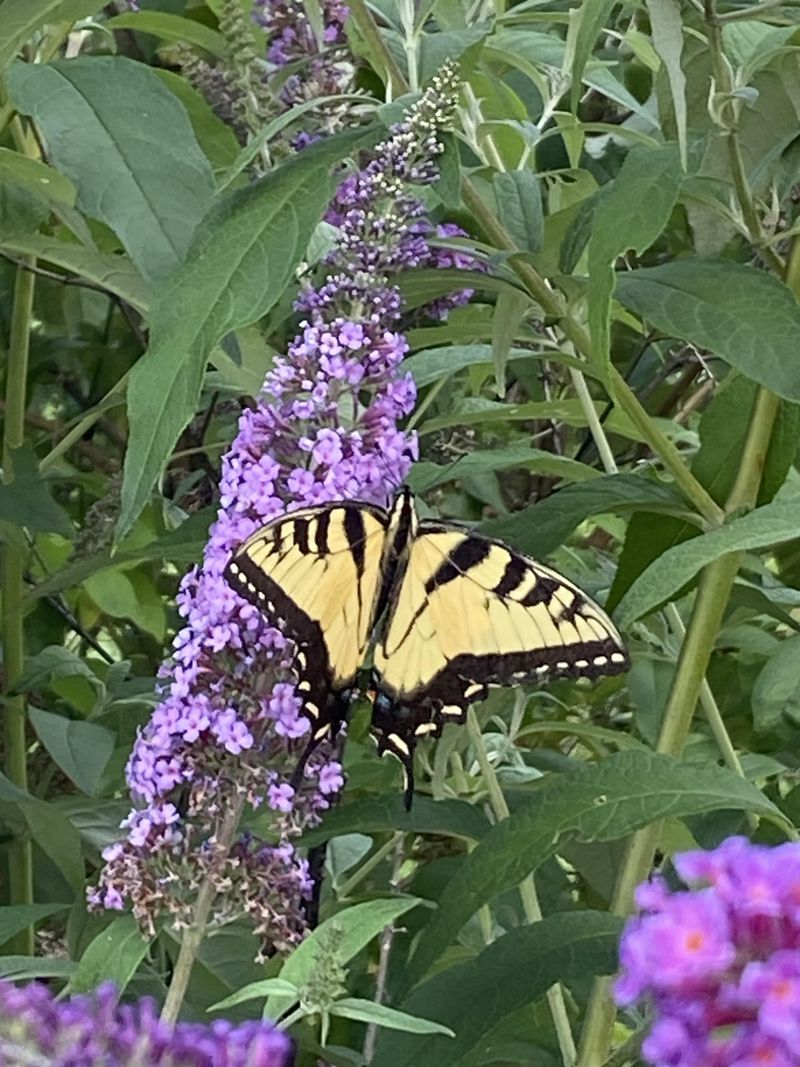
Buddleja davidii, the shrub commonly called butterfly bush, originated in China and arrived in North American gardens as an ornamental plant prized for its long, fragrant flower spikes. Adult butterflies, bees, and other flower visitors genuinely use those blooms for nectar, and a flowering plant in summer can draw a satisfying number of winged visitors on a warm afternoon.
That part of the plant’s reputation is accurate.
The gap shows up when you look beyond the flower. NC State Extension’s plant profile for butterfly bush states that native butterfly caterpillars cannot feed on its foliage.
Butterfly reproduction depends on females laying eggs on plants their larvae can actually eat, and butterfly bush does not serve that function for North Carolina’s native species.
Seeing adult butterflies at a flower and supporting butterfly populations are two different things. A yard can host dozens of nectaring adults on a given day without producing a single new butterfly if there are no caterpillar host plants nearby.
NC State’s guide to butterflies in your backyard makes this distinction plain: adult nectar sources and larval host plants both belong in a garden designed to support butterflies, not just attract them.
None of this means butterfly bush is harmful to the insects that visit it. It delivers real nectar to real butterflies and other pollinators.
The honest assessment is narrower: the shrub plays one role in the butterfly life cycle, not two, and that limitation matters when you are trying to build a yard that does more than put on a good show.
North Carolina’s invasive warning depends on region
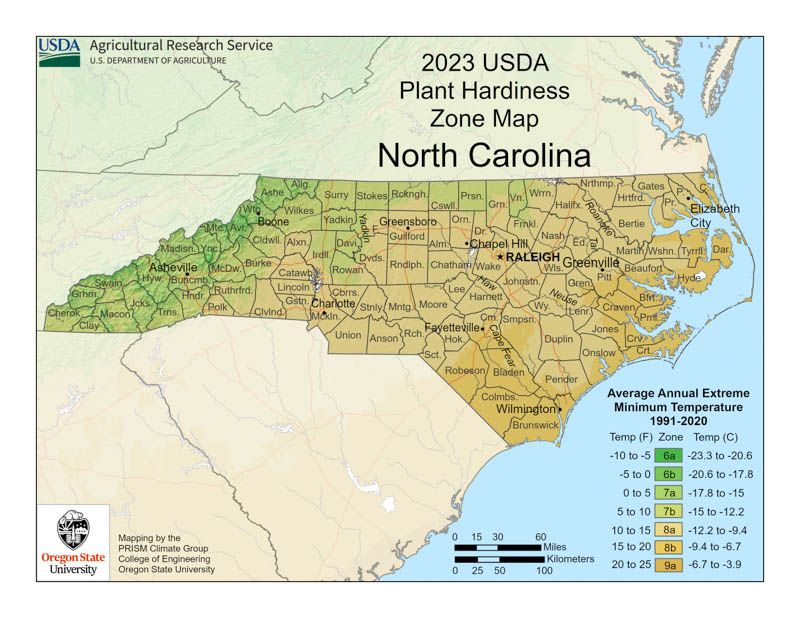
Not every corner of North Carolina carries the same risk from butterfly bush, and the guidance reflects that. NC State Extension currently lists butterfly bush as invasive in the Mountain and Piedmont regions of the state.
If your yard sits in Asheville, Boone, Charlotte, or the Research Triangle, that regional classification applies directly to you.
The NC Native Plant Society’s invasive exotic species list places butterfly bush among severe-threat invasives and advises gardeners not to rely on supposedly sterile cultivars of invasive plants as a workaround. Some cultivars marketed as sterile may still produce viable seed or cross-pollinate with other plants, so treating them as categorically safe is not a position the current guidance supports.
Outside the Mountains and Piedmont, the picture is less settled. NC Parks flora records document butterfly bush escaping cultivation primarily in the southern Mountains, with additional records in the lower Piedmont and near the Outer Banks.
Those records support caution across the state, but they do not establish the same level of documented spread in the Coastal Plain as in the western regions.
It is worth knowing that an earlier NC State horticultural assessment from 2009 concluded that butterfly bush was noninvasive in North Carolina because it was rarely found in natural areas at the time. That assessment predates the current Extension plant profile and the NC Native Plant Society’s present classification.
Current guidance has moved, and practical planting decisions in the Mountain and Piedmont should follow the more recent evidence.
Buttonbush offers a broader wildlife role in wet sites
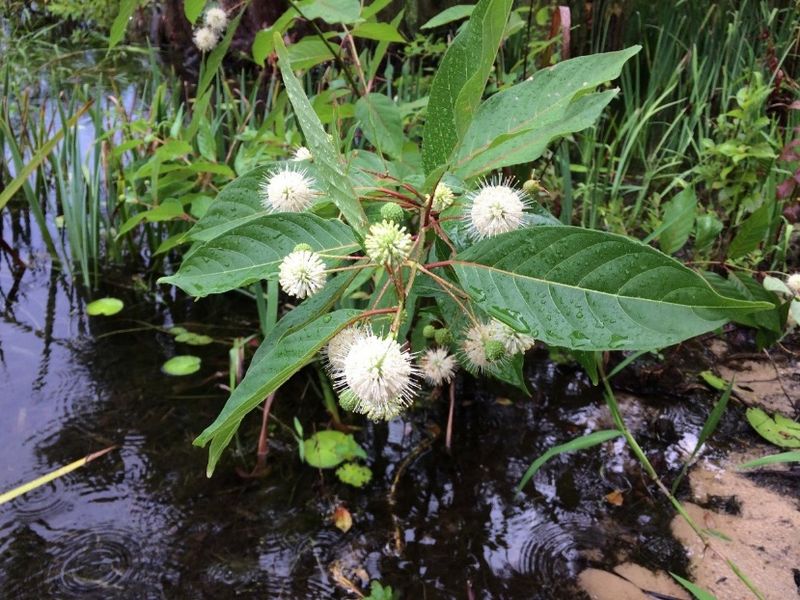
Cephalanthus occidentalis, known as buttonbush, is native throughout North Carolina, from the Coastal Plain wetlands to mountain stream edges. NC State’s profile for buttonbush describes it as preferring consistently moist to wet, rich soil in full to partial sun, and notes its value to bees, butterflies, hummingbirds, and birds.
Its distinctive round white flowers appear roughly from June through September, giving it a long window of usefulness during peak pollinator season.
The case for buttonbush rests on more than nectar. Its seed heads feed birds into fall and winter, its branching structure provides cover and nesting opportunities, and its deep roots stabilize wet or periodically flooded soil.
Those combined roles, nectar source, seed producer, and structural habitat element, add up to a shrub that participates in a wider food web than a nectar-only plant.
Research into native versus nonnative plants and pollinator performance consistently finds that results vary by plant species, region, pollinator group, and season. One peer-reviewed study on native plant benefits and related research on pollinator-plant interactions both support the general principle that native plants can provide more specialized ecological relationships for native insects, but neither establishes a specific numerical advantage for buttonbush over butterfly bush in North Carolina yards.
What the evidence does support is this: buttonbush fits North Carolina’s ecology, carries no documented invasive risk, and delivers wildlife value across multiple dimensions. On the right site, those qualities make it a well-grounded choice for gardeners looking to do more than attract a passing adult butterfly.
Check moisture, sunlight, and mature size before planting
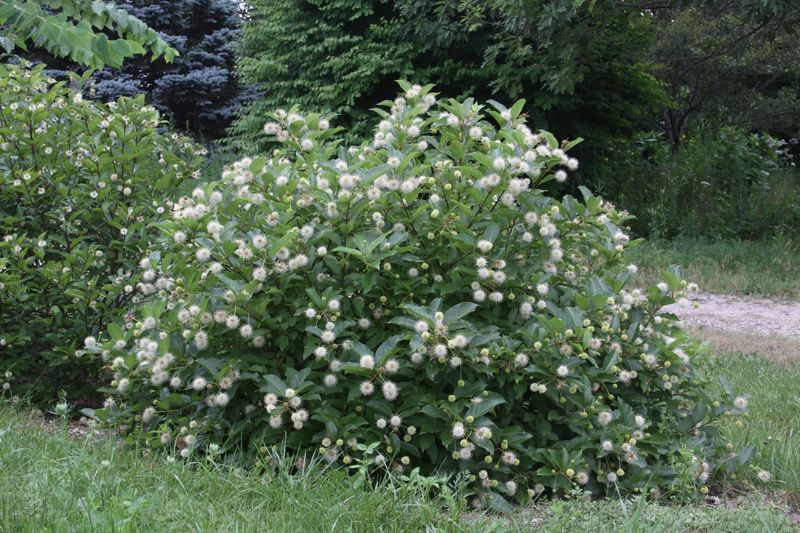
Before buying a buttonbush, spend a few minutes reading your intended planting spot rather than just your enthusiasm for the plant. The single most important question is whether the soil stays consistently moist or wet.
NC State’s buttonbush profile is direct about this: the shrub prefers wet to consistently moist, rich soil. A hot, dry, well-drained foundation bed is the wrong environment, and putting buttonbush there is likely to result in poor flowering, stressed growth, or outright failure.
Good candidate sites include the edges of ponds or streams, low spots in the yard that stay damp after rain, rain gardens designed to hold water temporarily, and areas near downspout outlets. If your yard drains quickly after a storm and dries out between rains, buttonbush is probably not the right fit regardless of how appealing the plant sounds.
Sunlight is the second check. Buttonbush tolerates full sun to partial shade, so it works in open, sunny wet areas as well as spots with afternoon shade.
That flexibility helps, but it does not override the moisture requirement.
Mature size deserves serious attention before you plant. Buttonbush can reach approximately 12 feet tall and 8 feet wide in favorable conditions.
A small foundation bed or a narrow side yard is unlikely to accommodate that spread comfortably over time. NC State’s butterfly garden guidance reinforces this point by recommending that plant selection follow local site conditions rather than assuming any single plant works everywhere.
Match the shrub to your actual yard, not the yard you wish you had.
Build a butterfly garden that feeds adults and caterpillars
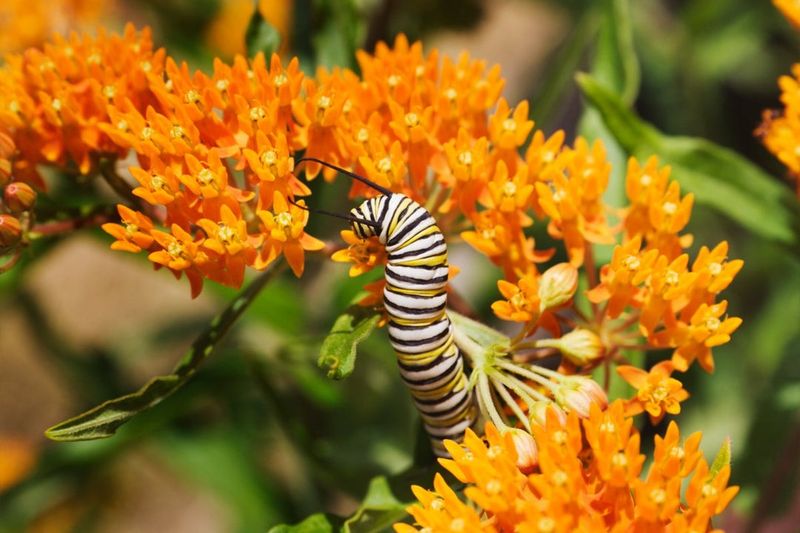
Replacing one shrub is a good start, but a yard that genuinely supports butterflies needs more than a single nectar source. The most effective butterfly gardens combine plants that feed adult butterflies through nectar with separate plants whose foliage caterpillars can actually eat.
Those two functions rarely overlap in a single species, so planning for both from the beginning makes a real difference.
NC State’s butterfly garden guide recommends distributing blooms across the growing season so that food is available from spring through fall rather than concentrated in one summer flush. Early-season natives, mid-season bloomers, and late-season plants each serve different species at different points in their life cycles.
A garden timed only to midsummer misses both early migrants and late-season residents.
Buttonbush fits this plan as a nectar source, seed producer, and structural element for moist sites. Its documented wildlife value covers bees, butterflies, hummingbirds, and birds, but the current evidence does not establish it as a documented host plant for native butterfly caterpillars.
Pair it with confirmed host plants: milkweed for monarchs, spicebush for spicebush swallowtails, wild senna for cloudless sulphurs, or passionvine for fritillaries, depending on which butterflies live or pass through your part of North Carolina.
Native status alone does not guarantee that a plant will outperform every nonnative option for every pollinator in every season. Pollinator research and related ecological studies consistently show that outcomes vary by plant, insect group, region, and conditions.
The stronger argument for native plants is their deeper ecological integration: they feed more life stages, support more species, and carry less risk of escaping into natural areas.
Remove an existing butterfly bush with follow-up care
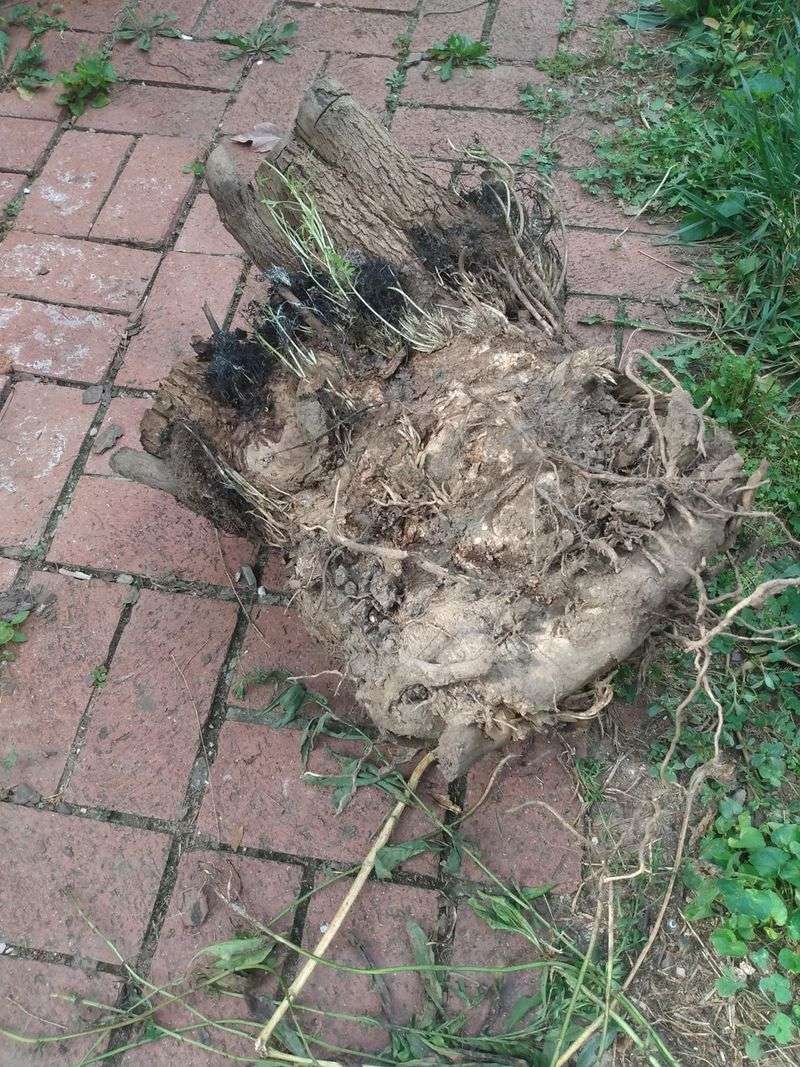
Finding butterfly bush already growing on your property does not require an emergency response, but a clear plan helps avoid leaving the problem half-finished. The most effective approach starts with the flower heads.
Removing spent blooms before seed dispersal cuts off the plant’s main route into surrounding soil and natural areas. Do this consistently through the flowering season, not just once.
University of Maryland Extension guidance on butterfly bush recommends digging out established plants when feasible, and their updated 2025 invasives resource reinforces that cutting the plant to the ground alone is unlikely to solve the problem permanently. Butterfly bush can resprout from the root crown, so plants that are only cut back may return the following season.
Digging out as much of the root system as possible gives you a cleaner result.
After removal, monitor the area for seedlings and resprouts for at least two growing seasons. Young seedlings pull out easily when caught early; established resprouts are harder to manage.
Staying on top of that follow-up monitoring is what separates a completed removal from an ongoing problem.
For a small residential plant whose root system can be removed without damaging nearby desirable plants, manual digging is the preferred method. NC State’s wildlife landscaping guidance and the 2025 NC chemical weed control guide both support a manual-first approach.
If a chemical treatment becomes necessary for a large or deeply rooted plant, use only a product with a label that permits the specific application site and method, follow every label instruction exactly, and avoid any application near pollinators, desirable plants, ponds, streams, wetlands, pets, or children.
Choose another native when buttonbush does not fit
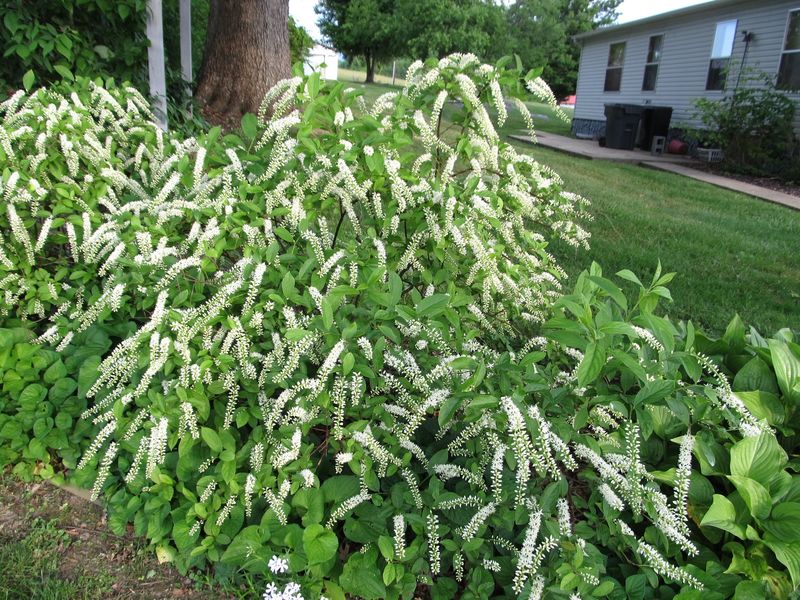
Buttonbush is a strong choice for the right site, but wet soil and room for a 12-foot shrub are conditions that many residential yards in North Carolina simply do not have. When your yard is drier, smaller, or calls for a different plant form, two other native shrubs deserve a close look.
Sweet pepperbush, Clethra alnifolia, is a native alternative that tolerates full sun to partial shade and produces fragrant white flower spikes that bees, butterflies, hummingbirds, and other pollinators visit readily. NC State’s sweet pepperbush profile notes that it dislikes hot, dry soil, so it still needs reasonable moisture, just not the standing-water or consistently saturated conditions that buttonbush prefers.
It can form small thickets over time through root sprouting, which is worth factoring into your spacing decisions.
Virginia sweetspire, Itea virginica, suits moist soil, rain garden edges, and streamside plantings. NC State’s Virginia sweetspire profile highlights its arching white flower clusters, reliable fall color, and value to pollinators.
Like sweet pepperbush, it can spread by suckering and gradually widen its footprint in favorable conditions, so give it space to do so or plan to manage the edges.
Neither shrub is a direct substitute for buttonbush’s wet-site performance, and none of these three plants are interchangeable. The deciding factor in each case is your actual site: how much moisture, how much sun, and how much room you realistically have.
Match the shrub to those conditions, and the plant will reward you with far less struggle and far more wildlife activity.
Make the replacement fit both your yard and your region
The decision to replace butterfly bush with a native shrub is not the same for every North Carolina yard. Gardeners in the Mountain and Piedmont regions have the clearest reason to act: current NC State Extension guidance and the NC Native Plant Society’s invasive list both flag the plant as a regional concern there.
Coastal Plain gardeners have less settled guidance but still have good reasons to consider a native alternative.
When your yard has consistently moist to wet soil, adequate sun, and room for a large shrub, buttonbush earns its place as a well-supported native replacement. Dry sites, small beds, and tight foundation plantings call for sweet pepperbush, Virginia sweetspire, or another site-matched native instead.
Whichever shrub you choose, the goal is a layered planting that covers adult nectar, documented caterpillar host plants, seed sources for birds, and structural cover across the seasons. NC State’s butterfly garden guidance makes the point well: a yard full of visible butterflies is not the same as a yard that produces them.
Build for both, and you will have something that serves your local ecosystem rather than just decorating it.