
Christmas Cactus Dropping Buds? Check Whether Its Fall Spot Is Part of the Problem
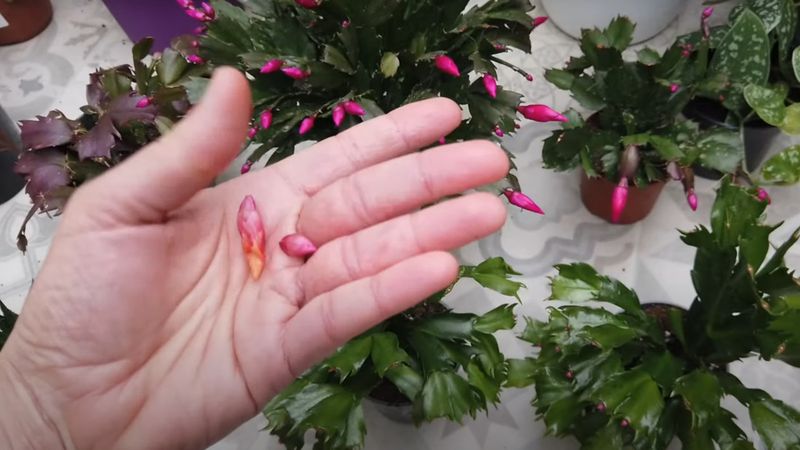
You wait all fall for flower buds on your Christmas cactus, and then they start dropping off one by one. It feels personal, especially when it happens year after year.
The spot where the plant sits in autumn can play a part, but it is rarely the whole story. Here is how to check your plant’s conditions and decide whether a change is really needed.
Fall placement can matter, but it is not the only cause
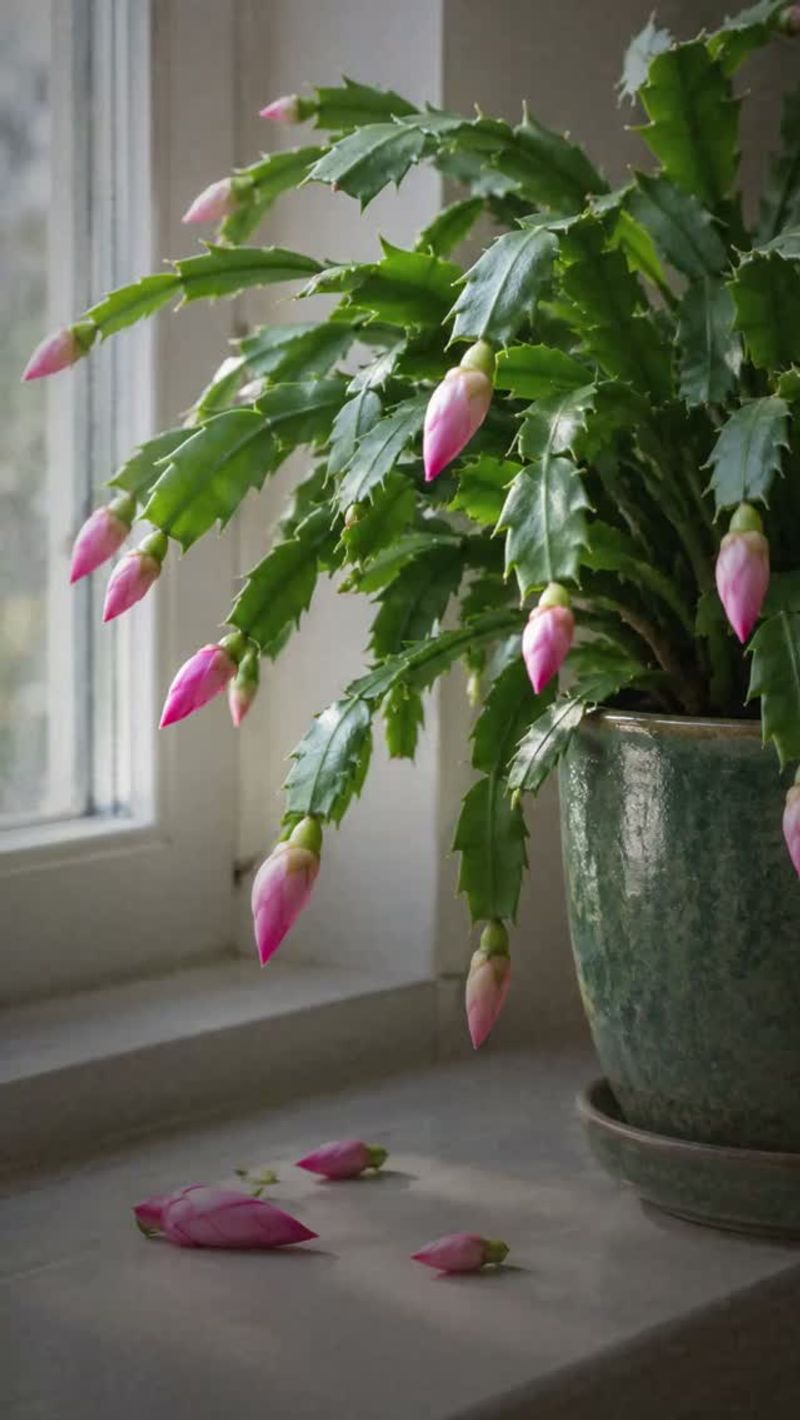
Finding tiny pink buds on the floor under your holiday cactus is discouraging, especially when it repeats every year. It is natural to look for one culprit, and the plant’s fall location is a fair place to start.
Still, October placement is not a proven cause for every plant.
A spot can hurt a plant in several ways. A cold draft from a door, a warm blast from a heating vent, or a sudden swing in light or temperature can all lead to bud loss.
Iowa State Extension advises keeping conditions consistent while buds develop instead of treating a move as a rescue.
Location is only one suspect. UConn’s holiday cactus fact sheet and other extension sources point to light, temperature, and watering as the usual trouble areas.
Some plants also drop a few buds on their own, as University of Minnesota Extension notes, when they set more buds than they can support.
So think of this article as a practical checklist, not a one-move cure. You will look at the spot, the light, the water, and the plant’s own habits.
Then you will make the smallest change that fixes a real problem, and nothing more.
Making buds and keeping buds require different conditions
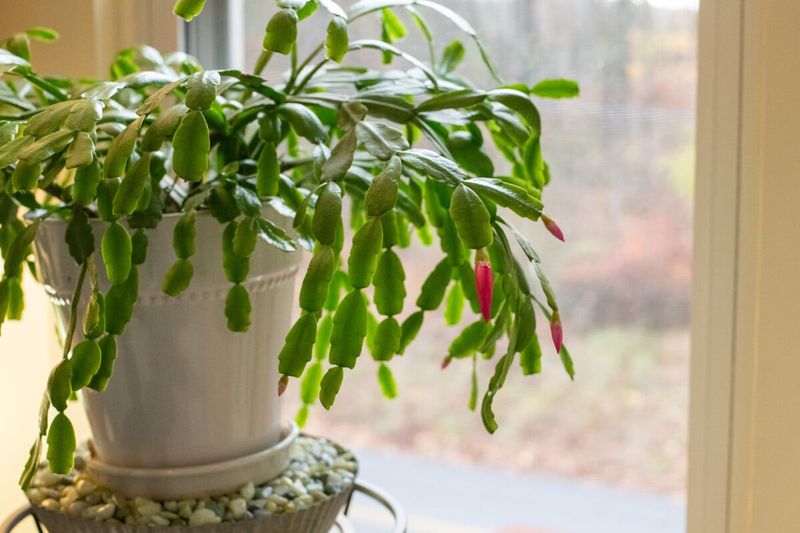
Getting a holiday cactus to form buds is one job. Keeping those buds on the plant is another.
Mixing them up is why advice sometimes backfires.
Buds form in response to long nights and cool conditions. Iowa State’s guidance gives 14 to 16 hours of uninterrupted darkness and nights around 60 to 65°F with slightly warmer days.
UConn describes a different setup, with 12 to 14 hours of dark nights, or days of 60 to 70°F and nights of 55 to 60°F. These are source-specific recommendations, not one universal setting.
Once buds are present, the priority shifts to stability. Sudden moves, drafts, heat, and uneven watering are the bigger risks at that stage.
Cool, long nights helped start the buds, but they are not a guaranteed cure for buds that are already falling.
Timing also varies. UMass Extension explains that the length and timing of short-day treatment depend on the cultivar, temperature, and growing conditions.
That means October is not a fixed deadline for every plant.
If your plant already has buds, skip the urge to restart the schedule. Hold the conditions steady and look for hazards instead.
Check the spot before you change it
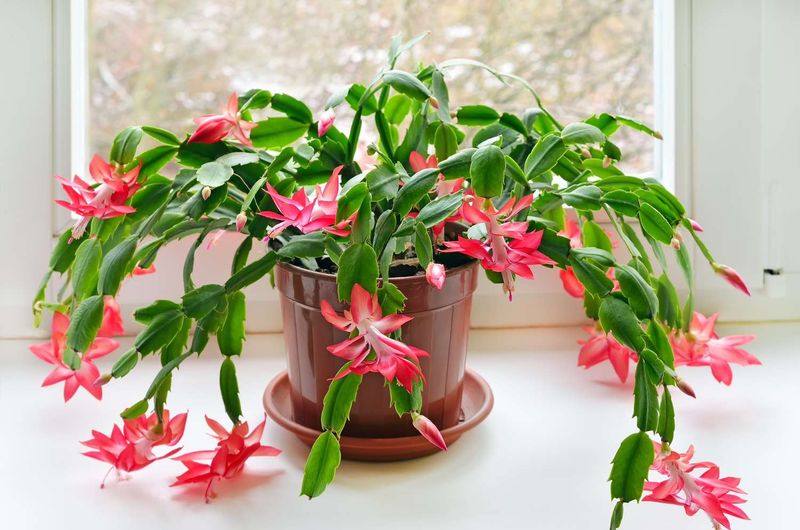
Before moving anything, spend a few minutes inspecting where the plant sits. Stand next to it and feel for air movement.
A cold draft from a door or window, or warm air from a vent, can stress developing buds.
UF/IFAS specifically warns against drafts and against placing the plant near vents, fireplaces, or other heat sources. Notice also whether the room changed recently, such as the furnace kicking on for the first time or curtains left open at night.
A cool spot is not automatically a good one. A chilly window can drop below the plant’s comfort zone, and sources warn that temperatures below about 50°F can damage the plant or cause buds to fall.
If your cactus spent summer outdoors, Illinois Extension says to bring it inside before temperatures fall near that point.
Here is the rule of thumb. If the plant already has buds and the spot has no clear problem, leave it where it is.
Iowa State recommends not moving the plant during bud development, since the move itself can be a shock.
If you do find a real hazard, fix it gently. Shield the plant from the draft with a nearby barrier, redirect a vent, or shift the pot a short distance with the same side facing the light.
Small changes beat big ones.
Bright days and uninterrupted nights support flowering
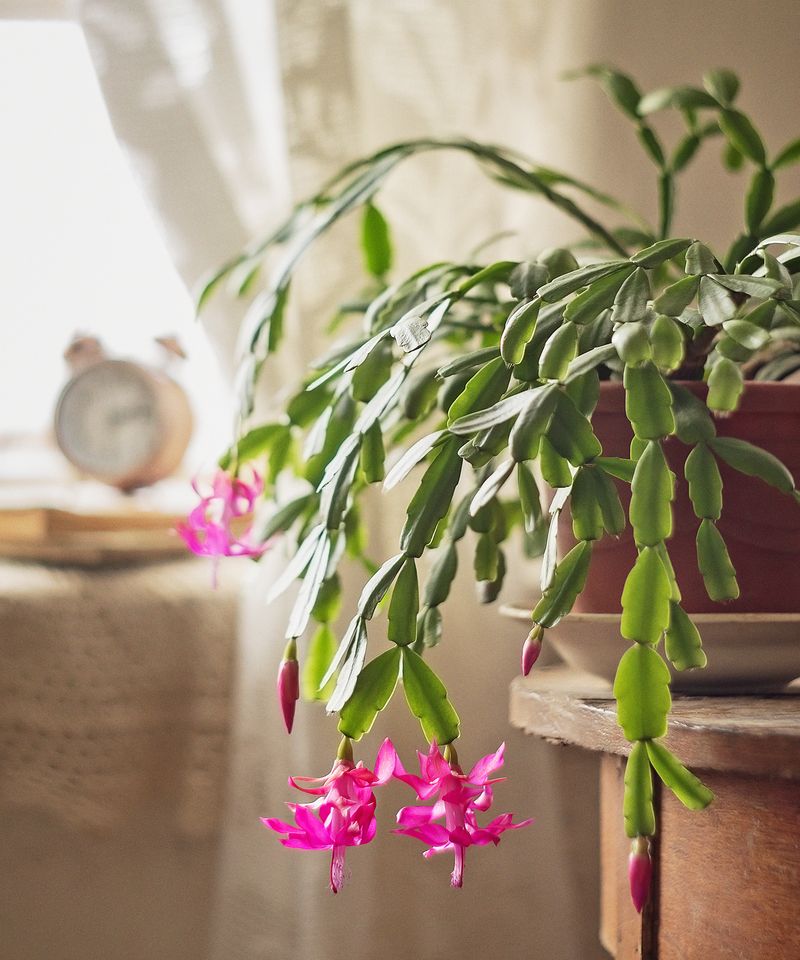
Flower buds need two things from light: plenty of it during the day and real darkness at night. Many people hear “give it darkness” and picture a closet, but that is not the idea.
The plant still wants bright daytime light.
Iowa State notes that artificial light at night can interfere with bud formation, which is why a plant sitting beside a lamp or a hallway light may struggle. Its guidance calls for long, uninterrupted nights alongside bright days.
In a real home, that can be simple. Pick a room where lights are off in the evening, or one that you rarely use after dark.
Keep the plant by a bright window during the day, out of harsh midday sun.
The hours differ by source. UConn gives 12 to 14 hours of dark nights, while Iowa State suggests longer.
Treat the numbers as a range, not a strict rule.
One caution matters here. This schedule is for starting flowers.
If buds are already dropping, changing the light is not a guaranteed rescue, and a sudden shift in light can add stress. Check the light only for obvious problems, like a lamp that stays on late.
Water steadily, without soggy or bone-dry soil
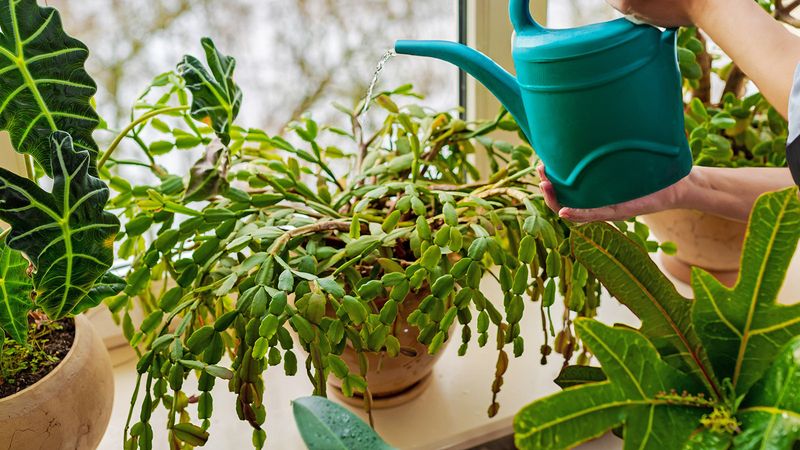
Watering swings are a common reason buds fall. Soil that stays soggy and soil that dries out completely can both cause trouble, according to University of Minnesota Extension.
Constantly wet mix also risks root rot.
Start with the pot. It should have drainage holes, and any saucer or decorative outer pot should be emptied after watering.
Standing water is an easy mistake to miss.
Then use your finger. Water when the top of the mix begins to dry, and let the excess run out.
UF/IFAS gives similar advice about drainage and watering as the mix dries.
You may have heard that you should stop watering to force flowers. Skip that.
UMass Extension reports that research has not supported withholding water to induce buds, and that water stress can reduce bud set.
If you suspect watering, look at the clues. Limp, shriveled stems hint at dryness, while mushy stem bases and a sour smell point to too much water.
Adjust gradually and keep a steady routine.
Some bud loss is not a placement failure
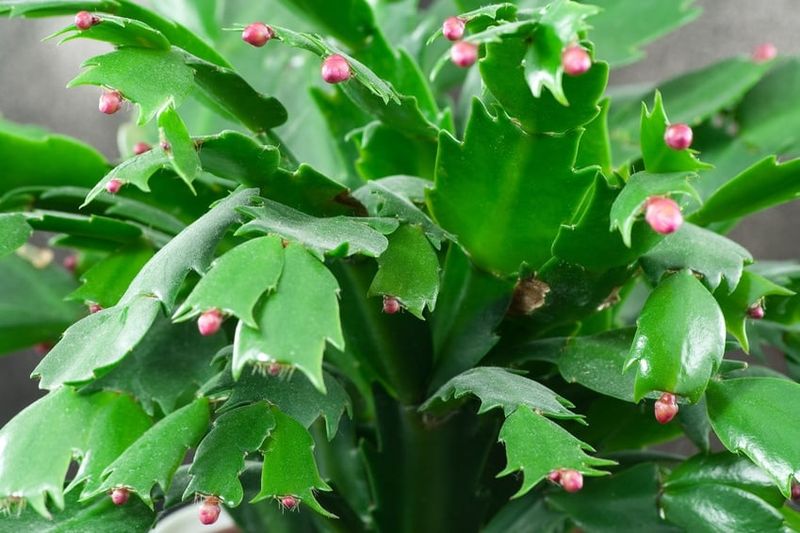
Sometimes a healthy plant simply sets more buds than it can carry. It then sheds a few, a bit like self-pruning.
University of Minnesota Extension describes this as a normal response.
So a handful of buds on the floor is not proof that you did something wrong. If the plant still has plenty of buds and looks firm and green, you may be seeing natural thinning.
A heavy, sudden drop of most buds is the pattern worth investigating.
Names add some confusion too. UMass Extension says most commercially sold holiday cacti are Thanksgiving cactus, which generally flowers earlier than a true Christmas cactus.
Illinois Extension explains how to tell them apart, mostly by the shape of the stem segments.
That means your plant’s bloom calendar may not match its label. Early buds do not mean something is off.
Still, knowing the type does not by itself explain why buds fall.
Use this as a calming reminder. Check the conditions, fix what is clearly wrong, and accept that a few lost buds are part of growing these plants.
Make one careful correction, then keep conditions steady
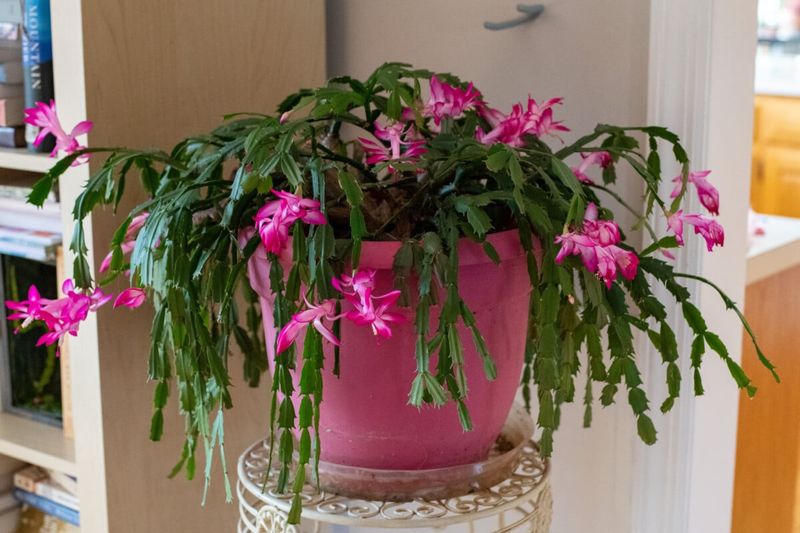
Walk the checklist once. Look for a clear hazard such as a draft, vent, or fireplace, then fix just that with as little disturbance as possible.
Keep bright days, dark nights, and even watering with good drainage, as Iowa State and UF/IFAS suggest.
No October move can promise that every bud stays. Once buds form, steady is the safer default.
A calm plant is often a blooming plant.