
Controlling Poison Ivy Vines on Your North Carolina Trees: A Careful Cut-Stump Approach
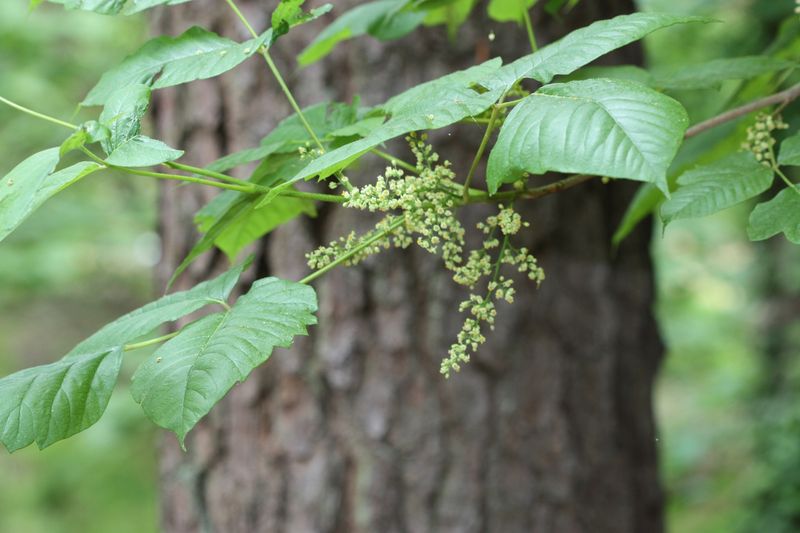
A hairy vine climbing your backyard oak can feel like a problem waiting to happen, especially if kids or dogs play nearby. Poison ivy is a native plant, so the goal is not to wipe it from your whole yard.
A careful cut-stump treatment lets you focus on one vine without spraying everything around it. Here is how to do it safely, and what to expect afterward.
Confirm the vine before you treat it
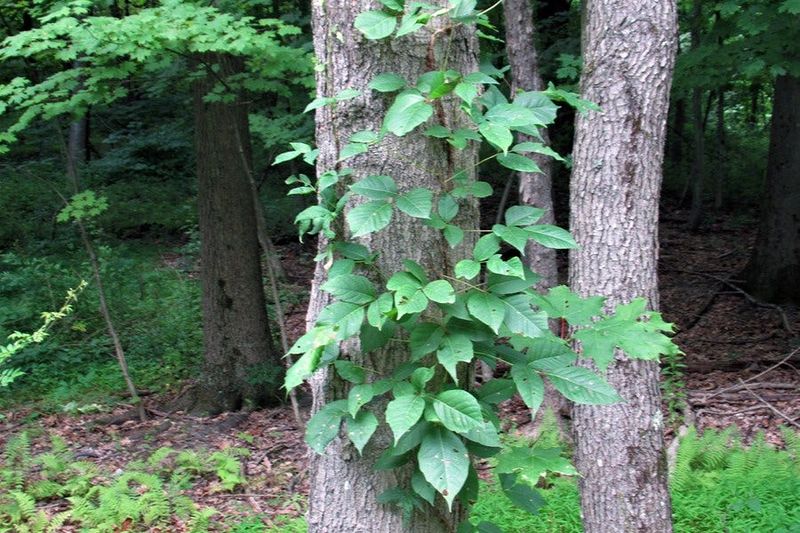
Spend a few minutes on identification before you pick up pruners. Plenty of vines climb backyard trees, and not every one deserves removal.
North Carolina Cooperative Extension notes that poison ivy has three leaflets, while Virginia creeper has five.
That difference matters because Virginia creeper is a native plant too. The N.C.
State Extension Plant Toolbox describes it as a common native vine, and treating it by mistake would remove a plant you may have been happy to keep. Counting leaflets on several leaves along the vine is the quickest check.
Look at the stem as well. A mature poison ivy vine on a trunk often looks hairy, like a thick rope, and it grips the bark with small rootlets.
Leaves can vary in size and shape, so do not rely on one leaf alone. Photograph the plant and compare it with trusted extension images if you are unsure, and do not touch it while you check.
Next, decide whether control is actually needed. Penn State Extension covers identification alongside control options, and the choice is yours.
A vine on a tree at the back edge of your property, far from foot traffic, can stay put, and its berries feed birds. A vine beside the swing set, the dog run, or the path to the compost bin is a stronger candidate for removal.
Treat this as a targeted choice, not a duty to clear every vine you find.
Fall may be favorable, but it is no guarantee
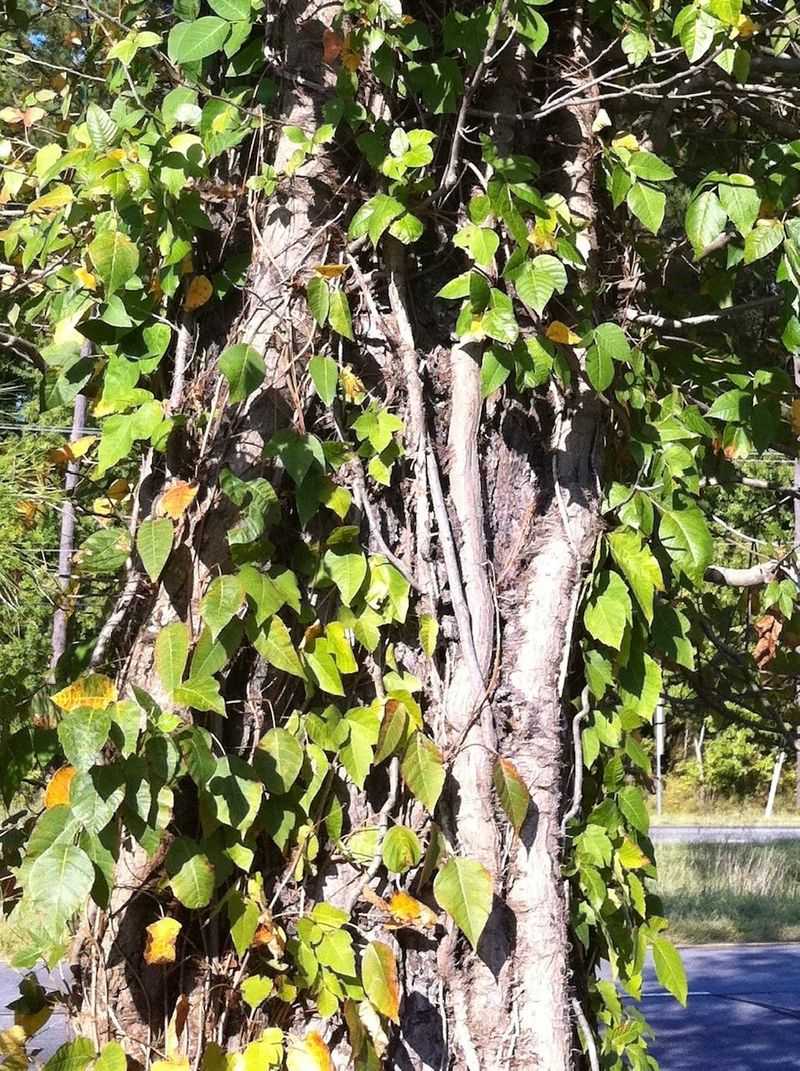
Gardeners often hear that fall is the time to go after poison ivy. There is some truth in that, but it comes with limits.
Iowa State Extension says fall applications tend to be slightly more effective, and the word slightly is worth keeping in mind.
Penn State Extension likewise describes late summer through autumn as a favorable window for cut-stump treatment. Favorable means your odds may be a bit better, not that other seasons fail.
If a vine is a hazard in July, you do not have to wait for October.
Timing advice also depends on the product and method. Clemson Extension gives different preferred timing for foliar sprays with different active ingredients.
So a rule that fits one product may not fit another, which is why the label on your product comes first.
Fall does not turn one treatment into a permanent fix either. Poison ivy has extensive roots and can come back, so plan on checking the stump later.
Think of autumn as a reasonable, slightly better time to act, with follow-up still on your calendar.
For North Carolina yards, that often means a mild October or November weekend, when the leaves are easy to see and the vine is easy to find.
Treat the fresh stump according to its label
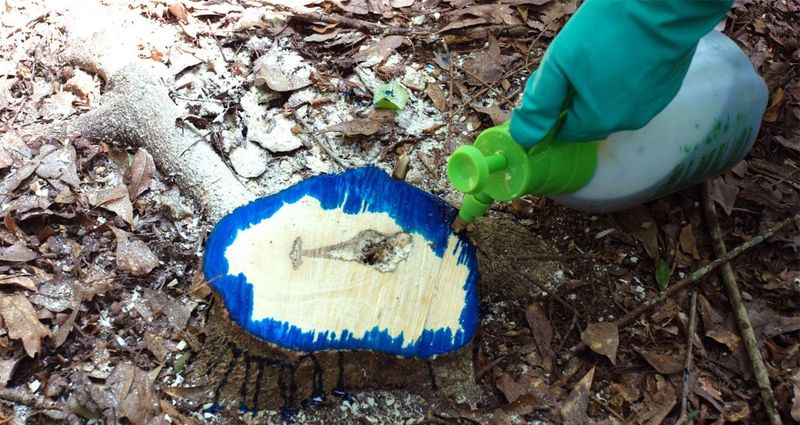
The method is simple, but the order of the steps matters. Start by choosing a product whose label specifically permits cut-stump use at your site.
Labels differ, so read yours fully before you cut anything. The EPA pesticide label database lets you look up product-specific labels.
Wear your protective gear, then cut the vine near the ground with sharp loppers or pruners. Make a clean cut across the stem so the surface is fresh and exposed.
Work from the side of the stem, and keep your face back from the cut.
Apply the product to the cut surface promptly, before the stem dries out. Iowa State Extension describes applying to the cut and using only enough to wet the surface without runoff.
A small paintbrush or sponge applicator gives you more control than a spray bottle.
Follow your chosen product’s directions for strength and handling. Do not borrow a mixing ratio from another product, a website, or a neighbor, because rates are not interchangeable.
This is a targeted method, not permission to spray the tree or the plants around it. Keep the product off the trunk, the bark, and nearby foliage, and clean up any drips right away as the label directs.
Leave the upper vine on the tree
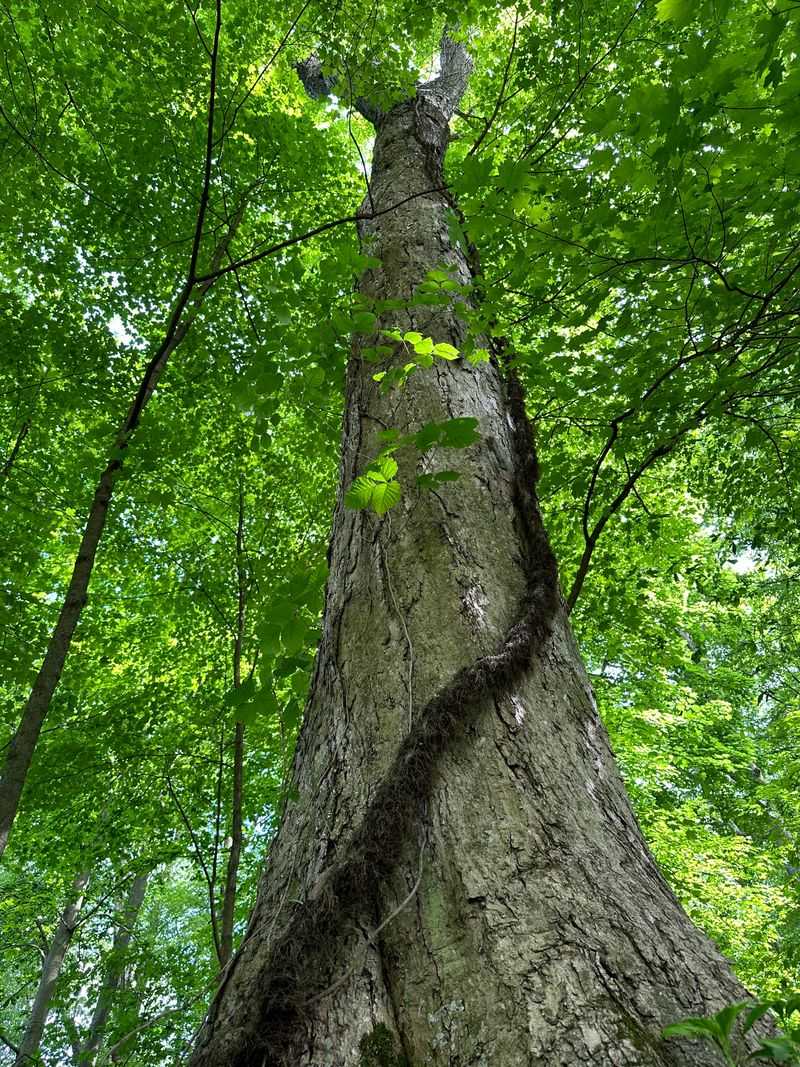
Once the lower stem is treated, resist the urge to yank the rest down. Penn State Extension advises cutting a window in the vine and leaving the upper section to die on its own.
Penn State’s guidance also cautions that pulling can damage the tree bark.
To make the window, cut the vine in two places, about a foot apart, and remove the short piece between them. Treat the stump on the ground side as described earlier.
The gap makes it easy to see if the vine tries to reconnect.
The upper vine will wither over time, and it may hang on the trunk for a season or longer. Dead vines can still carry urushiol, so leaving them alone also keeps you from handling them.
If you decide to remove the dead growth later, do it with full protection.
Because you are putting product only on a cut surface, contact with nearby plants can be lower than with broad spraying. That is a relative benefit, not a guarantee.
Iowa State Extension stresses avoiding runoff, and the product label governs safe use. Drift, drips, and spills can still reach other plants or soil, so check the EPA label for your product and work slowly.
Protect your skin, tools, and lungs
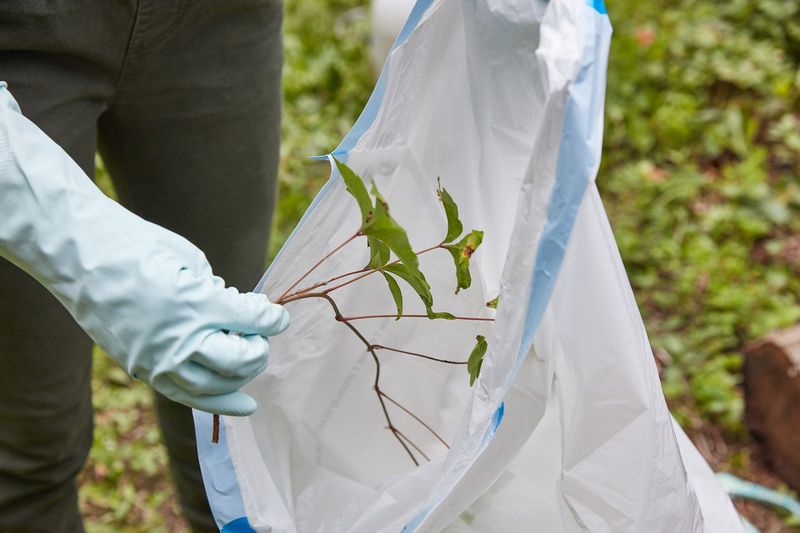
Poison ivy’s oil, urushiol, is the reason this job calls for care. CDC and NIOSH guidance notes that the oil can stay on plant material, tools, and clothing, even after the plant is dead.
Dress for the job. Wear long sleeves, long pants, boots, eye protection, and chemical-resistant gloves, and consider a disposable layer over the gloves if your product label calls for it.
Do not rub your face or eyes while you work.
Afterward, treat everything you wore as contaminated. Remove gloves carefully, wash clothes separately in hot water, and rinse your skin with soap and cool water soon after the task.
Wipe pruners, loppers, and handles with a cleaner suited to the job. Clemson Extension also advises care with tools and clothing that touched the plant.
Pets can carry urushiol on their fur, so keep dogs away while you work and bathe them if they brushed against the vine.
Never burn poison ivy, whether vines, leaves, or cuttings. CDC and NIOSH warn that the smoke can cause serious respiratory irritation.
Bag cuttings and dispose of them as your local waste rules allow.
Check the stump for new growth
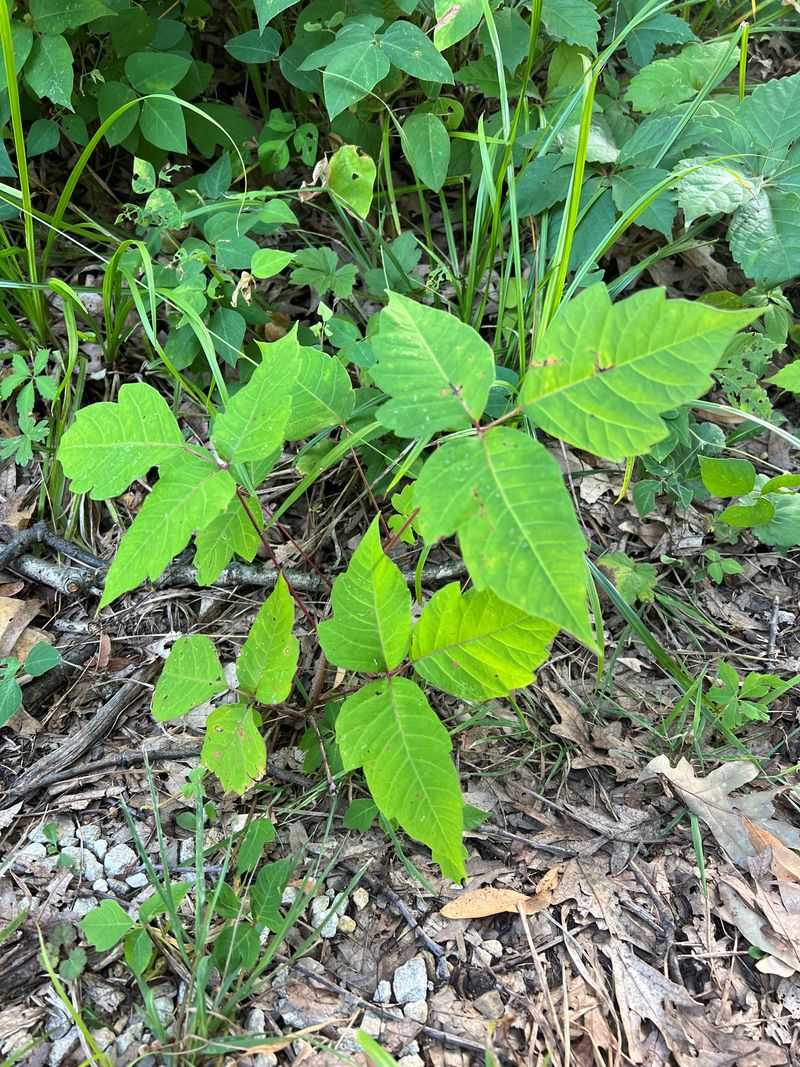
A few weeks after treatment, walk back to the tree and take a look. You are checking the stump and the ground around it for new shoots or leaves.
Poison ivy can resprout, so a sprout does not mean you did something wrong.
Iowa State Extension says retreatment may be needed if the plant regrows. Cut-stump treatment is a strong step, but it is not a guaranteed permanent fix.
The roots are part of the story. UGA Cooperative Extension notes that poison ivy has extensive roots and can take repeated effort to control.
That is why a single afternoon of work may not end the project.
If you see new growth, put on your protective gear again and treat it using the same product label. Follow that label each time, including any limits on how often or how much you can apply.
Do not increase the amount because the plant came back.
Set a reminder to look again in spring and again in the following fall. A quick visual check takes a minute, and catching a small sprout is much easier than dealing with a new vine climbing the trunk.
Make removal a targeted yard decision
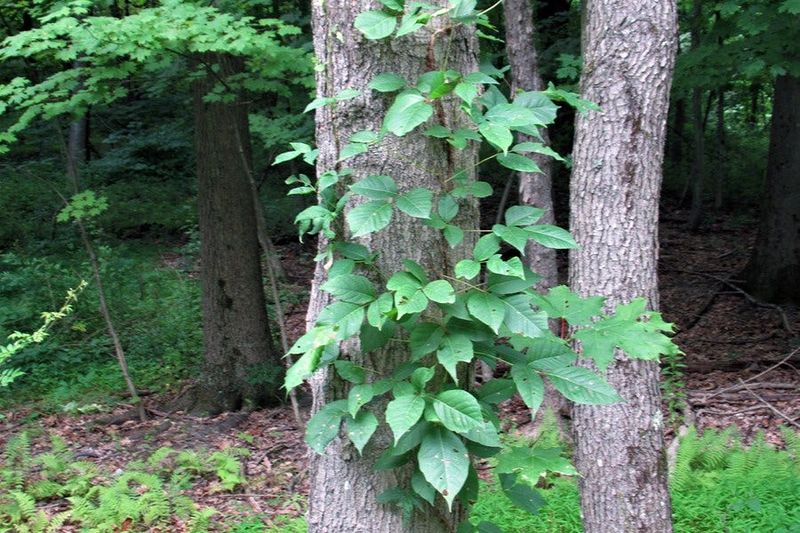
Poison ivy is a native plant, and the Virginia Department of Forestry points out that birds eat its berries. So control makes the most sense where people or pets are likely to touch it, not as a campaign against an invader.
Cut-stump treatment can focus the product on the vine, fall may be a slightly better time, and follow-up may be needed. Confirm the plant first, as Penn State explains, and check back as Iowa State suggests.
A good steward removes one vine for a reason and leaves the rest of the yard to do its work.