
Could Fire Ants Be a Hidden Hazard for Box Turtles and Nesting Birds in North Carolina Yards?
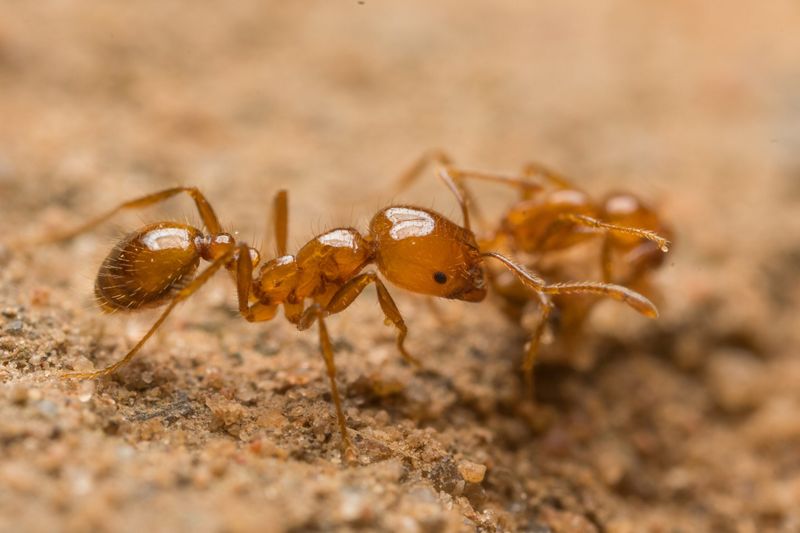
Most of us think of fire ants as a painful nuisance that ruins a barefoot walk across the lawn. State wildlife officials and bird researchers say the trouble can go past the sting.
Fire ants may threaten turtle nests and some bird nests, though no one has counted how often that happens in North Carolina yards. Knowing what is proven, and what is not, helps you protect the wildlife you love without overreacting.
Imported fire ants are established across much of North Carolina
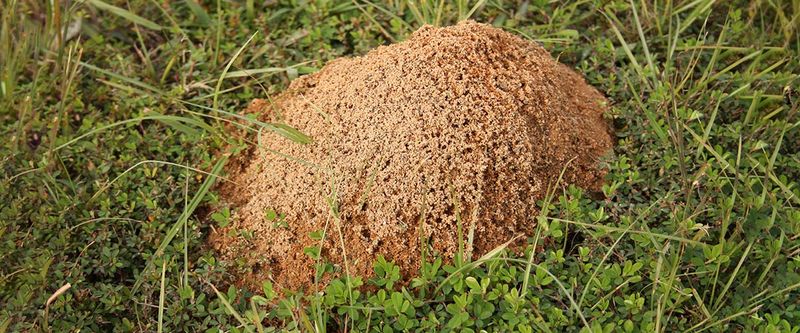
Fire ants are not a far-off problem in our state. The NC Department of Agriculture and Consumer Services reports that portions or all of 81 counties are generally infested with one or more types of imported fire ants.
That covers a big share of the state, especially the Coastal Plain and much of the Piedmont.
That number needs a careful reading. It describes imported fire ants as a group, which includes red, black, and hybrid types, so it does not mean every county has red imported fire ants in every yard.
It also does not mean every dirt mound you spot belongs to a fire ant colony, since plenty of native ants build mounds too.
Presence is also different from proven harm. Knowing that these ants live across much of North Carolina tells you the hazard is possible where you live.
It does not tell you that box turtles or nesting birds are being lost in your neighborhood, because nobody has measured that in local yards.
The practical takeaway is simple. Learn what is living in your yard before you decide whether any action is needed, and keep the wildlife questions in mind as you look around.
Box turtle nests and hatchlings face a documented hazard
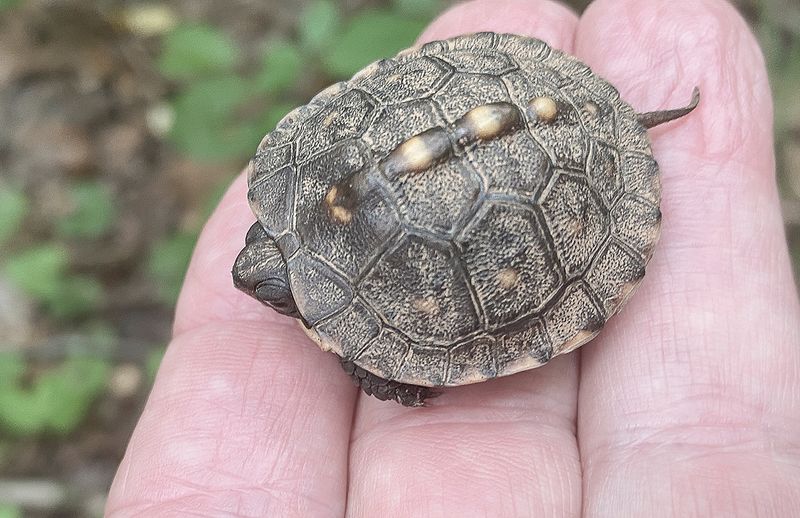
Picture a hatchling box turtle no bigger than a half-dollar, just climbing out of its nest. According to the North Carolina Wildlife Resources Commission, that is a risky moment.
In its Eastern Box Turtle profile, the agency warns that fire ants can attack nests and consume hatchlings as they emerge.
The warning does not stop with the babies. NCWRC also cautions that juvenile and adult turtles may be attacked when they stay still with their shells closed.
Closing up is a box turtle’s usual defense against predators, and it may not work well against swarming ants.
Keep the limits of this warning in view. The profile comes from the state wildlife agency, so it carries weight, but it does not give attack rates for North Carolina yards.
It also does not estimate what fire ants may do to box turtle populations here.
So think of it as a credible caution rather than a body count. If you share your property with box turtles, it is one more reason to watch where your yard’s ant colonies are, especially during nesting and hatching season.
A Texas vireo study found higher nest survival with ant exclusion

Researchers in central Texas tested what happens to songbird nests when red imported fire ants are kept away. In a controlled, two-year study, they followed nests of White-eyed Vireos and Black-capped Vireos, with and without ant exclusion.
The results differed by species. For White-eyed Vireos, estimated nest survival rose from 10% to 31% when ants were excluded.
For Black-capped Vireos, it rose from 7% to 13%.
The nests were not all on the ground. Monitored nests ranged from 0.4 to 4.2 meters above ground, which is roughly from ankle height to well over head height.
So the study speaks to some low or reachable bird nests in general, and it should not be pinned only on ground-nesting birds.
It also helps to remember where and who. These findings come from two vireo species in central Texas.
They show what happened in that setting, and they are not a measurement of how birds fare in a North Carolina backyard.
Still, the numbers are striking enough to take seriously. A nest that is two or three times as likely to succeed is a meaningful difference for a small songbird.
What the evidence does—and does not—show

Put the two findings side by side and a pattern appears, but with gaps. The Texas work shows that fire ants can lower estimated nest survival for two vireo species.
That points to a possible risk for some bird nests, not a number you can apply to birds in a Piedmont or coastal yard.
Nests also fail for many reasons. Snakes, cats, jays, raccoons, storms, and cowbirds all take their share, so fire ants should not be treated as the main or usual cause of a lost nest.
The turtle warning is a different kind of source. NCWRC’s box turtle profile is guidance from the state wildlife agency, not a field study of North Carolina turtles with counts and rates.
Put plainly, we do not know how often fire ants attack turtles or nests in residential yards here. We also do not know what effect they have on wildlife populations across the state.
That leaves a reasonable middle path. The hazard is real enough to pay attention to, and uncertain enough that you should not panic or spray the whole lawn.
Targeted control can limit unnecessary treatment
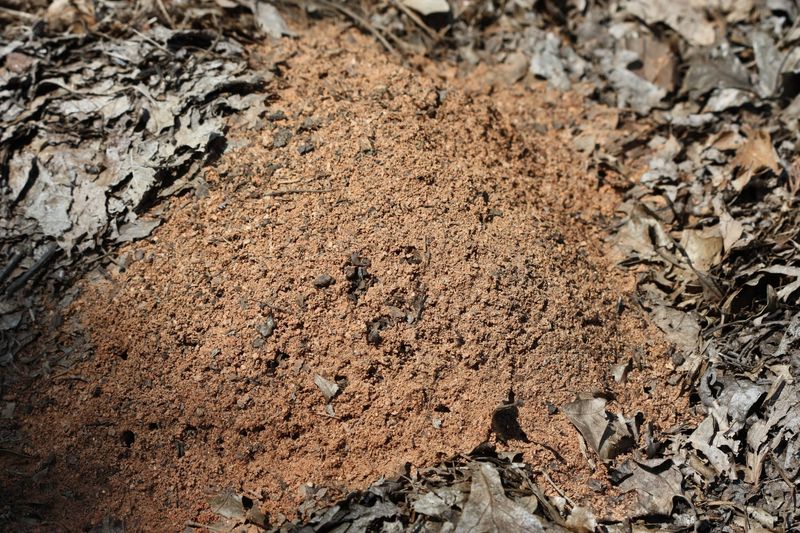
Start with identification. Not every mound is a fire ant mound, and the state notes that imported fire ants come in red, black, and hybrid types.
Confirming what you have, perhaps with your county Cooperative Extension office, can save you from treating harmless native ants.
If you do decide to treat, think small. NC State Extension describes baiting as a slower option for a yard with several active colonies.
For one mound that needs faster control, it describes mound drenches.
Extension also says individual-mound treatments generally use less insecticide and reduce effects on non-target ground-dwelling insects compared with broadcast treatment. It cautions that broadcast applications can disrupt other ant communities, so blanket spraying is not a wildlife-friendly shortcut.
Whatever you choose, use only a product labeled for your site and purpose, and follow every line of the label. The U.S.
EPA warns in its wildlife pesticide tips that products can harm wildlife when directions are ignored.
Treating ants is not a guarantee that turtles or birds will be safer. It is simply a way to deal with a colony near a play area or garden bed while keeping the chemical footprint as small as you can.
Leave a box turtle nest in place
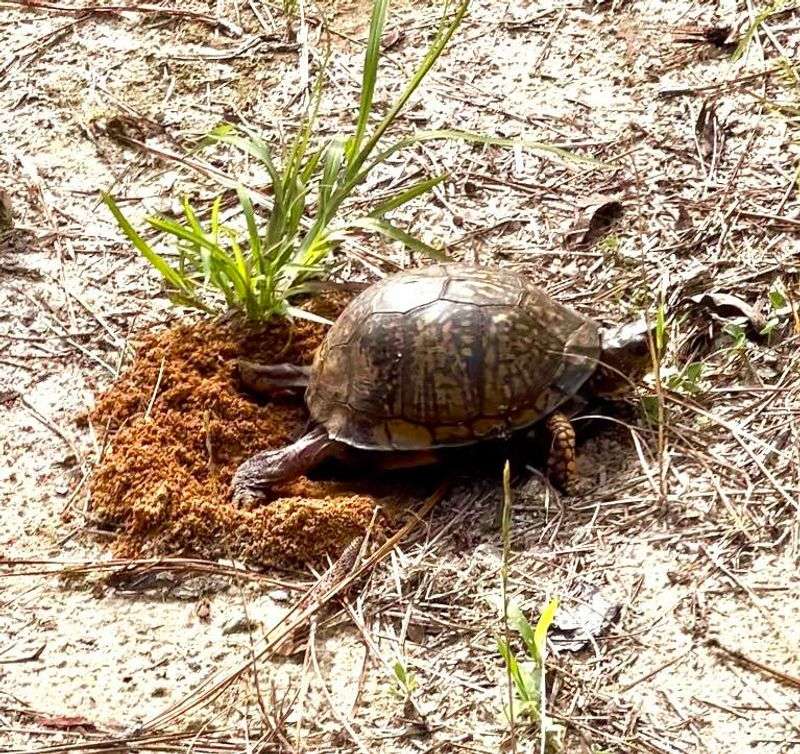
If you find a box turtle nest, the best move is usually to walk away. The North Carolina Wildlife Resources Commission says on its eastern box turtle species page that a nest does not require intervention.
Ants nearby do not change that. Please do not dig up the eggs or move the nest to somewhere you think is safer, since that can do more harm than the ants might.
Skip the homemade mound remedies near a nest as well.
NCWRC does offer one option for people who want to help. You can place temporary mesh over the nest to deter predators.
The agency advises removing it after the ground settles, about one to two weeks later, so hatchlings are not blocked when they emerge.
Keep pets and mowers away from the spot, and mark it from a distance if that helps you remember where it is. Then let the nest do its slow work.
A box turtle can live for decades, and the hatchlings that make it start with a patch of quiet soil.