
Planting Time and Your Mums: How the Window Affects Whether They Return Next Fall
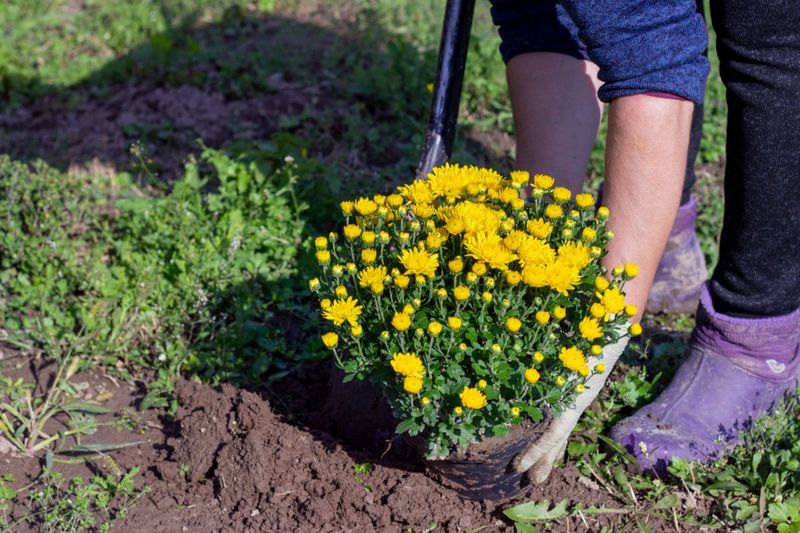
You brought home a pot of bright fall mums, and now you wonder if they will come back next year. Sometimes they do, and sometimes they vanish by spring, which can feel like your fault.
The truth is that planting time changes the odds, but it is not the only thing at work. Here is how to size up your own mums and give them a fair shot.
What kind of mum did you buy?
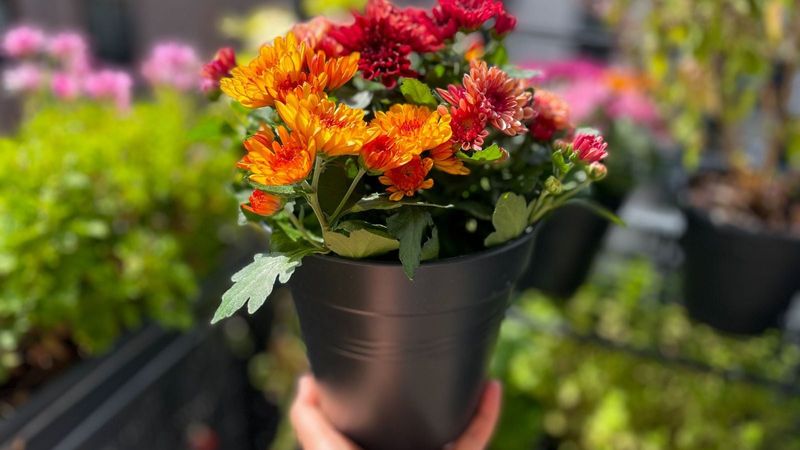
Before you think about a shovel, figure out what is actually in the pot. Mums sold in fall come in two broad groups.
Garden mums are generally more cold-hardy, while florist mums are commonly sold as seasonal display plants.
That difference matters a lot. Iowa State Extension explains that florist mums often do not survive outdoors in colder regions.
It also reports that even garden mums can be badly damaged or killed by winter conditions in Iowa. So being sold in a fall pot does not make a mum a reliable perennial.
A hardy-sounding label is a helpful clue, but it is not a promise for your yard. Your region’s winter, your soil, and the plant’s own cultivar all play a part.
A tag that says hardy in one climate may not mean the same thing in a colder one.
Look at the tag for a variety name or hardiness zone, and compare it with your local zone. If the tag says nothing, ask the nursery staff whether the plant is a garden mum.
If they are not sure, treat it as a bonus of fall color that might return, not a sure thing.
Setting expectations now takes the pressure off. If your mum does not come back, the plant type may be the reason, not anything you did wrong.
Spring gives perennial mums the safer start
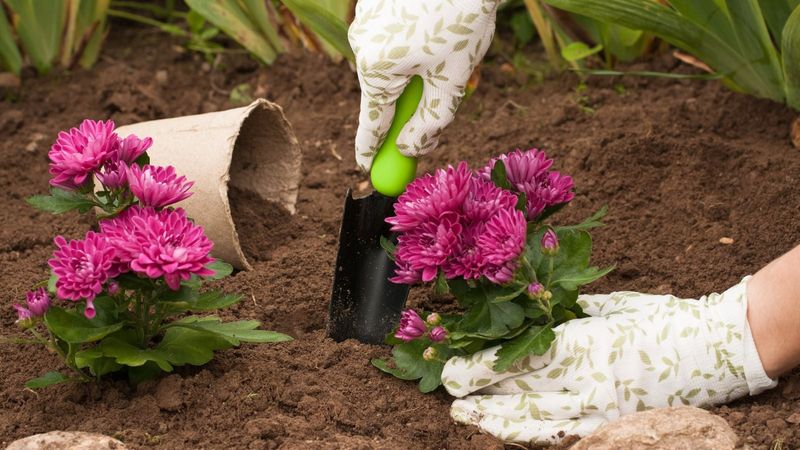
If you want mums to return as perennials, spring is the safer general choice. A mum planted in spring has the whole growing season to spread its roots before winter arrives.
That head start is the main reason spring planting usually gives better odds.
Fall planting can work too, but it depends on how much time your plant has before the ground freezes. The goal is to plant as early as practical and let roots settle in first.
Iowa State guidance on planting perennials suggests about four to six weeks before ground freeze as a general rule for the state.
For mums specifically, Illinois Extension points to late August to early September as a workable window in Illinois. Think of that as a second-best option, not the ideal.
Later planting may not leave enough time to establish.
Notice that these are regional examples, not national deadlines. A gardener in Minnesota and one in Georgia face very different freeze dates.
Check when your area usually gets its first hard ground freeze, then count back several weeks.
If that window has already passed, you still have choices. You can plant anyway and accept the lower odds, or keep the mum in its pot for fall color and plant it in spring.
Neither path is a failure, and Iowa State notes that fall-planted mums are simply less likely to survive.
Late planting leaves less time to establish
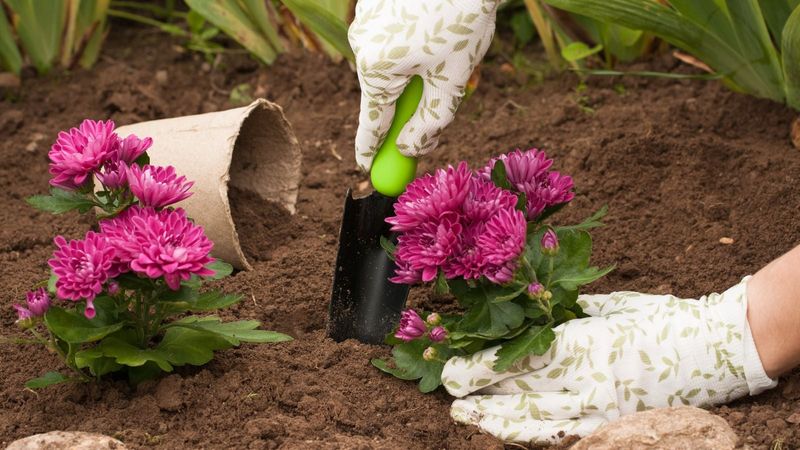
Picture a mum dropped into the ground just as nights turn frosty. Its roots are still small and shallow, and they have little time to grow out into the surrounding soil.
When winter comes, that young root system is asked to handle cold it was not ready for.
One big threat is freeze-thaw heaving. When soil freezes, thaws, and freezes again, it can push shallow-rooted plants upward and expose the roots to cold air.
Illinois Extension notes that a late-season transplant may not establish in time.
You may have heard that blooms use up all of a mum’s energy, so fall mums die. Some sources, including one Penn State page, offer that explanation.
It is not a proven, universal cause, and the more consistent explanations are short establishment time, shallow roots, and winter stress.
Here is a clue to watch for in winter. If you see a mum sitting higher in the soil, with roots poking out after a thaw, heaving is likely at work.
Gently press the plant back down and cover the roots with soil if the ground is workable.
None of this means late planting always fails. Iowa State says fall-planted mums are less likely to survive, not that they never do.
Mum type, drainage, and the winter itself still shape the result.
Choose a sunny, well-drained site

Once you pick a planting window, the spot you choose helps your mum get established. Mums like full sun, which Iowa State Extension describes as at least six hours of direct sunlight a day.
A shaded corner usually leads to leggy, weaker plants.
Soil matters just as much. Aim for soil that stays moist but drains well.
Skip low-lying areas where water collects, and avoid any place that stays soggy after rain, since wet roots struggle.
If your soil is heavy clay, mixing in compost before planting can help water move through. A slightly raised bed is another option for a wet yard.
Even a gentle slope can be better than a bowl-shaped dip.
When it is time to plant, dig a hole about as deep as the nursery pot and a bit wider. Set the mum in so it sits at the same depth it grew in the pot.
Planting too deep or too shallow can stress the crown.
Water regularly after planting so the roots can settle in and begin to spread. Check the soil with your finger, and water when the top inch or so feels dry.
New plants dry out faster than established ones, so keep an eye on them through the first weeks.
Mulch can reduce winter heaving
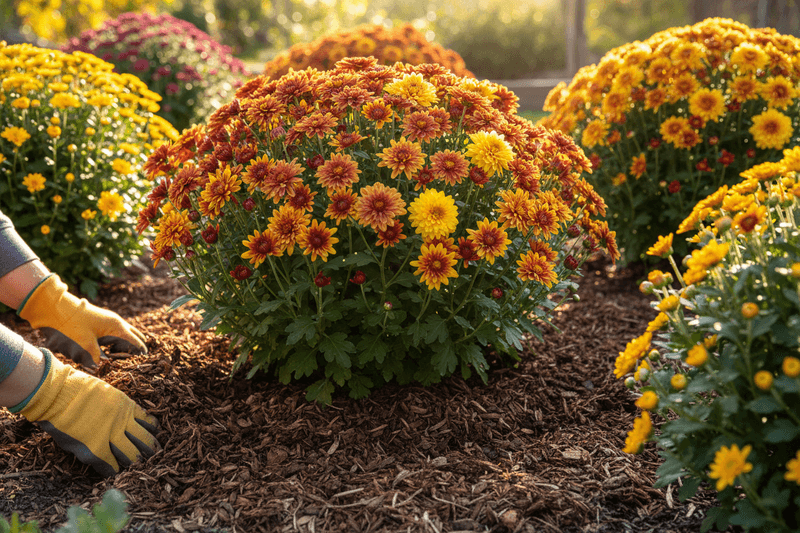
For established garden mums, a layer of mulch in late fall is a smart habit. Both Iowa and Illinois Extension recommend several inches of mulch as the ground begins to freeze.
Iowa State’s winter prep advice says it helps reduce freeze-thaw heaving around the shallow roots.
Loose materials such as straw or pine needles work well. Shredded or whole leaves can mat down into a soggy layer, so use them with caution.
Timing matters, so wait until the soil is starting to freeze rather than mulching early.
Mulch can improve the odds, but it cannot ensure survival. A harsh winter, poor drainage, or a tender variety can still win out.
Think of it as one helpful step among several.
Pruning is where advice splits. Iowa State and Illinois suggest leaving old growth standing through winter.
Penn State advises cutting plants back after a hard frost.
Neither approach is the single right answer for everyone. If you want a tie-breaker, follow your own state’s Extension office, since it reflects your local winters.
Potted mums need a separate winter plan

A mum left in its pot above ground faces a tougher winter than one planted in the soil. The root ball is less insulated, so temperatures around it swing faster and farther.
Those swings are a big part of why potted mums have a harder time.
Maryland Extension offers two main options. One is to insulate the pot and root ball, for example by wrapping the container or surrounding it with insulating material.
The other is to move the plant to a cool, unheated, protected space, such as a garage or shed.
Watering is the tricky part. The plant should not become waterlogged, and it should not dry out completely either.
Check the soil now and then, and give a small drink only when it is dry, keeping drainage holes clear.
If you wrap the pot, make sure water can still drain. A soggy pot that freezes solid is a problem of its own.
In a sheltered space, the plant will need far less water than in summer, so go lightly.
Even with good care, container protection is no guarantee. Some potted mums will make it and some will not.
Treat any survivors as a pleasant bonus.
Improve the odds, not guarantee a return

Start by identifying your mum, favor spring planting if you want a perennial, and use your local ground-freeze timing for any fall planting. Hardiness and winter conditions still matter, as Iowa State notes.
Keep winter survival separate from blooming, since day length and nearby outdoor lights can shift bloom timing without telling you anything about the roots.
Some mums will surprise you, and some will not return. Either way, you gave them a fair chance, and next spring is a fresh start.