
Does a Spider Plant Really Scrub Your Bedroom Air All Night? Here’s What the Evidence Actually Shows
A lot of people have heard that keeping a spider plant in the bedroom is like running a quiet air filter all night long. The claim is appealing, and it traces back to real NASA research, which gives it a ring of scientific authority.
But the full picture is more complicated, and understanding it can help you make smarter choices about the air you actually breathe while you sleep.
The NASA story began in a sealed chamber

Back in the late 1980s, NASA researchers were working on a very specific problem: how to keep air breathable inside sealed space habitats where chemicals could build up with nowhere to go. Their experiments placed plants inside closed chambers, introduced selected pollutants like benzene, formaldehyde, and trichloroethylene, and measured whether the plants reduced those chemicals over time.
That original NASA plant study found that spider plants and several other species did interact with airborne chemicals under those controlled conditions. The results were genuine, and the researchers were not exaggerating what they found inside those chambers.
What the study did not do is test a single potted spider plant sitting on a nightstand in a normal bedroom while someone slept. The chambers were sealed or tightly controlled environments, not rooms with doors, windows, HVAC systems, or people moving in and out.
Pollutant concentrations were deliberately set at experimental levels, lighting was controlled, and plant density was far higher than a typical household arrangement. Every one of those variables matters when you try to predict what would happen in your home.
Pulling a finding out of a sealed-chamber experiment and applying it to an ordinary bedroom is a bigger leap than it sounds. EPA guidance for health professionals on indoor air pollution specifically cautions that extrapolating from these controlled experiments to real homes carries real uncertainty.
The NASA work is a legitimate starting point for plant-air research, not a finished answer about what your bedroom spider plant does while you sleep.
What a spider plant can actually do
Spider plants are living organisms, and they do real biological work. Like every green plant, a spider plant absorbs carbon dioxide and releases oxygen during photosynthesis.
Its roots, leaves, and associated soil microbes can also interact with certain airborne chemicals, pulling some molecules out of the surrounding air under the right conditions. None of that is made up or exaggerated.
Where the story gets more complicated is the gap between “can interact with a chemical” and “meaningfully cleans a room.” A peer-reviewed review of ornamental plants and VOC removal found that while some studies do show plants absorbing certain compounds, the evidence from real-world settings is sparse and mixed. Measuring a chemical concentration drop in a controlled experiment is not the same as demonstrating that a bedroom’s air became meaningfully cleaner or that a person’s exposure to that chemical went down by a health-relevant amount.
A spider plant’s biology is also shaped by conditions. Photosynthesis runs on light, so the gas-exchange activity that drives most of the plant’s chemistry slows considerably when the lights go out.
The plant is still alive in the dark, still respiring, but the active, light-driven processes that underpin most of the chemical-interaction findings from research studies are not running at full speed at 2 a.m. in a dark bedroom. That does not make the plant useless, but it does mean its biological activity at night looks quite different from what happens under the bright, controlled lighting of a laboratory setup.
A bedroom is not a laboratory chamber
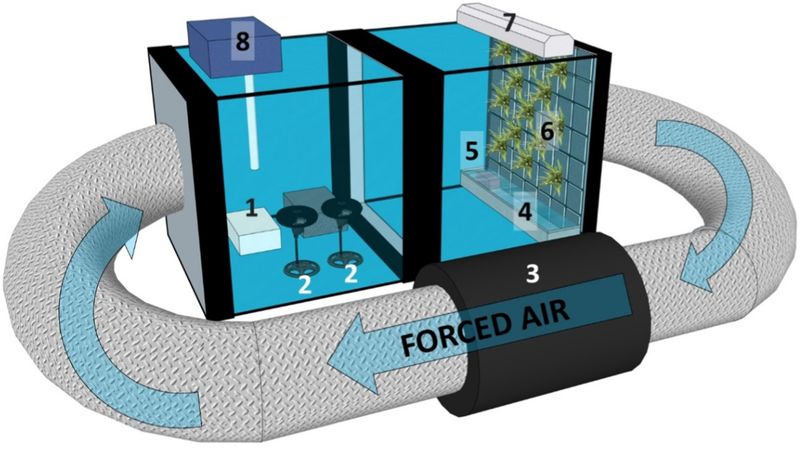
Sealed experimental chambers and ordinary bedrooms share almost nothing in common beyond the presence of a plant. In a research chamber, air exchange is minimized or precisely controlled so that any chemical the plant absorbs actually registers as a measurable drop in concentration.
Your bedroom, by contrast, leaks air constantly through gaps around doors, windows, and HVAC ducts. Every time someone opens a door, a fresh slug of air enters and dilutes whatever chemical reduction the plant might have contributed.
Pollutant concentrations in lab chambers are also set deliberately, often at levels much higher than what a typical home contains. Lighting is calibrated, airflow is managed, and the ratio of plant mass to room volume is far higher than what any reasonable household arrangement would look like.
Change any one of those variables and the measured removal rate changes too, sometimes dramatically.
A peer-reviewed review of 12 plant-chamber studies calculated that to match the pollutant-removal rate of ordinary outdoor-air exchange, you would need roughly 10 to 1,000 plants per square meter of floor space. That is not a typo.
A standard bedroom might be around 12 square meters, which means the math points to hundreds or thousands of plants, not one spider plant in a hanging basket. The same EPA guidance on improving indoor air quality states plainly that there is currently no evidence that a reasonable number of houseplants removes significant quantities of pollutants from homes or offices.
That conclusion reflects the full body of available research, not a single negative study.
Understanding the chamber-to-bedroom gap is not about dismissing the NASA research. The experiments were real and the findings were valid within their own carefully controlled conditions.
The problem is that those conditions do not describe your sleeping space, and the two environments are different enough that the results cannot travel directly from one to the other.
What the evidence says about overnight air cleaning
The overnight angle is where the popular claim gets its most appealing imagery: a plant quietly working through the night, pulling invisible pollutants out of the air while you sleep. The reality of plant biology makes that picture harder to support.
A NASA experiment on foliage plants and carbon monoxide removal reported sorption results during a defined six-hour light period. That experimental window under controlled lighting does not translate into a promise of continuous removal in a dark room overnight.
Photosynthetic processes depend on light. When a bedroom goes dark, the plant shifts from net carbon dioxide absorption to net carbon dioxide release through respiration, and the light-driven chemistry that underlies most of the pollutant-interaction findings from research studies is no longer running at full capacity.
That does not mean zero activity happens at night, but it does mean the rate and character of the plant’s chemical interactions change substantially once the lights go out.
A 2024 office experiment adds another useful caution. That study placed five or eighteen Boston ferns in an occupied office and found that the plants increased relative humidity but produced no significant effect on corrected carbon dioxide concentration.
Boston ferns are not spider plants, so the study does not directly test what happens in your bedroom. But it does offer a real-world check on the broader idea that ordinary numbers of houseplants can meaningfully regulate the gas composition of an occupied room.
The fern study found they could not, even with up to eighteen plants in the space.
Taken together, the evidence suggests that a bedroom spider plant’s overnight contribution to air chemistry is, at best, very small and has not been demonstrated to be meaningful in an ordinary occupied home.
Could the pot create a moisture problem?
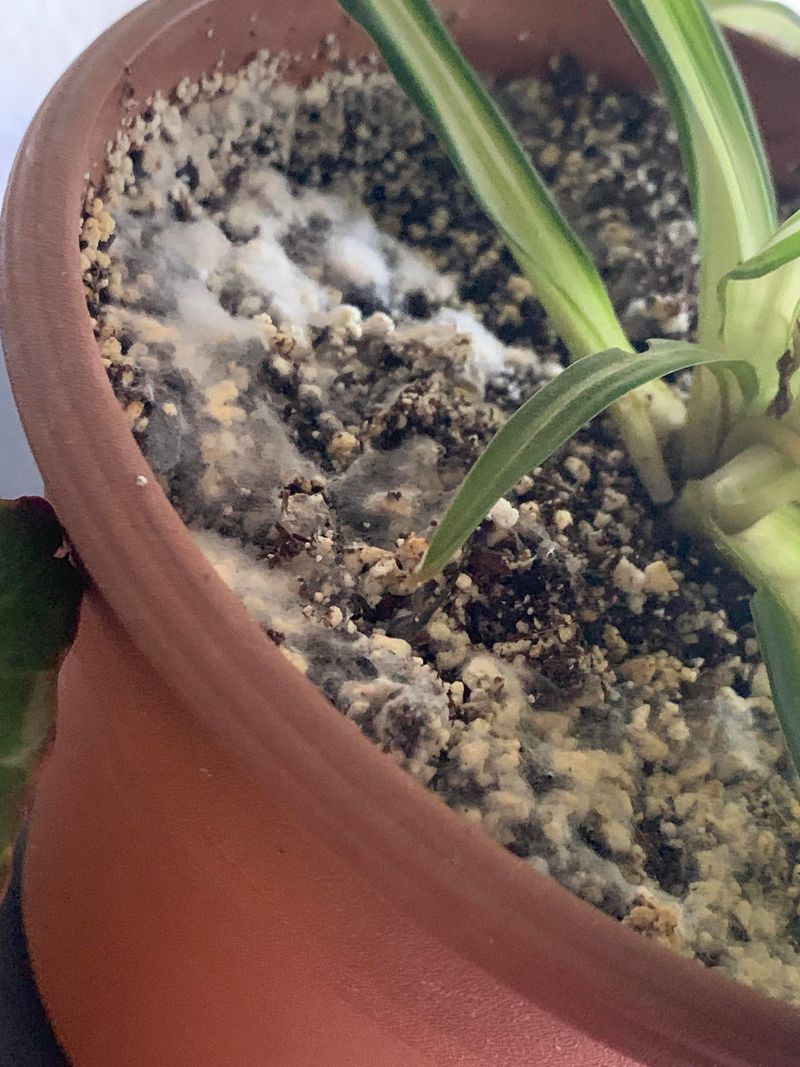
Plants and moisture go together, and a spider plant in a bedroom does have the potential to affect the humidity in the immediate area around it. Some plant enthusiasts see this as a bonus, imagining that a bit of added moisture is good for sleep comfort.
The reality depends heavily on how the plant is cared for and how well the room is ventilated.
Modest, well-managed humidity from a healthy, properly watered plant is not automatically a problem. The concern comes when potting soil stays consistently wet.
EPA guidance on indoor air quality warns that overly damp potting soil can support microorganism growth, which may affect people with allergies or sensitivities. CDC guidance on mold and indoor environments also identifies plant pots as places where mold can develop when excess moisture is present.
The 2024 fern office study found that plants did raise relative humidity in the test space, which is a real effect, but higher humidity is not inherently beneficial, particularly in a bedroom with limited airflow. A room that stays too humid can encourage mold growth on walls, fabrics, and other surfaces, creating an air-quality problem that is far more significant than whatever the plant might theoretically remove.
The practical rule is straightforward: do not overwater a bedroom spider plant in hopes of boosting humidity or improving air. Water it when the top inch of soil has dried out, keep the pot in a well-drained container, and let the plant do its job as a plant rather than as a humidifier.
Soggy soil is a trade-off that works against you.
What actually improves the air you sleep in?
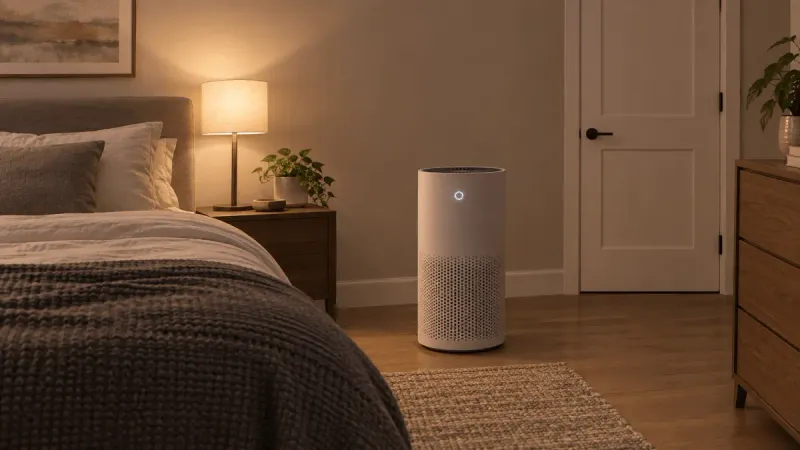
Correcting the spider plant myth is most useful when it points toward approaches that genuinely work. The most reliable way to improve bedroom air quality is to reduce or eliminate the sources of pollution in the first place.
That might mean switching to low-VOC paints or cleaning products, keeping dry-cleaned items out of the bedroom until they have aired out, or addressing any appliances that burn fuel and could release combustion byproducts.
Bringing in clean outdoor air is the next lever. Opening a window when outdoor air quality is good dilutes indoor pollutants faster than any number of houseplants could.
EPA recommendations on indoor air quality identify source control, clean ventilation, and appropriate filtration as the primary practical strategies for cleaner indoor air. Ventilation is not always the right answer, though.
During wildfire smoke events or days when outdoor pollution is elevated, opening windows pulls the problem inside rather than solving it.
For filtration, EPA guidance on air cleaners and air filters explains how to evaluate portable air cleaners and HVAC filters for your home. A portable air cleaner with a true HEPA filter can meaningfully reduce fine particles, which includes dust, pet dander, and some allergens, in a single room.
Upgrading an HVAC filter to a higher-rated option can help throughout the whole house.
Specific hazards need specific tools. Carbon monoxide requires a working alarm near sleeping areas, not a plant.
Radon requires testing and, if levels are elevated, professional mitigation. Mold requires finding and fixing the moisture source.
Smoke from wildfires or tobacco requires source control and appropriate filtration. A spider plant cannot address any of those hazards at a meaningful rate, and relying on one in place of hazard-specific controls is a risk not worth taking.
Keep the spider plant healthy—and the promise modest
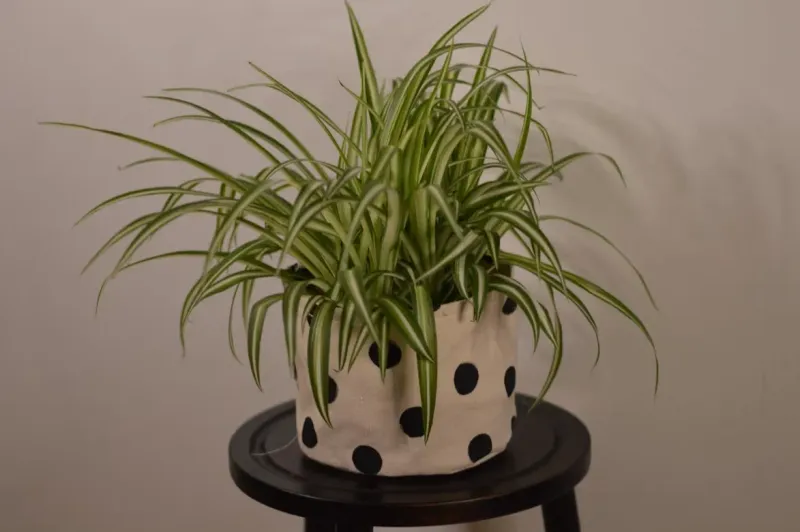
A spider plant that is well cared for is a genuinely pleasant bedroom companion, even if it is not a pollution-control device. UF/IFAS Extension guidance on spider plants recommends placing them in bright to moderate indirect light, which makes a spot near but not directly in a sun-baked window a good choice.
Direct, intense sun can scorch the leaves, while very low light will slow the plant’s growth and reduce its vigor over time.
Watering habits matter more than most people expect. The UF/IFAS guidance advises letting the upper inch of soil dry out briefly between waterings rather than keeping the mix consistently moist.
Spider plants are more forgiving of brief dry spells than they are of sitting in wet soil, which can rot roots and create the moisture problems described earlier. One more care note worth knowing: spider plants can show brown leaf tips when watered with heavily fluoridated tap water.
Switching to rainwater or distilled water often clears up the problem without any other changes.
If you share your home with cats or dogs, there is good news on the safety front. The ASPCA lists spider plants as non-toxic to cats and dogs.
That classification means the plant is not considered dangerous, though it does not mean pets should eat large quantities of it without any consequence. Individual animals can still experience stomach upset from chewing on plant material, so placing the pot out of easy reach is a sensible precaution.
Think of these steps as good plant care and safe placement, not as a way to unlock greater air-purifying performance.
Let it be a plant, not your air-safety plan
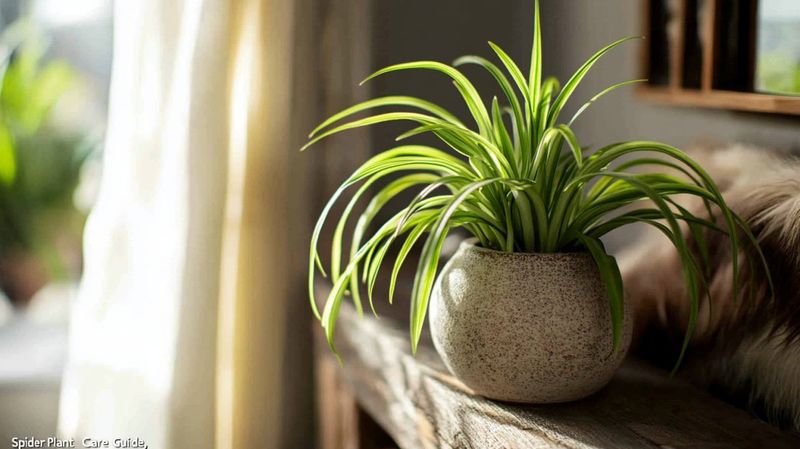
A spider plant may have limited pollutant-removal potential under tightly controlled experimental conditions, but one bedroom plant has not been shown to produce meaningful overnight pollutant removal in an ordinary occupied bedroom. The research review that calculated the 10-to-1,000-plants-per-square-meter figure puts the scale of the gap in plain terms.
EPA guidance points consistently toward source control, clean ventilation, and appropriate filtration as the tools that actually move the needle on indoor air quality.
Enjoy the spider plant for what it genuinely is: low-maintenance living decor with an interesting growth habit and a long track record as a reliable houseplant. For cleaner, safer bedroom air, lean on proven strategies and hazard-specific equipment.
A plant that looks good on your shelf and asks very little of you is already a worthwhile thing to keep around.