
Don’t Toss That Pineapple Crown: Plant It Indoors And Grow Your Own Pineapple Plant
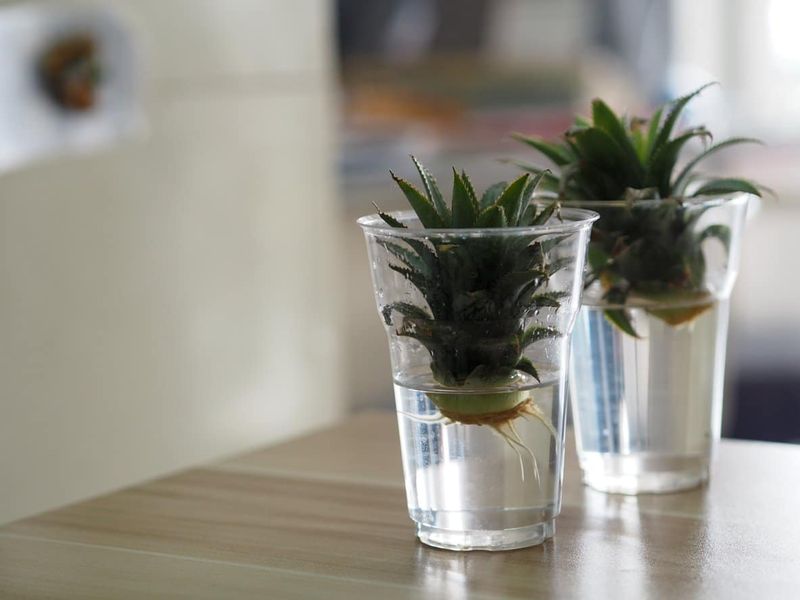
That spiky green top you cut off your pineapple is not trash. With a little prep, it can grow into a living houseplant for the price of a pot and some soil.
Most of us worry we will kill a new plant, so this guide keeps the steps simple and the expectations honest. You will get a leafy plant first, and fruit is a long shot you can treat as a bonus.
A pineapple crown can become a potted plant
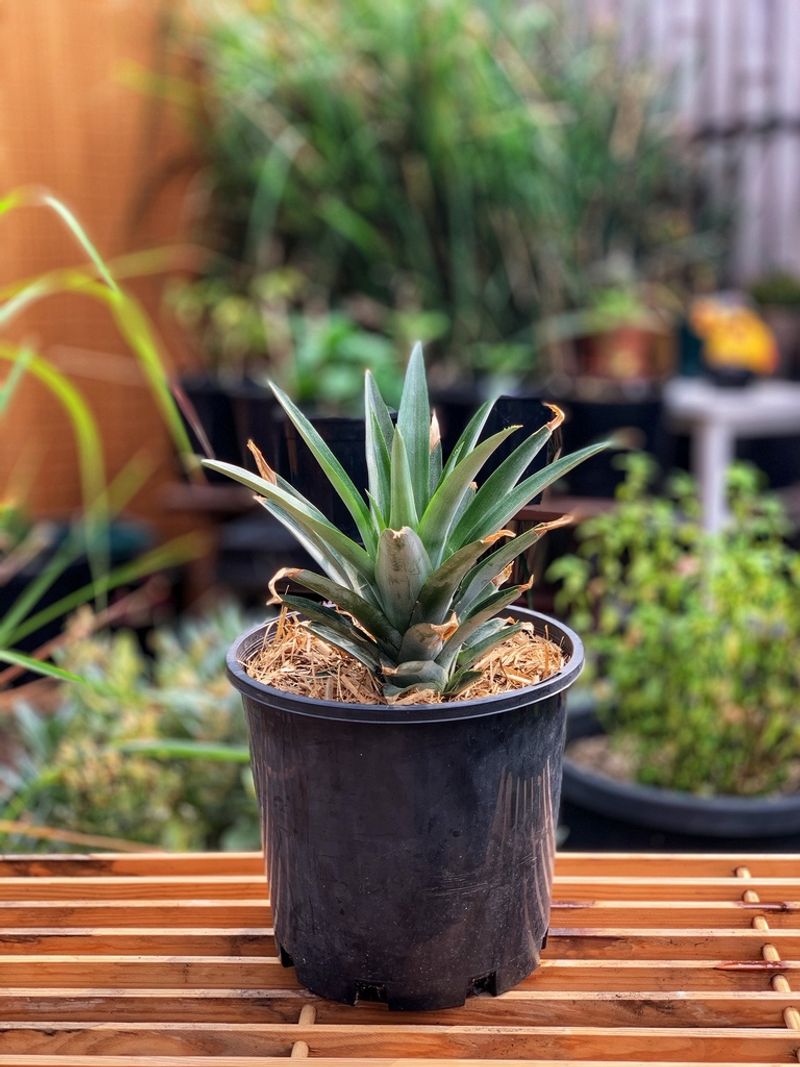
Yes, you can turn that leafy top into a real, growing plant. Crown propagation is a legitimate method, not a gardening myth, and it costs almost nothing if you already bought the fruit.
There is no published success rate, so treat your first crown as an experiment rather than a sure thing.
The realistic payoff is a handsome, leafy plant. Fruit is a much longer and less certain prospect, especially indoors.
UF/IFAS Gardening Solutions describes planting a prepared crown in well-drained potting soil, and it estimates a long wait before any fruit under suitable conditions.
A sunny windowsill is a fine place to start a young plant. It does not mean the plant will stay small, though.
NC State Extension reports that pineapple plants can reach 3 to 4 feet tall and wide, so think of the windowsill as a nursery, not a forever home.
Keep your goals simple. If you end up with a healthy, spiky, tropical-looking plant from something you would have tossed in the compost, that counts as a win.
Anything beyond that is a bonus.
Prepare the crown before planting
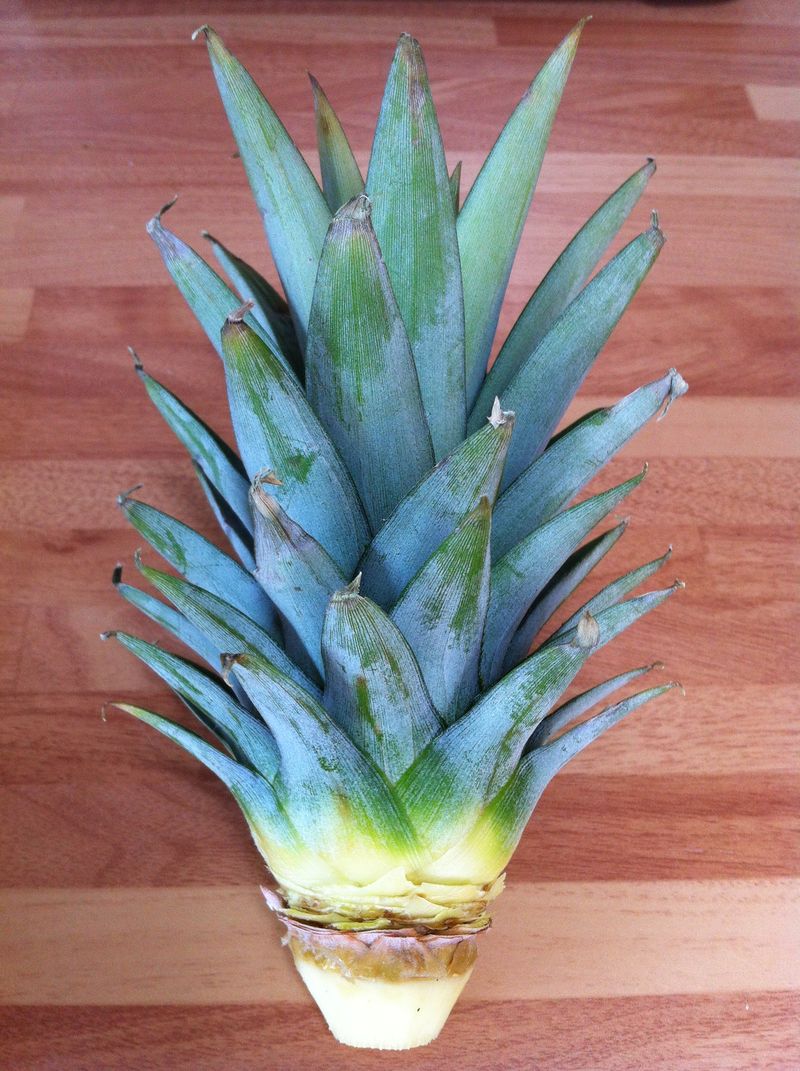
Start with a crown that looks fresh and green. Skip any that are brown, mushy, or shriveled.
Remove leftover fruit flesh from the base, because soft fruit tissue can rot once it sits in a damp medium.
Next, strip off a few of the lowest leaves so a bit of bare stem shows. Roots will form from that exposed stem.
Wear gloves if you like, since the leaves can be sharp.
Here is the Iowa State version of prep. Iowa State Extension advises cutting about an inch below the leaves, trimming away the outer fruit while keeping the firm core, and letting the crown dry for several days before planting.
That drying period is one recommended approach, not a rule every source shares. UF/IFAS describes removing excess fruit and some lower leaves, then planting, without naming a drying time.
If you follow the Iowa State route, set the crown somewhere dry and out of the sun while it dries.
Choose a rooting method that suits your setup
You have two extension-backed routes, and you only need one. They are separate methods, so do not blend them into one long to-do list.
Pick the one that matches the supplies you already have.
Route one is rooting first. Iowa State Extension recommends setting the dried crown in perlite, vermiculite, or coarse sand.
This airy medium drains fast, which suits anyone who tends to overwater.
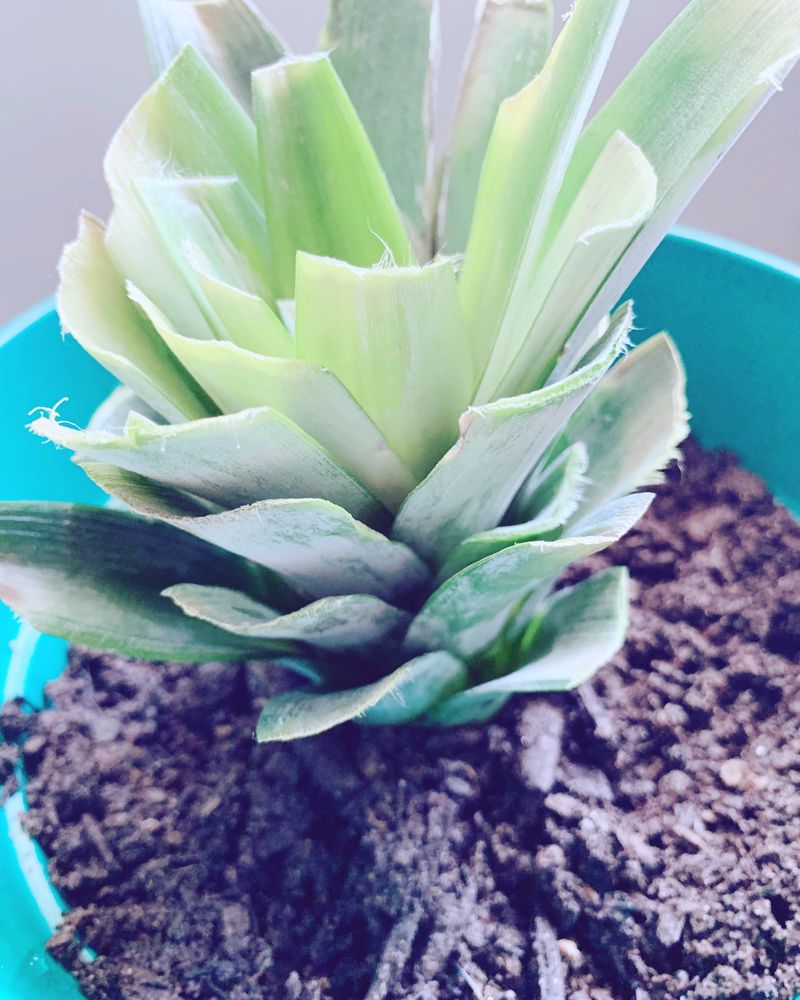
Route two is planting directly. UF/IFAS recommends planting the prepared crown 3 to 4 inches deep in a well-drained container with potting soil.
It skips a transfer step, so it suits anyone who wants fewer moving parts.
If you like to watch progress and already have perlite on hand, rooting first makes sense. If you would rather keep it simple, go straight to soil.
You do not need a glass of water for either method, and neither source says water rooting is required or better.
Keep the crown moist, not soggy
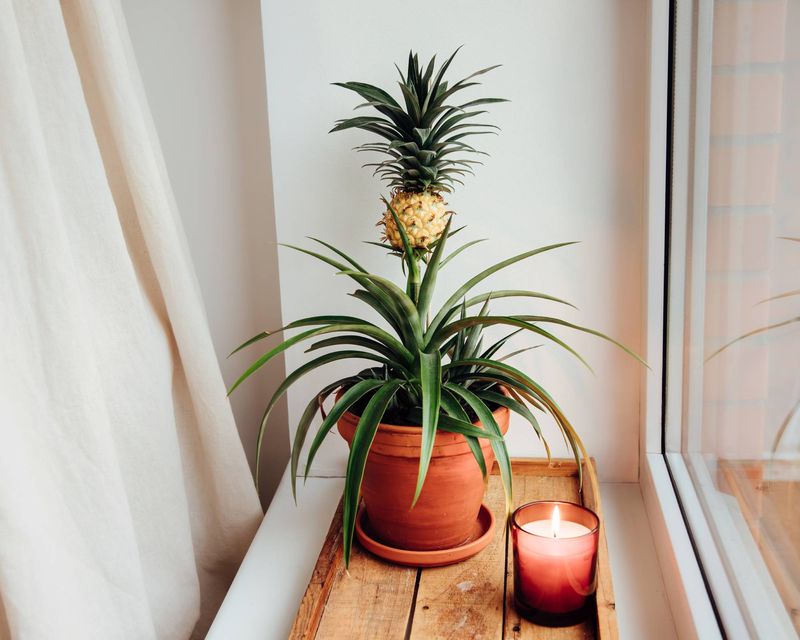
Once your crown is in its medium, the job is steady, gentle care. Keep the medium moist but not wet, and give it bright, indirect light.
Think of a wrung-out sponge rather than a puddle.
Iowa State Extension says rooting should take about 6 to 8 weeks. Treat that as a guide, since not every crown follows the schedule.
A gentle tug that meets resistance is a good sign that roots have formed.
When roots appear, pot the crown in a light, well-drained mix. After 2 to 3 weeks, move it to a sunny window.
That short wait gives it time to settle into the new pot before stronger light arrives.
Drainage matters more than anything else here. UF/IFAS warns that pineapple is vulnerable to root rot when soil stays too wet.
A University of Hawaii CTAHR publication covers heart and root rots of pineapple, which is why excess moisture is worth avoiding.
Use a pot with drainage holes and empty any saucer after watering. If the center leaves turn soft or the base smells sour, the medium is probably too wet.
Let it dry out a bit before you water again.
Will a windowsill still suit it as it grows?
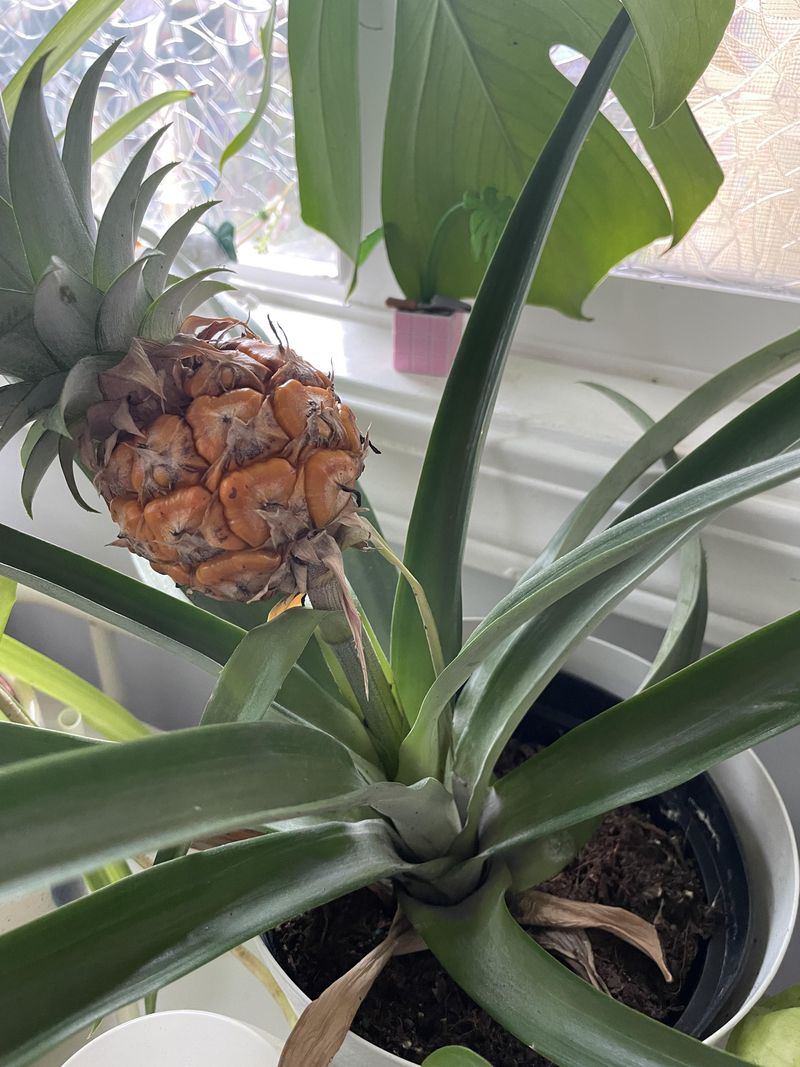
Picture the plant a year or two from now. NC State Extension reports that pineapple plants can grow 3 to 4 feet tall and wide.
That is far bigger than a sill, so be ready to give it a floor spot or a larger pot.
The leaves are stiff and sharp-edged, so handle them with care. Wear gloves when repotting, and keep the plant out of walkways and away from kids and pets.
Plan an easy path to move it when the time comes.
Warmth helps too. NC State gives a preferred range of 68 to 86°F and advises bringing plants indoors before temperatures drop below 50°F.
If your plant spends summer on a porch, set a reminder for fall.
The cold-kill number is a different matter. UF/IFAS says temperatures below 28°F will kill a plant.
That is the point of no return, while 50°F is the point where the plant should already be safely inside. Do not wait for a hard freeze.
Fruit may take years—and may not come indoors
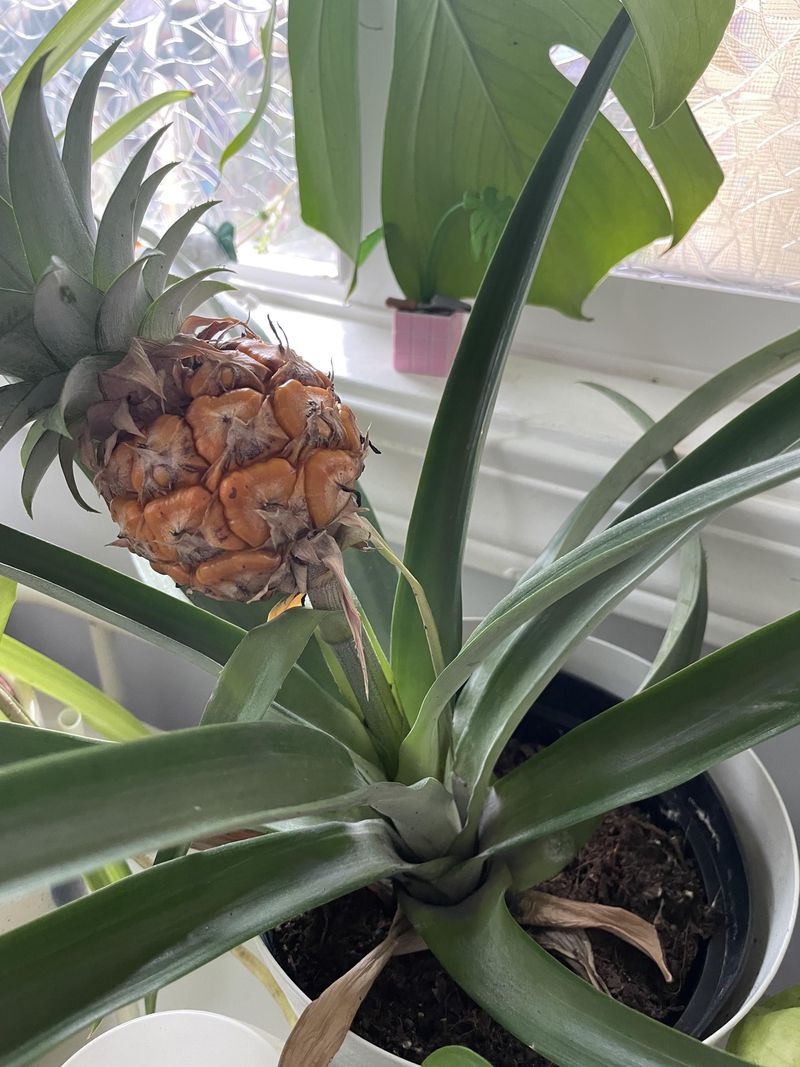
If you are hoping for a homegrown pineapple, here is the timeline. UF/IFAS estimates about 18 to 32 months from planting to ripe fruit under suitable conditions.
It adds that a mature plant typically has about 70 to 80 leaves before a flower stem forms.
Timing varies with climate, variety, and care. That means the estimate is conditional, not a promise.
A plant on a typical indoor windowsill may not get the light and warmth it needs.
Crowns are on the slow side. NC State Extension describes a crown as the slowest propagation method, and says plants grown from crowns may take at least 24 months to flower.
One practical way to track progress is to count new leaves and watch for steady growth. A plant that keeps pushing out healthy foliage is doing its job, whether or not a flower ever appears.
Start with the plant, not the harvest
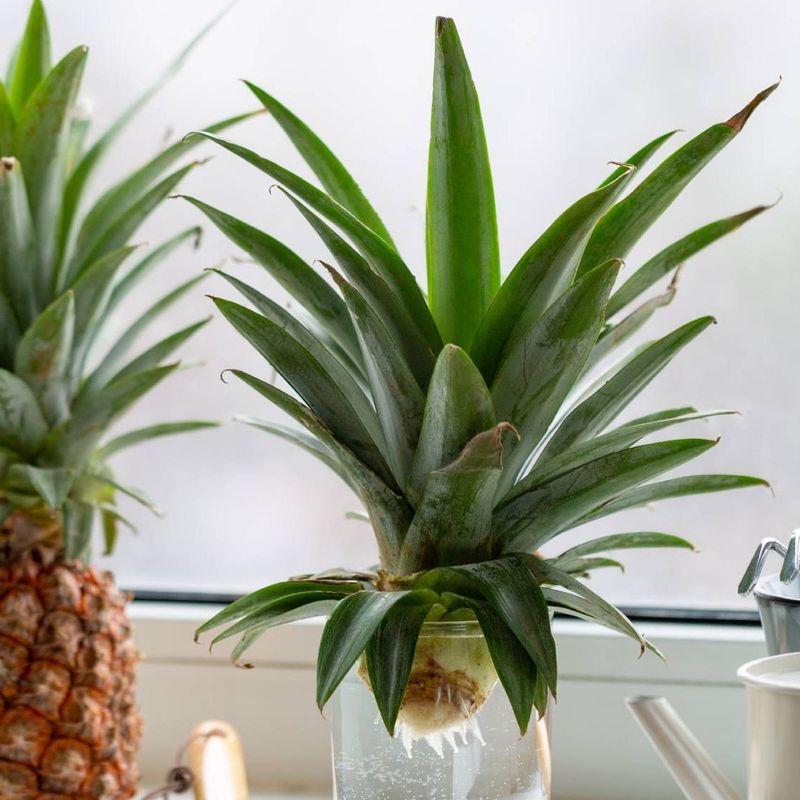
Trim a fresh crown, pick one of the two supported rooting routes, and give it a pot that drains well. Those few steps are enough to start.
A leafy pineapple plant is a worthwhile result all by itself, even if fruit never shows up indoors.
Some of the best houseplants begin as something you were about to throw away.