
Don’t Spray Your Lawn’s Brown Fall Patches Before Checking What’s Causing Them
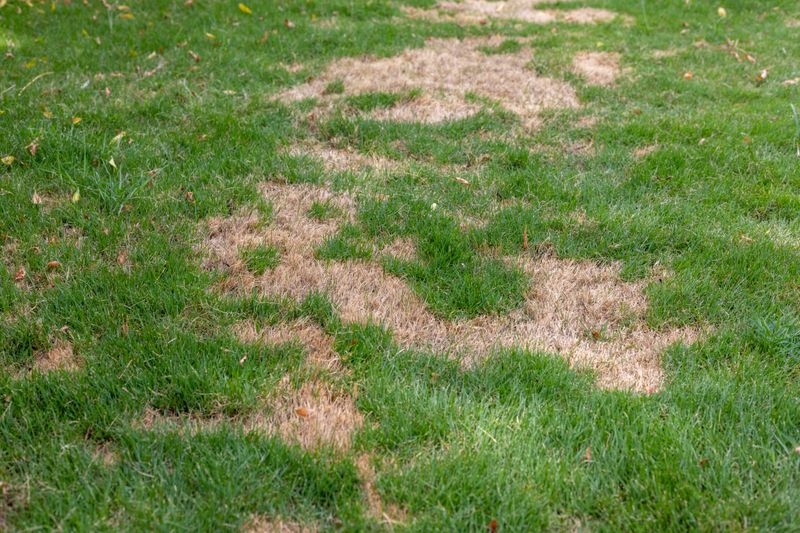
A brown patch in your lawn can make your stomach drop, and the urge to grab a spray bottle is strong. But color alone cannot tell you what went wrong underneath.
A few simple checks, most of them free, can point you toward the real cause. Spending a little time now can save you money and keep you from treating a problem you do not have.
A brown patch is a symptom, not a diagnosis
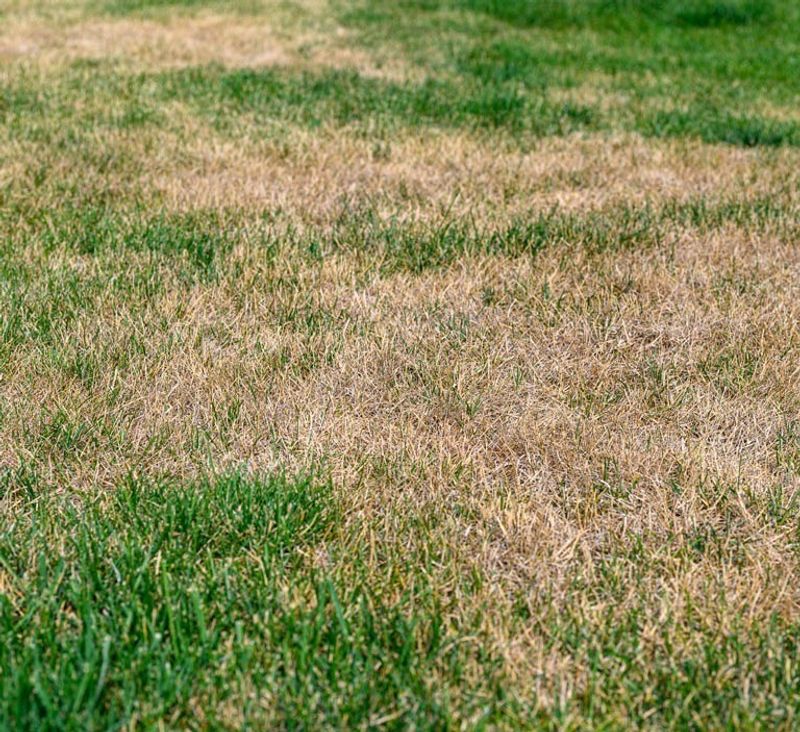
Seeing brown in the grass feels like an emergency, but color is a poor guide. Lots of different problems can turn turf the same shade of tan, and each one needs a different response.
Uneven watering is one common culprit. Colorado State Extension’s irrigation guidance points to patchy sprinkler coverage as a frequent reason for brown spots, and it describes comparing the water that lands in healthy and brown areas.
Dry weather can do it too. Missouri Extension notes that brown cool-season grass is not automatically a sign of disease.
Some lawns simply go dormant when conditions turn dry.
Disease and insects are on the list as well, and grass type and season affect which ones fit. Missouri Extension’s patch article shows how a problem in zoysia during cool spring and fall weather can look very different from trouble in other lawns.
So there is no single answer to “why is my lawn brown?” The goal here is simple: look first, figure out the likely cause, and only then decide whether any treatment makes sense. The next sections walk through those checks one at a time.
Use a tug as a clue, then check for grubs
Kneel down at the edge of a brown patch and give the turf a gentle pull. If the grass lifts easily or rolls back like a piece of carpet, that is a clue worth following.
University of Minnesota Extension describes this pattern as a sign that roots are mostly missing, which can happen when many grubs are feeding.
Still, a tug is only a first hint. Loose turf does not name the cause by itself, and it cannot tell you about dog injury, thatch, drought, irrigation trouble, or disease.
To follow up, look at the border where damaged grass meets healthy grass. That is where grubs are often easiest to find, and it is a good place to check whether the roots are thin or gone.
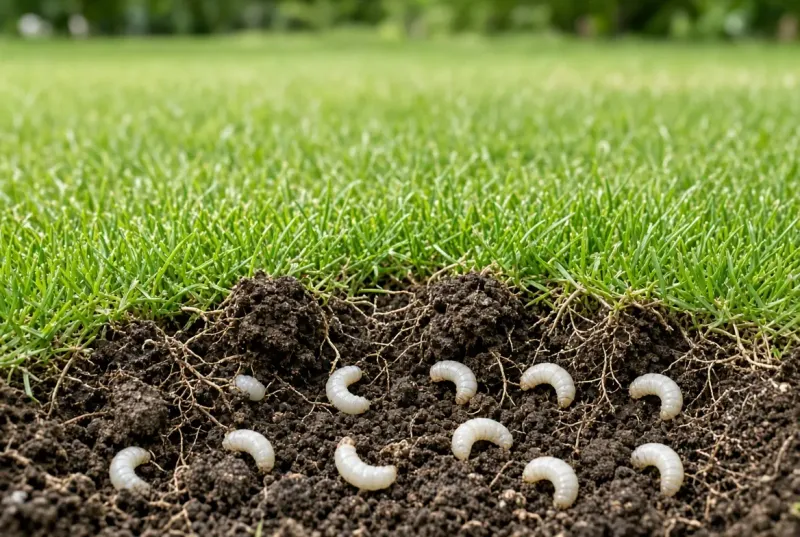
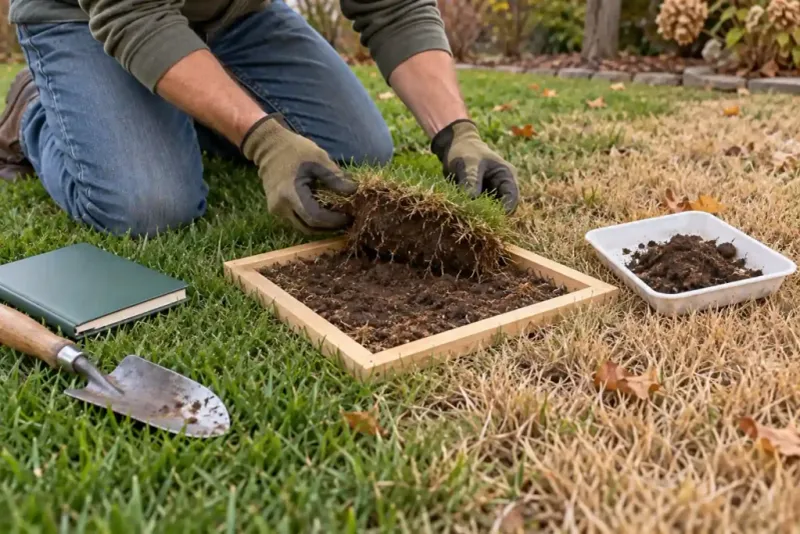
Next, dig up a one-square-foot piece of turf and soil. Pull it apart with a trowel or gloved hands and look for pale, C-shaped grubs in the roots and the top few inches of soil.
When you finish, Penn State Extension recommends putting the sample back in place and watering it.
Finding a few grubs does not automatically mean you need a treatment. Penn State explains that thresholds vary by grub species and site.
Five to ten grubs per square foot is a commonly used curative threshold in many cases, but it is not a universal rule.
If you find none, that is useful information too. It tells you to keep looking at other causes rather than reaching for a product.
Dog-urine injury leaves a different clue
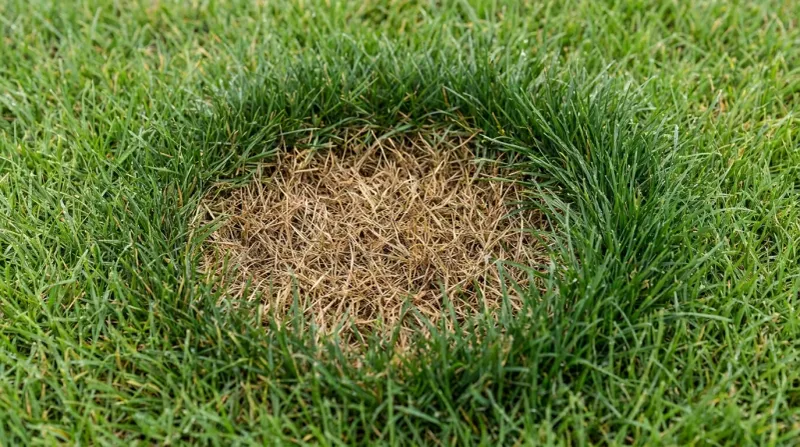
Dog damage tends to look different from grub damage. Instead of loose, rootless turf, you may see a small spot that is yellow to brown with a noticeably greener border around it.
That ring is a clue, not proof. Other problems can look similar, so treat it as one piece of the picture along with how the turf feels when you tug it and whether your dog uses that area.
The reason behind the pattern is nitrogen. Penn State Extension attributes the injury to concentrated nitrogen in urine rather than to urine alkalinity.
In the middle of the spot there is too much for the grass to handle, while the edges get a smaller dose that acts more like fertilizer, which explains the greener ring.
If you catch your dog in the act, rinsing the area with water soon afterward may reduce injury. It can also leave greener growth where the water went, so the lawn may look uneven in a different way.
For more on keeping a dog and a lawn on speaking terms, Penn State’s Dogs vs. Lawns guide is a handy read. If the spot matches the pattern and the turf is firmly rooted, you can likely skip the insect spray.
Measure thatch in a turf wedge
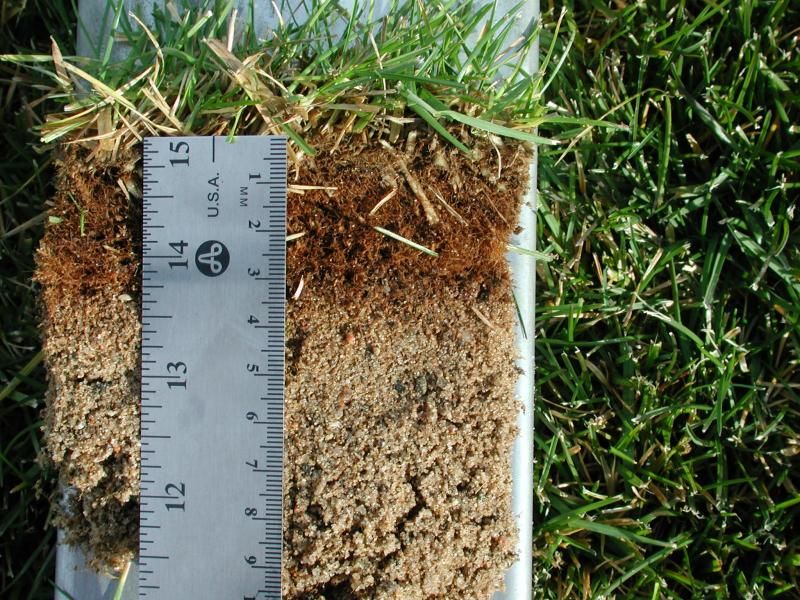
Thatch is the layer of stems and roots that builds up between the green grass and the soil. You cannot judge it by pulling on the surface, so a tug will not diagnose it.
To check, use a sharp knife or spade to cut a small wedge of turf and lift it out. Look at the side of the wedge and find the brownish, spongy band between the soil and the green blades.
Then hold a ruler against that band and measure its thickness.
Minnesota Extension says a layer over one-half inch merits thatch management. That is Minnesota’s guidance, so check with your own local extension office if you want advice tailored to your grass and climate.
Keep in mind that a thick thatch layer is a condition of the whole lawn. It can add stress and make turf more prone to trouble, but it is not a catch-all explanation for one isolated brown patch.
If your wedge shows only a thin layer, you can cross thatch off the list and move on to the other checks. Put the wedge back, press it down, and water it in.
Check water, dormancy, and disease too
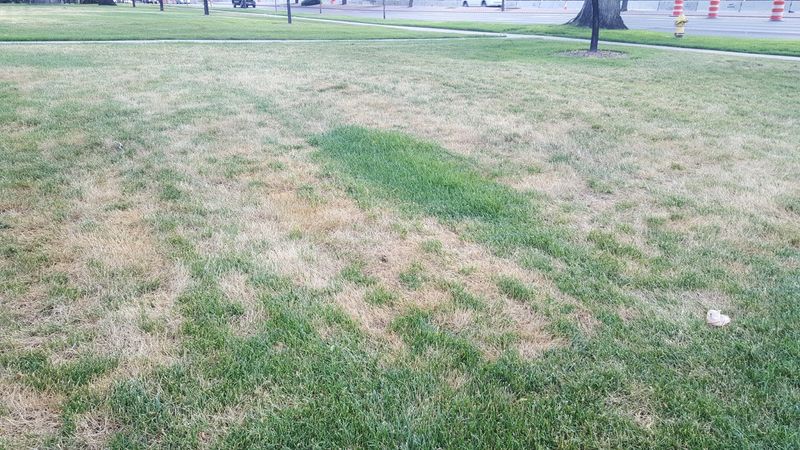
Sometimes the cause has nothing to do with pests. Start with water, since it is easy to check and costs almost nothing.
Set out several straight-sided containers across the lawn, including in the brown area and in healthy sections, and run your sprinklers for a set time. Colorado State Extension describes this kind of audit, and big differences between containers suggest uneven coverage.
For general watering amounts, Missouri Extension’s home lawn watering guide is a useful reference.
Next, think about dormancy. A cool-season lawn that dried out may turn brown and then green up again once conditions improve.
Missouri Extension explains that brown grass is not necessarily a sign of disease.
Disease is still a possibility, but color alone cannot name it. Season and grass type matter.
For example, Missouri Extension describes large patch in zoysia during cool spring and fall weather, and Illinois Extension’s patch disease page shows how management depends on the specific problem.
None of these checks rules out every explanation. If you are still stumped, take photos and ask your local extension office for help.
Let diagnosis and local guidance govern any spray
After a few checks, you will probably know a lot more than you did when you first spotted the brown. That knowledge is what should decide whether you spray, not the color of the grass or how easily it lifts.
If you did find grubs, timing is the next question, and there is no one calendar that fits every yard. Penn State Extension notes that damage can show in late summer and fall and recommends surveying from August through early September for the best results from curative treatment.
Other regions differ. Minnesota Extension’s guidance advises against treating grubs in fall because they move deeper for winter.
Species, location, and weather all play a part, so look up your own state’s extension advice.
If a pesticide does make sense, read the specific product’s label from start to finish. EPA-registered labels spell out directions and precautions, and one product’s timing should never be assumed for another.
If your checks pointed to dog spots, thatch, watering, or dormancy, a spray would not have helped anyway. The grass underneath often tells the story if you take a minute to look.