
Fall Care Can Help Your Christmas Cactus Set Buds Before the Holidays
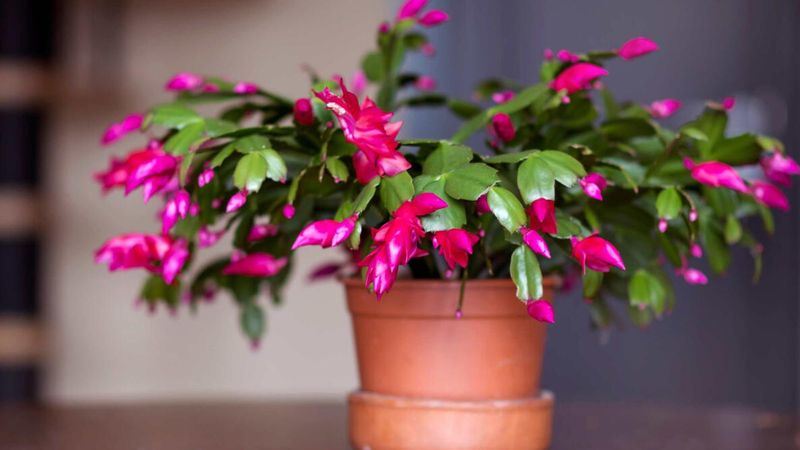
Your holiday cactus has been sitting there all year, and now you want flowers. The good news is that fall gives you a few simple ways to nudge it toward setting buds.
Long nights, cool air, and steady watering all play a part. Here is how to use them without stressing your plant, and why no routine can promise a bloom on a certain date.
What Kind of Holiday Cactus Are You Growing?
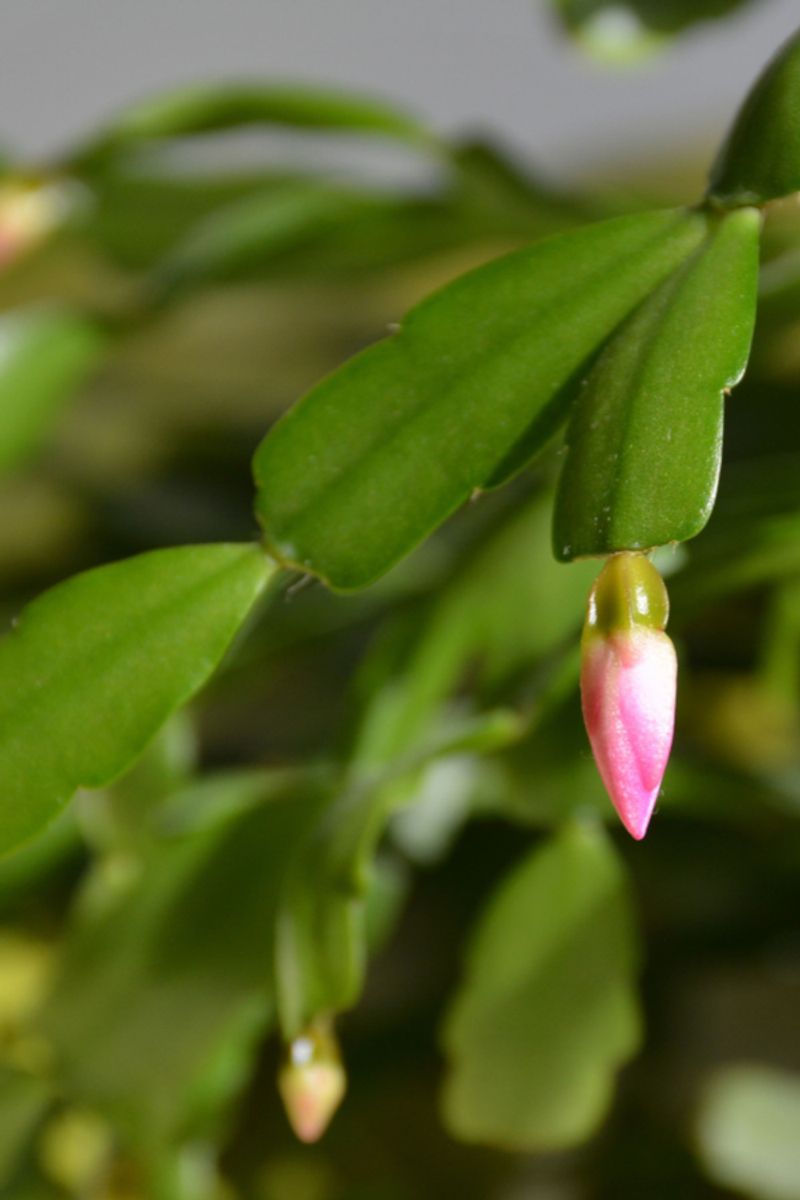
Before you plan anything, take a good look at your plant. Many cacti sold as Christmas cactus are really Thanksgiving cacti or hybrids, so the label on the pot may not tell the whole story.
Check the flat green segments. Iowa State Extension explains that pointed, claw-like edges are typical of Thanksgiving cactus, while smooth, rounded, scalloped edges are typical of true Christmas cactus.
A plant with a mix of traits may be a hybrid.
Why does this matter? University of Wisconsin Extension notes that Thanksgiving cactus commonly blooms earlier, and even different cultivars of the same type can vary in timing.
If yours has pointed edges and flowers in November, that is normal, not a problem.
Treat the segment clue as a hint, not a verdict. Edges can be hard to judge on young or stressed stems, and breeders have mixed these plants for decades.
Whatever you find, a tag that says Christmas does not guarantee flowers on December 25.
Knowing your type helps you set fair expectations. If your plant is a true Christmas cactus, buds may show up later than a neighbor’s Thanksgiving cactus, and that is simply how it works.
October Is a Useful Window, Not a Bloom Deadline
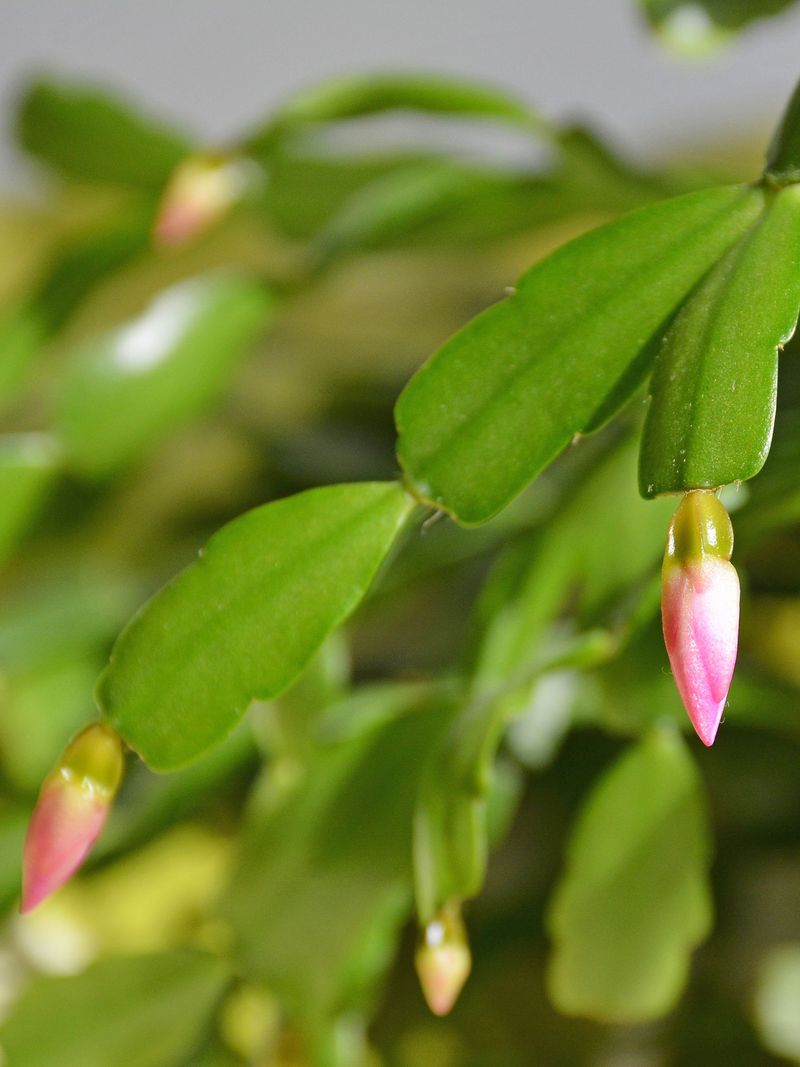
If your cactus has no buds yet, relax. October is a handy time to start fall care, but it is not a cliff your plant falls off on November 1.
Holiday cacti need several weeks of suitable fall cues to start forming buds. University of Minnesota Extension says about six weeks of short days, while UConn Extension describes four to eight weeks and suggests different start dates for Thanksgiving and Christmas cactus.
Those ranges make October a sensible start for some plants. For others it may be early or a bit late, depending on type and cultivar.
Your plant may also have gotten cues already. A cactus kept on a porch through cool, shortening September days may be a step ahead, and one in a bright, warm room may lag behind.
University of Wisconsin Extension also points out that conditions vary from place to place.
Think of October care as supportive, not magical. It gives your cactus good odds, and a plant with no buds is not necessarily unhealthy.
Why Long Nights and Cool Conditions Help
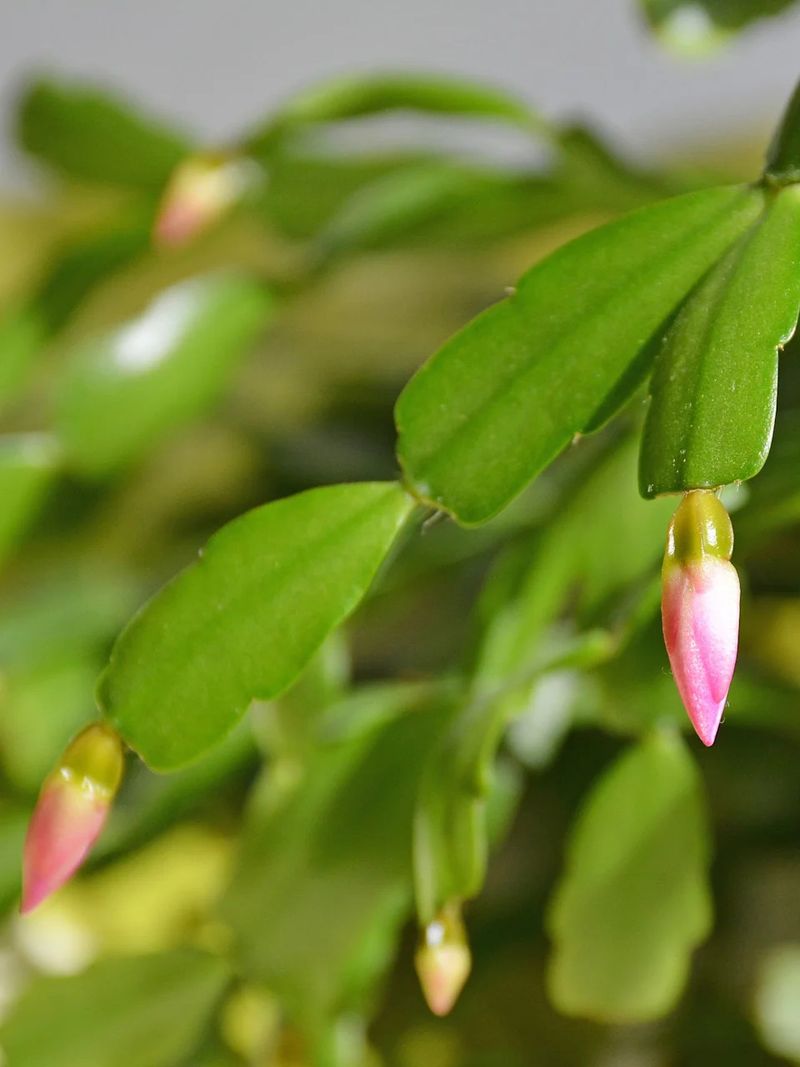
Holiday cacti started life in the cooler, shadier forests of Brazil, and they still read the seasons. Shorter days and cooler nights tell the plant that it is time to make flower buds.
Day length and temperature work together. University of Minnesota Extension says that with nights around 60 to 65°F, at least 12 hours of complete darkness helps.
Nights near 55°F can sometimes trigger buds even without careful day-length control, while nights above 65°F make flowering less likely.
Other guides differ a little. UConn Extension gives a wider range of weeks for bud start and different darkness suggestions, and some sources mention 14 to 16 hours.
That spread is useful information. It tells you there is no single magic formula.
Your cultivar, your room, and your light all shift the result.
So aim for the general pattern: long, dark nights and cooler air, without chasing exact numbers. Watch your plant and adjust gently.
Give It Bright Days and Uninterrupted Nights
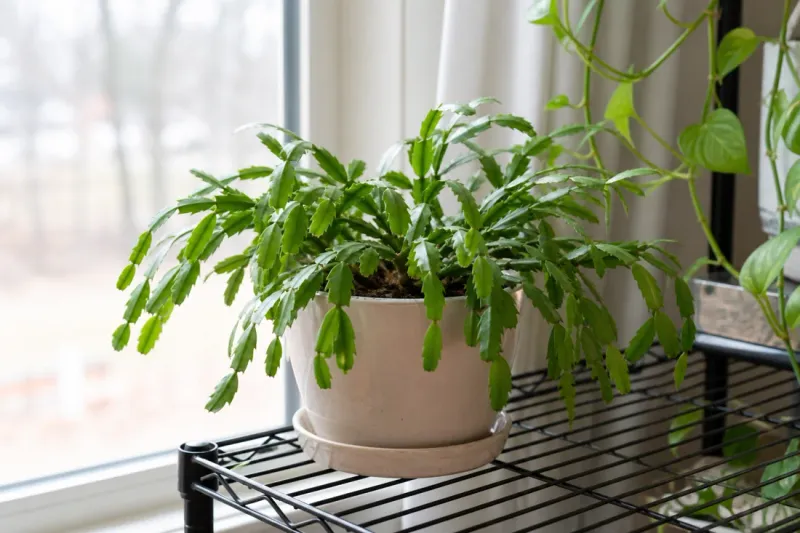
Picture a lamp clicking on at 9 p.m. every night near your cactus. To the plant, that can cut the long night short.
During the day, give it bright, indirect light, such as a spot near an east or filtered south window. Iowa State Extension recommends bright, indirect light for good growth and flowering, and direct hot sun can scorch the segments.
At night, the goal is real darkness. If your living room is lit until bedtime, move the cactus to a spare room, a closet shelf, or an unused corner.
Covering it with a box or cloth in the evening and uncovering it in the morning can work too, as long as air can move around it.
University of Minnesota Extension suggests about 12 hours of complete darkness with nights of 60 to 65°F. Treat that as a guide, not a timer setting, since cooler rooms may need less and other sources suggest longer.
Natural fall darkness may be enough in some homes, especially away from street lights and lamps. In others, a little planning makes the difference.
Check your plant after a few weeks for tiny buds at the stem tips.
Keep Nights Cool, Not Chilly
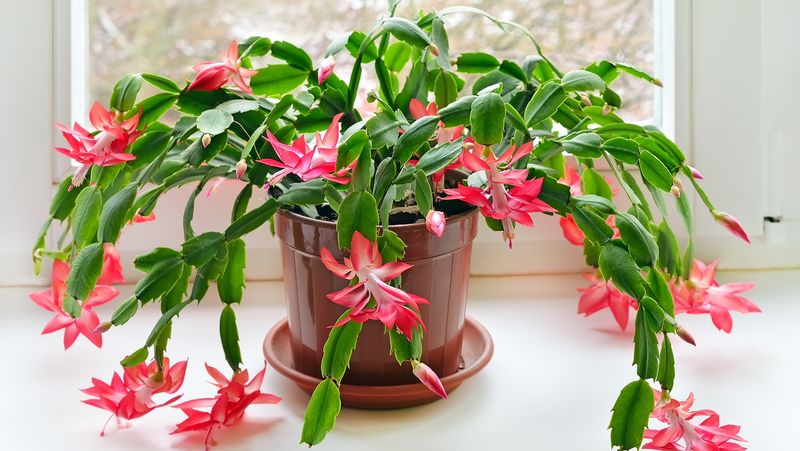
Cool is the goal, cold is the danger. For most homes, a night temperature of roughly 55 to 65°F is a handy target.
Temperature changes how the plant responds to darkness. University of Minnesota Extension notes that nights near 55°F can sometimes start buds, while warm nights above 65°F make it less likely.
A simple way to get there is to move the plant to a cooler room, like an unused bedroom or a bright entryway, and keep it away from heat vents and radiators. A cheap thermometer tells you what the spot really does overnight.
If your plant spent summer outdoors, protect it from frost. University of Wisconsin Extension says holiday cacti are not frost-hardy, and UConn Extension advises bringing them inside before outdoor temperatures approach 50°F.
No single number works in every home, and no temperature guarantees buds. If your house runs warm, lean on the dark nights and do what you can with the rest.
Water by the Potting Mix, Not a Bud-Forcing Calendar
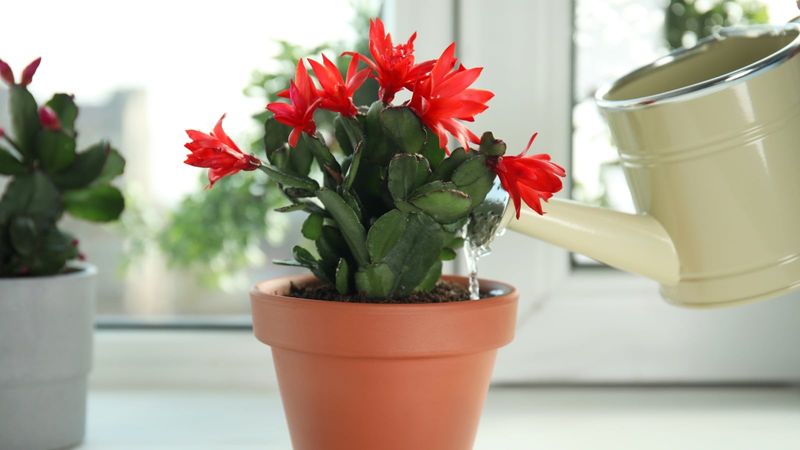
You may have heard that you should stop watering to force buds. That advice is not reliable, and it can backfire.
Instead, let the potting mix guide you. Check the top inch or so, and water when it feels dry.
In cooler fall rooms the mix often dries more slowly, so you may water less often without trying.
Clemson Extension stresses well-drained mix and letting excess water run out. Empty the saucer so the pot never sits in standing water, since soggy roots can rot.
Some guides suggest keeping the mix on the drier side in fall, while Iowa State Extension warns against both too much water and too little during bud development. Together, that means water less often if the mix stays damp, but do not let it go bone dry.
UMass Amherst reports that research did not support withholding water, and that water stress during flower induction reduced bud set.
Wilted, limp segments can signal either thirst or rotting roots, so feel the mix before you act. Steady, moderate moisture is the safest path.
Once Buds Appear, Keep Conditions Steady
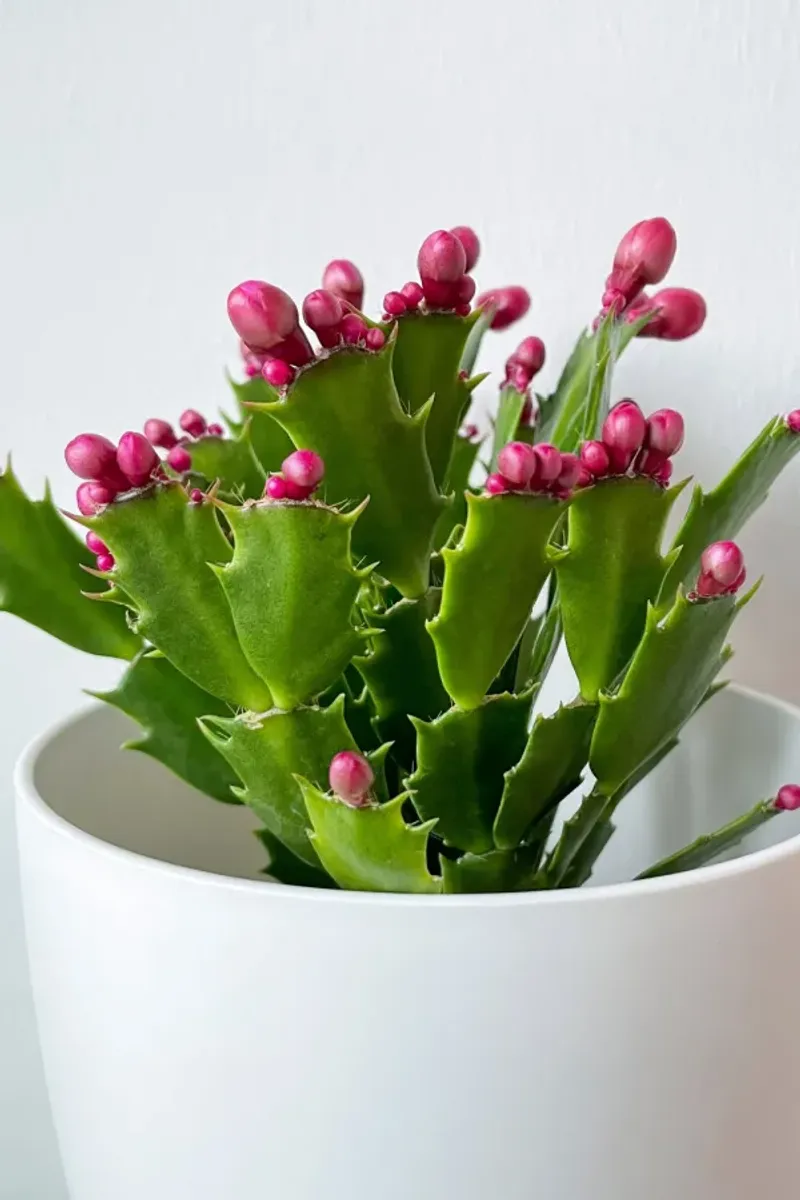
Tiny buds at the stem tips are a happy sight. Now the job changes from encouraging buds to protecting them.
Pick a good spot and leave the plant there. University of Minnesota Extension and Iowa State Extension both note that moves, drafts, temperature swings, too much water, and severe drying can lead to bud drop.
That means keeping it away from heating vents, cold window glass, and doors that open often. Avoid turning the pot to a new angle every day, and hold off on big changes in light or temperature.
Keep watering in the same measured way, checking the mix and draining the saucer. If a few buds drop, do not panic.
Plants often shed some, and a handful of fallen buds does not mean you failed.
Steady care supports flowering, but it cannot promise a bloom date. Your cactus may open early, right on time, or after the holidays, and it will be worth the wait.