
Fall Hydrangea Looking Tired? Check the Soil and Read the Symptoms First
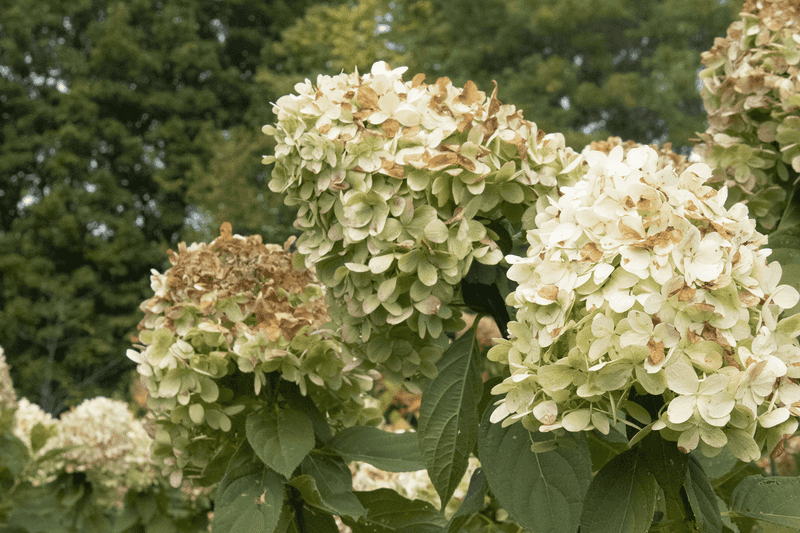
Fall can make a hydrangea look worn out, with faded blooms, drooping leaves, and branches that start to thin. Before you worry, it helps to know what your plant is actually showing you.
Some changes are just part of the season, while others call for a closer look at the soil. A few simple checks can tell you what to do next, and what to leave alone.
Fall changes can look alarming without signaling a crisis
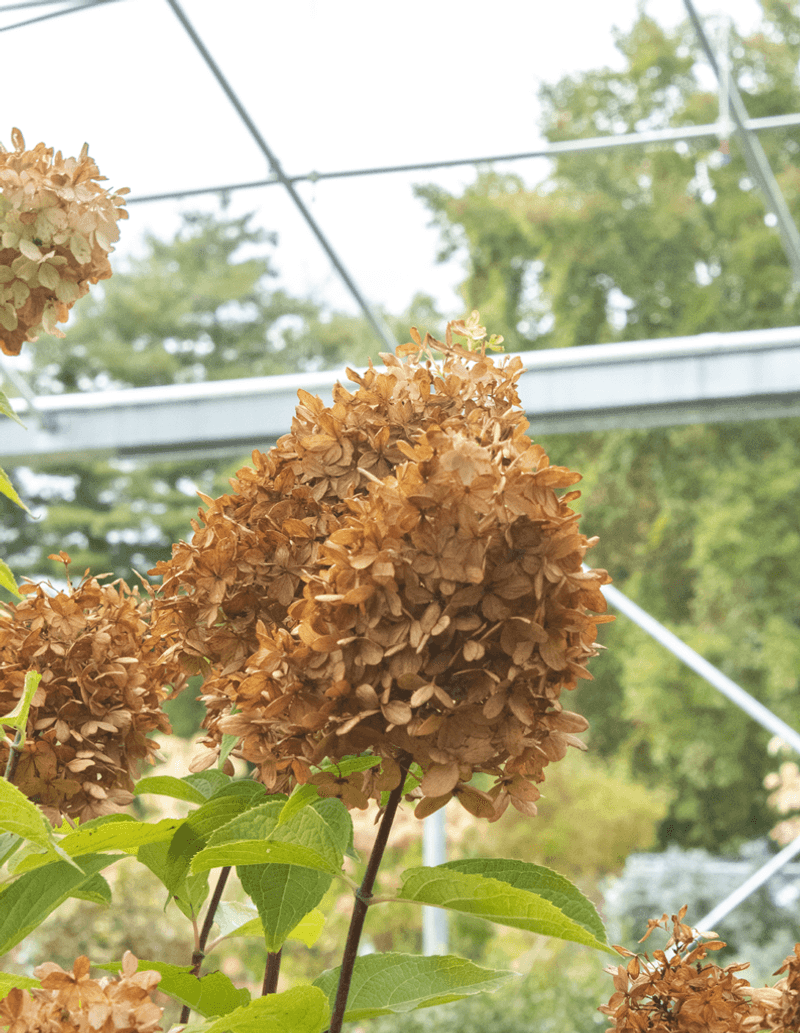
Walk out to your hydrangea in October and the sight can be a little shocking. The big blooms have gone papery, some look green or dusty rose, and leaves are turning yellow or dropping.
It is easy to assume the worst, but these are not all the same problem.
Flower heads commonly fade as they age, and Oregon State University Extension notes that hydrangea blooms change color over time. Fading or greening can be a normal stage, and University of Arkansas Cooperative Extension describes it as part of how blooms age.
It does not by itself mean your shrub needs more water or fertilizer.
Leaf drop is similar. Hydrangeas are deciduous, and University of Maryland Extension’s Ask Extension service explains that some lose leaves after frost.
Timing and fall appearance differ by hydrangea type and climate, as University of Vermont Extension points out for northern gardens.
The symptom to watch more closely is wilted foliage, where leaves hang limp and soft on a plant that has not yet dropped them. Sort out which of these three you are seeing: faded blooms, seasonal leaf drop, or true wilt.
Your answer decides your next step, and the next sections walk through each one.
Check the root zone before you reach for the hose
A drooping hydrangea makes most of us grab the hose. Hold off for a minute.
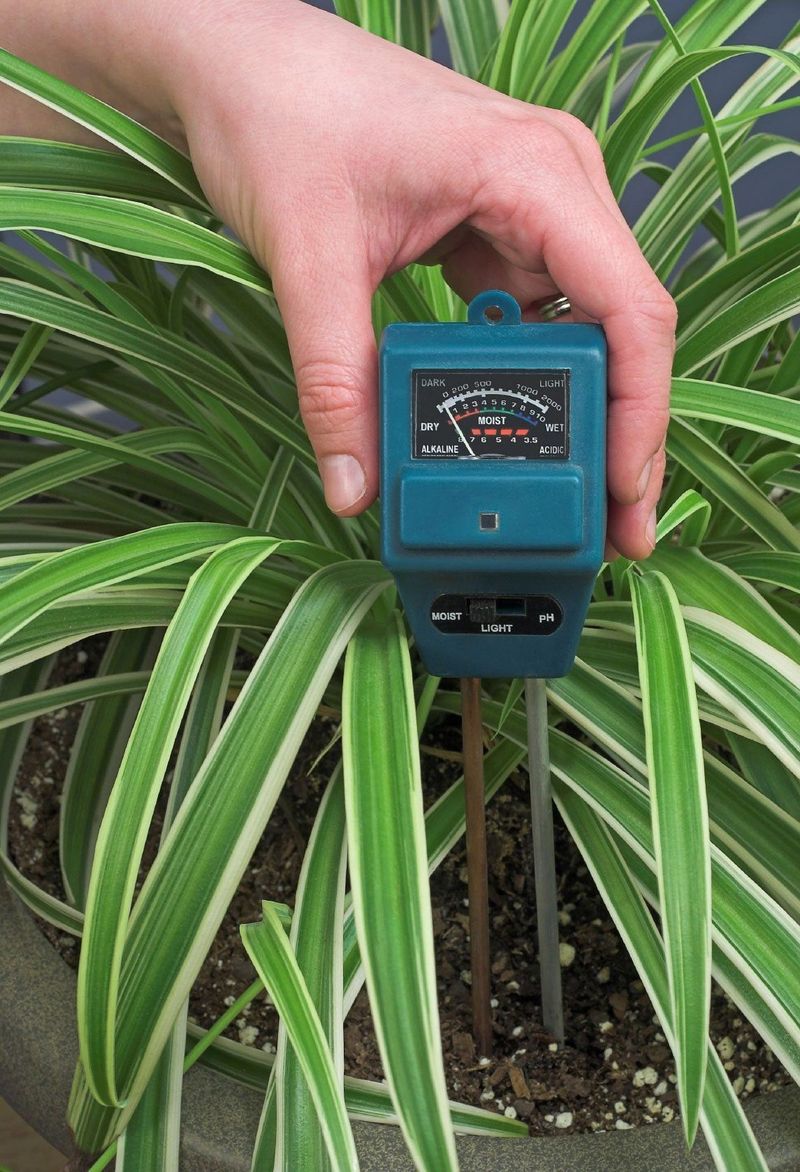
The most useful thing you can do is find out what the soil is doing down where the roots live.
For an established shrub, University of Minnesota Extension recommends checking the root zone about 6 to 9 inches deep. If the soil there feels cool and moist, the plant does not need water.
If it is dry, watering may be the right call.
Here is a simple way to do it. Use a trowel or a long screwdriver to open a small hole a foot or so from the stem, out where the roots are spread.
Grab a pinch of soil from that depth and squeeze it in your hand.
Damp soil that holds a loose shape means you can skip the water. Crumbly, dusty soil that falls apart means the roots are likely dry.
Soil that feels soggy or drips water is a different story, covered a bit later.
Treat this check as your decision point, not the look of the leaves. Droop alone does not prove thirst, because several problems can cause it.
Two minutes with a trowel gives you a real answer instead of a guess, and it keeps you from drowning a plant that was fine.
When the soil is dry, water slowly and thoroughly
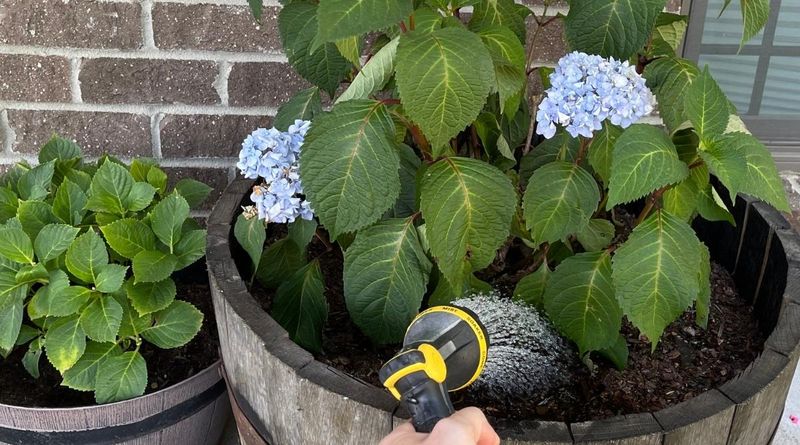
Say your trowel test turned up dry soil. Now the goal is to get water down to the roots, not just wet the top inch.
A quick sprinkle can leave the root zone dry while the surface looks damp.
Slow application works better. A soaker hose or a hose set to a trickle lets water soak in across the area under and around the shrub.
Oregon State University Extension advises deep watering for dry soil when hydrangeas are stressed.
How much and how often depends on your situation. Sandy soil drains fast and may dry out sooner, while clay holds water longer.
Rain, temperature, and drainage all matter, and a newly planted shrub needs different care than one that has been in the ground for years.
A few days after watering, dig down and check again. If the root zone is now cool and moist, you are done for the moment.
If it is still dry, a second slow soaking may be needed.
Be realistic about results. A thirsty hydrangea may perk up within a day or so, or it may take longer, and some plants do not bounce back fully.
If the shrub keeps wilting even though the soil is now moist, more water is not the answer, and it is time to look for another cause.
Wet soil calls for restraint, not another drink
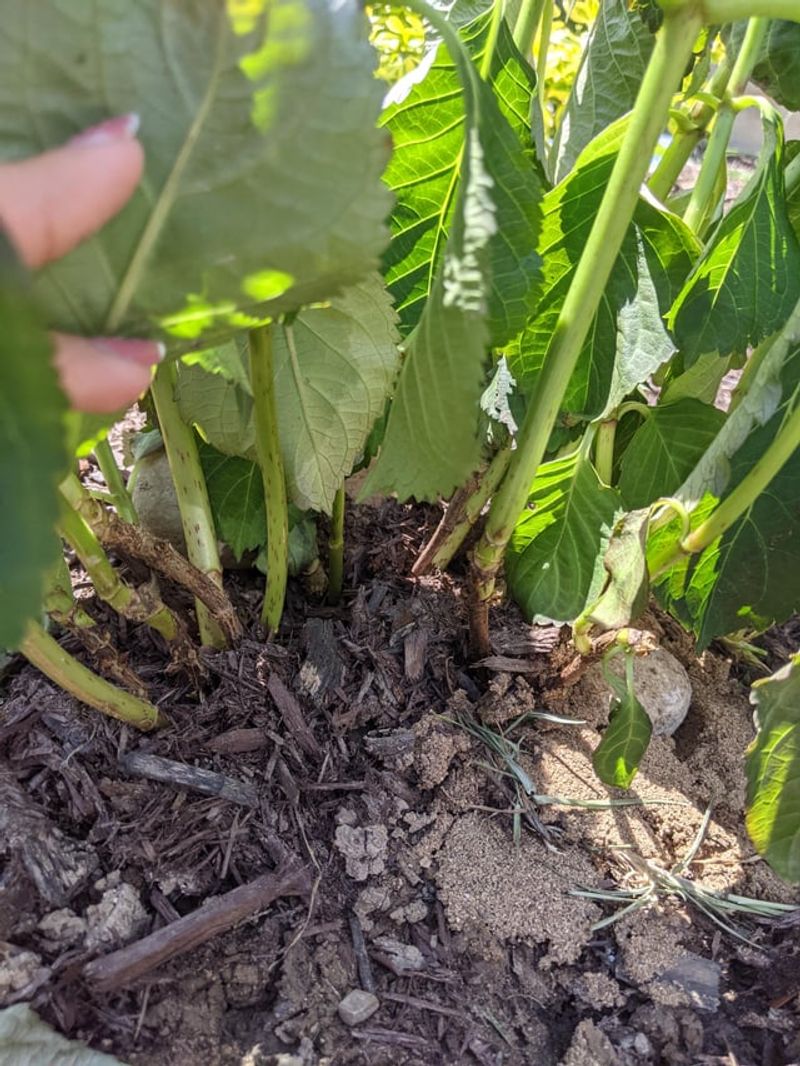
Here is the twist that catches many gardeners off guard: a wilted hydrangea can be sitting in soil that is already soaked. Roots that cannot get enough air do not move water well, so the leaves droop even though water is everywhere.
Penn State Extension explains that root rot problems in woody plants are tied to wet, poorly drained conditions. Both too little and too much water can cause wilting, and University of Maryland Extension’s Ask Extension answer on hydrangea wilting points the same way.
So if your trowel test shows wet, heavy soil, put the hose away. Adding more water can make root trouble worse.
Look for clues that point to a drainage issue. Water pooling after rain, a low spot in the bed, heavy clay, or soil that stays soggy for days all matter.
Mulch piled against the stem can also hold moisture where you do not want it.
Give the soil time to drain and check again in a few days. If the plant keeps declining even though the soil moisture seems right, do not fall back on repeated watering.
That is the point to ask your local extension office or a plant clinic for a diagnosis, since the cause could be roots, disease, or something else.
Let local conditions guide fall watering
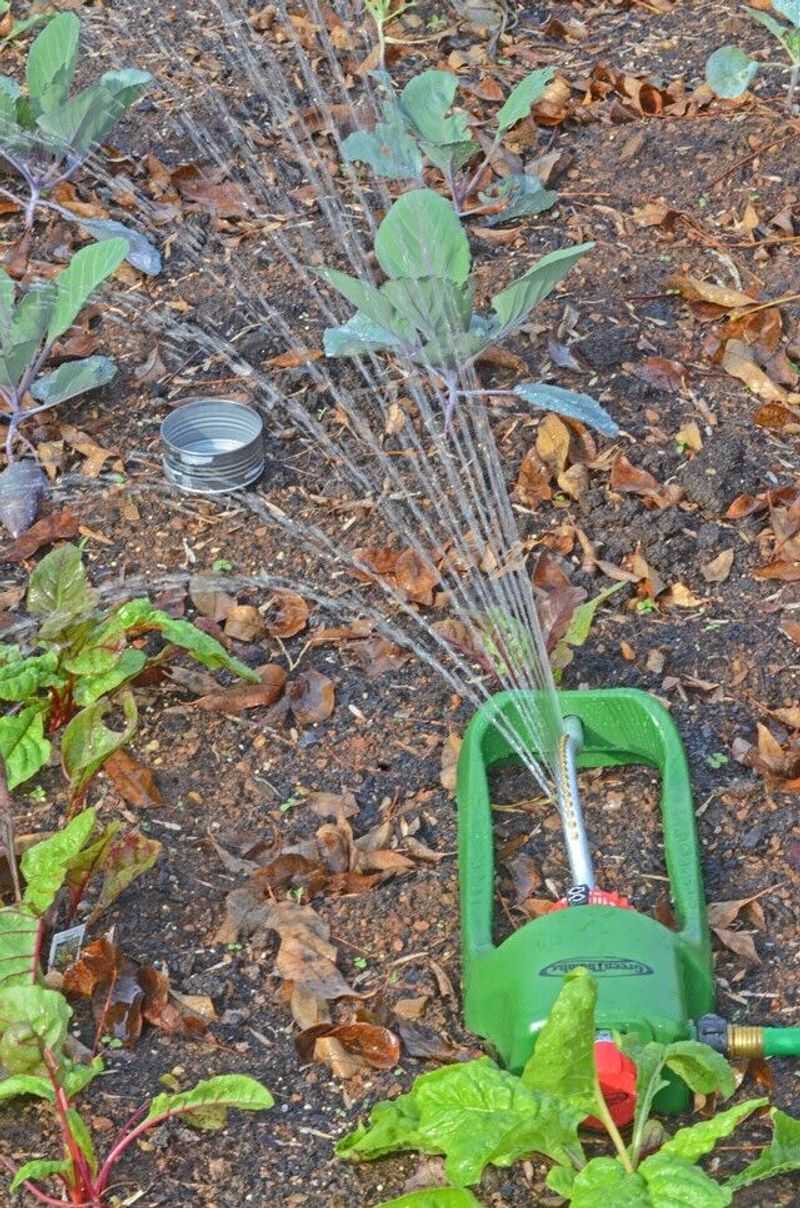
Fall watering is not a set schedule. If autumn has been rainy, your hydrangea is probably getting plenty.
If weeks have passed with no rain, the soil may be dry even as the weather cools.
During a long dry spell, some shrubs may need a drink before the ground freezes. The way to know is the same trowel check you have already learned, paired with a look at your local weather and soil.
Some guidance is written for very specific places. Colorado State University Extension suggests watering only when air and soil temperatures are above 40°F and there is no snow cover.
That advice fits the dry conditions of Colorado, so treat it as a local rule, not a nationwide one.
A gardener in a wet climate may never need to water in late fall, while someone in a dry, windy region may need to more often. Your own rainfall, soil type, and first frost date matter more than any single number.
When you do water, pick a milder day so the water can soak in before freezing nights. Then skip the hose when the soil is already moist.
Your local extension office can tell you what fits your area.
Brown leaves cannot be brought back with more water
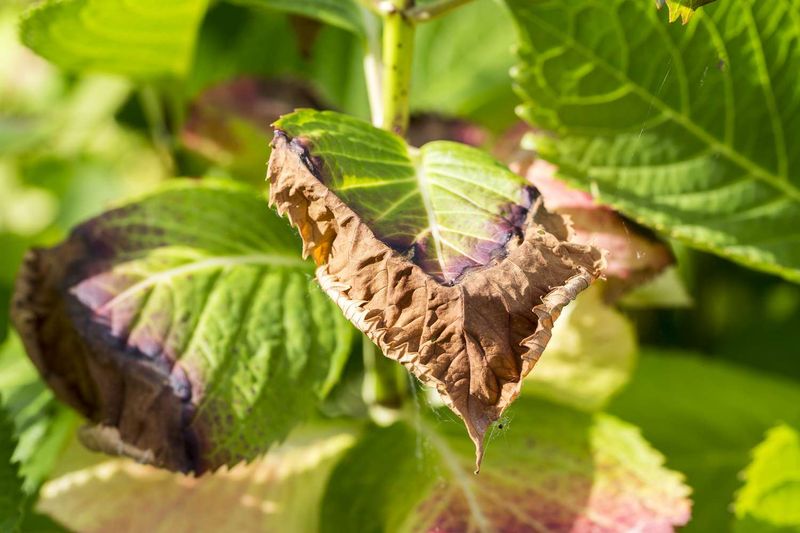
Crispy, brown leaf edges can look like a plant crying for help. Once leaf tissue has dried out or been scorched by heat, though, it will not turn green again.
Extra water cannot undo that damage.
That does not mean the whole shrub is lost. Oregon State University Extension’s heat wave guidance treats leaf scorch as damage to leaves, not proof the entire plant is gone.
Healthy leaves, firm stems, and living buds are good signs.
Your next step is still the soil check. If the root zone is dry, give a deep, slow watering so the plant is not stressed further.
If the soil is moist, leave it be.
Resist the urge to do something drastic. Oregon State cautions against severe pruning or fertilizing as a quick fix after heat damage.
Cutting hard or feeding a stressed plant can add more strain, not less.
Brown leaves will drop on their own, and you can simply wait. Scratch a stem gently with a fingernail, and green tissue underneath is a good sign.
Some damage is cosmetic, and the real test comes next spring when new growth appears.
Know your hydrangea type before you prune
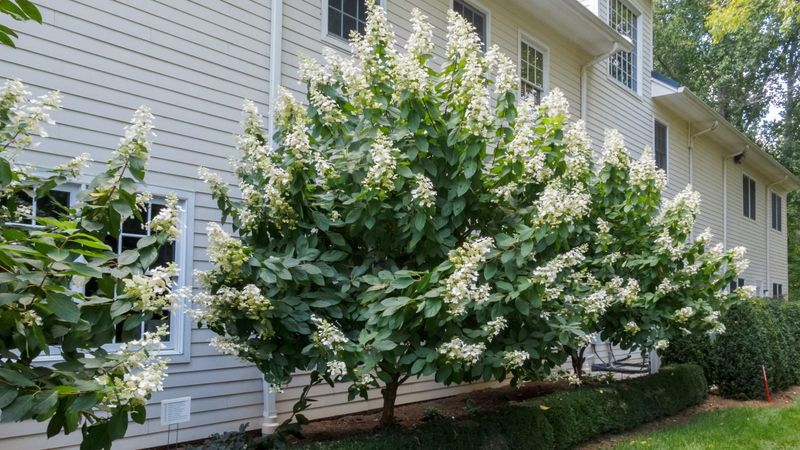
Fall cleanup season brings a strong urge to cut everything back. With hydrangeas, that can backfire.
Whether pruning helps or hurts depends on which type you have.
Some hydrangeas bloom on old wood, meaning the flower buds for next summer already formed on this year’s stems. University of Maryland Extension explains that pruning at the wrong time can remove those buds.
Cut them back in fall and you may get few or no flowers next year.
Other types bloom on new wood and are handled differently. University of Minnesota Extension’s pruning guide lays out how timing varies by type.
That is why a single rule for all hydrangeas does not work.
So before the shears come out, figure out what you have. Check the plant tag, look at your records, or compare leaf and bloom shape with photos from a reliable extension site.
If you cannot tell, wait and watch what the plant does in spring.
A tired-looking fall shrub is rarely an emergency that pruning will fix. Removing a few clearly dead stems is one thing, but a big cutback is another.
Leaving the plant alone costs you nothing, and next year’s blooms may be sitting on those stems right now.