
Feed Your Hydrangeas Like This And They Push Out Bigger, Fuller Blooms Next Summer (Plus 5 Feeding Mistakes To Skip)
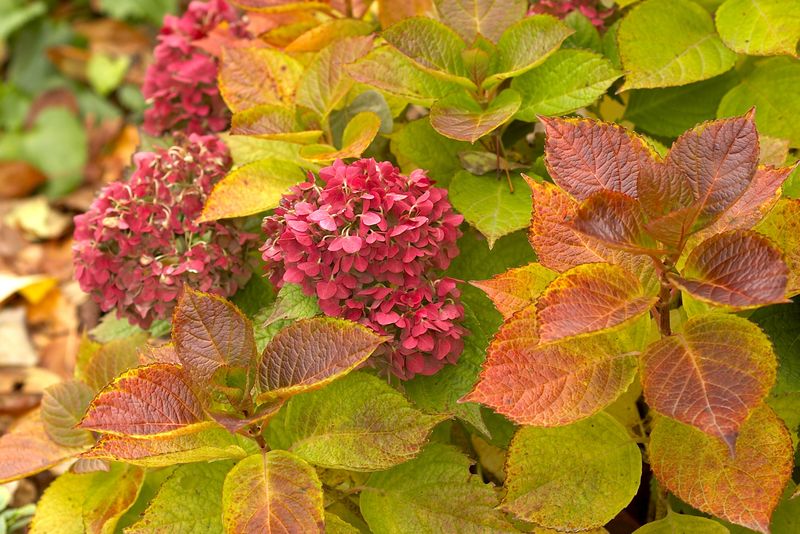
If your hydrangea gave you lots of green leaves but only a few sad flowers, the problem might be how you feed it. Hydrangeas are not greedy plants, but they are picky about what they eat and when they eat it.
Get the timing and the food right, and next summer’s flower heads can come back bigger and fuller. Here is the simple feeding plan, plus five common mistakes that quietly steal your blooms.
1. The Early Spring Foundation Feeding
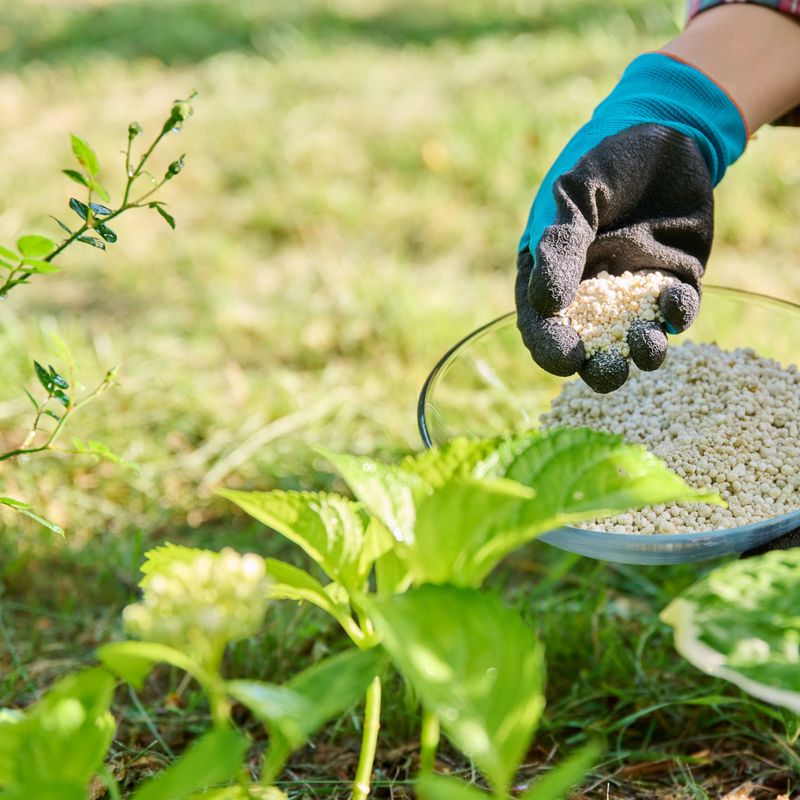
Picture the first tiny green leaves popping out of those bare hydrangea stems. That moment is your cue.
It is the single most important feeding of the whole year.
Use a balanced, slow-release organic fertilizer, like a 10-10-10 or a gentle option such as Holly-Tone (4-3-4). A thick layer of finished compost works too, and it also improves the soil over time.
Apply it as new leaves appear, but before flower buds form.
Here is how to do it right. Sprinkle the food around the drip line, the area under the outer edge of the branches, where the feeding roots live.
Gently scratch it into the top of the soil, keep it off the stems, and water deeply.
Always follow the amount on the bag. More is not better here, and one good spring meal can carry your plant a long way.
2. The Bud-Time Bloom Boost and Summer Cutoff
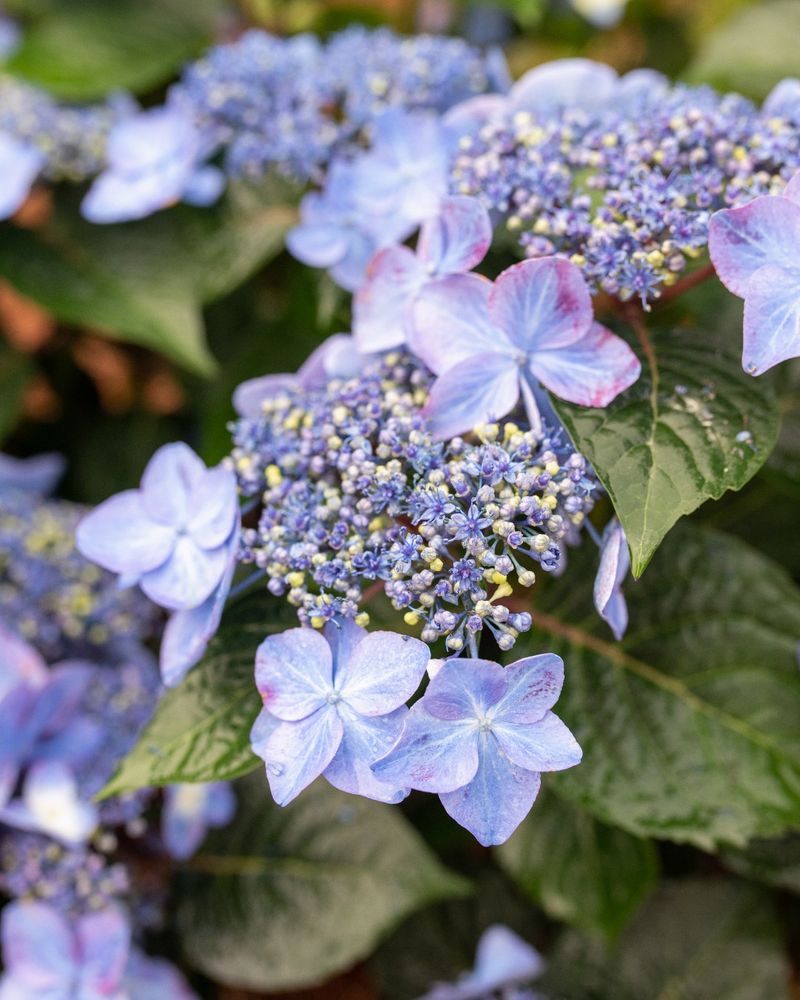
Spot those little knobby flower buds at the tips? Now you can give your hydrangea a small push.
A fertilizer with a bit more phosphorus and potassium supports flower formation and strong roots.
Reblooming types, like many Endless Summer varieties, can take a second light feeding in late June or early July. That helps them keep making new flowers through the season.
Then put the bag away. Stop all feeding by early to mid-July in most US gardens.
Food that arrives too late tells the plant to grow soft new shoots instead of getting ready for winter, and that can hurt next year’s flowers.
3. Mistakes 1 and 2: Overfeeding and Too Much Nitrogen
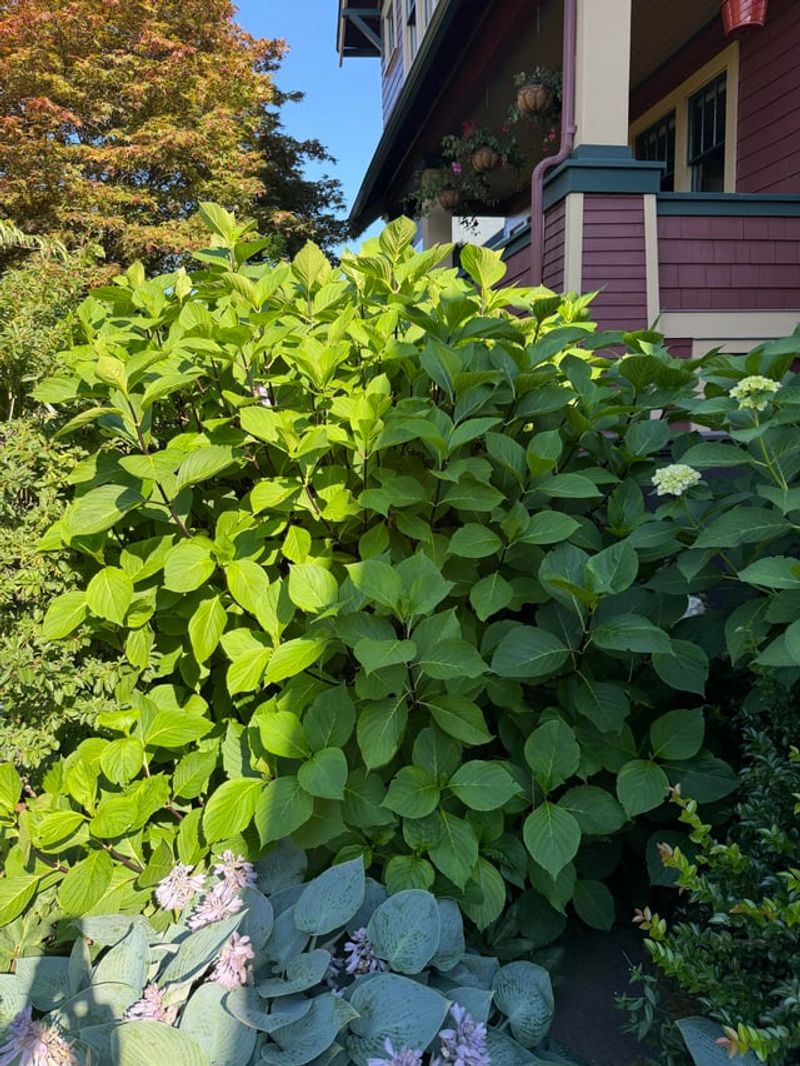
A neighbor once showed me a hydrangea the size of a small car. It was gorgeous, full of glossy leaves, and had exactly three flowers.
The culprit was a lawn fertilizer sprinkled on it every few weeks.
Overfeeding can burn roots, stunt growth, and oddly enough, stop flowering. Hydrangeas simply do not need heavy, frequent meals.
Nitrogen is the sneaky part. It is the first number on the bag, and it fuels leaves.
Too much of it, especially later in the season, can give you a jungle of green with very few blooms.
The fix is easy. Skip high-nitrogen lawn food near your shrubs, since lawn runoff counts too.
Stick to one or two measured feedings a year.
4. Mistake 3: Feeding in Late Summer or Fall
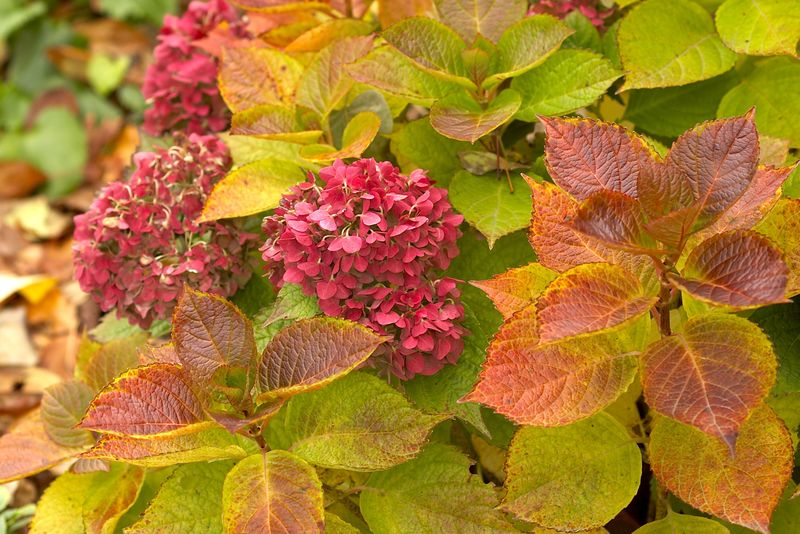
Fall feels like a kind time to treat your plants. For hydrangeas, though, it is one of the worst moments to fertilize.
Many popular bigleaf hydrangeas set next summer’s flower buds on their stems during late summer and fall. A late shot of food can trigger tender new growth that freezes easily.
When that growth gets hit by cold, the buds tucked inside may go with it.
Late feeding can also confuse the plant as it heads into its rest period. So in autumn, let it wind down naturally.
Want to help anyway? Add a layer of mulch or compost around the base for root protection.
That is a cozy blanket, not a wake-up call.
5. Mistakes 4 and 5: Harsh Salty Fertilizers and Skipping the Water
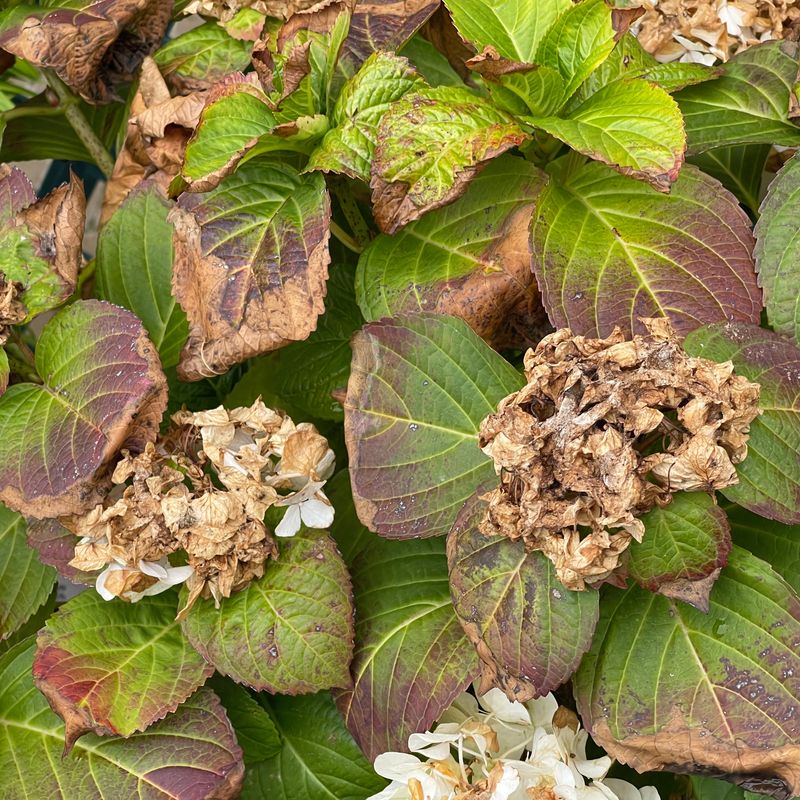
Crispy brown leaf edges right after you fed your plant? That is often fertilizer burn, and it usually comes from two habits that travel together.
Fast-acting synthetic fertilizers can leave salts behind in the soil. Those salts can damage tender roots and scorch leaves.
Slow-release organic foods break down gently, so they are more forgiving for a sensitive shrub.
The second habit is feeding dry soil and walking away. Fertilizer needs water to dissolve and reach the roots.
Without it, the food sits in a strong layer near the surface where it may burn roots instead of feeding them.
So water before and after every feeding, and soak the root zone well. It costs nothing and protects every bloom you are working toward.
Fun fact: in bigleaf hydrangeas, soil acidity, not fertilizer alone, helps decide whether flowers turn blue or pink.