
Tree-of-Heaven and Spotted Lanternflies in North Carolina: How to Spot the Tree and Plan Winter Scouting
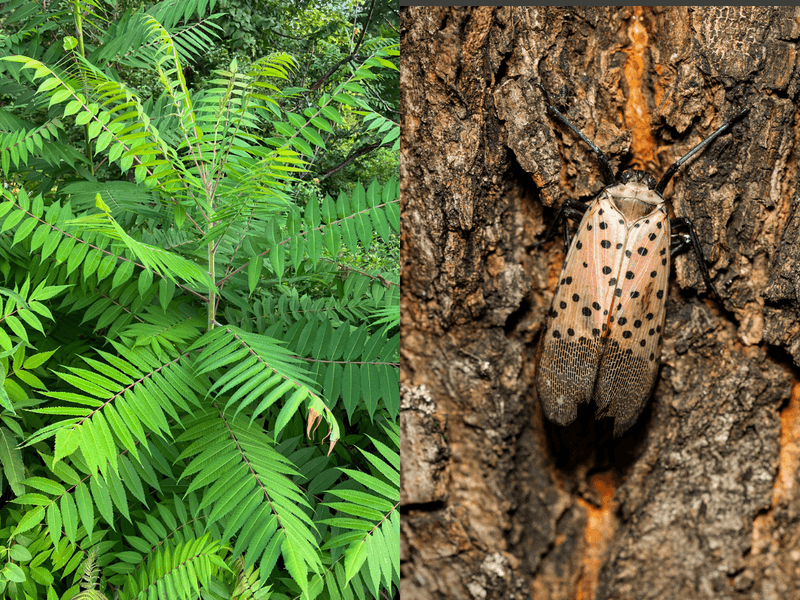
Some trees in North Carolina yards and fence lines are not what they seem. Tree-of-heaven is an invasive tree that spotted lanternflies strongly prefer at certain life stages.
Winter, when the leaves are gone, is a smart time to look for it and plan ahead. Here is how to identify it, what to check for, and why a quick chainsaw job can backfire.
Tree-of-heaven is a preferred host, not the only host
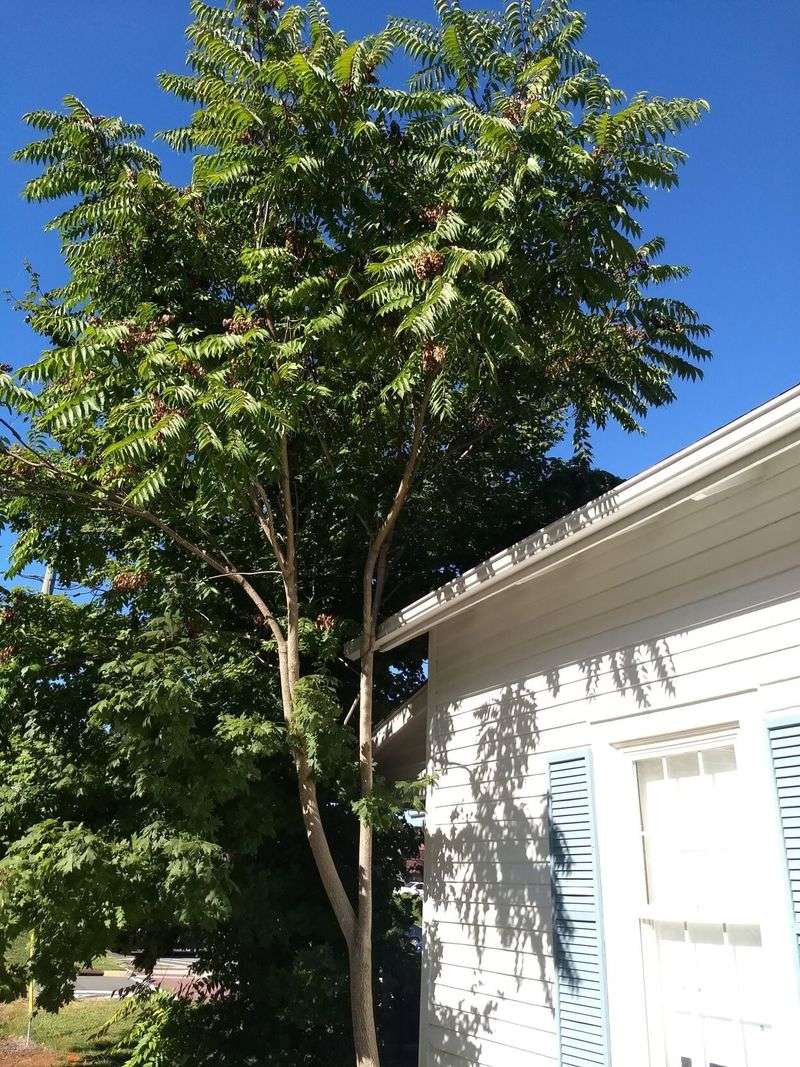
North Carolina agriculture officials say spotted lanternflies feed on more than 70 plant species, yet they show a strong preference for tree-of-heaven (Ailanthus altissima) as late-stage nymphs and adults. That preference is why the tree gets so much attention.
It is not a requirement, though. Lanternflies can develop on many other plants.
Think of tree-of-heaven as a favorite restaurant, not the only place to eat. A yard without one can still host lanternflies, and a yard with one may not see a big crowd.
There are good reasons to deal with this tree anyway. It is an invasive plant that crowds out native trees and spreads aggressively by seed and root sprouts.
Managing it can be worthwhile on those grounds alone.
What you should not expect is a guaranteed drop in lanternflies. Penn State Extension notes that the effect of removing preferred host trees on insect numbers has not been specifically evaluated, and the management guide says removal may not consistently reduce numbers.
Research has not shown that taking out one tree reliably cuts nearby populations, or that it protects your other plants.
So treat the tree as an invasive-plant project, and treat lanternfly worries as a separate, ongoing task.
Check the leaves and seed clusters before treating a tree
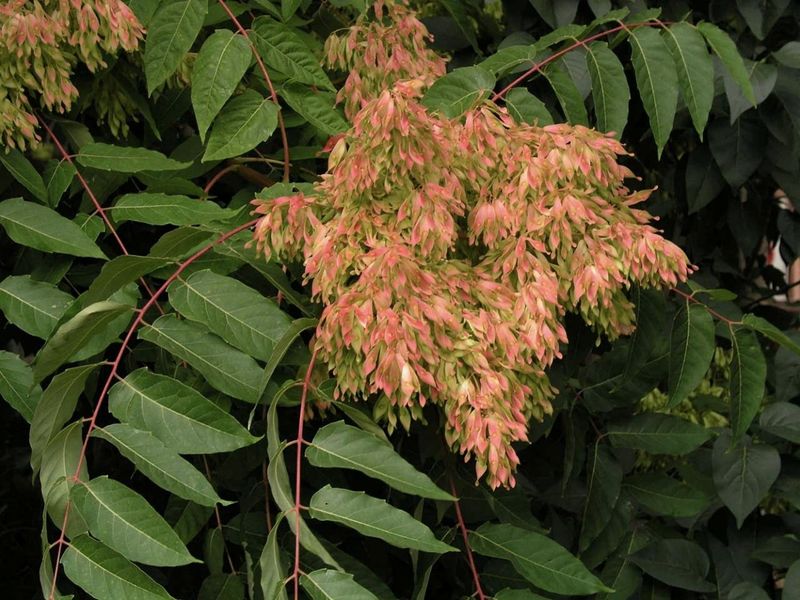
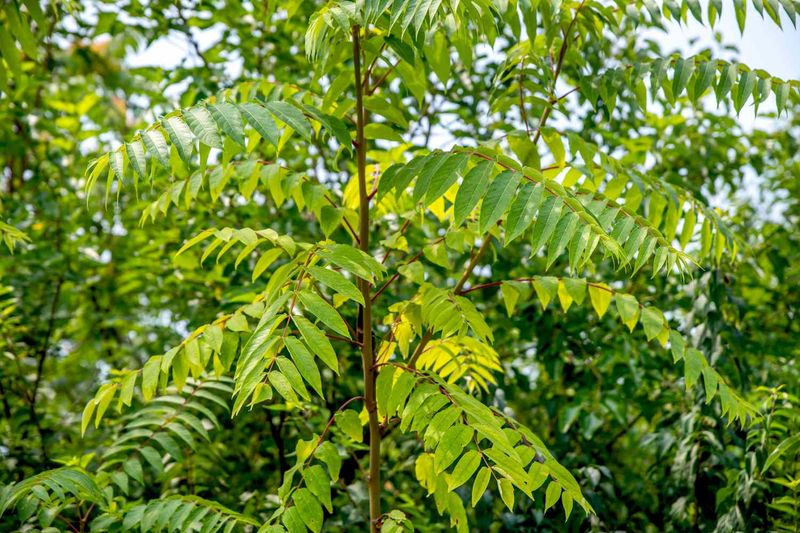
Before you touch a tree, make sure it is the right one. Tree-of-heaven has long leaves made of many leaflets arranged along a central stem, often one to three feet long.
The leaflet edges are mostly smooth, with one or two small glandular notches near the base of each leaflet, as described by Penn State Extension.
Walnut and sumac are the common look-alikes in North Carolina yards. Both have compound leaves too, but their leaflets have toothed edges, which is a handy clue.
Rubbing the foliage of tree-of-heaven can also release a strong, unpleasant smell, though you should not rely on smell alone.
In winter the leaves are gone, so look up. Clusters of papery, twisted, winged seeds often hang on through the cold months, especially on female trees.
Bark on mature trunks is pale gray and fairly smooth, and the twigs are thick and stubby.
Take photos, note the location, and compare against a trusted guide. North Carolina State Extension offers tree-of-heaven control guidelines that you can check against what you see.
Confirm the identification before choosing any control. Treating a native walnut or sumac by mistake would harm a tree that supports local wildlife.
If you are unsure, ask your county Extension office to help.
Use winter to scout and plan, not to rush into cutting
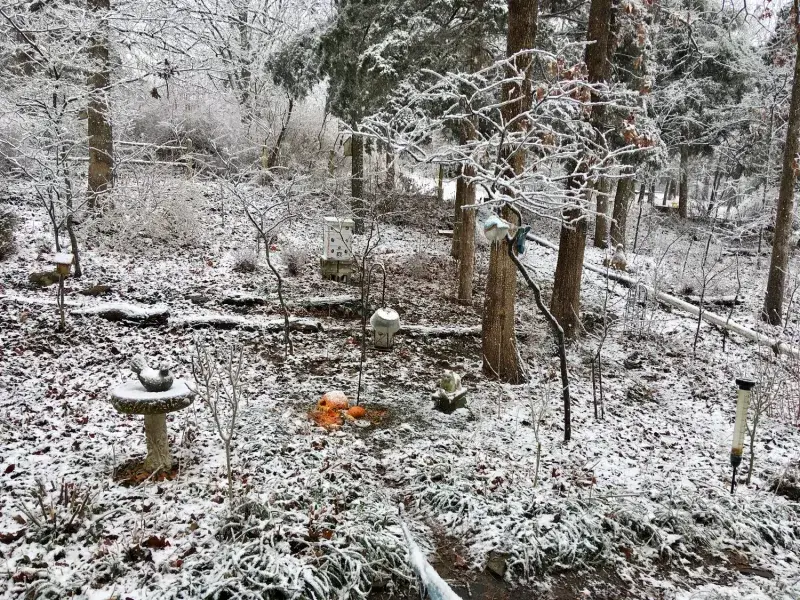
A bare yard makes scouting easier. With the canopy open, you can see where suspected trees stand, how big they are, and whether young shoots are spreading nearby.
Tie a ribbon on each suspect, sketch a simple map, and snap photos for later.
Marking is not the same as cutting. Felling a tree just to beat the spring hatch is a tempting shortcut, but it does not match current advice.
North Carolina State Extension says not to use cut-stem treatments as a general control method, and it emphasizes treatment timing in late summer or early fall.
Planning time is well spent. Note how close the tree is to the house, power lines, or a neighbor’s property, since that affects who should do any work.
Write down questions for your county Extension office, and read the NC State overview of Ailanthus so you know what you are dealing with.
While you are out there, look at more than the tree. Winter is also a good time to check accessible surfaces for lanternfly egg masses.
Removing one host tree would not remove eggs laid on nearby trees, fences, or furniture, so inspect the whole yard.
Look for egg masses on surfaces beyond tree-of-heaven
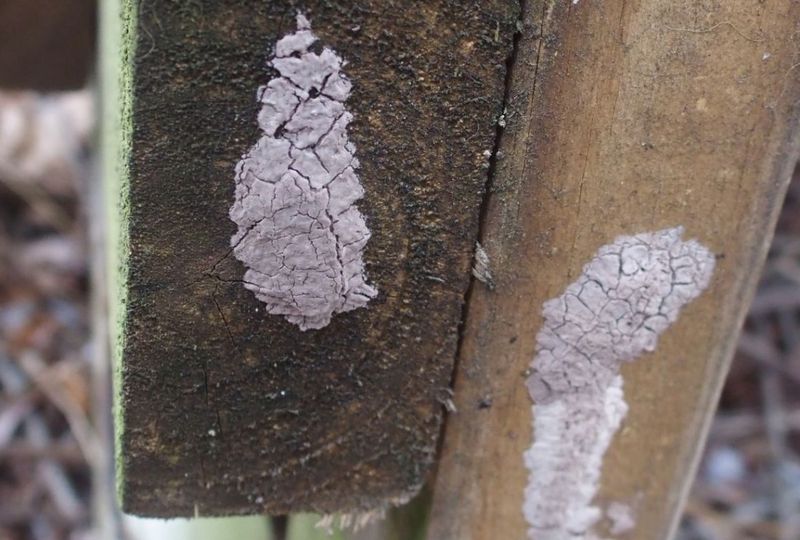
Spotted lanternflies lay eggs on far more than one kind of tree. Penn State Extension explains that egg masses show up on many surfaces, including other trees, fences, outdoor furniture, and equipment.
Each mass looks like a patch of gray, putty-like mud, sometimes cracked and dried out in winter.
Masses you find from fall through spring can be dealt with if you can reach them safely. Scrape each one with a stiff card straight into a container of rubbing alcohol or hand sanitizer.
You can also smash the mass thoroughly.
Never scrape them onto the ground and assume the job is done. Eggs can survive that, so the container or a complete smashing matters.
Stay on solid footing. Do not climb or set up a ladder to reach masses high on a trunk or limb.
Many masses will be hidden or out of reach, and that is fine.
Penn State’s management guide supplement covers egg management as one piece of a larger approach. Scraping can reduce some future insects on your property, but it cannot eliminate a neighborhood population.
Treat it as a small, useful chore, and keep your expectations realistic.
Cutting can trigger a flush of new shoots
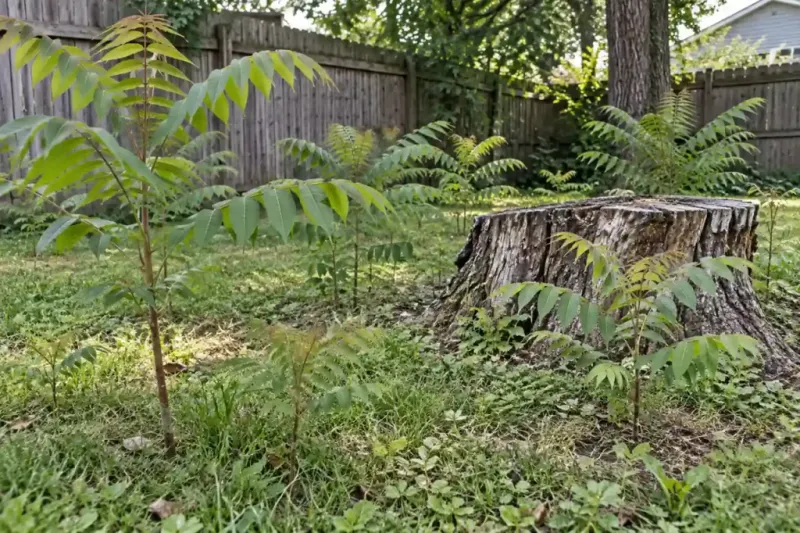
Cut a tree-of-heaven and it often answers with a crowd. The species spreads by wind-blown seeds and by root suckers, which are new shoots rising from the roots.
Penn State Extension notes that cutting or injuring the tree can prompt even more sprouts.
That means a lone saw cut can turn one tree into a thicket. Sprouts may pop up several feet from the stump, sometimes in the lawn or a neighbor’s bed.
The University of Maryland Extension tree-of-heaven page describes the same habit and stresses that control takes planning and follow-up. North Carolina State Extension’s updated guidance specifically cautions against cut-stem treatments as a general approach, and it says established infestations take several years to manage.
Planned treatment and improvised winter felling are very different things. A plan includes proper timing, a way to handle regrowth, and repeat checks over several seasons.
A weekend cut with no follow-up usually leaves you with more work.
If a tree is already dead or leaning, call a qualified tree-care professional rather than guessing.
Plan control around the tree’s seasonal growth
Timing is the heart of controlling this tree. In mid to late summer, tree-of-heaven moves stored carbohydrates down toward its roots, so systemic treatments are generally aimed at that window.
The University of Maryland Extension describes this seasonal approach for the species.
North Carolina State Extension emphasizes late-summer or early-fall foliar treatment in its control guidelines, and it warns against cut-stem treatments. Winter is not the time to go after this tree with a generic recipe, even though general advice for some other woody plants allows winter work.
Expect a long game. Established patches can take several years to manage, because roots keep sending up shoots after the first treatment.
Plan to check the area each growing season and deal with new sprouts as they appear.
This article does not give a product or mix, on purpose. The right choice depends on the tree, the site, and what is growing nearby.
Before you buy anything, read the current NC Extension advice and the label on the specific product to confirm it fits your site and use.
Use the cold months to book that conversation with your county Extension agent and set a reminder for late summer.
Protect people and wildlife during yard management
Good stewardship starts with safety. If a tree-of-heaven is leaning over the house, dropping limbs, or sitting near power lines, that is an immediate hazard.
Call a qualified tree-care professional instead of tackling it yourself.
For any pesticide, the label is the rule book. The EPA explains why reading labels matters: the label tells you where and how a product can be used legally and safely.
Choose only a product labeled for the intended site and application, and follow its directions exactly.
For weed-control specifics, North Carolina State Extension publishes the Agricultural Chemicals Manual chapter on chemical weed control. Keep pets and children away from treated areas, and take care near plants you want to keep.
Skip unprotected sticky bands. Penn State notes that sticky material can capture birds, mammals, and beneficial insects, which matters if you value your yard’s chickadees, woodpeckers, and tree frogs.
Its guidance on a wildlife barrier for sticky band traps shows why safeguards are needed if anyone uses them at all.
Build a realistic plan for your North Carolina yard
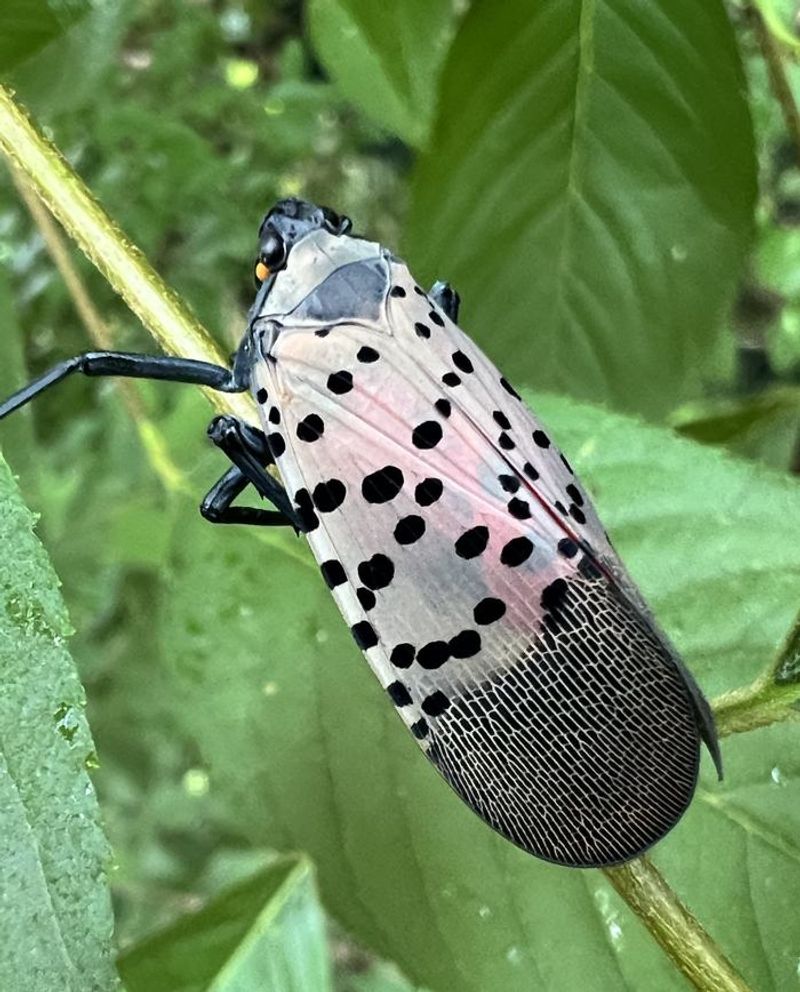
Start with a short list. First, confirm and mark any suspected tree-of-heaven.
Second, inspect accessible surfaces for egg masses and handle them as described above. Third, read the NC State control guidelines and plan a multi-season approach with your county Extension office.
If you think you have spotted lanternflies outside the state’s established area, check the NCDA&CS spotted lanternfly page for current reporting steps. Distribution can change, so look at the latest information rather than relying on an old list of counties.
None of this promises a lanternfly-free yard. These steps simply help you manage an invasive tree and some egg masses with care.
Winter gives you time to look closely, and the tree rewards patience more than speed.