
Frost-Browned Hydrangeas: Wait for Clearer Damage, Then Check Stem Health and Hydrangea Type Before Cutting
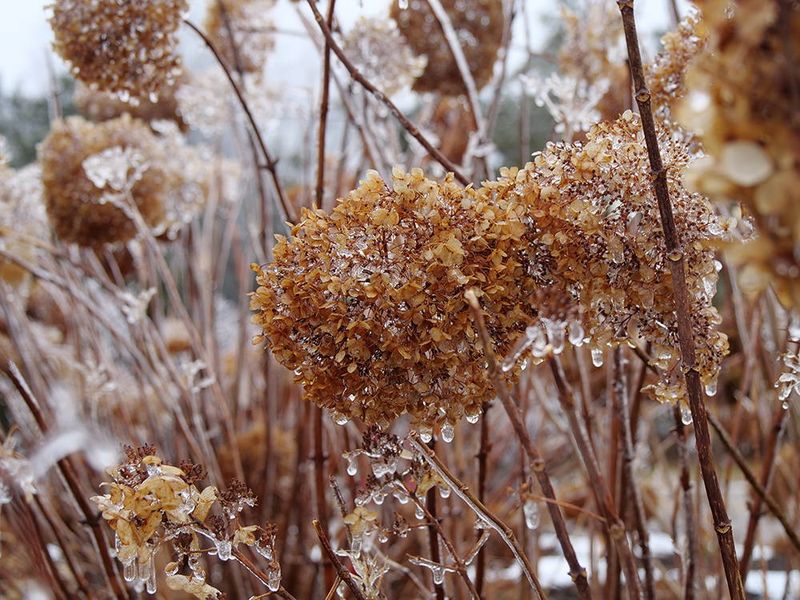
A hard frost can turn a lush hydrangea into a sad, brown tangle overnight. It is tempting to grab the pruners and clean it all up right away.
But a hasty cut can take off stems that are still alive, and on some hydrangeas it can remove next summer’s flowers. A little patience and a few simple checks will help you cut only what truly needs to go.
Brown leaves and brown stems tell different stories
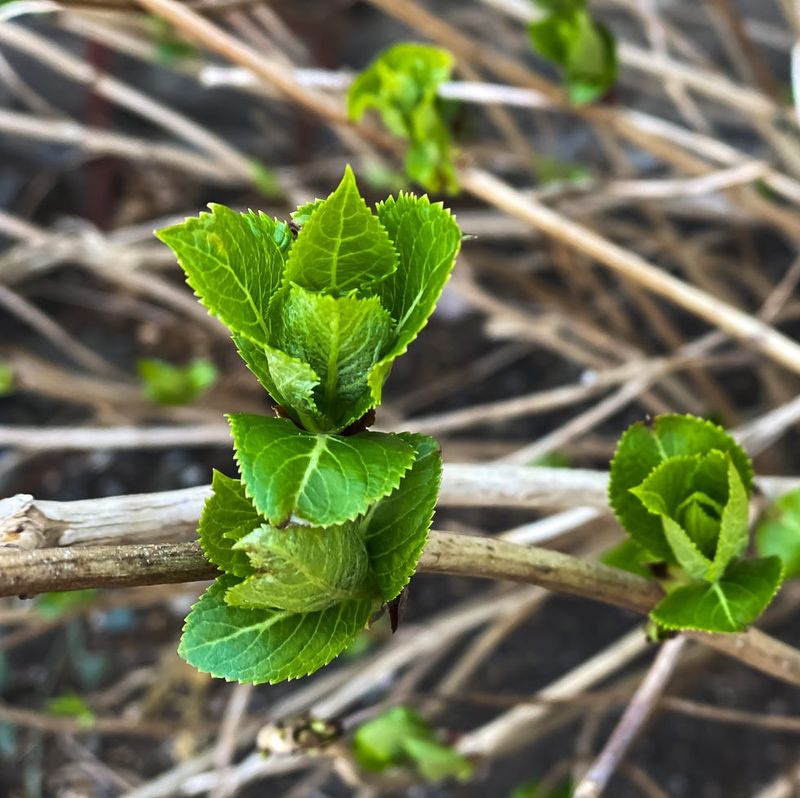
Walk out after a frost and the whole shrub can look finished. Crispy, blackened leaves and limp tips are the most obvious sign, and they are easy to mistake for a dead plant.
Those leaves and tender shoots are a different symptom from the stems underneath. Woody hydrangea stems are naturally brown and bare when they are dormant, so brown wood by itself tells you very little.
A stem can look rough and still be alive.
In spring, frost-browned new leaves often do not need to be cut off. Maryland Extension advises waiting for more growth before removing them, since later leaves may cover the damage.
If the look bothers you, waiting a few weeks costs you nothing.
Frost does not hit every part of a plant the same way. It can burn leaves, injure buds, or damage stems, and sometimes only one of those happens.
That is why UGA Extension guidance points toward checking the tissue and waiting for new growth rather than making a blanket cut based on color.
None of this means frost damage is always harmless. Some stems and buds really are injured.
The point is that a messy look is not enough reason to prune, and you will get a much clearer picture in a few weeks.
A premature cut can remove flower buds
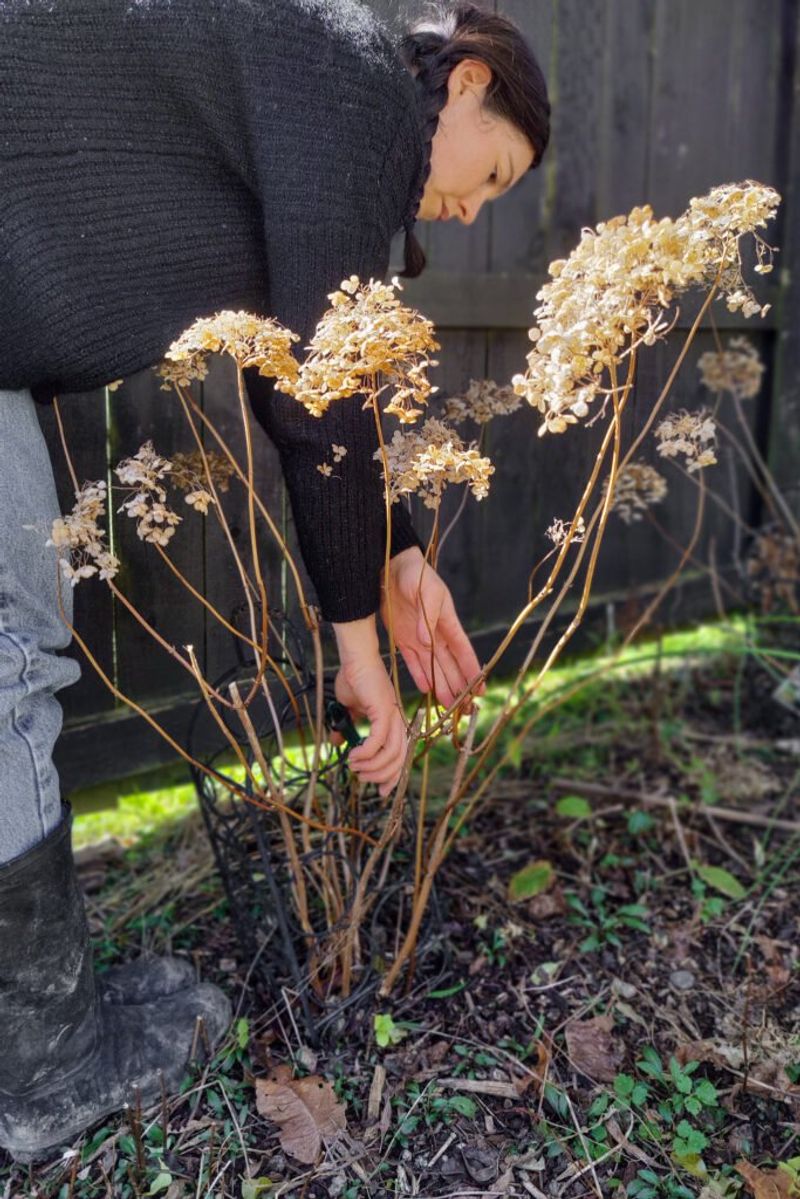
Here is the real risk of cutting early. Some hydrangeas set their flower buds the summer or fall before they bloom, and those buds ride out winter on the stems.
Cut a living stem and you may be cutting off next summer’s flowers.
According to University of Maryland Extension, bigleaf, mountain, and oakleaf hydrangeas generally bloom on old wood. For those types, pruning at the wrong time is a common reason for a flowerless year.
Losing blooms is not the same as losing the shrub. As UGA Cooperative Extension describes for bigleaf hydrangeas, an ill-timed cut mostly costs you flowers.
The plant itself will usually keep growing and can bloom again in later seasons.
Frost adds another twist. A stem can be alive while its flower buds are dead.
UMass Extension lists winter and late-spring cold injury to buds as one cause of poor bloom on bigleaf hydrangeas.
So a living stem does not promise flowers, but a cut stem definitely removes the chance. That is the reason restraint pays off on old-wood types.
Your hydrangea type changes the pruning advice
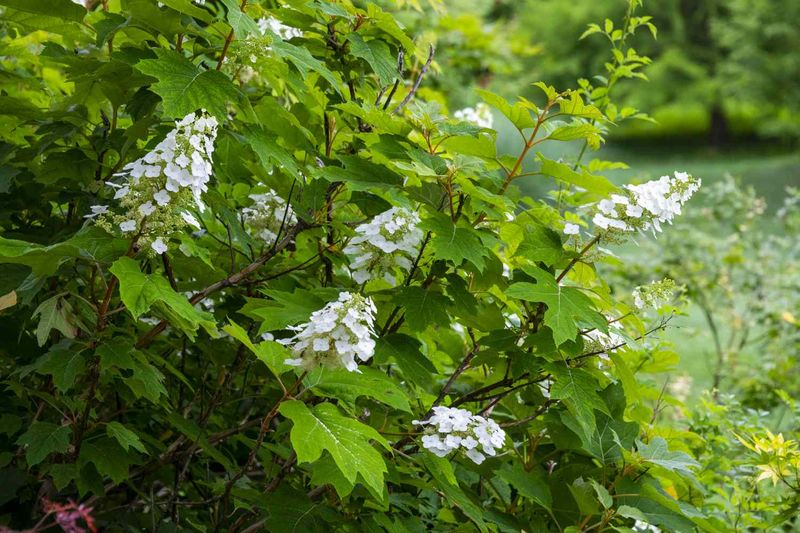
Before you cut anything, figure out which hydrangea you own. The right timing depends on the species and cultivar, and one rule does not fit them all.
Bigleaf (Hydrangea macrophylla), mountain (H. serrata), and oakleaf (H. quercifolia) hydrangeas generally flower on old wood. Maryland Extension notes that these are generally pruned just after they finish flowering, not routinely in fall or early spring.
Panicle (H. paniculata) and smooth (H. arborescens) hydrangeas are the opposite. They flower on new growth, so they are generally pruned in late winter or early spring.
A frost-browned panicle hydrangea has far less to lose from a careful spring cut than a bigleaf does.
Then there are the rebloomers. Some bigleaf and mountain cultivars flower on both old and new wood.
They may still bloom on new growth if some old-wood buds are lost, though pruning can delay or shorten the rebloom period. That is a possibility, not a promise for any one plant.
If you are not sure what you have, check the plant tag, look up the cultivar name, or note the flower shape and leaf style. When in doubt, treat it as an old-wood type and hold off on cutting living stems.
Assess stem health without relying on buds
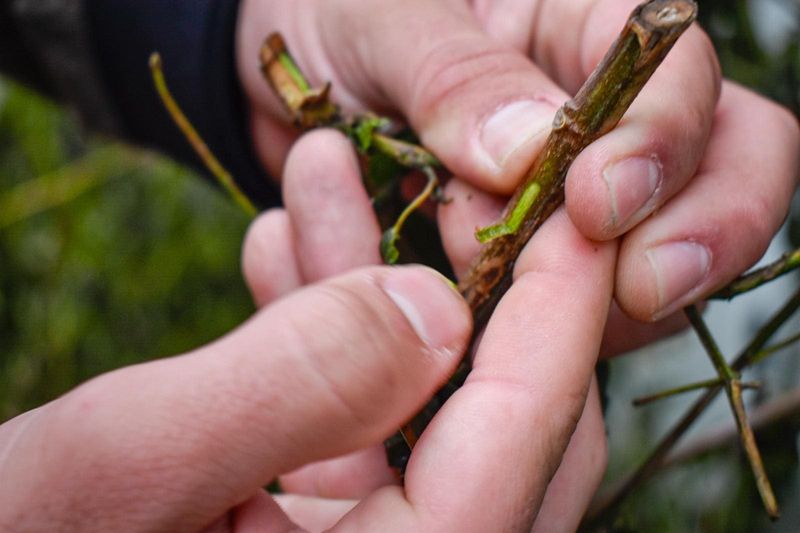
Once new growth is steady, you can check the stems directly. Use a fingernail or the tip of a knife to gently scratch a small patch of bark.
Green tissue beneath suggests living wood. Brown or black tissue suggests injury, as described in UGA Extension’s freeze damage guidance.
Scratch only a tiny spot, and test a few places along the stem, since damage can be uneven.
Keep in mind what this check does and does not tell you. It speaks to the stem tissue only.
It does not tell you whether the flower buds on that stem survived the cold.
That is also why plump buds should not reassure you too much. Frost may injure buds without obvious leaf symptoms, and Maryland Extension’s Q&A makes clear that bud survival depends on the freeze and the plant’s condition.
A visible bud is not proof of a living stem or a coming flower.
The same goes for bare stems. If a stem scratches green, it is alive even if it looks plain.
If it scratches brown or black, mark it and wait to see whether leaves push out above or below that spot.
Wait for clearer damage, then remove only dead tissue
Think of the process as a short checklist. Start with timing, then type, then the stem itself.
First, skip the calendar date. Freeze timing varies across the country, so use your local risk of more freezes and the arrival of consistent new growth as your cues.
UGA Extension recommends waiting for that growth before pruning freeze-damaged plants.
Second, identify your hydrangea type. An old-wood bigleaf needs a much lighter hand now than a new-wood panicle, as laid out in Maryland Extension’s pruning guide.
Third, scratch-test questionable stems. Remove only the portions you have confirmed are dead, and cut back to firm, healthy tissue.
Leave anything that is green inside or still leafing out.
Waiting does not undo frost injury, and it cannot guarantee blooms. Buds may already be lost.
What patience does is keep you from cutting off living stems or viable buds for no reason. And a stem that sits dead for a few extra weeks does little harm, while a lost bloom season is hard to get back, as UGA’s bigleaf hydrangea publication suggests.
Protect tender growth if another frost threatens
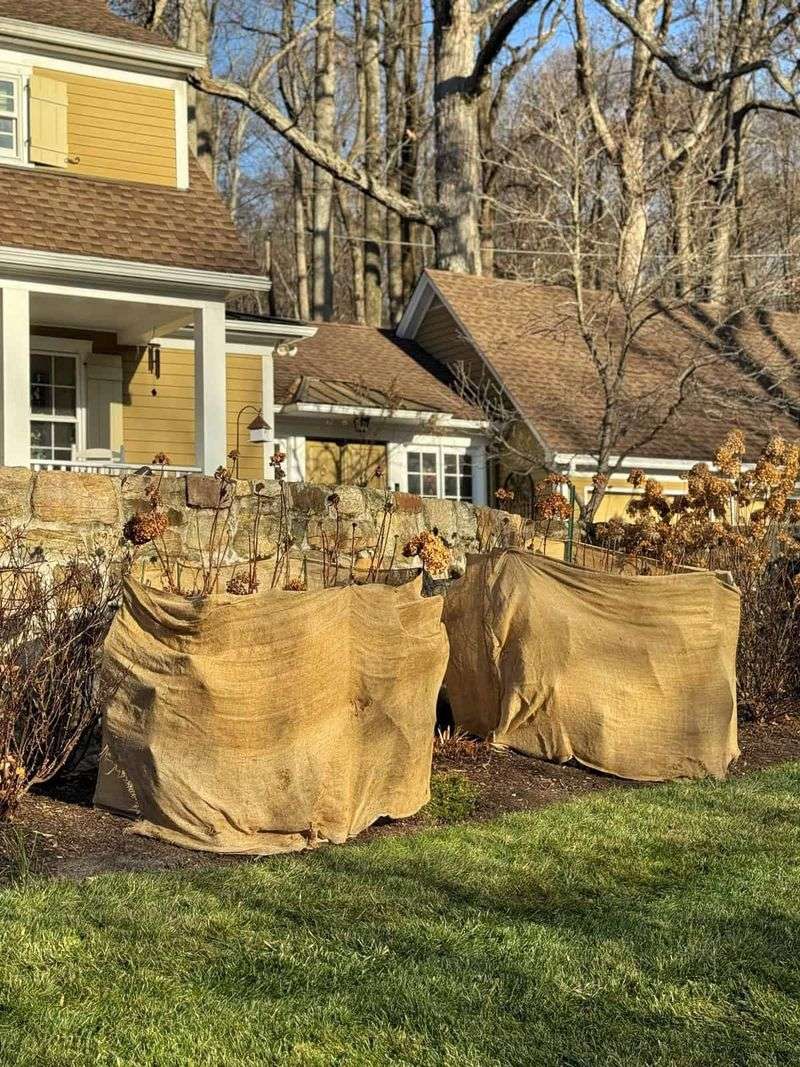
Spring has a habit of sneaking in one more cold night. If the forecast calls for frost after your hydrangea has leafed out, cover it that evening.
Maryland Extension suggests covering the plant overnight with fabric, such as an old sheet, and avoiding plastic. Drape it loosely over the shrub, and take it off in the morning once temperatures rise.
This protects growth that has not been hit yet. It will not bring back leaves or buds that frost already injured.
When the cold passes, go back to the plan. Let new growth and a careful stem check, as described by UGA Extension, guide your pruners instead of brown color or a single bud.
A hydrangea that looks wrecked in April often looks very different by June.