
Get Bigger, Bluer Hydrangea Blooms With These Simple Fertilizing Habits
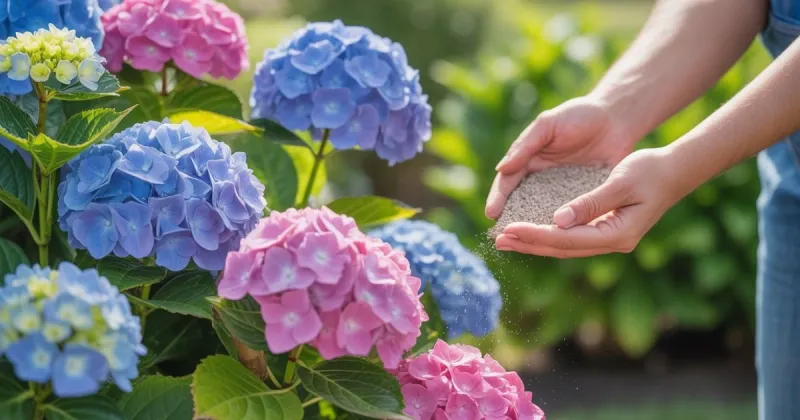
Hydrangeas are one of the most rewarding shrubs you can grow, but getting them to flower well takes more than just watering and hoping for the best. The right fertilizing habits can make a real difference when your soil is lacking, but feeding alone cannot guarantee giant blooms or a particular color. Understanding what your plant actually needs, and what it is capable of, puts you in a much better position to get results you will be happy with.
Start with the hydrangea that can actually change color
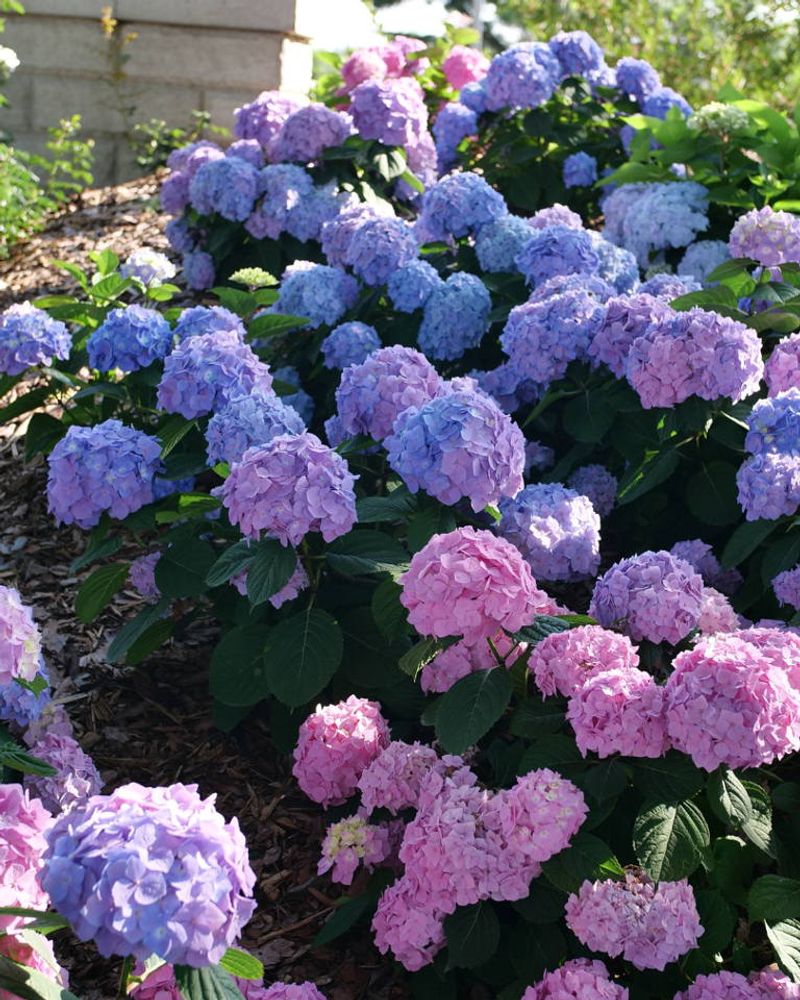
Not every hydrangea on the market can shift from pink to blue no matter what you put in the soil. The ability to change bloom color in response to soil conditions is mainly limited to bigleaf hydrangeas (Hydrangea macrophylla) and mountain hydrangeas (H. serrata). These are the two groups where soil pH and aluminum availability can meaningfully influence flower color, and even within these groups, genetics still plays a deciding role.
Panicle hydrangeas (H. paniculata), smooth hydrangeas (H. arborescens), oakleaf hydrangeas (H. quercifolia), and climbing hydrangeas (H. anomala subsp. petiolaris) generally do not change bloom color in response to soil pH. Treating those plants with acidifying amendments in hopes of blue flowers will not deliver the result you want, and could create unnecessary chemical imbalances in your soil. Checking the plant tag or the cultivar name before making any amendments is always the right first step.
Even among bigleaf and mountain hydrangeas, some cultivars are genetically wired to stay pink, white, or lavender regardless of what you do to the soil. UMass Extension guidance on hydrangea color and fertilizing confirms that white-flowered cultivars typically remain white, and some bigleaf cultivars lean toward pink no matter how acidic the soil gets. Knowing your cultivar before you invest time and money in soil treatments keeps your expectations realistic.
Flowering abundance and size are also shaped by factors that have nothing to do with fertilizer. Cultivar genetics, adequate light, consistent moisture, correct pruning, and winter survival all contribute to how many blooms a plant produces and how large those blooms grow. Fertilizing can help when soil fertility is genuinely low, but it cannot override a cultivar’s natural limits or compensate for poor growing conditions.
Use a soil test to guide decisions, not to predict the final bloom color
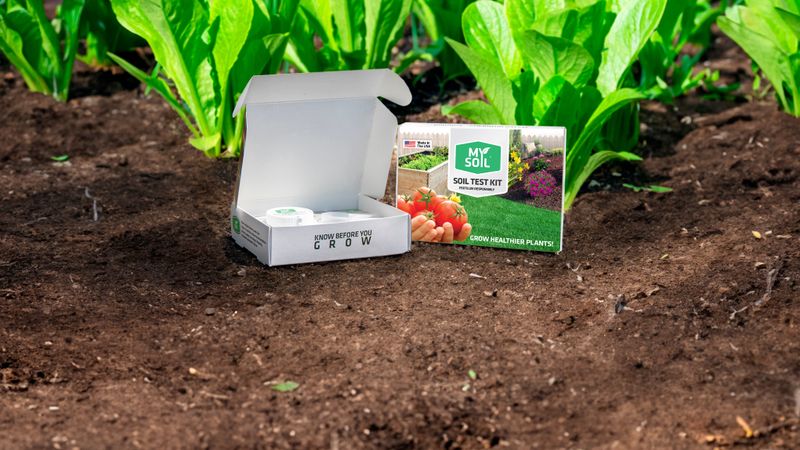
A soil test is the most practical tool you have before reaching for fertilizer, lime, sulfur, or any other amendment. Penn State Extension’s soil management guidance for ornamentals emphasizes that testing gives you a clear picture of your soil’s pH and nutrient levels, so you are not guessing or overcorrecting. Without that baseline, you risk adding nutrients the soil already has in abundance or adjusting pH in the wrong direction.
For gardeners growing a blue-capable bigleaf or mountain hydrangea, soil pH matters because of how it affects aluminum. When soil pH drops into the acidic range, generally around 5.0 to 5.5 for many blue-responsive cultivars, aluminum that is naturally present in most soils becomes more available for plant uptake. The plant absorbs that aluminum, and it interacts with the flower’s pigment compounds to produce blue or blue-purple tones. At higher pH values, aluminum stays locked up, and the same cultivar often produces pink flowers instead.
A soil test tells you where your pH currently sits and whether nutrients like phosphorus are already at adequate levels. That matters for blue-bloom goals because excess phosphorus can bind aluminum in the soil, making it harder for the plant to take up. Knowing your phosphorus level before adding any fertilizer helps you avoid accidentally working against your color goal.
What a soil test cannot do is predict the exact shade your flowers will reach. Soil type, existing aluminum content, cultivar genetics, the plant’s own uptake efficiency, and seasonal conditions all shape the final color. Penn State’s hydrangea blooming guide notes that color shifts can also take one or more blooming cycles to appear, and outdoor soil is harder to control than a container medium. A test sets you up to make informed decisions; the rest depends on your plant and your growing conditions.
Match fertilizer to the plant, soil, and color goal
Choosing the right fertilizer starts with what your soil test reveals, not with what the bag promises on the front label. A general-purpose balanced fertilizer may work fine for many hydrangeas when soil nutrients are genuinely low, but it is not the automatic answer for every plant or every goal. For a blue-capable bigleaf or mountain hydrangea where blue color is the priority, fertilizer choice takes on an extra layer of consideration.
UMass Extension recommends a low-phosphorus formulation, citing a product such as 12-4-8 as an example for blue bigleaf and mountain hydrangeas, with one spring feeding as a suggested starting point. The reasoning is practical: excess phosphorus can bind aluminum in the soil, reducing how much the plant can take up. Keeping phosphorus on the lower side helps preserve aluminum availability when that is the goal. This is a context-specific guideline, not a universal prescription, and it should be applied alongside your soil-test results and product label directions rather than in place of them.
For hydrangeas where blue color is not the goal, or for species like panicle, smooth, or oakleaf hydrangeas, a soil-test-informed balanced or slow-release fertilizer is a reasonable starting point when fertility is found to be inadequate. The University of Georgia Cooperative Extension gives one regional example of an 8-8-8 or 10-10-10 general fertilizer applied at 1 pound per 100 square feet for established bigleaf hydrangeas in March, May, and July. That schedule reflects Georgia’s growing conditions and should not be copied directly for plants in different climates, species, or growing situations without checking local Extension guidance.
High-phosphorus fertilizers do not automatically improve flowering. Phosphorus is a nutrient the plant needs, but adding it beyond what the soil already provides can create problems, especially when blue color is the target. The product label and your soil-test report together give you a more reliable guide than any single formulation promise.
Feed lightly and apply nutrients where the roots can use them
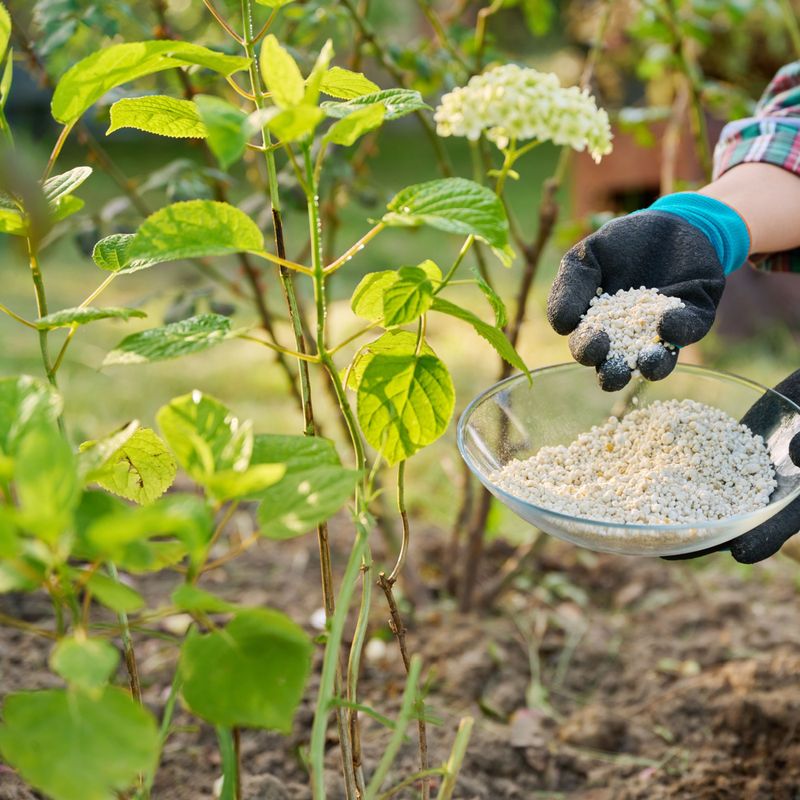
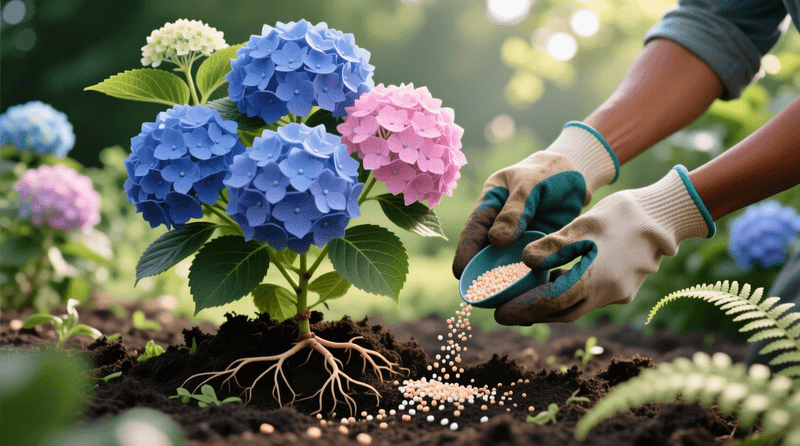
How you apply fertilizer matters almost as much as which product you choose. Sprinkling granules directly against the stems or piling them at the plant’s base does not help the roots and can cause localized burn. Iowa State University Extension recommends applying fertilizer in a band around the plant, roughly 6 inches away from the stems, which places nutrients closer to where the feeder roots can actually absorb them. After application, watering according to the product label helps move granular fertilizer into the soil and reduces the risk of surface burn.
Keep granules off the foliage. Fertilizer sitting on leaves can cause spotting or damage, and any product that contacts the plant directly should be brushed off and watered in promptly. Following the product’s labeled rate is not just a safety precaution; it is the most reliable way to give the plant what it needs without tipping into excess.
Timing recommendations vary more than many gardeners realize. UMass Extension guidance suggests one spring feeding for blue bigleaf or mountain hydrangeas, while other sources allow for light applications into midsummer depending on species, climate, and product type. The consistent thread across sources is that light, label-directed feeding is safer and more effective than repeated heavy doses across the season.
Late-season high-nitrogen applications are a specific concern worth avoiding. University of New Hampshire Extension cautions that late feeding can push tender new growth that has no time to harden before frost arrives. That soft growth is vulnerable to cold injury, which can set the plant back heading into winter. If you are in a region with an early first frost, wrapping up your fertilizing routine well before late summer is a practical precaution.
Adapt the routine for containers and garden soil
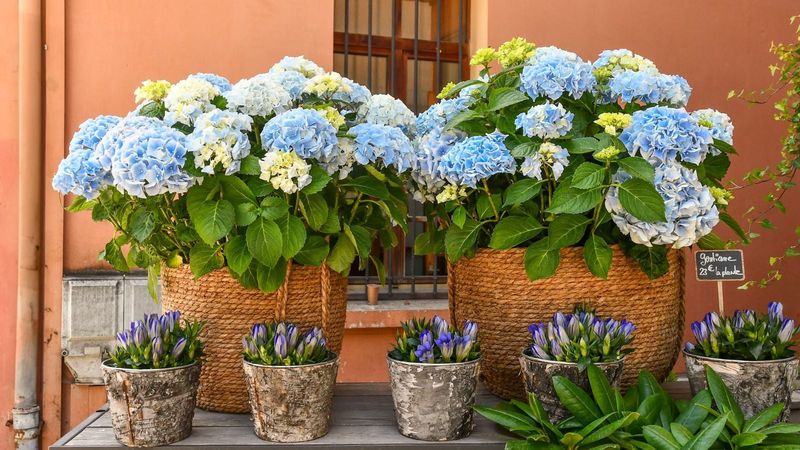
Container-grown hydrangeas play by different rules than plants in the ground, and applying an in-ground fertilizer schedule directly to a potted plant can cause real problems. Potting mixes drain faster than garden soil, which means nutrients leach out more quickly with regular watering. That changes how often a container plant may need feeding and how much fertilizer is appropriate at each application.
University of Georgia Cooperative Extension notes that container culture requires its own approach to fertilizing, timing, and medium management. The product label written for container plants or potting media is the most reliable guide for rates and frequency, not a schedule designed for garden beds. Container growers should also pay close attention to drainage: a pot without adequate drainage holes or one that stays waterlogged between waterings creates root problems that no fertilizer can fix.
Adjusting pH in a container is also a different process than working with outdoor soil. Potting mixes often start at a specific pH range, and adding acidifying amendments without knowing the medium’s baseline can push pH too far in either direction. Penn State’s ornamental soil management guidance reinforces that testing or at least knowing your growing medium’s starting condition is the responsible first step before making any adjustments.
For in-ground beds, the same core principle applies: soil-test results and regional Extension recommendations tailored to your species and climate are more reliable than generic schedules. Whether you are growing in a raised bed, a container, or an established border, moderate and measured feeding is the safest approach across all settings.
Support flowering with moisture, light, and healthy roots
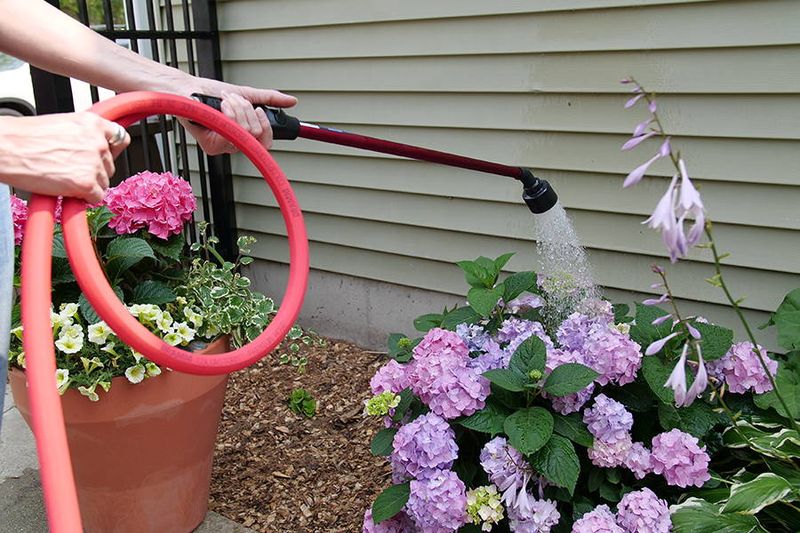
Fertilizer cannot compensate for conditions that are working against the plant at a more fundamental level. Consistent moisture is one of the biggest influences on hydrangea flowering, and University of New Hampshire Extension specifically advises against fertilizing drought-stressed shrubs unless reliable irrigation is in place. A plant under drought stress is already struggling; adding fertilizer to a dry root zone can concentrate salts and cause further damage rather than helping recovery. Water first, let the plant stabilize, then return to your normal feeding routine.
Saturated or poorly drained soil creates the opposite problem. Roots sitting in waterlogged conditions cannot take up nutrients efficiently regardless of how much fertilizer you apply, and prolonged saturation can lead to root rot. Good drainage and consistent but not excessive watering give roots the environment they need to actually use the nutrients you provide.
Light availability shapes flowering in ways that feeding simply cannot override. Iowa State University Extension notes that most hydrangeas perform best with morning sun and some afternoon shade, particularly in hotter climates. Too much deep shade reduces flowering; too much intense afternoon sun in warm regions can stress the plant and affect bloom quality.
Winter survival and plant maturity round out the picture. UGA Cooperative Extension and Penn State Extension both point out that young plants may not bloom reliably in their first few seasons, and that winter injury to buds or stems is a common reason an otherwise healthy-looking bigleaf hydrangea produces no flowers in spring. In some situations, these factors matter more than soil fertility, and no fertilizer program can substitute for addressing them directly.
Prune according to where your hydrangea sets its flower buds
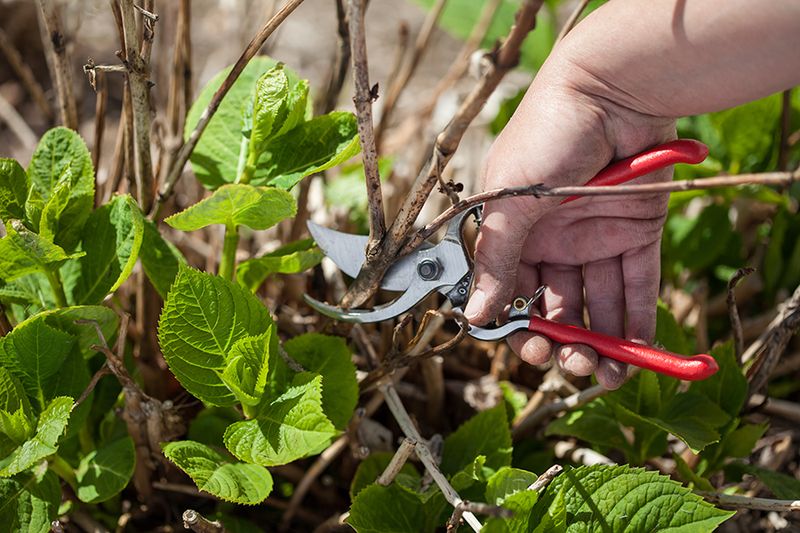
Pruning at the wrong time is one of the most common reasons a well-fed, well-watered hydrangea still refuses to bloom. Many bigleaf hydrangeas set their flower buds on old wood, meaning the stems that grew during the previous season already carry next year’s blooms by late summer. Cutting those stems back in fall, winter, or early spring removes the buds before they ever have a chance to open.
University of Minnesota Extension guidance on pruning hydrangeas explains that the safest window for old-wood bloomers is right after flowering ends in summer, giving the plant time to set new buds on the fresh growth before the season closes. Waiting until the following spring to tidy up dead stems is a reasonable approach if you are uncertain about timing, since you can remove clearly dead wood without risking healthy bud-bearing canes.
Reblooming bigleaf cultivars, such as the Endless Summer series, produce flowers on both old and new wood, which gives them more flexibility and a longer bloom window. Penn State Extension notes that even these cultivars benefit from thoughtful pruning rather than a heavy cutback. Smooth hydrangeas (H. arborescens) and panicle hydrangeas (H. paniculata) flower on new wood and can be pruned more aggressively in late winter or early spring without sacrificing that season’s blooms.
UC IPM notes that reducing the number of stems on a plant can produce larger individual flower clusters, since the plant channels energy into fewer growing points. This is a separate technique from fertilizing, and it works alongside appropriate nutrition rather than replacing it. Getting the pruning right is a prerequisite for seeing the results that good fertilizing habits can support.
Avoid unmeasured shortcuts and judge results over more than one season
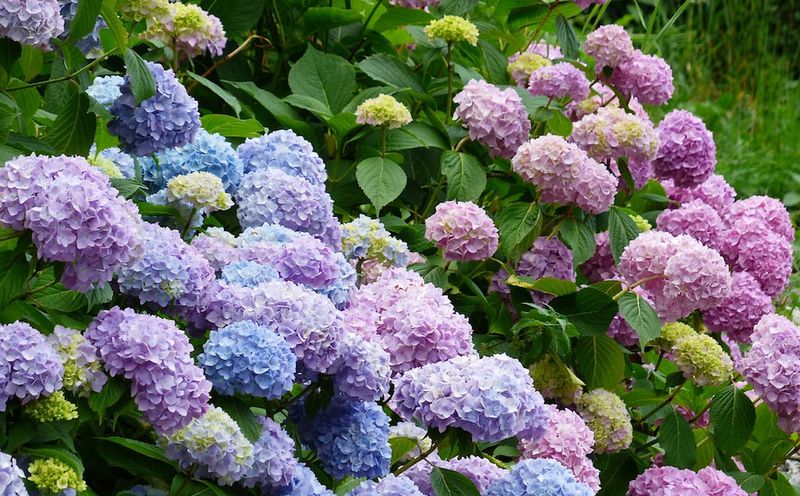
Gardening forums are full of home remedies for turning hydrangeas blue, from burying rusty nails near the roots to pouring coffee grounds or citrus peels around the base. NC State Extension’s hydrangea plant profile does not support these materials as reliable, measured treatments. They do not deliver a consistent, quantifiable change in soil pH or aluminum availability, so the results are unpredictable at best. A soil test paired with a calibrated acidifying amendment is a far more defensible starting point.
Aluminum sulfate is a real option for lowering soil pH and increasing aluminum availability in some situations, but it is not a harmless or universally necessary product. University of Maryland Extension cautions that too much aluminum sulfate can injure or burn roots, and direct contact with foliage can cause damage as well. Any application must follow the product label’s measured rates, avoid stems and leaves, and account for your soil’s existing aluminum level. Penn State Extension notes that many soils already contain aluminum, making supplemental applications unnecessary in those cases.
Sharp pH swings carry their own risks. UNH Extension explains that soil amendments work gradually, and overcorrecting pH in one application can lock out other nutrients or cause root stress. Gradual, measured changes based on test results protect the plant while still moving conditions in the right direction.
Color shifts also take time. Depending on the amendment, soil type, and cultivar, visible results may not appear until the following blooming cycle or later. Bloom color can also shift naturally as flowers age, moving from blue or pink toward green, cream, or antique tones as the season progresses. That natural transition is not a soil problem.
When recommendations from different sources seem to conflict, the plant tag, your soil-test report, your local Extension office, and the product label are the four most reliable places to look. The plant will show you what is working over time.