
How To Encourage Your Christmas Cactus To Rebloom After The Holidays
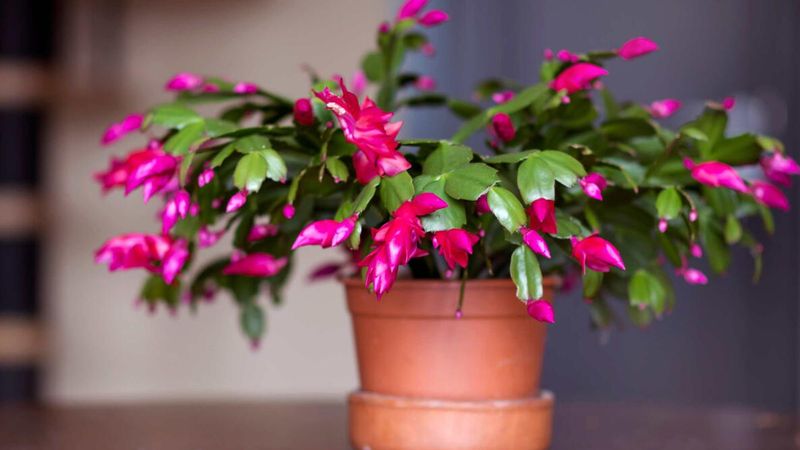
Your holiday cactus just dropped its last flower, and now it looks like a plain green plant again. Many gardeners toss in the towel here, afraid they will harm a plant they already love.
The good news is that a simple routine of long, dark nights may nudge it to bloom once more. It is not a magic switch, but it is worth a try.
A spring rebloom is possible, not promised
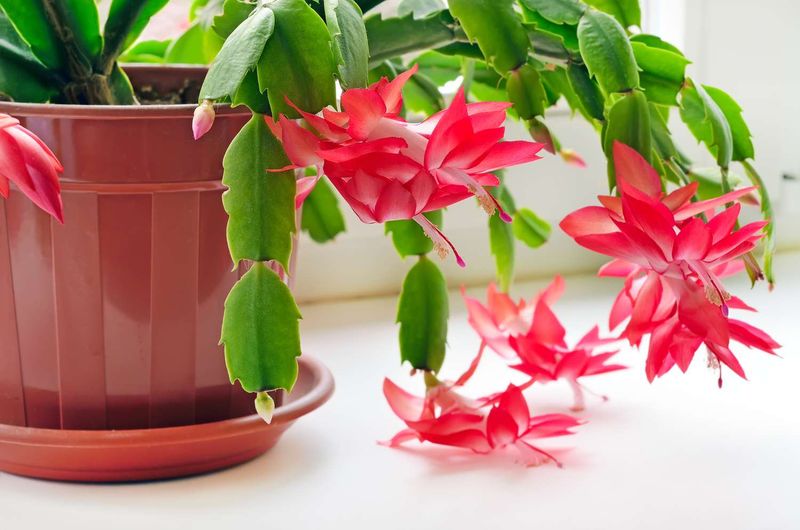
Ask any plant owner and you will hear the same hope: one more round of flowers. According to Iowa State Extension, Christmas and Thanksgiving cacti may rebloom in spring, and returning the plant to short-day conditions is the way to encourage it.
The key word there is may.
Spring flowers usually come in smaller numbers than the big holiday show. Your plant might produce a handful of blooms, a modest flush, or nothing at all this round.
That does not mean you did something wrong.
Timing varies too. University of Wisconsin-Madison Extension notes that cultivar and growing conditions affect when these plants flower.
Two cacti on the same shelf can run on different schedules.
So think of the routine in this article as an invitation, not a command. You give the plant the right cues and steady care, and then you let it decide.
There is no quick fix here, and no pre-spring deadline you need to hit. If a rebloom happens, enjoy it as a bonus.
If it does not, your plant is still healthy and will likely bloom again in its usual season.
Is it really a Christmas cactus?
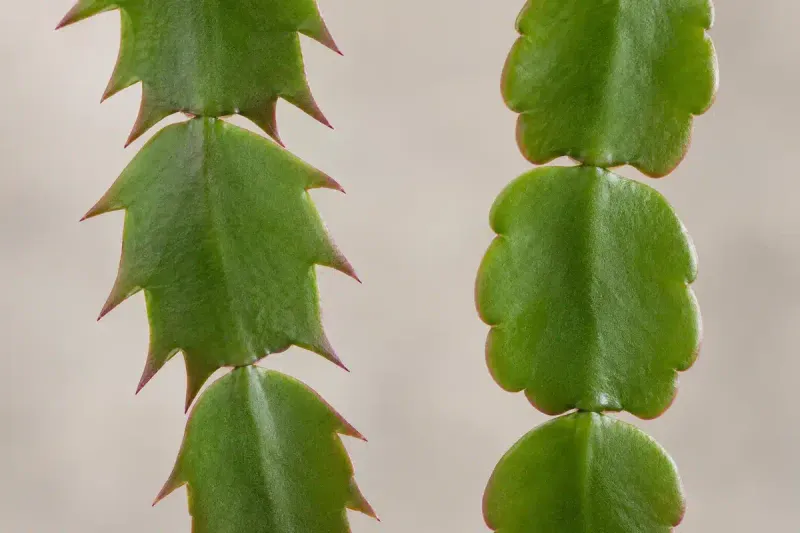
Check the stems before you start. Many plants sold as Christmas cactus are really Thanksgiving cacti, and the two are easy to mix up at the garden center.
Look closely at the flat green stem segments. University of Illinois Extension explains that Thanksgiving cactus segments have pointed, tooth-like edges.
True Christmas cactus segments are more rounded or scalloped.
Why does it matter? The two types do not have identical bloom timing, so a plant that flowered in early December may be a different kind than the one your neighbor owns.
Knowing which you have helps you set fair expectations.
Easter cactus is another relative, and it is a different spring-blooming type. Its natural flowering season is different, so do not apply holiday cactus timing to it.
As Iowa State Extension points out, these three plants are often confused. If you are unsure, do not worry too much.
The care routine below suits both Christmas and Thanksgiving cacti.
Uninterrupted darkness is the flowering cue
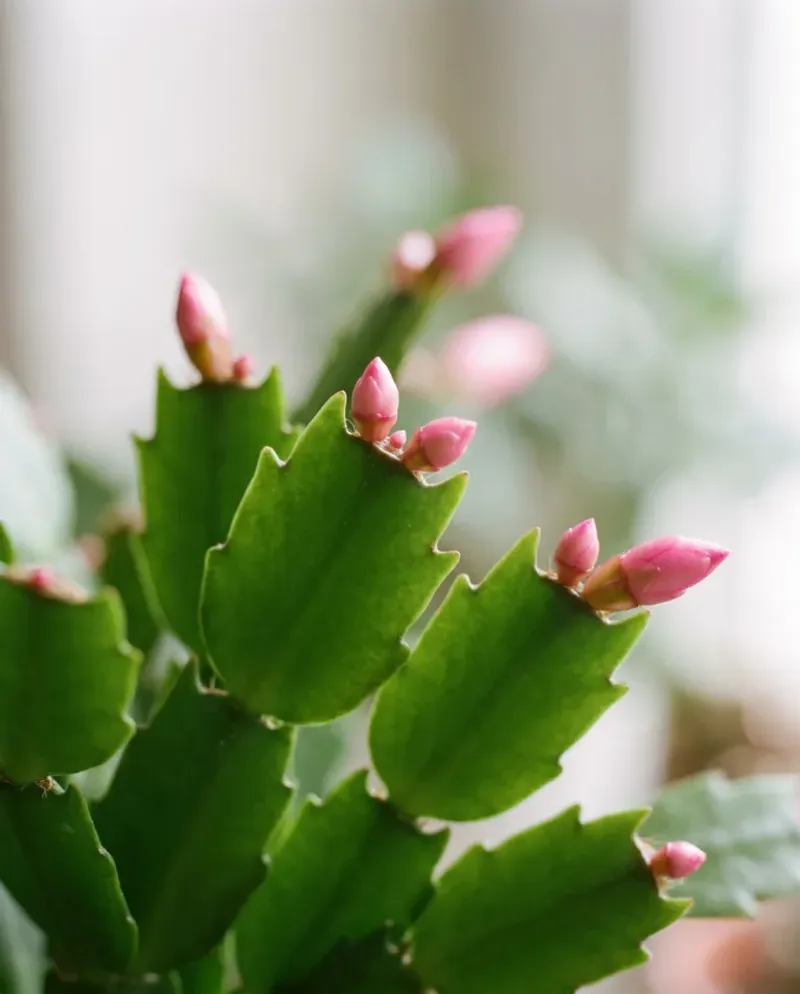
Plants pay attention to the length of the night. For holiday cacti, long stretches of darkness tell the plant that it is time to form flower buds.
University of Minnesota Extension describes long, uninterrupted nights as the main trigger, sometimes paired with cooler night temperatures. A quick flick of a lamp in the middle of the night can interrupt the signal.
That is why a few popular tips fall short. Snipping off spent flowers is optional and does not make the plant bloom on its own.
Cutting back water by itself will not do it either. Illinois Extension also lists light and temperature as the cues that matter.
Think about where your cactus lives right now. A spot near a living room lamp, a hallway light, or a streetlight shining through a window may be giving it unwanted evening light.
Spotting that is half the work.
Even with ideal darkness, buds are not guaranteed. The cue simply gives the plant a better chance.
The next section covers the actual routine.
Give the plant about six weeks of long nights
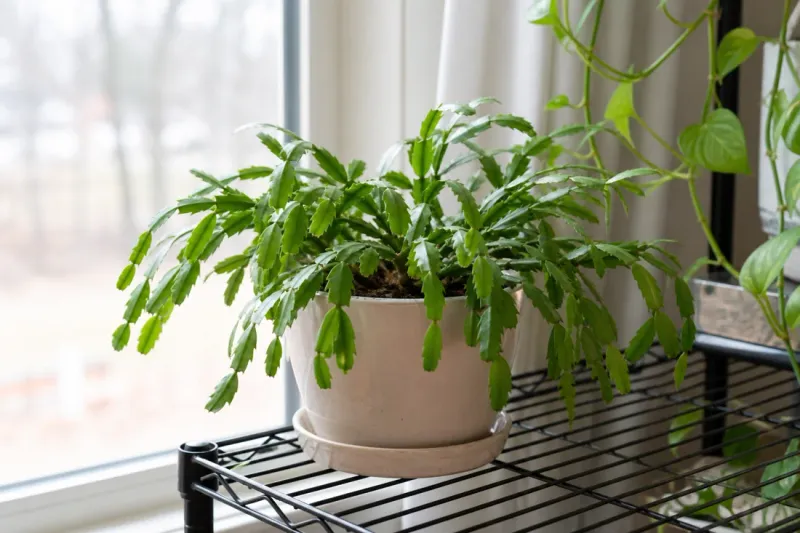
Here is the routine in plain steps. Each night, give your cactus at least 12 hours of complete darkness.
Do that for about six weeks.
University of Minnesota Extension says that when night temperatures sit around 60 to 65 degrees Fahrenheit, holiday cacti need at least 12 hours of total darkness nightly for roughly six weeks. Nights near 55 degrees may also encourage buds.
There are easy ways to do it. Move the plant to a spare room where no one turns on a light after dusk.
Or cover it with a box or dark cloth in the evening and uncover it in the morning. Pick a routine you can keep up every single day, because skipped nights can weaken the cue.
During the day, bring it back into bright, indirect light. A spot a few feet from an east or north window often works well.
Direct afternoon sun can scorch the stems.
After the dark period, buds need more time to develop into flowers. Some plants take longer than others, so there is no exact bloom date to circle on the calendar.
Keep checking the stem tips for tiny pink or red bumps, which are your first signs of progress. If nothing appears, you can simply try again later.
Steady conditions help protect developing buds
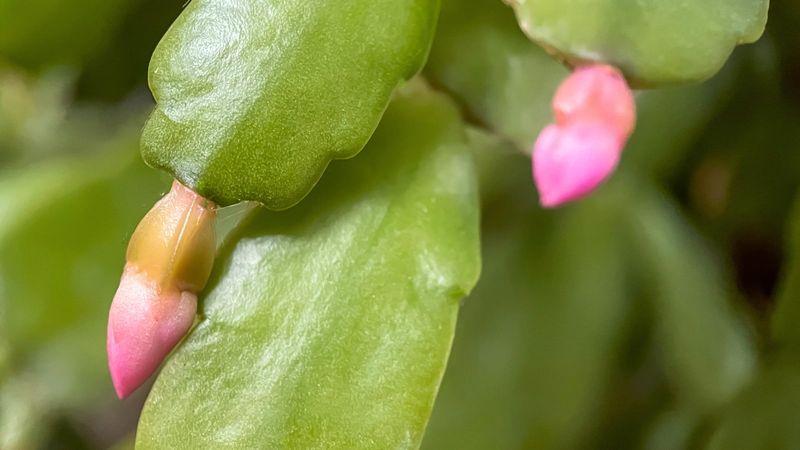
Once buds start forming, stability becomes the goal. Holiday cacti are rainforest plants, not desert cacti, so they like bright, filtered light rather than harsh sun.
University of Minnesota Extension notes that environmental stress can cause buds to drop, and temperatures below 50 degrees may do it as well. Cooler nights in the mid 50s to mid 60s are the range the extension guidance mentions for bud formation.
Walk around your home and look for trouble spots. A cold windowpane, a drafty door, a heating vent, or a space heater can all shock the plant.
Illinois Extension also advises protecting the plant from abrupt temperature changes.
Try not to move the pot around once you see buds. Turning it, relocating it, or hauling it to a new room can all be a mild stress.
Pick a good home and leave it there.
These numbers are guidelines, not promises. Your house may run warmer or cooler than the examples, and your plant may respond in its own way.
Small steady choices usually serve it better than big dramatic ones.
Water less often, but do not let the plant dry out
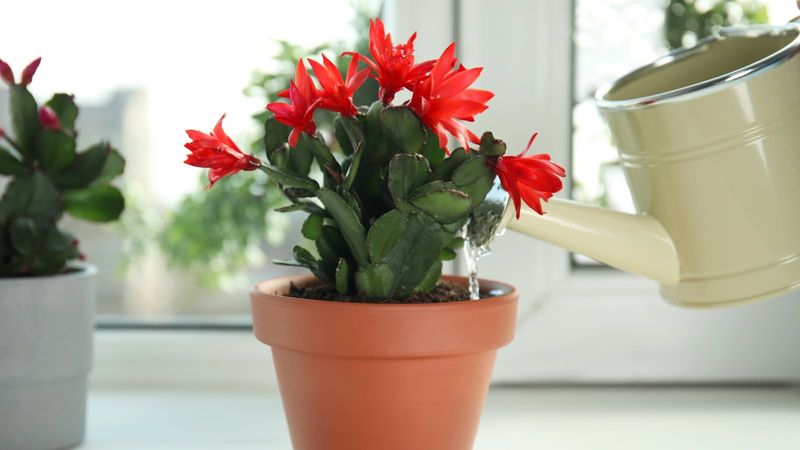
Watering is where many worried gardeners slip. After the flowers fade, the plant slows down, so it needs a little less water than it did during active growth.
Illinois Extension advises watering somewhat less until new growth appears. Michigan State University Extension adds that you should avoid both waterlogged soil and letting the plant dry out completely.
Put those together and you get a simple plan. Wait until the top of the soil feels dry, then water thoroughly and let the extra drain away.
Empty the saucer so the roots are never sitting in a puddle.
A pot with drainage holes makes all of this easier. Soggy soil is a common reason these plants struggle.
Do not cut off water entirely. A total cutoff is too harsh, and a bone-dry plant can drop buds or shrivel.
When you spot fresh new growth at the stem tips, return to more regular watering.
Let the plant set the pace
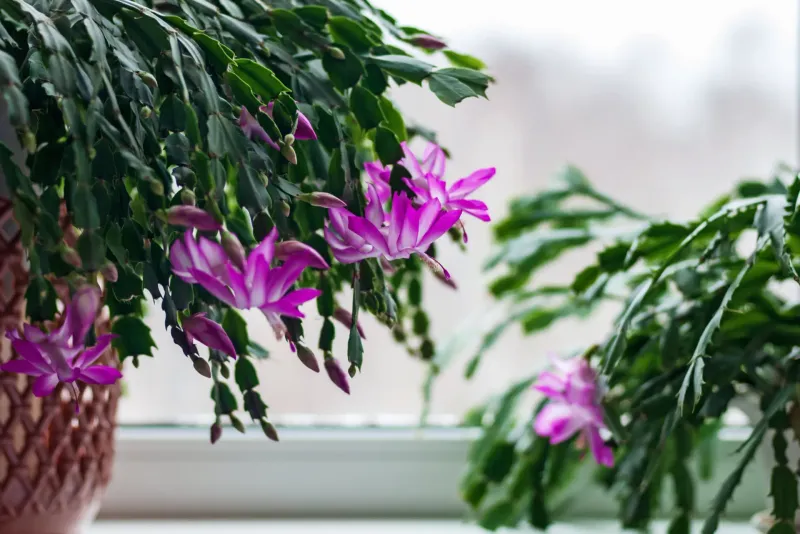
Keep the nights long and the care gentle, then watch what the plant does. Its response matters more than any date on the calendar.
University of Minnesota Extension frames bud formation as a process that takes weeks, and Iowa State Extension reminds us that spring flowers tend to be lighter than the holiday display.
A few buds in March is a win. A quiet green plant is not a failure.
Either way, your cactus is still alive and ready for its next season.