
How to Help a Christmas Cactus Bloom: Light, Temperature, and Steady Watering
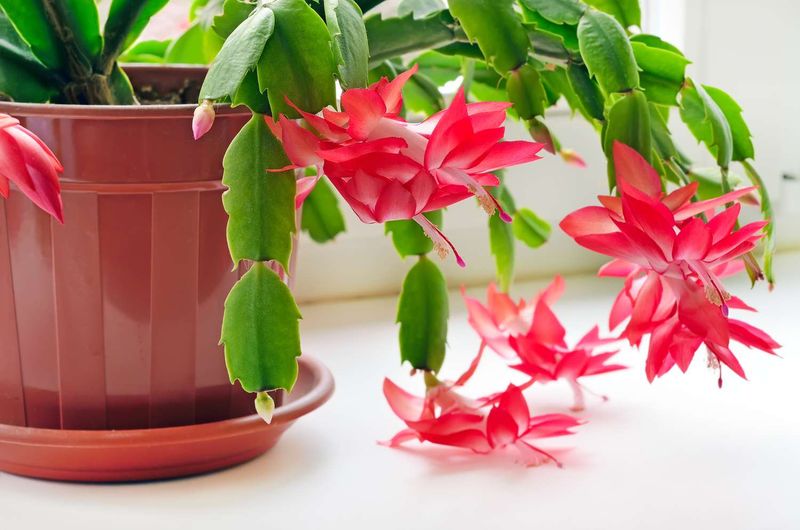
Your Christmas cactus looks healthy, but the buds just are not showing up. Many gardeners blame their watering, and plenty of online tips say a dry spell will flip a bloom switch.
The real story is a little different, and it is good news for anyone who feels they have done something wrong. Here is what actually helps your plant flower, and how to keep the buds once they arrive.
Watering is not the switch that starts the blooms
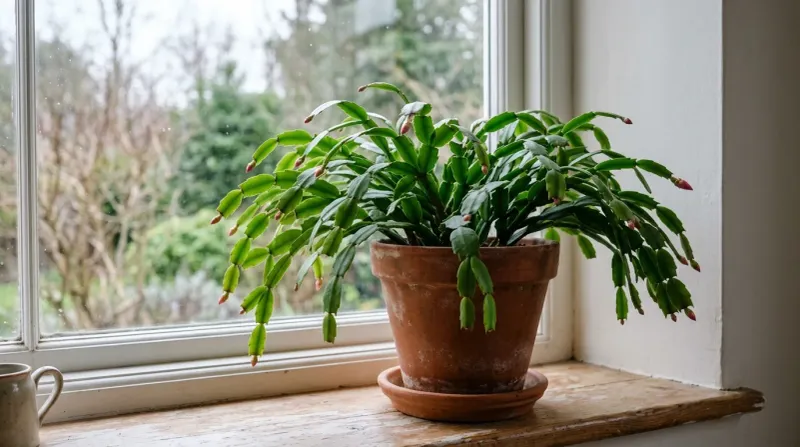
If your cactus has no buds, please do not assume you watered it wrong. A popular tip says to cut back or stop watering so the plant sets more buds.
UMass Extension’s guidance for commercial growers says research does not support withholding water to start buds, and that water stress can actually reduce bud set.
It helps to separate two jobs. One job is bud initiation, which is when the plant decides to make flower buds.
The other is bud retention, which is whether those buds stay on the plant and open into flowers. Watering plays a part in the second job and in the plant’s general health, but it is not the signal that starts the first one.
The better-supported cues for starting buds are long, uninterrupted nights and cool conditions. We will walk through those in the next two sections.
Water still matters, because Iowa State Extension notes that too much or too little water can lead to bud or flower drop.
So a plant without buds is not a sign of a mistake you made. More often, it is a sign that the light or temperature cues were not quite right yet.
That is something you can fix without risking your plant.
Long nights and cool conditions cue bud formation
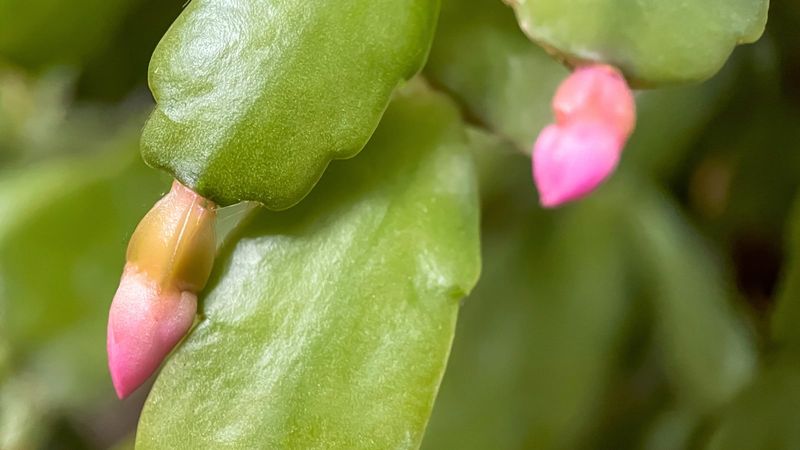
Holiday cacti are short-day plants, which means they respond to the length of the night. When nights are long and uninterrupted, the plant gets the message that it is time to make flower buds.
University of Illinois Extension describes long dark periods as a key trigger for both Thanksgiving and Christmas cacti.
Cool temperatures play a role too. UConn Extension notes that cool nights, around 55 degrees Fahrenheit, can also encourage buds.
Think of light and temperature as two dials that can each help nudge the plant toward flowering.
Things can go the other way as well. Iowa State Extension says artificial light at night and temperatures above 70 degrees can interfere with flowering.
A lamp that stays on in the evening or a warm, cozy living room may be why your cactus is holding back.
Daytime matters too. Bright, indirect light during the day keeps the plant healthy and strong while it builds those buds.
You are not asking the plant to sit in the dark all the time, just to get a clear, quiet night.
A consistent dark period gives the plant a clear signal
Turning those cues into a routine is simpler than it sounds. Pick a spot where the plant gets a full, unbroken night, such as a spare room that is never lit after dark, or a closet you open only in the morning.
Then bring it back to bright daytime light so it keeps growing well.
The exact schedule depends on who you ask. Illinois Extension suggests at least 12 hours of continuous darkness for 5 to 6 weeks.
UConn gives 12 to 14 hours for 4 to 5 weeks, and UF/IFAS describes a six-week dark treatment. Treat these as helpful guidance rather than a rule that fits every plant.
UConn also offers a cool-night alternative, with nighttime temperatures around 55 degrees. You do not need to combine every method.
Choose the one that fits your home, whether that is a dark room or a cool spot, and stay consistent with it.
The key word is uninterrupted. Even a short burst of light from a hallway lamp or a phone screen can break the pattern, so pick a place where nobody will flip a switch at night.
Keep watering by the soil, which we cover next, while the plant is in its dark routine.
Water by the soil, not by a fixed schedule
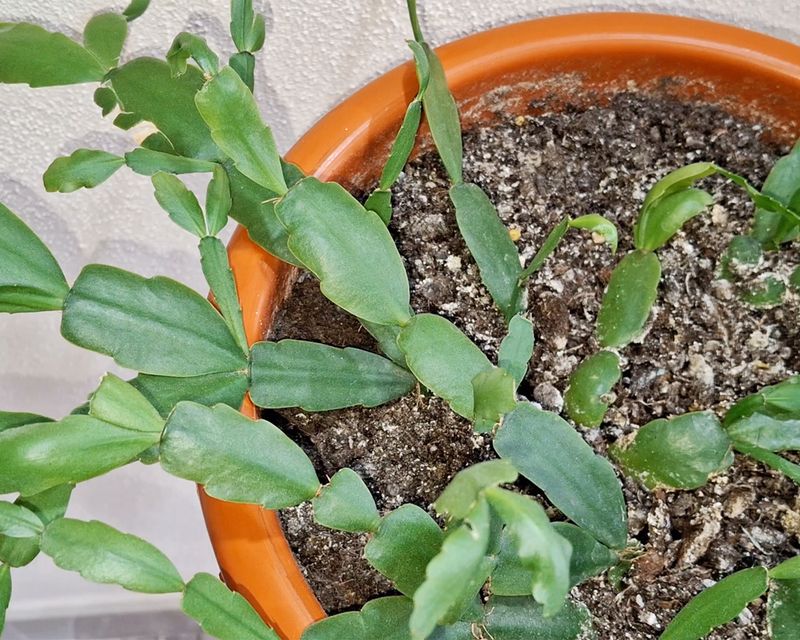
A calendar cannot tell you when your cactus is thirsty, but the potting mix can. UF/IFAS advises watering when the top inch of soil feels dry.
Then water thoroughly and empty the saucer so the roots are not left standing in water.
Drainage does a lot of the work for you. Use a pot with holes and a well-draining mix.
UConn Extension also stresses good drainage, since saturated soil can damage roots.
Extension sources do not all say the same thing about moisture. Some say keep the mix lightly moist, and University of Wisconsin Extension and others mention letting it dry a bit between waterings.
The shared advice is to avoid extremes.
In practice, that means two warning signs. Limp, shriveled stems can point to a plant that has gone too dry, while soggy soil and a sour smell point to too much water.
Neither one is a trick to get flowers, so aim for the middle and check the pot with your finger each time.
Once buds appear, steady conditions help prevent drop
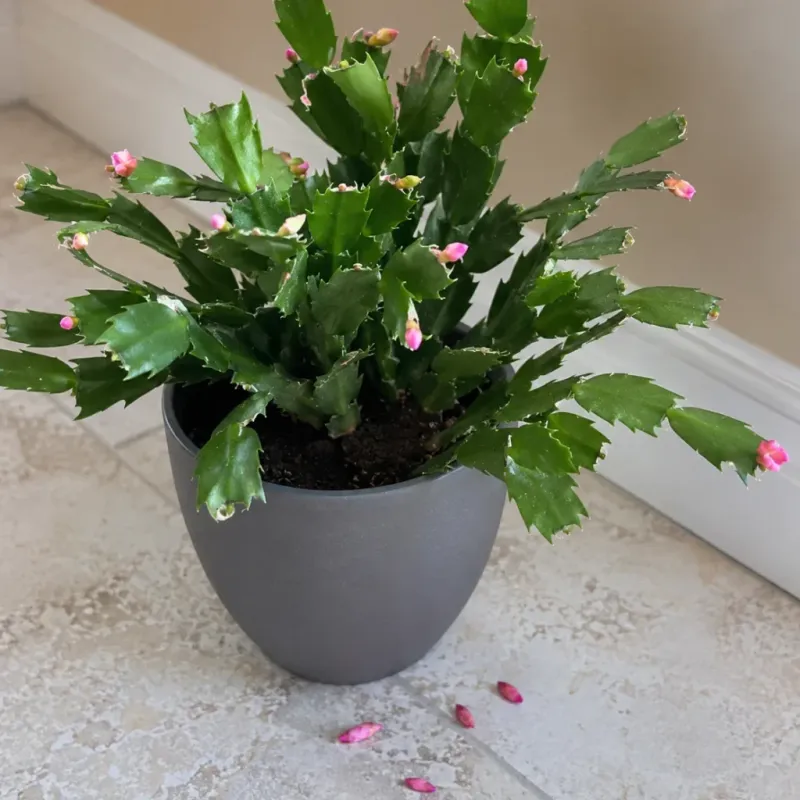
Seeing buds is exciting, and now the goal changes from making buds to keeping them. Holiday cacti can be touchy at this stage.
Iowa State Extension points to drafts, sudden changes in temperature or light, and watering extremes as common reasons buds fall off.
Moving the plant can cause trouble too. NC State Extension Plant Toolbox lists moving the plant and abrupt changes among the things that can lead to bud drop.
If you must shift your cactus, do it before the buds are large.
Check where the pot sits. A spot near a heating vent, a cold window, or a door that opens often is a poor choice.
Pick a place with steady light and an even temperature, and leave it there.
If a few buds drop, try not to panic. It happens, and the plant often keeps others.
Keep your routine calm and consistent, and rely on the soil check you already know instead of adding any new tricks.
Which holiday cactus you have affects when it flowers
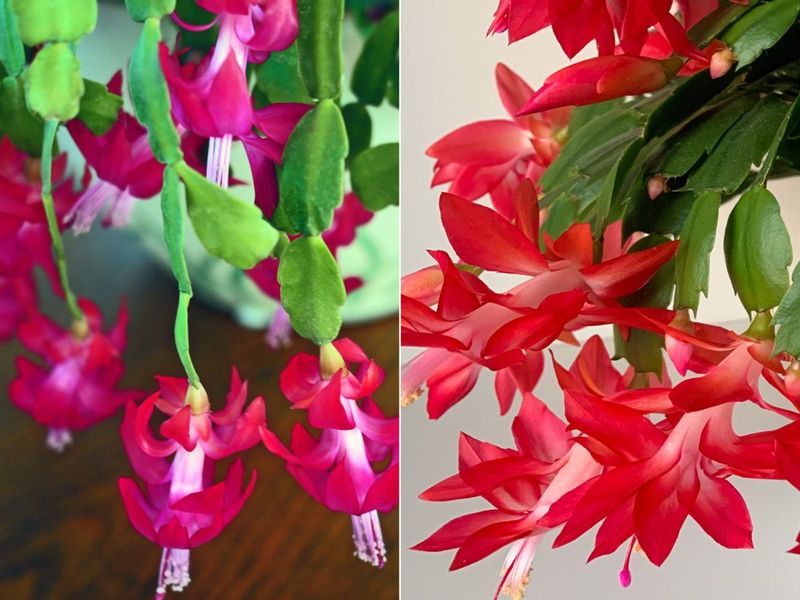
The name “Christmas cactus” is often used loosely for several holiday cacti. Many plants sold before the holiday are actually Thanksgiving cacti.
If yours bloomed early, or has not bloomed yet, the type may explain the timing.
Illinois Extension notes that Thanksgiving cacti typically bloom from late November to late December. True Christmas cacti typically bloom from late December into March.
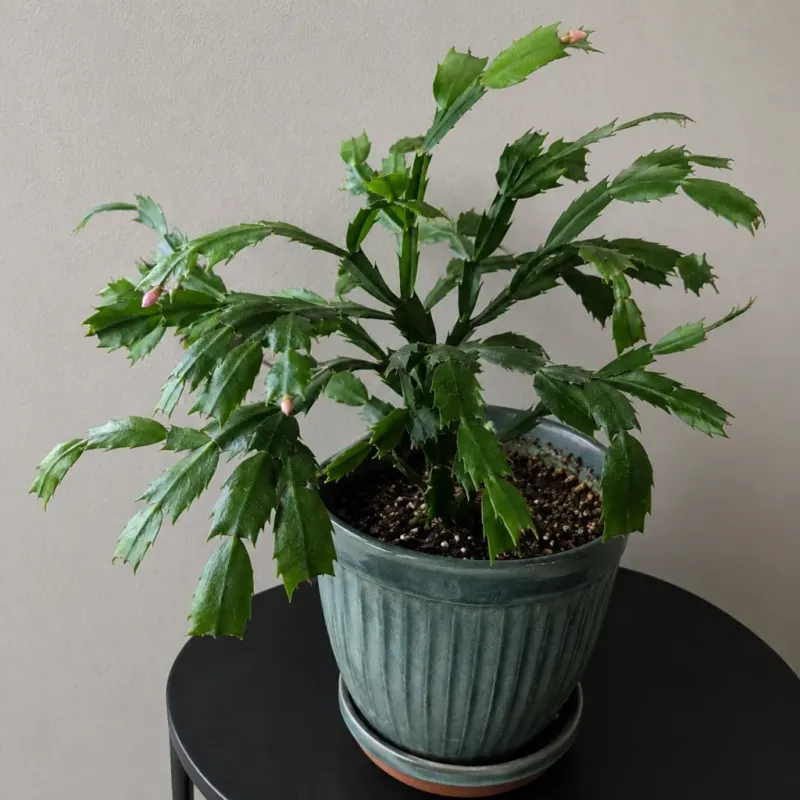
Looking at the stem edges can help, since Thanksgiving cacti have pointed, claw-like edges and Christmas cacti have smoother, rounded ones.
Timing also depends on the cultivar and on the light and temperature your plant actually gets. Iowa State Extension says these factors can shift when flowers appear.
So a later bloom does not mean you watered incorrectly. It may simply be a different plant on a different schedule.
Plan on flowers sometime in the season rather than on one exact date.
Focus on steady care, not a watering trick
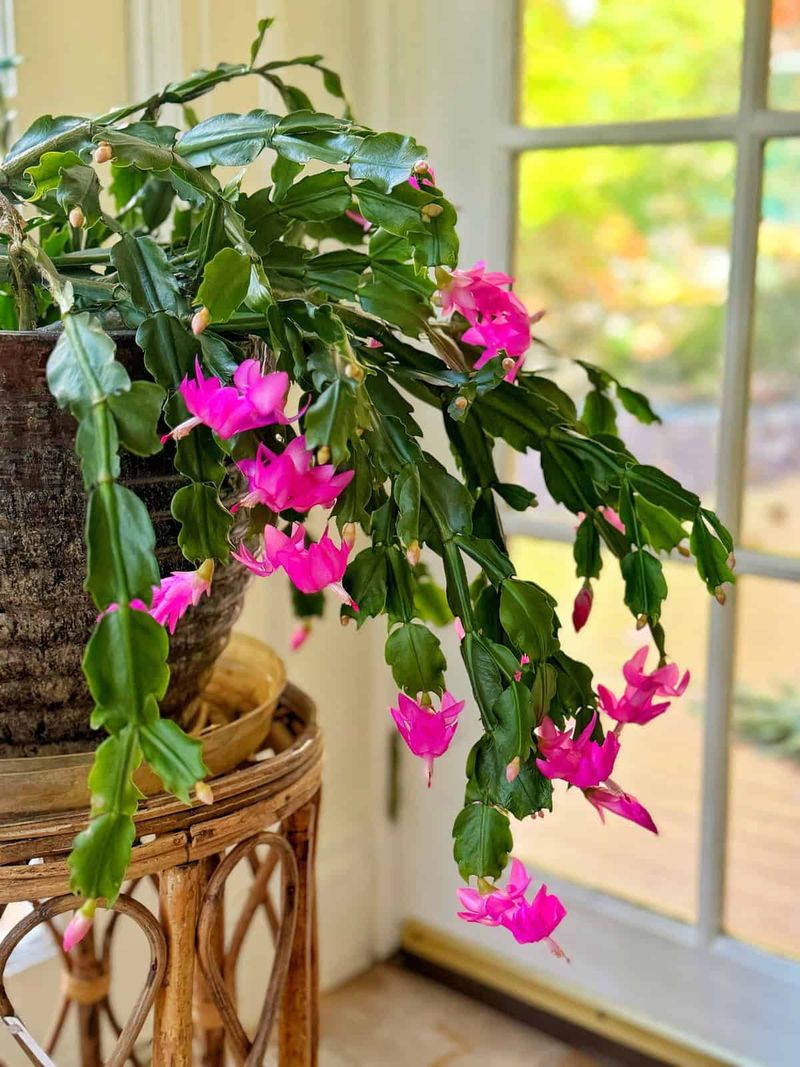
Skip the drought and give the plant long, dark nights and cool conditions, which are the cues that encourage buds. As UMass Extension explains, withholding water is not a supported method.
Water by the potting mix, and keep things steady once buds form, as Iowa State Extension advises.
A calm, consistent cactus is a happy one, and blooms tend to follow patience rather than tricks.