
How To Support Your Christmas Cactus So It Has the Best Chance To Flower
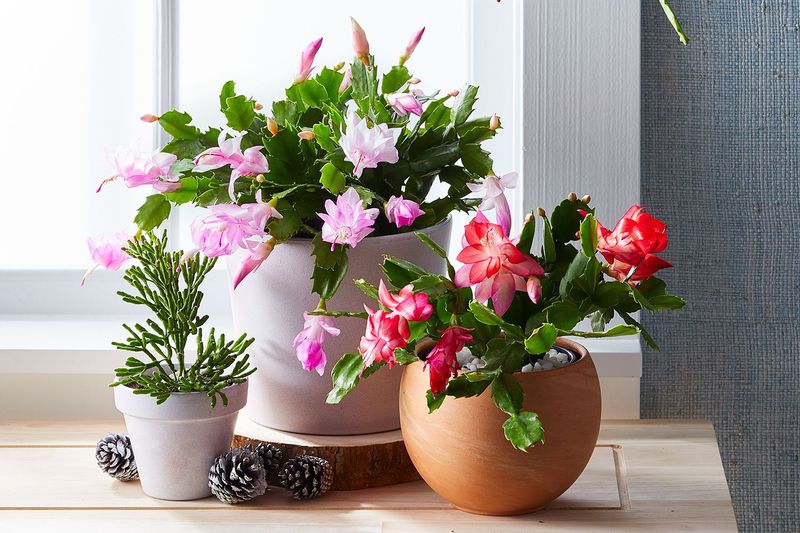
A holiday cactus with no buds can make you worry, especially as the holidays get closer. The good news is that a few simple habits around light, temperature, and water can help the plant get ready to flower.
Some plants set buds on their own schedule, and a late start does not mean you have ruined anything. Here is what to check and what to do this fall, plus a few honest notes about timing.
First, know which holiday cactus you have
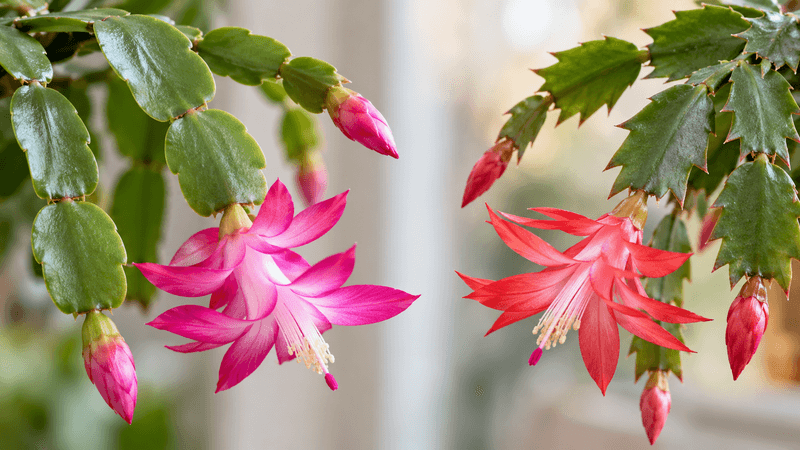
Take a close look at the stems before you plan anything. Many plants sold as Christmas cactus are really Thanksgiving cactus, and the two are easy to mix up at the garden center.
The quickest clue is the shape of the flat stem segments. Illinois Extension explains that Thanksgiving cacti have pointed, saw-like edges on each segment, while true Christmas cacti have smoother, rounded edges.
Run a fingertip along the side of a segment and you will feel the difference.
Why does it matter? The two types have different customary bloom seasons, with Thanksgiving cactus typically opening earlier in the season and true Christmas cactus a bit later.
If your plant has pointed edges and still shows nothing in late fall, it may simply be running on its own clock.
Keep in mind that identification is not a way to predict an exact bloom date. Cultivar, the room where the plant lives, and how it was cared for earlier in the year all shift timing.
Think of the label as a rough guide to what is normal, not a deadline your plant has missed.
Once you know what you are growing, the rest of this checklist applies to either type. The care steps are similar, and the main differences show up in when flowers might appear.
A late start can help, but it cannot set a deadline
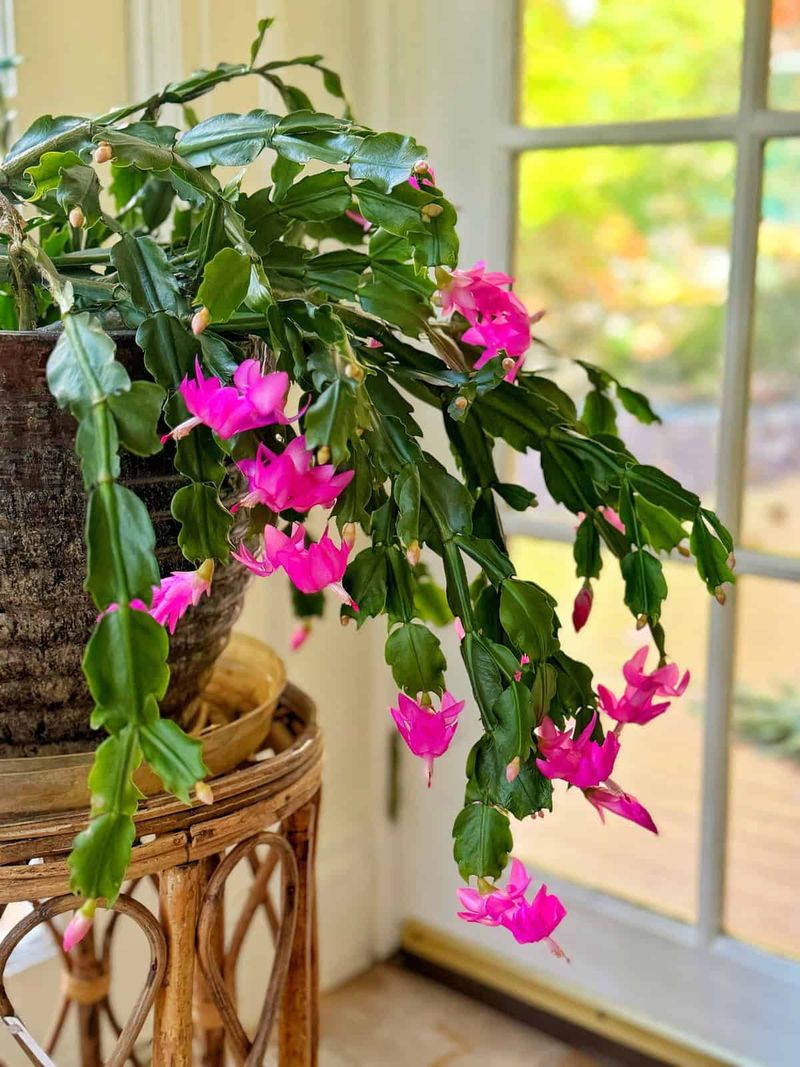
Before you change anything, it helps to set expectations. Starting a bud-friendly routine late can still support flowering, but nobody can promise blooms by Christmas or a plant covered in buds.
Some plants are already ahead of you. UMass Extension notes that most cultivars in the northern U.S. start forming buds under natural fall conditions in September.
That is an observation about northern cultivars, not a cutoff date for your home.
The same fact sheet describes controlled commercial greenhouse production, where tight buds took about seven weeks and first flowers about eight weeks after treatment began. Those are growers’ figures under tightly managed conditions.
A kitchen windowsill is a different place, so please do not treat them as a household countdown.
Cultivar, location, and the plant’s previous care all play a part. A cactus that spent the summer healthy and well fed has more to work with than one that was stressed.
University of Minnesota Extension describes about six weeks of short days as the general need, which gives you a rough sense of how long this takes.
So the honest picture is this: a late start gives the plant a chance, not a guarantee. If flowers show up after the holidays, that is still a win, and the plant is not behind or broken.
Use long nights and cool, safe temperatures
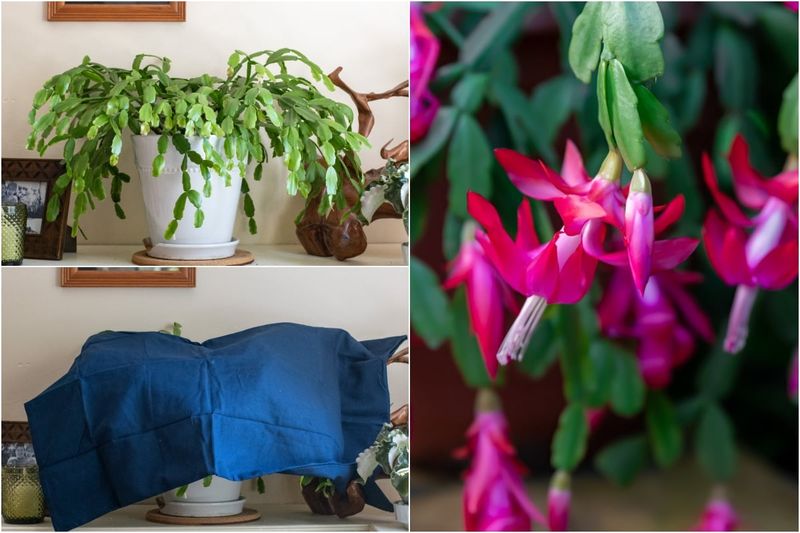
Two cues matter most for a holiday cactus that has not set buds: long, uninterrupted nights and cool, but not cold, air. Give the plant bright light during the day so it has energy to build flower buds.
University of Minnesota Extension suggests indoor temperatures of 65 to 70 degrees F by day and 55 to 65 degrees F at night. When nights run 60 to 65 degrees F, it recommends at least 12 hours of complete darkness every night for about six weeks.
Nights warmer than 65 degrees F make blooming less likely.
Cooler nights can do part of the work. The same source says a night temperature around 55 degrees F can also encourage flowers, sometimes regardless of day length.
That makes an unheated spare room or a cool entryway worth considering, as long as the plant stays well above freezing.
Sources do not agree on one exact recipe. UConn describes about four to five weeks of long nights, or nighttime temperatures near 55 degrees F.
Treat these numbers as a practical range, not a rule that every plant must meet.
A simple routine is to leave the cactus in its bright daytime spot and check a thermometer near the plant at night. If the room stays in the 55 to 65 degree range and the dark hours are protected, you are giving the plant a fair chance.
Never push it into frost or very cold air, since that can do harm instead of good.
Make the dark period dependable
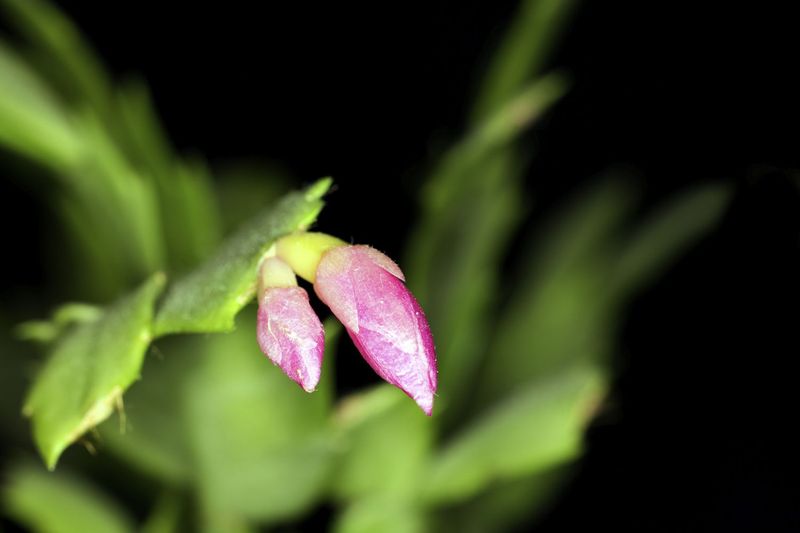
Long nights only work if they are truly dark. The easiest setup is a room that gets no evening artificial light, such as a spare bedroom, a quiet office, or an unused dining room.
If your cactus lives in a busy living area, you could move it to that darker spot each evening and bring it back in the morning. Another option is a closet or a box that blocks light, as long as the plant still gets bright light during the day.
Illinois Extension says buds need at least 12 hours of continuous darkness for five to six weeks. Those hours are commonly recommended as a minimum, so you do not need to hit an exact number like 14.
You may worry that a quick trip to the kitchen for a snack ruins everything. It does not.
Illinois Extension warns specifically about interruptions lasting two or more hours, which can prevent bud set. A few seconds of hallway light is a different story from a lamp left on all evening.
Once buds are set, the pressure eases. The same source explains that day length no longer affects flowering after that point, so you can stop managing the dark hours and shift to steady care.
Water normally; do not dry the plant out to force buds
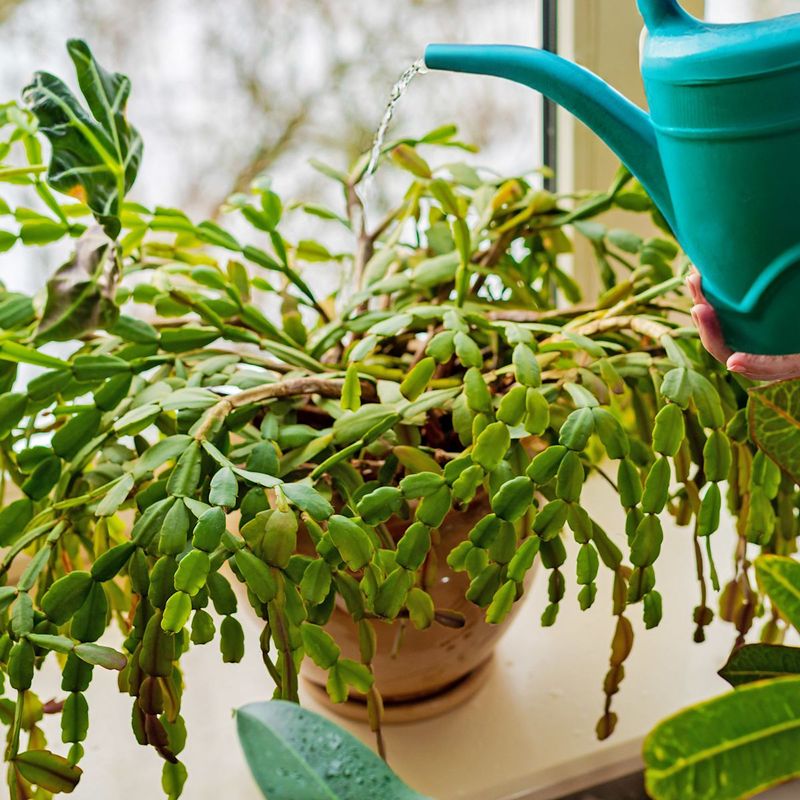
Despite the name, a holiday cactus is not a desert plant. It comes from tropical forests, where it grows on trees, and it likes a different routine than a spiny cactus in a sunny yard.
University of Minnesota Extension notes that holiday cacti need relatively moist soil for much of the year. Excellent drainage matters just as much, because waterlogged roots can rot.
A good habit is to water when the top of the mix starts to feel slightly dry, then let the extra drain away. Empty the saucer so the pot never sits in water.
Aim to avoid both extremes: long dry spells and soggy soil.
You may have heard that you should stop watering to push the plant into blooming. Please skip that advice.
UMass Extension reports that research does not support withholding water to induce buds, and that water stress during flower induction can reduce bud set.
A limp, wrinkled stem is a clue that the plant is too dry. Soft, mushy stems near the base point toward too much water.
Either way, steady, moderate moisture in a pot that drains well is the safer path.
If buds are present, keep conditions steady
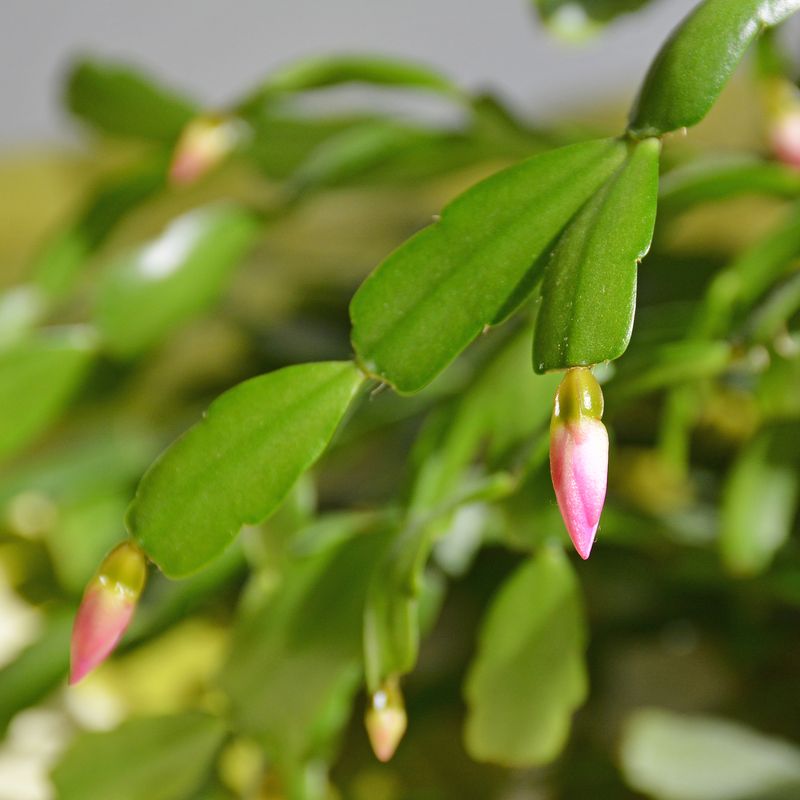
Spotted tiny buds at the tips of the stems? Congratulations, the hard part is done.
Now the goal changes from encouraging buds to keeping the ones you have.
Give the plant bright, indirect light and a stable home. Water it appropriately, and avoid moving it around or turning it to a new window every day.
Choose a spot away from heating vents, cold drafts, and doors that open to the outdoors.
Illinois Extension lists several causes of bud drop: high temperatures, drafts, insufficient light, and watering that is too little or too much. If buds are falling off, check that list first, since one of those is often the culprit.
Cold can be a problem too. Illinois Extension warns that temperatures below 50 degrees F may cause bud drop, and UConn advises bringing plants indoors when temperatures drop below 50 degrees F.
A chilly night is not a shortcut to more flowers.
Think of this stage as protecting your progress. Even a plant with plenty of buds may drop a few, so a small loss is not a sign that you did something wrong.
Choose steady care over drastic interventions
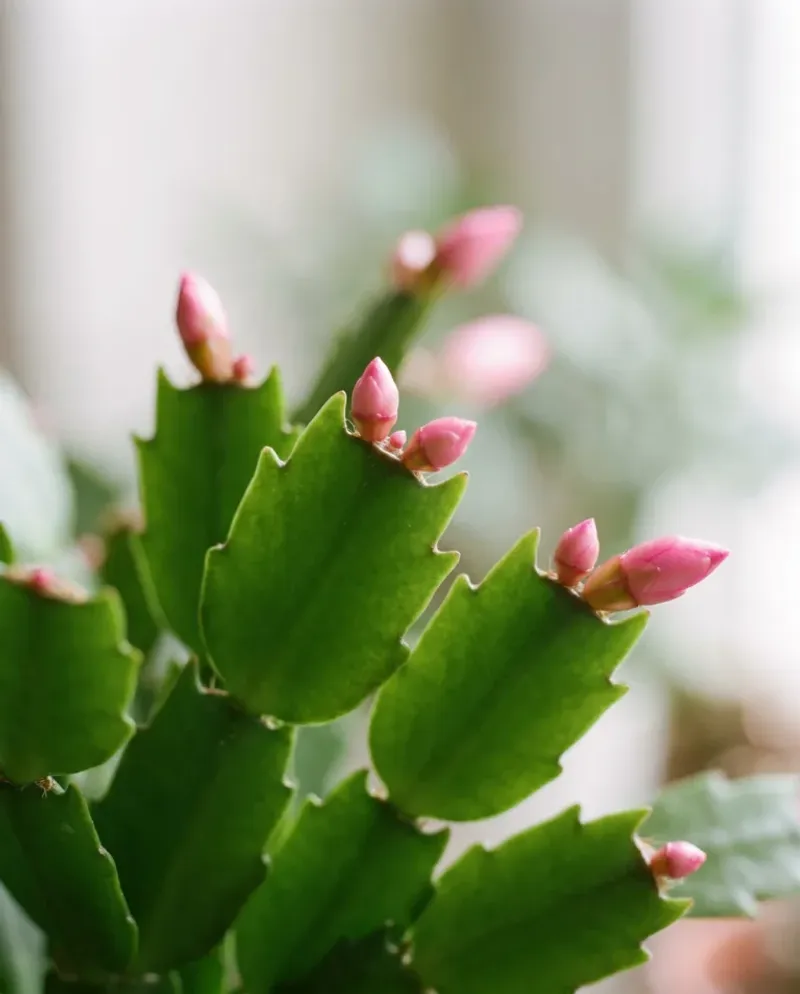
If your cactus has no buds, offer reliable long nights, cool but safe temperatures, and sound watering in a pot that drains well. If buds are already there, keep the light, temperature, and moisture steady and leave the plant where it is.
These steps can support flowering, but they cannot promise Christmas blooms or a crowded display, especially after a late start. University of Minnesota Extension and UMass Extension both point toward patience and consistency.
A holiday cactus rewards calm routines far more than dramatic rescues, and a late bloom is still a bloom.