
Sourwood: The North Carolina Native Tree That Can Feed Bees in Midsummer
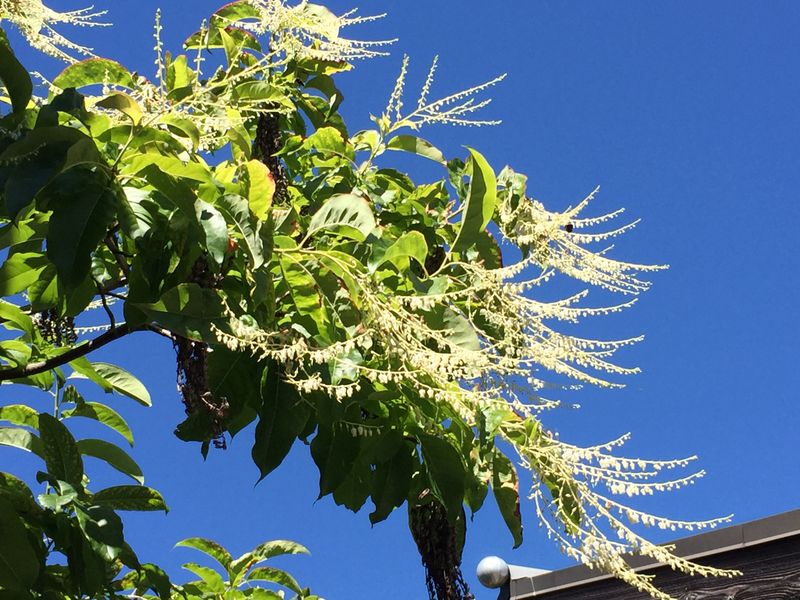
Picture a small tree dripping with white, bell-shaped flowers while summer heat settles over your yard. That tree is sourwood, a North Carolina native that can give bees and other pollinators a meal in the middle of summer.
When it blooms depends on where you live, and it will not fit every yard. Here is how to tell whether sourwood belongs in yours.
Sourwood brings a distinctive bloom to the North Carolina yard
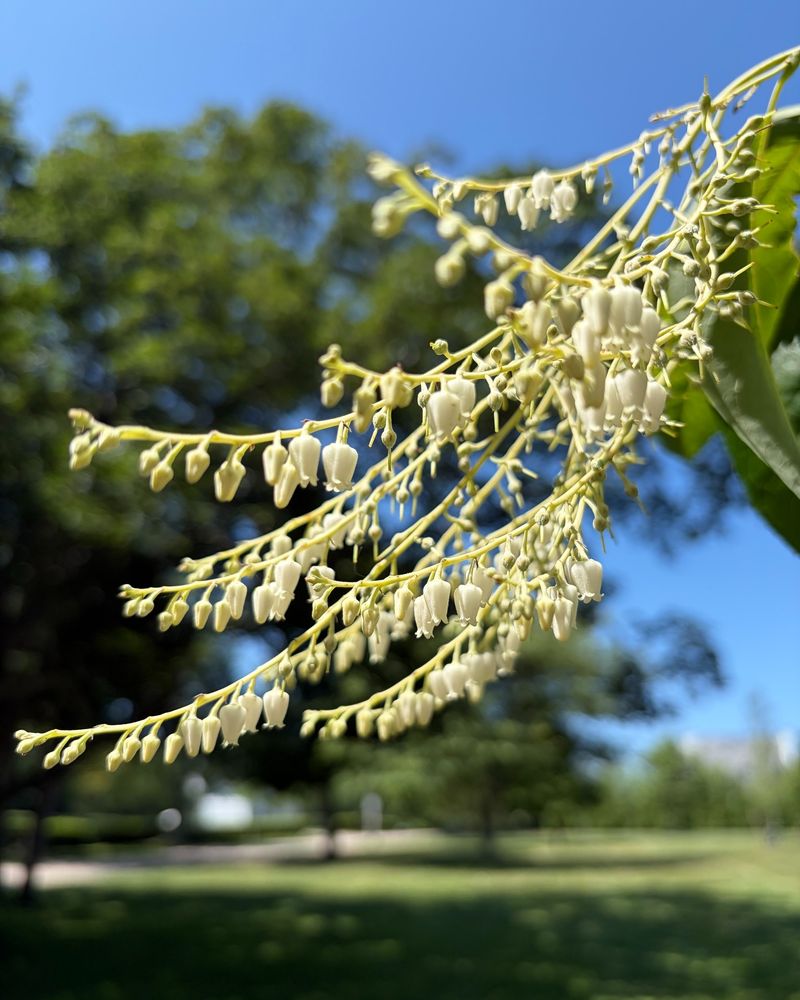
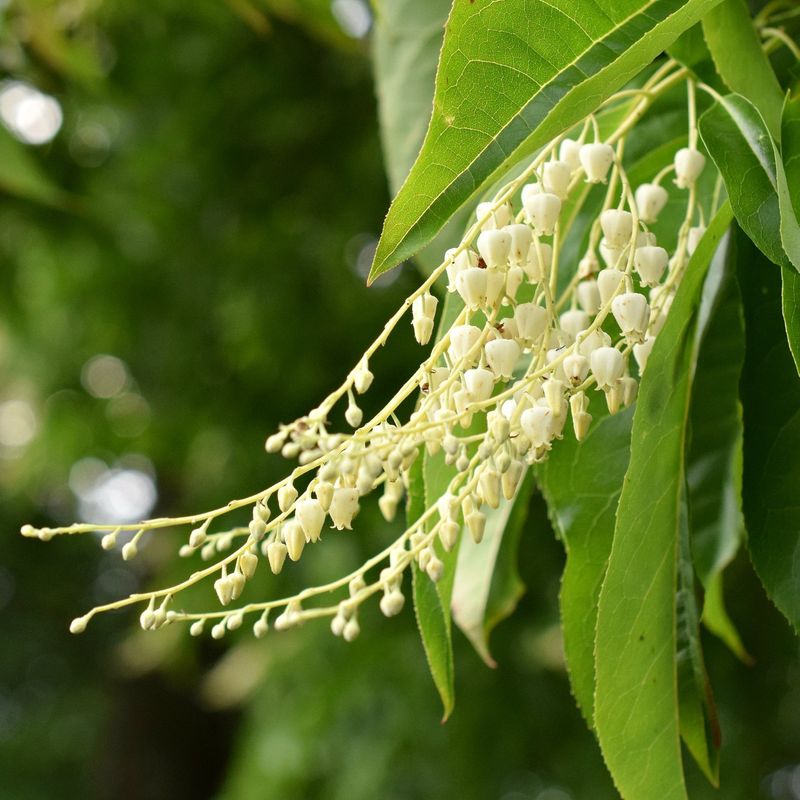
Sourwood (Oxydendrum arboreum) is easy to spot once it flowers. Small white, bell-shaped blossoms hang in drooping clusters from the branch tips, a bit like lily-of-the-valley strung along curved wands.
According to the NC State Extension Plant Toolbox, those clusters run about 4 to 8 inches long and stay on the tree after the flowers drop.
This tree grows wild across the Mountains, Piedmont, and Coastal Plain. It is less common in the low, alluvial parts of the Coastal Plain, so folks near river bottoms should not expect to see it everywhere in the woods around them.
Size matters when you are picking a spot near a house. Sourwood is slow-growing, and a typical landscape tree reaches about 20 to 30 feet tall and 10 to 15 feet wide.
That makes it a good fit for a residential lot that has room for a small to medium tree, but not a quick screen or shade maker.
The real draw for pollinator-minded gardeners is its midsummer flowering. Bees and other pollinators visit the blooms, which can add food to the yard during the warm part of the year.
Bloom dates shift from one region to the next, though, so your own yard may see flowers earlier or later than a neighbor in another part of the state. The next section sorts out the timing.
When does sourwood bloom in your part of the state?
Ask three sources about sourwood bloom and you will get three slightly different answers. NC State Extension lists June to July.
The USDA Forest Service describes a wider range across the tree’s whole territory, from late June into August.
For a closer look at North Carolina, the North Carolina State Beekeepers Association calendar gives approximate windows. Sourwood runs roughly June 25 to July 20 in the Mountains, June 10 to 30 in the Piedmont, and June 1 to 21 in the Coastal Plain.
Read those dates as a rough guide. In the Piedmont and Coastal Plain, flowering may wrap up before July even starts, while mountain gardeners have a better shot at flowers well into the month.
Weather and microclimate can push dates around too. A cool, sheltered hollow and a hot, sunny slope a mile apart may bloom on different weeks.
Spring warmth, drought, and elevation all play a part.
So think of July bloom as a possibility in some places and some years, not a promise. A simple habit helps: note the first open flowers on a nearby sourwood each year, and you will learn your local rhythm.
Its flower clusters offer bees a seasonal food source
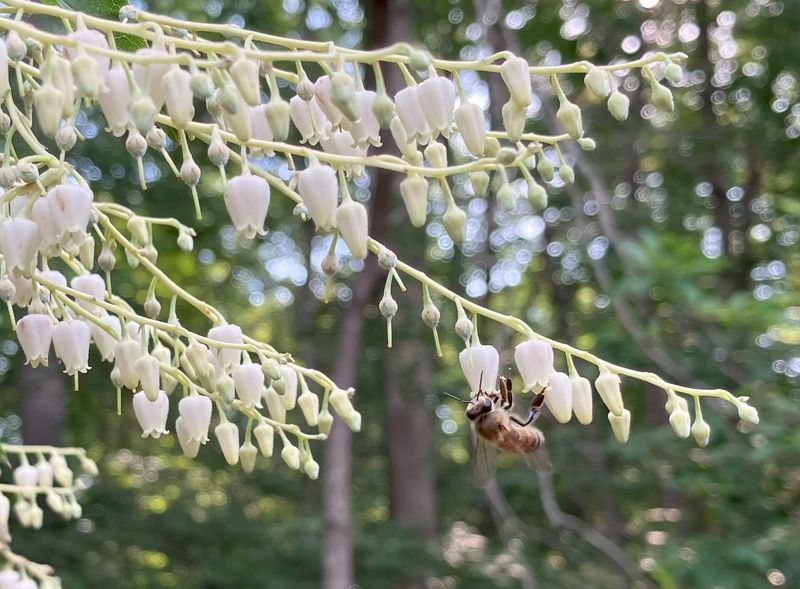
Bees do not have to hunt for sourwood flowers. They hang in rows along the branch tips, which makes the blooms easy to find and easy to work.
NC State lists sourwood as a plant that attracts bees, butterflies, and other pollinators, and you can read that in its plant profile.
The USDA Forest Service goes a step further and calls the flowers an important honey source in some areas. That is good evidence for honey bee forage and for general pollinator visits.
It does not show that native bees depend on sourwood, and not every visitor on your tree will be a native species.
You may have heard of sourwood honey, a prized product from parts of the southern Appalachians. Do not count on a jar from your own yard, though.
As Lee County Extension explains, the crop depends on weather, timing, and beekeeping, not just on having the tree.
What one tree can offer is a patch of nectar and pollen during a season you can see and enjoy. Stand near a blooming sourwood on a warm day and listen.
The hum alone is worth the planting.
Other flowers can remain in the July landscape
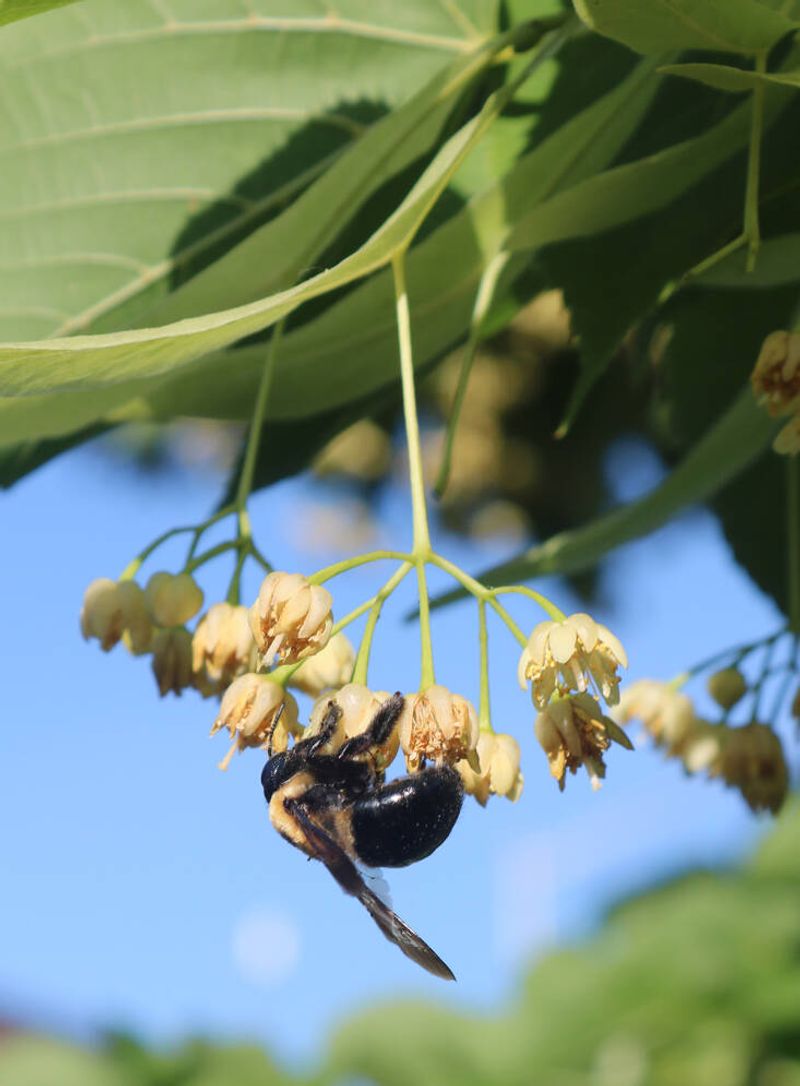
Here is a correction worth making: sourwood is not the only thing blooming in July. Plenty of trees and plants carry on well past June, and a fair picture of the season keeps that in view.
The beekeepers’ flowering calendar lists basswood, also called linden, running into July in the Mountains. It also shows sumac, clovers, and other forage stretching into July in other parts of the state.
American linden is a good example. NC State lists its flowers from May to July and notes that bees visit them abundantly.
A big linden can be a heavy hitter, though it needs far more room than a sourwood.
So the honest story is not an empty landscape rescued by one tree. In some places and some years, sourwood adds another course to a midsummer menu that already has a few dishes on it.
That is still a real contribution. Different plants bloom at different times and offer different amounts of nectar and pollen, so each flowering tree that fits your site makes the sequence a little stronger.
Choose a site that suits sourwood’s growing needs
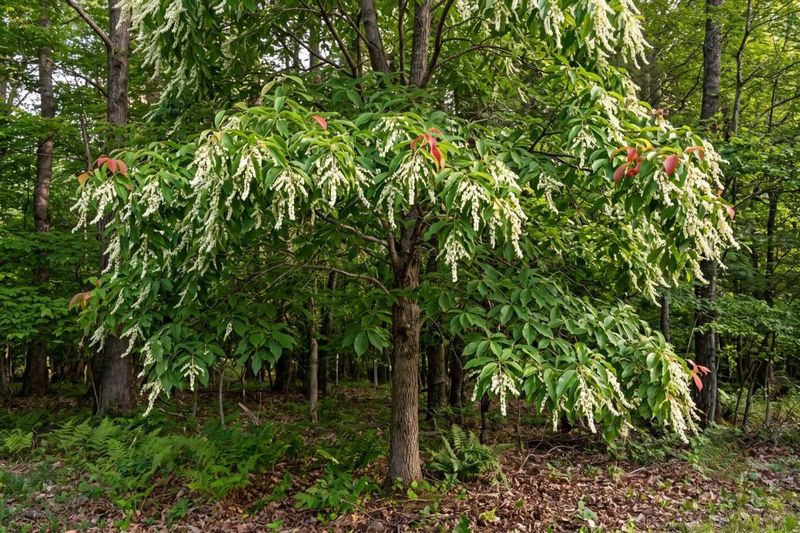
Before you buy anything, take a walk around your yard. Sourwood does best in acidic soil that stays moist but drains well, with full sun to partial shade, according to the NC State Plant Toolbox.
Think of the soil you see under oaks and pines on a wooded edge: loose, a bit leafy, and not sticky clay. That is closer to what sourwood likes than a freshly graded lot.
Trouble spots are easy to spot. Puddles that linger after a storm point to poor drainage.
A shovel that bounces off hard ground suggests compaction. A bare, baking spot with all-day sun can be rough on a young tree too.
Native status does not make a tree easy everywhere. Coastal Plain gardeners can look to Craven County Extension’s native plant guidance, which cautions that sourwood is poorly suited to harsh sites such as compacted subsoil with all-day sun.
A wooded or less-disturbed spot is a better bet.
If your yard is mostly new construction fill or heavy, soggy clay, consider other native flowering plants instead. Matching the tree to the site is the kindest thing you can do for it.
Start with a nursery-grown tree and allow room to grow
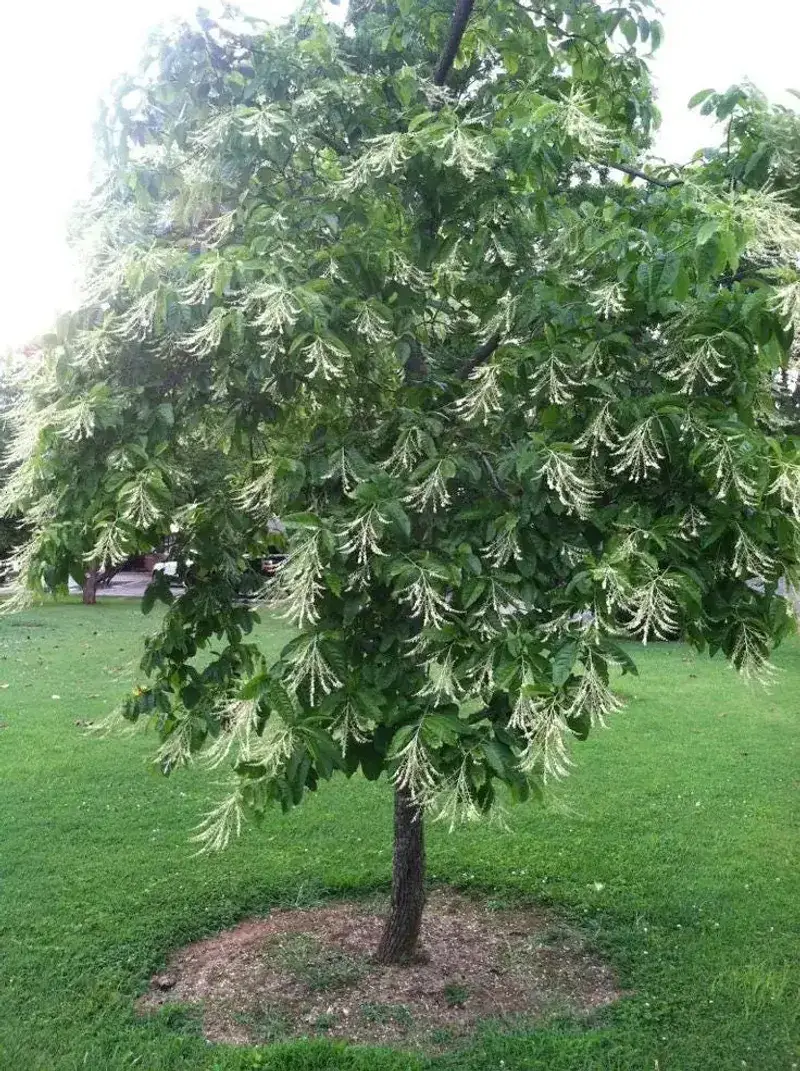
Resist the urge to dig up a sourwood from a roadside or woodlot. NC State notes in its plant profile that sourwood dislikes transplanting, and a wild tree has often lost much of its root system in the move.
Extension also warns in its Sourwood article that wild-transplanted trees can be difficult to establish. Digging also takes a tree out of a natural area, which is not what a wildlife-minded steward wants to do.
A young, nursery-grown tree is the better route. Ask your local native plant nursery whether they carry sourwood, and choose a healthy sapling over a large, stressed one.
Then plan for its adult size. Picture a tree 20 to 30 feet tall and 10 to 15 feet wide, and keep it clear of roofs, power lines, and walkways.
Expect slow growth. You may wait several seasons to see much change, and flowering comes with maturity.
Patience is part of the deal, and the reward arrives in the form of those hanging white clusters.
Pair sourwood with flowers that extend the season
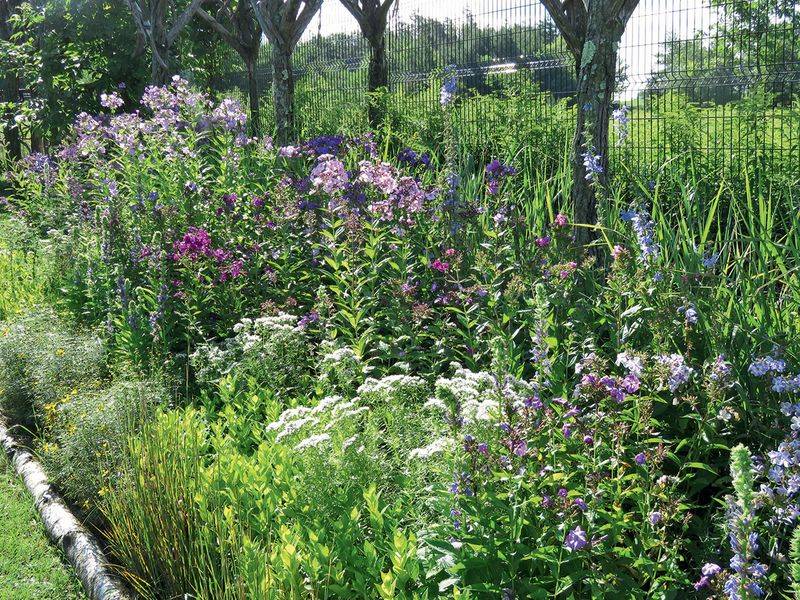
Bees need a steady supply of food, not a single big meal. The North Carolina Department of Agriculture’s wild bee guidance encourages diverse blooms across the year for that reason.
Sourwood fits as one link in that chain. Pair it with spring bloomers, summer perennials, and fall flowers so something is open from March through autumn.
Flowers are only part of the picture. As NC State’s bee hotel guidance points out, native bees have varied diets and nesting needs, so leaving bare ground and some undisturbed spots helps too.
Plant sourwood where the site suits it, and keep the rest of the yard blooming around it. One tree cannot feed every bee, but a well-timed link in the chain is worth planting.