
How to Identify and Manage Likely Asian Lady Beetles Clustering on Your North Carolina Home
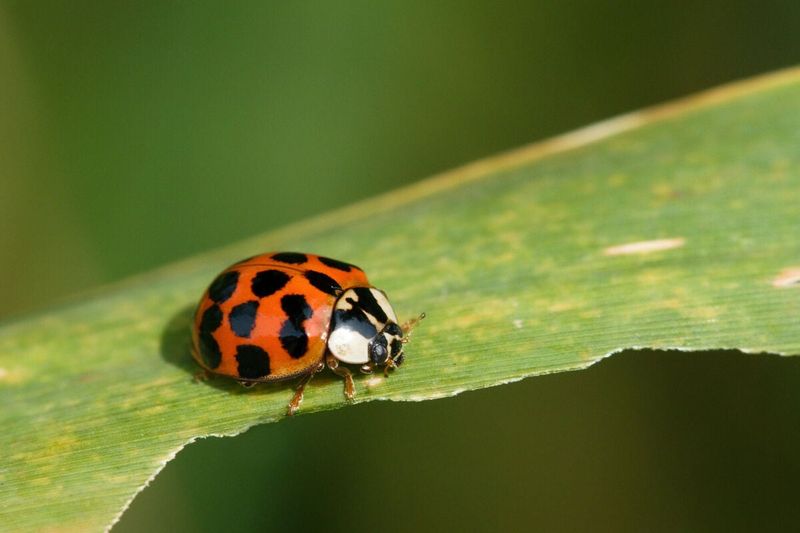
Every fall, many North Carolina homeowners spot clusters of small beetles on sunny siding and window frames. Some of those beetles are multicolored Asian lady beetles, but looks can fool you.
Knowing which clues matter helps you handle the nuisance indoors without harming the wildlife you value in your yard. Here is how to sort it out.
A fall cluster is a clue, not a certain identification
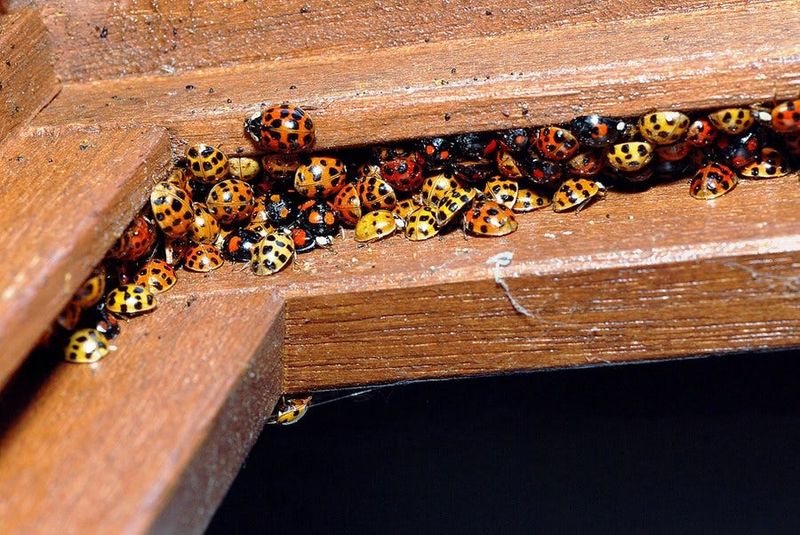
Come October, a sunny south or west wall can suddenly look alive with tiny beetles. According to NC State Extension, multicolored Asian lady beetles often gather on buildings in fall while they search for protected places to spend the winter.
Warm, light-colored walls seem to attract them, and a few slip in through small gaps around windows, doors, vents, and other openings. University of Kentucky Extension describes the same pattern of beetles collecting on structures and finding their way inside.
So a big crowd on your house is a useful hint. It is consistent with the Asian lady beetle, which is not native to North Carolina but is now well established here.
Still, a crowd by itself cannot prove the species, because other lady beetles can also show up near buildings.
The better habit is to identify the beetle by what it looks like, not by where it is sitting. A beetle on a window frame is not automatically an invader, and one in a flowerbed is not automatically a native.
Take a close look at a few of them before you decide how to respond.
That close look is easier than it sounds. You do not need a lab, just good light, a steady hand, and a phone camera that can zoom.
The next section shows you exactly where to look.
Look for the mark behind the head
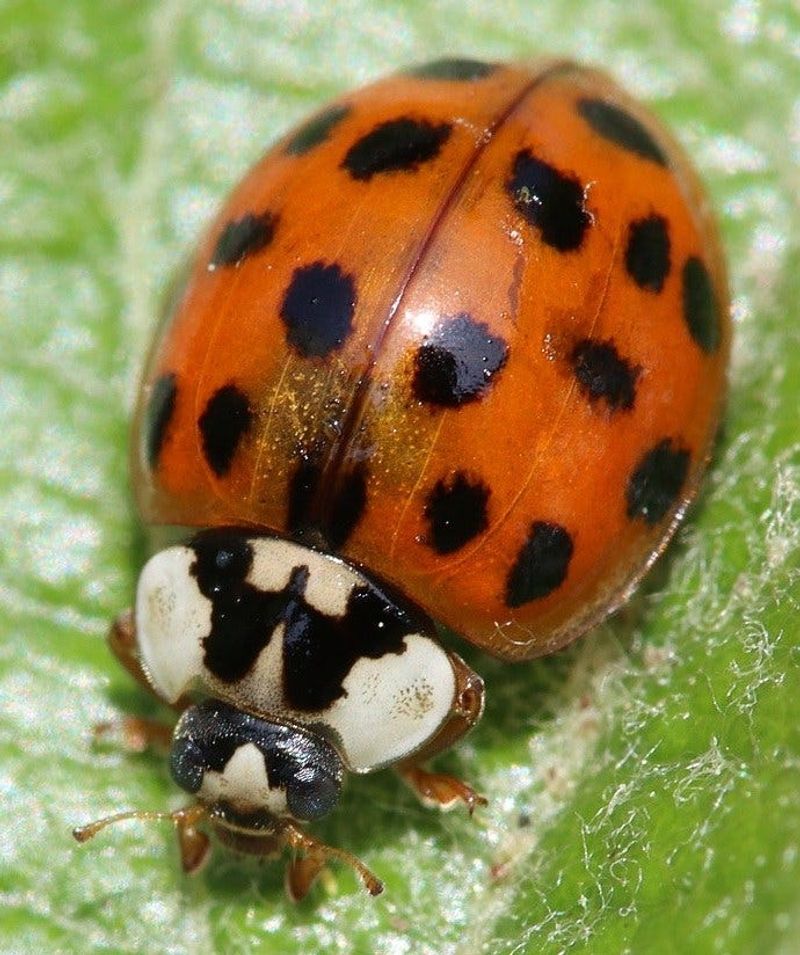
Behind a beetle’s head sits a smooth, shield-like plate called the pronotum. On a multicolored Asian lady beetle, that plate is usually pale, with a black mark shaped a bit like an M or a W.
NC State Extension points to this marking as a helpful clue.
Treat it as a clue, not a guarantee. Markings can be faint or hard to see, and a single photo from a bad angle may mislead you.
Check several beetles before drawing a conclusion.
Color is where many people go wrong. You may have heard that orange means Asian and red means native, but that shortcut does not hold up.
University of Minnesota Extension notes that Asian lady beetles range from yellow and orange to red, and some are even darker.
Spot count is just as shaky. An Asian lady beetle may carry many spots, only a few, or none at all.
Counting dots will not settle the question.
Here is a simple routine. Gently bring a beetle into good light, look at the plate behind the head, and snap a close photo if you can.
If you see that dark M or W on a pale background, a multicolored Asian lady beetle is a reasonable guess. If you do not, keep the question open and let the beetle be.
Non-native does not mean ecologically worthless
Nobody enjoys beetles in the bedroom, and that frustration is fair. The multicolored Asian lady beetle is non-native, and its fall invasions can be a real household nuisance.
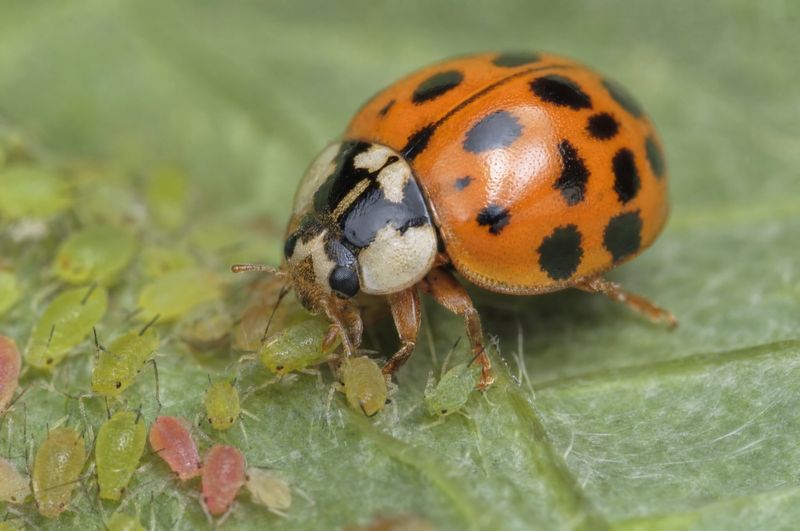
Yet the story has another side. NC State Extension Entomology describes the species as a predator of aphids and other small arthropods that contributes to pest management.
In other words, the beetle on your siding in October may have spent the summer eating pests on nearby plants.
That is why the claim that house-clustering beetles are not worth protecting goes too far. You do not need to cheer for them indoors, but you also do not need to treat every one as an enemy outdoors.
Nothing here says that killing them around your home is required to protect native species.
Native lady beetle declines are a more complicated matter. Some research has found native species dropping as introduced ones spread, but the causes are tangled, and nobody has pinned it on one mechanism.
In one field study, researchers found no evidence that exotic lady beetles ate the tested native lady beetle eggs in those habitats, which challenges a popular explanation.
Also remember that the Asian species is itself a lady beetle, in the same family as the natives. Keeping that in mind makes for a calmer, fairer approach: manage the nuisance at your door, and let the garden predators do their work.
Leaf litter is not a native-ladybeetle-only refuge
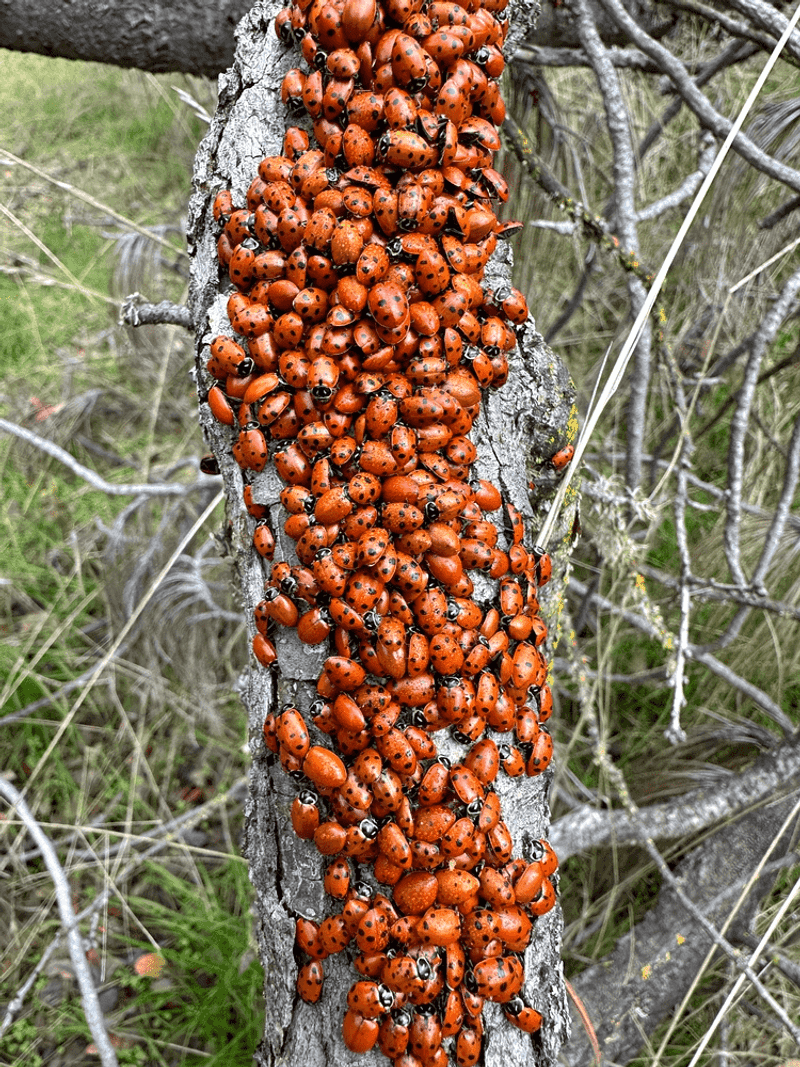
A tidy rule sounds tempting: beetles on windows are invaders, and beetles in the leaves are natives. Real life is messier.
Both kinds of lady beetles use a variety of sheltered places to get through winter.
A University of Minnesota Extension blog post on lady beetle myths explains that Asian lady beetles also overwinter outdoors, in spots that can include trees and leaf litter. So finding one under a pile of leaves tells you little about whether it is native.
Native species are flexible too. Cornell University notes that lady beetles may shelter in leaf litter, under bark, among rocks, in hedgerows, and sometimes in buildings.
A native beetle on your porch wall is entirely possible.
The practical lesson is that place alone never names a species. A beetle in the mulch, on the siding, or in a windowsill still needs a close look at its features before anyone decides what it is.
That keeps you from a common mistake, which is sweeping away or squashing beetles based on where they landed. Check the mark behind the head first, and remember that even then it is only a clue.
Keep some yard cover for wildlife

Winter is hard on small creatures, and a bit of cover can make a difference. University of Florida IFAS suggests that leaving or moving some fallen leaves and plant debris can give wildlife and insects places to shelter through the cold months.
Many kinds of animals can benefit, from native bees and moths to spiders and ground-feeding birds like towhees and wrens. That broad support is the point.
Leaf cover is not a special refuge for any one beetle, and it is wrong to count on it for protecting native lady beetles in particular.
You also do not have to leave the whole yard untouched. Pick spots that make sense, like under shrubs, along a back fence, or in the corners of beds.
Rake leaves off the lawn and into those areas rather than bagging everything for the curb.
Leave some standing stems in perennial beds until spring, too. Just keep a clear strip of bare ground or gravel along the foundation, so the wildlife cover sits away from the walls of your home.
This is a good weekend job. A little thought about where leaves go lets you keep a welcoming yard without inviting more trouble to the siding.
Reduce indoor entry with exclusion and vacuuming
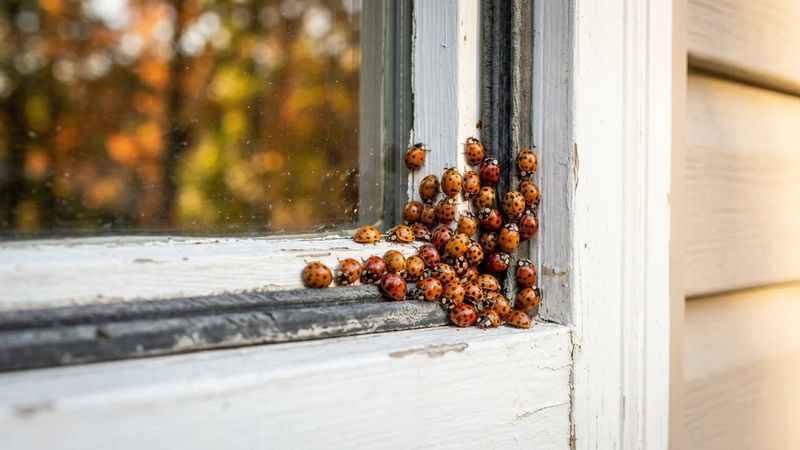
Keeping beetles out beats chasing them once they are in. NC State Extension recommends sealing cracks and gaps before the beetles show up, ideally in early fall.
Walk the outside of your house with a caulk gun. Check around window and door frames, siding seams, vents, and places where pipes, cables, or wires enter the wall.
Patch torn screens and fix loose weatherstripping or door sweeps while you are at it.
Some beetles will still make it inside, and vacuuming is the easiest fix. University of Minnesota Extension also favors prevention and vacuuming, and notes that indoor insecticides do not work well on beetles hiding in wall voids.
Try not to squash them. A crushed beetle can release a smelly fluid that may stain walls and curtains.
A vacuum with a knee-high stocking secured over the hose end can collect them alive, so you can release them outdoors if you like.
If you ever consider a pesticide, read and follow the current product label first, and do not spray broadly. Sealing and vacuuming handle most problems.
Beetles that never find a gap in October are beetles you will not be vacuuming in January.