
How To Smooth Out A Bumpy North Carolina Lawn By Hand Without Renting Any Equipment
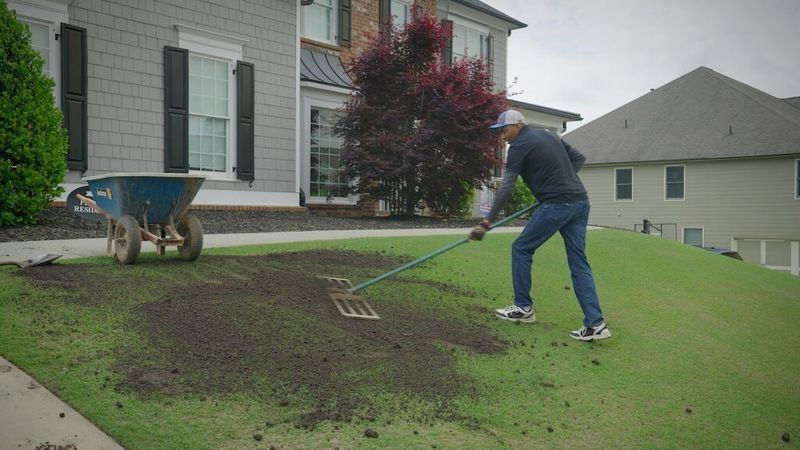
A lumpy lawn is more than an eyesore – it can trip you up during mowing and let water pool in the wrong places. The good news is that shallow bumps, small mower ruts, and minor hollows in an otherwise healthy yard can often be corrected with basic hand tools you probably already own.
This guide walks North Carolina homeowners through a careful, step-by-step approach to smoothing mild surface unevenness without renting a single piece of equipment. Keep in mind that hand work has real limits, and some yard problems genuinely require more than a weekend and a garden rake.
Decide whether the lawn needs smoothing or real grading
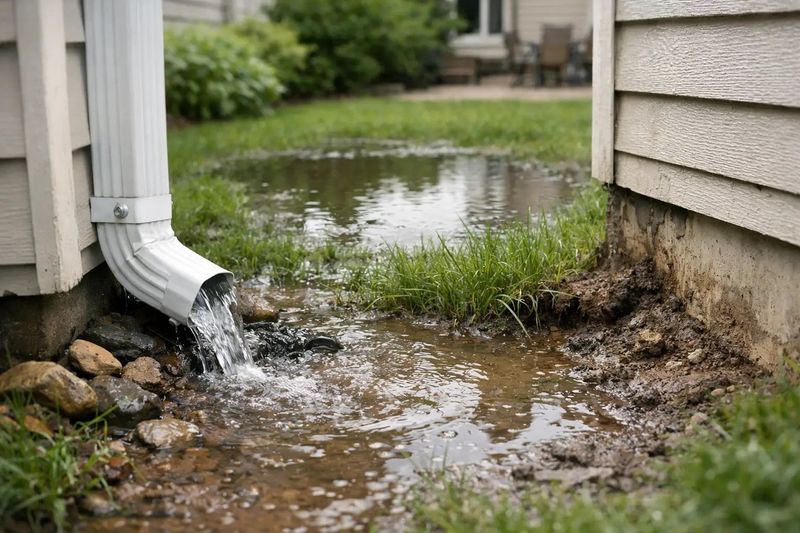
Walking your lawn the day after a good rain is the most reliable diagnostic tool you have. Watch where water lingers for more than a few hours, where it flows toward your house or garage, and where the surface dips or rises enough to make mowing feel like steering over speed bumps.
Those observations tell you whether you are dealing with a surface cosmetic problem or something deeper.
Shallow hollows, small mower ruts, and minor bumps over otherwise healthy turf are the situations where hand tools genuinely help. University of Maryland Extension guidance on lawn repair confirms that thin layers of compatible material can correct shallow ruts in existing turf without removing the grass, provided the grass crown is not buried.
That is the ceiling of what hand topdressing accomplishes well.
Several problems look like surface unevenness but are not. Standing water that lingers more than a day or two after rain usually signals a drainage failure, compacted subsoil, or a genuine low point in the yard’s grade.
Erosion channels, ruts left by heavy vehicles, soil that sinks because of decomposing organic matter underground, and slopes that direct runoff toward a foundation are separate issues that topdressing cannot fix.
NC State Extension notes that turf establishment – and by extension surface repair – should be avoided in low areas that collect water or in heavily compacted soil, because neither topdressing nor reseeding will succeed until the underlying condition is addressed. If your inspection turns up any of those red flags, the right move is to stop and plan a larger correction before touching the surface.
A small hand project may begin in one weekend. Shaving a few high spots, filling a shallow hollow or two, and raking the surface smooth is realistic for a limited area.
What will not fit into one weekend is settling time, turf recovery, and the follow-up inspection that confirms whether the correction held. Treat the initial work session as the start of a process, not the finish line.
NC State’s lawn handbook describes hand raking as the appropriate method for final surface preparation, but it also notes that substantial regrading involves shaping subsoil, restoring topsoil, firming the soil, and allowing it to settle with water or irrigation. Those are larger operations than smoothing an established lawn, and knowing the difference protects you from turning a cosmetic repair into a drainage problem.
Prepare the yard and tools before moving soil
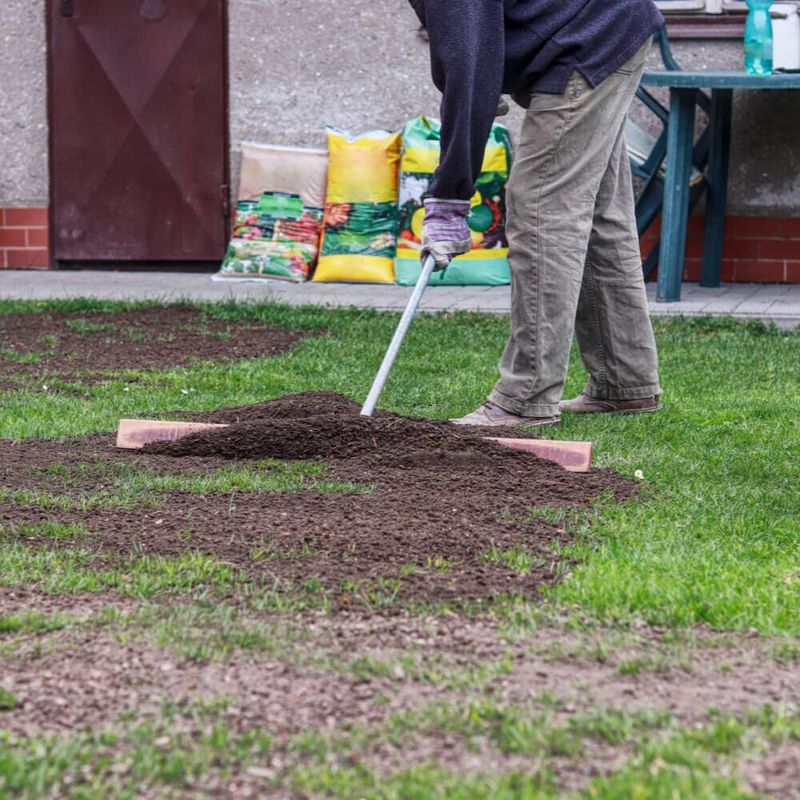
Before a single shovelful of soil moves, the yard itself needs a careful walkthrough. Mow the lawn at its normal height and collect the clippings so you can actually see the surface contours.
Short, clipping-free grass lets you spot high spots, shallow hollows, and the subtle ridges that a full-height lawn hides.
Mark everything that cannot be disturbed. Push a small stake or flag next to each sprinkler head, noting the direction the head swings.
Trace your known drainage routes – swales, low edges, downspout outlets – and mark those too, so you do not accidentally fill a path that water needs to escape. Identify any tree-root zones by looking for surface roots or simply respecting the area beneath the tree’s canopy edge, called the drip line.
ISA guidance on avoiding construction damage to trees makes clear that grading, compaction, and soil additions within a tree’s critical root area can cause serious harm even when the work is done entirely by hand.
Call 811 before you break ground, even for a small project. The national 811 safe-digging service states that every digging project – including residential landscaping – should begin with a utility-locate request.
Underground lines for gas, water, electric, and cable can run through lawns at surprisingly shallow depths, and a flat shovel can reach them.
The tool list for a small hand correction is short: a flat spade or square-edged shovel, a garden rake, a garden fork for loosening compacted spots, a wheelbarrow or tarp for moving soil, and stakes with string or a straight board for checking grade. NC State’s water quality guidance reminds homeowners not to work clay soil when it is wet, because foot traffic and cultivation on saturated clay worsen compaction.
Check the forecast and wait for a dry stretch before starting.
Hand tools handle small corrections well. They do not solve deep compaction, broad grading problems, drainage construction, or large-scale soil incorporation.
Knowing that before you start keeps the project from expanding beyond what the tools can safely accomplish.
Preserve a useful slope instead of flattening the lawn
A smooth lawn and a flat lawn are not the same thing, and chasing perfect flatness can create problems that a bumpy lawn never had. The real goal is a mowable surface that moves water away from your house, driveway, and other structures and routes it toward an appropriate drainage outlet – a swale, a street, a planted bed, or a lower area of the yard away from the foundation.
Extension sources agree on a practical grade range, though the exact figure varies by application. NC State’s lawn handbook recommends roughly 2% to 3% slope away from buildings, while University of Maryland Extension cites approximately 1% to 2%, and Penn State Extension’s lawn-establishment guide gives a range of 1% to 4% depending on site conditions.
Rather than locking onto one number, treat the 1% to 3% range as a practical target and use your post-rain observations to confirm that water is actually moving in the right direction.
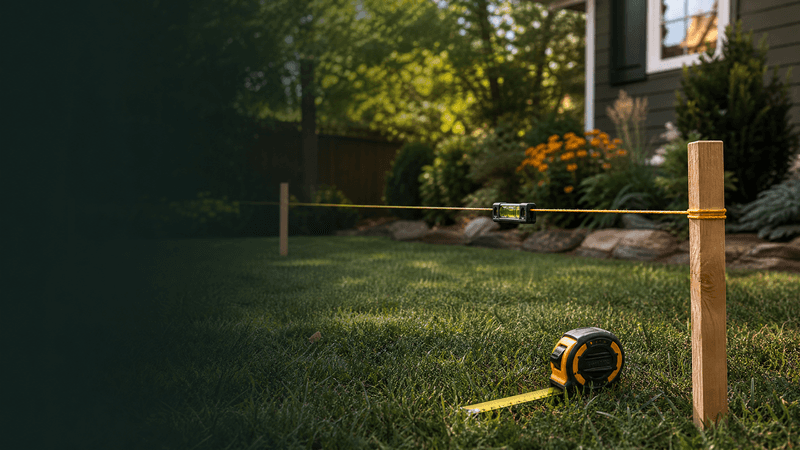
Translating a percentage into something you can see on the ground is easier than it sounds. Drive two stakes into the soil about ten feet apart along the line you want to check.
Tie a string between them at the same height on each stake, then use a line level to make the string truly horizontal. Measure the vertical distance from the string to the soil at the lower stake.
One inch of drop over ten feet equals roughly a 1% slope – a useful reference for a hand project on a small area.
Two specific mistakes are worth avoiding. Filling a low spot that collects water without addressing why it collects water can push the problem to a neighboring area or create a new one.
Scraping a high spot too aggressively near the house can redirect runoff toward the foundation instead of away from it. Before moving any soil, trace the path you want water to follow after the correction and confirm that your plan actually sends it there.
On established turf where you are topdressing rather than regrading exposed soil, the string-and-stake check is less practical. Instead, use your post-rain walkthrough as the grade reference and correct only the spots where water clearly pools or where the mower scalps a high point repeatedly.
Use conservative topdressing for shallow hollows and ruts
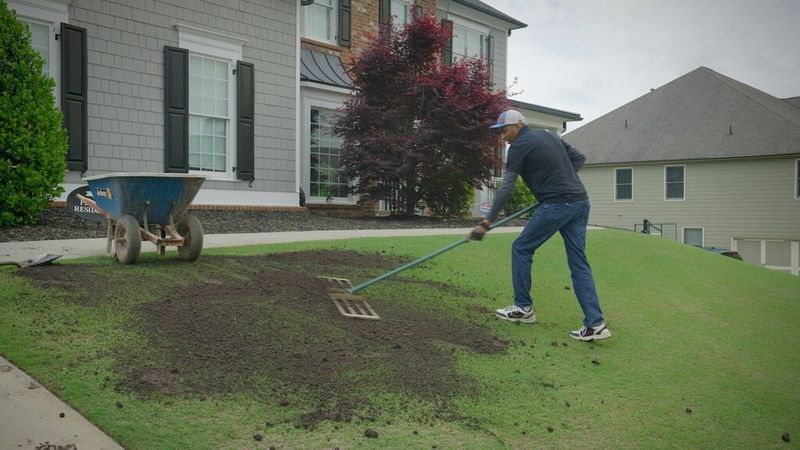
Topdressing living turf is the core technique for correcting shallow defects without tearing up the lawn. The procedure works when the problem is genuinely shallow – a mower rut, a small depression from foot traffic, or a minor hollow left by settling soil – and when the grass beneath is otherwise healthy enough to grow through a thin layer of added material.
University of Maryland Extension’s lawn repair guidance gives approximately 1/4 to 3/4 inch of compatible topsoil or compost as a typical safe adjustment for shallow ruts, provided the grass crown is not buried. That range applies to suitable localized defects, not as a blanket depth across an entire lawn.
For most residential situations over living turf, treat 1/4 inch as your default and consider a second light application after the first one settles rather than applying more in one pass.
Start by shaving small high spots with a flat shovel or the back of a garden rake. Work carefully, removing only enough soil to bring the high area closer to the surrounding grade.
Move that skimmed material directly into a nearby hollow rather than carting it away, which keeps compatible soil on-site and reduces waste. For hollows that need more fill than the high spots provide, bring in compatible topsoil or mature, screened compost.
NC State’s organic lawn care guide warns that fresh or unstable organic materials can settle as they decompose, tie up nitrogen, or damage turf. Use only mature, screened compost that has finished breaking down, not yard waste that is still actively composting.
Once material is in place, rake it gently into the turf so that grass blades stand up above the surface. NC State’s athletic-field maintenance guide supports a routine topdressing depth of about 1/4 inch, with the understanding that heavier applications risk smothering turf or delaying recovery.
Oregon State Extension’s turf management research echoes that caution, noting that applications approaching or exceeding 1/2 inch at one time can interrupt grass growth. If a hollow is deep enough that filling it to grade would require more than 3/4 inch of material, plan multiple light applications spaced weeks apart rather than one heavy fill.
NC State’s lawn handbook also notes that adding soil on top of compacted soil without incorporating it does not solve the underlying problem – it creates a separate surface layer that the roots may struggle to penetrate. If the soil beneath a hollow feels hard and dense, topdressing alone will not be enough.
Address compaction with a garden fork before adding fill material, or plan a more involved spot repair.
Regrade a small bare patch with a controlled sequence
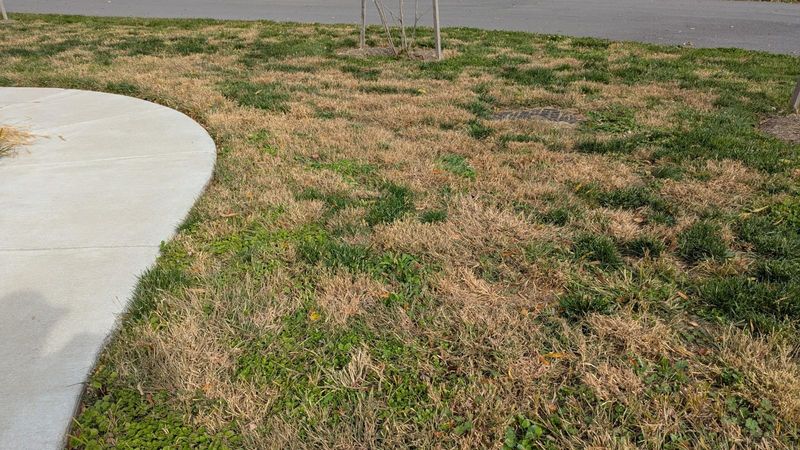
Some damaged areas are too far gone for topdressing through living grass. A mower scalp that removed the turf entirely, a rut deep enough that filling it over living crowns would smother the grass, or a patch where the soil was badly disturbed during a repair or construction project – these spots need localized regrading rather than topdressing.
The sequence for a small bare patch starts with loosening the existing soil surface using a garden fork. Compacted soil does not accept new material or roots easily, and breaking the surface crust helps the added topsoil integrate rather than sitting as a separate layer.
If the patch is part of a larger grade problem, use stakes and string – or a long straight board laid across two fixed reference points – to establish the target slope before adding any fill.
NC State’s lawn handbook recommends shaping the underlying soil to the desired grade, redistributing topsoil uniformly, firming the soil, watering to encourage settling, and then filling areas that settle unevenly before planting. Follow that sequence even on a small patch: shape first, add compatible topsoil, firm it by walking across it lightly or tamping with the back of a rake, water slowly, and wait.
Watering after firming is not optional. Dry soil settles differently than moist soil, and a patch that looks level before the first rain may develop new low spots within a week.
Oregon State Extension’s lawn renovation guide describes this inspection-and-correction cycle as a normal part of soil preparation, not a sign that something went wrong.
University of Maryland Extension confirms that after settling, any remaining low areas should be filled and raked level before reseeding or sodding. Plan at least one follow-up inspection before you plant anything.
Localized spot regrading stays limited in scale by definition. Moving soil by hand across a patch of a few square feet to a few square yards is realistic.
A full-yard regrading project is a different category of work: NC State notes that substantial grading may involve removing and stockpiling roughly 4 to 8 inches of topsoil, reshaping the subsoil, and restoring a uniform topsoil layer across a broad area. That is not a hand-tool project, and recognizing the boundary protects you from starting something that outgrows your tools.
Settle the surface and repair turf on the right schedule
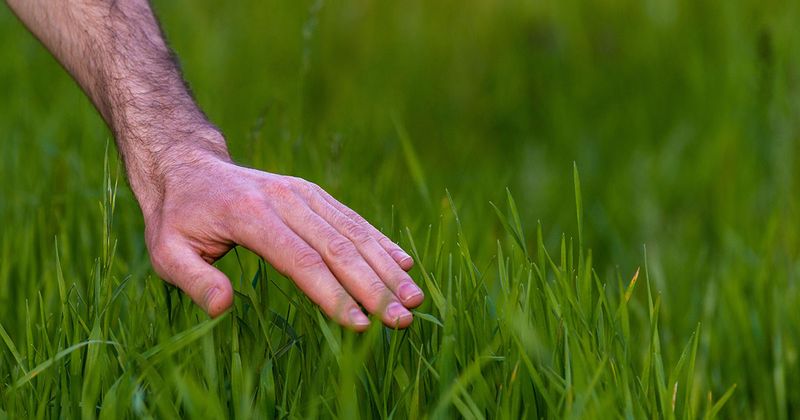
Freshly moved soil is not finished soil. After the initial raking and filling, the surface needs time and water before you can judge whether the correction worked.
Apply a slow, gentle watering over the repaired area to help the material settle without washing it away or puddling at the edges of the patch.
Give the area at least a few days before the next inspection. Look for new low spots where the material compressed more than expected, ridges where it mounded slightly, and any sign that water is pooling or flowing in an unintended direction.
Rake down small ridges and add another thin layer to any fresh depressions before planting. Working saturated clay at this stage causes the same compaction problems as working it before the initial repair.
NC State’s water quality guide specifically cautions against walking on, mowing, or otherwise working wet lawns because foot pressure on wet clay worsens compaction.
Reseeding and sodding timing depends on your grass type and your region of North Carolina. NC State’s Carolina Lawns guide lists approximate optimum seeding windows for tall fescue – a cool-season grass common in the Piedmont and mountains – as September 1 through 15 in the Piedmont, September 15 through October 15 in the Coastal Plain, and August 15 through September 1 in the mountains.
Warm-season grasses such as bermudagrass and zoysiagrass are generally planted from spring into summer when soil temperatures support active growth.
Sod is worth considering when damage is concentrated in a few larger areas and you need faster coverage. NC State notes that sodding works especially well for warm-season lawns with localized damage, because it provides immediate ground cover and reduces the window when bare soil is exposed to rain and foot traffic.
Seed costs less but requires suitable establishment conditions, consistent moisture, and patience through a full germination and establishment period.
University of Maryland Extension and NC State’s lawn handbook both treat settling, reseeding, and turf recovery as normal steps that follow initial soil work, not as signs of failure. Plan for the full arc: initial hand work may fit into a weekend, but a stable, recovered surface takes weeks to months depending on grass type, season, and weather.
Avoid shortcuts that damage soil, turf, or drainage
A few common shortcuts feel efficient in the moment and create problems that take a season or more to unwind. Knowing what not to do is just as useful as knowing the correct procedure.
Dumping a thick layer of topsoil across the entire lawn is the most frequent mistake. Grass crowns buried under more than about 3/4 inch of material can suffocate, and the added layer may not bond with the compacted soil below – leaving you with a perched layer that drains poorly and settles unevenly.
Spread material thin, rake it in, and repeat rather than filling everything at once.
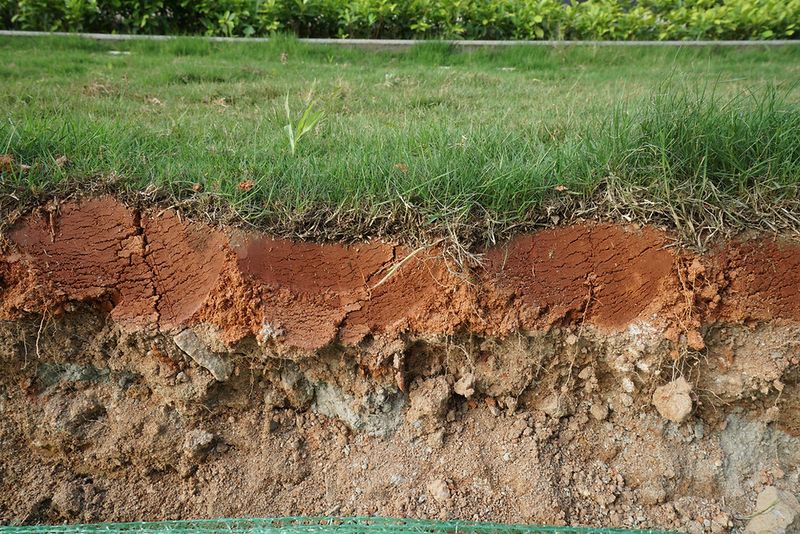
Sand is not a reliable fix for North Carolina clay. NC State’s soil modification guide explains that measurable improvement to clay soil may require sand at roughly four to five times the volume of the clay – an amount that is generally impractical for homeowners.
Adding a small amount of sand to heavy clay can actually produce a dense, concrete-like mixture that is worse than the original soil. Piedmont and mountain lawns commonly sit on substantial clay, while Coastal Plain soils tend to be sandier; the right approach depends on a physical inspection and, ideally, a soil test rather than a universal amendment recipe.
NC State’s organic lawn care guide warns against spreading fresh compost over turf. Only mature, screened material that has finished decomposing is stable enough for topdressing.
Fresh material can settle significantly, tie up nitrogen, and introduce uneven organic pockets into the surface.
Lime and fertilizer should not be applied without a soil test. NC State’s soil-testing guide and NCDA&CS sample collection instructions both describe testing as the tool for determining pH and fertility needs.
Applying lime to soil that does not need it can raise pH past the point where grass can absorb nutrients effectively.
Exposed soil left bare for more than a day or two on a slope or near a storm drain, stream, driveway, or sidewalk is a sediment and erosion risk. NC State’s water quality and lawn care guidance and EPA sediment research both identify disturbed soil as a significant source of runoff pollution.
Cover bare areas promptly with seed, sod, straw, or erosion-control matting.
For larger disturbances, drainage changes, work near streams or protected buffers, or projects that may affect neighboring properties, check with local authorities before starting. NCDEQ’s erosion and sediment control program notes that a formal plan is generally required for land-disturbing activity exceeding one acre, but local rules and site-specific requirements may apply at smaller scales, especially near waterways or sensitive resources.
Judge success by drainage and recovery, not perfect flatness
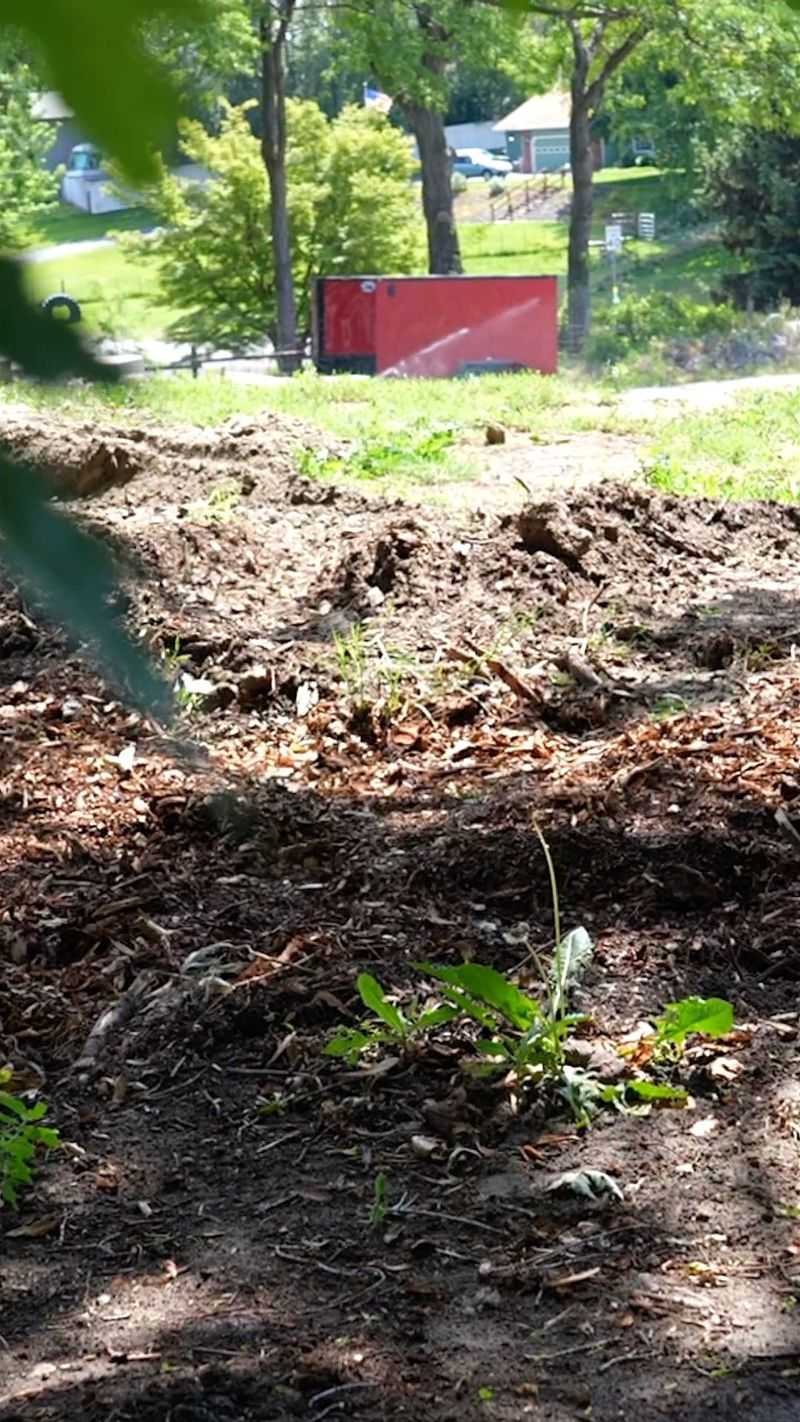
Hand tools and thin, compatible topdressing can genuinely improve shallow bumps and ruts in a manageable residential lawn. The measure of a successful repair is not a perfectly flat surface – NC State’s lawn handbook and University of Maryland Extension both frame the goal as a mowable surface with appropriate drainage, not a surface with zero slope or zero variation.
Evaluate the result after settling and turf recovery, not the day after the initial work. Watch where water moves after the next rain.
Walk the repaired area when the grass has grown back enough to mow, and note whether the mower rides evenly or still scalps high spots. Those observations tell you whether the correction held or whether another light pass is needed.
Deep settlement, persistent standing water, compacted subsoil, steep slopes, drainage that runs toward a building, or broad elevation changes across the yard are signals to stop and escalate. Those problems need a different plan – drainage engineering, professional grading, or both – and pushing them into a hand-tool project will not make them smaller.
Protect utilities, established trees, and the surrounding yard during any soil-moving work, because a lawn that drains well and supports healthy roots is a more durable result than one that simply looks level on the day the rake goes back in the shed. ISA guidance on tree protection during construction is a useful reminder that even small hand projects can cause lasting harm when they happen too close to established trees.