
How to Try Overwintering Tender Bedding Pelargoniums (Often Called Geraniums) Before Frost Hits
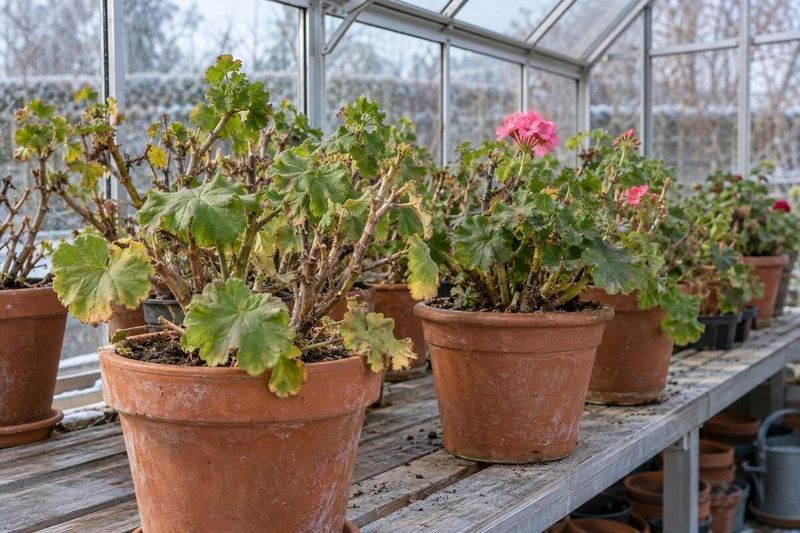
That big pot of red geraniums on your porch looks tough, but frost is a real worry for it. Most bedding geraniums are tender plants that were never built for freezing weather.
With a little planning, you can try to carry yours through winter indoors and give it another season. There are no promises, but the effort costs almost nothing, so it is worth a shot.
Bedding geraniums are tender Pelargoniums
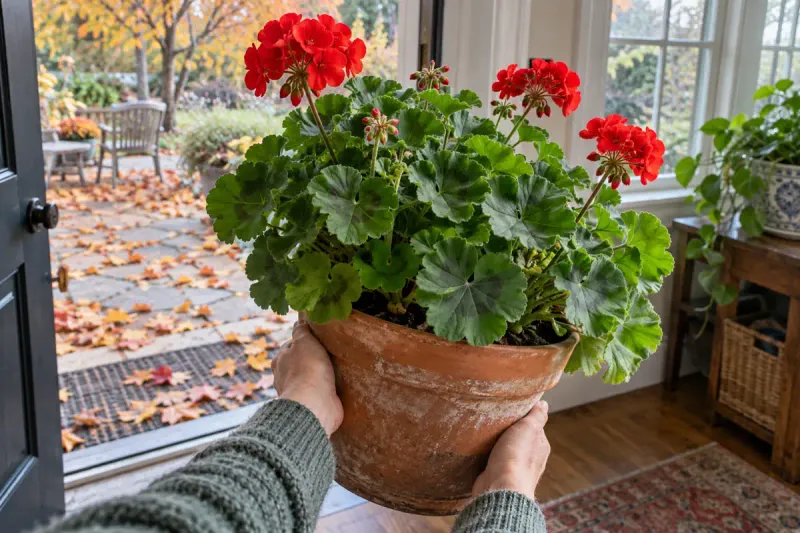
Walk through any garden center and the plants labeled geraniums are usually Pelargoniums. Their round, often zoned leaves and big flower clusters are the classic porch-pot look.
Botanically, they are a different group from the true Geraniums, which gardeners also call hardy geraniums or cranesbills.
The difference matters when frost shows up. True Geraniums are often hardy perennials that return on their own.
As Iowa State Extension explains, the familiar bedding type is treated as a tender annual in most of the country, and it can be overwintered indoors and grown again.
Everything in this article is aimed at those tender bedding Pelargoniums. If your plant has small, delicate flowers and deeply cut leaves and has come back in the ground for years, it is probably a hardy cranesbill and needs none of this.
When you are unsure, check the plant tag or compare the leaves and flowers with photos from a reliable source.
Bringing a Pelargonium inside gives it a chance at another growing season. It is an attempt, not a guarantee.
Some plants sail through, some sulk and drop leaves, and some do not make it. Even a survivor may bloom later or less heavily than it did outdoors, and that is a normal outcome rather than a sign you did something wrong.
Illinois Extension offers a simple houseplant approach, and the steps ahead follow it.
Inspect the plant and bring it indoors before frost
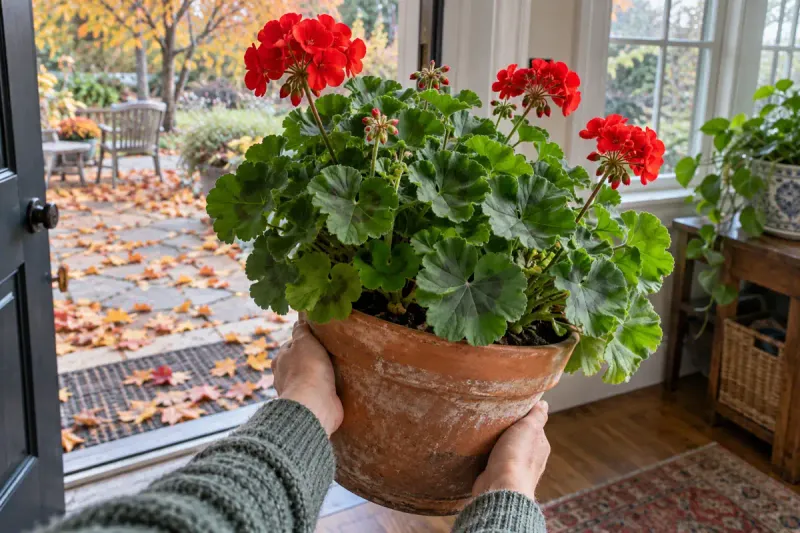
Timing comes first. Plan to move your Pelargonium indoors before frost arrives, and keep an eye on your local forecast from early fall on.
Not every plant dies at the very first touch of cold, but waiting to find out is a gamble with a plant you care about.
Before it crosses the doorstep, give it a careful once-over. Turn leaves over and look along the stems for tiny insects, sticky residue, or webbing.
Check the base for soft, dark, mushy tissue, and look at the soil surface for anything unusual.
Plants showing disease, rot, or insect infestation are better discarded. Illinois Extension advises tossing them rather than hauling problems inside, where pests can spread to your other houseplants.
It is a hard call, but one sick geranium can cause trouble for a whole windowsill.
If you have several pots, go through them one at a time. A plant with a few yellow lower leaves is usually fine, since older foliage often yellows with changing seasons.
A plant with mushy stems or a swarm of whiteflies is a different story.
For healthy plants, pull off dead leaves and spent flowers and clear debris from the pot surface. Then set them in their indoor spot.
Digging up in-ground plants gets its own steps next, since that job takes a bit more care.
Dig and pot plants that grew in the ground
Geraniums planted straight into the garden need an extra step. A plant that is already in a pot can simply come inside after its inspection.
An in-ground plant has to be lifted and given a container first.
Pick a day before frost and water the bed lightly so the soil holds together. Slide a trowel or spade in a few inches out from the stem, loosen the soil all around, and lift the plant with as much of its root ball as you can.
Work slowly, since roots torn up in a hurry set the plant back.
Choose a pot with drainage holes that fits the roots without much extra room. Fill it with fresh potting mix, set the plant at about the same depth it grew outdoors, and firm the mix gently around it.
Soggy soil is a common cause of trouble indoors, so a pot that drains is not optional.
Next, cut the plant back. Illinois Extension recommends pruning by one-third to one-half, which leaves less top growth for the disturbed roots to support.
Then water thoroughly until it runs out the bottom.
Expect some wilting or yellowing over the first week or two. That is common after digging and does not mean the plant is lost.
Careful potting improves the odds, but it cannot promise a recovery.
Provide bright light, moderate warmth, and careful water
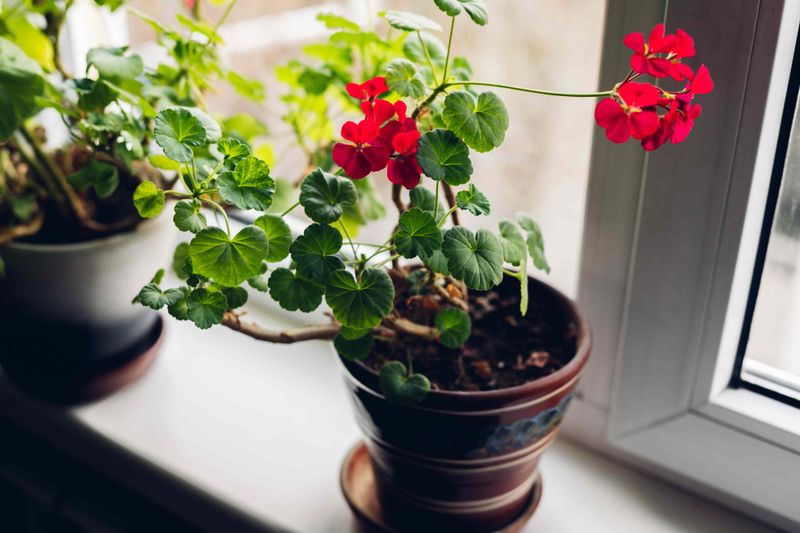
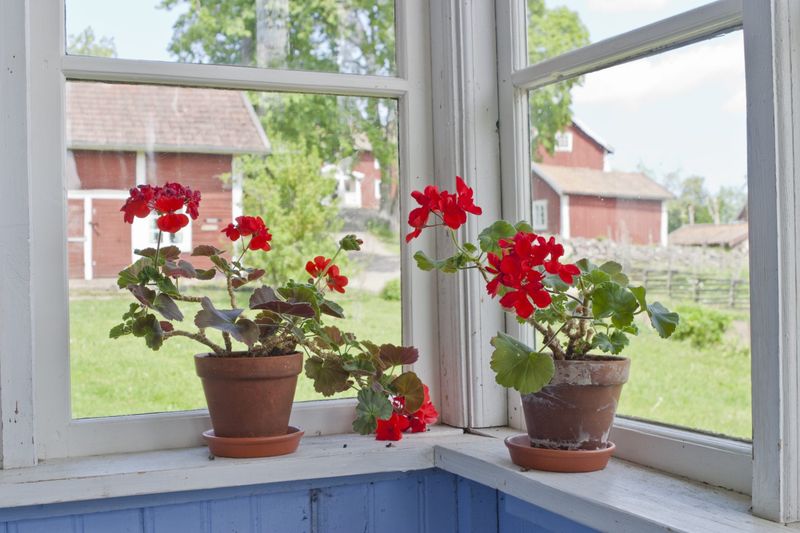
Light is the make-or-break factor once your plant is settled indoors. Put it in your brightest, sunniest window, or set it under supplemental grow lights if windows are dim.
This is the routine for an actively growing potted plant, as Illinois Extension outlines.
Aim for roughly 65°F during the day with slightly cooler nights. A spot near a drafty glass pane or directly above a heat vent can be rough on the plant, so move it if it seems stressed.
Normal room temperatures work for many homes, and nothing fancy is needed.
For watering, wait until the growing medium becomes dry, then water well. Pushing a finger an inch or two into the mix is a quick test.
Pelargoniums dislike staying soggy, and wet soil in a cool, dim room is a fast route to rot.
Watch the stems for clues. If they stretch out long and thin with widely spaced, pale leaves, the plant is not getting enough light.
That lanky growth is a signal to move it closer to the glass or add a lamp.
Keeping the plant alive does not mean it will flower in winter. Some plants bloom a little, many just hold their leaves, and both are acceptable results.
Do not confuse this routine with dormant storage. A bare-root plant kept in a cool, dry place gets very different treatment, covered in the next section.
Use cuttings or dormant storage as alternatives
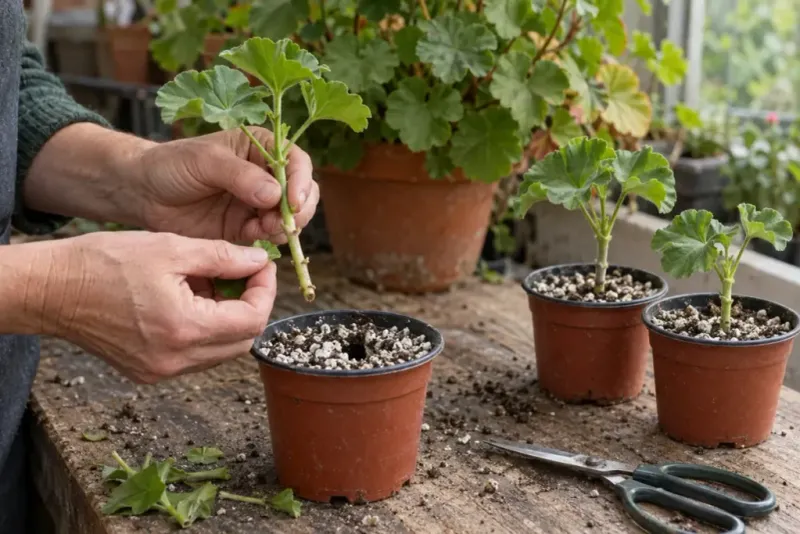
Short on window space? Cuttings are an optional backup, not a required step in the potted method.
They take up far less room than a full plant, and they give you something to fall back on if the parent plant struggles.
Following Iowa State guidance on propagating annuals, snip stem tips 2 to 4 inches long and strip off the lower leaves. Push the cut ends into moist perlite and keep them in bright light.
Rooting is not certain every time, so take a few rather than one.
The other option is bare-root storage, which is a separate and less forgiving approach. Iowa State advises shaking the soil off clean plants, placing them in a paper sack, and keeping them in a cool, dry place around 45 to 55°F.
In spring, prune back to firm green tissue and pot them, with March given as one example.
Leaves and shoot tips may shrivel and drop during storage. That alone does not prove the plant is dead, so check for firm green tissue before giving up on it.
Also keep this dry routine separate from the care described earlier, since dormant plants should not be kept wet.
Even experts admit the bare-root route can be tricky. Wisconsin Extension suggests taking cuttings too, in case the stored plant does not make it.
Wait for local frost danger to pass before moving it outside
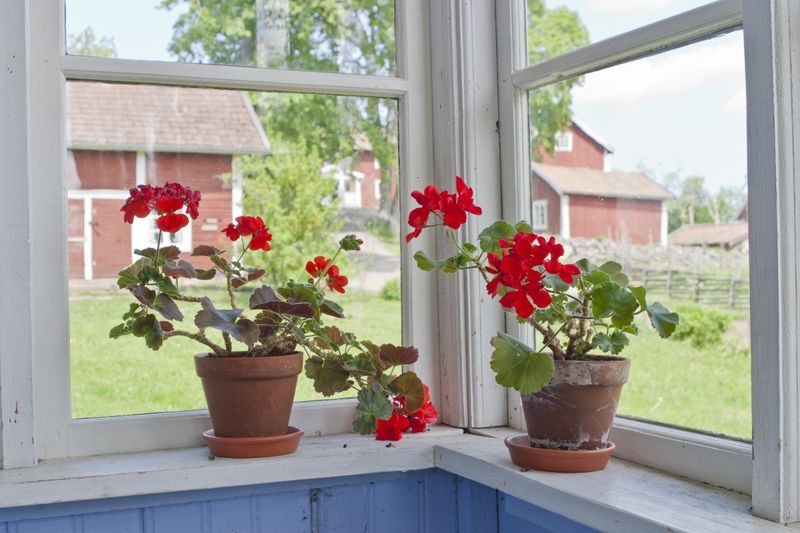
Spring is where gardeners get impatient. A warm week in March can tempt you to set the pots outside, but the plant stays indoors until the danger of frost has passed where you live.
Some regional sources mention May as an example, yet that is not a nationwide rule, so your local last-frost date is the guide.
If the plant stretched out over winter, pinch back the leggy stems. As Wisconsin Extension notes, pinching can encourage fuller growth.
It looks harsh, but it gives the plant a chance to branch.
Once the pot is outside and blooms appear, deadhead the spent flowers. University of Minnesota Extension describes this as a way to encourage repeat flowering.
It is a quick chore to do while you water.
Do not be surprised if flowering takes a while. Light affects both growth and blooming, and as NC State Extension Plant Toolbox shows for Pelargonium, varieties differ in how they flower.
A plant that survived may bloom later or less heavily than before.
So try the method, and root a few cuttings as insurance. A geranium that comes back is a bonus, and one that does not still taught you something for next fall.