
How to Water Newly Seeded Fescue in a Dry North Carolina Fall
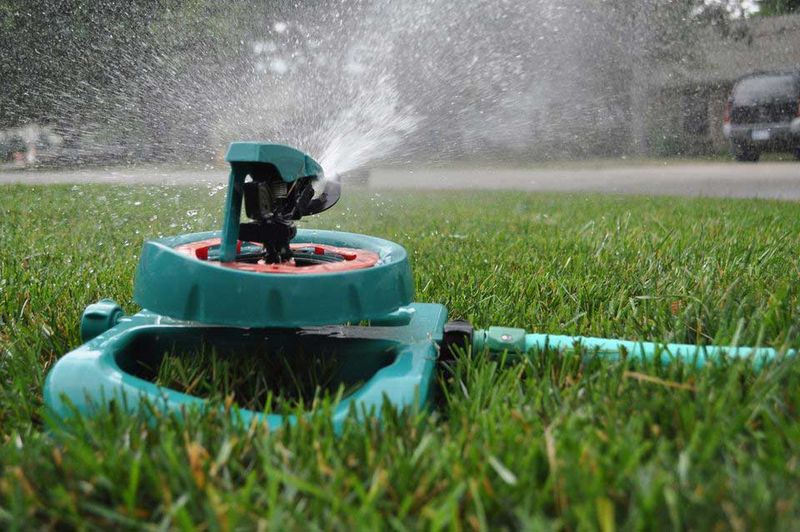
Tall fescue seed needs steady moisture to wake up, and a dry North Carolina fall makes that hard to deliver. Water helps a lot, but it cannot fix bad timing or cold soil.
Here is a practical starting rhythm, plus the signs that tell you when to adjust or when to wait. Your yard, your soil, and your calendar all get a vote.
Check Your Region’s Seeding Window
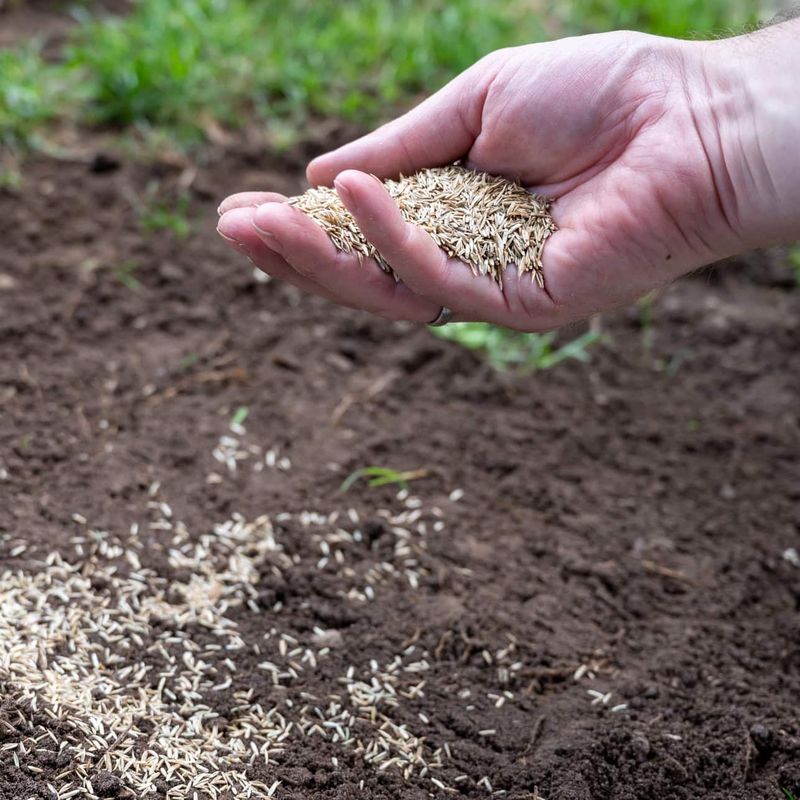
Timing comes before any watering plan. The Carolina Gardener’s Handbook from NC State lists August 15 to September 1 for the mountains, September 1 to 15 for the Piedmont, and September 15 to October 15 for the Coastal Plain.
NC State’s sources do not match perfectly. One TurfFiles article on cool-season seeding gives the Piedmont a target of mid-September to early October and puts the mountains one to two weeks earlier.
Treat these dates as regional guidance, not one statewide deadline.
If you are reading this on October 31, 2026, the handbook’s optimal seeding dates have already passed in all three regions. Local conditions vary, but late-fall seeding cannot be counted on to sprout before cold weather arrives.
Seed that does not come up in time raises the risk of a thin stand or winter injury.
Spring seeding is an option in some circumstances, and NC State TurfFiles points to it as an alternative. The catch is that fescue established in spring is more vulnerable to summer stress.
Neither season is risk-free, so weigh your calendar honestly before you buy seed.
Prepare a Seedbed That Holds Moisture
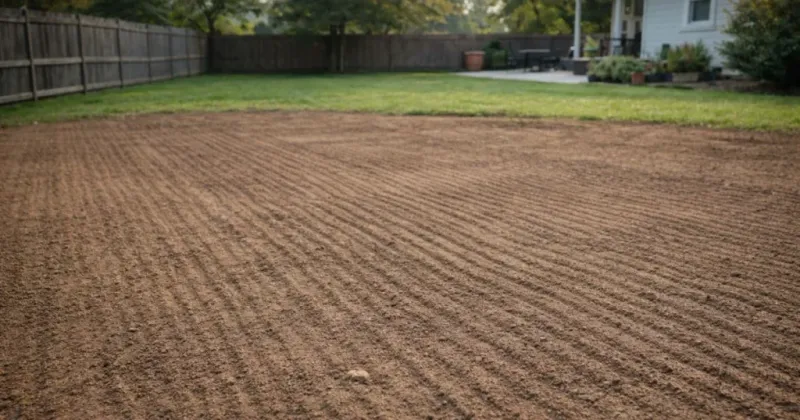
Seed that sits on top of loose debris or hard, bare clay struggles to drink. Good seed-to-soil contact lets each seed pull in the moisture it needs, which is why NC State TurfFiles stresses it for fall seeding.
Before spreading seed, rake out leaves, clumps, and dead thatch so seed can touch soil. Loosen compacted spots, then press the seed in lightly with a rake or roller.
A seedbed that is firm but crumbly holds water better than one that is fluffy or crusted.
Mulch can slow evaporation and cut down on erosion during heavy rain. Straw spread thinly is the usual approach, thin enough that you can still see soil through it.
NC State’s lawn care guidance recommends avoiding too much, because a thick blanket can inhibit germination.
Moisture is only one ingredient. NC State describes air temperatures of 68 to 77 degrees and soil above 60 degrees as favorable, so a perfectly watered seedbed can still stall if the weather turns cool.
Water supports sprouting, but it cannot stand in for warmth.
Start With Light, Frequent Watering
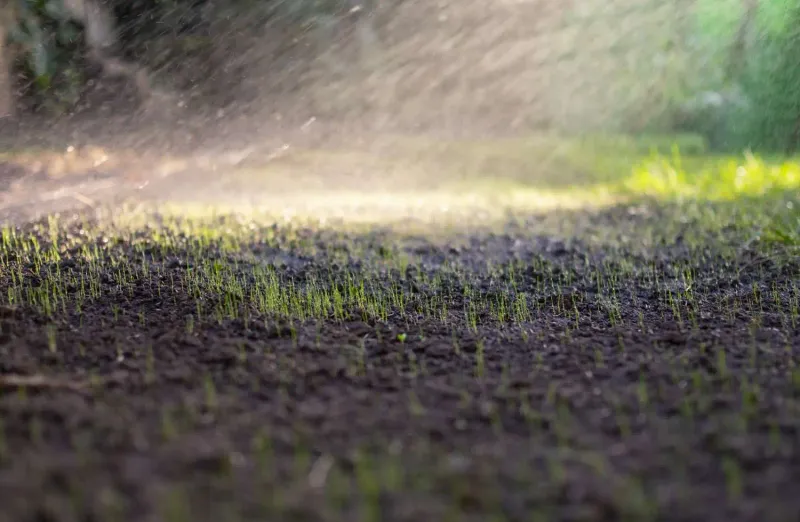
Once seed is down, the goal is simple to say and fiddly to do: keep roughly the top half-inch of soil moist, not saturated. Seeds sit near the surface, and that thin layer dries out fast.
Deep soaking wastes water and can wash seed around.
For a starting point, NC State’s North Carolina lawn care guide says new seed may need light watering two to three times a day for 15 to 20 days. Think of that as an estimate of what keeping the seedbed moist can take, not a command to water by the clock.
How long should each session run? There is no honest universal number.
Sprinklers put out very different amounts, so a ten-minute run on one yard may barely dampen the soil while another puddles. Try a short run, then check with your finger or a small trowel to see how far the moisture reached.
A morning, midday, and mid-afternoon pattern is a common way to cover the hottest, driest hours. NC State also advises watching for runoff.
If water runs off the lawn before it soaks in, shorten the session and add another later.
Adjust for Dry Weather, Rain, and Runoff
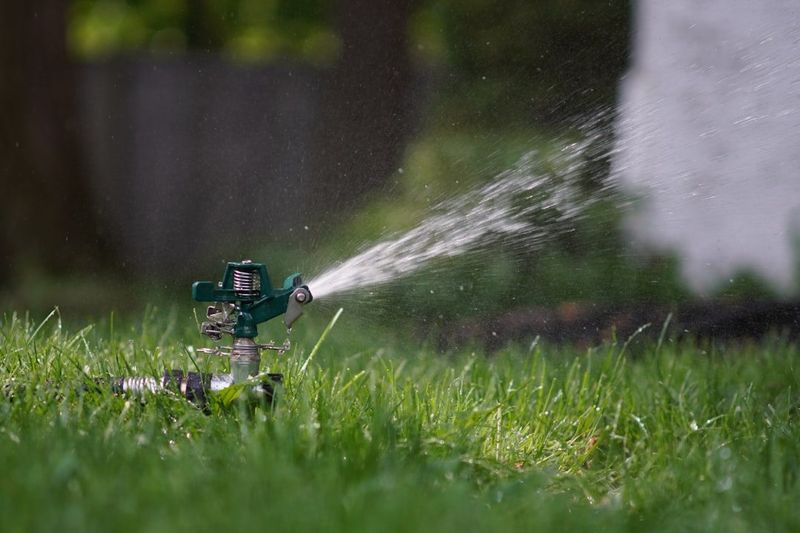
A dry, breezy afternoon can bake a seedbed faster than a calm, cloudy one. So walk the yard a few times a day and look at the surface.
When it starts to lighten or feel dry, a light watering is due. When it still looks dark and damp, wait.
University of Maryland Extension likewise recommends several light waterings a day in dry, windy weather. Notice that this is a response to conditions, not a fixed count.
Rain counts. After a good soaking, skip a session or two until the surface dries again.
A rain gauge or a plain straight-sided can helps you see what actually fell.
Your site matters as well. Sandy soil dries fast, clay holds water longer, and slopes shed water.
South-facing banks and spots near pavement usually dry first, so they may need extra checks while a shady, flat corner needs less.
NC State says to avoid runoff, and Maryland Extension warns that prolonged puddling can stress or kill turfgrass roots. Standing water is a signal to back off.
In low spots, shorter, lighter passes keep seed from drowning or drifting.
Keep Supporting Seedlings as Roots Develop

Green shoots feel like a finish line, but they are not. Young seedlings have tiny roots that reach only a short way into the soil, so a few dry hours can still set them back.
Frequent watering should continue for a while after they appear.
The shift toward an established-lawn routine is gradual. Water a little less often, and let each session soak somewhat deeper, which encourages roots to follow the moisture downward.
Two sources offer different cues. Maryland Extension suggests starting the transition when seedlings are tall enough to mow.
NC State advises deeper watering after the third mowing.
Neither is an on-off switch. A practical path is to begin stretching the gaps once you first mow, then keep going slowly while watching the grass.
Thin patches, wilting, or a bluish-gray tint mean the yard needs more water than you gave it. Back up a step and try again.
Know When to Wait or Check Local Water Rules

Be honest about whether you can keep the seedbed moist for weeks. If you travel, have no irrigation, or face a drought with limited hose time, the plan can fail halfway through.
Seed that dries out after sprouting may be lost.
Maryland Extension warns that without irrigation you should expect poorer germination and establishment. It also says mulch does not fully make up for dry conditions.
So mulch alone is not a rescue plan.
Postponing is a defensible choice. Waiting for the next recommended window, or considering spring with its summer-stress risk, may cost less than reseeding a failed patch.
It also saves seed and effort.
Water rules matter too. Restrictions vary by utility and can change, sometimes quickly in a drought.
Raleigh, for example, publishes conservation stages and irrigation rules for its own service area, but those rules do not apply statewide.
Check your own utility’s current requirements before you seed, and again if dry weather drags on. Some utilities handle new-seeding exceptions differently, so a quick call can save you a fine.
Use Seedbed Moisture as Your Guide
Start with light, frequent watering, using NC State’s two to three times daily estimate as a first guess. Then let the soil and the forecast steer you, skipping water after rain and stopping before puddles form.
Ease off slowly as seedlings toughen up.
Remember that watering supports germination but cannot guarantee a stand before cold, and it cannot override the handbook’s regional seeding dates.
Grass forgives a late start less often than it forgives a missed afternoon watering, so the calendar deserves your first look.