
How Watering Can Contribute to Orchid Buds Dropping Right Before They Open
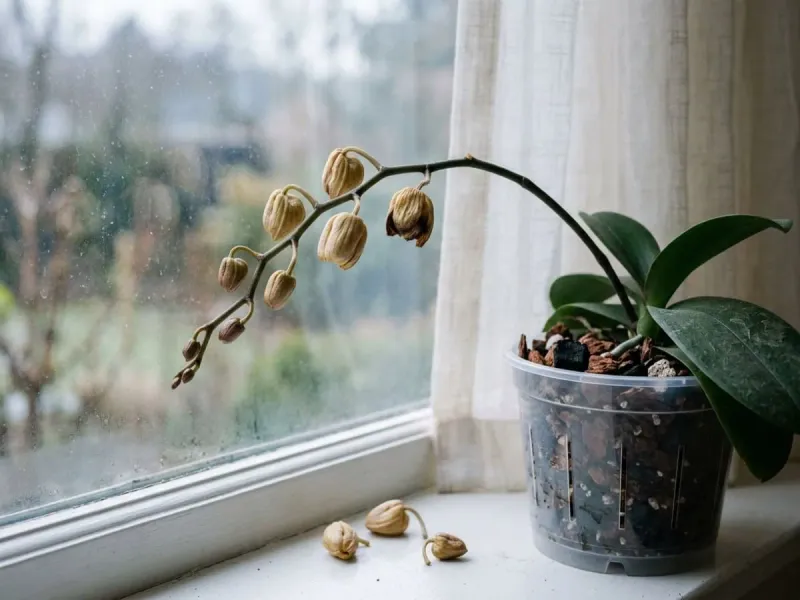
You waited weeks for those buds, and then they yellowed and dropped just before opening. It is a gut punch for anyone who has nursed a moth orchid along.
Watering can play a part in this problem, though it is rarely the whole story. Here is how to check your routine and what else to look at.
Bud blast is a symptom, not a verdict on your watering
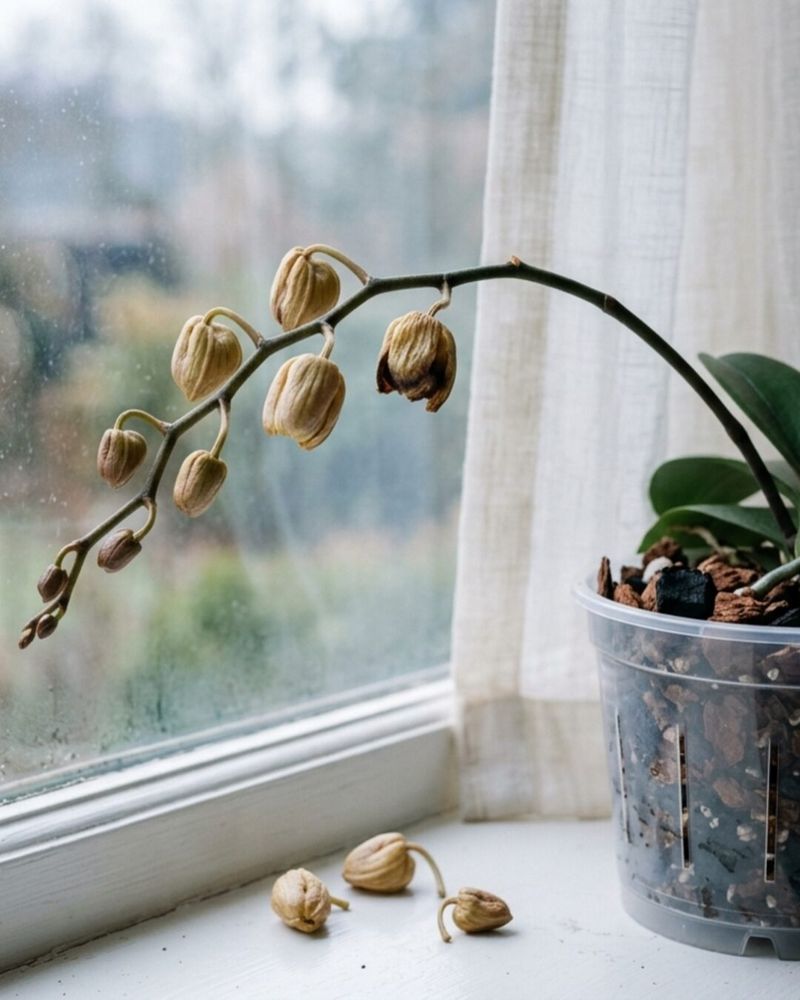
Bud blast is the name growers use when orchid buds turn yellow, shrivel, or fall off before they ever open. If your moth orchid just did this, you are far from alone.
It is one of the most common frustrations in home orchid growing.
Here is the reassuring part: the symptom does not prove you watered wrong. According to the American Orchid Society’s bud blast guide, several different stresses can set it off.
Temperature swings, low or changing humidity, fumes such as ethylene, and unsuitable light all made the list, and so did watering problems.
That means watering is one possible contributor among several. Think of it like a detective checklist.
You are not looking for someone to blame, you are ruling things out one at a time.
The AOS troubleshooting page takes the same approach, walking through symptoms and possible causes instead of pointing to a single culprit. That is a good mindset for your own plant too.
This article focuses on watering because it is something you can adjust today without buying anything. Improving it may reduce one source of stress for your orchid.
It will not guarantee that every bud holds on, and it cannot bring back buds that have already dropped. Later sections cover the other triggers worth checking if the problem continues.
Too-dry or persistently soggy mix can stress an orchid
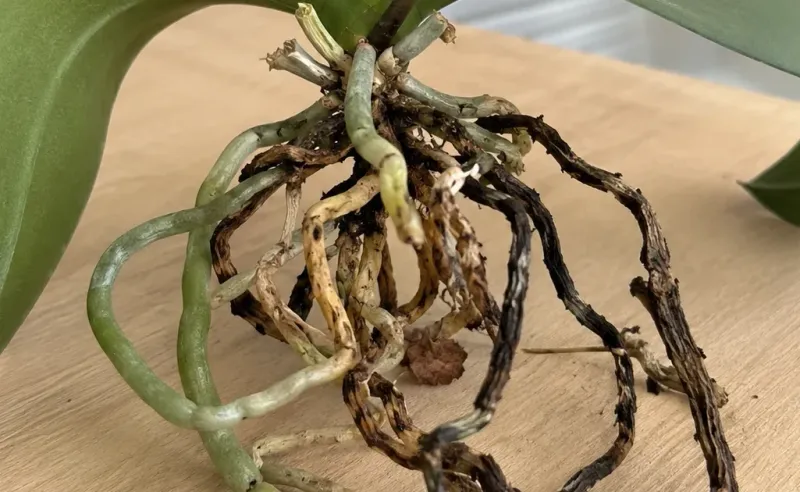
Picture two opposite mistakes. In one, the orchid goes so long between drinks that the roots dry out and the plant gets thirsty.
In the other, the mix stays wet all the time and the roots start to suffer.
Both can leave the plant under water stress. The American Orchid Society notes that overwatering can damage roots so they cannot take up water, which means a plant sitting in wet mix can still be thirsty.
Inconsistent watering, swinging between the two extremes, can add to that stress.
A bloom spike full of buds asks a lot of the plant. If the roots are struggling, buds may be among the first things it gives up.
This is why dropped buds are not a signal to pour on more water. Extra water on a plant with damaged roots can make things worse.
Instead, look at the plant and the pot before you reach for the watering can.
Check whether the roots look plump and silvery-green or mushy and brown. Notice whether the mix feels bone dry or stays wet for days.
The AOS watering article advises that Phalaenopsis should not dry out completely or sit in soggy medium. Aim for the middle ground.
What the potting mix tells you
Your calendar cannot see inside the pot, but your fingers can. Checking the mix directly beats any weekly schedule, because drying time shifts with the pot, the room temperature, the humidity, and the season.
Iowa State Extension suggests feeling the mix or pushing a wooden chopstick into it. If the chopstick comes out damp and dark, the mix is still holding moisture.
If it comes out dry, it is time to water.
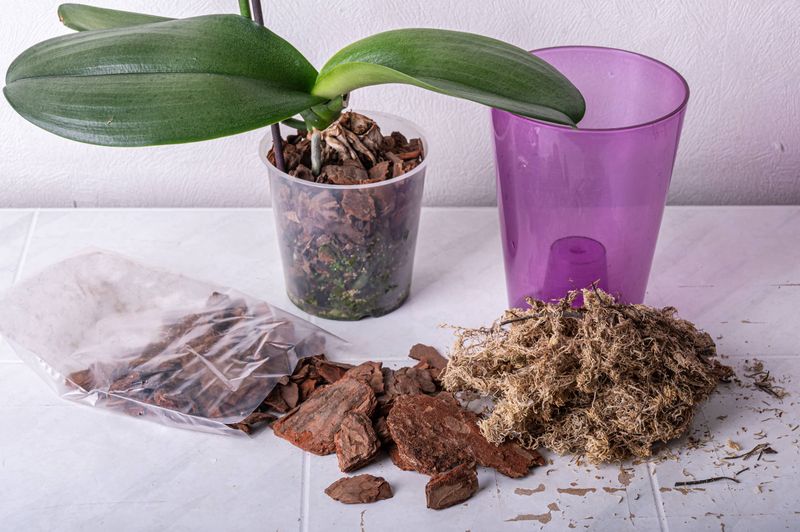
The type of mix matters a lot. Bark drains and dries quickly, so it often needs attention sooner.
Sphagnum moss holds much more water, which can raise the risk of overwatering and root rot.
Now imagine two identical orchids on the same watering day, one in bark and one in moss. A few days later, the bark pot may be nearly dry while the moss pot is still soggy.
Following the same calendar for both would leave one thirsty and the other waterlogged.
Try making the check a habit. Once or twice a week, poke the mix, lift the pot to feel its weight, and glance at the roots through a clear pot if you have one.
Over time you will learn how fast your own plant dries in your own home.
Water thoroughly, then let the pot drain
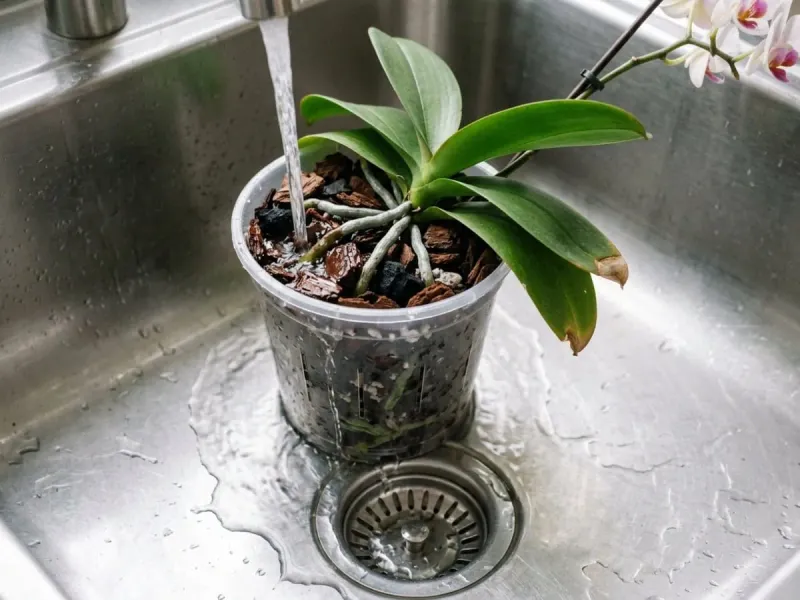
Once the mix says it is time, technique makes the difference. Pour water over the potting medium, not into the center of the plant, and keep going until the whole root ball is soaked and water runs out the bottom.
Thorough watering matters because a quick splash only wets the top layer. Many growers take the plant to the sink so they can let water flow through for a bit.
Then comes the part people forget: let the pot drain fully before it goes back on its saucer or into a decorative cachepot.
The American Orchid Society’s Phalaenopsis culture sheet recommends watering in the morning. That gives leaves and the crown time to dry before night.
It also advises keeping water from collecting in the crown, the spot where the leaves meet at the top of the plant. Standing water there can promote crown rot.
If some splashes in, blot it out with a paper towel.
Finally, empty any water that gathers under the pot. Roots sitting in a puddle are the same as roots sitting in soggy mix.
A steady rhythm of a good soak followed by a good drain gives roots both water and air.
Different orchids need different drying targets
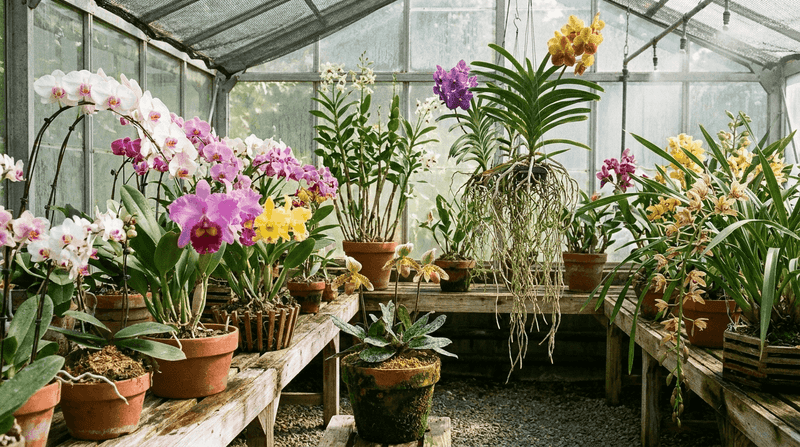
Not every orchid on your windowsill wants the same treatment. Moth orchids are just one group, and advice written for them does not carry over to all the others.
The American Orchid Society says Phalaenopsis should be watered just before the medium becomes dry. Cattleya and Oncidium, on the other hand, should be allowed to dry completely between waterings.
So the same pot that looks ready for a drink in a moth orchid might be too wet for a Cattleya. A routine borrowed from the wrong orchid could easily leave a plant too soggy or too dry.
Start by finding out what you own. Look for the plant tag, check the original store listing, or compare your plant’s leaves and growth habit with a trusted care sheet.
If you are unsure, ask a local orchid society.
Once you know the type, use it as a guide, not a rulebook. Pot size, mix, light, and room conditions still change how quickly things dry.
The target tells you what the mix should feel like when you water. Your checks tell you when it gets there.
When watering looks right, check the surroundings
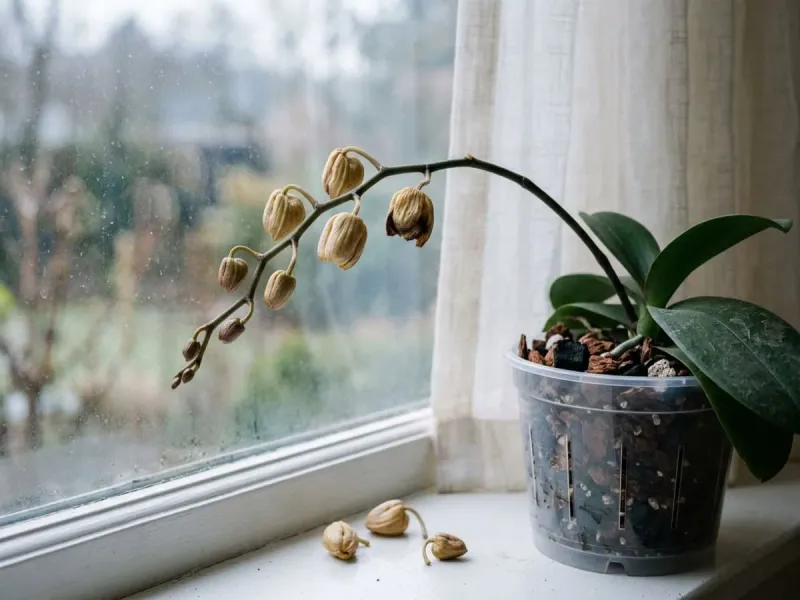
Sometimes the roots are healthy, the mix is just right, and the buds still fall. At that point, look around the room.
The AOS bud blast page lists several other triggers worth checking.
Sudden temperature changes and drafts are common ones. A plant moved from a warm store to a cool porch, or parked near a door that opens to winter air, may react.
Heating and cooling vents can cause trouble too.
Humidity that swings up and down is another suspect, as are fumes. Ripening fruit gives off ethylene gas, so a fruit bowl next to your orchid is worth moving.
Other fumes from gas appliances or fresh paint can also bother plants.
Light matters as well. Too little light may leave a plant without the energy to open its buds, while a sudden jump to harsh light can be a shock.
While buds are developing, try to keep conditions steady. Skip big moves, rearranging, and repotting if you can.
A stable spot with bright, indirect light and no drafts gives buds the best chance, though no single change can promise recovery.
Build a steady routine, not a rescue promise
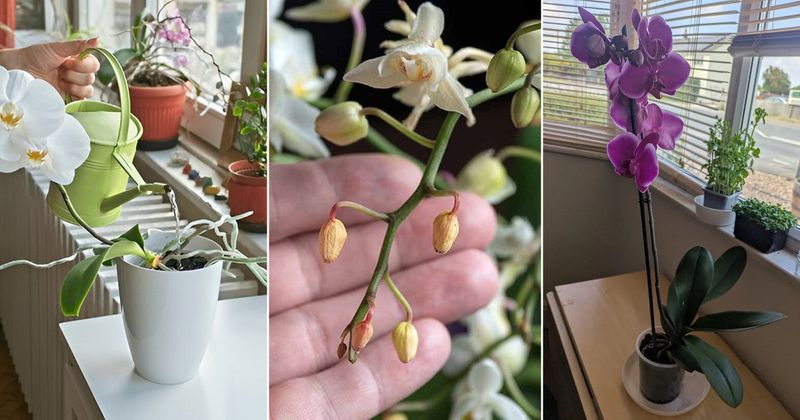
Let your orchid’s type and the feel of its mix decide when to water. For a Phalaenopsis, that means avoiding both bone-dry roots and soggy bark, as the AOS culture sheet describes.
If buds keep dropping anyway, walk through the room checks again. The AOS bud blast guidance is a handy reference.
Better care can lower one risk, but it cannot promise to save buds already falling. Consider it practice for the next flower spike.
A calm, steady plant is usually a happier one.