
If A Camel Spider Sprints Across The Desert Sand, Here’s The One Brutal Problem It’s Racing To Solve
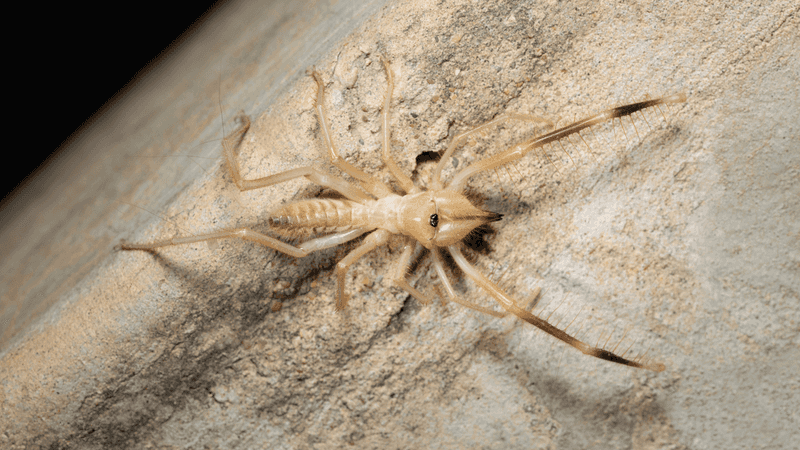
Few things stop a desert hiker cold like a fast-moving creature the size of a fist suddenly closing the gap between you. What looks like a predator locked onto your trail is almost certainly something far less sinister, and understanding what is really happening can turn a terrifying moment into a fascinating one.
Solifuges, commonly called camel spiders, may be racing toward the patch of shade you are creating rather than toward you as prey. Getting that distinction right matters for your safety and for the creature’s reputation.
It May Be Chasing Your Shadow, Not You
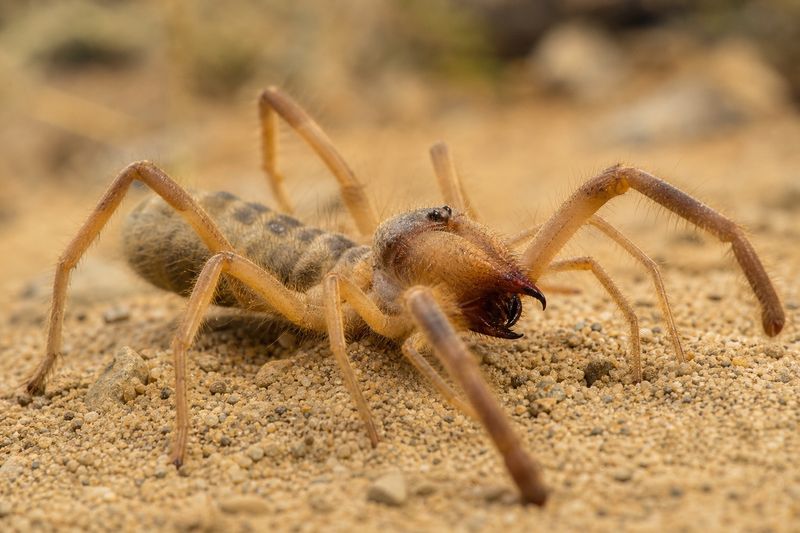
Picture the scene: you are crossing a stretch of open desert in full midday sun, and something the size of your palm breaks into a sprint directly behind you. Every instinct says run.
But U.S. Army public-health entomology guidance offers a more grounded explanation: solifuges, the arachnids commonly called camel spiders, may follow a moving human shadow during hot daytime conditions, creating the convincing illusion that they are chasing a person.
A person walking across bright ground drags a patch of shade behind them. That patch moves at exactly the same speed as the walker, shifts direction when the walker turns, and can look, from a solifuge’s perspective, like a mobile refuge from an otherwise scorching surface.
The animal may be tracking the shade rather than the person who happens to be casting it.
The Burke Museum’s myth-busting resource on camel spider tall tales reinforces this same point: the apparent pursuit is an optical and behavioral coincidence, not an attack. Both the Army guidance and the Burke Museum are explicit that the solifuge is not treating the human as prey.
Calling this a universal rule would go further than the evidence allows. Solifugae is a large and varied order with more than 1,200 species, and researchers acknowledge that the group’s natural history is still incompletely understood.
Shadow-following is a documented explanation for some daytime encounters in hot, open environments. Not every solifuge sprint has the same cause, and not every individual running in daylight is necessarily responding to a human shadow at all.
The qualified answer is the honest one: when you see what looks like pursuit in bright desert heat, a moving shadow is a plausible and well-cited reason for the behavior, even if it is not the only possible explanation.
The Animal Behind the Camel-Spider Name
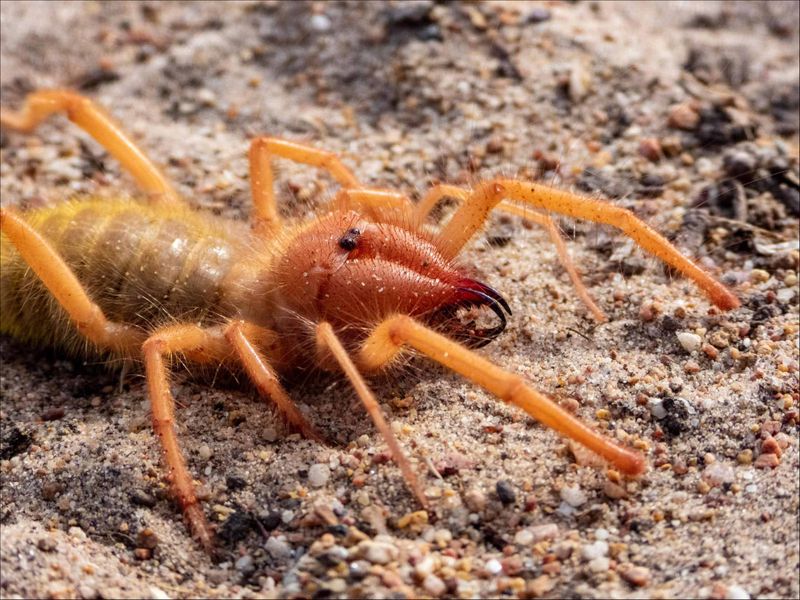
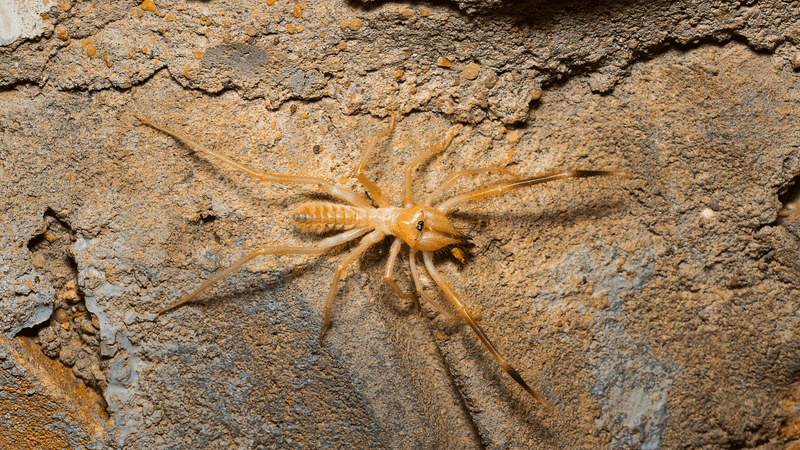
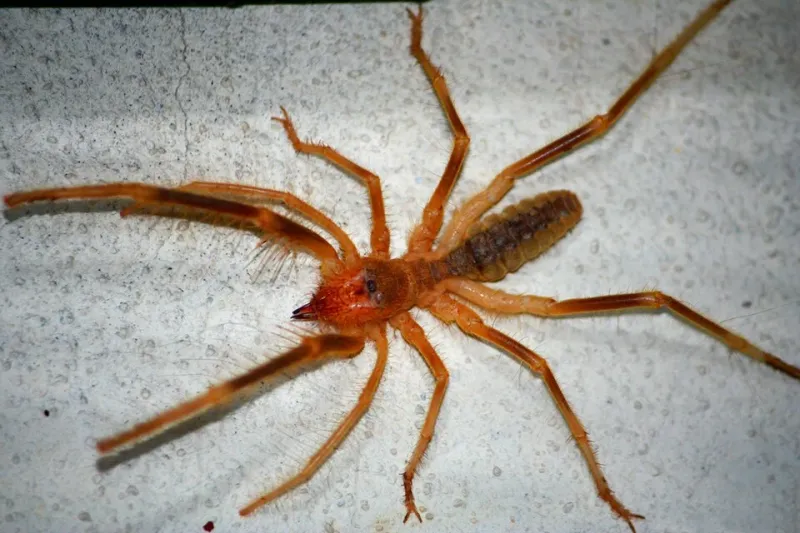
The name “camel spider” calls up a vivid image, but it is a common name attached to an entire order of arachnids, not a single species. Solifugae sits in its own branch of the arachnid family tree, separate from true spiders and separate from scorpions.
UC Cooperative Extension’s windscorpion guide and the National Park Service’s arachnid field guide both categorize solifuges as a distinct order. You may hear them called wind scorpions or sun spiders, names that reflect their speed and their preference for open, sunny terrain rather than any close relationship to scorpions or spiders.
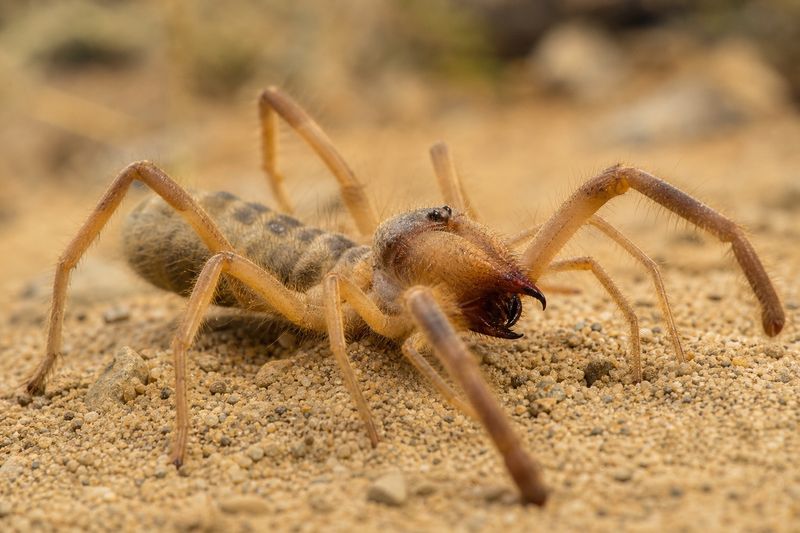
The feature that makes solifuges look so alarming up close is the chelicerae: two massive, claw-like mouthparts that project forward from the front of the head and can look almost as large as the animal’s body. Those chelicerae are the tools of an active predator.
Solifuges hunt insects, other spiders, scorpions, centipedes, and occasionally small lizards. Army guidance and the Burke Museum both confirm that camel stomachs and sleeping soldiers are not on the menu.
North American species are generally described by university and government sources as lacking known venom glands, which separates them from venomous spiders and scorpions. That distinction matters, but it does not mean the chelicerae are harmless.
They are strong enough to break skin, and a bite or pinch can be genuinely painful, particularly if the animal feels trapped or handled.
Knowing what solifuges actually eat reframes the encounter entirely. An animal built to chase down scorpions and centipedes is not going to redirect that energy toward a creature many hundreds of times its size.
The sprint you witness is far more likely to be about environment than appetite.
Hot Ground May Make Shade Useful
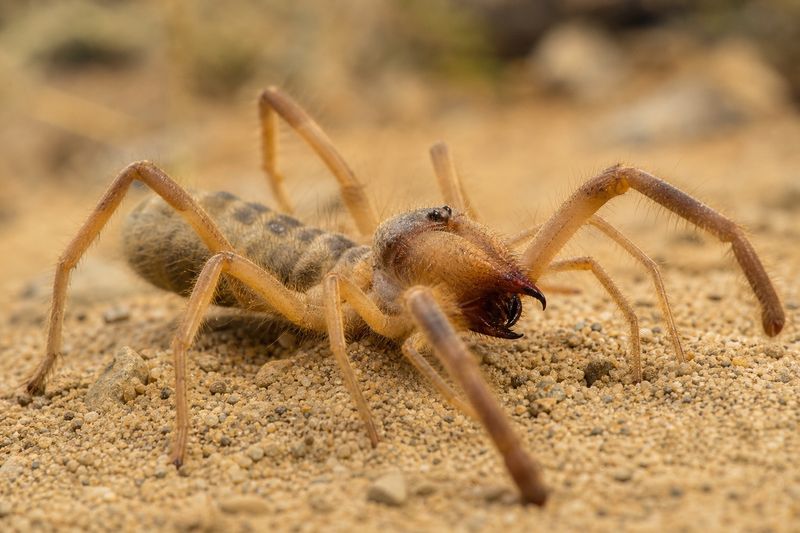
Desert sand in full sun can reach temperatures that would blister bare skin in seconds. For a small arthropod with its body close to that surface, the difference between a sunlit patch of ground and a shaded one is not trivial.
Army entomology guidance specifically describes solifuges seeking shade to avoid hot ground, framing shade not as a luxury but as a way to manage contact with an extreme thermal environment.
Field research supports the broader idea that heat can shape solifuge movement. A study documented in the Environmental Information Service Namibia’s library on the diurnal solifuge Metasolpuga picta recorded thermoregulatory behavior in a daytime-active species, showing that movement patterns in at least some solifuges respond to thermal conditions in the environment.
A desert arthropod that moves toward cooler ground is doing something functionally sensible, even if the internal trigger is not fully mapped.
Framing this as “racing to solve overheating” goes further than the science allows, though. A comprehensive scientific review of Solifugae emphasizes that the order contains more than 1,200 species with varied activity patterns, and that researchers acknowledge the group’s natural history remains poorly understood.
Concluding that any individual solifuge you spot is in an urgent physiological crisis, near dehydration, or desperate would read more into a single sprint than the evidence can support.
The more defensible framing is this: moving toward cooler shade or away from hot ground is a plausible and behaviorally sensible response for a desert solifuge in certain conditions. Whether that response reflects a strict thermoregulatory mechanism, a learned behavior, or simple avoidance of an uncomfortable surface is a question the research has not fully answered.
The sprint is real. The exact internal reason for it, in any given individual, remains an inference.
Why Shade Does Not Explain Every Sprint
Accepting shadow-following as the complete story would mean ignoring a lot of inconvenient variety. The scientific review of Solifugae makes clear that the order is large, diverse, and incompletely studied.
Some species are diurnal, some are nocturnal, and some appear to shift their activity timing depending on season or habitat. Assuming every solifuge sprint in daylight is a bid for shade would be like assuming every mammal running across a field is fleeing a predator.
The sensory mechanism that would allow a solifuge to detect, recognize, and actively track a human shadow has not been pinned down in the peer-reviewed literature. Army guidance states the shadow-following behavior clearly, and the Burke Museum backs the same explanation, but neither source identifies the precise sensory pathway involved.
Whether the animal is responding to a temperature gradient, a light-intensity boundary, or some other cue is still an open question.
A study published and indexed on PubMed examining arthropod communities under solar panels in Chilean desert environments adds a further complication. Researchers looked at how the shaded microhabitat beneath solar panels affected the local biotic community, and solifuges were seldom recorded in the shaded areas.
That result does not directly test whether solifuges follow human shadows in hot open terrain, and the study was specific to one habitat type and one arthropod community. It does, however, limit any sweeping claim that shade is universally preferred by solifuges across all settings.
The Namibian thermoregulatory work cited in the previous section, drawn from research on the diurnal Metasolpuga picta, applies most clearly to daytime-active species in open sun. Nocturnal solifuges, by contrast, are attracted to artificial light rather than avoiding it, as Mojave Desert field experiments have shown.
A creature that runs toward a light source at night is not behaving the same way as one that seeks shade at noon, and both behaviors exist within the same order.
The honest takeaway is that shade-seeking and shadow-following are credible, well-cited explanations for some daytime encounters, while species differences, habitat context, and unresolved sensory questions mean no single explanation covers every sprint you might witness.
Its Speed Is Real, but the Viral Number Is Not
Viral posts have credited camel spiders with speeds of 25 to 30 miles per hour, which would make them faster than most humans can sprint. That figure is not supported by measured data, and repeating it does the animal a disservice by replacing genuine biology with sensationalism.
Controlled locomotion research on Galeodes granti, a species studied specifically for its movement on sand, recorded an average running speed of roughly 12 centimeters per second under test conditions, according to work presented at the Society for Integrative and Comparative Biology. That translates to about 0.27 miles per hour in the controlled setting, which is fast for the animal’s body size but well short of anything a walking adult could not easily outdistance.
A broader scientific review of Solifugae, published in Zoological Journal of the Linnean Society, cites an unusually fast field observation of 437 centimeters per second, roughly 9.8 miles per hour, for a solifuge under natural conditions. That figure is genuinely impressive for an arthropod, and it helps explain why the animal looks alarming at close range.
At 9.8 miles per hour, a solifuge can close a short gap quickly enough to seem relentless even when it is only chasing shade.
Neither measurement should be treated as a universal top speed. Species, substrate, temperature, and test conditions all affect how fast any given animal moves on any given day.
The Galeodes granti result reflects one species on sand under controlled conditions; the 437 centimeters per second observation reflects a different moment in a different context. What both numbers confirm is that solifuges are genuinely quick relative to their size, and that the viral 25-to-30-miles-per-hour claim inflates reality by a factor of roughly three or more.
Give It Space Instead of Fighting the Sprint
Knowing the animal is probably after your shadow rather than your ankle is useful. Knowing what to do with your hands in that moment is more useful.
The core rule is simple: do not grab it, do not swat at it, and do not try to trap or crush it. Army guidance specifically recommends brushing a solifuge off rather than striking it if one makes contact with the body.
Striking at it increases the chance of a defensive bite.
Stepping away and giving the animal room to move is the most reliable response. If it is chasing your shadow, changing direction will shift the shadow and, in many cases, redirect the solifuge.
If it is moving toward you for any other reason, open space still gives it somewhere to go that is not into your boot or under your shirt.
Gloves matter more than most people realize in desert terrain. UC Cooperative Extension’s windscorpion guidance and Utah State University Extension’s arachnid resource both point to the chelicerae as the primary risk.
Solifuges often shelter beneath rocks, lumber, tent stakes, gear piles, and other materials that get moved by hand. Wearing gloves when clearing or shifting anything that has been sitting undisturbed on desert ground is a practical habit that reduces the chance of a surprise contact.
Calling solifuges completely harmless would misrepresent the risk. North American species are not known to carry venom, but their jaws are strong enough to break skin and produce a painful wound.
The National Park Service’s arachnid field guide supports treating any bite with basic wound care: clean the area with soap and water to reduce infection risk. No exotic treatment is needed, but ignoring a bite wound in a dusty environment is not wise either.
A Frightening Sprint Is a Clue, Not a Verdict
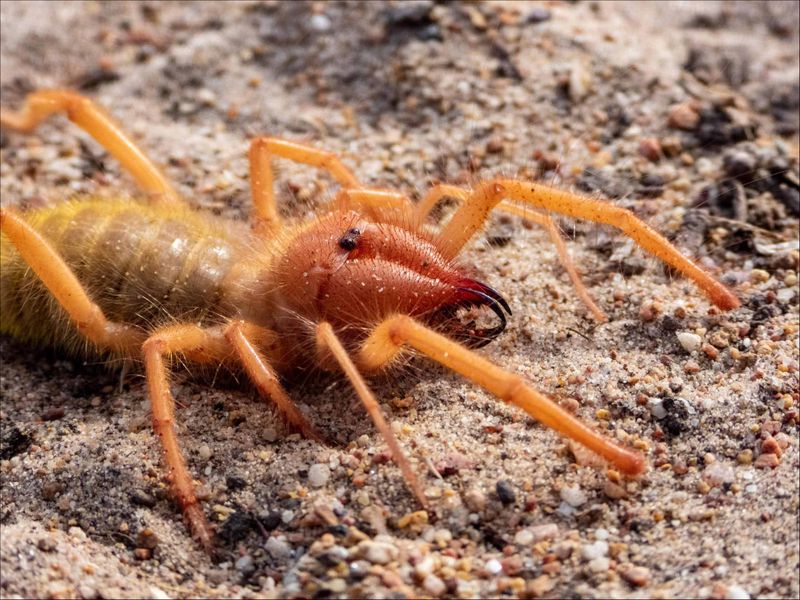
A solifuge crossing the sand at speed is telling you something about its environment, not necessarily about its intentions toward you. The sprint is a behavioral response to conditions, and the overlap between its path and yours may be nothing more than geometry: your shadow happens to fall where the animal wants to go.
Army entomology guidance documents shadow-following as a real and recognized pattern in some daytime solifuge encounters, and that explanation holds up well for hot, open-terrain situations. At the same time, the scientific review of Solifugae reminds us that the order spans more than 1,200 species, that activity patterns vary widely, and that researchers have not mapped every detail of solifuge behavior or sensory biology.
Shadow-seeking is plausible and well-cited in some contexts. It is not a universal law.
What the evidence does support is a shift in how you read the encounter. The animal is not hunting you, is not chasing you as prey, and is not mounting an attack.
It is an arthropod navigating a difficult thermal environment, and your presence may be incidental to its route. Giving it space, keeping your hands clear, and watching from a short distance will almost always be enough.
The sprint is a clue about the desert’s conditions, and reading it correctly turns a moment of panic into a brief window of genuinely strange natural history.