
If A Walk Under Pines Leaves You Calmer Than Under Oaks, Here’s The Chemical Signal Each Tree Is Quietly Sending
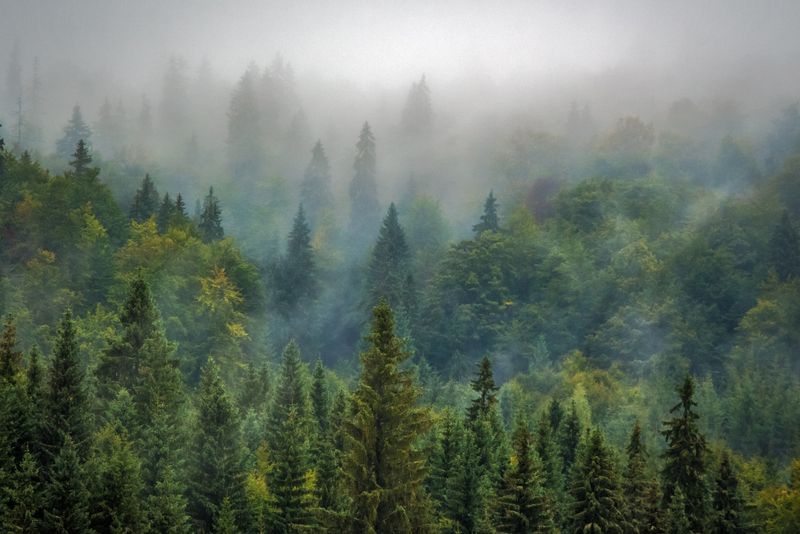
Some people step into a pine grove and feel their shoulders drop within minutes, while a walk under a dense oak canopy leaves them feeling something slightly different, though they cannot quite name why. That contrast is real enough to notice, but the explanation turns out to be more complicated than a single calming molecule floating down from the branches.
Trees do release different airborne chemicals depending on their species and the conditions around them, and those differences may shape how a forest smells and perhaps how a person feels. Whether one canopy is truly sending a calming message and another is not is a question science is still working through.
The canopy can change the air without sending a proven message
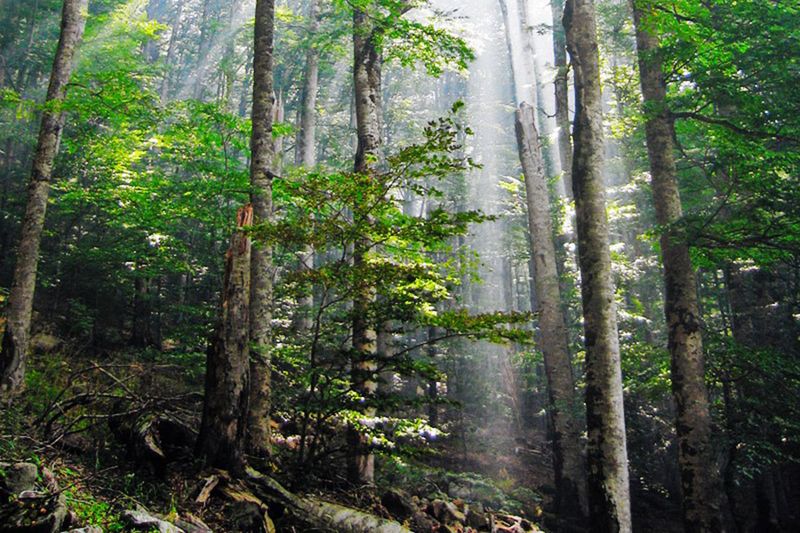
Standing beneath a tall canopy and noticing a distinct, resinous smell is a legitimate sensory experience, not imagination. Trees continuously release gases and particles into the surrounding air, and the mix of compounds above a pine stand often differs measurably from the mix above an oak grove.
Scientists call these releases biogenic volatile organic compounds, or BVOCs, a broad category that covers dozens of carbon-based molecules that plants produce as part of normal biological activity.
The phrase “chemical signal” in this article’s title is best read as a metaphor and an open hypothesis, not a settled biological fact. BVOCs evolved mainly as plant chemicals involved in defense, communication between plants, and atmospheric processes, not as messages aimed at the human nervous system.
Whether they produce a specific conscious or calming effect in people walking underneath is a question researchers are actively studying, and the current answer is: possibly, but not proven.
Pine and oak forests can differ in their BVOC profiles, and those profiles do not automatically translate into different brain effects. The EPA’s Biogenic Emission Inventory System tracks how different plant communities across the country contribute varying compounds to local air, reflecting just how much species, climate, and season shape what is actually overhead.
A felt difference between two forest types may reflect airborne chemistry, but it may equally reflect shade, temperature, quiet, personal associations with the smell of pine, and the simple fact of slowing down.
The sections ahead look at what pine and oak trees actually tend to release, how much of it reaches a person walking below, and what research says about whether those compounds change how people feel. The honest starting point is that different trees make different air, and that difference is interesting without needing to be overstated.
Pines put monoterpenes at the center of the scent
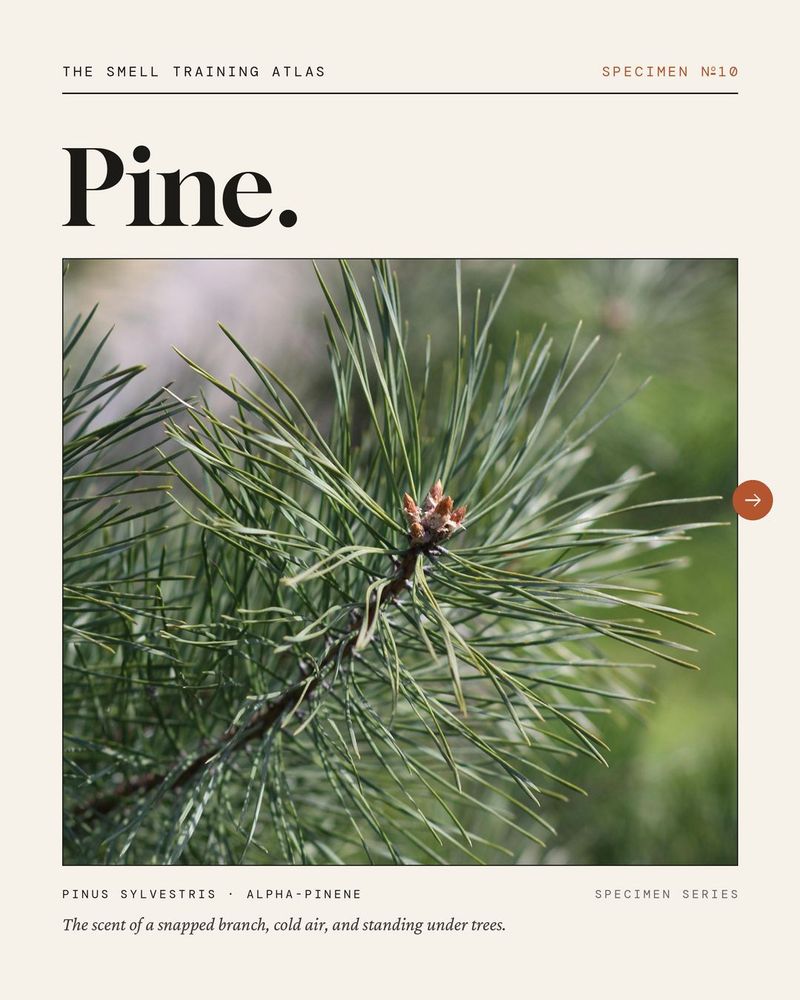
Walk into a mature pine stand on a warm afternoon and the air carries that sharp, resinous smell almost immediately. Much of that character comes from a group of compounds called monoterpenes, ten-carbon molecules that pines commonly store in their resinous tissues and release into the surrounding air.
Alpha-pinene is the one most people encounter in the research literature, but beta-pinene and 3-carene are also frequently detected in pine-dominated air, and USDA Forest Service research on natural forest influences on air chemistry has documented how the precise mixture shifts considerably by species, tree age, season, and local conditions.
The resinous smell is not simply leaking from the bark. Monoterpenes move out of pine needles through small pores, and any physical disturbance, a snapped twig, a branch brushing against a hiker’s shoulder, or even wind bending the canopy, can temporarily increase the release.
Resin ducts running through wood and bark also contribute, especially when a tree is stressed or damaged. That means the scent a person notices on a breezy day may be noticeably stronger than on a still, overcast morning.
Temperature and sunlight also drive emissions upward. Published measurements of pine-forest terpene emissions show that warmer air accelerates the volatilization of these compounds, so a midsummer afternoon under pines tends to produce a richer chemical environment than an early spring morning.
Moisture, humidity, and the density of the canopy overhead all add additional variation.
None of this means that a pine forest delivers a medicinal dose of alpha-pinene to everyone who enters. Measurements of VOC emissions from southeastern U.S. pine forests confirm that concentrations in ambient outdoor air are far lower than the purified compound levels used in many laboratory experiments.
The smell is real, the chemistry is real, and the variation by species, season, and weather is also real, which is why “pine” should not be treated as a single fixed scent or a guaranteed chemical exposure.
Oaks often speak in isoprene, especially in heat and sun
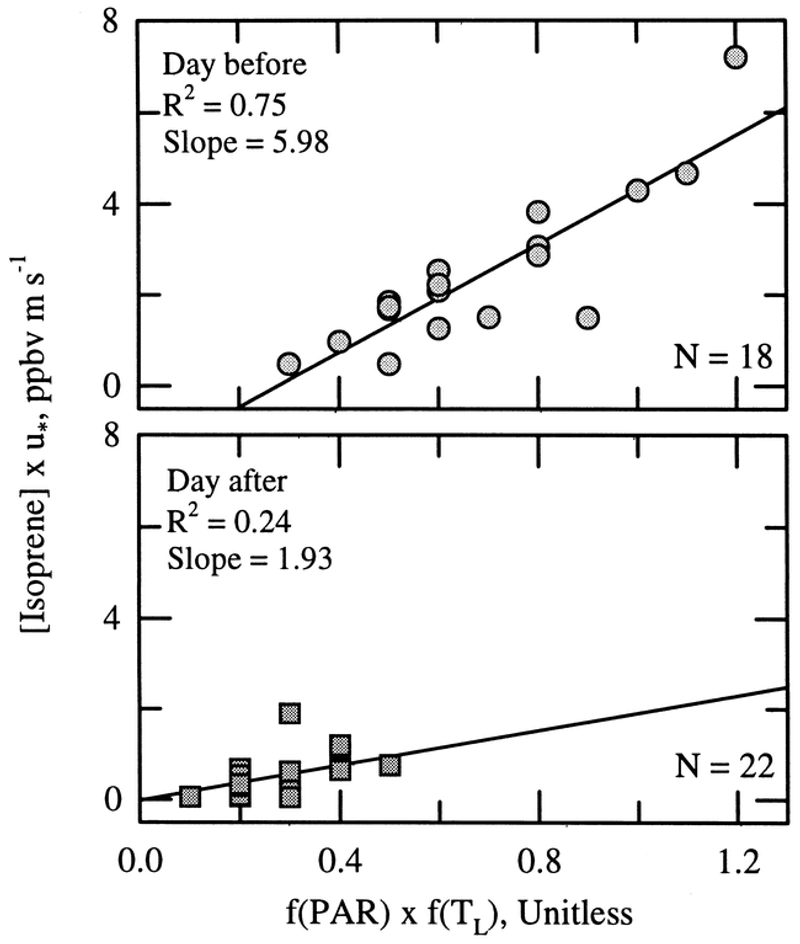
Oak forests have their own airborne chemistry, and it centers on a compound that works quite differently from pine monoterpenes. Many oak species are among the most significant emitters of isoprene, a five-carbon hydrocarbon that plants produce rapidly and release almost immediately rather than storing it in resin ducts.
USDA Forest Service data on northern Wisconsin forest VOC emissions places oaks among the dominant contributors to regional isoprene levels, a pattern repeated across much of the eastern United States.
What makes isoprene behave so differently from pine monoterpenes is its sensitivity to light and temperature. Production can spike sharply on a hot, sunny afternoon and drop back during cloud cover or after sunset.
Research tracking diurnal variation in red-oak isoprene emissions shows this pattern clearly, with emissions rising through the morning as light and temperature climb and then falling in the evening. A shaded oak grove on a cool, overcast day may emit relatively little isoprene compared with the same trees on a bright July afternoon.
Isoprene and monoterpenes are chemically distinct. Isoprene is not simply a smaller version of a pine terpene, and the two compound classes do not produce the same atmospheric or sensory effects.
EPA preferred methods for estimating biogenic emissions treat them as separate categories with different emission algorithms, temperature dependencies, and atmospheric fates.
Calling oak isoprene a “stress signal” would be a serious misreading of the chemistry. Oaks emit isoprene as part of normal photosynthetic activity, possibly as a mechanism to protect leaf membranes from heat damage, not to send any message to passing humans.
The scent profile of an oak forest is shaped by many compounds beyond isoprene, including tannins, leaf litter, soil organisms, and moisture, and no study has shown that oak-dominated air reliably makes people feel more anxious or less relaxed than pine air.
What reaches a walker depends on more than the tree overhead
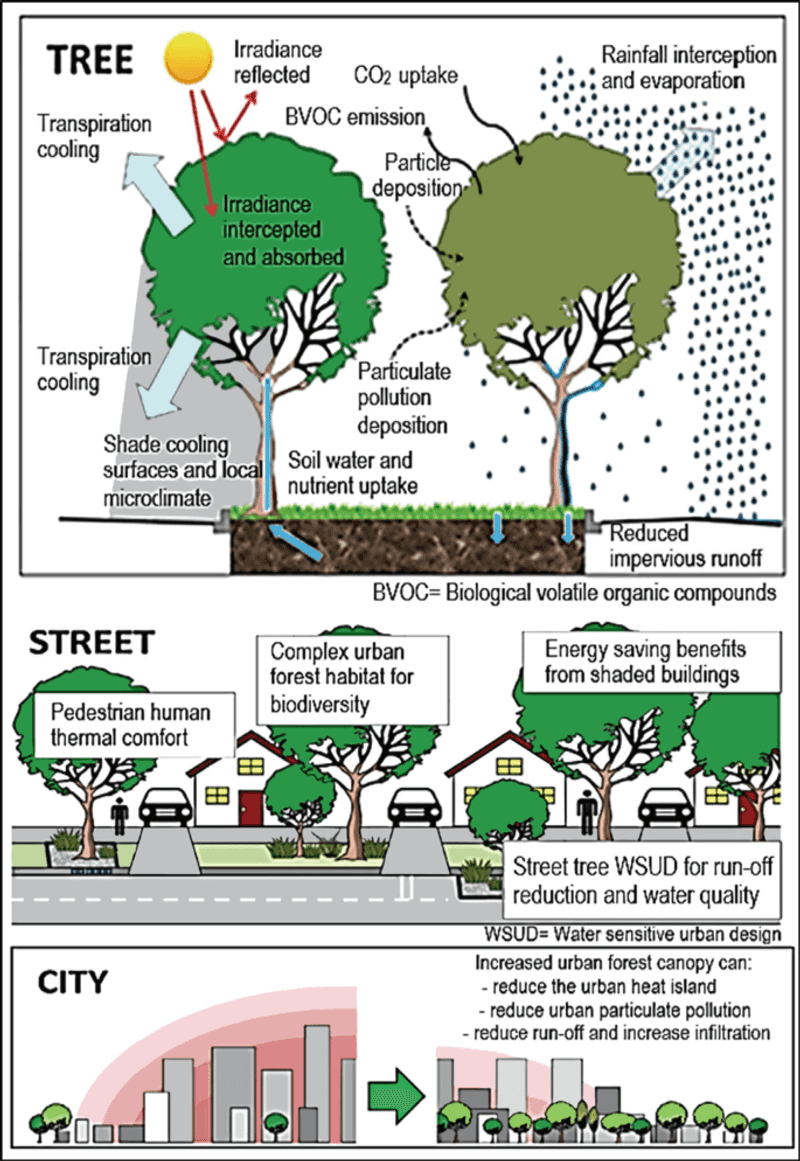
Knowing which tree species dominates a canopy gives only a rough hint about what a person below is actually breathing. Forest air is a dynamic chemical environment where BVOCs are constantly being produced, dispersed by wind, absorbed by soil and leaf surfaces, and chemically transformed.
Atmospheric chemistry research on pine-oak canopy BVOCs documents how compounds react with ozone and other atmospheric gases within the canopy itself, sometimes converting into secondary products before they ever reach a person walking the trail below.
Weather plays a major role. A gusty afternoon disperses compounds quickly and reduces local concentrations, while calm conditions beneath a dense canopy can allow certain BVOCs to accumulate temporarily.
Rain, humidity, and soil moisture change how much the ground absorbs or releases its own suite of organic molecules, including earthy-smelling geosmin from soil bacteria, which has nothing to do with the tree overhead but strongly shapes the overall scent of the forest floor.
Recent forest-air terpene exposure studies confirm that measured concentrations of specific BVOCs vary considerably across locations within the same forest stand, depending on canopy gaps, trail orientation, slope, and proximity to individual trees. A person walking a shaded ridge trail in a pine forest may encounter a very different chemical environment than someone sitting in a sunny clearing surrounded by the same species.
Broader reviews of forest-air composition and human exposure reinforce that the tree species label overhead cannot determine an individual’s inhaled dose.
Mixed pine-oak stands complicate the picture further. Many forests across the eastern and southeastern United States contain both tree types in close proximity, meaning the air a walker breathes may carry monoterpenes and isoprene simultaneously, along with compounds from the understory shrubs, mosses, fungi, and decomposing leaf litter underfoot.
The canopy is one input among many, not a chemical tap that can be turned to a single setting.
Forest exposure can calm people, but the chemistry is not isolated

Spending time in forests has been studied seriously enough that the evidence for short-term calming effects is worth taking at face value, even if the mechanism remains debated. Physiological field experiments on forest bathing recorded lower salivary cortisol, reduced pulse rate, and lower blood pressure in participants who walked in forest settings compared with urban ones, suggesting that the body responds differently to the two environments.
These are real measured changes, not just self-reported impressions.
The important qualification is that those studies compared forest with city, not pine with oak. Researchers cannot yet say how much of the calming response came from airborne chemicals versus the quieter soundscape, cooler shade, slower walking pace, visual complexity of the natural scene, reduced traffic and crowd stimulation, or the expectation that a nature walk will be relaxing.
A systematic review and meta-analysis of forest-bathing psychological well-being research found positive trends across many studies but also noted that study quality, control conditions, and follow-up duration varied considerably across the literature.
A health and well-being review of forest-exposure research reached a similar conclusion: the overall picture is encouraging, but separating the chemical contribution from the broader sensory and behavioral effects of being in nature remains a significant methodological challenge. Researchers repeatedly call for better controls, longer follow-up periods, and study designs that can isolate specific variables.
A nature-exposure stress systematic review likewise highlighted that many studies lack the controls needed to attribute benefits to any single factor.
Forest exposure appears to offer a potentially useful, generally low-risk way for many healthy adults to experience short-term reductions in perceived stress. A randomized-trial review of nature-exposure therapies supports that framing while making clear that the evidence does not yet justify treating a forest walk as medical therapy for anxiety, depression, or other clinical conditions.
The walk itself, in all its sensory fullness, appears to be what matters most.
A recent randomized study still leaves the pine-versus-oak question open
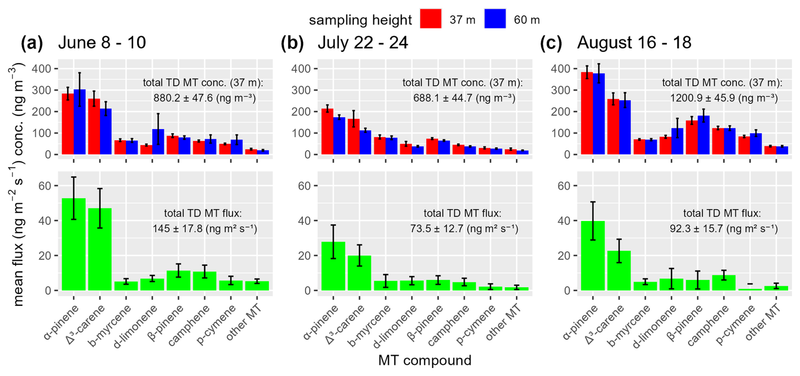
One of the most direct attempts to test whether forest terpenes specifically contribute to the calming effects of a walk came in a recent randomized crossover study that filtered terpenes from ambient forest air, then compared participants’ physiological and psychological responses under filtered versus unfiltered conditions. That 2025 study is an important recent test of the chemical hypothesis, but its findings are more nuanced than a simple yes or no.
Participants showed no statistically significant difference on most measured outcomes when breathing terpene-filtered versus unfiltered forest air. Several results trended in the direction that would support a chemical contribution, but those trends did not reach the threshold that researchers use to call a finding reliable.
The study does not prove that terpenes are irrelevant, but it does not confirm that they produce a distinct, measurable calming response under ordinary outdoor conditions either.
Critically, that study did not compare pine forests with oak forests. Its design tested whether removing ambient terpenes from one forest environment changed how people felt, which is a meaningful but narrower question than whether pine and oak send contrasting neurological messages.
The results leave room for a partial chemical role without establishing what that role is or whether it would differ between canopy types.
Laboratory and animal studies on purified alpha-pinene or concentrated essential oils sometimes suggest biological activity, and reviews of forest BVOCs and human health acknowledge those findings as preliminary signals worth investigating. However, research on inhaled essential oils and their potential effects makes clear that concentrations, exposure routes, and experimental conditions in laboratory settings differ substantially from what a person encounters while walking outdoors.
Translating a lab result directly to a forest walk is not scientifically justified, and the pine-versus-oak neurological question remains genuinely open.
Choose the walk that feels restorative, and treat it as a walk
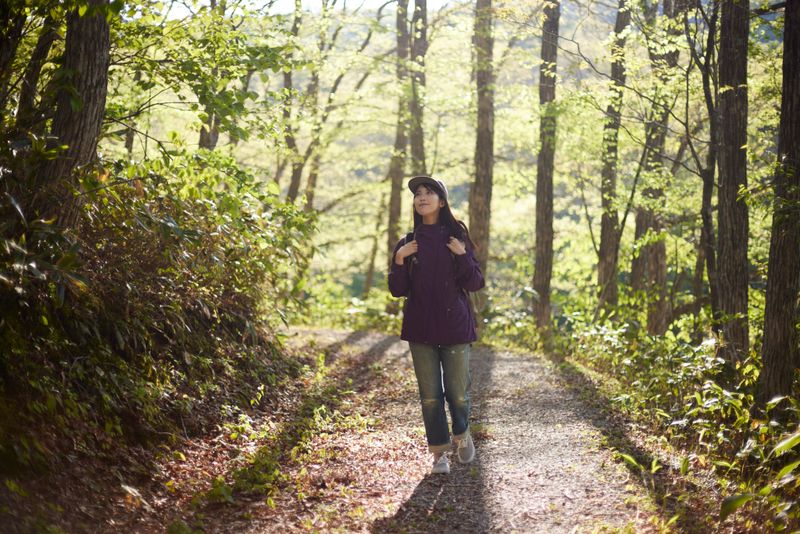
Given what the research does and does not show, the most honest advice is also the simplest: pick the forest that feels comfortable and walk at an easy pace. There is no evidence-based reason to seek out a specific tree species for its chemical output, and no need to crush needles underfoot, snap branches, rub resin on your hands, or breathe in a concentrated way to absorb more of anything.
The walk itself, with its shade, quiet, cooler air, and shifting scenery, appears to be the active ingredient, not a particular molecule.
Pausing occasionally to notice what the air smells like, where the light is coming from, or which sounds are present can extend the sensory engagement that researchers think contributes to the restorative quality of time in nature. Whether the canopy above is mostly pine, mostly oak, or a mix of both, the body and mind respond to the whole environment, not just the chemistry overhead.
Readers with asthma, pollen allergies, or fragrance sensitivities should check local pollen counts and air-quality conditions before heading out. CDC guidance on pollen and health notes that tree pollen, not only airborne BVOCs, can trigger allergic rhinitis and worsen respiratory symptoms.
Carry any prescribed medication, including rescue inhalers, and follow CDC asthma control recommendations for outdoor activity. The AAAAI outdoor allergen guidance advises leaving the area if coughing, wheezing, chest tightness, eye irritation, or shortness of breath develops rather than pushing through symptoms.
The calmer feeling that many people notice under pines may reflect a blend of resinous scent, familiar associations, cooler shade, and the quiet of a forest floor, with chemistry playing a supporting role whose size science has not yet measured. That blend is worth seeking out, whatever the tree.